
In This Article
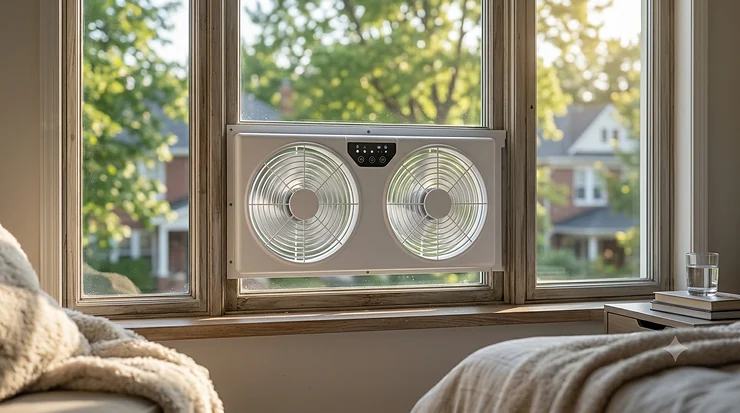
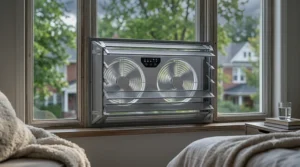
If your air conditioner bill spikes every July, a window fan might be the cheapest fix you haven’t tried yet. A window fan is a dual-blade unit that mounts directly in a window frame, using a reversible motor and expandable side panels to fit most standard window widths. Unlike a box fan propped on a sill, it seals into the opening so air actually moves through the room — in as fresh outdoor air, or out as hot, stale indoor air — instead of just stirring what’s already there.
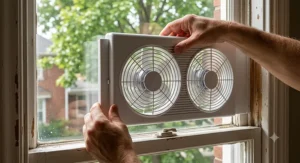
Picking the best window fan for your space comes down to a few things: how loud it is at night, how wide your window opening is, whether you want a remote or app control, and how much airflow you actually need for the room size. None of that shows up clearly on a bare product listing.
In this guide, I’ve gathered seven real, currently available window fan models — from a basic manual unit under $35 to a WiFi-connected smart fan with app control — based on their published specs, certifications, and how they’re rated by buyers and independent testers. Whether you’re after a top rated window fan with smart features or a no-frills option that just works, there’s a match below for your window size, budget, and noise tolerance. We’ll also cover which fan fits which living situation, the buying mistakes that trip people up, and the energy and safety details that actually matter once the fan is installed.
Quick Comparison: Best Window Fans at a Glance
| Fan | Best For | Speeds / Control | Width Fit | Price Range |
|---|---|---|---|---|
| Vornado TRANSOM AE | Best overall / smart homes | 4 speeds, Alexa + remote | 26″–40″ | $120–$160 |
| Comfort Zone 9″ Smart WiFi Twin | Best app control | 3 speeds, WiFi app + remote | 23.5″–37″ | $60–$85 |
| Bionaire Reversible Airflow Fan | Best programmable thermostat | 3 speeds, remote + LED display | 24″–36″ | $45–$65 |
| Holmes Digital CleanBreeze | Best easy-clean design | 3 speeds, remote + thermostat | Up to 35.5″ | $40–$60 |
| Genesis Twin Fan (A1WINDOWFAN) | Best budget with thermostat | 3 speeds, manual + LED indicators | Standard double-hung | $30–$45 |
| Amazon Basics Digital Twin | Best simple remote option | 3 speeds, remote control | 25″–32″ | $30–$40 |
| shinic 9″ Twin (2026) | Best ultra-budget pick | 3 speeds, remote + foam seal | 23.5″–37″ | $25–$35 |
Looking at the spread above, the Vornado TRANSOM AE justifies its higher price with smart-home integration and a sealed, low-profile design you won’t find on the cheaper units. If you just want reliable airflow without paying for connectivity, the Holmes CleanBreeze and Genesis Twin Fan land in a sensible middle ground. Budget shoppers should note that the cheapest options, like the shinic and base Amazon Basics models, trade a couple of conveniences (app control, advanced sealing) for a price that’s roughly a third of the premium picks.
💬 Just one click — help others make better buying decisions too!😊
✨ Don’t Miss These Exclusive Deals!
💬 Take your home cooling setup to the next level with these carefully selected window fans. Click on any highlighted model to check current pricing and availability — these picks help real rooms breathe easier all summer long! 😊
Top 7 Best Window Fans: Expert Analysis
Each of these models is currently sold on Amazon. Specs are pulled from manufacturer listings; price ranges reflect typical market positioning rather than a fixed number, since Amazon pricing shifts often — always check the current listing before buying.
1. Vornado TRANSOM AE Window Fan — Best Overall, Works with Alexa
The Vornado TRANSOM AE is built half the height of a traditional window fan, using a soft-fit foam block system instead of bulky side panels to seal into windows 26 to 40 inches wide. That low-profile build matters more than it sounds: a shorter fan blocks less of your view and is easier to remove and store off-season.
It runs on 4 speeds with auto temperature control, and the AE variant adds Alexa voice control, so you can switch it from intake to exhaust without getting up. What most buyers overlook is that the reversible function on this model is electronic, not manual — you’re not lifting the fan out of the window and flipping it like on cheaper units, which matters a lot if your window is hard to reach.
This is the pick for anyone already running a smart-home setup, or anyone who wants a window fan that doesn’t look like one. It’s a poor fit if your window opening is narrower than 26 inches, since the soft-fit blocks need that minimum width to seal properly.
✅ Alexa and app control
✅ Low-profile, view-friendly design
✅ Electronic reversible airflow
❌ Higher price than manual competitors
❌ Needs at least a 26″ window opening
Price range: $120–$160. For a fan you’ll use every summer for years, the smart features and sealed fit make this a reasonable premium if your budget allows it.
2. Comfort Zone 9″ Smart Reversible Twin Window Fan — Best App & WiFi Control
The Comfort Zone Smart WiFi Twin runs three independent 9-inch blades that can be activated one, two, or three at a time, which is a genuinely useful detail the spec sheet undersells — you can run a single blade on low overnight and switch to all three on high during the hottest part of the afternoon, without buying a second fan.
It connects to a home WiFi network through the Comfort Zone app, so you can start cooling a room before you walk in the door, and it includes a built-in adjustable thermostat that keeps the fan running only when needed. Three modes (cooling, exhaust, circulate) cover most everyday ventilation needs, and the accordion expanders stretch from 23.5 to 37 inches.
This suits anyone who wants smart-home convenience without paying Vornado-level prices, especially renters who move the same fan between apartments with different window sizes. It’s overkill if you just want something to flip on and forget.
✅ WiFi app + voice assistant control
✅ Built-in thermostat
✅ Triple-fan flexible output
❌ App setup adds a step manual fans skip
❌ Plastic housing feels less premium than Vornado
Price range: $60–$85, depending on the retailer and any active promotions.
3. Bionaire Window Fan with Reversible Airflow Blades — Best Programmable Thermostat
The Bionaire fits windows 24 to 36 inches wide and pairs a programmable thermostat with an LED display, so you can set a target temperature and let the fan cycle on and off automatically instead of running constantly. In my read of the spec sheet, that auto-cycling is the feature that actually saves on your electric bill — not the 3-speed motor itself, which is fairly standard for this price tier.
It ships with a remote control and requires no assembly, which keeps install time under five minutes. Buyers consistently flag the LED display as easy to read at a glance, even in a dim bedroom at night.
This is a solid match for bedrooms, where the programmable thermostat means you’re not waking up to adjust speed manually. It’s a step down from the Vornado and Comfort Zone in terms of smart-home integration, but it’s also noticeably cheaper.
✅ Programmable thermostat
✅ No-assembly install
✅ Remote control included
❌ No app or voice control
❌ Display backlight can be distracting in a fully dark room
Price range: $45–$65.
4. Holmes 9″ Digital CleanBreeze Window Fan — Best for Easy Cleaning
The Holmes CleanBreeze has one feature most window fans skip entirely: a removable back panel built specifically for cleaning out the dust that collects behind the blades over a season of use. That’s a bigger deal than it sounds, since dust buildup is a common reason window fans lose airflow over time.
It runs reversible twin blades across 3 speeds, includes a programmable thermostat and remote, and has water-resistant construction that holds up if a window is left cracked during a light rain. Two built-in extender panels stretch the fit up to 35.5 inches wide.
This fan is best for households that keep windows open often — kitchens, screened porches, or anyone in a dusty or pollen-heavy climate who’ll actually use that cleanable panel. If you rarely clean appliances anyway, you won’t get extra value from this specific feature.
✅ Removable, cleanable back panel
✅ Water-resistant build
✅ 3-year limited warranty
❌ Reversing still requires accessing the unit
❌ No WiFi or smart features
Price range: $40–$60.
5. Genesis Twin Fan (A1WINDOWFAN) — Best Budget Pick with a Thermostat
The Genesis Twin Fan, model A1WINDOWFAN, packs an adjustable thermostat and LED indicator lights into a price point usually reserved for fans with no thermostat at all. Genesis calls this “Max Cool Technology,” which in practice means the thermostat handles the on/off cycling so you’re not manually checking the room temperature.
It’s ETL certified for electrical safety, runs on 3 manual speed settings, and fits standard double-hung windows without extra hardware. What most buyers overlook here is that the LED indicators are genuinely helpful for confirming which mode (intake or exhaust) is active, since the blade direction alone isn’t always obvious to glance at.
This is the pick for anyone furnishing a first apartment or a guest room who wants more than a bare manual fan, without spending Bionaire money. It lacks a remote, so you’ll need to reach the unit to change settings.
✅ Thermostat at a budget price
✅ ETL certified
✅ LED mode indicators
❌ No remote control
❌ Manual reversing required
Price range: $30–$45.
6. Amazon Basics Twin Window Fan, Digital, 9-Inch — Best Simple Remote Option
The digital Amazon Basics Twin Window Fan runs at 78 watts across 3 speeds with a remote control and a copper motor, which Amazon’s own listing leans on as a durability point — copper motors generally run cooler and longer than the cheaper aluminum-wound motors found in some no-name competitors. The expandable side panels fit windows 25 to 32 inches wide.
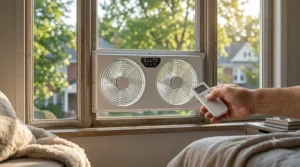
Reviewers consistently point to the straightforward setup as the standout feature: no app, no pairing, just plug in and use the included remote. That simplicity is exactly the appeal for buyers who’ve been burned by smart devices that lose WiFi connection or need firmware updates.
This suits anyone who wants remote convenience without any of the complexity of an app-controlled fan, and who has a fairly standard window width. It’s not a fit for wider or non-standard windows, since the expansion range is narrower than most competitors on this list.
✅ Remote control at a budget price
✅ Copper motor for durability
✅ Simple plug-and-play setup
❌ Narrower width fit (25″–32″) than most rivals
❌ No thermostat
Price range: $30–$40.
7. shinic 9″ Twin Window Fan (2026 Updated) — Best Ultra-Budget Pick
The shinic twin window fan is the most affordable model here that still includes a remote control, 3 speeds, and 3 airflow functions, plus a removable bug screen and a foam sealing strip included in the box. That foam strip is a small but practical add — it closes the gap between the fan housing and the window frame, which is normally an extra purchase on cheaper fans.
It’s ETL certified, adjusts from 23.5 to 37 inches wide, and includes a fabric dust cover for off-season storage. Buyers consistently mention the included accessories (bug screen, foam seal, dust cover) as unusually generous for the price point.
This is the right call if budget is the deciding factor and you’re not picky about brand recognition — it covers nearly the same width range as the much pricier Comfort Zone Smart model. It won’t impress anyone looking for a sturdy, long-lasting build; budget plastic housings in this category tend to show wear faster than metal-cased models like the Vornado.
✅ Remote + 3 functions at a low price
✅ Foam seal and bug screen included
✅ Wide 23.5″–37″ fit range
❌ Plastic build feels less durable long-term
❌ No thermostat
Price range: $25–$35.
How to Install a Window Fan for Maximum Airflow
A window fan only performs as well as its seal. Loose accordion panels let outside air leak around the fan instead of through it, which quietly cuts your effective airflow without you noticing. Here’s how to get the most out of any of the seven fans above:
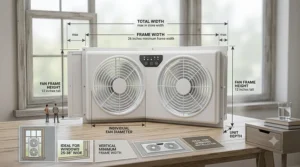
- Measure first. Open the window fully and measure the exact width before buying — most fans listed here cover roughly 23–40 inches, but the edges of that range can be tight.
- Seal the gaps. Use the included foam strips (like on the shinic) or add weatherstripping tape around any visible gap between the fan and the frame.
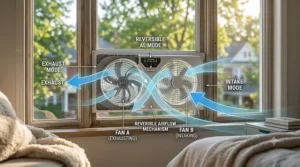
- Pick the right direction for the time of day. Run the fan in intake mode during cool evenings to pull fresh air in, then switch to exhaust during the hottest afternoon hours to push hot air out — this is the same logic the Department of Energy recommends for circulating fans generally.
- Open a second window. A window fan moves air best when there’s a path for it to flow through the house, not just into a sealed room.
- Clean the blades monthly. Dust buildup on the blades is one of the most common, and most avoidable, causes of reduced airflow over a season.
Following this routine during the first 30 days after installation also helps you catch a poor seal or wrong-direction setup early, before you assume the fan itself is underperforming.
Which Window Fan Fits Your Life? Real-World Scenarios
The apartment renter: If you move every year or two, prioritize a wide, flexible width range and a model without permanent mounting hardware. The Comfort Zone Smart WiFi Twin or the shinic both stretch to 37 inches, which covers a wider range of window sizes you might encounter from one lease to the next.
The light sleeper: Programmable thermostats matter more than top-end speed here, since the goal is steady background airflow rather than maximum power. The Bionaire or Holmes CleanBreeze, both with auto thermostat cycling, are better suited than a fan that only runs manually on high or low.
The smart-home household: If your other devices already run through Alexa or a similar app ecosystem, the Vornado TRANSOM AE or Comfort Zone Smart WiFi Twin fit directly into that setup, letting you schedule cooling alongside your other connected devices.
The budget-first buyer: For a first apartment, a dorm, or a guest room that doesn’t get heavy use, the Genesis Twin Fan or Amazon Basics Digital Twin deliver the core function — reversible airflow, multiple speeds — without paying for features you won’t use daily.
Window Fan Problems and How to Fix Them
Problem: The fan runs but the room doesn’t feel cooler. This is usually a one-window setup with nowhere for air to flow. Crack a window on the opposite side of the house so air has a path through, rather than just into a sealed room.
Problem: Reversing airflow is a hassle. Manual-reverse models like the Genesis or Amazon Basics Digital Twin require physically turning the unit. If you switch modes daily, an electronically reversible model like the Vornado TRANSOM AE removes that step entirely.
Problem: Outside noise comes through alongside the airflow. A window fan creates an opening for street noise as much as air. Adding the foam sealing strip (included with the shinic, or sold separately for other models) can dampen some of that bleed-through.
Problem: The fan rattles or vibrates on high speed. This is most often a loose accordion expander rather than a defective motor. Re-securing the panel against the window frame, and adding a thin foam strip at the contact point, usually resolves it.
How to Choose the Best Window Fan for Your Space
- Start with your window’s exact width. Every model above lists a fit range — buying outside it means a poor seal no matter how good the fan is.
- Decide how hands-on you want to be. Manual-reverse units cost less but require more physical interaction than electronically reversible models.
- Factor in noise tolerance. Bedrooms generally do better with a programmable thermostat that cycles the fan rather than running it at full speed all night.
- Consider control type. Remote control covers most convenience needs; WiFi/app control adds scheduling and away-from-home cooling, at a price premium.
- Match airflow functions to your goal. If you mainly want to clear stuffy air (cooking smoke, bathroom humidity), prioritize a strong exhaust mode over raw speed count.
- Check certifications. Look for ETL certification, which several models here carry, as a baseline electrical safety standard.
- Budget for accessories. A bug screen and a sealing strip aren’t included on every model — factor that into the real total cost if your unit doesn’t ship with them.
Common Mistakes When Buying a Window Fan
Buyers most often skip measuring the window opening and assume “standard” width will fit — it frequently doesn’t, since double-hung, sliding, and casement windows all have different practical openings. Another common misstep is assuming every twin-blade fan reverses electronically; several budget models on this list, including the Genesis and Amazon Basics Digital Twin, require manually turning the unit around.
People also tend to undervalue the thermostat feature until after a few nights of manually adjusting speed at 2 a.m. — a programmable thermostat, available on the Bionaire, Holmes, and both Comfort Zone models, removes that entirely. Finally, many buyers focus purely on price and skip checking the width range against their actual window, which is the single most common reason a window fan gets returned.
Window Fan vs. Box Fan vs. Central AC: Which Wins for Your Window?
| Factor | Window Fan | Box Fan | Central AC |
|---|---|---|---|
| Installs in window opening | Yes | No (sits loose) | N/A |
| Reversible exhaust mode | Most models | Rare | N/A |
| Typical energy use | 25–78 watts | 50–100 watts | 2,000–5,000+ watts |
| Whole-room ventilation | Yes | Limited | Yes, whole house |
| Best For | Single rooms, ventilation | Spot cooling, portability | Whole-home climate control |
A window fan and a box fan use comparable wattage, but the window fan’s sealed install means more of that airflow actually exchanges room air with outside air rather than just stirring it in place. Central AC obviously cools more consistently, but at roughly 30–100 times the power draw of a window fan, which is why the Department of Energy recommends pairing fans with AC rather than treating them as competing options. For most single-room ventilation needs — clearing smoke, cooling a bedroom, drying out a bathroom — a window fan covers the job a central system handles less efficiently on a room-by-room basis.
What to Expect: Real-World Performance of a Window Exhaust Fan
On paper, every fan on this list lists similar wattage and speed counts, but real-world performance depends heavily on outdoor conditions. On a still, humid night with no breeze, even a strong exhaust window fan will move less air than the same fan during a windy evening, since it’s working against (or with) outside air pressure rather than in a vacuum.
Expect the most noticeable cooling effect when you run a window fan during the cooler overnight hours rather than the hottest part of the day — pulling in 65°F night air does far more than blowing around 90°F afternoon air. This is also why the EPA’s indoor air quality guidance recommends window and attic fans specifically for increasing the outdoor air exchange rate, rather than for lowering temperature on their own.
Features That Actually Matter (And Those That Don’t)
Matters: A snug width fit and a working seal — this single factor affects real airflow more than any other spec on the box.
Matters: Reversible airflow direction, since most rooms benefit from both pulling in cool air and exhausting stale air depending on time of day.
Matters: A programmable thermostat if the fan runs overnight, since it prevents both overcooling and wasted electricity.
Doesn’t matter much: Extra speed settings beyond three — most users settle on low, medium, or high and rarely use in-between steps.
Doesn’t matter much: WiFi connectivity if you’re not already using a smart-home app ecosystem; it adds cost without daily-use benefit for most households.
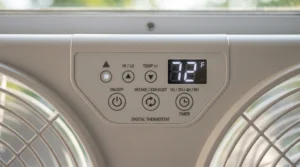
Doesn’t matter much: LED display brightness, unless you specifically need it dimmed for a bedroom.
Long-Term Cost and Maintenance
| Price Tier | Upfront Cost | Typical Wattage | Est. Nightly Cost (8 hrs)* |
|---|---|---|---|
| Budget (shinic, Amazon Basics) | $25–$40 | 63–78W | ~$0.06–$0.07 |
| Mid-range (Bionaire, Holmes, Genesis) | $30–$65 | ~60–70W | ~$0.05–$0.06 |
| Premium (Vornado, Comfort Zone Smart) | $60–$160 | 25–70W | ~$0.02–$0.06 |
*Estimated using a typical U.S. residential electricity rate; actual cost varies by local utility pricing.
The Vornado’s lower wattage despite its premium price means it can actually cost less to run per season than some budget fans, even though it costs more upfront — a detail that matters if you run a window fan nightly for several months a year rather than occasionally. Across every tier, the real long-term cost driver isn’t the fan itself but the accordion expanders and foam seals, which wear out faster with frequent installation and removal and may need replacing every few seasons regardless of which model you buy.
Window Fan Safety, Energy Use, and Regulations You Should Know
Look for ETL certification — carried by the Genesis, Holmes, and shinic models above — which confirms the unit meets recognized U.S. electrical safety testing standards. Avoid running any window fan with a damaged cord or visibly cracked housing, and unplug it before any cleaning, especially on models like the Holmes with a removable back panel.
On the ventilation side, the EPA notes that opening windows and running window or attic fans is one of the more accessible ways to increase outdoor air exchange in a home, particularly in homes without mechanical fresh-air systems. If you live somewhere with high outdoor pollen, wildfire smoke, or pollution on a given day, it’s worth checking local air quality before running a fan in intake mode, since a window fan brings in whatever is in the outside air without filtering it.
Frequently Asked Questions
❓ Do window fans actually cool a room or just move air?
❓ What size window fan do I need?
❓ Is a window fan cheaper to run than an air conditioner?
❓ Can I leave a window fan running overnight?
❓ Do window exhaust fans help with smoke or cooking odors?
Conclusion
The best window fan for you depends less on brand and more on three practical questions: does it fit your window, does it match how hands-on you want to be with daily reversing, and does the price reflect features you’ll actually use. The Vornado TRANSOM AE earns its premium price with smart controls and a sealed, low-profile build, while the Comfort Zone Smart WiFi Twin gets you most of that convenience for less. If you don’t need smart features at all, the Bionaire and Holmes CleanBreeze cover thermostat-controlled comfort at a mid-range price, and the Genesis, Amazon Basics Digital Twin, and shinic all deliver reliable core function for buyers prioritizing budget over extras.
Whichever model you choose, the install details — a snug width fit, a sealed gap, and the right airflow direction for the time of day — matter more to real-world performance than any single spec on the box.
✨ Don’t Miss These Exclusive Deals!
🔍 Take your home cooling setup to the next level with one of these seven picks. Click through to check current pricing and availability before the next heat wave hits!
Recommended for You
- 7 Best Box Fan Air Filter Picks for 2026 (DIY & Built-In)
- 7 Best Quiet Box Fans for Bedrooms in 2026
- Best Box Fan 2026: 7 Top Picks That Actually Move Air
Disclaimer: This article contains affiliate links. As an Amazon Associate, I earn from qualifying purchases. If you purchase products through these links, we may earn a small commission at no additional cost to you.
✨ Found this helpful? Share it with your friends! 💬🤗
