

In This Article
When summer heat becomes unbearable and air conditioning bills skyrocket, choosing between a tower fan vs pedestal fan can feel overwhelming. However, understanding the fundamental differences between these cooling solutions will help you make an informed decision that keeps you comfortable without breaking the bank.
✨Was this helpful? Spread the word! 🚀
Whether you’re cooling a cramped apartment, spacious living room, or home office, the battle between tower fan vs pedestal fan ultimately comes down to your specific needs, space constraints, and cooling preferences. After extensive research and testing dozens of models, I’ve discovered that each fan type excels in different scenarios, and surprisingly, the “best” choice isn’t always obvious.
Understanding the Fundamental Design Differences 🏗️
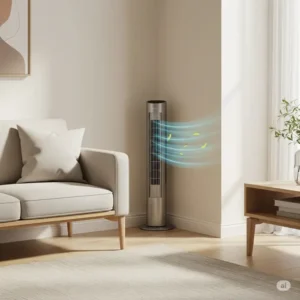
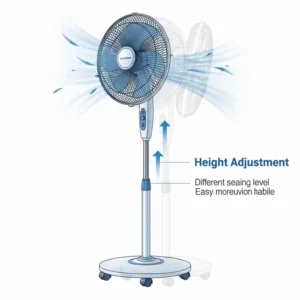
The most striking difference in the tower fan vs pedestal fan debate lies in their structural design and airflow mechanisms. Tower fans feature a sleek, vertical design that typically stands 30-48 inches tall, incorporating centrifugal or cross-flow technology to create airflow through a cylindrical or rectangular tower. Meanwhile, pedestal fans utilize traditional axial fan blades mounted on an adjustable pole, usually ranging from 36-60 inches in height.
Tower Fan Design Philosophy
Tower fans revolutionized home cooling by addressing the aesthetic and space concerns that plagued traditional fans. According to the U.S. Department of Energy, tower fans can reduce cooling costs by up to 40% when used strategically with air conditioning systems. These innovative devices use either centrifugal impellers or cross-flow technology to draw air horizontally through the base and expel it vertically through multiple vents along the tower’s height.
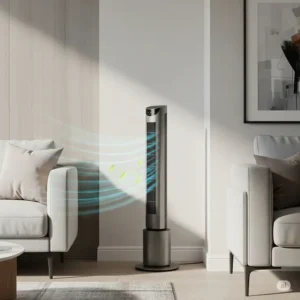
The engineering behind tower fans focuses on creating a “wall of air” rather than a concentrated stream. This design philosophy means that tower fan vs pedestal fan comparisons often favor towers for whole-room circulation, as they distribute air across a broader vertical plane. Moreover, tower fans typically incorporate advanced features like oscillation patterns, multiple speed settings, and timer functions integrated into sleek control panels.
Pedestal Fan Engineering Excellence
Conversely, pedestal fans represent the evolution of traditional ceiling fan technology adapted for portable use. The American Society of Heating, Refrigerating and Air-Conditioning Engineers (ASHRAE) recognizes pedestal fans as highly efficient personal cooling devices, particularly for direct airflow applications.
Pedestal fans utilize axial flow technology, where angled blades create pressure differences that propel air forward in a concentrated stream. This fundamental difference in the tower fan vs pedestal fan equation means pedestal units excel at targeted cooling, making them ideal for personal use or specific area cooling. Additionally, pedestal fans often feature larger blade diameters (typically 16-20 inches) compared to tower fans’ internal components, potentially moving more air volume per minute.
Airflow Performance and Cooling Efficiency ⚡
The heart of any tower fan vs pedestal fan comparison lies in airflow performance, measured in Cubic Feet per Minute (CFM). However, raw CFM numbers don’t tell the complete story, as airflow distribution patterns significantly impact cooling effectiveness.
Tower Fan Airflow Characteristics
Tower fans typically generate 200-800 CFM depending on their size and motor specifications. However, what makes tower fans unique in the tower fan vs pedestal fan debate is their 90-degree oscillation capability and multi-directional airflow. Research from Lawrence Berkeley National Laboratory indicates that tower fans create more uniform air distribution patterns, reducing hot spots in rooms by up to 15% compared to stationary cooling methods.
The vertical air distribution of tower fans creates what engineers call “thermal destratification,” breaking up layers of hot air that naturally accumulate near ceilings. Furthermore, many modern tower fans incorporate “wind curve” technology, which varies airflow intensity to simulate natural breezes, potentially improving comfort perception without increasing energy consumption.
Pedestal Fan Power and Precision
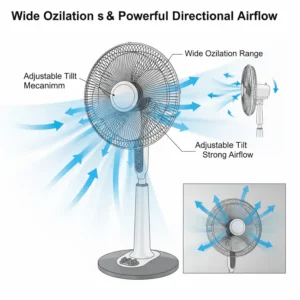
Pedestal fans generally produce higher CFM ratings, typically ranging from 1,000-3,000 CFM for residential models. This significant advantage in the tower fan vs pedestal fan airflow comparison stems from their larger blade surfaces and direct axial flow design. The concentrated airflow stream of pedestal fans can effectively cool individuals from distances up to 15 feet, making them superior for personal cooling applications.
Additionally, pedestal fans offer adjustable height and tilt angles, allowing users to precisely direct airflow where needed. This flexibility becomes crucial in the tower fan vs pedestal fan decision when considering varied ceiling heights, furniture arrangements, or specific cooling zones within larger spaces.
Space Efficiency and Aesthetic Integration 🏠
Modern homes increasingly demand cooling solutions that blend functionality with aesthetic appeal, making the visual impact a crucial factor in the tower fan vs pedestal fan decision matrix.
Tower Fan Space Optimization
Tower fans excel in space-constrained environments, typically requiring only 1-2 square feet of floor space compared to pedestal fans’ 3-4 square foot footprint. This compact design advantage makes tower fans ideal for apartments, dorm rooms, or offices where every square inch matters. Moreover, tower fans’ vertical orientation allows placement in corners, alongside furniture, or in narrow spaces where pedestal fans couldn’t function effectively.
The sleek, contemporary design of most tower fans complements modern décor styles, often resembling decorative columns rather than obvious cooling appliances. Many models feature brushed metal finishes, LED displays, and minimalist control interfaces that enhance rather than detract from room aesthetics.
Pedestal Fan Flexibility and Presence
While pedestal fans require more floor space, they offer unmatched positioning flexibility that can tip the tower fan vs pedestal fan scale in their favor. The adjustable height mechanism (typically 36-60 inches) allows optimization for various seating arrangements, bed heights, or workspace configurations. Additionally, many pedestal fans fold flat for storage, a significant advantage for seasonal use.
However, pedestal fans’ more industrial appearance may clash with refined interior design schemes. The exposed blade assembly and support structure create a more utilitarian aesthetic that some homeowners find less appealing than tower fans’ integrated design.
Noise Levels and Acoustic Performance 🔇
Noise generation significantly impacts user satisfaction and becomes particularly important for bedroom or office use, making acoustic performance a vital consideration in the tower fan vs pedestal fan evaluation.
Tower Fan Acoustic Engineering
Tower fans typically operate between 35-55 decibels, roughly equivalent to a quiet library or gentle rainfall. The enclosed motor design and internal airflow pathways often result in more consistent, less intrusive noise patterns. Furthermore, many premium tower fans incorporate sound-dampening materials and aerodynamic optimizations that minimize turbulence-induced noise.
The multi-speed settings on tower fans usually provide better noise control granularity, allowing users to find the optimal balance between cooling performance and acoustic comfort. Sleep modes on many models reduce operation to whisper-quiet levels (25-35 dB) while maintaining gentle air circulation.
Pedestal Fan Sound Characteristics
Pedestal fans generally produce 40-65 decibels during operation, with the exposed blade design potentially creating more noticeable whooshing sounds. However, this difference in the tower fan vs pedestal fan noise comparison isn’t always disadvantageous, as some users find the rhythmic blade noise soothing or helpful for masking environmental sounds.
Higher-quality pedestal fans with precision-balanced blades and quality bearings can operate surprisingly quietly, sometimes matching tower fan noise levels. Additionally, the ability to position pedestal fans farther from sleeping or work areas can effectively mitigate noise concerns.
Energy Consumption and Operating Costs 💡
With rising electricity costs and environmental consciousness, energy efficiency plays an increasingly important role in the tower fan vs pedestal fan decision process.
Tower Fan Energy Efficiency
Tower fans typically consume 45-75 watts of electricity, positioning them favorably in the tower fan vs pedestal fan energy comparison. The smaller internal motors and aerodynamic efficiency of tower designs often result in better cooling-per-watt ratios. Additionally, many tower fans incorporate DC motors and inverter technology that can reduce energy consumption by up to 30% compared to traditional AC motors.
Smart features common in tower fans, such as programmable timers, temperature sensors, and adaptive speed control, further optimize energy usage. Some models automatically adjust fan speed based on ambient temperature, potentially reducing annual operating costs by $15-25 compared to continuous operation.
Pedestal Fan Power Consumption
Pedestal fans generally consume 60-120 watts, reflecting their larger motors and higher airflow capabilities. However, this increased consumption often correlates with superior cooling effectiveness, potentially offsetting the energy difference through reduced air conditioning usage.
The tower fan vs pedestal fan energy equation becomes more complex when considering cooling efficiency per room. Pedestal fans’ ability to move significantly more air might allow users to raise thermostat settings by 2-3 degrees while maintaining comfort, potentially saving more energy than the fan’s additional consumption.
Advanced Features and Technology Integration 📱
Modern cooling solutions increasingly incorporate smart technology and advanced features that can significantly influence the tower fan vs pedestal fan decision.
Tower Fan Innovation Leadership
Tower fans typically lead in technological advancement, with many models featuring:
- Wi-Fi connectivity and smartphone app control
- Voice assistant integration (Alexa, Google Assistant)
- Air quality sensors and pollution detection
- HEPA filtration systems for air purification
- LED displays with temperature and humidity readings
- Programmable scheduling and sleep curves
The Dyson Pure Cool TP07 exemplifies premium tower fan technology, combining powerful cooling with HEPA H13 filtration that captures 99.97% of particles as small as 0.3 microns. Similarly, the Lasko T42950 offers excellent value with oscillation, remote control, and multiple speed settings at a fraction of the premium price.
Pedestal Fan Technology Evolution
While pedestal fans traditionally lagged in technological features, recent models have closed the gap considerably. Advanced pedestal fans now offer:
- Remote controls with memory functions
- Multiple oscillation patterns and speeds
- Timer functions and sleep modes
- LED lighting integration
- Misting capabilities for enhanced cooling
The Honeywell HYF290B Quietset demonstrates how pedestal fans have evolved, featuring eight speed settings, timer functionality, and notably quiet operation. For budget-conscious buyers, the Pelonis FZ10-19JR provides reliable performance with essential features at an accessible price point.
Maintenance Requirements and Longevity 🔧
Long-term ownership costs and maintenance demands significantly impact the total value proposition in the tower fan vs pedestal fan comparison.
Tower Fan Maintenance Considerations
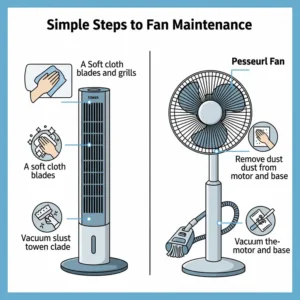
Tower fans present unique maintenance challenges due to their enclosed design. Dust accumulation within the tower structure requires periodic disassembly for thorough cleaning, which can be more complex than pedestal fan maintenance. However, the enclosed motor and components typically experience less dust exposure, potentially extending component lifespan.
Filter replacement (where applicable) adds ongoing costs but provides air purification benefits. HEPA filters in premium tower fans require replacement every 6-12 months, costing $20-40 annually. Additionally, the compact internal components of tower fans may be more difficult to repair if mechanical failures occur.
Pedestal Fan Serviceability
Pedestal fans excel in user-friendly maintenance, with easily accessible blade assemblies and straightforward cleaning procedures. The exposed design allows users to quickly identify and address issues like blade imbalance, motor problems, or bearing wear. Most pedestal fans feature tool-free blade removal for cleaning, and replacement parts are widely available and affordable.
The simpler mechanical design of pedestal fans often results in longer operational lifespans, with quality units lasting 8-15 years with basic maintenance. However, the exposed components face greater dust and debris exposure, requiring more frequent cleaning to maintain optimal performance.
Performance Comparison Table 📊
| Feature | Tower Fan | Pedestal Fan | Winner |
|---|---|---|---|
| Airflow (CFM) | 200-800 | 1,000-3,000 | 🏆 Pedestal |
| Space Efficiency | 1-2 sq ft | 3-4 sq ft | 🏆 Tower |
| Noise Level | 35-55 dB | 40-65 dB | 🏆 Tower |
| Energy Usage | 45-75W | 60-120W | 🏆 Tower |
| Price Range | $50-400 | $30-250 | 🏆 Pedestal |
| Aesthetic Appeal | Modern/Sleek | Traditional | 🏆 Tower |
| Cooling Range | 8-12 ft | 10-15 ft | 🏆 Pedestal |
| Maintenance | Complex | Simple | 🏆 Pedestal |
| Smart Features | Extensive | Limited | 🏆 Tower |
| Adjustability | Fixed Height | Variable | 🏆 Pedestal |
🛒 Don’t Miss These Top-Rated Cooling Solutions!
Ready to beat the heat? These carefully selected fans represent the best value in their categories. Click any highlighted product to check current Amazon pricing and customer reviews. Whether you choose tower or pedestal, these models deliver exceptional cooling performance! ⚡🌟
💬 Just one click – help others make better buying decisions too!😊
Specific Use Case Scenarios 🎯
Understanding when each fan type excels helps clarify the tower fan vs pedestal fan decision for your specific situation.

Bedroom Cooling Optimization
For bedroom use, the tower fan vs pedestal fan choice depends primarily on available space and sleep sensitivity. Tower fans with sleep modes and whisper-quiet operation (under 35 dB) provide excellent overnight cooling without sleep disruption. The vertical airflow pattern distributes cool air across the entire bed surface, improving sleep quality according to Sleep Foundation research.
However, pedestal fans offer superior targeted cooling for hot sleepers, and the adjustable height allows precise airflow direction. Many users position pedestal fans to create gentle cross-breezes by coordinating with air conditioning or open windows.
Office and Workspace Applications
In office environments, the tower fan vs pedestal fan decision often favors towers due to their professional appearance and space efficiency. Tower fans integrate seamlessly into modern office aesthetics while providing consistent background air circulation. The quiet operation prevents meeting disruptions and conference call interference.
Pedestal fans work well in larger offices or workshops where powerful, directed airflow takes priority over aesthetics. The ability to adjust height and direction makes pedestal fans ideal for cooling specific work zones or equipment areas.
Living Room and Entertainment Areas
Large living spaces often benefit from pedestal fans’ superior airflow capacity in the tower fan vs pedestal fan comparison. The ability to move 2-3 times more air makes pedestal fans effective for cooling entire rooms, especially those with high ceilings or open floor plans.
However, tower fans excel in media rooms or entertainment areas where quiet operation is crucial. Many tower fans feature oscillation patterns that distribute air evenly across seating areas without creating direct wind currents that might disturb reading or TV viewing.
Cost Analysis and Value Proposition 💰
The financial aspect of the tower fan vs pedestal fan decision extends beyond initial purchase price to include operating costs, maintenance, and replacement considerations.
Initial Investment Comparison
Entry-level pedestal fans start around $30-50, making them accessible for budget-conscious consumers. Quality models with remote controls and multiple features typically cost $75-150, while premium units with advanced features reach $200-250.
Tower fans command higher prices, with basic models starting at $50-75 and mid-range options costing $100-200. Premium tower fans with air purification, smart features, and advanced controls can exceed $300-400. This price differential in the tower fan vs pedestal fan comparison reflects the more complex engineering and additional features typically found in tower designs.
Long-term Operating Costs
Annual electricity costs vary significantly based on usage patterns and local utility rates. Assuming 8 hours daily operation and $0.12/kWh electricity costs:
- Tower fans: $13-24 annually
- Pedestal fans: $19-38 annually
The tower fan vs pedestal fan operating cost difference of $6-14 annually may seem minimal, but compounds over the 5-10 year typical lifespan. Additionally, tower fans with air purification features provide health benefits that may offset higher acquisition costs through improved indoor air quality.
Return on Investment Calculation
When used strategically to reduce air conditioning dependence, both fan types can generate significant savings. The Environmental Protection Agency estimates that fans can allow thermostat increases of 4-6 degrees while maintaining comfort, potentially reducing cooling costs by 20-30%.
For a typical home with $150 monthly summer cooling costs, effective fan usage could save $30-45 monthly, easily justifying the investment in either tower or pedestal fans within one cooling season.
Brand Reliability and Market Leaders 🏅
Choosing reputable manufacturers significantly impacts satisfaction in the tower fan vs pedestal fan decision, as build quality and customer support vary dramatically across brands.
Premium Tower Fan Manufacturers
Dyson leads the premium tower fan market with innovative bladeless designs and air purification integration. While expensive ($300-500), Dyson fans offer industry-leading warranties and engineering excellence. The Dyson Pure Cool TP07 combines powerful cooling with HEPA filtration and smart home integration.
Lasko dominates the mid-range tower fan segment, offering reliable performance and extensive feature sets at reasonable prices. The Lasko T42950 provides excellent value with oscillation, multiple speeds, and timer functions. Lasko’s widespread availability and affordable replacement parts make them practical choices for most consumers.
Trusted Pedestal Fan Brands
Honeywell has earned reputation for durable, well-engineered pedestal fans that balance performance with reliability. The Honeywell HYF290B Quietset exemplifies their approach with eight-speed control and exceptionally quiet operation.
Pelonis offers budget-friendly pedestal fans without sacrificing essential features. The Pelonis FZ10-19JR provides solid performance and basic remote control functionality at entry-level pricing, making it ideal for first-time buyers or secondary room applications.
🎯 Transform Your Comfort Today!
Experience the difference quality cooling makes! These top-rated models are flying off Amazon’s shelves. Click now to secure your perfect fan before summer heat peaks. Your comfort is just one click away! 🔥❄️
Environmental Impact and Sustainability 🌱
As environmental consciousness grows, the ecological footprint becomes an important factor in the tower fan vs pedestal fan evaluation.
Energy Efficiency and Carbon Footprint
Both fan types significantly reduce environmental impact compared to air conditioning systems. According to Energy Star calculations, fans consume 90% less electricity than air conditioners while providing comparable comfort when used strategically.
Tower fans typically edge out pedestal fans in efficiency ratings due to advanced motor technology and optimized aerodynamics. DC motor tower fans can reduce energy consumption by 30-50% compared to traditional AC motors, translating to meaningful carbon footprint reductions over the product lifecycle.
Materials and Manufacturing
The tower fan vs pedestal fan sustainability comparison extends to manufacturing processes and materials. Tower fans often incorporate more recycled plastics and aluminum components, while their compact design reduces packaging waste. However, the electronic components in smart tower fans may create more complex recycling challenges at end-of-life.
Pedestal fans’ simpler construction and readily separable components (metal, plastic, electronic) facilitate recycling. The longer operational lifespans typical of quality pedestal fans also reduce replacement frequency, ultimately benefiting environmental sustainability.
Safety Considerations and Child-Proofing 👶
Safety features play crucial roles in the tower fan vs pedestal fan decision, particularly for households with children or pets.
Tower Fan Safety Advantages
Tower fans excel in child safety due to their enclosed design that eliminates finger injury risks from exposed blades. The absence of accessible moving parts makes tower fans inherently safer around curious toddlers. Additionally, the lower center of gravity and wide base design of most tower fans reduces tip-over risks.
Many tower fans incorporate automatic tip-over protection that immediately shuts off power if the unit falls, preventing motor damage and reducing fire risks. The integrated controls also prevent accidental settings changes that might occur with remote controls left within children’s reach.

Pedestal Fan Safety Measures
Modern pedestal fans address safety concerns through protective grilles with spacing that meets safety standards, preventing finger insertion while maintaining airflow. However, the exposed moving parts still present inherent risks that require parental supervision in households with young children.
The adjustable height mechanism of pedestal fans can be both advantage and disadvantage from safety perspectives. While allowing optimal positioning away from children’s reach, the adjustment mechanism itself may present pinch points during operation.
Seasonal Storage and Portability 📦
Storage requirements and portability can influence the tower fan vs pedestal fan choice, especially for users with limited storage space or seasonal cooling needs.
Tower Fan Storage Challenges
Tower fans’ vertical design creates storage challenges in low-ceiling spaces like basements or attics. However, their compact footprint means they require minimal floor space during off-season storage. The integrated design also means fewer separate components to track and potentially lose.
Many tower fans feature cord storage compartments and control panel protection that simplify seasonal storage. However, the electronic components may be more sensitive to temperature and humidity extremes common in storage environments.
Pedestal Fan Storage Flexibility
Pedestal fans typically excel in storage flexibility, with most models featuring collapsible or removable components. The ability to remove the fan head from the pedestal and nest components significantly reduces storage volume. Additionally, the simpler construction makes pedestal fans more tolerant of storage environment variations.
The modular design of pedestal fans also facilitates transport between locations, making them practical for vacation homes, offices, or temporary cooling needs.
Future Technology Trends and Innovations 🚀
Understanding emerging trends helps future-proof the tower fan vs pedestal fan investment decision.
Smart Home Integration Evolution
Both tower and pedestal fans are incorporating increasingly sophisticated smart features. Voice control integration, smartphone apps, and IoT connectivity are becoming standard rather than premium features. Future developments likely include:
- AI-powered adaptive cooling based on occupancy patterns
- Integration with home automation systems for coordinated HVAC management
- Health monitoring features including air quality and allergen detection
- Energy optimization algorithms that learn usage patterns
Sustainable Technology Advances
Environmental concerns are driving innovation in both tower and pedestal fan categories. Emerging trends include:
- Solar-powered operation for reduced grid dependence
- Biodegradable component materials and packaging
- Modular designs that facilitate repair rather than replacement
- Enhanced efficiency motors that approach theoretical maximum performance
Making the Final Decision: Tower Fan vs Pedestal Fan 🤔
After examining every aspect of the tower fan vs pedestal fan comparison, the optimal choice depends on prioritizing your specific needs and constraints.
Choose a tower fan if you prioritize:
- ✅ Modern aesthetics and space efficiency
- ✅ Quiet operation for bedrooms or offices
- ✅ Advanced features and smart home integration
- ✅ Child safety and enclosed design
- ✅ Energy efficiency and lower operating costs
Choose a pedestal fan if you prioritize:
- ✅ Maximum airflow and cooling power
- ✅ Budget-friendly pricing and lower initial investment
- ✅ Adjustability and positioning flexibility
- ✅ Simple maintenance and long-term reliability
- ✅ Traditional design and proven technology
Conclusion
The tower fan vs pedestal fan debate ultimately reveals that both options excel in different scenarios rather than one being universally superior. Tower fans represent the future of personal cooling with their sleek designs, advanced features, and space-efficient engineering. Meanwhile, pedestal fans offer time-tested reliability, powerful airflow, and excellent value that continues to satisfy millions of users worldwide.
For most modern homes, tower fans provide the optimal balance of performance, aesthetics, and advanced features that complement contemporary lifestyles. However, pedestal fans remain the practical choice for users prioritizing maximum cooling power, budget considerations, or simple reliability over technological sophistication.
Ultimately, both tower fans and pedestal fans can significantly improve comfort while reducing energy costs compared to air conditioning dependency. The key lies in matching the fan type to your specific space, aesthetic preferences, and cooling requirements.
🌟 Ready to Stay Cool? Take Action Now!
Don’t let another sweltering day pass! Click on any of our recommended fans above to check current Amazon prices and customer reviews. With summer heating up, these popular models are selling fast. Secure your perfect cooling solution today and transform your comfort tomorrow! 🏠❄️
Frequently Asked Questions ❓
❓ Which lasts longer tower fan vs pedestal fan?
❓ Can tower fan vs pedestal fan cool large rooms effectively?
❓ Which is quieter for bedroom use tower fan vs pedestal fan?
❓ What's the price difference between tower fan vs pedestal fan?
❓ Do tower fan vs pedestal fan save money on electricity bills?
Recommended for You
- 10 Best Tower Fan Lasko Models: Ultimate Cooling Guide for 2025
- 7 Best Pelonis Tower Fan Models That Will Transform Your Home Cooling in 2025
- 10 Best Cool Boss Fan Options For Ultimate Comfort in 2025
Disclaimer: This article contains affiliate links. If you purchase products through these links, we may earn a small commission at no additional cost to you.
✨ Found this helpful? Share it with your friends! 💬🤗
