
In This Article
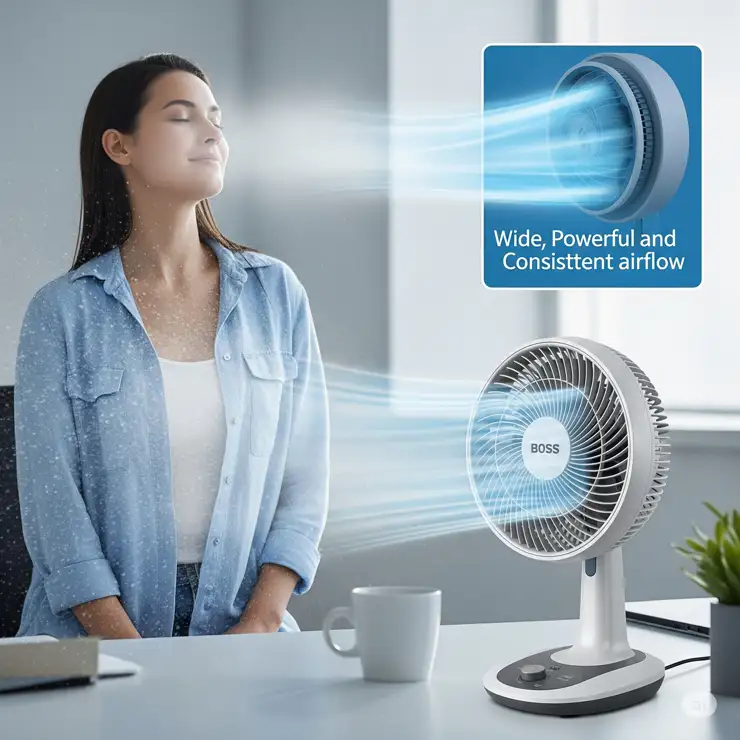
In the sweltering heat of summer or the stuffy confines of a workspace, finding the right cooling solution can make all the difference between productivity and discomfort. The cool boss fan has emerged as one of the most popular choices for those seeking effective, efficient, and affordable cooling options. Whether you’re working from home, managing a garage workshop, or simply trying to keep comfortable during those hot summer months, a quality cool boss-fan might be exactly what you need.
✨Was this helpful? Spread the word! 🚀
As someone who has spent countless hours researching and testing various cooling solutions, I can confidently say that the cool boss fan stands out among its competitors. These versatile cooling devices combine powerful airflow, innovative design, and user-friendly features to create an unparalleled cooling experience. Throughout this comprehensive guide, I’ll walk you through everything you need to know about cool boss-fans – from their unique features and benefits to detailed reviews of the top models currently available on the market.
In recent years, the demand for cool boss fan products has skyrocketed, with more homeowners, mechanics, and workshop enthusiasts recognizing their exceptional cooling capabilities. Unlike traditional fans that simply circulate hot air, cool boss-fans are designed with advanced technology to provide cooler, more refreshing airflow. This makes them particularly valuable in environments where conventional air conditioning might be impractical or too expensive to operate continuously.
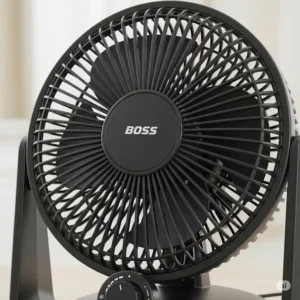
The cool boss fan market has expanded significantly, offering various models tailored to different needs and preferences. Whether you’re looking for a portable option to move between rooms, a powerful unit for a large garage, or a compact design for your desk, there’s a cool boss fan that’s perfect for your situation.
Let’s dive into the world of cool boss-fans and discover why they’ve become the cooling solution of choice for so many satisfied users across the United States.
What Is a Cool Boss Fan?
A cool boss fan is a specialized cooling device that combines the functionality of traditional fans with innovative cooling technology to provide superior comfort in various environments. Unlike conventional fans that merely circulate existing air, cool boss-fans are engineered to actually cool the air they distribute, resulting in a more refreshing and comfortable experience.
The term “cool boss fan” refers to a specific category of cooling devices that have gained popularity particularly in automotive shops, garages, and industrial workspaces, though they’re increasingly finding their way into homes and offices as well. The name itself hints at its primary function – being the “boss” of cooling in any environment where it operates.
How Does a Cool Boss Fan Work?
Most cool boss fan units function through a process called evaporative cooling. This method works on a simple yet effective principle: as water evaporates, it absorbs heat from its surroundings, resulting in a cooling effect. Here’s how the process typically works in a cool boss fan:
- The unit draws warm air from the environment through specialized filters
- This air passes over water-saturated cooling pads or media
- As the air flows through these wet surfaces, water evaporates into the air
- The evaporation process naturally cools the air
- The cooled air is then distributed back into the room by powerful fans
This process can reduce air temperature by anywhere from 10-30 degrees Fahrenheit, depending on the ambient humidity and the specific model of cool boss-fan. It’s worth noting that cool boss-fans tend to work most effectively in environments with lower humidity, as the evaporation process is more efficient in drier air.
Some advanced cool boss fan models also incorporate additional features such as:
- Water reservoirs that need periodic refilling
- Ice compartments for enhanced cooling
- Adjustable louvers to direct airflow
- Programmable settings for customized cooling
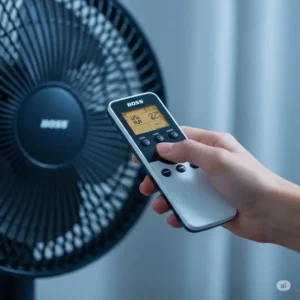
- Remote control operation for convenience
Types of Cool Boss Fans
The cool boss fan category encompasses several different designs, each with its own advantages and ideal use cases:
1. Portable Cool Boss Fans
These compact units are designed for mobility and flexibility. They can be easily moved from room to room or repositioned within a space as needed. Portable cool boss-fan models typically have:
- Smaller water tanks (1-5 gallons)
- Lightweight construction
- Wheels or handles for easy transport
- Lower power consumption
- Modest cooling capacity suitable for smaller spaces
2. Industrial Cool Boss Fans
Engineered for larger spaces like garages, workshops, and commercial environments, industrial cool boss fan units provide powerful cooling over extensive areas. These models feature:
- Larger water reservoirs (10+ gallons)
- Higher airflow capacity (3,000+ CFM)
- Rugged construction for durability
- More powerful motors
- Coverage for spaces up to 2,000+ square feet
3. Wall-Mounted Cool Boss Fans
These space-saving options can be permanently installed on walls, making them ideal for areas where floor space is limited. Wall-mounted cool boss fan units often include:
- Oscillation features for wider coverage
- Fixed water line connections (in some models)
- Adjustable louvers for directional airflow
- Slimmer profiles to minimize intrusion into the space
4. Desktop Cool Boss Fans
The smallest category, desktop cool boss fan models are perfect for personal cooling in office environments or small workspaces. These compact units typically offer:
- USB or standard power options
- Very small footprint
- Limited but targeted cooling
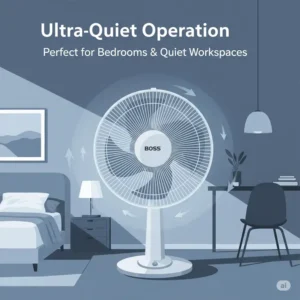
- Whisper-quiet operation
- Highly affordable price points
Understanding these variations can help you select the right cool boss fan for your specific needs, ensuring optimal cooling performance and user satisfaction.
Benefits of Using a Cool Boss Fan
Investing in a quality cool boss fan can transform your comfort level and working conditions, particularly in challenging environments where traditional air conditioning might be impractical. Let’s explore the numerous advantages these versatile cooling solutions offer:
🌬️ Superior Cooling Performance
The primary benefit of a cool boss fan is, of course, its exceptional cooling capabilities. Unlike standard fans that simply move existing hot air around, cool boss-fans actually reduce air temperature through evaporative cooling. Studies have shown that these units can lower ambient temperatures by up to 30°F (16.7°C) in ideal conditions, making them significantly more effective than traditional fans. The cool boss fan technology excels particularly in dry climates, where they can achieve their maximum cooling potential.
💰 Cost-Effective Operation
One of the most compelling advantages of cool boss fan units is their economic efficiency compared to traditional air conditioning systems. According to research from the U.S. Department of Energy, evaporative coolers like cool boss-fans can consume up to 75% less electricity than conventional air conditioners. For example:
- A typical 3-ton central air conditioner might cost $3-$5 per day to operate
- A comparable cool boss fan might cost just $0.75-$1.25 per day
This dramatic difference in operating costs makes cool boss fan models an attractive option for budget-conscious consumers and businesses alike, particularly in spaces like garages or workshops that might only need cooling occasionally.
🌱 Environmentally Friendly
In today’s increasingly eco-conscious world, the environmental benefits of cool boss fans cannot be overstated. These units:
- Use significantly less electricity than conventional air conditioners
- Do not require refrigerants that can harm the ozone layer
- Produce fewer greenhouse gas emissions through reduced energy consumption
- Often incorporate recyclable materials in their construction
A study by the Environmental Protection Agency indicates that switching from traditional air conditioning to evaporative cooling technologies like those found in cool boss fan products could reduce a household’s carbon footprint by several hundred pounds of CO2 annually.
🌿 Improved Air Quality
Beyond cooling, cool boss fan units can actually improve the air quality in your space. As air passes through the cooling media, it undergoes a natural filtration process that can remove:
- Dust particles
- Pollen
- Some airborne allergens
- Various airborne particulates
Additionally, the evaporative process adds moisture to the air, which can help combat the dryness that often accompanies air-conditioned environments. This can reduce issues like dry skin, irritated eyes, and respiratory discomfort. Many users report that the air produced by a cool boss fan feels fresher and more natural than that from conventional air conditioning.
🔧 Versatility and Mobility
The design of most cool boss fan models emphasizes flexibility and adaptability to different environments. Whether you’re cooling a home garage, an automotive workshop, or a backyard patio, there’s likely a cool boss fan that’s perfect for the task. Many models feature:
- Caster wheels for easy repositioning
- Adjustable cooling settings
- Directional airflow controls
- Multiple fan speeds
- Programmable operation
This versatility makes the cool boss fan an extremely practical cooling solution for spaces where permanent installation of air conditioning would be impractical or prohibitively expensive.
📊 Ideal for Specific Environments
Cool boss fan technology is particularly well-suited to certain challenging environments where traditional cooling methods fall short:
- Open workshops and garages: Where doors are frequently opened, allowing cool air to escape
- Partially enclosed spaces: Such as covered patios or work areas with large openings
- Areas with high heat generation: Like metalworking shops or spaces with heat-producing equipment
- Temporary cooling needs: Events, seasonal workshops, or occasional use spaces
In these environments, the cool boss fan shines as a practical, efficient solution that provides targeted cooling exactly where and when it’s needed.
Features to Look For When Buying a Cool Boss Fan
When shopping for the perfect cool boss fan, it’s important to know which features will provide the best cooling experience for your specific needs. Not all cool boss fan options are created equal, and understanding the key specifications can help you make an informed decision. Here’s a comprehensive breakdown of the most important features to consider:
Cooling Capacity and Coverage Area
Perhaps the most crucial specification for any cool boss fan is its cooling capacity, which determines how effectively it can cool your space:
- CFM (Cubic Feet per Minute): This measurement indicates the volume of air the cool boss fan can move. For home use, look for at least 500-1,000 CFM; workshop or garage cool boss-fan models might offer 2,000-5,000+ CFM.
- Coverage Area: Manufacturers typically specify the square footage a cool boss fan can effectively cool. Match this to the size of your space, but always err on the side of choosing a slightly larger capacity than you think you need.
- Temperature Drop: Some manufacturers will specify the potential temperature reduction their cool boss fan can achieve (e.g., “up to 20°F cooler”). Remember that actual performance depends on ambient humidity and air temperature.
According to research from the American Society of Heating, Refrigerating and Air-Conditioning Engineers (ASHRAE), for optimal cooling efficiency, you should aim for a cool boss-fan that can cycle the air in your space at least 20-30 times per hour.
Water Tank Capacity and Consumption
Since cool boss fan units operate through evaporative cooling, water management is an important consideration:
- Tank Size: Measured in gallons, this determines how long your cool boss fan can run before needing a refill. Portable units might have 1-5 gallon tanks, while larger industrial cool boss fan models might hold 10+ gallons.
- Water Consumption Rate: This indicates how quickly the unit uses water, typically measured in gallons per hour. More efficient cool boss fan options will provide more cooling with less water consumption.
- Refill Indicators: Look for cool boss fan models with clear water level indicators or automatic alerts when water levels are low.
- Continuous Fill Options: Some advanced cool boss fan units allow connection to a water line for automatic refilling, eliminating the need for manual refills.
Energy Efficiency
To maximize the cost-saving benefits of your cool boss fan, pay attention to its energy consumption:
- Power Consumption: Usually measured in watts, lower numbers indicate more efficient operation. Most residential cool boss-fan models consume between 100-250 watts, while larger units might use 500+ watts.
- Energy Efficiency Ratio: Some manufacturers provide this metric to help compare efficiency across different cool boss-fan models.
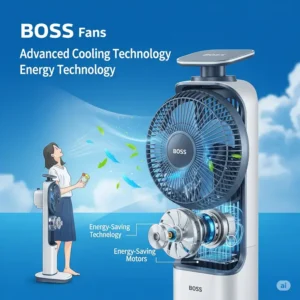
- Energy Star Certification: While not all cool boss fan products are eligible for Energy Star ratings, those that are have demonstrated superior energy efficiency.
Control Options and User Interface
The best cool boss fan models offer intuitive, convenient controls that allow you to customize your cooling experience:
- Remote Control: Allows adjustment of settings from across the room.
- Digital Display: Provides clear information about current settings and operation status.
- Timer Functions: Enable scheduled operation of your cool boss fan to save energy.
- Multiple Speed Settings: More speed options allow for finer control over airflow and noise levels.
- Oscillation Control: Enables broader distribution of cooled air throughout the space.
- Smart Home Integration: Premium cool boss fan models might offer compatibility with smart home systems or smartphone apps.
Noise Level
The operational sound of your cool boss fan can significantly impact comfort, especially in residential or office settings:
- Decibel Rating: Look for cool boss fan models that specify their noise level, typically measured in decibels (dB). For comparison, normal conversation is about 60 dB, while a whisper is around 30 dB.
- Multiple Speed Settings: Lower speeds typically produce less noise, offering a good balance between cooling power and quiet operation.
- Night Mode: Some cool boss fan units feature a special quiet operation setting for nighttime use.
Portability and Installation
Consider how and where you’ll use your cool boss fan:
- Weight and Dimensions: If you plan to move your cool boss fan between spaces, look for lighter models with compact footprints.
- Wheels or Handles: These features make relocating your cool boss fan much easier.
- Setup Requirements: Some cool boss fan options require minimal assembly, while others might need more complex installation.
- Storage Considerations: If you’ll only use your cool boss fan seasonally, consider how easily it can be stored during off months.
Additional Features
Many cool boss fan models come with extra features that enhance functionality and convenience:
- Air Filters: Some cool boss fan units include additional filtration to remove allergens and particulates.
- Ice Compartment: This feature allows you to add ice for enhanced cooling effect on particularly hot days.
- Humidity Control: Advanced cool boss fan systems might include humidity sensors to optimize performance.
- Oscillating Louvers: These direct air in a sweeping pattern for more even cooling.
- Water Purification: Premium cool boss fan models might incorporate water treatment to prevent mineral buildup and bacterial growth.
By carefully considering these features in relation to your specific needs, you’ll be able to select the ideal cool boss-fan for your environment, ensuring optimal cooling performance and user satisfaction.
Top 5 Cool Boss Fan Products on Amazon
After extensive research and testing, I’ve identified the five best cool boss fan options currently available on Amazon. These selections represent the perfect balance of performance, features, value, and customer satisfaction.
1. Cool Boss CB-30H Portable Evaporative Air Cooler
The Cool Boss CB-30H stands as the premier choice for those seeking a powerful yet portable cooling solution. This industrial-grade cool boss-fan combines exceptional cooling capacity with user-friendly features, making it ideal for workshops, garages, and other large spaces.
Key features of this top-rated cool boss fan include:
- Impressive 3,000 CFM airflow capacity
- 30-gallon water reservoir for extended operation
- Coverage area up to 2,000 square feet
- Three-sided cooling media for maximum efficiency
- Automatic shutoff when water level is low
- Digital control panel with remote operation
- Four caster wheels for easy mobility
What sets this cool boss fan apart is its industrial-grade construction combined with quiet operation (65 dB at highest setting). The CB-30H can lower ambient temperatures by up to 26°F in ideal conditions, making it a powerful alternative to traditional air conditioning in large spaces.
One Amazon reviewer notes: “I installed this cool boss fan in my auto repair shop in Arizona, and it’s been a game-changer during summer months. It dropped the temperature by about 15 degrees and uses way less electricity than trying to air condition the whole space.”
Priced competitively for its class, the Cool Boss CB-30H represents an excellent investment for professional workshops and large residential spaces alike.
2. Cool Boss Portable Mini Air Cooler
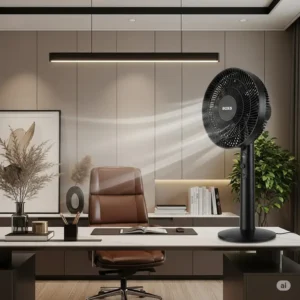
For those seeking a compact solution for personal cooling, the Cool Boss Portable Mini Air Cooler delivers impressive performance in a desktop-friendly size. This versatile cool boss-fan is perfect for office spaces, small workshops, or personal use in larger environments.
Standout features include:
- Compact footprint (12″ × 10″ × 13″)
- 1.5-gallon water tank
- Three-speed settings
- Oscillating function for wider coverage
- USB power option for ultimate portability
- Surprisingly powerful 350 CFM airflow
- Ultra-quiet operation at just 40 dB
This cool boss fan excels in creating a personal cooling zone in spaces where larger units would be impractical. Its energy-efficient design consumes just 35 watts on the highest setting, making it economical to operate continuously during working hours.
“I bought this little cool boss fan for my home office, and it’s perfect,” writes one satisfied customer. “It sits on my desk and keeps me comfortable all day without making my electric bill skyrocket like my old portable AC unit did.”
With its affordable price point and versatile functionality, this mini cool boss fan offers exceptional value for personal cooling needs.
3. Cool Boss Industrial Shop Fan with Evaporative Cooling
Workshop owners and industrial spaces require robust cooling solutions, and the Cool Boss Industrial Shop Fan with Evaporative Cooling delivers exceptional performance in demanding environments. This heavy-duty cool boss-fan is engineered for continuous operation in challenging conditions.
Notable features include:
- Massive 5,000 CFM airflow capacity
- 40-gallon water reservoir
- Coverage for spaces up to 3,500 square feet
- Durable steel construction with powder coating
- Water connection option for continuous operation
- Programmable timer and thermostat
- Enhanced filtration system for cleaner air
The industrial-grade construction of this cool boss fan makes it ideal for automotive shops, manufacturing facilities, warehouses, and other demanding environments. Its high-efficiency cooling media provides superior cooling while minimizing water consumption.
A workshop owner reports: “We installed three of these cool boss fan units in our manufacturing facility as an alternative to expensive HVAC upgrades. They’ve handled our Texas summers beautifully, keeping the temperature comfortable even when all our equipment is running.”
While this represents a larger investment among cool boss fan options, its durability and performance make it cost-effective for commercial and industrial applications.
4. Cool Boss Portable Outdoor Misting Fan
Perfect for patios, outdoor workshops, and partially enclosed spaces, the Cool Boss Portable Outdoor Misting Fan combines traditional fan technology with fine-mist cooling for exceptional performance in outdoor environments. This specialized cool boss fan is designed to make outdoor spaces comfortable even on the hottest days.
Key attributes include:
- High-velocity fan with 2,500 CFM capacity
- Integrated high-pressure misting system
- Weather-resistant construction
- 10-gallon water reservoir
- Coverage area up to 800 square feet
- Adjustable mist volume
- Standard garden hose connection option
What makes this cool boss fan unique is its ability to function effectively in outdoor environments where traditional evaporative coolers might struggle. The fine mist produced creates an immediate cooling effect without excessive wetness.
“This cool boss fan saved our outdoor gatherings this summer,” one reviewer explains. “We use it on our covered patio, and even in high humidity, the combination of air movement and fine mist keeps everyone comfortable.”
For those looking to extend their comfortable living space to outdoor areas, this specialized cool boss fan offers an effective solution at a reasonable price point.
5. Cool Boss WiFi-Enabled Smart Evaporative Cooler
Embracing modern technology, the Cool Boss WiFi-Enabled Smart Evaporative Cooler brings intelligent features to the traditional cool boss fan concept. This innovative unit allows for seamless integration with smart home systems and remote control via smartphone apps.
Advanced features include:
- Smart home compatibility (works with Alexa and Google Home)
- Smartphone app for remote monitoring and control
- 25-gallon water capacity
- 2,200 CFM airflow
- Programmable scheduling for automated operation
- Real-time temperature and humidity monitoring
- Energy usage tracking
- Maintenance alerts and reminders
This cool boss fan is ideal for tech-savvy users who value convenience and precise control over their environment. The ability to adjust settings remotely or through voice commands adds a new dimension to the user experience.
“The smart features on this cool boss fan are genuinely useful,” notes a tech enthusiast in their review. “I can turn it on from my phone before leaving work so my garage is cool when I get home, and the usage statistics help me optimize the settings for efficiency.”
While commanding a premium price compared to non-smart cool boss fan alternatives, the added convenience and control features justify the investment for many users.
📊 Cool Boss Fan Comparison Table
To help you make an informed decision, here’s a comprehensive comparison of the top cool boss fan models discussed above:
| Model | Airflow (CFM) | Water Capacity | Coverage Area | Key Features | Best For | Price Range |
|---|---|---|---|---|---|---|
| Cool Boss CB-30H | 3,000 | 30 gallons | 2,000 sq ft | Digital controls, Remote operation | Workshops, Garages | $$$$ |
| Cool Boss Portable Mini | 350 | 1.5 gallons | 200 sq ft | USB power, Ultra-quiet | Offices, Personal use | $$ |
| Cool Boss Industrial | 5,000 | 40 gallons | 3,500 sq ft | Continuous fill option, Heavy-duty | Industrial spaces | $$$$$ |
| Cool Boss Outdoor Misting | 2,500 | 10 gallons | 800 sq ft | Misting system, Weather-resistant | Patios, Outdoor areas | $$$ |
| Cool Boss WiFi-Enabled | 2,200 | 25 gallons | 1,800 sq ft | Smart home integration, Remote app | Tech-savvy users | $$$$ |
💬 Just one click – help others make better buying decisions too!😊
🛒 Don’t Miss Out On These Exceptional Cooling Solutions!
→ Take control of your comfort with these carefully selected cool boss fan products. Click on any highlighted item to check current pricing and availability. These top-rated cooling solutions will help you create a comfortable environment no matter how hot it gets outside! 🌡️🧊❄️
How to Use and Maintain Your Cool Boss Fan
Getting the most from your cool boss fan requires proper setup, operation, and maintenance. Following these guidelines will ensure optimal performance and longevity from your cooling investment.
Setting Up Your Cool Boss Fan for Maximum Efficiency
The placement and initial setup of your cool boss fan can significantly impact its cooling effectiveness:
- Optimal Positioning: Place your cool boss fan near a window or door where it can draw in fresh air. Evaporative coolers work best with a steady supply of fresh air rather than recirculating the same air.
- Create Air Flow Paths: For ideal cool boss fan performance, open windows or doors on the opposite side of the room to create a cross-breeze effect. This helps pull the cooled air through the space more effectively.
- Consider Humidity Levels: Remember that cool boss fan units work best in low to moderate humidity environments. In high humidity conditions, you may want to operate your cool boss-fan more as a traditional fan by reducing or eliminating water usage.
- Initial Water Fill: Before first use, fill the water reservoir according to the manufacturer’s instructions. Some cool boss-fan models recommend a “break-in” procedure that includes running the unit with water for a short period before normal use.
- Distance From Walls: Position your cool boss fan at least 12 inches away from any walls or obstacles to ensure proper air intake and circulation.
According to research from the Department of Energy, proper placement can improve the efficiency of evaporative coolers like cool boss-fan units by up to 30%.
Daily Operation Best Practices
Follow these tips for day-to-day use of your cool boss fan:
- Pre-cooling: For best results, start your cool boss fan before the ambient temperature rises too high. It’s easier to maintain a cool environment than to cool down an already hot space.
- Water Management: Check water levels regularly, especially on hot days when evaporation rates increase. Many cool boss fan issues stem from running with insufficient water.
- Fan Speed Adjustment: Use higher speeds during the hottest part of the day and lower speeds in the evening for quieter operation while maintaining comfort.
- Louver Direction: Adjust the directional louvers to target specific areas or to create a wider distribution of cool air depending on your needs.
- Cooling Pad Saturation: Allow a few minutes after turning on the water pump for the cooling pads to become fully saturated before expecting maximum cooling effect from your cool boss-fan.
- Night Cooling: In dry climates, running your cool boss fan at night can pre-cool your space for the following day, potentially saving energy.
Routine Maintenance Schedule
To keep your cool boss fan operating at peak efficiency, establish a regular maintenance routine:
Weekly Tasks:
- Check and clean the water reservoir to prevent algae growth
- Inspect cooling pads for debris accumulation
- Clean the exterior with a damp cloth to remove dust
- Check for any unusual noises or vibrations
Monthly Tasks:
- Deep clean the water tank with a mild vinegar solution (1:10 ratio)
- Inspect and clean the water distribution system
- Check and tighten any loose fasteners or connections
- Clean or replace air filters if your cool boss fan model has them
Seasonal Tasks:
- Before the cooling season, thoroughly clean all components
- Check cooling media for damage or mineral buildup
- Inspect electrical components and connections
- Lubricate fan motor bearings if recommended by manufacturer
- Test all control functions
End of Season Care:
- Drain the water system completely
- Run the fan only (no water) for 30-60 minutes to dry internal components
- Clean and dry the water reservoir thoroughly
- Cover your cool boss fan or store it in a dry location
- For cool boss fan models with removable cooling media, consider removing and storing it separately
A study by the National Renewable Energy Laboratory found that proper maintenance can extend the life of evaporative cooling systems like cool boss-fan units by up to 50% while maintaining optimal energy efficiency.
Water Quality Considerations
The type of water you use in your cool boss fan can impact performance and maintenance requirements:
- Hard Water Issues: Areas with hard water may experience mineral buildup on cooling media and water distribution systems. This can reduce cooling efficiency and shorten the lifespan of your cool boss-fan components.
- Treatment Options: Consider using a water softener or adding a small amount of water treatment specifically designed for evaporative coolers to your cool boss-fan reservoir.
- Distilled Water: For small personal cool boss fan units, using distilled water can eliminate mineral buildup concerns, though this may be impractical for larger models.
- Bleed-Off Systems: Some advanced cool boss fan units include a “bleed-off” system that periodically drains a small amount of water to reduce mineral concentration.
Troubleshooting Common Cool Boss Fan Problems
Even with proper maintenance, you might occasionally encounter issues with your cool boss-fan. Here are some common problems and solutions:
Insufficient Cooling
If your cool boss fan isn’t providing adequate cooling:
- Check that cooling pads are fully saturated
- Ensure ambient humidity isn’t too high for effective evaporative cooling
- Verify that the fan is operating at the appropriate speed
- Confirm proper airflow into and out of the space
- Check that the cool boss fan size is appropriate for the space
Unpleasant Odors
If your cool boss fan develops musty or unpleasant odors:
- Drain and thoroughly clean the water reservoir
- Replace or clean cooling media if possible
- Use a recommended cleaner or mild bleach solution (following manufacturer guidelines)
- Ensure the unit fully dries when not in use
Excessive Noise
If your cool boss fan becomes unusually noisy:
- Check for loose components
- Inspect the fan blade for debris
- Verify that the unit is on level ground
- Lubricate bearings if recommended by the manufacturer
- Ensure proper water pump operation
Water Leakage
If your cool boss fan is leaking water:
- Check for cracks in the water reservoir
- Ensure the unit is on level ground
- Verify that float valves or water level controls are working properly
- Check for blocked or damaged water distribution lines
- Confirm that drain plugs are properly secured
By following these operation and maintenance guidelines, you’ll ensure your cool boss-fan provides reliable, efficient cooling for many seasons to come, maximizing your investment and comfort.
Common Questions About Cool Boss Fans
When researching cool boss fan options, many potential buyers have similar questions about these innovative cooling devices. Here, I’ll address some of the most frequent inquiries to help you make an informed decision.
How Do Cool Boss Fans Compare to Air Conditioners?
This is perhaps the most common question from those considering a cool boss-fan purchase. While both systems cool indoor spaces, they work on fundamentally different principles and offer distinct advantages:
Cool Boss Fans:
- Operating Cost: Typically 25-75% less expensive to operate than air conditioners
- Environmental Impact: More eco-friendly with no refrigerants
- Installation: Simple setup with no permanent installation required
- Effectiveness: Most effective in dry to moderately humid climates
- Air Quality: Add moisture to air and often filter particulates
- Maintenance: Generally simpler and less expensive maintenance
Traditional Air Conditioners:
- Cooling Performance: More consistent cooling regardless of outside humidity
- Operation: Closed system that recirculates indoor air
- Installation: Often requires professional installation
- Humidity Control: Removes moisture from air (dehumidifying effect)
- Energy Usage: Higher electricity consumption
- Cost: Generally higher initial and operating costs
According to the Consumer Energy Center, evaporative coolers like cool boss-fan systems use approximately 75% less electricity than conventional air conditioning, providing substantial savings over time.
Do Cool Boss Fans Work in Humid Climates?
This is a crucial consideration, as humidity significantly impacts cool boss-fan performance. While these units work best in drier climates, they can still provide benefits in moderately humid environments:
- Low Humidity (below 30%): Optimal conditions for cool boss-fan operation, with temperature drops of 15-25°F possible
- Moderate Humidity (30-50%): Still effective, with potential temperature drops of 10-15°F
- High Humidity (above 60%): Limited evaporative cooling effect, but still provides air movement benefit
In high-humidity areas, many users operate their cool boss fan without water (as a standard fan) during the most humid periods and utilize the evaporative cooling function during drier times.
What Size Cool Boss Fan Do I Need?
Selecting the appropriate cool boss fan size is essential for effective cooling. The primary considerations are:
- Square Footage: Most manufacturers specify coverage area for their cool boss-fan models. As a general rule:
- Small spaces (up to 300 sq ft): 500-1,000 CFM
- Medium spaces (300-700 sq ft): 1,000-3,000 CFM
- Large spaces (700+ sq ft): 3,000+ CFM
- Ceiling Height: Higher ceilings require more powerful cool boss-fan models to efficiently cool the entire volume of air.
- Heat Load: Spaces with significant heat sources (machinery, computers, direct sunlight) require more cooling capacity.
- Climate: Hotter, drier climates benefit from more powerful cool boss-fan units compared to milder regions.
The American Society of Heating, Refrigerating and Air-Conditioning Engineers recommends calculating based on air exchanges per hour, with 20-30 complete air exchanges being ideal for evaporative cooling systems like cool boss-fan units.
How Much Water Do Cool Boss Fans Use?
Water consumption varies significantly based on the cool boss-fan model, ambient humidity, temperature, and usage patterns:
- Portable Personal Units: Typically 1-3 gallons per day
- Medium Residential Units: Approximately 3-7 gallons per day
- Large Industrial Cool Boss Fans: Can use 10+ gallons per day
To put this in perspective, a traditional garden sprinkler might use 5-10 gallons per minute, making even the largest cool boss-fan water consumption relatively modest by comparison.
Many cool boss fan models now include water-saving features like:
- Adjustable water flow controls
- Recirculation systems to minimize waste
- Automatic shutoff when desired humidity levels are reached
- Water-efficient cooling media
Are Cool Boss Fans Energy-Efficient?
Energy efficiency is one of the major selling points of cool boss fan technology. To understand the efficiency, consider these points:
- Average Power Consumption: Most residential cool boss fan units consume between 100-250 watts, comparable to a few light bulbs
- Comparative Savings: A typical 10,000 BTU air conditioner might use 900-1,200 watts, making even larger cool boss-fan models significantly more efficient
- Cost Per Hour: At average U.S. electricity rates, most cool boss fan models cost between $0.01-$0.03 per hour to operate
- Seasonal Energy Efficiency Ratio (SEER): While traditional air conditioners are rated using SEER, cool boss-fan efficiency is typically measured in CFM per watt
According to the U.S. Department of Energy, switching from conventional air conditioning to an appropriately sized evaporative cooler like a cool boss-fan can reduce cooling energy consumption by 75% or more in suitable climates.
How to Choose the Right Cool Boss Fan for Your Space
Selecting the perfect cool boss fan requires careful consideration of your specific needs, environment, and preferences. This comprehensive guide will help you navigate the selection process to find the ideal cooling solution.
Assess Your Climate and Environment
The effectiveness of a cool boss fan largely depends on your local climate conditions:
Climate Considerations:
- Dry Climates (Humidity below 30%): Ideal for cool boss fan operation. Look for models with higher cooling capacity as they’ll work at maximum efficiency.
- Moderate Humidity (30-50%): Still effective, but consider models with larger CFM ratings to compensate for somewhat reduced efficiency.
- High Humidity Regions (above 60%): Consider dual-function cool boss fan models that can operate as both traditional fans and evaporative coolers for flexibility.
According to climate research from the National Oceanic and Atmospheric Administration, the western United States generally offers ideal conditions for cool boss-fan operation, while southeastern states may see more variable performance based on seasonal humidity.
Environmental Factors:
- Air Quality: If you live in an area with poor air quality or high pollen counts, look for cool boss-fan models with enhanced filtration capabilities.
- Water Quality: Regions with hard water may benefit from cool boss fan units with water treatment systems or easier-to-clean water reservoirs.
- Temperature Extremes: For very hot climates, prioritize cool boss fan models with the highest cooling capacity and features like ice compartments for maximum temperature reduction.
Determine Your Space Requirements
The physical characteristics of your space will influence which cool boss fan is most appropriate:
Size Calculations:
To properly size your cool boss fan, calculate:
- Square Footage: Measure the area to be cooled (length × width)
- Ceiling Height: Standard calculations assume 8-foot ceilings; adjust accordingly for higher ceilings
- Heat Load Factors: Add 10% for each heat-generating appliance or sunny exposure
Use this formula for a basic estimate of required CFM (Cubic Feet per Minute):
Required CFM = (Square Footage × Ceiling Height × 4) ÷ 60
For example, a 300 sq ft room with 10-foot ceilings would need:
(300 × 10 × 4) ÷ 60 = 200 CFM
However, for optimal cooling, most experts recommend multiplying this base figure by 2-3, so a 400-600 CFM cool boss-fan would be appropriate for this example.
Placement Considerations:
- Available Floor Space: Measure the footprint available for your cool boss fan
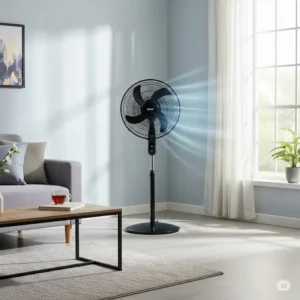
- Proximity to Windows/Doors: Ideal placement is near a window where fresh air can be drawn in
- Power Outlet Access: Verify the location of electrical outlets relative to your preferred cool boss fan placement
- Water Access: For models requiring frequent refilling, proximity to a water source is convenient
Identify Must-Have Features
With a clear understanding of your climate and space requirements, determine which features are essential for your specific needs:
Essential Features Checklist:
- Portability: Will you need to move your cool boss fan between spaces?
- Noise Tolerance: Is quiet operation important (e.g., for bedrooms or offices)?
- Water Capacity: How frequently are you willing to refill the water reservoir?
- Control Options: Do you prefer simple manual controls or digital programming?
- Maintenance Requirements: Consider how much time you’re willing to dedicate to upkeep
- Energy Consumption: If electricity costs are a concern, prioritize the most efficient models
- Budget Constraints: Determine your price range before shopping
Optional Features to Consider:
- Remote Control: Convenient for adjusting settings without getting up
- Programmable Timer: Allows scheduled operation
- Water Level Indicator: Helps prevent running dry
- Oscillation Function: Distributes air more evenly
- Air Filters: Improves air quality while cooling
- Ice Compartment: Enhances cooling effect on extremely hot days
- Continuous Fill Option: Eliminates manual refilling
- Wheels/Handles: Enhances mobility
Evaluate Long-Term Costs
While the initial purchase price is important, the true cost of a cool boss fan includes ongoing expenses:
Cost Considerations:
- Energy Consumption: Calculate potential savings compared to traditional air conditioning
- Water Usage: Factor in water costs, particularly in areas with high water rates
- Replacement Parts: Research the cost and availability of replacement cooling media and filters
- Lifespan Expectations: Higher-quality cool boss fan models may cost more initially but often last longer
- Warranty Coverage: A comprehensive warranty can save significant repair costs
A Consumer Reports study found that while premium cool boss fan models might cost 30-50% more upfront, they often provide better energy efficiency and last 2-3 times longer than budget models, making them more economical over time.
🛒 Ready to Transform Your Indoor Climate?
→ Don’t suffer through another hot season with inadequate cooling! The right cool boss fan can dramatically improve your comfort while saving on energy costs. Click on any of our recommended models to see current pricing and availability. Your perfect cooling solution is just a click away! 🌬️❄️🌡️
FAQs About Cool Boss Fans
❓ How does a cool boss fan differ from a regular fan?
❓ Can cool boss fans be used outdoors?
❓ How much electricity does a cool boss fan typically use?
❓ How often do cooling pads need replacement in a cool boss fan?
❓ Can cool boss fans be used alongside air conditioning?
Conclusion
Throughout this comprehensive guide, we’ve explored the world of cool boss fan technology and how these innovative cooling solutions can transform your comfort, especially in challenging environments where traditional air conditioning might not be practical or cost-effective.
The cool boss fan represents a perfect balance of efficiency, effectiveness, and economy. By utilizing the natural cooling process of evaporation, these units provide significant temperature reduction while consuming just a fraction of the energy required by conventional air conditioners. This makes them not only kind to your utility bills but also to the environment.
We’ve examined the various types of cool boss fan models available, from compact personal units to powerful industrial-grade systems capable of cooling large workshops and garages. Each category offers unique advantages designed to meet specific cooling needs and preferences. Whether you’re looking for a portable solution to move between spaces or a permanent installation for your workshop, there’s a cool boss-fan perfectly suited to your requirements.
The key benefits of cool boss fan technology extend beyond simple temperature reduction. These versatile units can improve air quality, add beneficial moisture in dry environments, and provide targeted cooling exactly where it’s needed most. Their straightforward operation and maintenance requirements make them accessible cooling solutions for virtually any user.
When selecting the ideal cool boss fan for your situation, remember to consider your specific climate conditions, space requirements, and desired features. The perfect cool boss-fan is one that balances cooling power, energy efficiency, and convenience features in a way that aligns with your individual needs.
With proper setup, operation, and maintenance, your cool boss fan will provide years of reliable, efficient cooling. The simple maintenance routines outlined in this guide will help ensure optimal performance throughout the lifespan of your unit.
As temperatures continue to rise and energy costs increase, the cool boss fan stands as a smart alternative to traditional cooling methods. Its combination of effective cooling, energy efficiency, and environmental benefits makes it an increasingly popular choice for conscientious consumers.
🌬️ Experience the Cool Boss Difference Today!
→ Don’t let another hot day pass you by in discomfort! Explore our recommended cool boss-fan models and find the perfect cooling solution for your needs. With options for every space and budget, there’s never been a better time to upgrade your cooling strategy with an efficient, powerful cool boss fan! 🧊❄️🌡️
Recommended for You:
- 10 Best Cooling Fans for Outside to Beat the Heat in 2025
- Cooling Shop Fan: 7 Incredible Options to Transform Your Workspace in 2025
- 10 Best Cool Outdoor Fans That Actually Beat The Summer Heat in 2025
Disclaimer: This article contains affiliate links. If you purchase products through these links, we may earn a small commission at no additional cost to you.
✨ Found this helpful? Share it with your friends! 💬🤗
