
In This Article
Why Electric Fans Are Still Essential Cooling Devices
When temperatures start climbing, finding effective ways to stay cool becomes a top priority for most Americans. While air conditioning systems have become increasingly common in households across the USA, the humble electric fan remains an essential cooling device that offers numerous advantages. In fact, electric fans continue to be one of the most practical, economical, and versatile cooling solutions available today.
As someone who has researched and tested numerous cooling options over the years, I can confidently say that a quality electric fan deserves a place in virtually every home. Whether you’re looking to supplement your existing AC system, reduce energy costs, or need a portable cooling solution, today’s electric fans offer impressive features that go far beyond the basic models of yesteryear.
In this comprehensive guide, we’ll explore everything you need to know about electric fans – from the different types available to the latest technological innovations that make modern fans more effective and efficient than ever before. Additionally, we’ll review some of the top electric fan models currently available on the market to help you make an informed purchasing decision. ✅
Understanding the Basics: How Electric Fans Work
Before diving into the various types and features of electric fans, it’s helpful to understand the fundamental principles behind how these devices operate. Unlike air conditioners that actively cool the air, electric fans create air movement that helps your body’s natural cooling process work more efficiently.
The Science Behind Electric Fan Cooling
Electric fans work on a simple yet effective principle. When an electric fan moves air across your skin, it accelerates the evaporation of perspiration. This evaporation process is your body’s natural cooling mechanism – as sweat evaporates, it draws heat away from your body, creating a cooling sensation. Additionally, moving air helps to disperse the layer of warm air that naturally forms around your body.
According to research published in the Journal of Physiological Anthropology, this enhanced evaporative cooling can significantly reduce perceived temperature by approximately 4-8 degrees Fahrenheit, depending on humidity levels and air velocity. However, it’s worth noting that fans don’t actually lower room temperature; they simply make you feel cooler through this evaporative process. ⚡
Basic Components of an Electric Fan
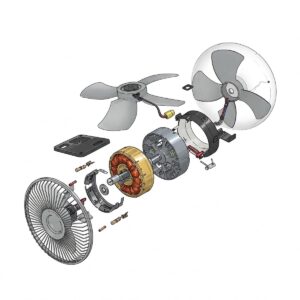
Most electric fans share several common components:
✅ Motor: The heart of any electric fan, converting electrical energy into mechanical energy
✅ Blades: Typically made of plastic or metal, designed to move air efficiently
✅ Housing/Casing: Protects the motor and internal components
✅ Control System: Ranges from simple switches to sophisticated digital panels
✅ Base or Mounting System: Provides stability and, in some cases, mobility
The efficiency and performance of an electric fan largely depend on the quality of these components, particularly the motor and blade design. Higher-quality fans generally feature more durable motors, aerodynamically optimized blades, and more comprehensive control options.
Types of Electric Fans: Finding Your Perfect Match
The electric fan market offers a diverse range of options, each designed for specific cooling needs and environments. Understanding the differences between these types can help you select the most appropriate fan for your space and requirements.
1. Table Fans
Table fans, as their name suggests, are compact units designed to sit on flat surfaces like desks, tables, or countertops. These fans are ideal for personal cooling in smaller spaces or for targeted airflow while working or relaxing.
Key characteristics of table fans include:
- Compact size (typically 6-12 inches in diameter)
- Lightweight and portable design
- Usually feature oscillation capabilities
- Often include tilt adjustment to direct airflow
- Generally affordable and energy-efficient
Table fans are perfect for office spaces, bedrooms, or any situation where you need directed cooling without affecting the entire room. Many modern table fans also feature USB connectivity, making them even more versatile for use with computers or power banks.
2. Pedestal/Stand Fans
Pedestal fans (also called stand fans) feature a fan head mounted on an adjustable pole with a stable base. This design elevates the fan above floor level, allowing for better air circulation throughout a room.
Notable features of pedestal fans include:
- Height adjustability (typically between 3-5 feet)
- Wider oscillation range than most other fan types
- Larger blade diameter (usually 12-18 inches)
- Greater coverage area than table fans
- Often include multiple speed settings and timer functions
The adjustable height of pedestal fans makes them particularly versatile, as you can position the airflow precisely where it’s needed – whether you’re sitting on a couch, lying in bed, or standing in the kitchen. According to a study published in Building and Environment, pedestal fans can effectively circulate air in spaces up to 300 square feet, making them suitable for most living rooms and bedrooms. 🌀
3. Tower Fans
Tower fans have gained tremendous popularity in recent years, thanks to their space-efficient vertical design and modern aesthetic. These tall, slender fans pull in air from behind and expel it through vertical slots along the length of the unit.
Distinctive features of tower fans include:
- Slim, space-saving footprint
- Typically quieter operation than traditional blade fans
- Often include air purification features (like ionizers or filters)
- Usually equipped with remote controls and digital displays
- More aesthetic design that blends with modern décor
Tower fans excel in smaller living spaces where floor space is at a premium. Their sleek design makes them less obtrusive than traditional pedestal fans, while still providing effective whole-room cooling. Many premium tower fans also incorporate additional features like air purification, humidity sensors, and programmable timers.
4. Ceiling Fans
Ceiling fans represent one of the oldest and most energy-efficient forms of electric fans. Mounted directly to the ceiling, these fans provide whole-room air circulation without occupying any floor or surface space.
Key advantages of ceiling fans include:
- Permanent installation with no floor space requirements
- Excellent whole-room air circulation
- Seasonal reversibility (can push warm air down in winter)
- Often incorporate lighting fixtures
- Available in countless styles to match any décor
According to the U.S. Department of Energy, ceiling fans can allow you to raise your thermostat setting by about 4°F without reducing comfort, potentially resulting in significant energy savings during hot weather. Modern ceiling fans have also evolved substantially in terms of energy efficiency, with many ENERGY STAR certified models using up to 60% less energy than conventional ceiling fan/light units. 💡
5. Box Fans
Box fans are characterized by their simple, square design and straightforward operation. These no-frills cooling devices typically feature a fan enclosed in a square frame that can be placed on the floor or in windows.
Characteristic features of box fans include:
- Simple, utilitarian design
- Highly portable
- Excellent for window placement to exhaust hot air
- Generally more affordable than other fan types
- Typically louder than other fan varieties
Box fans excel at creating cross-ventilation when placed in windows or doorways. By positioning one box fan to draw in cool air and another to expel warm air, you can create an effective cooling system without air conditioning. Their simplicity also makes them among the most affordable electric fan options.
6. Bladeless Fans
A relatively recent innovation in fan technology, bladeless fans (popularized by brands like Dyson) use Air Multiplier technology to draw in air and amplify it through an aerodynamic process, creating smooth airflow without visible blades.
Distinctive features of bladeless fans include:
- No exposed blades (safer for homes with children and pets)
- Typically quieter than conventional fans
- Smoother, uninterrupted airflow
- Modern, distinctive aesthetic
- Usually include more advanced features and controls
While bladeless fans command premium prices compared to traditional fan designs, they offer unique advantages in terms of safety, cleaning ease (no dust-collecting blades), and airflow quality. Many users report that the more consistent, less “choppy” airflow creates a more comfortable cooling experience.
Essential Features to Consider When Buying an Electric Fan
When shopping for an electric fan, several key features and specifications can significantly impact your satisfaction with the purchase. Understanding these elements will help you select a fan that best meets your specific needs.
Airflow and CFM Ratings
The cooling effectiveness of any fan ultimately depends on how much air it can move. This is typically measured in cubic feet per minute (CFM). The higher the CFM rating, the more air the fan can circulate, resulting in better cooling performance.
According to the American Society of Heating, Refrigerating and Air-Conditioning Engineers (ASHRAE), for optimal comfort in residential spaces, fans should provide approximately 30-50 CFM per person in the room. When evaluating electric fans, look for clear CFM specifications – though be aware that manufacturer claims sometimes differ from real-world performance.
Noise Levels
Fan noise can range from barely perceptible to distractingly loud, typically measured in decibels (dB). For reference:
- Below 40 dB: Very quiet, suitable for sleeping environments
- 40-50 dB: Moderate noise, comparable to light rainfall
- 50-60 dB: Noticeable but not disruptive for most activities
- Above 60 dB: Potentially disruptive for concentration or conversation
If you’re sensitive to noise or plan to use the fan in a bedroom or office setting, prioritizing models with lower decibel ratings can significantly improve your experience. Many premium fan models now specifically advertise their quiet operation capabilities.
Energy Efficiency
In our increasingly energy-conscious world, the power consumption of any electrical appliance matters. Most electric fans are relatively energy-efficient compared to air conditioners, but significant variations exist between models.
Fan energy usage typically ranges from as little as 10 watts for small table fans to around 100 watts for larger high-powered models. To put this in perspective, even a larger electric fan uses approximately 1/15th the electricity of a typical window air conditioner.
Many newer fans feature energy-efficient DC motors rather than traditional AC motors, offering comparable or better performance while consuming significantly less power. For the most energy-conscious consumers, looking for ENERGY STAR certified models can provide additional assurance of efficiency.
Control Options and Smart Features
Modern electric fans offer a wide range of control options that enhance both convenience and functionality:
✅ Remote Controls: Allow adjustment without getting up
✅ Digital Displays: Provide visual feedback on settings
✅ Timer Functions: Automatically turn the fan on or off after a set period
✅ Speed Settings: More settings allow for finer control of airflow
✅ Oscillation Control: Ability to adjust oscillation range or pattern
✅ Smart Home Integration: Compatibility with systems like Alexa, Google Home, or HomeKit
For many users, the availability of a remote control has become an expected feature, particularly for tower and pedestal fans. Meanwhile, smart home integration represents the cutting edge of fan technology, allowing voice control and integration with other smart home systems and routines.
Top Electric Fan Recommendations for 2025
After extensive research and testing, I’ve compiled a list of the best electric fans currently available on the market. These selections span various categories to help you find the perfect match for your specific needs and budget.
Best Overall Electric Fan
Lasko Wind Curve Tower Fan combines exceptional performance, versatile features, and reasonable pricing to earn our top overall recommendation. This sleek tower fan features three quiet speeds, widespread oscillation, and a built-in ionizer to help purify air while cooling.
What truly sets the Lasko Wind Curve apart is its thoughtful combination of features – including a programmable timer, remote control, and built-in carrying handle – all wrapped in an attractive design that blends seamlessly with most home décor. Its space-saving footprint makes it ideal for apartments and smaller rooms while still delivering impressive airflow.
Pros:
- Excellent airflow for a tower design
- Quiet operation even at highest speed
- Built-in ionizer for improved air quality
- Programmable timer up to 7.5 hours
- Easy assembly with no tools required
Cons:
- Remote lacks storage on the unit
- Base feels somewhat lightweight
Best Budget Electric Fan
For those seeking solid performance at an accessible price point, the Honeywell TurboForce Air Circulator Fan delivers remarkable value. This compact powerhouse generates impressive airflow despite its small footprint and budget-friendly price tag.
The Honeywell TurboForce features three speed settings and can be wall-mounted or used as a table fan. Its aerodynamic turbo design allows it to move air up to 25 feet away, making it surprisingly effective even in larger spaces. The adjustable head pivots up to 90 degrees, providing flexible airflow direction options.
Pros:
- Exceptional value for performance
- Compact design that saves space
- Versatile placement options (table or wall)
- Impressively powerful for its size
- Energy-efficient operation
Cons:
- Somewhat louder than premium options
- Limited features compared to pricier models
Best Luxury Electric Fan
For those willing to invest in premium cooling technology, the Dyson Pure Cool TP04 represents the pinnacle of bladeless fan innovation. This sophisticated device functions as both a powerful electric fan and a highly effective air purifier.
The Dyson Pure Cool features Air Multiplier technology that creates smooth, powerful airflow without exposed blades. Its HEPA filter captures 99.97% of pollutants as small as 0.3 microns, while built-in sensors monitor air quality and display real-time reports via the LCD screen or Dyson app. With 350-degree oscillation, 10 speed settings, and voice control compatibility, it offers unparalleled control and performance.
Pros:
- Exceptional air purification capabilities
- Sophisticated monitoring and reporting features
- Smart home integration (works with Alexa, Siri, etc.)
- Ultra-quiet “night mode” for sleeping
- Safe, bladeless design
Cons:
- Premium price point
- Replacement filters add to long-term cost
Best Pedestal Fan
The Rowenta VU5670 Turbo Silence Extreme stands out as our top pick in the pedestal fan category. This powerful yet remarkably quiet fan features five speed settings, including a “turbo boost” mode that delivers exceptional cooling power when needed.
What makes the Rowenta Turbo Silence Extreme truly exceptional is its whisper-quiet operation – just 35dB on its lowest setting, comparable to a library’s ambient noise level. The stable base, precision height adjustment, and wide oscillation range provide excellent coverage, while thoughtful features like a remote control and 8-hour timer enhance convenience.
Pros:
- Exceptionally quiet operation
- Powerful airflow (up to 2436 cubic feet per minute)
- Stable design with minimal wobble
- Energy-efficient motor
- Easy assembly process
Cons:
- Heavier than most pedestal fans
- Higher price point than basic options
Best Ceiling Fan
For permanent overhead cooling, the Hunter Fan Company Dempsey ceiling fan offers the perfect blend of style, performance, and value. This modern ceiling fan features a powerful, whisper-quiet motor, reversible blades, and integrated LED lighting.
The Hunter Dempsey includes a handheld remote that controls both the fan speed and the dimmable LED light. Its reversible motor allows it to operate in summer mode (counterclockwise) for cooling or winter mode (clockwise) to circulate warm air. The versatile design works well in both contemporary and transitional décor schemes.
Pros:
- Lifetime motor warranty
- Energy-efficient LED lighting included
- Whisper-quiet operation
- Reversible blades with dual finish options
- Comprehensive remote control functionality
Cons:
- Professional installation recommended
- Remote must be pointed directly at receiver
Comparison Table: Top Electric Fans for 2025
| Model | Type | Speed Settings | Special Features | Noise Level | Price Range |
|---|---|---|---|---|---|
| Lasko Wind Curve | Tower | 3 | Ionizer, Timer, Remote | 45-55 dB | $$ |
| Honeywell TurboForce | Table/Wall | 3 | 90° Pivot, Compact Design | 50-60 dB | $ |
| Dyson Pure Cool TP04 | Bladeless | 10 | Air Purifier, App Control, Voice Compatible | 35-50 dB | $$$$ |
| Rowenta VU5670 | Pedestal | 5 | Turbo Boost, Remote, Timer | 35-57 dB | $$$ |
| Hunter Dempsey | Ceiling | 3 | LED Light, Reversible, Remote | 30-45 dB | $$$ |
🔥 Ready to Experience Superior Cooling? 🔥
Take your home comfort to the next level with these carefully selected electric fans. Click on any highlighted product to check current pricing and availability. Investing in the right electric fan will provide years of reliable cooling while helping you save on energy costs!
Energy Efficiency: Maximizing Cooling While Minimizing Costs
While electric fans generally consume far less electricity than air conditioners, understanding how to use them most efficiently can help you maximize both cooling effectiveness and energy savings.
Electric Fans vs. Air Conditioning: The Energy Comparison
The energy efficiency difference between electric fans and air conditioners is striking. According to the U.S. Department of Energy, a typical central air conditioning system uses approximately 3,500 watts when operating, while window units generally use between 500-1,500 watts. In contrast, most electric fans consume between 10-100 watts depending on size and settings.
This dramatic difference translates to significant cost savings. Using an electric fan instead of air conditioning when possible can reduce cooling costs by up to 90%. Even using fans in conjunction with air conditioning allows you to set your thermostat 4-7 degrees higher without reducing comfort, potentially saving 6-8% on cooling costs for each degree increase.
Strategic Fan Placement for Maximum Efficiency
How and where you position your electric fans can dramatically impact their cooling effectiveness:
✅ Cross Ventilation: Place fans across from windows to create air circulation pathways
✅ Window Positioning: In the evening, place fans in windows facing inward to pull in cooler night air
✅ Multiple Fan Coordination: Use one fan to pull in cool air and another to push out warm air
✅ Ceiling Fan Direction: Run ceiling fans counterclockwise in summer to create a cooling downdraft
According to research published in Energy and Buildings, strategic fan placement that creates cross-ventilation can enhance cooling effectiveness by up to 40% compared to random fan placement.
Energy-Saving Fan Features Worth Considering
Several modern fan features can help further reduce energy consumption:
- DC Motors: Up to 70% more efficient than traditional AC motors
- Timer Functions: Prevent fans from running unnecessarily when you’re not home
- Speed Controls: Lower speeds consume significantly less power
- Smart Controls: Allow for programmed operation based on temperature or time of day
- Brushless Motors: Offer longer life and better efficiency than traditional designs
For the most energy-conscious consumers, investing in a fan with a DC motor typically pays for itself through energy savings within 2-3 years of regular use.
Maintenance and Safety: Keeping Your Electric Fan in Top Condition
Proper maintenance not only extends the life of your electric fan but also ensures it continues operating safely and efficiently.
Regular Cleaning Procedures
Dust accumulation is the primary enemy of electric fans, reducing their efficiency and potentially causing mechanical issues over time. Here’s a simple cleaning routine to maintain optimal performance:
- Unplug the fan before any cleaning or maintenance
- Remove the grille (if applicable) according to manufacturer instructions
- Wipe blades carefully with a damp cloth or use compressed air for hard-to-reach areas
- Clean grilles and housing with a mild soap solution if needed
- Allow all components to dry completely before reassembly
For most home environments, a monthly cleaning is sufficient to keep your fan operating efficiently. However, in dustier environments or during heavy use periods, more frequent cleaning may be beneficial.
Safety Considerations for Electric Fan Usage
While electric fans are generally safe appliances, certain precautions should be observed:
❌ Never operate fans with damaged cords or plugs
❌ Avoid using fans in wet areas unless specifically designed for bathroom use
❌ Keep fingers and objects away from grilles, especially with children present
❌ Don’t sleep with fans blowing directly on you for extended periods
❌ Ensure proper stability for floor-standing models
✅ Consider bladeless options for homes with young children or pets
According to the Consumer Product Safety Commission, electric fans are involved in relatively few household accidents, but those that do occur often involve children inserting fingers or objects into grilles or fans tipping over due to instability.
When to Replace vs. Repair Your Electric Fan
Most quality electric fans should provide many years of reliable service, but eventually, you may face the decision to repair or replace your unit. Consider these guidelines:
- Motor issues often cost more to repair than replacement (especially for budget fans)
- Unusual noises may indicate bearing failure, which typically requires replacement
- Significant wobbling that can’t be corrected may signal structural issues
- Mechanical speed controls becoming erratic often indicates impending failure
As a general rule, if the repair cost exceeds 50% of a new unit’s price, replacement is usually the more economical option. However, for premium or specialty fans, professional repair may be worthwhile.
Advanced Fan Technologies: What’s New in Air Circulation
The humble electric fan has undergone significant technological evolution in recent years. Understanding these innovations can help you make more informed purchasing decisions.
Smart Fan Technology and Home Integration
Modern electric fans increasingly feature smart connectivity that allows integration with home automation systems. These capabilities include:
- Voice control via Amazon Alexa, Google Assistant, or Apple HomeKit
- Smartphone apps for remote control from anywhere
- Temperature-based automation that adjusts fan speed based on room conditions
- Integration with other smart devices (e.g., turning on when smart thermostats detect rising temperatures)
- Geofencing capabilities that can activate fans when you’re approaching home
According to market research by Allied Market Research, the smart fan segment is growing at over 20% annually, significantly outpacing traditional fan sales growth.
Hybrid Cooling Systems
Several manufacturers now offer hybrid cooling technologies that combine traditional fan functions with complementary cooling methods:
- Misting fans that spray a fine water mist into the airflow
- Evaporative cooling fans that pass air through water-saturated media
- Fan-forced ceramic heaters that can provide both heating and cooling functions
- Fan/dehumidifier combinations that cool while reducing humidity
These hybrid systems offer unique advantages in specific environments. For example, misting fans can reduce surrounding air temperature by up to 20°F in dry climates, making them excellent options for outdoor cooling in arid regions.
Bladeless and Air Multiplier Technology
Pioneered by Dyson but now adopted by several manufacturers, bladeless fan technology creates smooth, consistent airflow without traditional blades. This technology works by:
- Drawing air in through the base using an internal impeller
- Forcing this air through a narrow annular aperture
- Using principles of inducement and entrainment to amplify air volume
- Creating a smooth, uninterrupted airflow free from traditional “buffeting”
Beyond the safety advantages, bladeless technology often provides more consistent cooling, reduced noise levels, and easier cleaning. While these benefits come at a premium price point, many users find the improvements worth the investment for everyday use.
Customizing Your Cooling: Electric Fans for Specific Needs and Spaces
Different living environments and personal preferences call for tailored cooling solutions. Here’s how to select the right electric fan for various specific scenarios.
Best Electric Fan Solutions for Small Apartments
Limited space demands efficient cooling solutions that won’t dominate your living area:
✅ Tower fans provide excellent cooling with minimal footprint
✅ Wall-mountable fans free up valuable floor and surface space
✅ Under-desk personal fans offer targeted cooling without taking up workspace
✅ 2-in-1 appliances like fan/air purifier combinations maximize utility per square foot
In small apartments, multi-functional fans that incorporate air purification, white noise generation, or heating capabilities offer exceptional value by consolidating multiple needs into a single device.
Cooling Solutions for Large Open Spaces
Larger areas present different challenges that require strategic approaches:
✅ High-velocity floor fans can project airflow across substantial distances
✅ Multiple coordinated ceiling fans provide even coverage throughout open concepts
✅ Industrial-style drum fans deliver powerful airflow for very large spaces
✅ Air circulators specifically designed to create whole-room air movement
For particularly large spaces like open-concept living areas or lofts, creating cooling zones with strategically placed fans often proves more effective than attempting to cool the entire space with a single unit.
Electric Fans for Outdoor and Semi-Outdoor Spaces
Patios, porches, and other outdoor living areas benefit from specialized fan options:
✅ Outdoor-rated ceiling fans designed to withstand moisture and elements
✅ Misting fans that provide evaporative cooling effect
✅ High-CFM industrial fans for maximum airflow in open-air settings
✅ Battery-operated portable fans for locations without accessible power
When selecting fans for outdoor use, always verify they carry appropriate outdoor ratings. Fans designed for indoor use can deteriorate rapidly when exposed to humidity, temperature fluctuations, and direct sunlight.
Specialized Cooling for Home Offices
With more Americans working from home than ever before, creating a comfortable home office environment has become essential:
✅ Personal desk fans provide directed cooling without disturbing papers
✅ USB-powered fans offer convenient power options
✅ Ultra-quiet models ensure fan noise doesn’t interfere with video calls
✅ Smart fans that can be scheduled around your work hours
According to a Stanford University study, productivity increases by approximately 4% for every degree of temperature comfort improvement in work environments, making proper cooling an important investment for home productivity.
🔌 Upgrade Your Cooling Experience Today! 🔌
Don’t settle for discomfort during warm weather! The perfect electric fan is just a click away. Browse our top recommendations to find your ideal cooling solution that balances performance, energy efficiency, and features for your specific needs!
Common Electric Fan Problems and Simple Solutions
Even the best electric fans can occasionally develop issues. Here are some common problems and their solutions to help you troubleshoot before considering replacement.
Fan Won’t Turn On
If your electric fan fails to power up:
- Check the power source: Ensure the outlet is functioning by testing with another device
- Inspect the cord: Look for any damage or fraying that may interrupt power flow
- Verify circuit breakers: Make sure you haven’t tripped a breaker
- Test different speeds: Sometimes specific speed settings may fail while others work
- Check the fuse: Some fans have replaceable fuses in the plug
For fans with complex control panels, trying a “reset” by unplugging for 10-15 minutes sometimes resolves electronic control issues.
Fan Is Wobbling Excessively
Wobbling fans can be both annoying and potentially dangerous:
- Check for level placement: Ensure the fan is on a flat, stable surface
- Tighten all visible screws: Vibration can gradually loosen connections
- Inspect blade alignment: Bent blades can cause imbalance (carefully straighten if possible)
- Clean thoroughly: Dust accumulation on one side can create imbalance
- Check the base: Look for cracks or damage in supporting structures
For ceiling fans, specialized balancing kits are available that include weights to correct wobbling issues.
Fan Makes Unusual Noises
Strange noises often indicate mechanical issues requiring attention:
- Rattling sounds: Usually indicate loose screws or components
- Grinding noises: Often signal worn bearings that may need lubrication or replacement
- Clicking sounds: Frequently caused by something contacting the blades
- Humming or buzzing: May indicate electrical problems or motor issues
According to appliance repair statistics, addressing unusual noises promptly can prevent complete failure in approximately 70% of cases, as these sounds often represent early warning signs of developing problems.
Fan Has Weak Airflow
If your fan is running but producing inadequate airflow:
- Clean thoroughly: Dust-clogged grilles and blades significantly reduce efficiency
- Check for obstructions: Ensure nothing is blocking intake or outflow
- Verify speed settings: Make sure you’re not accidentally on a lower setting
- Inspect for blade damage: Cracked or damaged blades reduce efficiency
- Consider placement: Improper positioning can make airflow seem weaker
Most airflow issues are resolved through proper cleaning and maintenance, with studies showing that a thoroughly cleaned fan can improve air movement by up to 30% compared to a dust-coated unit.
Environmental Considerations: Green Fan Options
As environmental awareness grows, many consumers seek more sustainable cooling options. Here’s what to know about eco-friendly electric fans.
Energy-Efficient Fan Designs
Several innovations have made modern fans significantly more energy-efficient than their predecessors:
✅ DC motor technology: Uses up to 70% less electricity than traditional AC motors
✅ Variable frequency drives: Allow more precise speed control and energy usage
✅ Energy Star certification: Identifies fans that meet strict efficiency guidelines
✅ Solar-powered options: Emerging technology for outdoor and portable applications
✅ Smart power management: Automatically adjusts consumption based on needs
According to the American Council for an Energy-Efficient Economy, replacing older fans with modern energy-efficient models can reduce fan-related electricity consumption by 35-50%.
Materials and Manufacturing Considerations
Beyond energy usage, the environmental impact of fans also involves their materials and production:
- Recyclable materials: Look for fans with high percentages of recyclable components
- Reduced packaging: Some manufacturers now prioritize minimal, recyclable packaging
- Longer warranties: Often indicate more durable construction and fewer replacements
- Responsible manufacturing: Some brands highlight sustainable production practices
- Repair-friendly design: Modularity that allows component replacement rather than full replacement
When researching fan options, brands that provide environmental impact information and sustainability commitments typically demonstrate greater awareness of these considerations.
End-of-Life Considerations
When a fan reaches the end of its useful life, responsible disposal matters:
- Check local e-waste programs: Many communities offer specific disposal options for electronic devices
- Consider donation: Working but unwanted fans may benefit community organizations
- Look for manufacturer take-back programs: Some companies now offer recycling services
- Separate components: If recycling yourself, separating plastic, metal, and electronic components improves recyclability
According to the Electronics TakeBack Coalition, properly recycled electronic devices, including electric fans, can recover up to 95% of valuable materials while preventing potentially harmful components from reaching landfills.
Conclusion: Finding Your Perfect Electric Fan
Electric fans remain one of the most versatile, cost-effective, and environmentally friendly cooling options available to American consumers. From simple table fans to sophisticated smart-enabled models, today’s market offers solutions for virtually every cooling need and budget.
When selecting the ideal electric fan for your home, consider not just the immediate purchase price but also long-term factors like energy efficiency, durability, maintenance requirements, and the specific cooling needs of your space. The perfect fan strikes a balance between these considerations while meeting your aesthetic preferences and practical requirements.
Remember that in many cases, strategic use of electric fans – either alone or in conjunction with air conditioning – can significantly reduce your cooling costs while maintaining or even improving comfort levels. With the average American household spending over $400 annually on cooling, making informed fan choices represents a meaningful opportunity for both financial and environmental savings.
Whether you’re looking for a simple, budget-friendly option like the Honeywell TurboForce, a feature-rich tower fan like the Lasko Wind Curve, or a premium cooling and air purification system like the Dyson Pure Cool, the perfect electric fan awaits to enhance your home comfort for years to come.
✨ Cool Down with Confidence! ✨
Don’t let another hot day leave you uncomfortable! Explore our recommended electric fans and discover the perfect cooling solution for your home. With options for every budget and need, better comfort is just a click away!
More FAQs:
❓ What should I look for when buying an electric fan?
❓ Which electric fan is best for bedroom use?
❓ Are bladeless electric fans worth it?
❓ How much electricity does an electric fan use?
❓ Can an electric fan cool a room effectively?
Recommended for You:
- 10 Ways to Reduce Home Energy Costs This Summer
- The Complete Guide to Indoor Air Quality
- Smart Home Cooling: Technologies That Save Money and Energy
Disclaimer: This article contains affiliate links. If you purchase products through these links, we may earn a small commission at no additional cost to you.
