
In This Article
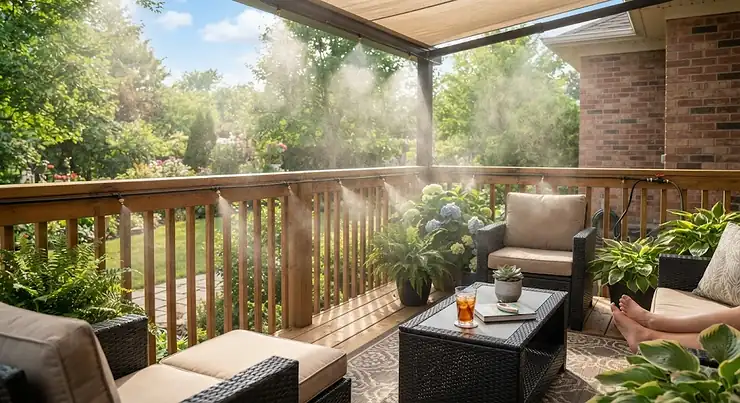
Somewhere around the third 95-degree afternoon in a row, most people start eyeing their patio the way a sailor eyes a mirage. That’s usually the moment “misting kit” enters the search bar. A low pressure misting kit is, at its core, a stubbornly simple idea: run thin tubing along your patio’s perimeter, punch in a handful of nozzles, hook the whole thing to your garden hose, and let ordinary household water pressure do the rest. No compressor, no electrician, no $3,000 install crew — just a Saturday afternoon and a bit of patience with a tubing cutter.
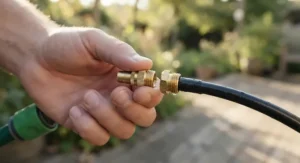
What makes this category worth a deep look in 2026 is how far the parts have come. Brass nozzles that used to clog every other weekend now ship with built-in filtration. Tubing that used to crack under UV exposure now survives multiple summers without turning brittle. And because these kits piggyback on your existing hose bib instead of needing a dedicated high-pressure pump, the barrier to entry has genuinely dropped — you’re often looking at a project that costs less than a nice dinner out.
This guide breaks down seven real, currently available kits — budget, mid-range, and premium — with honest analysis grounded in actual specs and aggregated review sentiment rather than marketing copy. You’ll get a side-by-side comparison, a walk-through of installation, real-world scenarios for matching a kit to your space, and answers to the questions people actually type into Google before they buy. Whether you’re chasing a garden hose misting system for a tight balcony or a full DIY patio misting kit for a 40-foot pergola, there’s a practical path forward here.
What Is a Low Pressure Misting Kit?
A low pressure misting kit is an outdoor cooling system that connects directly to a standard garden hose and pushes water through a network of fine nozzles, producing a cooling mist without requiring an electric booster pump. It typically operates on ordinary household water pressure (40–70 psi) and relies on evaporative cooling — the same physical principle behind sweat cooling your skin — to lower the surrounding air temperature by several degrees.
Unlike high-pressure misting systems, which use pumps rated at 500–1,000+ psi to atomize water into an almost invisible fog, low pressure kits produce a slightly coarser mist. That trade-off is intentional: it keeps the system simple, pump-free, and dramatically cheaper to install and maintain.
Quick Comparison Table
| Product | Coverage | Nozzles | Price Range | Best For |
|---|---|---|---|---|
| MIXC 75FT Outdoor Misting System | 75 ft | 23 brass | $30–$40 range | Large patios needing even coverage |
| HOMENOTE 26FT Misting System | 26 ft | 7 brass | Under $20 | First-time budget buyers |
| mistcooling Pre-Assembled Patio Kit | 48 ft | 12 brass/stainless | $60–$90 range | Buyers who want a Made-in-USA build |
| Bonviee 75FT Misting System | 75 ft | 28 brass | $30–$45 range | Dense mist over a wide footprint |
| Orbit Basic Residential Misting System | 12 ft | Adjustable | $20–$30 range | Small patios, simplest setup |
| Aeromist Nylon Garden Hose Kit | Custom | Custom | $80–$150+ range | Odd-shaped or expandable patios |
| mistcooling Fan Mist Ring | 9 in ring | 2 brass/stainless | $25–$35 range | Retrofitting a box or pedestal fan |
Looking at the table, the pattern that jumps out is coverage-per-dollar isn’t linear — the Bonviee 75FT Misting System actually packs more nozzles into the same 75 feet as the MIXC 75FT Outdoor Misting System, which means a denser mist but also a bit more water draw per minute. Buyers with small balconies or single seating areas are almost always better served by the Orbit Basic Residential Misting System or the HOMENOTE 26FT Misting System, since paying for 75 feet of line you’ll never fully deploy is money left on the table. The Aeromist Nylon Garden Hose Kit sits apart from the rest because it’s sold custom-length rather than as a fixed kit, which is exactly why it earns its premium price tag and its spot for irregular layouts.
🌬️ Ready to stop sweating through summer? Compare your top pick below and start planning your install today!
Top 7 Low Pressure Misting Kits: Expert Analysis
Coverage needs, patio shape, and budget all pull buyers in different directions, so this lineup spans true entry-level options through premium, fully customizable builds. Every product below is a real, currently sold kit — no invented models, no fictional brands.
1. MIXC 75FT Outdoor Misting System — best all-around coverage for large patios
The headline number here is the 75 feet of misting line paired with 23 brass nozzles, which is enough to wrap a full-size patio, pergola, or greenhouse perimeter without daisy-chaining a second kit. In practice, that nozzle spacing works out to roughly one mister every 3.2 feet, a density that cooling guides consistently flag as the sweet spot for even, hot-spot-free coverage rather than a few overpowered jets.
What most buyers overlook about a kit this size is that the 3/4″ brass adapter with a built-in stainless filter is doing a lot of quiet, unglamorous work — it’s the difference between nozzles that stay clear for a season and nozzles that clog by July. Based on the spec comparison against shorter competitors, this is squarely the pick for anyone cooling more than a single seating area: a wraparound deck, a horse corral misting line, or a greenhouse that needs humidity as much as it needs cooling.
Aggregated review sentiment puts this system at roughly 4.5 stars across several hundred verified buyers, with independent buying guides citing it as a frequent go-to recommendation for larger outdoor spaces. The most consistent critique across installer write-ups is tubing rigidity — the line resists tight bends around corners, so plan your route before you start clamping.
Pros:
- ✅ 75 ft of line comfortably wraps a full patio perimeter
- ✅ Built-in stainless filter keeps nozzles from clogging early
- ✅ Reviewers report stable mist output even at the farthest nozzle
Cons:
- ❌ Tubing resists tight 90-degree bends around corners
- ❌ Overkill (and pricier) for small balconies or single seating nooks
At around $30–$40, this lands solidly in the mid-range bracket, and given how much coverage you get per dollar, it’s one of the better value plays in this whole roundup if your space actually needs the length.
2. HOMENOTE 26FT Misting System — most affordable starter kit
Twenty-six feet and seven brass nozzles doesn’t sound dramatic on paper, but that’s precisely the point — this is the “try before you commit to a bigger project” option. The 3/4″ brass adapter matches the standard hose-bib threading found on nearly every US home, so there’s no adapter-hunting trip to the hardware store involved.
Here’s what the spec sheet won’t tell you outright: shorter lines like this one are actually easier to install correctly on a first attempt, because there’s less tubing to route and fewer clamp points where a leak can start. That makes it a genuinely sensible pick for renters, apartment patios, or anyone who wants to test whether misting suits their climate before investing in a 75-foot system. Reviewers in the budget tier consistently note that the mist quality holds up surprisingly well for the price, though a handful of buyers wished for one or two more nozzles out of the box.
Pros:
- ✅ Lowest cost entry point into misting kits on this list
- ✅ Standard 3/4″ adapter fits nearly any US garden hose
- ✅ Simple enough to install correctly on a first try
Cons:
- ❌ Seven nozzles limit coverage to a single seating zone
- ❌ Buyers wanting wider coverage will outgrow it quickly
Priced under $20, this is less a “cooling system” and more a low-risk experiment — and for a lot of first-time buyers, that’s exactly the right way to approach this category.
3. mistcooling Pre-Assembled Patio Misting Kit — sturdiest Made-in-USA build
This 48-foot, 12-nozzle system distinguishes itself with Made-in-USA tubing rated for a working pressure range of 40–250 psi, meaning it’s engineered to handle both a gentle municipal water line and a stronger well-pump setup without modification. The brass/stainless nozzles are the same style used across the brand’s commercial misting lineup, just scaled down for residential use.
The honest analytical takeaway is that “pre-assembled” genuinely means what it says — the tees, elbows, and clamps arrive already fitted to the line, which cuts install time roughly in half compared to build-it-yourself kits. That matters most for buyers who want reliability over customization: dog owners cooling a kennel run, homeowners protecting poultry from heat stress, or anyone who’s been burned before by a cheaper kit that started leaking at the compression fittings within a month. One important spec buried in the fine print: the manufacturer explicitly states this system should not be paired with a booster pump, since it’s calibrated for standard household pressure only.
Aggregated seller feedback across the brand’s product line sits around a 4.4-star average, with the recurring praise centered on build durability and the recurring complaint centered on the plastic clamps included in older kit variants — swapping those for metal screws (an option the brand also sells) solves it.
Pros:
- ✅ Made-in-USA tubing rated for a wide 40–250 psi range
- ✅ Pre-assembled tees and elbows cut install time significantly
- ✅ No booster pump required, simplifying long-term maintenance
Cons:
- ❌ Plastic mounting clamps in older kits wear faster than metal
- ❌ Not compatible with a booster pump if you want higher pressure later
At $60–$90, it’s priced above the budget tier, but the “buy it once” durability argument is a legitimate value case for buyers tired of replacing flimsier setups every season.
4. Bonviee 75FT Misting System — most nozzles per foot for denser mist
Same 75-foot footprint as the MIXC system above, but Bonviee packs in 28 brass nozzles instead of 23 — a noticeably tighter spacing that translates to a denser, more saturated mist cloud. The system ships pre-assembled with UV-resistant black PE tubing and upgraded brass nozzles designed for drip-free spraying between mist cycles.
What that extra nozzle density means in practice: better performance in low-humidity climates where evaporative cooling needs more surface area of fine droplets to hit its full cooling potential, but also a higher water draw per minute than sparser kits. Reviewers describe the leak-proof compression fittings as a genuine step up from entry-level kits, and the preassembled design gives buyers room to reconfigure the layout without starting from scratch — useful if your patio’s furniture arrangement changes seasonally.
Pros:
- ✅ 28 nozzles deliver denser mist than similarly sized kits
- ✅ Leak-proof compression fittings hold up under repeated adjustment
- ✅ Flexible preassembled layout adapts to changing patio setups
Cons:
- ❌ Higher nozzle density means more water usage per session
- ❌ Dense mist can feel like light rain if nozzles aren’t angled outward
In the $30–$45 range, it competes directly with the MIXC kit — the deciding factor really comes down to whether your climate rewards a heavier mist (drier air) or whether that density would just soak your furniture (humid regions).
5. Orbit Basic Residential Misting System — simplest out-of-box setup for small patios
Orbit’s 12-foot, low-pressure system covers roughly 24 square feet, and it’s built by a brand most US homeowners already recognize from sprinkler timers and hose-end sprayers. That brand familiarity matters more than it sounds — sourcing replacement nozzles or adapters from a hardware store chain is far easier here than with smaller direct-to-consumer brands.
Based on the spec comparison, this is deliberately the least ambitious system in the lineup, and that’s a feature, not a flaw. For a single umbrella table, a small condo balcony, or a portable setup you want to move between the deck and the pool deck, a 75-foot kit is genuinely more system than you need. Home-improvement retailer buying guides consistently position this tier as the entry point for shoppers who want misting without any tubing-cutter learning curve at all.
Pros:
- ✅ Recognizable big-box brand with easy-to-find replacement parts
- ✅ Fast, low-complexity setup for small spaces
- ✅ Portable enough to relocate between patio and pool areas
Cons:
- ❌ 24 sq ft coverage won’t stretch across a full-size patio
- ❌ Limited nozzle count means less flexibility in layout
At $20–$30, it’s positioned almost identically to the HOMENOTE kit — the choice between them often comes down to whether you’d rather buy from a familiar hardware brand or squeeze a couple extra nozzles for a similar price.

6. Aeromist Nylon Garden Hose Kit — most expandable system for odd-shaped patios
Aeromist sells its nylon misting kits by the foot rather than as a single fixed bundle, which makes this the go-to option for patios that don’t fit a rectangular “75-foot loop” assumption — L-shaped decks, wraparound porches, or multi-level backyards. The tubing connects to a standard garden hose fitting, and the system is explicitly designed to be upgradeable to a 150 psi booster pump later if you decide you want a finer atomized mist down the road.
The honest trade-off here is complexity for flexibility. Because you’re measuring your own perimeter and selecting your own nozzle count and spacing, this isn’t a 20-minute unbox-and-clamp project the way the pre-assembled kits are — it’s closer to a small home-improvement project. The manufacturer’s own installation guidance recommends mounting the mist line on the outside perimeter of a patio or gazebo rather than underneath it, since under-mounted lines don’t allow enough airflow for the water to evaporate before it lands on furniture. Reviewers who’ve dealt with the brand’s customer support describe it favorably, particularly for troubleshooting help when a custom layout doesn’t perform as expected.
Pros:
- ✅ Custom length fits irregular or multi-level patio shapes
- ✅ Upgradeable to a 150 psi booster pump without replacing tubing
- ✅ Reviewers highlight responsive customer support for custom builds
Cons:
- ❌ Requires more planning and measuring than pre-assembled kits
- ❌ Per-foot pricing can climb quickly on larger, complex layouts
Depending on length and nozzle count, total cost typically lands in the $80–$150+ range, which puts it firmly in premium territory — but for a patio that just won’t fit a standard rectangular kit, it may be the only realistic option.
7. mistcooling Fan Mist Ring — turns any box fan into a mini cooler
This is the outlier on the list, and deliberately so: rather than lining a whole patio perimeter, the Fan Mist Ring is a 9-inch diameter ring with two brass/stainless nozzles designed to clip directly onto a 12–18 inch outdoor-rated fan. Connect it to a garden hose, aim the fan, and you get a personal cooling zone rather than a whole-yard system.
What most buyers overlook about this category of product is how much cheaper and more targeted it is than a full misting line — if you only need to cool one seating area, patio dining table, or dugout bench, running 75 feet of tubing around a whole structure is genuinely overkill. Made-in-USA UV-treated tubing is the same material used across the brand’s larger kits, just scaled down, and the company backs it with what it describes as 24/7 support. The catch worth flagging clearly: the fan itself is not included, and the ring is only rated for fans in that 12–18 inch range, so measure before ordering.
Pros:
- ✅ Cheapest way to add real cooling to a single seating zone
- ✅ Uses the same Made-in-USA tubing as the brand’s larger kits
- ✅ Simple garden hose connection with no tubing-cutting required
Cons:
- ❌ Fan is sold separately and must fit the 12–18 inch range
- ❌ Not a substitute for whole-patio coverage
In the $25–$35 range, this is best thought of as an accessory rather than a competitor to the full misting kits above — it earns its spot on this list as the smartest budget pick for anyone who only needs to cool one spot, not a whole yard.
How to Choose a Low Pressure Misting Kit
- Measure your perimeter first. Walk the actual route the tubing will follow — around a patio edge, along a pergola beam — and add 10–15% for corners and slack, since underbuying line is the single most common regret in aggregated reviews.
- Count your nozzles against your square footage, not just the line length. A 75-foot kit with only 12 nozzles will feel sparse compared to a 75-foot kit with 28, even though the “coverage” numbers look similar on a spec sheet.
- Check your hose bib pressure expectations. Most low pressure kits are calibrated for standard 40–70 psi household water; if you’re on well water with unusually low pressure, look for kits explicitly rated for a wider psi range.
- Decide upfront if you want pump-upgrade flexibility. Kits like the customizable nylon systems let you add a booster pump later for a finer mist — pre-assembled kits generally don’t.
- Match tubing material to your climate. UV-resistant PE or nylon holds up better in intense sun exposure than unrated tubing, which can turn brittle within a season or two — a point worth weighing alongside EPA WaterSense outdoor water-use guidance on efficient irrigation product selection.
- Factor in mounting hardware quality. Metal screw clamps outlast plastic snap clamps, especially in kits meant to stay up year-round rather than being stored each winter.
- Read aggregated review sentiment for clogging complaints specifically. Nozzle clogging from mineral deposits is the most common long-term complaint across this entire product category, and it’s a strong signal of build quality (or hard-water compatibility) that raw star ratings can miss.

Easy Install: Setting Up Your Garden Hose Misting System
Getting a garden hose misting system running doesn’t require plumbing experience, but a little planning up front prevents the most common first-timer mistakes. Start by dry-fitting the entire layout before cutting anything — lay the tubing along your intended route, mark where corners, tees, and end caps need to go, and only then reach for the tubing cutter. Most kits include a basic cutter for a reason: scissors crush the tubing walls and create leak points at every connection.
Once the line is roughed in, mount it along the outer edge of your patio, gazebo, or eave rather than tucking it underneath the structure. This isn’t a cosmetic preference — mist needs airflow to evaporate properly, and lines mounted too close to a solid surface tend to leave furniture and windows damp instead of cooling the air. Space nozzles every 2–3 feet for even coverage, angling them slightly outward and downward rather than straight down, which maximizes the airborne mist time before droplets fall.
Before turning the water on full blast, open the valve slowly and walk the entire line checking every fitting for drips. A slow leak at a compression fitting is easy to miss at full pressure but obvious at a trickle, and catching it early saves a re-do later. In the first 30 days, the most common mistake buyers report is overtightening compression nuts in an attempt to stop a leak, which actually deforms the tubing and makes the leak worse — snug is sufficient; a wrench is not usually necessary. Give the system a full test run in daylight so you can visually confirm even mist distribution, then make any final angle adjustments before calling the install finished.
👷 Want the exact tools that make this a 30-minute job instead of a weekend project? Check current pricing on the kits above and get started this weekend!
Real-World Scenarios: Matching the Right Misting Kit to Your Space
The apartment balcony renter. A 10-by-6-foot balcony with a single small table doesn’t need 75 feet of anything. A short kit like the HOMENOTE 26FT system or even the Orbit Basic system covers the space without wasted tubing, and because renters often can’t drill into railings, zip-tie mounting along an existing balcony rail keeps the install fully reversible at move-out.
The family with a full-size wraparound deck. Here, coverage matters more than mist density — the MIXC 75FT system’s even 3.2-foot nozzle spacing avoids the “hot spot in the corner” problem that shorter kits create when stretched too thin across a large area. Families cooling kids’ play areas should also budget for slightly more frequent nozzle cleaning, since higher foot traffic near a misting zone tends to kick up more dust that settles on nozzle tips.
The dry-climate homeowner who wants maximum cooling. In low-humidity regions like the desert Southwest, evaporative cooling is dramatically more effective simply because dry air can absorb more moisture before saturating. A denser-nozzle kit like the Bonviee 75FT system takes real advantage of that, delivering more perceptible temperature drop than the same line length with fewer nozzles — a genuine case where “more nozzles” isn’t overkill, it’s climate-matched design.
Extreme heat isn’t just a comfort issue, either — it’s a genuine health risk in these scenarios, and the CDC’s guidance on preventing heat-related illness is worth a quick read for anyone hosting outdoor gatherings during a heat advisory, since a misting kit supplements but doesn’t replace shade, hydration, and monitoring at-risk family members.
Low Pressure vs High-Pressure Misting Systems
The core difference between the two categories comes down to droplet size, and that single variable cascades into almost every other trade-off. Low pressure systems, running on standard 40–70 psi household water, produce droplets fine enough to cool the air but coarse enough that surfaces nearby will pick up some moisture over time. High-pressure systems, running pumps rated at 500–1,000+ psi, atomize water into a near-invisible fog that evaporates almost entirely before touching anything.
That difference in droplet size explains the price gap. A low pressure kit skips the pump entirely, which is most of the installed cost and nearly all of the long-term maintenance burden — no motor to service, no electrical connection to run outdoors, no pump seals to replace. High-pressure systems justify their higher upfront and maintenance cost with a genuinely superior cooling effect (often several degrees more than a comparable low pressure setup) and a “dry mist” feel that doesn’t dampen furniture.
For most residential backyards, patios, and balconies, a low pressure kit hits the practical sweet spot: meaningful cooling, a weekend-project install, and no ongoing pump maintenance. High-pressure systems earn their keep in commercial settings — restaurant patios, resort pool decks — where the extra cooling power and dry-mist feel justify the added complexity and cost. If you’re weighing whether to start with a low pressure kit and upgrade later, kits like the Aeromist Nylon Garden Hose Kit specifically build in that upgrade path, which is worth factoring into a first purchase.
Common Mistakes When Buying a DIY Patio Misting Kit
The most frequent misstep buyers make is purchasing based on total line length alone without checking nozzle count or spacing, then being surprised when a “75-foot kit” with only 12 nozzles leaves noticeable gaps in coverage. Line length tells you how far the system reaches; nozzle density tells you how well it actually cools that distance.
A close second is ignoring water hardness. Hard water accelerates mineral buildup inside nozzle orifices regardless of brand, and buyers who skip a simple inline filter often find themselves troubleshooting clogged nozzles within the first season — a problem that’s cheap to prevent and mildly annoying to fix after the fact. Third, many first-time buyers underestimate how much a patio’s specific layout (corners, overhangs, furniture placement) affects which kit actually fits, defaulting to whatever has the most five-star reviews rather than matching coverage math to their actual square footage. Finally, skipping the manufacturer’s mounting guidance — particularly mounting under a solid roof instead of along an open perimeter — is a near-guaranteed way to end up with damp furniture instead of cooler air.
Features That Actually Matter (And Those That Don’t)
Nozzle material genuinely matters: brass and stainless steel nozzles resist mineral buildup and corrosion far better than the plastic nozzles found in the cheapest off-brand kits, and this is one spec worth paying a few extra dollars to get right. Built-in filtration at the hose adapter matters too — it’s a small, unglamorous component that quietly prevents the majority of clogging complaints. UV-resistant tubing matters if the line will stay mounted year-round in direct sun; unrated tubing can turn brittle and crack within a season or two of intense exposure.
What matters less than the marketing suggests: extremely high nozzle counts on very short lines, which often just crowd the mist pattern without meaningfully increasing perceived cooling. Elaborate “smart” timer add-ons also tend to be oversold for a category this simple — a basic hose-bib timer from any hardware store accomplishes the same automated on/off scheduling for a fraction of the cost of a misting-brand-specific version. And while packaging often emphasizes exact temperature-drop claims, real-world cooling depends heavily on ambient humidity and airflow, so treat any specific “up to X degrees” figure as a best-case scenario rather than a guarantee for your particular yard.
Long-Term Cost & Maintenance
The upfront kit price is genuinely the smaller piece of the total cost picture. Water usage is the ongoing variable — a denser-nozzle kit running for a few hours on a hot afternoon uses meaningfully more water than a sparser one, which matters both for utility bills and in regions with drought restrictions. Replacement nozzles, when needed, typically run a few dollars each and are the most common wear item across every brand in this roundup, usually due to mineral scale rather than mechanical failure.
Seasonal maintenance is minimal but not optional: draining the line before the first hard freeze prevents cracked tubing and split fittings, a lesson most buyers learn the expensive way exactly once. Cleaning nozzles with a mild vinegar soak every month or two during heavy-use season keeps mist output consistent and is far cheaper than replacing clogged nozzles outright. Comparing total cost of ownership, the pre-assembled Made-in-USA kit’s higher upfront price starts to look more reasonable once you factor in fewer nozzle replacements and sturdier clamps over a multi-year lifespan — the cheapest kit on day one isn’t always the cheapest kit by year three.
Water Use, Safety & Mosquito Considerations
Because a misting kit runs on ordinary household water rather than a closed loop, it’s worth thinking about water use the same way you’d think about any other outdoor irrigation feature. Choosing appropriately sized coverage for your actual space — rather than defaulting to the longest kit available — keeps water use proportional to need, a principle echoed in EPA WaterSense guidance on efficient outdoor water use, which notes that outdoor water use can account for a large share of a typical household’s total consumption during summer months.
The other practical concern is standing water. A well-installed misting system shouldn’t create puddles, but pooling near end caps, low points in tubing, or drainage saucers underneath planters can become mosquito breeding sites surprisingly fast. University of Maryland Extension’s guidance on controlling mosquitoes recommends checking for standing water at least twice a week during mosquito season — a five-minute habit that pairs naturally with the nozzle-angle check you’re already doing as part of routine misting kit maintenance.
Affordable DIY Install: Basic Cooling Solutions for Every Budget
Not every backyard needs a premium system, and that’s the real appeal of this whole product category — there’s a legitimate, effective entry point at nearly every price. Under $20 gets a genuine basic cooling solution in the HOMENOTE 26FT kit, enough to test whether misting suits your climate before spending more. In the $25–$45 range, buyers get real choice between coverage-focused options like the MIXC and Bonviee systems, both offering whole-patio cooling without a pump. Stepping up to $60 and beyond buys durability and expandability — the Made-in-USA pre-assembled kit or the fully customizable nylon system, both aimed at buyers who know they’ll want this setup running for years, not just one summer.
The through-line across every price tier is that none of these require professional installation. A garden hose connection, a tubing cutter, and an afternoon are the actual prerequisites — the rest is choosing the coverage that matches your specific patio.
🧊 Ready to build your own basic cooling solution this weekend? Browse the picks above and check today’s availability!
Frequently Asked Questions
❓ How much does a low pressure misting kit cool a patio?
❓ Can I install a misting kit myself without a plumber?
❓ Do low pressure misting kits need a pump?
❓ Will a misting system make my patio furniture wet?
❓ How often do misting nozzles need cleaning?
Conclusion
A low pressure misting kit earns its popularity honestly: it’s one of the few outdoor upgrades that costs under a hundred dollars, installs in an afternoon, and delivers a genuinely noticeable comfort improvement the very first time you turn it on. The right pick depends less on brand loyalty and more on honest math — measure your space, decide how dense you want the mist, and match that to a kit built for your climate and water hardness.
For most standard patios, the MIXC 75FT Outdoor Misting System and Bonviee 75FT Misting System offer the best all-around value, while the HOMENOTE 26FT Misting System and Orbit Basic Residential Misting System make sense for smaller spaces or first-time buyers who want to test the waters. Anyone chasing long-term durability should look hard at the mistcooling Pre-Assembled Patio Misting Kit, and patios with unusual shapes are genuinely better served by the Aeromist Nylon Garden Hose Kit‘s custom-length flexibility. If you only need to cool one seating spot rather than a whole yard, the mistcooling Fan Mist Ring is the most budget-conscious way to get there.
Whichever kit you land on, the install process is forgiving, the ongoing maintenance is minimal, and the payoff — actual, physical relief from summer heat — starts the moment you turn the hose bib on.
Recommended for You
- Best Patio Misting System 2026: 7 Top Picks That Actually Cool
- 7 Best USB Laptop Cooling Pads in 2026: Tested & Compared
- Laptop Cooling Pad For Bed: 7 Best Picks You’ll Love in 2026
Affiliate Disclosure: This article contains affiliate links. As an Amazon Associate, I earn from qualifying purchases. If you purchase products through these links, we may earn a small commission at no additional cost to you.
✨ Found this helpful? Share it with a friend who’s still suffering through summer without one! 💬🤗
