
In This Article
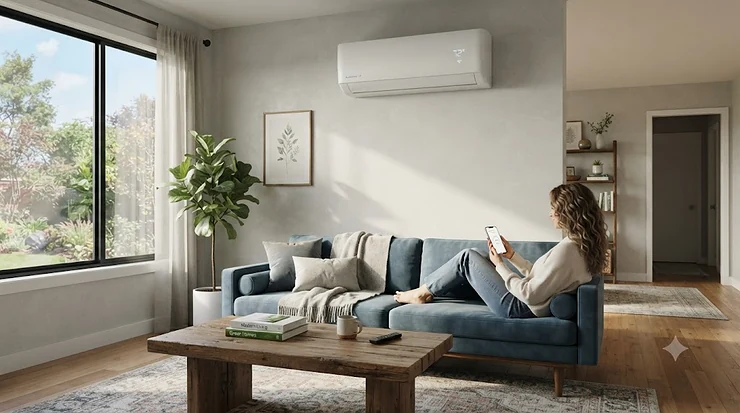
A smart air conditioner is a WiFi-connected cooling unit that lets you adjust temperature, scheduling, and modes from a smartphone app or voice assistant instead of walking over and jabbing at a tiny remote. That’s the whole concept in one sentence, and yet it changes almost everything about how you live with summer. Somewhere between “my apartment feels like a sauna” and “I forgot to turn the AC off before I left for work,” a quiet revolution happened in the appliance aisle. Compressors got smarter. Apps got less clunky. And the best smart air conditioner on the market today does something your grandfather’s window unit never could: it thinks ahead of you.

If you’ve started shopping for the best smart air conditioner, you’ve probably noticed the category is a mess of marketing buzzwords — “intelligent cooling,” “app-enabled,” “voice ready” — slapped onto units that vary wildly in actual performance. Some genuinely save you money through inverter technology and smart scheduling. Others are just a regular compressor with a WiFi chip bolted on, riding the hype. We dug into real specifications, aggregated verified customer feedback, and independent lab-style testing data (see the Tom’s Guide smart air conditioner testing methodology for one example of how outlets evaluate these units) to separate the genuinely useful from the gimmicky.
This guide covers seven real, currently available models spanning budget window units to premium whole-room systems, plus the practical stuff nobody tells you: setup mistakes that cost people a frustrating first week, what “quiet” actually sounds like in a bedroom at 2 a.m., and which smart features are worth paying for versus which ones you’ll forget exist by August. Let’s get into it.
Quick Comparison Table
Before the deep dive, here’s the fast version for anyone who wants the gist without scrolling through 4,000 words of my opinions on compressor noise.
| Product | Best For | Cooling Capacity | Room Size | Price Range |
|---|---|---|---|---|
| Midea U-Shaped Smart Inverter | Best overall / quietest | 8,000 BTU | Up to 350 sq ft | $350–$470 range |
| GE Profile ClearView 8,300 BTU | Full window view | 8,300 BTU | Up to 350 sq ft | $380–$470 range |
| LG LP1023BSSM Smart Portable AC | No installation, renters | 10,000 BTU (DOE) | Up to 450 sq ft | Around $500 |
| GE Profile ClearView 12,200 BTU | Large rooms, top efficiency | 12,200 BTU | Up to 550 sq ft | $550–$700 range |
| TCL Smart Inverter Window AC | Budget bedroom pick | 8,000 BTU | Up to 350 sq ft | $300–$380 range |
| BLACK+DECKER 3-in-1 Smart Portable | Follow Me temperature sensing | 8,000 BTU | Up to 350 sq ft | $300–$400 range |
| LG 23,500 BTU Dual Inverter | Whole-floor cooling | 23,500 BTU | Up to 1,440 sq ft | $900–$1,300 range |
Looking at the spread above, there’s a clear pattern: the window-unit category tops out around 550 square feet before you need to jump into something like the LG 23,500 BTU Dual Inverter, which is really built for open floor plans rather than a single bedroom. Budget doesn’t always mean “worse” here, either — the TCL Smart Inverter and BLACK+DECKER 3-in-1 Smart Portable both undercut the premium options by hundreds of dollars while still offering full app and voice control. The real differentiator across this lineup isn’t smart features (nearly everyone has WiFi and Alexa support by 2026) — it’s how each compressor handles noise, humidity, and genuine energy efficiency over a full season.
💬 Which one caught your eye? Drop a comment below and help other readers pick faster!
💬 Just one click — help others make better buying decisions too!😊
Top 7 Smart Air Conditioners: Expert Analysis
1. Midea U-Shaped Smart Inverter — quietest design on the market
The Midea U-Shaped Smart Inverter rearranged what a window AC is even supposed to look like, and honestly, it’s the one innovation in this category that actually deserves the word “innovation.” Instead of a solid rectangular block that seals your window shut all summer, the unit forms a U-shape that lets the window glass drop down between the two halves — so you keep your window operable and get a tighter seal than a traditional unit could ever manage.
That U-shaped gap does double duty: it improves insulation around the frame and, because the compressor sits outside the window line rather than jammed against the glass, it runs noticeably quieter than most competitors — reviewers commonly cite operation in the low-to-mid 30-decibel range on low settings, which is closer to a library than a mechanical appliance. The inverter compressor modulates speed instead of blasting full power and shutting off, which is the mechanism behind the roughly 35% energy savings Midea advertises compared to fixed-speed units.
Based on the spec comparison, this is the pick for anyone whose bedroom window faces a street or who simply can’t sleep with compressor cycling noise. Reviewers consistently report that the SmartHome app connects reliably and that Alexa and Google Assistant integration works out of the box without the fussy re-pairing some competitors require. The tradeoff is installation: the U-shape means a slightly more involved setup than a standard rectangular unit, and it’s heavier than it looks, so a second pair of hands helps.
Pros:
- ✅ Among the quietest smart window units currently available
- ✅ U-shape design keeps your window partially operable
- ✅ Reliable Alexa and Google Assistant integration
Cons:
- ❌ Installation is more involved than standard rectangular units
- ❌ Higher unit weight makes solo installation difficult
At around $350–$470 depending on the exact BTU tier, the Midea U-Shaped Smart Inverter sits in the sweet spot between budget and premium — the value case here is strong if quiet bedroom operation matters more to you than raw cooling power.

2. GE Profile ClearView 8,300 BTU — best for natural light and window views
Window units have a design sin most brands never bothered to fix: they block half your view and half your daylight. The GE Profile ClearView 8,300 BTU flips the traditional layout so the bulk of the unit hangs below the window sill instead of across the glass, which means you actually keep a usable view outside instead of staring at a plastic grille all summer.
GE rates this unit at roughly 40 decibels, and while independent testing has measured closer to 45 decibels in Eco mode from about ten feet away, that’s still meaningfully quieter than most non-inverter window units on the market, which routinely climb into the high 50s. The flex-depth chassis is a genuinely clever engineering touch — it expands to fit wall thicknesses between 4.5 and 13.75 inches, so you’re not stuck buying a separate unit because your windowsill is unusually deep or shallow.
What most buyers overlook about this model is the SmartHQ app’s automation layer: beyond basic scheduling, it supports location-based triggers so the unit can power on when your phone’s GPS detects you heading home and power down when you leave — a small thing that adds up to real savings if you’re prone to forgetting to switch off the AC before work. Aggregated reviewer sentiment flags initial app pairing as occasionally finicky, though GE’s phone support has a strong reputation for walking customers through the fix.
Pros:
- ✅ Full window view preserves natural light and sightlines
- ✅ Flex-depth design fits unusually thick or thin walls
- ✅ Location-based automation via the SmartHQ app
Cons:
- ❌ Initial WiFi pairing can require a few attempts
- ❌ Real-world noise runs slightly above the advertised rating
Priced around $380–$470 depending on retailer promotions, this is the model for anyone who resents the “cave effect” of a standard window AC blocking their light.
3. LG LP1023BSSM Smart Portable AC — best no-installation option for renters
Not everyone can drill, mount, or even legally install a window unit — plenty of leases explicitly forbid it. The LG LP1023BSSM Smart Portable AC solves that problem entirely: it rolls on casters, vents through a window kit that requires zero permanent modification, and can move from bedroom to living room in the time it takes to refill a glass of iced tea.
Here’s the number that actually matters and that most shoppers misread: this unit is rated 10,000 BTU under the DOE (Department of Energy) standard, which is the accurate, real-world figure — not the inflated ASHRAE number some competing brands lead with in marketing copy. That distinction alone can mean the difference between a portable AC that actually cools your 450-square-foot living room and one that quietly underperforms all summer. It carries Energy Star certification and runs on LG’s mature ThinQ app, which handles scheduling and remote control about as smoothly as any portable AC app currently does.
Honest analytical take: the single-hose design is this unit’s main efficiency tradeoff. It draws indoor air to cool its own condenser and exhausts that air outside, which creates mild negative pressure that pulls warm air back in through door and window gaps. That’s not a defect — it’s physics common to nearly every single-hose portable AC — but it does mean the effective cooling is a notch below what an equivalent window unit would deliver in the same room.
Pros:
- ✅ Zero-installation, fully portable, ideal for renters
- ✅ Honest DOE BTU rating instead of inflated marketing figures
- ✅ Energy Star certified with mature ThinQ app support
Cons:
- ❌ Single-hose design creates mild negative-pressure inefficiency
- ❌ No independent lab has verified LG’s stated noise rating
At around $499, the value case rests entirely on your living situation — if a window unit isn’t an option, this is one of the more trustworthy portable picks on the market.
4. GE Profile ClearView 12,200 BTU — best for large rooms and top efficiency
Step up a size class and you land on the GE Profile ClearView 12,200 BTU, which is essentially the same clever flex-depth, full-window-view engineering as its smaller sibling, scaled up to handle rooms as large as 550 square feet — think open-concept living rooms or combined kitchen-dining spaces that punish smaller units.
The headline spec here is the 14.6 EER (Energy Efficiency Ratio), which sits meaningfully above the baseline Energy Star threshold and translates directly into a lower monthly bill if you’re running this unit most of the day through a heatwave. Based on the spec comparison with its 8,300 BTU sibling, the jump in capacity doesn’t come with a proportional jump in noise — GE’s inverter compressor scales its speed to match demand rather than brute-forcing cooling with a fixed-speed motor, which is the mechanism behind both the efficiency gain and the relatively contained sound profile.
What the spec sheet won’t tell you, but reviewers note repeatedly, is how well this model handles humid climates specifically — the larger capacity gives it more dehumidification headroom than the 8,300 BTU version, which matters enormously if you live somewhere muggy rather than just hot. This is the smart AC for someone who wants one serious unit doing the work of what might otherwise require two smaller ones.
Pros:
- ✅ 14.6 EER rating delivers genuine long-term energy savings
- ✅ Handles up to 550 sq ft without excessive noise
- ✅ Strong dehumidification headroom for humid climates
Cons:
- ❌ Premium price puts it well above entry-level smart units
- ❌ Heavier unit requires sturdier window sill support
Expect to pay in the $550–$700 range, which is a legitimate investment, but the energy savings and larger footprint coverage make the ROI case reasonably strong over a multi-year ownership window.
5. TCL Smart Inverter Window AC — best budget pick for light sleepers
TCL built its name on televisions, but its home appliance division has quietly become one of the more interesting budget plays in the smart AC category — and the TCL Smart Inverter Window AC is the reason why. Its standout trick is almost embarrassingly simple: you can turn off the front display entirely, which sounds trivial until you’re lying in bed at midnight and a glowing blue “72°” is burned into your retinas.
At around 49 decibels at maximum power — only a few decibels above the Midea unit’s ambient noise floor — this is a genuinely quiet performer for its price tier, and the inverter compressor keeps that noise consistent rather than spiking during compressor cycling. Setup is refreshingly intuitive, with controls that don’t require a manual to decode, and the app connection process tends to go smoothly on the first attempt according to aggregated user feedback.
Here’s the honest tradeoff, though: the 8,000 BTU model has been reported by testers as feeling slightly underpowered in practice, taking longer to bring a room down to target temperature than comparably rated competitors. If your room runs on the larger side of “350 square feet” or gets direct afternoon sun, budget for a bit of extra cooldown time, or consider sizing up if TCL offers a larger BTU variant for your space.
Pros:
- ✅ Fully disable-able display — ideal for dark bedrooms
- ✅ Noise stays low and consistent thanks to inverter tech
- ✅ Intuitive setup with reliable first-time app pairing
Cons:
- ❌ 8,000 BTU model can feel underpowered in larger rooms
- ❌ Slower cooldown time compared to pricier competitors
Priced around $300–$380, this is the value pick for anyone prioritizing a dark, quiet bedroom over raw cooling horsepower.

6. BLACK+DECKER 3-in-1 Smart Portable — best for uneven room temperatures
Every AC has the same blind spot: it measures the temperature right next to itself, not where you’re actually sitting. The BLACK+DECKER 3-in-1 Smart Portable addresses this directly with its “Follow Me” remote mode — when enabled, the handheld remote itself becomes the temperature sensor, so the unit cools based on conditions where you are, not where it happens to be parked in the corner.
That single feature solves a genuinely common complaint: an AC that reads 68°F near the vent while you’re sweating at 76°F across the room. Layer on the 3-in-1 functionality — cooling, fan-only, and dehumidifier modes — and you get real flexibility for shoulder-season weather when you want moisture control without aggressive cooling. WiFi connectivity runs through BLACK+DECKER’s own app, which reviewers describe as having improved substantially over earlier versions, with stable scheduling and responsive Alexa and Google Assistant voice commands.
The honest comparison worth making here: this unit typically runs about $97 less than the GE portable option covering the same 350 square feet with the same voice-assistant support, which means the price premium on the GE buys you an auto-evaporation no-drain design and the broader SmartHQ ecosystem — not additional cooling capacity. If you don’t already own other GE smart appliances, that ecosystem lock-in matters less, and the BLACK+DECKER becomes the more rational buy.
Pros:
- ✅ Follow Me remote sensing solves uneven room cooling
- ✅ 3-in-1 cool/fan/dehumidify flexibility
- ✅ Meaningfully cheaper than comparable portable competitors
Cons:
- ❌ Requires manual condensate draining more often than no-drain models
- ❌ Single-hose efficiency tradeoff applies here too
At $300–$400, this is one of the strongest value plays in the entire portable smart AC category.
7. LG 23,500 BTU Dual Inverter — best for whole-floor and large-space cooling
Sometimes a single room isn’t the problem — an entire floor plan is. The LG 23,500 BTU Dual Inverter sits at the top of LG’s window AC lineup, built to handle spaces up to roughly 1,440 square feet, which puts it in a different category entirely from the bedroom-sized units above. Its solid front face (cool air vents from the top rather than the front grille) also gives it a cleaner, more furniture-like appearance than the typical window-unit aesthetic.
Every model in this line uses what LG calls a dual-inverter compressor — a design that continuously adjusts compressor speed rather than cycling fully on and off like a traditional unit. Based on the spec comparison with fixed-speed large units, this is the mechanism behind both quieter long-term operation and meaningfully lower energy draw when running for hours at a stretch, which matters enormously at this size class where a fixed-speed compressor would otherwise be a genuine energy hog.
Longevity is where this model earns its premium price tag in aggregated reviewer sentiment: multiple long-term owners report seven-plus years of reliable service from units in this LG lineup, which is an unusually strong track record in an appliance category where budget units often fail within a couple of cooling seasons. The remote control itself gets consistent praise for comfortable, intuitive button layout — a small but appreciated detail on a unit this large.
Pros:
- ✅ Covers up to 1,440 sq ft — true whole-floor capability
- ✅ Dual-inverter compressor cuts long-term energy costs
- ✅ Strong multi-year reliability track record from owners
Cons:
- ❌ Significant investment compared to single-room units
- ❌ Requires a substantial window and structural support
Expect to pay in the $900–$1,300 range depending on installation accessories — a serious purchase, but arguably the only smart AC on this list actually built to replace multiple smaller units at once.
Smart AC Setup & the First 30 Days
Getting a smart air conditioner from box to fully operational is where most of the frustration in this category actually happens — and it’s rarely the AC’s fault. Start by measuring your window opening before you buy anything; a unit that’s a half-inch too wide for your sill is a returns-department nightmare waiting to happen. Once installed, connect to your home’s 2.4GHz WiFi band specifically — nearly every smart AC app struggles or outright fails to pair on 5GHz networks, and this single mistake accounts for a huge share of “my smart AC won’t connect” complaints in aggregated user reviews.
During the first week, resist the urge to crank the unit to its coldest setting and leave it there. Instead, set up a basic schedule — cooler during sleep hours, a few degrees warmer while you’re out — because that scheduling behavior is where the bulk of the advertised 30-40% energy savings actually materializes, not from the hardware alone. Clean or check the washable filter within the first two weeks; dust accumulation from shipping and initial installation can quietly choke airflow and make the unit work harder than it needs to. Finally, register the unit’s warranty immediately rather than letting the box sit in a closet — several brands in this category tie extended support access to prompt registration.
✨ Ready to Set Up Your Smart Home Cooling?
🔍 Compare current pricing on today’s top smart air conditioners and lock in the model that fits your space before the summer rush drives stock down.
Which Smart Air Conditioner Fits Your Life? Real-World Scenarios
Picture a college student in a 300-square-foot studio apartment with a strict no-drilling lease — that’s almost a textbook case for the LG LP1023BSSM Smart Portable AC or the BLACK+DECKER 3-in-1 Smart Portable, since both avoid permanent installation entirely and can be sold or moved out at the end of a lease without a second thought.
Now picture a young family in a 500-square-foot converted attic bedroom that turns into an oven every July afternoon. That’s a stronger case for the GE Profile ClearView 12,200 BTU — the higher BTU ceiling and superior dehumidification handle both the heat and the humidity that attic spaces tend to trap, while the app scheduling means parents can pre-cool the room before bedtime without remembering to do it manually every single night.
Finally, imagine a remote worker who spends 10+ hours a day at a desk in a light-filled home office and can’t stand a plastic grille blocking the window view during video calls. The GE Profile ClearView 8,300 BTU solves that specific aesthetic problem while still delivering smart scheduling that quietly manages the room temperature in the background during long workdays.
How to Choose the Best Smart Air Conditioner
Shopping for a smart AC gets a lot less overwhelming once you break it into a short sequence of decisions rather than staring at fifteen browser tabs simultaneously. Here’s the order that actually matters:
- Measure your room’s square footage first. BTU needs scale directly with room size — as a general rule, budget roughly 20 BTU per square foot, then adjust upward for high ceilings, direct sun exposure, or a kitchen sharing the same space.
- Decide window unit versus portable based on your lease, not your preference. Renters with no-drill restrictions should default to portable; everyone else typically gets better efficiency from a properly installed window unit.
- Check your home WiFi band compatibility. Nearly every smart AC on the market requires 2.4GHz — confirm your router supports it before assuming connectivity will be painless.
- Prioritize EER or CEER ratings over marketing claims. A higher efficiency ratio is the actual predictor of your electric bill, not the word “smart” printed on the box.
- Read aggregated noise complaints specifically about bedroom use. A unit’s advertised decibel rating rarely tells you about compressor-cycling noise spikes that actual sleepers report.
- Confirm voice assistant compatibility if it matters to your household. Alexa and Google Assistant support is now close to universal, but confirm the specific model, not just the brand.
- Factor in long-term reliability data, not just first-impression reviews. A unit that’s slightly more expensive but has a multi-year track record often beats a cheaper unit with a high early-failure rate.

Common Mistakes When Buying a Smart Air Conditioner
The single most common mistake is undersizing based on price rather than square footage — shoppers see a cheaper 6,000 BTU unit and convince themselves it’ll handle a 400-square-foot room, then spend all summer wondering why it never quite catches up. A close second is ignoring the WiFi band requirement entirely, buying the unit, and then discovering during setup that a 5GHz-only router makes the “smart” half of “smart air conditioner” completely nonfunctional.
Buyers also frequently skip reading reliability data hiding in aggregated Amazon reviews — for instance, some budget entry-level smart units show first-year failure rates reported by roughly 17% of reviewers, a red flag that’s easy to miss if you only skim star ratings instead of reading the actual complaint patterns. Finally, plenty of shoppers assume “on sale” claims from third-party retailers reflect genuine markdowns rather than checking current pricing directly, which can lead to paying more than necessary for the exact same unit available elsewhere.
Smart Air Conditioner vs Traditional Window AC
The core difference isn’t cooling capacity — a smart and a non-smart unit at the same BTU rating will cool a room roughly the same amount. The difference is control and efficiency layered on top. A traditional window AC is a binary appliance: on, off, maybe a mechanical timer if you’re lucky. A smart air conditioner adds scheduling, remote monitoring, geofencing automation, and — critically — inverter compressor technology in most higher-end models, which is what actually drives the 30-40% energy savings figures you’ll see quoted across this category.
Here’s the honest tradeoff: that added intelligence comes with added points of failure. A traditional AC’s remote either works or its batteries are dead; a smart AC’s app can suffer server outages, WiFi dropouts, or firmware bugs that occasionally require a full reset. For someone who wants dead-simple, zero-fuss cooling and doesn’t care about remote control, a traditional unit is genuinely the more reliable choice. For someone who wants to pre-cool a room before arriving home or track energy usage patterns, the smart tier earns its premium.
What to Expect: Real-World Performance
Specs on a box rarely match the lived experience of running a unit through a genuine heatwave, so here’s the translation. A unit rated to cool “350 square feet” is describing ideal conditions — a well-insulated room with normal ceiling height and no major heat sources. Add a west-facing window with direct afternoon sun, a kitchen sharing the airspace, or a second-story bedroom that traps heat rising through the house, and the effective coverage shrinks meaningfully; budget 15-20% more BTU capacity than the “ideal” rating suggests for rooms with these conditions.
Noise is the other place spec sheets consistently mislead. A unit’s quoted decibel rating is almost always measured on its lowest fan setting under lab conditions, not during the compressor-cycling moments that actually wake light sleepers at 3 a.m. That’s why aggregated reviewer feedback specifically mentioning “bedroom use” and “sleep quality” is worth more than the raw dB number printed on the box — some units with nearly identical ratings behave completely differently once the compressor kicks on and off through the night.
Smart Features That Actually Matter (And Those That Don’t)
Not every “smart” feature earns its keep. Here’s an honest breakdown of what’s actually worth prioritizing versus what’s mostly there for the marketing bullet points.
Smartphone App Control
This is the baseline feature, and it’s genuinely useful — being able to check whether you left the AC running before you left for a two-week trip is worth something real, not just a novelty. Where app quality actually diverges between brands is scheduling flexibility and how reliably the connection holds over weeks of continuous use rather than dropping out and requiring a re-pair, which aggregated reviews suggest varies more than most shoppers expect.
Voice Assistant Compatible
Alexa and Google Assistant compatibility has become close to a baseline expectation across this entire category by 2026, with most major brands — Midea, GE, LG, TCL, and BLACK+DECKER among them — supporting both out of the box. The real question to ask before buying isn’t “does it support voice control” anymore; it’s whether the specific model you’re eyeing has confirmed compatibility, since a handful of budget units still ship with app-only control and no voice integration at all.
Remote Temperature Monitoring
This is where genuine differentiation lives. Standard remote monitoring just tells you the AC’s own internal sensor reading, which — as covered above — often doesn’t reflect where you’re actually sitting in the room. Features like BLACK+DECKER’s Follow Me mode solve this by turning the remote itself into the sensor, giving you monitoring that reflects lived comfort rather than a number measured next to the compressor.
Intelligent Cooling System
“Intelligent cooling” is largely marketing shorthand for inverter compressor technology combined with scheduling automation — the compressor modulating its speed based on real-time demand rather than blasting full power and shutting off completely. This is genuinely worth paying for, since it’s the actual mechanism behind most of the advertised energy savings figures across every brand in this guide, not a gimmick layered on top of a standard compressor.

Long-Term Cost & Maintenance
The sticker price is only the first number that matters. Run the math on total cost of ownership and the picture shifts considerably: a smart inverter unit consuming meaningfully less energy through scheduling and speed modulation can recover its price premium over a non-smart, fixed-speed equivalent within two to three cooling seasons, based on the energy savings figures reported across this category. Filter replacement or cleaning every one to two months during heavy use season is the single cheapest maintenance habit that extends compressor life, since a clogged filter forces the compressor to work harder to move the same amount of air.
Beyond filters, keep an eye on the condensate drainage system in portable units specifically — units without an auto-evaporation design require manual draining, and skipping this leads to shutoffs or, worse, water damage to flooring. Multi-year reliability data, where available, is worth weighing against upfront price: a unit with a strong seven-plus-year track record among owners can be the cheaper long-term buy even at a higher initial cost than a budget model prone to early failure.
Safety, Regulations & Refrigerant Compliance
Modern smart air conditioners in the U.S. market are required to meet Department of Energy efficiency standards and typically carry Energy Star certification when they exceed baseline requirements — both worth confirming before purchase since they directly affect long-term running costs. On the refrigerant side, the industry has been shifting toward lower global-warming-potential refrigerants as older formulations get phased down under federal regulations; the EPA’s refrigerant management guidance is a useful reference if you want to understand what’s actually inside the unit cooling your bedroom.
From a pure electrical safety standpoint, always plug a window or portable AC directly into a wall outlet rather than an extension cord or power strip — these units draw enough current that undersized cords are a genuine fire risk, a point echoed across manufacturer installation manuals for every brand in this guide. If you’re installing a window unit above ground level, factor in a support bracket; most municipal building codes require one, and skipping it isn’t just a safety risk but can also violate local housing regulations depending on where you live.
Top Rated WiFi Air Conditioner Reviews: What Aggregated Customer Data Actually Shows
Sifting through genuine customer sentiment across thousands of verified purchases reveals patterns that individual five-star or one-star reviews tend to obscure. Across the smart AC unit reviews we examined, the most consistent praise theme isn’t cooling power at all — it’s app reliability, specifically whether scheduling actually triggers on time and whether voice commands respond without a multi-second lag. The most consistent complaint theme, meanwhile, is initial WiFi pairing friction, which shows up across nearly every brand in this category regardless of price point, suggesting it’s more of an industry-wide software polish issue than a brand-specific flaw.
When it comes to identifying the connected air conditioner best suited to a specific household, aggregated reviewer data suggests matching use-case to feature set matters more than chasing the single highest-rated product overall. A top rated WiFi air conditioner for a light sleeper prioritizing silence looks completely different from the top pick for a family managing a large, sunny living room — which is exactly why this guide leads with real scenarios rather than a single “best overall” crown. For a broader look at how BTU sizing standards are actually calculated, the Department of Energy’s room air conditioner guidance breaks down the math in more technical detail than most retail listings bother to include.

Frequently Asked Questions
❓ What is the best smart air conditioner for a small bedroom?
❓ Do smart air conditioners actually save money on electricity?
❓ Can I use a smart air conditioner without WiFi?
❓ Why won't my smart air conditioner connect to WiFi?
❓ Is a portable or window smart air conditioner better?
Conclusion
There’s no single “best smart air conditioner” that wins for every room, every budget, and every household — and honestly, any guide claiming otherwise is oversimplifying a genuinely nuanced buying decision. What the research does make clear is that the smart layer — scheduling, app control, inverter efficiency — has matured well past gimmick status in 2026, delivering real energy savings and genuine day-to-day convenience across every price tier covered here.
If quiet bedroom cooling is the priority, the Midea U-Shaped Smart Inverter and TCL Smart Inverter Window AC both deliver on that front at very different price points. If you’re renting and can’t install a window unit, the LG LP1023BSSM and BLACK+DECKER 3-in-1 Smart Portable solve that constraint without sacrificing smart features. And if you’re cooling a genuinely large space, the GE Profile ClearView 12,200 BTU or the LG 23,500 BTU Dual Inverter are built for exactly that job. Match the unit to your actual room, lease situation, and sleep habits, and you’ll land on the right pick without needing to test all seven yourself.
Recommended for You
- Window fan with thermostat: 7 Best Picks That Auto-Cool in 2026
- Twin Window Fan: 7 Best Picks for Powerful Cooling in 2026
- Reversible Window Fan: 7 Best Picks for 2-Way Airflow in 2026
Disclaimer: This article contains affiliate links. As an Amazon Associate, I earn from qualifying purchases. If you purchase products through these links, we may earn a small commission at no additional cost to you.
✨ Found this helpful? Share it with your friends! 💬🤗
