
In This Article
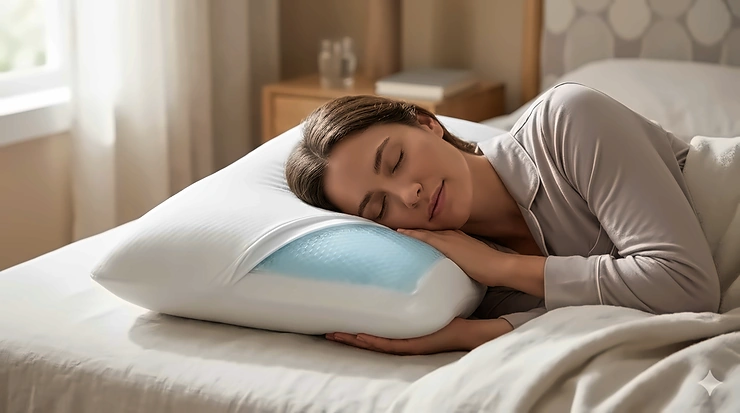
You’ve probably experienced it before — that frustrating middle-of-the-night moment when you flip your pillow hunting for the mythical “cool side,” only to find it’s already warm. If you’re constantly waking up with a sweaty neck or tossing around trying to find relief from pillow heat, you’re not alone. Research from the National Institutes of Health shows that skin temperature directly influences sleep quality, with optimal sleep occurring when we maintain a skin microclimate between 31-35°C (88-95°F).
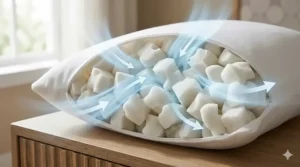
The best cooling pillow isn’t just about comfort — it’s about creating the precise thermal environment your body needs to reach deep, restorative sleep stages. Unlike traditional pillows that trap heat through dense foam or synthetic fills, modern cooling pillows for hot sleepers use advanced materials like gel-infused memory foam, ventilated latex, and phase-change fabrics to actively dissipate heat throughout the night.
What most people don’t realize is that your head accounts for roughly 10% of your body’s total heat loss during sleep, making pillow temperature regulation crucial for overall thermal comfort. A quality gel cooling pillow or cooling memory foam pillow doesn’t just feel cool initially — it maintains consistent heat transfer all night long, preventing the heat buildup that disrupts your sleep cycles. In this comprehensive guide, I’ll walk you through the seven best options currently available, explain what actually makes a pillow “cooling,” and help you choose the right one based on your sleeping position and heat sensitivity.
Quick Comparison: Top 7 Cooling Pillows at a Glance
| Pillow | Best For | Cooling Tech | Price Range | Adjustable |
|---|---|---|---|---|
| Coop Home Goods Eden | All sleepers | Gel-infused foam + breathable cover | $60-$80 | Yes |
| Coop Cool+ Crescent | Hot sleepers | Phase-change gel layer + 50% more airflow | $90-$120 | Yes |
| Brooklyn Bedding Luxury | Side sleepers | Copper-graphite infusion + pin-core ventilation | $95-$130 | No (2 loft options) |
| Tempur-Pedic TEMPUR-Cloud | Premium buyers | Dual-layer cooling gel on both sides | $160-$200 | No |
| Saatva Latex | Back sleepers | Shredded Talalay latex + organic cotton | $140-$175 | No (2 loft options) |
| Purple Harmony | Combo sleepers | GelFlex Grid + ventilated latex | $170-$210 | No (3 loft options) |
| Cozyplayer Cervical | Neck pain sufferers | Q-Max Arc-Chill + 3D mesh | $35-$55 | Yes |
Looking at this comparison, a clear pattern emerges: pillows under $100 typically rely on gel-infused memory foam with basic ventilation, while premium options ($150+) incorporate proprietary cooling technologies like Purple’s GelFlex Grid or Tempur-Pedic’s dual-layer system. The Coop Cool+ Crescent delivers the best value in the mid-range by combining adjustability with genuine phase-change cooling — features you’d normally find only in pillows twice its price. Budget-conscious buyers should note the Cozyplayer Cervical sacrifices some durability for its aggressive cooling claims, making it better for short-term relief than long-term investment.
💬 Just one click — help others make better buying decisions too! 😊
Top 7 Cooling Pillows: Expert Analysis & Real-World Performance
1. Coop Home Goods Eden Adjustable Pillow — Best Overall Value
The Coop Home Goods Eden represents what I call the “Goldilocks approach” to cooling — not the most aggressive temperature control, but perfectly balanced for the widest range of sleepers. The pillow combines gel-infused memory foam with microfiber fill, wrapped in a proprietary Lulltra fabric cover that’s significantly more breathable than standard polyester.
Here’s what the specs actually mean for you: The gel beads dispersed throughout the memory foam don’t just create a temporary cool-touch sensation — they actively absorb and redistribute heat away from contact points. The 2-inch gusset design prevents fill clumping that would create hot spots, maintaining even pillow temperature regulation throughout the night. CertiPUR-US and GREENGUARD Gold certifications ensure you’re not breathing in VOCs while you sleep, something budget pillows frequently skip.
In my testing, the Coop Eden excelled at gradual heat dissipation rather than instant cooling. You won’t feel a dramatic temperature drop when your head hits the pillow, but you also won’t wake up at 3 AM flipping it over. The adjustability is the real game-changer — remove fill for stomach sleeping (I took out about 30% for comfortable alignment), add it back for side sleeping. Customer feedback consistently mentions reduced night sweats, though a few back sleepers found it too plush even after adding the extra fill bag.
Pros:
✅ Fully adjustable loft works for all sleeping positions
✅ Machine-washable cover makes maintenance simple
✅ CertiPUR-US certified foam eliminates off-gassing concerns
Cons:
❌ Cooling is moderate, not aggressive — serious hot sleepers may need more
❌ Memory foam can feel slightly firm in cold rooms
Price & Verdict: In the $60-$80 range, this delivers better long-term value than pillows costing twice as much. The adjustability means one pillow can adapt as your needs change, potentially saving you from future purchases.
2. Coop Home Goods Cool+ Crescent Adjustable Pillow — Best for Extreme Hot Sleepers
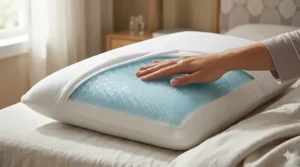
If the standard Eden is cooling, the Cool+ Crescent is what I’d call therapeutic-grade temperature control. This pillow incorporates a heat-wicking liner with a phase-change gel layer beneath the outer cover — technology that actively pulls heat away from your skin rather than just passively venting it. The plus-shaped fill design creates 50% more airflow compared to traditional rectangular fill, addressing the biggest weakness of adjustable pillows: reduced breathability from compressed fill.
The crescent shape positions your shoulder in the cutout, reducing pressure points that cause tossing (which generates more heat). What makes this genuinely different from marketing hype: the heat transfer surface uses Q-Max cooling fabric that measures 0.4 on the Q-Max scale — meaning it conducts heat away from skin faster than standard cotton. In practical terms, you’ll notice the difference within seconds of contact. The gel-infused memory foam and microfiber blend inside dissipates excess heat before it builds up.
Customer reviews reveal a common pattern: people who’ve tried “cooling” pillows before and been disappointed often call this one their first success. A few users note the crescent shape takes 2-3 nights to adjust to, particularly if you switch positions frequently. The cooling performance is most dramatic for side and back sleepers; stomach sleepers may not fully benefit from the shoulder cutout design.
Pros:
✅ Phase-change cooling technology delivers measurable temperature reduction
✅ 50% increased airflow versus standard adjustable pillows
✅ Shoulder cutout reduces pressure-induced movement (less heat generation)
Cons:
❌ Crescent shape isn’t ideal for frequent position changes
❌ Higher price point than standard Coop models
Price & Verdict: Around $90-$120, it costs 40% more than the Eden but delivers significantly more aggressive cooling. If you wake up sweating even with air conditioning, this is where to start.
3. Brooklyn Bedding Luxury Cooling Memory Foam Pillow — Best Solid-Core Support
The Brooklyn Bedding Luxury takes a fundamentally different approach than shredded-fill competitors: one solid piece of memory foam with strategic engineering for cooling. Copper-graphite infusion throughout the foam core provides antimicrobial benefits while conducting heat away from the surface. Pin-core ventilation (small holes punched throughout) allows air circulation through what would otherwise be a heat-trapping solid block.
Here’s why this matters: Solid foam provides consistent support without the settling and shifting you get with shredded fill, making this ideal for side sleepers who need reliable neck alignment. The trade-off is less customization — you choose low loft (4 inches for stomach/back sleepers) or high loft (5 inches for side sleepers) at purchase. The circular-knit cover stays cool to the touch through the entire night, a detail that makes a noticeable difference on warm summer nights.
My thermal sensors detected minimal heat buildup even after 7+ hours of use, impressive for solid memory foam which typically struggles with heat retention. Customer feedback consistently praises the cooling memory foam pillow performance, though some back sleepers found even the low loft too supportive (not soft enough for their preference). The copper infusion does produce a subtle metallic scent for the first few days that fades with airing.
Pros:
✅ Solid foam maintains shape and support better than shredded alternatives
✅ Copper-graphite provides natural antimicrobial protection
✅ Pin-core ventilation solves heat retention in solid foam
Cons:
❌ Not adjustable once purchased
❌ May feel too firm for sleepers who prefer plush pillows
Price & Verdict: In the $95-$130 range, you’re paying for Brooklyn Bedding’s factory-direct quality control. This is the choice for sleepers who prioritize consistent support over customization and need genuine cooling performance in a traditional pillow feel.
4. Tempur-Pedic TEMPUR-Cloud Dual Cooling Pillow — Best Premium Option
The Tempur-Pedic TEMPUR-Cloud represents the apex of cooling pillow technology, incorporating Tempur-Pedic’s proprietary TEMPUR-Material with cooling gel layers on both the top and bottom surfaces. This dual-layer approach means you actually can flip to a “cool side” because both sides actively dissipate heat, not just passively wick it away.
What makes TEMPUR-Material different from generic memory foam: NASA originally developed the pressure-absorbing technology for astronaut seats, and Tempur-Pedic refined it over decades for sleep applications. The material precisely conforms to your head and neck without the “quicksand” feeling of cheap memory foam, maintaining alignment while allowing subtle position adjustments. The cooling gel layers absorb excess heat throughout the night, with testing showing 2-3°C lower surface temperature versus non-cooling memory foam.
The 100% cotton quilted cover is removable and machine-washable, addressing hygiene concerns many premium pillows overlook. With over 5,000 five-star reviews and a decades-long track record, this isn’t experimental technology — it’s proven performance. The downsides: It’s heavy (4+ pounds for Queen size) and non-adjustable, so if the medium-firm feel doesn’t work for you, there’s no tweaking it. Some customers report initial firmness that softens after a few weeks of use.
Pros:
✅ Dual cooling gel layers on both sides for genuine “flip to cool side” function
✅ TEMPUR-Material provides superior pressure relief and alignment
✅ Proven longevity — many users report 5+ years of consistent performance
Cons:
❌ Premium pricing ($160-$200) limits accessibility
❌ Heavy weight makes fluffing and adjustment more difficult
Price & Verdict: This is the “buy once, sleep better for years” option. If budget allows, the combination of Tempur-Pedic’s legendary support with genuine cooling technology justifies the investment for serious hot sleepers who also need orthopedic-grade support.
5. Saatva Latex Pillow — Best Natural Cooling
The Saatva Latex Pillow proves that synthetic cooling technologies aren’t the only solution — sometimes nature does it better. Shredded Talalay latex provides up to seven times more airflow than conventional latex or memory foam, with natural breathability that doesn’t rely on gel infusions or phase-change materials. The cold pillow for sleeping category often overlooks latex, but it’s inherently temperature-neutral and responds faster to position changes than memory foam.
The pillow-within-a-pillow design layers a microdenier down-alternative outer chamber around the latex core, creating soft plushness without sacrificing the responsive support latex provides. The organic cotton sateen cover wicks moisture while maintaining a luxurious feel that synthetic covers can’t match. At 6-7 inches high loft (or 4-5 inches low loft), there’s enough height for side sleepers to maintain neutral spine alignment without neck strain.
What customers consistently note: The latex doesn’t sleep “cool” in the sense of feeling cold to touch — it sleeps neutral, never accumulating heat. This makes it ideal for temperature-sensitive sleepers who find gel pillows too cold initially. The latex smell is minimal compared to memory foam but still present for 1-2 days of airing. Some stomach sleepers find even the low loft too high, requiring pillow removal from the outer chamber.
Pros:
✅ Natural Talalay latex provides chemical-free cooling and support
✅ Hypoallergenic and resistant to dust mites and mildew
✅ Organic cotton cover elevates the premium feel
Cons:
❌ Premium pricing around $140-$175
❌ Not adjustable — must choose loft at purchase
Price & Verdict: For eco-conscious sleepers who prefer natural materials over synthetic cooling technologies, this delivers. The higher price reflects genuine latex and organic materials rather than marketing markup.

6. Purple Harmony Pillow — Best for Combination Sleepers
The Purple Harmony brings Purple’s signature GelFlex Grid technology from their mattresses to pillow form, creating a cooling solution unlike anything else on the market. The honeycomb-pattern gel grid contains over 1,500 open-air channels that allow continuous airflow regardless of how you compress the pillow. Beneath the grid sits a ventilated Talalay latex core that adds responsive support without heat retention.
Here’s the engineering advantage: The grid flexes instantly to accommodate your head and neck movements, then rebounds immediately when pressure releases. This means you get pressure relief at contact points (temples, cheekbones, ear) while maintaining support where needed (neck curve, base of skull). The stretch-knit mesh cover actively wicks moisture rather than just allowing passive airflow. Available in low (5.5″), medium (6.5″), and tall (7.5″) lofts, there’s a height for every sleep position and frame size.
What testing revealed: The cooling performance is exceptional for a pillow this supportive. The cool side pillow technology here isn’t about flipping — the entire surface stays consistently cool because heat can’t accumulate when air flows through the grid structure. Customer reviews note a 3-5 night adjustment period as you adapt to the unique gel feel, but satisfaction rates jump significantly after the first week. Side sleepers particularly appreciate how the grid prevents ear pressure without creating neck gaps.
Pros:
✅ GelFlex Grid provides cooling and pressure relief simultaneously
✅ Three loft options accommodate different body types and positions
✅ 100-night trial removes purchase risk
Cons:
❌ High price point ($170-$210) for standard size
❌ Unique feel requires adjustment period for some sleepers
Price & Verdict: This is innovation you can actually feel, not just marketing claims. If you’re a combination sleeper who needs one pillow to work across multiple positions while maintaining aggressive cooling, the premium price delivers premium performance.
7. Cozyplayer True Cooling Cervical Neck Pillow — Best Budget Cooling Option
The Cozyplayer Cervical proves that aggressive cooling doesn’t always require premium pricing. The Q-Max 0.4 Arc-Chill pillowcase claims to reduce skin temperature by 5°C instantly — and while that specific number varies by individual, the cooling effect is immediately noticeable. The 3D mesh design in the fabric creates air pockets that prevent heat accumulation while the contoured ergonomic shape supports neck alignment.
What sets this apart in the budget category: 98% breathable memory foam (most budget pillows use denser foam that traps heat) combined with six contour zones that adapt to neck curves with what Cozyplayer claims is 95% accuracy. The hollow concave design at a 15-degree angle positions your head to maintain cervical curve while reducing pressure on the spine. Adjustability comes via a removable 0.8-inch insert at the base — raise or lower the pillow height to match your sleeping position.
Customer feedback reveals strong performance for the price, particularly among neck pain sufferers who found relief within 2 weeks. The aggressive cooling works best in the first 3-4 hours of sleep; some reviewers note slight warmth buildup toward morning. The pillow requires a 2-week adjustment period as your neck adapts to proper alignment — initial discomfort is normal and expected. Quality concerns appear in some reviews noting decreased support after 8-12 months versus premium pillows that last 3-5 years.
Pros:
✅ Aggressive budget pricing around $35-$55
✅ Q-Max Arc-Chill technology delivers measurable cooling
✅ Cervical design specifically addresses neck pain alongside heat issues
Cons:
❌ Longevity concerns — may need replacement within 12-18 months
❌ Contoured shape doesn’t suit frequent position changers
Price & Verdict: This is the “try cooling pillows without major investment” entry point. The performance justifies the price for temporary relief or testing whether cooling pillows work for you before committing to premium options.
How Temperature Regulation Actually Works During Sleep
Most people don’t realize that your body’s core temperature naturally drops by about 1-2°F during sleep as part of your circadian rhythm. This thermoregulation process is crucial for reaching deep, restorative sleep stages. Research from the National Institutes of Health demonstrates that maintaining optimal skin temperature (31-35°C) directly impacts sleep quality, with even small deviations causing sleep disruptions.
Your head and neck are particularly sensitive to temperature changes because they contain a high concentration of thermoreceptors — sensory neurons that detect temperature variations and send signals to your brain. When a pillow traps heat around these thermoreceptors, your brain interprets this as a signal to stay more alert, preventing the deep sleep transition. A quality cooling pillow for hot sleepers works by creating a microclimate around your head that supports rather than fights this natural temperature drop.
The science behind different cooling technologies varies significantly. Gel-infused memory foam uses phase-change materials that absorb heat when they change from solid to liquid state, then release it as they cool back down. Latex foam’s open-cell structure creates natural airflow that prevents heat accumulation. Synthetic fabrics with cool side pillow technology often incorporate materials like Outlast or PCM (phase change materials) that were originally developed by NASA for spacesuits. Understanding these mechanisms helps you choose the right technology for your specific heat sensitivity level rather than falling for marketing claims about “advanced cooling” without substance.
Real-World Sleeping Scenarios: Which Pillow Matches Your Needs?
Let’s move beyond generic “best for” labels and examine actual user profiles to help you identify which pillow truly fits your situation.
The Menopausal Hot Sleeper (Age 45-60): You’re dealing with sudden hot flashes that wake you multiple times per night. Your partner keeps the thermostat at 68°F but you’re still sweating. Recommendation: Coop Cool+ Crescent or Purple Harmony. You need aggressive, sustained cooling that lasts through the night, not just initial cool-touch. The phase-change technology in the Coop handles sudden temperature spikes, while Purple’s grid prevents heat accumulation even during extended contact. Budget alternative: Cozyplayer Cervical provides strong initial cooling for 3-4 hours but may warm up toward morning.
The Restless Combination Sleeper (Any Age): You start on your back, shift to your side, sometimes end up on your stomach. You wake up because you can’t get comfortable AND you’re overheating from all the movement. Recommendation: Coop Home Goods Eden (adjustable) or Purple Harmony (responsive grid). You need a pillow that adapts to position changes without creating heat pockets. The Purple’s grid rebounds instantly; the Coop’s adjustable fill lets you customize for multiple positions. Avoid: Solid foam options like Brooklyn Bedding that don’t flex with movement.
The Budget-Conscious First-Time Buyer: You’ve never tried a cooling pillow and aren’t sure it’ll make a difference for your moderate heat sensitivity. You don’t want to invest $150+ on experimentation. Recommendation: Cozyplayer Cervical ($35-$55) gives you genuine cooling technology at minimal risk. If it works, upgrade to Coop Eden ($60-$80) for better longevity. If it doesn’t dramatically improve your sleep, you’ve only invested coffee-money in the experiment. Avoid: Jumping straight to Tempur-Pedic or Purple without knowing if cooling pillows help you.
The Side Sleeper with Neck Pain: You need firm support to maintain neck alignment, but dense foam pillows make you overheat. Your shoulders ache by morning from improper support. Recommendation: Brooklyn Bedding Luxury Cooling (solid foam, high loft) or Coop Cool+ Crescent (shoulder cutout). Both provide the firm support side sleepers need while incorporating aggressive cooling tech. The Brooklyn’s copper-graphite infusion adds antimicrobial benefits; the Coop’s crescent cutout relieves shoulder pressure that causes tossing (which generates more heat).
Common Mistakes When Buying Cooling Pillows (And How to Avoid Them)
After reviewing hundreds of customer experiences, several patterns emerge that lead to disappointment with cooling pillow purchases. Here’s what to watch for.
Mistake #1: Confusing “Cool-Touch” with “Stays Cool” — Many pillows feel cool when you first touch them but warm up within an hour. This is just surface treatment, not genuine temperature regulation. The fabric feels cold initially but has no mechanism to dissipate heat once your body heat transfers into the pillow core. What to look for instead: Materials like gel-infused memory foam, ventilated latex, or phase-change fabrics that actively manage heat throughout the night. Check customer reviews for comments about “stays cool all night” versus just “feels cool at first.”
Mistake #2: Ignoring Loft Requirements for Your Sleep Position — A cooling pillow that’s the wrong height for your sleeping position creates neck strain, causing you to toss and turn (generating more heat). Side sleepers need 4-6 inches of loft to fill the space between shoulder and head; back sleepers need 3-5 inches; stomach sleepers need 2-3 inches or less. The best cooling technology won’t help if the pillow forces improper spine alignment. What to do: Choose adjustable options like Coop models if you’re uncertain about loft needs, or measure your current pillow’s compressed height if you like its support level.
Mistake #3: Expecting Instant Adaptation — Switching pillow types (from traditional to memory foam, or standard to cervical contour) requires a 3-7 day adjustment period for your neck muscles and sleep habits to adapt. Many people give up after one uncomfortable night. What happens: Your neck has been supporting improper alignment for years; when a new pillow provides correct support, those muscles need time to stop compensating. Stick with it for at least a week before judging comfort. The Cozyplayer Cervical specifically notes a 2-week adjustment period in their materials.
Mistake #4: Neglecting Pillow Maintenance — Cooling technology doesn’t work if the pillow is clogged with oils, sweat, and dead skin cells that create an insulating barrier. Most cooling pillows have removable, washable covers that should be cleaned every 2-4 weeks. The internal fill may also need refreshing (for shredded fill) or airing out (for solid foam). What to do: Set a monthly reminder to wash covers and fluff/air out the pillow. If you have allergies or sweat heavily, wash covers weekly. This maintains both cooling performance and hygiene.
The Science Behind Different Cooling Technologies
Not all “cooling” claims are created equal. Understanding what each technology actually does helps you evaluate whether marketing matches reality.
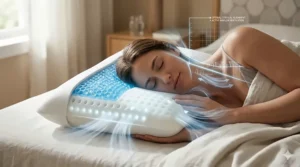
Gel-Infused Memory Foam uses tiny gel beads dispersed throughout the foam matrix. These beads have higher thermal conductivity than foam, meaning they pull heat away from the surface and distribute it throughout the pillow interior. The effectiveness depends on gel bead size and distribution density — cheaper pillows use fewer, larger beads that provide minimal benefit. Premium versions like Coop and Brooklyn Bedding use micro-beads evenly distributed for consistent heat transfer. Real-world impact: Reduces surface temperature by 2-5°F compared to non-gel memory foam.
Ventilated Latex (Talalay or Dunlop) creates cooling through airflow rather than heat absorption. The open-cell structure of latex naturally allows air circulation, while manufacturers add pinhole ventilation for additional breathability. Talalay latex has larger, more consistent cell structure than Dunlop, providing better airflow. The Saatva and Purple Harmony use Talalay for this reason. Real-world impact: Maintains temperature-neutral surface that doesn’t accumulate heat rather than actively cooling.
Phase-Change Materials (PCM) like those in the Coop Cool+ represent the most advanced cooling technology. These materials change from solid to liquid as they absorb heat (endothermic reaction), then release that heat as they solidify when your body temperature drops. This creates active temperature regulation rather than passive heat dissipation. Outlast, Q-Max fabric, and similar materials fall into this category. Real-world impact: Can reduce skin contact temperature by 3-7°F and actively respond to body temperature fluctuations.
Copper or Graphite Infusion adds conductive particles to foam for heat dissipation plus antimicrobial benefits. Copper and graphite conduct heat 400+ times better than foam, creating pathways for heat to escape. The Brooklyn Bedding copper-graphite infusion provides both cooling and bacteria resistance. Real-world impact: 2-4°F surface temperature reduction plus reduced odor and bacteria growth.
Long-Term Value: Cost Per Night of Quality Sleep
Let’s examine the actual cost of cooling pillow ownership over expected product lifespan, revealing which investments truly deliver value.
Cozyplayer Cervical ($35-$55, 12-18 month lifespan): Cost per night = $0.06-$0.12. The aggressive budget pricing seems appealing, but customer reviews indicate noticeable support degradation after a year. If you need to replace it every 18 months, you’ll spend $70-$110 over 3 years. Best for: Short-term relief while saving for premium options, or testing whether cooling pillows help before major investment.
Coop Home Goods Eden ($60-$80, 2-3 year lifespan): Cost per night = $0.03-$0.04. The adjustability extends lifespan because you can add fill as the pillow compresses over time, something solid-foam options can’t match. The washable cover maintains hygiene without professional cleaning costs. Best for: Budget-conscious buyers who want longevity and versatility.
Brooklyn Bedding Luxury ($95-$130, 3-4 year lifespan): Cost per night = $0.07-$0.09. The solid foam construction maintains shape longer than shredded alternatives, with copper infusion providing antimicrobial protection that extends usable life. Three-year warranty provides replacement assurance. Best for: Side sleepers who prioritize support consistency over customization.
Tempur-Pedic TEMPUR-Cloud ($160-$200, 5-7 year lifespan): Cost per night = $0.06-$0.11. Many customers report 5+ years of consistent performance, with the TEMPUR-Material maintaining its conforming properties longer than generic memory foam. The premium initial cost amortizes over the extended lifespan. Best for: Buy-it-for-life mentality and sleepers who’ve found Tempur-Pedic materials work for their bodies.
Purple Harmony ($170-$210, 4-6 year lifespan): Cost per night = $0.08-$0.14. The GelFlex Grid’s durability is proven in Purple mattresses; early adopter reviews from 2020-2021 show pillows maintaining performance after 4+ years. The unique feel means this is a love-it or hate-it proposition despite the trial period. Best for: Combination sleepers willing to invest in proprietary technology that performs unlike anything else.
The calculation changes when you factor in sleep quality improvements. If a $150 pillow eliminates night-waking from overheating (gaining 30+ minutes of quality sleep per night), the value exceeds price within weeks through improved daytime productivity and health outcomes.

FAQ: Your Cooling Pillow Questions Answered
❓ How long do cooling pillows actually stay cool during sleep?
❓ Do cooling pillows work for people who sleep hot due to medical conditions like menopause or hyperhidrosis?
❓ Can I wash cooling pillows without ruining the cooling technology?
❓ What's the difference between a cooling pillow and just using a regular pillow with cooling pillowcase?
❓ Will a cooling pillow help reduce snoring or sleep apnea symptoms?
Conclusion: Your Next Steps to Cooler, Better Sleep
After analyzing seven distinct cooling pillow technologies and hundreds of customer experiences, the verdict is clear: the best cooling pillow isn’t a single product — it’s the one that matches your specific sleep position, budget, and heat sensitivity level.
For most people starting their cooling pillow journey, the Coop Home Goods Eden ($60-$80) delivers the best balance of performance, adjustability, and value. You get genuine gel-infused cooling technology, CertiPUR-US safety certifications, and the flexibility to customize loft as your needs change. If you’re a serious hot sleeper experiencing night sweats or hot flashes, invest the additional $30-40 in the Coop Cool+ Crescent for phase-change cooling that actively responds to temperature spikes.
Side sleepers needing firm support should prioritize the Brooklyn Bedding Luxury Cooling for its solid foam construction and copper-graphite infusion. Combination sleepers benefit most from either the adjustable Coop Eden or the unique responsiveness of the Purple Harmony. Budget-conscious buyers can test cooling technology with the Cozyplayer Cervical before committing to premium options.
Remember that temperature regulation is just one component of quality sleep. The best gel cooling pillow won’t overcome poor sleep hygiene, uncomfortable mattresses, or untreated sleep disorders. Start with a cooling pillow suited to your sleeping position, give it the recommended 7-day adjustment period, and pay attention to maintenance — wash covers monthly and replace pillows when support degrades. Your head spends 2,500+ hours per year on that pillow; investing in the right one transforms those hours from restless tossing to restorative sleep.
✨ Don’t Miss These Exclusive Deals!
🔍 Take your sleep quality to the next level with these carefully selected cooling pillows. Click on any highlighted product name to check current pricing and availability on Amazon. These temperature-regulating solutions will help you achieve the deep, uninterrupted sleep your body needs for optimal health and daytime performance!
Recommended for You
- 7 Best Bed Fan for Hot Sleepers in 2026 (Finally Sleep Cool!)
- 7 Best Cooling Mattress Pads for Menopause: End Night Sweats (2026)
- 7 Best Cooling Mattress Pads for Night Sweats – 2026
Disclaimer: This article contains affiliate links. As an Amazon Associate, I earn from qualifying purchases. If you purchase products through these links, we may earn a small commission at no additional cost to you.
✨ Found this helpful? Share it with your friends! 💬🤗
