
In This Article
What are warehouse cooling solutions? Warehouse cooling solutions are the fans, evaporative coolers, spot air conditioners, and ducted HVAC systems used to cut worker heat exposure and protect inventory in large, often poorly insulated buildings. The right mix depends on ceiling height, local humidity, floor area, and how much of the building people actually occupy.
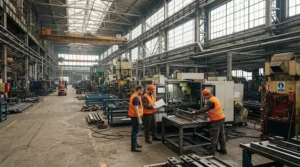
Here is the uncomfortable truth about a metal-roofed building in July: it behaves like a giant toaster oven with forklifts. Heat rises, pools under the roof deck, and radiates back down onto people who are already generating body heat from lifting, scanning, and walking miles per shift. Productivity slumps, tempers fray, and the safety paperwork starts to multiply.
The good news is that you rarely need to air-condition 100,000 square feet to fix it. Smart warehouse cooling solutions go after people and processes first. Often that means moving air with high-volume low-speed fans, which are defined as ceiling fans larger than 7 feet in diameter. Add spot cooling where the heat is worst, and save full warehouse air conditioning for the zones that truly demand it.
This guide covers seven real products across budget, mid-range, and premium tiers, built from published specs and aggregated review sentiment. It also covers the less glamorous topics: how a warehouse cooling system should be sized, why high ceiling cooling is its own puzzle, and what a distribution center climate does to the equation. Prices are given as ranges only, so check current pricing before you buy.
Quick Comparison Table: Warehouse Cooling Solutions at a Glance
| Product | Type | Airflow / Capacity | Coverage Claim | Best For |
|---|---|---|---|---|
| Lasko 2265QM | High-velocity fan | ~3,160–3,460 CFM | Spot / worker-level | Packing benches, dock doors |
| Hessaire MC18M | Evaporative cooler | 1,300 CFM | ~500 sq ft | Small work zones, dry climates |
| Hessaire MC37M | Evaporative cooler | 3,100 CFM | ~950 sq ft | Mid-size workshops, garages |
| Uthfy 41″ 4800 CFM | Evaporative cooler | 4,800 CFM | ~1,200 sq ft | Largest zone per dollar |
| Portacool Apex 500 | Evaporative cooler | 800 CFM | ~500 sq ft | Commercial duty, remote control |
| MovinCool Classic Plus 14 | Spot air conditioner | 13,200 BTU/h | Hot spots | Humid sites, 115V convenience |
| MovinCool Classic Plus 26 | Spot air conditioner | 24,000 BTU/h | Hot spots | Heavy heat loads, process areas |
Look at the table and one pattern jumps out. Airflow-based products (the fans and swamp coolers) deliver far more “coverage” per dollar, while the MovinCool units trade coverage for real refrigerated cooling that works in humid air. If your region is dry, the Uthfy 41″ 4800 CFM is the value standout. If it is muggy, the spot ACs are the only honest cooling option on this list.
💬 Just one click — help others make better buying decisions too!😊
Top 7 Warehouse Cooling Solutions: Expert Analysis
1. Lasko 2265QM High Velocity Fan — cheapest way to move serious air
Before anything else, a reality check: a fan does not lower air temperature. It raises airspeed at body level, which speeds up sweat evaporation. That is why a fan can cool a person without cooling the room.
The 20-inch Lasko 2265QM uses three metal blades and three speeds, with a listed airflow of roughly 3,160, 3,320, and 3,460 CFM. It draws about 125 watts on high, which is pocket change next to any compressor. The steel construction, 9-foot cord, and QuickMount bracket mean you can park it on the floor or bolt it to a wall stud.
Based on the specs, this is a worker-zone tool. Aim it at packing benches, pick stations, or a dock door where people stand for hours. It will not fix a roof-deck oven on its own.
Reviewer sentiment is consistent. The listing carries roughly a 4.6-star average across more than 1,700 ratings on a major retailer. Owners praise the solid build, and one reports a unit purchased in 2015 still running. The most common gripe is noise on the high setting.
Pros:
- ✅ Very low running cost per fan
- ✅ Wall-mount option frees up floor space
- ✅ Metal blades and steel guards feel industrial
Cons:
- ❌ Loud on the high setting
- ❌ Moves air only; no actual cooling
Price: roughly the $65–$105 range, so check current price. For spot relief it is hard to beat.

2. Hessaire MC18M — compact swamp cooler for small, dry work zones
The Hessaire MC18M is the little brother in Hessaire’s lineup. It moves 1,300 CFM, runs a two-speed fan at about 53 dB, and carries a roughly 4.8-gallon tank.
Evaporative cooling pulls heat out of the air by evaporating water, so output depends on how dry your air is. In arid regions it can meaningfully knock down temperature near the unit. In sticky air it mostly makes things damp.
Here is what the spec sheet will not tell you, but reviewers do. The advertised 500 square feet is optimistic for an open, high-ceilinged building. Treat it as a zone cooler for an office corner, a shipping desk, or a small workshop bay.
Reviewer themes are fairly consistent. Buyers like the low noise and portability, while the small tank means frequent refills unless you hook up a hose.
Pros:
- ✅ Quiet operation around 53 dB
- ✅ Light enough to move between zones
- ✅ Very low electrical draw
Cons:
- ❌ Small tank means frequent refilling
- ❌ Coverage claim runs optimistic in open spaces
Price: budget tier, so check current price. It is a solid starter, not a building-wide answer.
3. Hessaire MC37M — the workhorse middleweight
The Hessaire MC37M is the evaporative cooler that appears most often on “best for garage and workshop” shortlists. It pushes 3,100 CFM, rates for about 950 square feet, and carries a 10.3-gallon tank. That tank gives roughly 3–4 hours on a manual fill, or continuous running with a hose hookup.
Context matters here. The U.S. Department of Energy says evaporative coolers use about one-quarter the energy of central air conditioning, but suit only low-humidity climates. That is the whole tradeoff in one sentence.
Based on the specs, the Hessaire MC37M fits a 600–900 square foot production area in the dry West. Pair two of them at opposite ends of a bay and you cover a lot of floor without running a compressor.
Review sentiment tracks humidity almost perfectly. Owners in dry climates report their rooms dropping several degrees (one cites 86°F air coming out near 78–80°F). Buyers in humid regions complain it just makes the air wetter. The pump is a cheap, replaceable part.
Pros:
- ✅ Strong 3,100 CFM for the price tier
- ✅ Continuous hose-fill option
- ✅ Oscillation spreads the airflow
Cons:
- ❌ Useless in high-humidity air
- ❌ Manual-fill tank empties in hours
Price: around the $300–$500 range. Real value if your climate cooperates.
4. Uthfy 41″ 4800 CFM — largest cooling zone per dollar
The Uthfy 41″ 4800 CFM is the biggest portable evaporative unit in this guide. It moves 4,800 CFM, claims about 1,200 square feet, and stores 10.6 gallons. It also has three-sided cooling pads, 110° oscillation, and three speeds. Three included ice packs add a modest chill boost.
Power draw is the surprise. Published figures put it somewhere around 92–187 watts depending on speed, which is less than a few desk lamps and a phone charger. That is why it makes the most sense for budget-conscious operators in dry regions.
Honest analysis: 1,200 square feet is a generous manufacturer claim. In a tall, open warehouse, treat it as a strong cooler for a defined zone like a loading area or assembly bay. Place it where people work and aim it across them.
Review themes are positive, especially from garage and patio users. The cautious note from some reviewers is long-term reliability, so keep your pads clean and the pump accessible.
Pros:
- ✅ Highest airflow in this lineup
- ✅ Low electrical draw for the output
- ✅ Wide oscillation for even coverage
Cons:
- ❌ Bulky and heavy when the tank is full
- ❌ Evaporative limits apply in humid air
Price: around the $250–$350 range. Best raw value on the list.
5. Portacool Apex 500 — commercial build with smart controls
The Portacool Apex 500 is the premium evaporative pick. It is rated at 800 CFM with a 55-foot airflow reach and a 40 mph air velocity. The 13-gallon reservoir includes water-level indicators and automatic shutoff, all in a 70-pound rotomolded body made in the USA.
Specs translate to practice like this. The 800 CFM number looks modest next to the Uthfy 41″ 4800 CFM, but the high-velocity throw lets it project cooled air down an aisle instead of just filling a bubble. At 53 dB it is also the quietest unit here, which matters in break rooms and offices.
The headline feature for facility managers is Wi-Fi. The CoolSync app can monitor and control multiple Apex units remotely, which is genuinely useful across a big building. It is ETL listed, and Portacool advertises extended warranty coverage.
Testers who reviewed it describe premium build, quiet operation, and easy app control. The consistent complaint is price.
Pros:
- ✅ Remote control of multiple units
- ✅ Long 55-foot airflow reach
- ✅ Quiet at about 53 dB
Cons:
- ❌ Costs several times more than rivals
- ❌ Smaller 500 sq ft rated zone
Price: around the $1,100–$1,300 range at retailers. Pay it only if durability and controls matter.
6. MovinCool Classic Plus 14 — real refrigerated cooling on 115V
Evaporative coolers hit a wall in humid air. The MovinCool Classic Plus 14 does not care, because it is an actual air conditioner. It delivers 13,200 BTU/h at standard rating conditions of 95°F and 60% humidity, with a digital temperature controller you set and walk away from.
The detail that matters is power. This model reaches its maximum capacity on ordinary 115V power, so there is no electrician call for a dedicated 230V circuit. You roll it in, plug it in, and duct the cold air where it is needed.
Honest analysis: 13,200 BTU/h is roughly 1.1 tons. That cools a specific hot spot, such as a packing station, a server closet, or a QC bench. It will not cool the building around it.
MovinCool is a well-known industrial brand, but consumer review volume for these units is thinner than for fans and swamp coolers. Treat any single review as a data point rather than a verdict.
Pros:
- ✅ Works in humid air where swamp coolers fail
- ✅ Runs on standard 115V power
- ✅ Digital thermostat control
Cons:
- ❌ Cools a spot, not a building
- ❌ Hot exhaust must be ducted away
Price: multi-thousand-dollar tier, with wide variance between sellers. Check current price and availability.
7. MovinCool Classic Plus 26 — heavy-duty spot cooling for hot processes
Step up to the MovinCool Classic Plus 26 when the heat load is serious. It delivers up to 24,000 BTU/h (about 2 tons), operates in ambient temperatures up to 113°F, and has a programmable digital controller with a two-speed fan. It runs on 230V single-phase power, with about 13.8 amps listed.
That 230V requirement is the catch. Plan the circuit before you order, because many warehouses have 230V available near dock doors and equipment rooms but not at every pick station.
Based on the specs, this unit suits production lines, equipment rooms, and temporary summer cooling for a high-heat process. Manufacturer literature describes it for applications like injection molding and metal forming. Standard warranty coverage is 12 months on the unit and 36 months on the compressor.
As with its smaller sibling, verified consumer review volume is limited, so lean on dealer support and warranty terms rather than star ratings.
Pros:
- ✅ Roughly double the capacity of the Classic Plus 14
- ✅ Handles ambient heat up to 113°F
- ✅ Self-contained, no permanent installation
Cons:
- ❌ Needs a 230V circuit
- ❌ Hot-air exhaust requires careful ducting
Price: multi-thousand-dollar tier, so check current price. It is the right tool for process cooling.
Top 7 Side by Side
| Product | Power / Water | Key Spec | Price Range | Best For |
|---|---|---|---|---|
| Lasko 2265QM | ~125 W | 3,460 CFM max | $65–$105 | Worker-zone airflow |
| Hessaire MC18M | Low-wattage fan | 1,300 CFM, ~4.8 gal | Budget tier | Small dry zones |
| Hessaire MC37M | 10.3 gal tank | 3,100 CFM | $300–$500 | Mid-size dry zones |
| Uthfy 41″ 4800 CFM | 92–187 W, 10.6 gal | 4,800 CFM | $250–$350 | Biggest zone per dollar |
| Portacool Apex 500 | 250 W, 13 gal | 55 ft reach, Wi-Fi | $1,100–$1,300 | Commercial durability |
| MovinCool Classic Plus 14 | 115V | 13,200 BTU/h | Multi-thousand | Humid-climate hot spots |
| MovinCool Classic Plus 26 | 230V, 13.8 A | 24,000 BTU/h | Multi-thousand | Process heat loads |
The table splits the field into three jobs. The Lasko 2265QM moves air past people, the swamp coolers (Hessaire MC18M, Hessaire MC37M, Uthfy 41″ 4800 CFM, Portacool Apex 500) lower temperature in dry air, and the MovinCool pair delivers true refrigerated cooling anywhere. Most real warehouses end up combining two of these roles. A fan-plus-cooler layout in a dry region often costs less than a single spot AC.
Practical Usage Guide: Your First 30 Days With a Warehouse Cooling System
Buying the equipment is the easy part. Here is a simple 30-day plan that Amazon listings will not hand you.
Days 1–3: Map the heat. Walk the floor mid-afternoon and note where people stand longest, such as pack stations, dock doors, and sortation. Cool people first, volume second.
Days 4–7: Place and aim. Put swamp coolers where fresh air can enter the intake. They need ventilation, so crack a dock door or an opposing vent. A cooler in a sealed room just raises humidity. Mount fans like the Lasko 2265QM on walls or posts so they do not become trip hazards.
Days 8–14: Watch the water. Fill and run the Hessaire MC37M or Uthfy 41″ 4800 CFM on a schedule. Several manufacturers recommend running the unit on fan only for about 30 minutes before storage so pads dry out. Wet, stagnant pads smell, and nobody wants a mildew-scented break room.
Days 15–30: Track and adjust. Take a simple temperature reading at worker height each shift, and keep a log. If you own Portacool Apex 500 units, the app makes this easy. Mistakes to avoid in the first 30 days: running coolers in closed rooms, skipping pad cleaning, and aiming fans at the ceiling instead of people.
Real-World Scenarios: Matching Warehouse Cooling Solutions to Real Operations
Scenario 1: The dry-climate 3PL. You run a 40,000 square foot facility in Arizona with six pack lines and a $1,500 summer cooling budget. Spend it on three Uthfy 41″ 4800 CFM units over the pack lines and a handful of Lasko 2265QM fans at dock doors. You will cover the people-heavy zones without touching your electric bill much. Dry air is your friend here.
Scenario 2: The humid-Southeast fulfillment shop. You operate in Georgia, humidity is relentless, and swamp coolers would just make things clammy. Your best move is one MovinCool Classic Plus 14 over a fixed station, with the circuit already on 115V. Fans handle the rest. Budget more per unit, but you buy real cooling.
Scenario 3: The process-heat manufacturer. You have an assembly cell that spikes above comfort every afternoon. A MovinCool Classic Plus 26 on a dedicated 230V circuit, ducted onto the cell, protects both workers and equipment. Add a Portacool Apex 500 in the adjacent break area for quiet comfort.
Notice the pattern: nobody tried to cool the whole building. Each plan targets a zone, a person, or a process.
Problem → Solution Guide: Fixing the Five Most Common Heat Headaches
Problem 1: The upper layer is 20 degrees hotter than the floor. Solution: destratify. Large ceiling fans mix the layers, and the Plant Engineering overview of high-volume low-speed fan selection reports energy savings of 20% and greater from breaking up stratified heat.
Problem 2: Swamp coolers are making the room feel swampy. Solution: add exhaust. Open a dock door or vent opposite the cooler so humid air can leave. If humidity stays high, step up to MovinCool Classic Plus 14 or MovinCool Classic Plus 26.
Problem 3: Fans are loud and workers complain. Solution: run the Lasko 2265QM on low or medium. Reviewers say even the lowest setting moves plenty of air, and the noise lives on high.
Problem 4: Spot cooler exhaust is heating the very room you are cooling. Solution: duct the hot exhaust outside or into an unoccupied space. A spot AC without exhaust routing is just an expensive space heater.
Problem 5: Units go unused because refilling is a chore. Solution: use the hose hookup on the Hessaire MC37M or choose the Portacool Apex 500, with its water-level alerts and remote control.
How to Choose Warehouse Cooling Solutions: 7 Steps
- Check your humidity first. Evaporative cooling needs dry air. If summer humidity is high, put refrigerated spot cooling on the shortlist.
- Measure the occupied zones. Cool the areas where people spend hours, not the empty racking aisles.
- Know your ceiling height. Tall buildings suffer from stratification, so airflow tools matter more there.
- Match power to your electrical reality. 115V units like the MovinCool Classic Plus 14 plug in anywhere, while the MovinCool Classic Plus 26 needs 230V.
- Plan the water. Evaporative units drink constantly. Consider hose hookups and drainage.
- Weigh noise against workflow. Quiet units like the Portacool Apex 500 suit offices, while louder fans suit open production areas.
- Budget for the full warehouse cooling system. Include maintenance, pads, extension cords, and the labor to refill and clean.
Warehouse Air Conditioning vs Evaporative Cooling vs Fans
Warehouse air conditioning is the gold standard for temperature and humidity control, and also the most expensive to buy, install, and run. Evaporative cooling is the efficiency champion in dry regions. Fans are the cheapest relief of all but cool only people.
| Option | Upfront Cost | Operating Cost | Works in Humidity? | Best For |
|---|---|---|---|---|
| Warehouse air conditioning (central or large rooftop) | Highest | Highest | Yes | Climate-controlled storage, offices |
| Spot AC (MovinCool Classic Plus 14, MovinCool Classic Plus 26) | Mid to high | Medium to high | Yes | Hot spots, process areas |
| Evaporative (Hessaire MC37M, Uthfy 41″ 4800 CFM) | Low | Low | No | Dry-climate work zones |
| High-velocity fans (Lasko 2265QM) | Lowest | Lowest | Yes (cools people only) | Worker comfort |
The table shows why one answer rarely fits every building. If you must hold a specific temperature for product, only refrigerated systems qualify. If your priority is keeping a dry-climate crew comfortable on a budget, evaporative units plus fans win by a mile. Most operators land on a hybrid: refrigerated cooling for the zones that need it, airflow everywhere else.
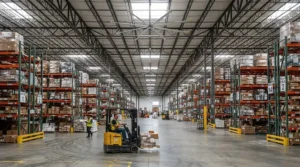
Large Warehouse Cooling: Where Industrial Warehouse AC and Large Space HVAC Fit
Large warehouse cooling is where good intentions collide with arithmetic. Cooling a 100,000 square foot, 30-foot-tall building to a “comfortable” 72°F would require serious tonnage and a serious electric bill.
Industrial warehouse AC
Industrial warehouse AC covers the tools at the top of the capacity ladder, from spot coolers like the MovinCool Classic Plus 26 to rooftop packaged units. Its strength is predictable control. Its weakness is that cooling uninsulated, leaky space burns money fast.
Large space HVAC
Large space HVAC means ducted or rooftop systems designed to serve big volumes. These make sense when you hold temperature-sensitive stock, run a clean or pharma-adjacent operation, or need climate-controlled zones. For general storage with heat stress as the main concern, they are usually overkill compared with targeted cooling.
Think of it as layers. Insulation and reflective roofing come first, targeted cooling second, whole-building HVAC only where product or process truly demands it.
High Ceiling Cooling: Taming the Hot Layer Overhead
High ceiling cooling is a different game from a regular room. Warm air rises, so a 30-foot building can hold a blanket of hot air over a much cooler lower zone, and cool air you pay for tends to sit near the floor, which is exactly where you want it.
Large, slow fans are the classic answer. The Wikipedia entry on HVLS fans notes that elevated airspeed speeds convective and evaporative heat loss, making people feel cooler without changing air temperature. Industry sources add that air speeds above roughly 4–5 miles per hour offer little extra cooling benefit, which explains why gentle large-diameter airflow beats a hurricane from a small fan.
For a budget version of high ceiling cooling, wall-mounted fans like the Lasko 2265QM push air down and across work zones. They do not destratify like a 20-foot ceiling fan will. Treat them as worker-level relief, and budget separately for HVLS if the overhead layer is your real problem.
Distribution Center Climate: Safety Rules, Humidity and Heat
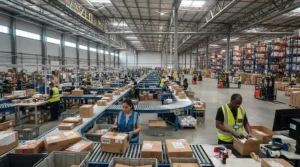
A distribution center climate is shaped by three forces: outdoor weather, constant dock-door openings, and the body heat of a busy workforce. Humidity swings with every trailer that backs up, which makes dry-climate assumptions risky.
Safety is the other half of the story. OSHA recognizes heat illness as a warehouse hazard, and heat is included in its National Emphasis Program for warehousing and distribution operations. Material Handling & Logistics’ summary of OSHA’s recommendations to employers includes designating a heat-program lead, scheduling heavy tasks for cooler hours, and a hydration rule of thumb of about one cup every 15 minutes.
Regulations also vary by state. California’s indoor heat standard took effect in 2024, and a handful of other states have their own rules. Federal rulemaking has been moving too, so verify the current status for your location before you finalize a compliance plan. Cooling equipment helps, but it is one control among several, alongside training, breaks, and water.
Long-Term Cost & Maintenance
Sticker price is only the opening bid. Total cost of ownership includes power, water, consumables, and labor.
| Product Type | Energy Use | Maintenance Burden | Lifespan Note | Best For |
|---|---|---|---|---|
| Lasko 2265QM | Low (~125 W) | Minimal; wipe the blades | Owners report years of service | Cheapest relief |
| Uthfy 41″ 4800 CFM / Hessaire MC37M | Low (about 92–187 W for Uthfy) | Pad cleaning, pump checks | Pads and pumps are wear items | Dry-climate zones |
| Portacool Apex 500 | 250 W | Pad care, seasonal cleaning | Premium build, extended warranty | Long-term fleets |
| MovinCool Classic Plus 14 / MovinCool Classic Plus 26 | Highest of the group | Filter cleaning, exhaust routing | 36-month compressor warranty standard | Humid sites, hot processes |
Here is what the numbers imply. The fan and swamp coolers cost very little to run but demand routine attention, because a neglected evaporative pad is a smell waiting to happen. The MovinCool units cost more to buy and run, but give you control that evaporative gear never will. Over a five-year window, the cheapest unit is rarely the cheapest outcome if it sits idle because nobody has time to maintain it.
FAQ
❓ Can portable air conditioners cool an entire warehouse?
❓ How many fans does a large warehouse need?
❓ Is there a legal maximum temperature for a warehouse?
❓ What is the cheapest way to cool a high ceiling warehouse?
❓ Do evaporative coolers work in humid distribution centers?
Conclusion
The best warehouse cooling solutions are rarely one big purchase. They are a layered plan: cool the people first with airflow, add evaporative or refrigerated cooling where heat concentrates, and reserve full warehouse air conditioning for areas that truly require it.
If your climate is dry and your budget is tight, the Uthfy 41″ 4800 CFM, Hessaire MC37M, and a few Lasko 2265QM fans make an effective, inexpensive trio. If you need controls and commercial durability, the Portacool Apex 500 earns its price. In humid regions, or around hot processes, the MovinCool Classic Plus 14 and MovinCool Classic Plus 26 deliver cooling that swamp coolers simply cannot.
Whatever you choose, measure first, place deliberately, and maintain consistently. Heat is a safety issue and a productivity issue, and a modest investment in warehouse cooling solutions usually pays for itself in steadier output and fewer bad afternoons.
✨ Ready to cool down your floor?
Compare current pricing and availability on your favorites above, and give your team the relief they have earned!
Recommended for You
- Best Spot Cooler: 7 Ultimate Picks Ranked For 2026
- Greenhouse Evaporative Cooler: 7 Best Picks For 2026
- Oscillating Fan For Grow Tent: 7 Best Quiet Picks For 2026
Disclaimer: This article contains affiliate links. As an Amazon Associate, I earn from qualifying purchases. If you purchase products through these links, we may earn a small commission at no additional cost to you.
✨ Found this helpful? Share it with your friends! 💬🤗
