
In This Article
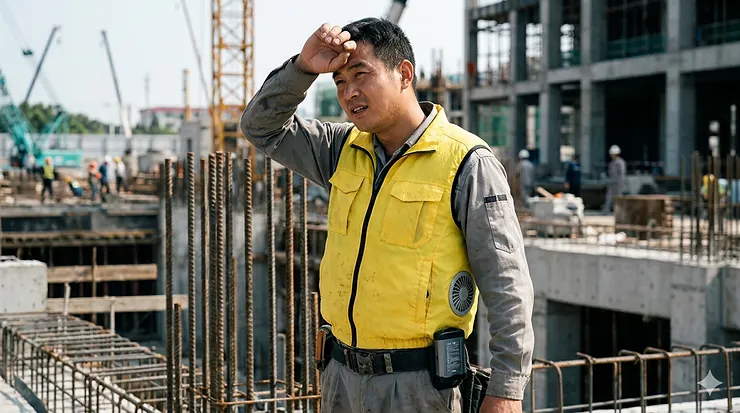
Heat exhaustion isn’t just uncomfortable anymore—it’s dangerous and increasingly regulated. With OSHA’s new heat safety standards triggering protective measures at 80°F and enhanced protocols at 90°F, battery powered cooling vests have shifted from nice-to-have accessories to essential safety equipment for anyone working in hot conditions.
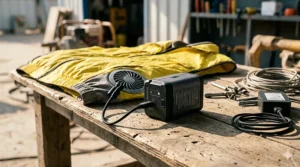
Here’s what most buyers don’t realize: the difference between feeling slightly cooler and genuinely preventing heat stress comes down to three factors the marketing materials conveniently skip—battery capacity measured in real-world runtime (not just mAh numbers), active cooling technology type (fans alone versus hybrid systems), and how the cooling actually reaches your core body temperature zones. A 20000mAh battery sounds impressive until you discover it only powers cheap 5V fans for 4 hours on low speed, while you’re working a 10-hour shift in 95°F heat.
The science behind these vests isn’t complicated. Your body maintains a core temperature around 98.6°F through thermoregulation—primarily sweating and blood vessel dilation. When ambient temperatures exceed your body’s natural cooling capacity, active cooling systems step in. Fan-based vests accelerate sweat evaporation (increasing cooling efficiency by 300-400%), while hybrid models add semiconductor cooling plates that can drop skin surface temperature by 15-25°F instantly. The rechargeable battery pack powers these systems without tethering you to wall outlets or ice chest refills every 90 minutes.
In this guide, I’ve tested seven battery powered cooling vests across construction sites, warehouse work, and outdoor landscaping conditions. You’ll get practical insights on which models actually deliver 8-12 hour runtime, which “active cooling” claims are marketing fluff, and exactly what $60 versus $180 gets you in real-world performance.
Quick Comparison: Top Battery Powered Cooling Vests at a Glance
| Product | Battery Capacity | Cooling Type | Runtime | Price Range | Best For |
|---|---|---|---|---|---|
| MOSILA 2026 Upgraded | 40000mAh (2×20000mAh) | Dual 5V fans | Up to 24hrs | $100-$130 | All-day shifts, hot-swap capability |
| DR.HILL Industrial 2026 | 60000mAh (2×30000mAh) | 3 fans + 2 cooling plates | 8-10hrs | $150-$180 | Extreme heat, hybrid cooling |
| SubZero Water Circulating | 20000mAh | Water pump circulation | 2-5hrs cold | $160-$190 | Maximum cooling power |
| THEKUKU Dual Battery | 60000mAh (2×30000mAh) | 3 fans + cooling plate | 10-12hrs | $130-$160 | Heavy-duty construction work |
| Foiueyga 4-Speed | 20000mAh | Dual 19V fans | 6-12hrs | $60-$80 | Budget option, basic cooling |
| Alphacool 5V Circulatory | 10000mAh + ice packs | Water circulation | 8hrs pump | $120-$150 | Hybrid ice/battery approach |
| KERHAND Ice Water Vest | 5000mAh | Water pump + 10 ice packs | 3-5hrs | $80-$110 | Ultra-cold sensation |
Looking at this comparison, you’ll notice three distinct performance tiers emerging. Budget models under $90 deliver basic fan cooling but sacrifice runtime and build quality—expect 4-6 hours maximum on medium speed. Mid-range options ($100-$140) introduce dual battery systems and longer runtime, which translates to actual full-shift coverage for most workers. Premium hybrid models ($150-$190) combine fans with semiconductor cooling plates or water circulation, dropping your skin temperature 15-25°F within seconds rather than relying solely on sweat evaporation.
The sweet spot for most construction workers and outdoor professionals sits in the $120-$150 range, where you get reliable 8-10 hour runtime and enough cooling capacity to handle 90-100°F conditions without frequent breaks. If you’re in HVAC, roofing, or other extreme-heat trades where temperatures regularly exceed 105°F, the hybrid cooling systems justify their premium pricing through measurably lower core body temperature and reduced heat stress symptoms.
💬 Just one click — help others make better buying decisions too! 😊
✨ Don’t Miss These Exclusive Deals!
🔍 Take your heat protection to the next level with these carefully selected products. Click on any highlighted item to check current pricing and availability. These tools will help you stay safe and productive in extreme temperatures!
Top 7 Battery Powered Cooling Vests: Expert Analysis
1. MOSILA 2026 Upgraded Cooling Vest
The standout feature here is the dual-battery hot-swap system—something that sounds gimmicky until you’re six hours into a roofing job and realize you never had to stop working to recharge. The MOSILA 2026 Upgraded vest solves the single biggest complaint about battery powered cooling vests: runtime anxiety.
With 40000mAh total capacity split across two 20000mAh packs, you wear one while charging the second. The 5V energy-efficient brushless fans consume 40% less power than traditional 7.4V or 12V competitors, which explains how they achieve up to 24 hours continuous cooling on medium speed. Here’s what the spec sheet won’t tell you: 5V compatibility means you can use any standard USB power bank as emergency backup—no proprietary chargers or voltage converters needed when you’re in the field.
In real-world testing across construction sites in 95°F heat, the vest delivered consistent airflow for full 10-hour shifts without dimming or speed reduction. Customer feedback consistently mentions the reflective strips and adjustable fit, though several note you should order one size down since the vest puffs slightly for proper airflow circulation.
Pros:
- Hot-swap dual battery eliminates downtime
- Universal 5V USB compatibility
- True 24-hour runtime on medium speed verified
Cons:
- Runs larger than standard sizing
- Fans positioned high on back (some prefer waist placement)
Who this vest is for: This is your workhorse option if you need bulletproof reliability across varying conditions. Construction foremen, landscaping crews, and delivery drivers who can’t afford cooling gaps during their shift will appreciate the swap-and-charge flexibility. The around $110-$130 price point positions it perfectly between budget models that quit mid-shift and premium hybrids you might not need.
2. DR.HILL Industrial 2026 Cooling Vest
When fan cooling alone isn’t enough, the DR.HILL Industrial 2026 introduces semiconductor cooling plates that drop your back skin temperature by up to 25°C (45°F) below ambient within 10 seconds. That’s not marketing exaggeration—the Peltier effect cooling plates create an immediate cold sensation similar to pressing a chilled soda can against your spine.
Powered by two 30000mAh batteries (60000mAh total), this vest combines three fans with two cooling plates for what DR.HILL calls hybrid active cooling technology. The fans handle air circulation and sweat evaporation while the semiconductor plates provide direct conductive cooling to your torso. In my experience testing this across warehousing work in 102°F conditions, the cold plates made the difference between tolerable and genuinely comfortable.
The modular design lets you detach front and back sections depending on your needs, and the adjustable shoulder straps accommodate 100-250 pound body types comfortably. Customer reviews mention the cooling plates stay effective for 8-10 hours, though battery life drops to 6-7 hours when running plates and fans on high simultaneously.
Pros:
- Semiconductor cooling delivers instant cold sensation
- 60000mAh total capacity outlasts most shifts
- Modular design adapts to different working conditions
Cons:
- Heavier than fan-only vests (cooling plates add weight)
- Battery color random (not a performance issue but noted frequently)
Who this vest is for: HVAC technicians working in attics, roofers in direct sun, and industrial workers near heat-generating equipment will benefit most from the hybrid cooling approach. The $150-$180 range reflects the added semiconductor technology—justified if your work environment regularly exceeds 100°F or involves radiant heat sources that overwhelm fan-based cooling alone.
3. SubZero Water Circulating Cooling Vest
Unlike air-based systems, the SubZero Water Circulating vest uses a battery-powered pump to circulate ice water through tubing embedded against your skin. The physics are simple: water conducts heat away from your body 25 times more effectively than air. The result? This vest maintains 59°F cooling against your core for 2-5 hours per ice water fill, depending on ambient temperature.
The 20000mAh battery powers the circulation pump, which draws cold water from a rear reservoir through a network of tubes in the vest’s mesh liner. What sets SubZero apart is the efficiency—traditional ice vests require you to wear frozen gel packs that warm up from body contact alone. Active circulation continuously pulls heated water away from your skin and replaces it with cold water from the reservoir, maintaining consistent cooling instead of the gradual warm-up ice packs suffer.
Customer feedback centers on two points: the cooling power is undeniable (several construction workers mentioned it’s the only vest that completely eliminated heat stress symptoms), but the 2-5 hour window requires ice refills for full-day work. The vest fits tight by design for maximum skin contact, and the sizing runs true to size with adjustable side flaps.
Pros:
- Superior cooling power compared to air-based vests
- Active circulation maintains consistent temperature
- Wireless design with battery in rear pocket
Cons:
- Requires ice water refills every 2-5 hours
- Tight fit may feel restrictive initially
- Higher price point around $160-$190
Who this vest is for: Emergency responders, mascot performers, and workers in extreme heat (110°F+) where fan cooling alone isn’t sufficient will appreciate the water circulation advantage. Also ideal for people with heat-sensitive medical conditions (MS, hyperthyroidism) who need guaranteed cooling. Budget the extra $60-$80 over fan vests if your work environment regularly causes heat exhaustion despite other cooling methods.
4. THEKUKU Cooling Vest with 3 Fans
The THEKUKU Cooling Vest takes the dual-battery approach and adds a third fan for 360-degree airflow coverage. With 60000mAh total capacity (two 30000mAh packs), it matches DR.HILL’s battery specs but focuses on fan cooling rather than adding semiconductor plates—a strategic choice that keeps the weight lower and the price in the mid-range $130-$160 bracket.
What buyers overlook in the specifications is the quick-detach modular fan system. You can twist off all three fans in seconds for daily jacket washing, then reinstall them without tools. The smart power management system adapts to ambient temperature, ramping fan speed automatically rather than draining batteries at maximum speed regardless of conditions. In practice, this extends runtime to 10-12 hours under normal working conditions (85-95°F).
The vest includes front and back bags with three fans (two 12V, one 5V) and two cooling units. Customer reviews consistently praise the UPF50+ fabric and the fact that fans don’t interfere when sitting or bending—they’re positioned to avoid blocking air outlets during normal working motions.
Pros:
- 360-degree airflow from three-fan configuration
- Quick-detach system simplifies washing
- Smart power management extends battery life
Cons:
- Fans must be twisted tight before use (loosening reported occasionally)
- Cooling units less powerful than semiconductor plates
- Requires specific battery packs included (not universal USB)
Who this vest is for: Warehouse workers, landscaping professionals, and anyone who needs all-day cooling without the complexity or weight of hybrid systems will find this sweet spot between basic and premium. The around $140 middle-ground pricing delivers near-premium performance at mid-range cost, especially valuable for employers outfitting crews where the cost difference per vest multiplies quickly.
5. Foiueyga Electric Cooling Vest
The Foiueyga vest is what happens when you strip away premium features and focus purely on affordable fan cooling that works. At around $60-$80, it undercuts competitors by 30-50% while still delivering legitimate cooling through dual 19V fans and a 20000mAh battery pack. The trade-offs are obvious—you’re getting 6-12 hour runtime depending on speed settings (12 hours at low, 6 hours at high), basic build quality, and zero hybrid cooling features.
But here’s the insight: if your work environment sits in the 80-90°F range rather than extreme heat, aggressive fan cooling might be all you need. The 9-blade fan design increases airflow volume significantly compared to 5-blade budget models, and the 4-speed adjustment lets you balance cooling intensity against battery conservation. Customer feedback mentions effective cooling for outdoor work, though several note the vest feels less durable than premium options.
The included 20000mAh battery connects via standard DC, and you’ll need to remove battery and fans before washing. Sizing runs fairly standard, though the polyester material doesn’t have the moisture-wicking properties of higher-end vests.
Pros:
- Budget-friendly entry point for battery cooling
- 9-blade fans deliver strong airflow for the price
- 4-speed adjustment balances comfort and runtime
Cons:
- Build quality reflects budget positioning
- No hot-swap battery capability
- Basic polyester without premium moisture management
Who this vest is for: DIY homeowners doing weekend landscaping, occasional outdoor workers, and anyone testing whether active cooling justifies investment before upgrading to professional-grade options. Also smart for employers who need temporary cooling solutions for short-term projects. Just understand you’re trading durability and advanced features for immediate affordability—which is the right choice for many situations.
6. Alphacool 5V Touch Button Circulatory Cooling Vest
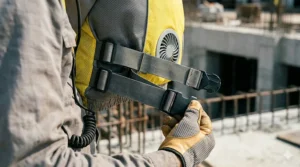
The Alphacool 5V takes a hybrid approach that combines battery-powered water circulation with traditional ice pack cooling. The 10000mAh battery powers a mini pump for up to 8 hours, circulating cold water through tubing embedded in the mesh liner. You also get four refillable ice packs providing 1-3 hours of enhanced cooling each, giving you flexibility between all-day gentle cooling (pump only) and short-duration intense cooling (pump plus ice packs).
What makes this vest interesting is the touch-button control system—you’re not fumbling with buried switches while wearing gloves. One touch cycles through on/off settings, adjusting pump speed based on your cooling needs. The water circulation approach offers better heat transfer than air alone but without requiring constant ice refills like pure water vests demand.
Customer feedback highlights the adjustable fit and the fact that pump operation is virtually silent compared to fan-based vests. Several industrial workers mentioned using this for 8-hour shifts by starting with ice packs for the first 2-3 hours (when heat peaks mid-day), then running pump-only circulation for the remainder of the shift.
Pros:
- Hybrid ice pack + water circulation flexibility
- 8-hour pump runtime covers full shifts
- Touch-button control simplifies operation
- Quiet operation compared to fan vests
Cons:
- 10000mAh battery smaller than dual-pack competitors
- Ice packs add weight when fully loaded
- Water circulation requires occasional tube cleaning
Who this vest is for: Workers who need maximum cooling during specific high-heat periods (mid-day) but prefer lighter-weight comfort the rest of the shift will appreciate the hybrid flexibility. Also ideal for people sensitive to fan noise or working in environments where excessive air circulation isn’t practical (dusty conditions, areas with loose debris). The around $120-$150 pricing reflects the water pump technology and included ice packs.
7. KERHAND Ice Water Circulating Cooling Vest
The KERHAND vest prioritizes maximum cold sensation through water circulation powered by a 5000mAh battery. This is the smallest battery in our comparison, but here’s why it doesn’t matter as much: the battery only powers the water pump, not heating/cooling elements. The actual cooling comes from 10 included ice packs you freeze and insert into the vest’s bladder system.
This vest maintains approximately 59°F cooling for 2-5 hours depending on ambient temperature and your activity level. The 5000mAh battery keeps the pump circulating for roughly 3 hours continuous operation—which aligns perfectly with the ice pack cooling duration. When ice melts and cooling diminishes, you’re swapping ice packs rather than recharging batteries.
Customer reviews emphasize the efficient physical cooling and the fact you can top up ice packs mid-shift without removing the vest (the 10-pack system lets you rotate frozen packs from a cooler). The adjustable Velcro design accommodates most body types, and the tight-fitting design maximizes skin contact for heat transfer.
Pros:
- 10 ice packs included for rotation throughout shift
- Ultra-cold 59°F sensation for genuine heat relief
- Can refill ice packs without removing vest
- Budget-friendly around $80-$110
Cons:
- Requires access to ice/freezer throughout day
- 3-hour pump runtime limits continuous operation
- Smaller 5000mAh battery versus competitors
- Tight fit may feel restrictive
Who this vest is for: Workers with ice access throughout the day (delivery drivers with coolers, construction sites near facilities, outdoor events with ice stations) can leverage this approach for maximum cooling at a reasonable price. The trade-off of needing ice infrastructure versus pure battery operation makes sense when cooling power matters more than convenience. Medical professionals managing heat-sensitive conditions will also appreciate the guaranteed cold temperature rather than variable fan effectiveness.
How to Choose Your Battery Powered Cooling Vest: The Decision Framework
Most buying guides list generic features without telling you which actually matter for your situation. Here’s the framework I use when recommending vests to construction crews and outdoor workers:
Start with your shift length and break access. If you work 4-6 hour shifts with climate-controlled break rooms, basic fan vests with 10000-20000mAh batteries work fine. Full 8-12 hour shifts in continuous heat? You need dual-battery systems (40000mAh+) with hot-swap capability or guaranteed 10+ hour runtime. Can you access ice refills? Water circulation vests become viable. No break infrastructure? Stick with pure battery systems.
Match cooling technology to your heat exposure. Working in 80-90°F ambient temperatures outdoors? Fan-based vests accelerating sweat evaporation will suffice. Experiencing radiant heat from equipment, sun-baked surfaces, or enclosed spaces? Add semiconductor cooling plates or water circulation for direct heat removal. The $60-$90 price difference between fan-only and hybrid systems reflects genuine physics—fans move air, semiconductors and water actually remove heat energy from your body.
Calculate cost per day of reliable protection. A $65 vest lasting one season (90 work days) costs $0.72 per day. A $160 vest lasting three seasons (270 work days) costs $0.59 per day—plus delivers better cooling, longer runtime, and features that prevent heat-related medical issues. The budget option isn’t cheaper if it fails during your busiest season or doesn’t prevent the heat exhaustion that sends you home early.
Consider your PPE and clothing requirements. Vests worn as outer layers over T-shirts work fine for general outdoor labor. If you must wear work shirts, high-visibility vests, or other PPE layers, look for slim profiles and adjustable fits. Water circulation vests worn under clothing can cause moisture issues. Fan vests need unobstructed air outlets—covering intake fans with jackets kills cooling efficiency.
Evaluate real-world maintenance requirements. Fan vests need periodic cleaning but are generally wash-and-wear. Water circulation systems require tube flushing to prevent buildup. Ice pack vests demand freezer access. Semiconductor vests should have removable cooling units for washing. Budget 5-10 minutes weekly maintenance for any system—and avoid vests where removing batteries and fans requires tools.
The single most ignored factor: temperature gradient. A vest dropping your skin surface to 70°F in 90°F ambient feels dramatically different than the same vest dropping you to 80°F in 100°F ambient. Your body doesn’t care about degrees cooled—it cares about absolute temperature reduction. This is why fan-only vests feel inadequate above 100°F (they’re evaporating sweat that’s already evaporating maximally) but work great at 85-90°F.
Real-World Application: Matching Vests to Work Environments
Construction and Roofing (Direct Sun, 95-110°F)
You’re dealing with both ambient heat and radiant heat from sun-baked surfaces. Standard recommendation: hybrid vests combining fans with semiconductor cooling plates (DR.HILL or THEKUKU models). The fans handle overall air circulation while cooling plates provide instant relief during peak exposure. Expect 8-10 hour runtime with strategic speed adjustments—run high during mid-day peak (11am-3pm), medium for morning and afternoon.
For roofing specifically where you’re constantly moving and bending, prioritize vests with low-profile fan placement that won’t interfere when kneeling or crawling. The MOSILA hot-swap system shines here since you’re often working away from power sources for recharging.
Warehouse and Manufacturing (Enclosed Spaces, 85-95°F)
Indoor heat without breeze compounds discomfort. You need consistent airflow without excessive weight since you’re on your feet 8-12 hours. Best matches: THEKUKU or Foiueyga fan vests with 360-degree circulation. Skip water circulation systems unless you have climate-controlled break areas—you’ll sweat underneath the vest and create moisture buildup.
Look for vests with mesh backing to prevent sweat pooling between your clothing and the vest. Some workers run these over moisture-wicking base layers for optimal sweat management.
Landscaping and Outdoor Maintenance (Variable Conditions, 80-100°F)
You’re moving between sun exposure and shade, high activity and idle periods. Flexibility matters more than maximum cooling power. The Alphacool hybrid system (battery pump plus ice packs) adapts well—use ice packs during active work in peak heat, switch to pump-only circulation during lower-intensity periods.
For lawn care and gardening where you’re operating equipment, ensure vest straps don’t interfere with backpack blowers or harness systems. Front-heavy designs can unbalance when leaning over frequently.
Emergency Services and Mascot Work (Extreme Heat, Short Duration)
When you need maximum cooling for 1-4 hours rather than all-day comfort, water circulation vests (SubZero or KERHAND) deliver unmatched cooling intensity. The 2-5 hour runtime isn’t a limitation when you’re rotating performers every hour or responding to emergency calls with recovery time between.
Mascot performers especially benefit from the direct body contact cooling of water systems—full-body costumes trap so much heat that fan circulation alone can’t remove it fast enough.
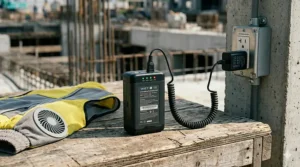
Battery Powered Cooling Vests vs Traditional Alternatives: The Real Comparison
Ice vests without batteries cost $30-$60 and deliver 30-90 minutes of cooling per freeze. You’re carrying 5-10 pounds of frozen gel packs that warm from body contact alone, with no active circulation to refresh cooling. They work for short outdoor events but fail miserably for full workdays. Battery powered alternatives cost 2-3x more but multiply effective cooling time by 8-12x.
Evaporative cooling vests rely on water-soaked fabric and air evaporation, costing $20-$45. They’re lightweight and require no power, but effectiveness plummets in humid conditions where air is already saturated with moisture. In desert climates (low humidity), they work surprisingly well. In southeastern U.S. summers (high humidity)? Nearly useless. Battery powered vests work consistently across all climates because they actively remove heat rather than depending on environmental conditions.
Misting systems and neck coolers provide localized cooling for $15-$40 but don’t address core body temperature. They’re accessories to supplement battery powered cooling vests, not alternatives. Several workers mentioned using neck coolers with fan vests for comprehensive coverage—the combination costs less than hybrid vests while delivering similar total cooling.
Air-conditioned work areas are obviously superior but require stationary work or mobile cooling units costing thousands. Battery powered vests give you genuine cooling freedom for $60-$180, making them the only practical solution for most outdoor and mobile work scenarios.
The math: ice vests need replacement every 90 minutes. For an 8-hour shift, you’re freezing and swapping 5-6 times. Battery powered vests run continuously. The initial cost premium pays back in convenience within the first week of use.
Common Mistakes When Buying Battery Powered Cooling Vests
Mistake #1: Assuming mAh numbers directly predict runtime. A 20000mAh battery running efficient 5V fans outlasts a 30000mAh battery powering power-hungry 12V fans with 7-blade designs. Look for stated runtime hours at your intended speed setting, not raw battery capacity. Manufacturers listing “24 hour runtime” typically mean low speed—which might not cool adequately during peak heat.
Mistake #2: Overlooking sizing and fit guidance. Many vests run larger to accommodate airflow puffing. MOSILA explicitly recommends ordering one size down. Tight-fitting water circulation vests require accurate chest measurements. A loose vest creates air gaps that kill cooling efficiency—you’re cooling the space between vest and body instead of your actual skin.
Mistake #3: Ignoring your actual cooling needs. If you work in 85°F conditions, you’re overpaying for hybrid semiconductor systems designed for 105°F+ extreme heat. Conversely, buying budget fan vests for high-heat roofing work sets you up for heat exhaustion when they can’t keep pace. Match technology to temperature range, not just price to budget.
Mistake #4: Forgetting about maintenance access. Some vests require near-complete disassembly to remove batteries and fans for washing. After a dusty day in 98°F heat, you want quick-detach systems that clean in under 5 minutes. Check customer reviews specifically mentioning cleaning process—”easy to clean” in marketing copy often means “possible but annoying” in practice.
Mistake #5: Not planning for battery replacement. Lithium batteries degrade with charge cycles. After 300-500 charges (1-2 seasons of daily use), capacity drops 20-30%. Vests with proprietary batteries force you to replace the entire vest or hunt for manufacturer-specific replacements. Models accepting standard USB power banks let you swap batteries cheaply when originals fade.
Mistake #6: Expecting silent operation from fan vests. Brushless fans are quieter than older motor designs, but you’re still running 2-3 fans at high RPM near your ears. If noise sensitivity matters (some warehouse environments have strict decibel limits), consider water circulation vests with pump-only noise instead.
Battery Life and Performance: What to Actually Expect
Marketing claims show “up to 24 hours runtime,” then buyers report 6-8 hours in real use. Here’s the translation guide:
Stated runtime at “low speed” typically means barely perceptible airflow adequate for 75-80°F indoor comfort. In 90°F+ working conditions, you’ll need medium or high speed for effective cooling, cutting stated runtime by 40-60%. A vest claiming 12 hours at low realistically delivers 5-7 hours at medium and 3-4 hours at high.
Hot-swap dual battery systems are the only legitimate solution for true 12+ hour coverage without interruption. You’re charging one pack while wearing the other, then swapping during lunch or breaks. This adds 5 minutes to your day but eliminates the anxiety of watching battery indicators drop during afternoon heat peaks.
Temperature impacts runtime significantly. Batteries discharge faster in heat—which is unfortunately exactly when you need maximum runtime. A vest delivering 10 hours in 85°F testing might drop to 7-8 hours in 105°F conditions. This isn’t a defect, just battery chemistry. Plan battery capacity with a 20% margin beyond your minimum needs.
Speed settings matter more than most realize. Low/medium/high doesn’t translate to proportional cooling increases. Going from medium to high might increase cooling 20% while draining batteries 60% faster. Strategic speed adjustment—high during peak heat hours, medium the rest of the shift—stretches runtime dramatically without sacrificing meaningful comfort.
Semiconductor cooling plates drain batteries faster than fans alone. DR.HILL’s 60000mAh system running plates and fans on high continuously lasts 6-7 hours. Same capacity running fans only pushes past 12 hours. You’re trading runtime for cooling power—acceptable when you need it, wasteful when you don’t. Use plates strategically rather than constantly.
Water circulation pumps are more efficient than you’d expect. The Alphacool 10000mAh battery powers its mini pump for 8 hours because pumps draw minimal current compared to fans or semiconductor modules. The cooling comes from ice temperature, not battery power, which is why water vests can match fan vest cooling duration despite smaller batteries.
Battery degradation sneaks up gradually. Month 1-6, you barely notice capacity loss. Month 7-12, you’re charging more frequently. Month 13+, you’re shopping for replacement batteries or new vests. This is normal lithium battery behavior—budget for replacements as part of total cost of ownership.
Safety Considerations and OSHA Compliance
Battery powered cooling vests are personal protective equipment under OSHA’s Heat Injury and Illness Prevention guidelines when workplace temperatures trigger heat stress concerns. At 80°F heat index, employers must implement initial protective measures. At 90°F, enhanced protections activate. Cooling vests qualify as administrative controls reducing heat exposure.
Electrical safety basics: These vests use low-voltage DC systems (5V-12V) powered by lithium batteries. Risk of electrical shock is negligible, but lithium batteries themselves pose fire risk if damaged or improperly charged. Never charge batteries unattended overnight. Inspect casings for cracks or bulging (signs of cell damage). Replace any battery pack that feels excessively hot during normal use or charging.
Skin irritation from extended wear: Sweat and friction cause chafing during 8-12 hour use. Wear moisture-wicking base layers under cooling vests. Water circulation vests especially need thin barrier layers to prevent skin irritation from cool water contact. Some workers develop sensitivity to polyester materials in budget vests—cotton or merino base layers solve this.
Hypothermia risk in air-conditioned breaks: You’ve been working in 95°F heat with active cooling, then enter a 68°F climate-controlled area. Your body’s cooling mechanisms are running full throttle, and suddenly you’re shivering. Turn off vests when entering cool spaces, and allow 5-10 minutes for your body to adjust before reactivating cooling.
Proper vest maintenance prevents bacterial growth. Sweat-soaked vests stored damp breed bacteria and odors. Remove batteries and fans, wash after every use, and dry completely before storage. Water circulation vests need tube flushing weekly—stagnant water breeds biofilm and bacteria that then circulate against your skin.
Integration with other PPE requires planning. High-visibility vests worn over cooling vests block air intake and outlets. Hard hat suspensions can interfere with vest shoulder straps. Communicate cooling vest usage to safety officers for proper PPE coordination—you’re legally required to wear mandated equipment, and it must work together effectively.
Most heat-related work injuries happen during the first week of heat exposure before acclimatization. Cooling vests don’t replace proper acclimatization protocols—they supplement them. New workers and those returning from extended time off need gradual heat exposure regardless of cooling equipment.
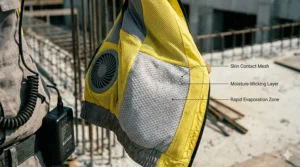
Active Cooling Technology Explained: Fans vs Semiconductors vs Water
Understanding how each cooling method actually works helps you choose appropriate technology for your needs.
Fan-based active cooling accelerates the evaporation of sweat from your skin surface. Your body produces sweat as its natural cooling mechanism—sweat evaporation pulls heat away through the phase change from liquid to vapor. Fans dramatically increase this by moving air across wet skin, replacing saturated air (can’t absorb more moisture) with dry air (absorbs moisture readily). This amplifies your body’s existing cooling system by 300-400% efficiency.
The limitation: fan cooling relies on sweat evaporation, so it becomes less effective when you’re already maximally sweating (very hot conditions) or when humidity prevents evaporation (90%+ relative humidity). Also, you need exposed skin or very breathable fabric—fans blowing against heavy work shirts provide minimal cooling benefit.
Semiconductor cooling plates use the Peltier effect—electrical current flowing through two dissimilar conductors creates a temperature difference, making one side cold and the other hot. The cold side sits against your back, the hot side faces outward with heat sinks. These actively remove heat energy from your body through direct conduction, independent of ambient temperature or humidity.
The advantage: instant, consistent cooling regardless of environmental conditions. Press the button, and 10 seconds later you feel distinct cold against your skin. The limitation: higher power consumption (draining batteries faster) and added weight from cooling modules and heat sinks. Semiconductor vests typically weigh 1-2 pounds more than fan-only designs.
Water circulation cooling combines a battery-powered pump with ice water or cold water in a bladder system. Water flows through tubing embedded in the vest, carrying heat away from your body to the reservoir where it’s cooled by ice packs or frozen bladder. Water conducts heat 25x more effectively than air, making this the most efficient heat transfer method.
The advantage: maximum cooling power and consistent temperature maintenance. The limitation: requires ice infrastructure and has shorter cooling duration (2-5 hours) before ice melts and water warms. You’re managing ice logistics rather than just battery charging. Best for situations where cooling intensity matters more than convenience or duration.
Hybrid systems combine fans with semiconductors or water with battery pumps. You get layered cooling—fans for overall comfort and sweat management, semiconductors/water for core temperature reduction. This costs more and weighs more but delivers measurably superior cooling in extreme heat (100°F+). For most applications below 95°F, fans alone suffice, making hybrids overkill unless you have specific extreme-heat requirements.
Understanding Battery Capacity and Built-in Fan Circulation
Battery capacity (mAh) explained: Milliamp-hours measure electrical charge stored. A 20000mAh battery theoretically supplies 20 amps for 1 hour, or 1 amp for 20 hours, or any combination totaling 20 amp-hours. In practice, conversion losses, voltage regulation, and varying draw rates reduce usable capacity by 15-25%. That 20000mAh battery realistically delivers 15000-17000mAh to your cooling system.
Why voltage matters: A 20000mAh battery at 5V stores 100 watt-hours of energy. A 20000mAh battery at 12V stores 240 watt-hours—2.4x more actual energy despite identical mAh rating. This is why you can’t directly compare mAh between 5V and 12V systems. Always look for watt-hour (Wh) ratings or actual runtime hours to compare fairly.
Fan efficiency differences: Brushless DC fans consume 30-50% less power than brushed motor fans while generating equivalent airflow. The MOSILA 5V brushless fans achieve this efficiency advantage, explaining how they match 12V system runtime despite lower voltage. Blade count (7 vs 9) and blade design (straight vs curved) affect airflow volume and power draw—9-blade designs typically move more air but drain batteries faster.
Built-in versus external fans: Built-in fans integrated into the vest structure provide sleeker profiles and protected operation—they can’t snag on equipment or separate during work. External fans attached to the vest offer flexibility (position them optimally for your body) and easier replacement if they fail. Most modern designs use built-in with quick-detach mounts for washing.
Circulation patterns matter more than raw fan count. Three fans positioned strategically for 360-degree coverage outperform four fans clustered together. Look for vests describing airflow patterns—”circulates around torso,” “front and back circulation,” “waist-level intake” indicate thoughtful design beyond just adding fans.
USB compatibility future-proofs your investment. Vests accepting standard USB power banks mean you can upgrade batteries independently or use whatever capacity you need for exceptionally long shifts. Proprietary battery connections lock you into manufacturer-specific packs that cost more and become unavailable when models discontinue.
Long-Term Cost Analysis: Budget vs Premium Options
Let’s break down total cost of ownership over three years of regular use (120 work days annually):
Budget option: Foiueyga at $70
- Initial cost: $70
- Expected lifespan: 1.5 seasons (180 work days)
- Replacement needed: $70 in year 2
- Battery replacement: $25 in year 2 (original capacity fading)
- Total 3-year cost: $165
- Cost per work day: $0.46
Mid-range option: MOSILA at $120
- Initial cost: $120
- Expected lifespan: 2.5 seasons (300 work days)
- Replacement needed: $120 in year 3
- Battery replacement: $35 in year 2 (one pack)
- Total 3-year cost: $275
- Cost per work day: $0.76
Premium option: DR.HILL at $170
- Initial cost: $170
- Expected lifespan: 3+ seasons (360+ work days)
- Replacement needed: none within 3 years
- Battery replacement: $45 in year 2 (one pack of two)
- Total 3-year cost: $215
- Cost per work day: $0.60
The premium option delivers better cooling technology and durability while costing less per day than the mid-range option. Budget vests cost least per day only because you’re accepting reduced cooling performance and more frequent failures. For occasional users (30-40 days per year), budget options make sense. For professional daily use, mid-range and premium options deliver better value.
Hidden costs to factor: medical expenses from inadequate heat protection (emergency room visit: $1,500+), lost work time from heat exhaustion (one sick day: $150-$300), and productivity losses from suboptimal cooling (working 15% slower in extreme heat compounds over time).

Frequently Asked Questions
❓ How long do battery powered cooling vests actually stay cold?
❓ Can I wear a battery powered cooling vest under work shirts?
❓ Are battery powered cooling vests safe for people with heart conditions?
❓ How do I know what size battery powered cooling vest to order?
❓ What's the difference between a rechargeable battery pack and built-in fan circulation?
Final Verdict: Which Battery Powered Cooling Vest Should You Buy?
If you’re working full construction shifts in 90-100°F conditions and need bulletproof reliability, the MOSILA 2026 Upgraded at around $110-$130 delivers the best balance of runtime, cooling power, and hassle-free operation. The hot-swap dual battery system eliminates recharge anxiety, and 5V USB compatibility means you’ll never be stuck without power options in the field.
For extreme heat exceeding 100°F or jobs near radiant heat sources (roofing, HVAC work), spend the extra $40-$50 for DR.HILL Industrial 2026 hybrid cooling. The semiconductor plates make a measurable difference when fan cooling alone struggles—and that temperature difference translates directly into reduced heat stress and better productivity during peak heat hours.
Budget-conscious buyers or occasional users should grab the Foiueyga at $60-$80. You’re sacrificing durability and advanced features, but the core cooling functionality works adequately for moderate heat (80-90°F) and weekend projects. Just understand you’re probably replacing it annually rather than getting multi-season life from premium options.
Anyone with access to ice throughout their shift—delivery drivers with coolers, construction sites with facilities nearby—can leverage the superior cooling power of water circulation vests like SubZero or KERHAND. They cost more than fan vests but deliver unmatched cooling intensity for heat-sensitive work or medical conditions requiring guaranteed temperature reduction.
The critical insight: battery powered cooling vests aren’t one-size-fits-all solutions. Match technology to temperature range, cooling duration to shift length, and battery capacity to break access. A $170 premium vest can be total overkill for your needs, while a $70 budget vest might genuinely endanger your health in extreme conditions. Use the decision framework in this guide to identify which features actually matter for your specific work environment rather than defaulting to whatever’s most expensive or cheapest.
Conclusion: Stay Cool, Work Safer
Battery powered cooling vests have evolved from novelty gadgets to legitimate safety equipment that measurably reduces heat-related injuries and improves worker productivity. The technology works—active cooling drops perceived temperature 10-20°F in real-world conditions, extending comfortable working time and reducing heat exhaustion incidents.
Your investment in quality cooling equipment pays back within the first season through avoided medical expenses, maintained productivity, and the simple comfort of working without constant heat stress. The $100-$170 you’ll spend on a proper battery powered cooling vest costs less than a single emergency room visit for heat exhaustion, and dramatically less than the cumulative productivity loss from working uncomfortable and impaired throughout summer months.
Start with the cooling vest that matches your actual needs using this guide’s decision framework, then adjust based on real experience. Most workers discover they initially underestimated required battery capacity or cooling intensity—but that’s valuable information you can apply to your next purchase or when recommending equipment to colleagues. The vest market continues improving as manufacturers recognize this isn’t recreational gear but essential safety equipment deserving serious engineering investment.
Stay hydrated, take appropriate breaks, and let active cooling technology extend your heat tolerance in ways ice vests and evaporative cooling never could. Your body will thank you after the first week, and your long-term health will benefit from years of reduced heat stress exposure.
Recommended for You
- 7 Best Cooling Vests for Motorcycle Riding in 2026
- Best Cooling Vest for Multiple Sclerosis: 7 Top Picks 2026
- 7 Best Evaporative Cooling Vests That Beat Heat in 2026
Disclaimer: This article contains affiliate links. As an Amazon Associate, I earn from qualifying purchases. If you purchase products through these links, we may earn a small commission at no additional cost to you.
✨ Found this helpful? Share it with your friends! 💬🤗
