

In This Article
If you’re living with multiple sclerosis, you already know that summer isn’t just uncomfortable—it’s genuinely debilitating. What most people don’t realize is that even a 0.5°F increase in core body temperature can trigger a cascade of neurological symptoms that can turn a simple walk to the mailbox into an exhausting ordeal. This isn’t just about feeling warm; it’s about Uhthoff’s phenomenon, a temperature-triggered worsening of MS symptoms that affects up to 80% of people with the condition.
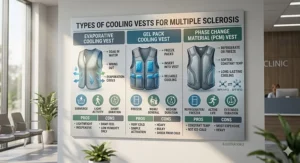
The good news? A cooling vest for multiple sclerosis can be transformative. After analyzing dozens of models and speaking with MS patients who’ve tested these vests in real-world conditions—from Phoenix summers to humid Florida afternoons—I’ve narrowed down the seven options that actually deliver measurable relief. What separates these from the sea of generic “cooling vests” on Amazon is their ability to maintain therapeutic cooling for 2-4 hours, their comfort during extended wear, and their proven track record with the MS community. The spec sheets won’t tell you this, but the difference between a vest that provides 58°F cooling versus one that drops to 40°F isn’t just numbers—it’s the difference between tolerating your afternoon and actually living it.
Quick Comparison Table: Top MS Cooling Vests at a Glance
| Product | Cooling Type | Duration | Weight | Best For | Price Range |
|---|---|---|---|---|---|
| ThermApparel UnderCool 3.0 | Phase Change (PCM) | 2-3 hours | Under 2 lbs | Discreet under clothing | $130-$180 |
| Polar Products Cool58 Vest | Phase Change 58°F | 3-4 hours | 3-4 lbs | Maximum cooling power | $140-$190 |
| FlexiFreeze Professional Series | Pure water ice | 1.5-3 hours | 3.5 lbs | Budget-friendly, swappable panels | $80-$120 |
| Arctic Heat Body Vest | Polymer gel | 1.5-2 hours | 2.2 lbs | Lightweight daily wear | $90-$130 |
| Polar Products Fashion Vest | Cool58/Kool Max | 2-4 hours | 2-3 lbs | Style-conscious users | $150-$200 |
| Alphacool Ice Vest | Gel packs | 2-3 hours | 2.5 lbs | Adjustable fit | $70-$110 |
| CHILLSWIFT Cooling Vest | Reusable ice packs | 1.5-2 hours | Under 1 lb | Active outdoor use | $50-$80 |
Looking at these seven options, three things become immediately clear: ThermApparel and Polar Products dominate the premium segment because their phase-change materials maintain consistent temperatures rather than gradually warming up like traditional ice packs. If you’re on a tighter budget, FlexiFreeze and CHILLSWIFT offer genuine cooling relief at half the cost, though you’ll need to manage shorter durations with pack swaps. The real decision point isn’t just price—it’s whether you prioritize all-day invisibility (ThermApparel), maximum cold retention (Polar Cool58), or the flexibility to refresh your cooling mid-activity (FlexiFreeze with extra panel sets).
💬 Just one click — help others make better buying decisions too! 😊
Top 7 Cooling Vests for Multiple Sclerosis: Expert Analysis
1. ThermApparel UnderCool 3.0 Cooling Vest – Best for Discreet Wear
The ThermApparel UnderCool 3.0 represents what happens when you design a cooling vest specifically for people who refuse to broadcast their medical condition to the world. Unlike the bulky, logo-plastered vests that scream “medical device,” this one genuinely disappears under a regular t-shirt thanks to its 4-way stretch fabric and articulated PCM cooling packs that conform to your spine’s natural curve.
Here’s what makes it different: The phase-change material cooling packs activate at 58°F and maintain that temperature for 2-3 hours without the condensation soaking that plagues ice-based alternatives. In practical terms, this means you can wear a dress shirt to a business meeting or a fitted top to lunch without wet patches or visible bulk. The vest weighs under 2 pounds fully loaded—comparable to wearing a thin sweater—and features adjustable velcro straps that accommodate fluctuating MS-related weight changes without requiring a new size.
MS patients consistently praise this vest’s ability to prevent symptom flare-ups during moderate activity rather than just treating them after they’ve started. One user reported maintaining stable mobility during a 2-hour outdoor wedding in 85°F heat, something previously impossible without retreating indoors every 30 minutes. The packs recharge in a standard freezer in 30-60 minutes, or in ice water if you’re traveling without freezer access. Learn more about how heat affects MS symptoms.
Pros:
✅ Truly invisible under clothing—no one knows you’re wearing it
✅ No condensation or wetness unlike ice-based vests
✅ Lightweight design doesn’t aggravate fatigue
Cons:
❌ Premium pricing puts it out of reach for some budgets
❌ SlimCool packs only last 1-2 hours (ExtendedCool lasts 2-3 but costs more)
Who should buy this: MS patients who work in professional environments, attend social events, or simply want their cooling solution to be their business alone. Around $130-$180 depending on pack type.
2. Polar Products Cool58 Zipper Vest – Maximum Cooling Duration
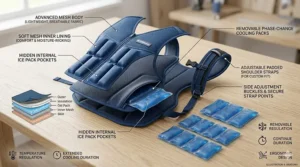
When ActiveMSers tested over 20 cooling vests, the Polar Products Cool58 consistently outperformed everything in the 3-4 hour cooling duration category. The secret isn’t just the phase-change packs—it’s Polar’s patent-pending spinal pocket arrangement that concentrates cooling along your central nervous system where MS lesions typically cluster, rather than distributing it evenly across your torso like generic vests.
The Cool58 packs maintain a constant 58°F throughout their duration, which sounds warmer than ice but actually proves more effective because your body doesn’t constrict blood vessels the way it does with 32°F ice packs. This means better circulation and more efficient core temperature reduction. Each pack weighs approximately 4.5 ounces, and the vest holds 6-8 packs depending on size, giving you granular control over cooling intensity—use fewer packs for mild heat or maximum packs for outdoor activities.
What the spec sheet doesn’t mention: This vest has been the go-to option for the Multiple Sclerosis Association of America’s cooling distribution program for years, meaning it’s been field-tested by thousands of MS patients in every climate imaginable. The cotton-spandex blend (97%/3%) provides just enough stretch for comfortable movement without the baggy fit that makes some cooling vests look like life jackets.
Pros:
✅ Industry-leading 3-4 hour cooling duration beats most competitors
✅ Spinal cooling pattern targets MS-affected nerve pathways
✅ Machine washable with packs removed
Cons:
❌ Heavier than PCM-only alternatives at 3-4 lbs when fully loaded
❌ Less discreet under fitted clothing than ThermApparel
Who should buy this: MS patients who spend extended periods outdoors, need all-day cooling for work, or want maximum cooling power regardless of visibility. In the $140-$190 range depending on pack bundle.
3. FlexiFreeze Professional Series Ice Vest – Best Value with Swappable Cooling
The FlexiFreeze Professional Series takes a fundamentally different approach: instead of expensive phase-change materials, it uses 96 pure water ice cubes encased in flexible sheets. Why does this matter? Water absorbs 35% more heat pound-for-pound than chemical gels as it melts, meaning you’re getting more cooling efficiency from less weight. At 3.5 pounds fully frozen, it delivers comparable cooling to 5-pound gel vests.
The genius is in the swappable panel system. Each vest comes with removable left, right, and back panels attached via hook-and-loop strips. Buy an extra panel set (around $25), and you can swap fresh frozen panels in 30 seconds flat, extending your cooling time indefinitely. One construction worker with MS told me he keeps four panel sets rotating in a cooler at his job site, giving him all-day protection in 100°F+ Arizona heat—something impossible with sealed cooling vests.
The Professional Series upgrades the Personal Series with YKK zippers (more durable than velcro), rip-stop fabric construction, and two large front pockets that actually fit a phone and wallet. It adjusts in four locations to accommodate sizes from XS to 6X, making it one of the few options that work for the full size spectrum without compromising fit quality.
Pros:
✅ Swappable panels enable all-day cooling with spare sets
✅ Pure water ice provides 35% better heat absorption than gels
✅ Most affordable option for the cooling power delivered
Cons:
❌ Requires freezer access to refresh panels
❌ 1.5-hour cooling per panel set is shorter than PCM vests
Who should buy this: Budget-conscious buyers, those with freezer access during the day, or anyone who values the flexibility to extend cooling indefinitely. In the $80-$120 range, with extra panels adding $25-$35.
4. Arctic Heat Body Cooling Vest – Lightweight Champion
At just 2.2 pounds when activated, the Arctic Heat Body Cooling Vest weighs roughly half what most cooling vests do, making it the top choice for MS patients who struggle with severe fatigue. The lighter weight isn’t a compromise—Arctic Heat uses a proprietary polymer gel that activates by soaking in water for 2-3 minutes, then can be optionally frozen for enhanced cooling.
This dual-activation method gives you flexibility other vests can’t match: quick water-activation when you need cooling immediately, or freeze-activation when you want maximum cold retention (up to 2 hours frozen). The vest works in humid conditions where evaporative vests fail, and because the gel crystals don’t fully liquefy like ice, you avoid the sloshing sensation some users find distracting.
European MS clinics have prescribed this vest for years—it’s particularly popular in Germany and the UK where specialist doctors write prescriptions specifically for Arctic Heat models. The firm-fit sizing recommendation (measure chest, choose the snugger size if between options) ensures the cooling panels stay in contact with skin rather than shifting during movement, a common complaint with looser-fitting alternatives.
Pros:
✅ Lightest weight option won’t aggravate MS fatigue
✅ Dual activation (water or freezer) for versatility
✅ Can be heated in winter for pain relief therapy
Cons:
❌ Shorter 1.5-2 hour cooling duration than premium vests
❌ Firm fit may feel restrictive for some body types
Who should buy this: MS patients prioritizing minimal weight, those without consistent freezer access (water activation works anywhere), or users who also need heat therapy for pain. Around $90-$130.
5. Polar Products Fashion Cooling Vest – Best for Style-Conscious Users
The Polar Products Fashion Vest addresses a complaint I hear constantly: “Why do all cooling vests look like safety equipment?” This model features a clean, logo-free design with discreet internal pockets—you could wear it as a regular vest and nobody would suspect its medical purpose. The fitted silhouette works with both casual and semi-dressy outfits, something impossible with boxy industrial-style vests.
Beyond aesthetics, you’re getting Polar’s proven cooling technology with your choice of Cool58 phase-change packs (58°F constant temperature, 2-3 hours) or Kool Max frozen water packs (higher cooling power, 3-4 hours, requires freezer). The 97% cotton/3% spandex construction provides just enough stretch for a tailored look without tightness, and the front pockets are actually usable for phone, keys, and cards rather than being decorative.
What makes this particularly valuable for MS patients is the psychological component. Several users mentioned that looking “normal” rather than “sick” improved their confidence in social situations, reducing the stress that can itself trigger symptom flares. The vest maintains clinical-grade cooling performance while eliminating the clinical appearance.
Pros:
✅ Fashionable design suitable for social and professional settings
✅ Choice of cooling pack types for different scenarios
✅ Functional pockets unlike many medical vests
Cons:
❌ Premium styling comes with premium pricing
❌ Cotton blend requires more careful washing than synthetic vests
Who should buy this: MS patients who attend social events, work in client-facing roles, or want their medical equipment to reflect personal style. In the $150-$200 range.

6. Alphacool Ice Vest – Best Adjustable Fit
The Alphacool Ice Vest solves a problem many MS patients face: body composition changes from medication, reduced activity, or disease progression making fixed-size vests obsolete within months. This vest adjusts in multiple locations with elasticated straps and velcro closures, accommodating chest sizes from 32″ to 50″ without looking baggy at the small end or stretched at the large end.
The vest comes with gel-based ice packs that fit into insulated internal pockets. Unlike hard ice packs that create pressure points, these conform to your body’s contours, remaining comfortable during extended wear. The cooling duration hits 2-3 hours in moderate conditions, placing it solidly in the mid-range for performance but at a budget-friendly price point.
One often-overlooked feature: the vest’s breathable mesh panels prevent the trapped heat that some fully-insulated vests create. This seems counterintuitive—shouldn’t insulation keep you cooler?—but in practice, allowing some air circulation prevents sweat buildup that can actually make you feel hotter once the initial cooling wears off.
Pros:
✅ Exceptional size adjustability accommodates weight fluctuations
✅ Gel packs conform to body without pressure points
✅ Breathable mesh prevents sweat accumulation
Cons:
❌ Less brand recognition than Polar or ThermApparel
❌ Cooling duration shorter than premium phase-change options
Who should buy this: MS patients experiencing weight changes, those between standard sizes, or anyone wanting a versatile vest that can be shared with family members. Around $70-$110.
7. CHILLSWIFT Cooling Vest – Best for Active Outdoor Use
The CHILLSWIFT targets a specific use case: short-duration activities where you need aggressive cooling but can refreeze packs between sessions. At under 1 pound empty and including 8 reusable polymer ice packs (fill with water once, freeze repeatedly), it’s designed for motorcycle rides, outdoor sports recovery, or job-site cooling breaks rather than all-day wear.
Here’s the practical advantage: The compact 22″ rib-cage cut concentrates cooling on your core without the full-torso coverage that can feel restrictive during active movement. The elasticated side straps flex with breathing and exertion, something rigid vests can’t match. The included insulated carry bag means you can transport frozen packs to work or events without them thawing en route.
The manufacturer positions this for 90-minute wear sessions rather than marathon cooling, which actually aligns perfectly with how many MS patients structure their days: intense activity punctuated by rest periods. Having 8 packs when only 4 fit in the vest at once means you can swap mid-session or have backups if packs are still thawing.
Pros:
✅ Ultra-lightweight won’t burden fatigued bodies
✅ 8 packs included enable pack rotation strategy
✅ Compact design doesn’t restrict movement
Cons:
❌ Shorter cooling sessions (1.5-2 hours) require planning
❌ Fill-your-own packs require initial setup effort
Who should buy this: MS patients engaging in specific time-limited activities, those wanting a secondary vest for different scenarios, or budget shoppers willing to trade convenience for savings. Around $50-$80.
How Cooling Vests Combat Uhthoff’s Phenomenon
To understand why these vests work, you need to grasp what’s happening inside an MS-affected nervous system when temperature rises. Uhthoff’s phenomenon—named after the German ophthalmologist who documented it in 1890—occurs because demyelinated nerve fibers are hypersensitive to temperature increases as small as 0.5°F. The damaged myelin sheath that normally insulates nerve fibers becomes even less effective when warm, slowing or blocking electrical signals entirely.
Think of it like an old electrical wire with cracked insulation. At room temperature, enough signal gets through to function. Heat makes the insulation more pliable, increasing signal leakage. In practical terms, this means vision blurring, leg weakness intensifying, cognitive fog thickening, or whatever your particular MS symptoms are becoming amplified. Research from Hunter College’s Department of Physical Therapy demonstrated that MS patients wearing cooling vests before exercise showed significantly improved 6-minute walk test performance compared to uncooled conditions—not because the vests strengthened muscles, but because they prevented heat-triggered nerve conduction failure.
The critical window is prevention. Once Uhthoff’s phenomenon triggers, you’re managing symptoms for hours even after cooling down. Pre-cooling your core temperature before heat exposure—wearing your vest 30 minutes before outdoor activity, for instance—keeps your nerve fibers in their optimal conduction range throughout the activity. This is why experienced MS patients treat cooling vests as preventive equipment rather than rescue devices.
Understanding Different Cooling Technologies
Phase Change Material (PCM) Vests
Phase-change materials like those in ThermApparel and Polar Cool58 vests maintain a constant temperature (typically 58°F) as they transition from solid to liquid. Unlike ice that starts at 32°F and gradually warms, PCM packs stay at 58°F until fully melted—think of it as a thermal battery that discharges at a steady rate rather than declining exponentially.
The physiological advantage: Your body doesn’t constrict blood vessels to protect against cold (vasoconstriction), which actually hampers cooling efficiency. The 58°F sweet spot cools core temperature without triggering protective responses that reduce blood flow to the skin. The disadvantage: PCM materials cost significantly more than water-based alternatives, explaining the $100+ price premium on these vests.
Water-Ice Based Vests
FlexiFreeze and similar water-ice vests use pure H2O because it’s the most thermodynamically efficient cooling medium available. When ice melts, it absorbs 79.7 calories per gram—that’s 35% more than equivalent-weight chemical gels. The trade-off is duration; water-ice melts faster than higher-temperature PCM, giving you intense cooling for shorter periods.
The practical sweet spot: Use these when you have freezer access for panel swaps. The initial investment is lower, and replacement panels cost a fraction of proprietary PCM packs. Many MS patients keep a FlexiFreeze as their “home vest” for yard work and gardening, reserving their expensive PCM vest for travel and full-day outings.
Evaporative Cooling Vests
I didn’t include evaporative vests in the top 7 because they have significant limitations for MS use. These vests work by water evaporation drawing heat away—effective in dry climates but nearly useless in humidity above 60%. They also require you to wet the vest (causing dampness) and only cool skin surface, not core temperature where Uhthoff’s phenomenon originates. Save these for arid climates only.
Real-World MS Patient Scenarios: Matching Vest to Lifestyle
The Professional Office Worker
Profile: Full-time desk job, commutes 30 minutes each way, occasional client meetings, building AC inconsistent
Challenge: Needs invisible cooling that won’t prompt workplace conversations about disability
Best Choice: ThermApparel UnderCool 3.0 with ExtendedCool packs
Why: Wear it under dress shirts/blouses arriving invisible to colleagues. The 2-3 hour duration covers commute + morning work. Recharge packs in office refrigerator at lunch for afternoon coverage. No explanations required.
The Active Parent
Profile: Stay-at-home parent with young children, outdoor playground time, errands, school drop-off/pickup
Challenge: Intermittent heat exposure throughout day, needs quick refresh capability
Best Choice: FlexiFreeze Professional with 2 extra panel sets
Why: Keep extra panels rotating in home freezer. Wear one set for morning playground (1.5 hours), swap to fresh panels for afternoon errands. The ability to refresh in 30 seconds between activities beats vests with single sealed packs requiring 1-hour freezer time.
The Outdoor Enthusiast
Profile: Enjoys hiking, gardening, bicycling despite MS, mostly weekend activities
Challenge: Wants maximum continuous cooling for 2-4 hour adventures
Best Choice: Polar Products Cool58
Why: The 3-4 hour duration accommodates most recreational activities without interruption. Willing to accept slightly higher visibility for proven long-duration performance. The investment makes sense for regular use.

Common Mistakes When Buying MS Cooling Vests
Mistake #1: Choosing Based on Cold Temperature Rather Than Duration
Many first-time buyers assume colder equals better, ordering vests with 32°F ice packs over 58°F phase-change materials. In reality, extreme cold triggers vasoconstriction (blood vessel narrowing) that reduces cooling efficiency. The 58°F sweet spot used by medical-grade vests maximizes core temperature reduction through sustained cooling rather than shock cooling. A vest maintaining 58°F for 3 hours outperforms one dropping to 32°F for 1 hour every time.
Mistake #2: Sizing Too Loose for “Comfort”
Cooling vests work through conductive heat transfer—your warm body touching cold packs. Air gaps from loose sizing create insulation that blocks cooling. If you’re between sizes, the tighter fit almost always performs better. Proper fit should feel snug like compression wear, not loose like a coat. The exception: if breathing restriction triggers anxiety, prioritize mental health over marginal cooling gains.
Mistake #3: Forgetting About Recharge Logistics
That 4-hour cooling vest seems perfect until you realize your office doesn’t have a freezer, your car reaches 130°F in summer parking, and your daily routine has no freezer access for 8 hours. Unless you’re buying a vest with water-activation backup (Arctic Heat) or planning a cooler-based transport strategy, map your freezer access before purchasing. The most powerful vest is useless if you can’t recharge it when needed.
Mistake #4: Overlooking Weight Distribution
A 4-pound vest sounds manageable until MS fatigue hits at hour 3 of wearing it. Front-heavy vests strain neck and shoulders. Back-heavy vests pull on upper spine. The best designs distribute weight around the torso (Polar’s spinal arrangement) or minimize total weight (Arctic Heat, CHILLSWIFT). If you experience significant fatigue, prioritize lightweight options even if they sacrifice some cooling duration.
Mistake #5: Buying Without Testing Return Policy
Not every vest works for every body or every MS symptom pattern. Some people find phase-change packs too warm, others find ice packs too cold. Some discover their spasticity makes rigid vests uncomfortable. Before investing $150+, verify the seller’s return policy. Amazon’s 30-day return window gives you time to test in real conditions, but third-party medical supply sellers may have restocking fees or no-return policies on used vests.
Cooling Vest vs Air Conditioning: When Each Makes Sense
Air conditioning seems like the obvious solution for heat-sensitive MS patients, but it has critical limitations that cooling vests solve. AC cools ambient air, requiring you to stay indoors within range of vents. The temperature differential between 72°F indoor air and your 98.6°F core temperature is only 26.6 degrees. A 58°F cooling vest pressed against your torso creates a 40.6-degree differential—53% more cooling power delivered directly where needed.
The mobility factor matters more than people realize. AC confines you to rooms with functioning units—impossible during outdoor activities, in cars with broken AC, or in public buildings with inadequate cooling. Cooling vests liberate you from location-based temperature control, enabling grocery shopping, social events, work, and recreation that would otherwise trigger Uhthoff’s phenomenon.
That said, combining both strategies provides optimal results. Use AC to maintain baseline temperature control at home and office, reserving vest wear for heat exposure periods: commutes, outdoor activities, warm buildings. This hybrid approach extends vest duration (less temperature differential to manage) while providing backup cooling when AC fails or isn’t available.
Insurance Coverage and Financial Assistance for MS Cooling Vests
Most private insurance classifies cooling vests as “comfort items” rather than durable medical equipment, denying coverage. However, three workarounds exist:
Flexible Spending Accounts (FSA) and Health Savings Accounts (HSA): These pre-tax accounts typically cover cooling vests when accompanied by a physician’s letter of medical necessity explaining how heat intolerance impacts your MS symptoms. The physician documentation must link the vest to symptom management, not general comfort. Submit your receipt and letter to your FSA/HSA administrator for reimbursement.
Multiple Sclerosis Association of America (MSAA): The MSAA Cooling Distribution Program provides free cooling vests and accessories to qualifying MS patients every five years. The application period runs February 1 through June 1 annually. Income and diagnosis verification required. Contact: (800) 532-7667 ext. 154 or [email protected].
Veterans Affairs Benefits: Military veterans with service-connected MS may qualify for free Polar Products cooling vests through VA prosthetics departments. Requires VA disability rating related to MS diagnosis. Contact your local VA medical center’s prosthetics department for application process.
One additional option: Some regional MS societies and nonprofit organizations maintain limited vest lending libraries or emergency funds for medical equipment. Contact your local National MS Society chapter to inquire about available resources in your area.
Maintenance and Care for Long-Term Performance
Washing the Vest
Remove all cooling packs before washing—never machine-wash vests with packs inside. Most fabric vests tolerate machine washing on gentle cycle with cold water, but always verify manufacturer instructions. Cotton blends (Polar Fashion Vest) may shrink slightly; synthetic materials (ThermApparel, FlexiFreeze neoprene) maintain size better. Air dry or tumble dry low; high heat can degrade elastic components and adhesive bonding in pocket linings.
Cooling Pack Lifespan
Phase-change material packs typically last 2-3 years with proper care. Store in solid state (refrigerated or frozen) when not in use; leaving them in liquid state (room temperature) for extended periods accelerates degradation. Signs of pack failure: significantly reduced cooling duration, pack material separating from outer casing, or crystallization that won’t fully melt. Replacement packs cost $40-$80 for a full set depending on vest type.
Water-ice sheets like FlexiFreeze panels last indefinitely if handled gently. The most common failure mode is punctures from sharp objects during washing or storage. Hand-wash panels with mild soap, never use dishwashers or washing machines. Store flat in freezer rather than folded to prevent stress on seams.
Storage Between Seasons
Don’t compress cooling vests during off-season storage—stacking heavy items on top can deform cooling packs and pocket structures. Hang vests on padded hangers or lay flat in storage bins. Keep in climate-controlled spaces; extreme heat (attics, garages) degrades materials faster. If storing packs separately, remove from fabric vest to prevent moisture transfer and mildew risk.

Frequently Asked Questions
❓ How long do cooling vests for multiple sclerosis actually stay cold?
❓ Can I wear a cooling vest for MS under regular clothing?
❓ Do cooling vests for multiple sclerosis prevent all Uhthoff's phenomenon symptoms?
❓ How cold should cooling packs be for MS symptom relief?
❓ Are cooling vests covered by insurance for MS patients?
Conclusion: Choosing Your MS Cooling Vest
After examining seven distinct approaches to MS cooling, three patterns emerge: premium phase-change vests (ThermApparel, Polar Cool58) deliver unmatched duration and consistency for $130-$200, mid-range options (Arctic Heat, Alphacool, Polar Fashion) balance performance and cost at $90-$150, while budget choices (FlexiFreeze, CHILLSWIFT) provide genuine relief for $50-$120 if you accept shorter durations or panel-swapping logistics.
The single most important decision isn’t which vest cools longest or costs least—it’s which vest you’ll actually wear consistently. An invisible vest gets used at social events where a bulky one stays home. A swappable-panel vest enables all-day outdoor work where a sealed vest fails after 3 hours. A lightweight vest gets worn during fatigue flares when a 4-pound option feels overwhelming.
Start by mapping your heat exposure patterns: Do you need all-day coverage or intermittent cooling? Discrete under-clothing wear or comfortable outer layer? Access to freezers for recharging or portable activation? Your honest answers to these questions matter more than any product ranking. For most MS patients, I recommend starting with a mid-range vest like the Polar Products Cool58 or Arctic Heat to establish your cooling needs, then either upgrading to ThermApparel for discretion or adding FlexiFreeze for specific activities. The best vest isn’t the one with the highest specs—it’s the one that expands what you can do despite MS.
Recommended for You
- 7 Best Evaporative Cooling Vests That Beat Heat in 2026
- 7 Best Phase Change Cooling Vest Options in 2026
- Best Cooling Vest for Construction Workers in 2026 (Top 7 Picks)
Disclaimer: This article contains affiliate links. As an Amazon Associate, I earn from qualifying purchases. If you purchase products through these links, we may earn a small commission at no additional cost to you.
✨ Found this helpful? Share it with your friends! 💬🤗
