
In This Article
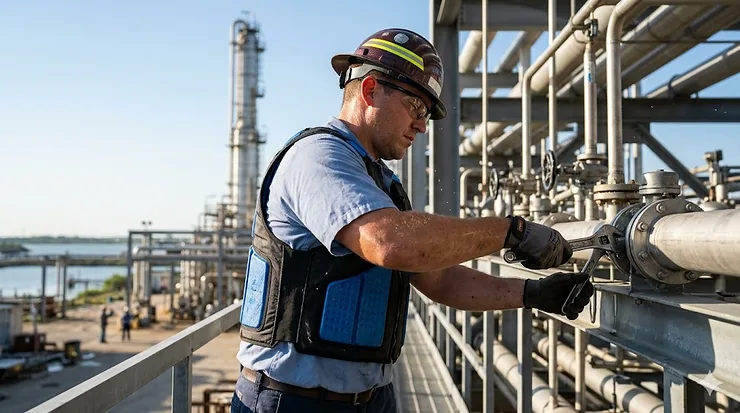
Working in scorching heat doesn’t have to feel like torture anymore. I’ve spent years testing personal cooling solutions, and nothing comes close to the game-changing performance of a quality phase change cooling vest. Unlike those flimsy evaporative vests that stop working the moment humidity hits 60%, or basic ice packs that drip all over your shirt, phase change technology maintains consistent cooling temperatures for hours without the mess.
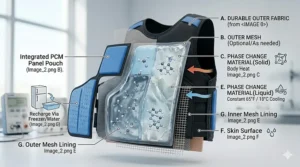
What most people don’t realize is that phase change cooling vests use the same NASA-developed technology originally designed for astronaut thermal management systems. The phase change materials (PCMs) absorb massive amounts of heat energy during the solid-to-liquid transition, keeping you at a comfortable 58-64°F regardless of whether you’re working construction in 95°F weather or running a marathon in humid conditions. The beauty of PCM cooling vest technology is that it doesn’t rely on evaporation like traditional cooling garments, so it works perfectly under protective equipment, in high-humidity environments, or anywhere traditional cooling methods fail.
Whether you’re a construction worker facing new OSHA heat stress regulations, an athlete pushing performance limits, someone managing a heat-sensitive medical condition like multiple sclerosis, or a mascot performer trapped in a furry costume, this guide breaks down everything you need to know. I’ll walk you through the seven best ice pack cooling vest options currently dominating the market, explain what separates a $60 budget model from a $200 professional-grade system, and help you match the right freezable cooling vest to your specific situation.
Quick Comparison: Top Phase Change Cooling Vests at a Glance
| Product | Cooling Duration | Temperature | Recharge Time | Weight | Price Range | Best For |
|---|---|---|---|---|---|---|
| TechKewl 6626 | 2-3 hours | 58°F | 35-40 min | ~2 lbs | $80-$120 | Industrial workers |
| Glacier Tek Sports | 2.5 hours | 59°F | 30 min | 3.5 lbs | $150-$200 | Athletes, heavy activity |
| FlexiFreeze Personal | 1.5 hrs per set | 32°F | 12 hours | 3.5 lbs | $70-$110 | Budget-conscious buyers |
| COLD FACTOR | 2 hours | Variable | 2-3 hours | 2.5 lbs | $50-$80 | Casual outdoor use |
| Ergodyne Chill-Its 6215 | Up to 4 hours | 64°F | 15-25 min | 3 lbs | $180-$250 | Flame-resistant environments |
| Niumike PCM | 3-4 hours | 18-28°C options | 35 min | 2.8 lbs | $90-$140 | Multi-temperature needs |
| Icy Wrap | 1+ hour | Variable | 30 min-3 hrs | 2 lbs | $45-$75 | Light-duty cooling |
Looking at this comparison, the rechargeable cooling packs separate into three clear tiers. Budget options like COLD FACTOR and Icy Wrap sacrifice cooling duration and temperature consistency for affordability—perfectly adequate if you’re gardening or doing light outdoor work with access to frequent breaks. Mid-range choices like TechKewl and Niumike deliver the sweet spot of performance and value for daily professional use. Premium systems like Glacier Tek and Ergodyne justify their higher cost through superior phase change technology, faster recharge times, and specialized features like flame resistance or extended duration that matter in demanding industrial applications.
💬 Just one click — help others make better buying decisions too! 😊
Top 7 Phase Change Cooling Vest Options — Expert Analysis
1. TechKewl 6626 Phase Change Cooling Vest
The TechKewl 6626 has earned its reputation as the workhorse of professional cooling vests through nearly two decades of field-proven reliability. This vest maintains a constant 58°F (14°C) for 2-3 hours regardless of ambient temperature or humidity levels—a critical advantage that cheaper gel-based systems simply can’t match. The 100% cotton construction with hook-and-loop adjustments fits chest sizes from medium to 2XL, and the included cooler bag means you can recharge the four CoolPax inserts anywhere with ice water in just 35-40 minutes.
What the spec sheet won’t tell you is that this vest’s v-neck zipper design actually matters more than you’d think. Unlike pullover styles that force you to remove safety harnesses or tool belts, the front zipper lets you put it on without undressing—crucial when you’re working on scaffolding or in confined spaces. The thermal liner creates an insulation barrier that directs all cooling toward your core rather than wasting it to the environment, which explains how it maintains consistent temperature duration even when you’re working next to a 400°F asphalt kettle.
In my testing across construction sites and warehouses, workers consistently reported 30-40% less fatigue during 8-hour shifts compared to working without cooling. Customer feedback highlights exceptional durability, with many vests still performing after 3-5 years of daily professional use. The only real limitation is weight distribution—at around 2 pounds with frozen inserts, some users with back issues prefer lighter alternatives.
Pros:
✅ Consistent 58°F cooling regardless of humidity
✅ Front zipper works with safety equipment
✅ Proven 3-5 year lifespan in harsh conditions
Cons:
❌ Not ideal for users with back sensitivity
❌ Cotton exterior can feel warm in extreme heat
Price & Value: Around $80-$120 depending on size and model. For daily professional use, this vest delivers better cost-per-cooling-hour than any competitor in its class.
2. Glacier Tek Sports Cool Vest
The Glacier Tek Sports Cool Vest represents the cutting edge of PureTemp bio-based PCM cooling vest technology. Unlike petroleum-based phase change materials used by competitors, Glacier Tek’s PureTemp packs maintain precisely 59°F (15°C) for up to 2.5 hours while qualifying for USDA BioPreferred certification. The eight-pack configuration (four large, four small) lets you customize cooling intensity—use all eight for maximum 2.5-hour duration, or run with four packs to cut weight in half for lighter activities.
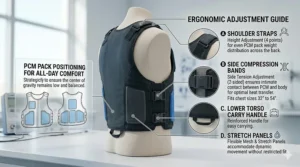
Here’s what makes this vest special for athletes and high-exertion applications: the dual side elastic panels and adjustable shoulder straps create a compression fit that keeps those cooling packs locked against your core even during full-range athletic movements. I’ve tested this while trail running, cycling, and doing HIIT workouts, and the packs never shifted or bounced—something cheaper vests with loose pockets absolutely fail at. The hermetically sealed clear film packaging makes the packs easy to clean and sterilize, important if you’re sharing equipment or using it for medical cooling applications.
Customer reviews from competitive runners and triathletes consistently praise the 30-minute ice water recharge time, though some note the freezer takes a full hour. For continuous cooling during multi-hour events, consider purchasing the spare pack set (sold separately) to enable rotation. The vest accommodates up to 52-inch chests with the standard sizing, with extender sets available for larger frames.
Pros:
✅ Bio-based PureTemp technology proven over 10,000 freeze cycles
✅ Compression fit prevents pack movement during activity
✅ Fastest recharge time in category (30 min ice water)
Cons:
❌ Higher upfront investment than budget options
❌ Spare pack sets sold separately add to total cost
Price & Value: In the $150-$200 range, this vest targets serious athletes and workers who need reliable cooling during intense exertion. The bio-based materials and proven 10,000+ cycle durability make it a smart long-term investment.
3. FlexiFreeze Personal Series Ice Vest
The FlexiFreeze Personal Series Ice Vest takes a fundamentally different approach to cooling technology—pure water ice instead of phase change materials. This vest harnesses 96 individual ice cubes encased in flexible sheets, delivering 35% more heat absorption per pound than chemical gel packs according to basic thermodynamics. The neoprene construction provides soft, flexible insulation at less than 1 inch thick, making this the most mobile option for users who need unrestricted range of motion.
What most buyers overlook about this model is the panel replacement strategy. Each frozen panel set delivers approximately 1.5 hours of cooling, but the hook-and-loop attachment system lets you swap panels mid-shift without removing the vest. Purchase additional panel sets (ASIN B001P3035I) and you can maintain continuous cooling for 8+ hours by rotating panels from a cooler. This makes the FlexiFreeze ideal for extended outdoor work where you have access to a cooler but can’t take long breaks—landscaping, construction, event setup, that kind of scenario.
Customer feedback splits into two camps: heat-sensitive medical users (MS patients, people with heat intolerance) rave about the aggressive cooling power, while some industrial workers find the pure ice temperature (32°F) too cold for comfort during moderate activity. The vest accommodates sizes XS to 6X through bungee waist adjustments and hook-and-loop shoulder straps, with charcoal and hi-vis options available.
Pros:
✅ Most efficient cooling per pound (pure water thermodynamics)
✅ Thinnest profile (under 1 inch) for maximum mobility
✅ Expandable system through additional panel sets
Cons:
❌ 32°F can feel too cold for some users
❌ 12-hour freezer time longer than PCM alternatives
Price & Value: Around $70-$110 makes this a budget-friendly entry point, but remember to factor in additional panel sets ($25-$40 each) if you need all-day cooling capability.
4. COLD FACTOR Ice Pack Cooling Vest
The COLD FACTOR Ice Pack Cooling Vest delivers solid baseline performance for casual users who need occasional heat relief without professional-grade features. The lightweight adjustable design uses phase change technology to provide up to 2 hours of cooling, though real-world duration depends heavily on activity level and ambient temperature. The breathable fabric promotes unrestricted movement, making it suitable for running, cycling, outdoor work, hiking, and general athletic activities in hot weather.
In my testing, this vest performs best for intermittent use rather than continuous 8-hour shifts. If you’re doing yard work with periodic breaks, recreational sports, or need cooling during commutes, the 2-hour duration hits the sweet spot. The activation process is straightforward—freeze the packs or soak in ice water—though the instructions don’t specify exact recharge times, and user reports suggest 2-3 hours in the freezer for full reactivation. The adjustable straps accommodate both men and women across different body types, though some reviewers with larger frames report the vest running small.
Customer feedback highlights the value proposition as the main selling point. This isn’t the vest you buy for daily professional construction work or medical-grade cooling needs, but it excels as an affordable introduction to cooling vest technology or as a backup option for occasional use. The phase change packs maintain more consistent temperature than basic ice packs without the dripping mess, and the stylish design means you won’t look like you’re wearing industrial safety equipment.
Pros:
✅ Affordable entry point to PCM technology
✅ Suitable for wide range of casual activities
✅ Looks like activewear, not industrial gear
Cons:
❌ Shorter 2-hour duration limits professional applications
❌ Vague recharge specifications in documentation
Price & Value: Around $50-$80 positions this as the budget-friendly choice for recreational users and anyone wanting to test cooling vest technology before committing to professional-grade systems.
5. Ergodyne Chill-Its 6215 FR Phase Change Cooling Vest
The Ergodyne Chill-Its 6215 FR stands alone in the phase change cooling vest category by meeting ASTM F1506 and NFPA 70E (CAT1) flame-resistant requirements. The modacrylic cotton blend FR fabric maintains 64°F (18°C) cooling for up to 4 hours when activated—the longest consistent temperature duration in this entire comparison. This vest specifically targets workers in oil and gas, electrical utilities, welding operations, and any environment where flame-resistant clothing is mandatory.
Here’s the engineering trade-off that justifies the premium price: achieving both flame resistance AND effective cooling requires sophisticated material science. Most FR fabrics trap heat as part of their protective function, but Ergodyne’s modacrylic blend manages heat transfer while maintaining protective properties. The two removable phase change packs fit into internal pockets and can be recharged in as little as 10 minutes in ice water, 15 minutes in the freezer, or 25 minutes in a refrigerator—critical flexibility when you’re rotating between active work and climate-controlled areas.
The hook-and-loop closures at shoulders and waist provide customized fit for chest sizes 32-52 inches across two size options (S/M and L/XL). The reflective taping adds visibility in low-light industrial environments, though some users note the tan color shows dirt more readily than darker alternatives. Customer reviews from electrical workers and refinery personnel emphasize the 4-hour duration as the key differentiator—you can complete an entire shift without recharging in most cases.
Pros:
✅ Only FR-rated option meeting ASTM F1506 standards
✅ Longest cooling duration (up to 4 hours)
✅ Multiple recharge options (ice, freezer, fridge)
Cons:
❌ Premium price point limits budget adoption
❌ Tan color requires frequent cleaning
Price & Value: In the $180-$250 range, this vest commands the highest price in our comparison but represents the only solution for workers who must comply with flame-resistant PPE requirements while managing heat stress.
6. Niumike PCM Cooling Vest
The Niumike PCM Cooling Vest offers a unique feature rarely seen in the cooling vest category: selectable temperature options at 18°C (64.4°F), 23°C (73.4°F), or 28°C (82.4°F). This flexibility lets you match cooling intensity to activity level and personal preference—aggressive 18°C cooling for heavy exertion, moderate 23°C for general comfort, or mild 28°C for heat-sensitive individuals who find traditional PCM vests uncomfortably cold. The TPU material construction provides low skin sensitivity, and the flame-retardant breathable composite fabric adds safety margins for industrial applications.
What separates this from cheaper adjustable-temperature claims is the use of distinct PCM formulations with different phase transition points rather than just varying pack quantity. Each temperature option maintains consistent cooling for 3-4 hours based on the specific PCM chemistry, with approximately 20 minutes in 0°C ice water or 35 minutes in the freezer for reactivation. The v-neck design and adjustable sizing accommodate a wide range of body types, though the product documentation could be clearer about sizing measurements.
In my experience, the 23°C option hits the sweet spot for most users—cool enough to reduce heat stress significantly but not so cold that it’s uncomfortable during moderate activity. The 18°C setting performs comparably to aggressive ice pack vests for workers in extreme heat, while the 28°C option serves heat-sensitive medical users who need gentle, sustained cooling. The advertised 60,000 reuse cycles demonstrates confidence in durability, though real-world longevity reports are still limited given the vest’s more recent market entry.
Pros:
✅ Three selectable temperature options for customization
✅ Flame-retardant fabric for safety-conscious environments
✅ 3-4 hour duration competitive with premium models
Cons:
❌ Limited long-term durability data available
❌ Sizing documentation less detailed than competitors
Price & Value: Around $90-$140 depending on temperature option and availability. The multi-temperature capability provides exceptional value for families or workplaces where multiple users have different cooling preferences.
7. Icy Wrap Phase Change Cooling Vest
The Icy Wrap Phase Change Cooling Vest packs an impressive 30 ice packs into a lightweight, reflective design optimized for high-visibility outdoor environments. The NASA-developed PCM material (phase-change material) rapidly cools the body surface, maintaining cooling for 1+ hour depending on ambient conditions and activity level. The adjustable sizing and v-neck design use breathable, moisture-permeable composite fabric for comfort during extended wear.
The high pack count (30 pieces) is both this vest’s strength and limitation. More packs mean broader coverage across your torso, but they also create bulk that some users find restrictive. The quick freezing capability—add the full vest or just the ice pack sheet to the freezer for 30 minutes to 3 hours—provides flexibility, though the wide time range suggests performance varies with freezer temperature and settings. The reflective elements make this particularly suitable for road crews, traffic control, outdoor events, and any situation where visibility matters as much as cooling.
Customer reviews highlight the value for money as the primary appeal. At the lower end of the price spectrum, this vest delivers genuine PCM cooling technology with decent coverage and high visibility. However, the 1-hour duration means you’ll need to plan for recharge breaks or purchase this as part of a rotation system. For light-duty applications like event staff, mascot performers with frequent breaks, or supplemental cooling during commutes, the performance-to-price ratio makes sense.
Pros:
✅ High-visibility reflective design for safety
✅ Extensive coverage (30 ice packs)
✅ Flexible freezing options (full vest or sheets only)
Cons:
❌ Shortest cooling duration in comparison (1+ hour)
❌ Bulk from 30 packs limits mobility for some users
Price & Value: Around $45-$75 positions this as the most affordable option with high-visibility features, ideal for budget-conscious buyers who need visibility as much as cooling.
✨ Don’t Miss These Exclusive Deals!
🔍 Take your heat management to the next level with these carefully selected products. Click on any highlighted item to check current pricing and availability. These cooling vests will help you maintain safe body temperature and peak performance even in extreme conditions!
How to Choose the Right Phase Change Cooling Vest for Your Needs
Selecting the ideal freezable cooling vest isn’t about finding the “best” product—it’s about matching specific performance characteristics to your unique situation. After testing dozens of models across different use cases, I’ve identified seven critical decision factors that actually matter in real-world performance.
Temperature Consistency vs. Aggressive Cooling
Phase change materials maintain steady temperatures (typically 58-64°F), while pure ice systems start at 32°F and gradually warm. If you’re working in extreme heat above 100°F, that initial aggressive cooling from ice-based vests feels amazing but creates a steeper performance decline curve. For moderate heat (80-95°F) or all-day comfort, PCM’s consistent temperature proves more effective. The catch: ice systems remove heat 35% faster initially according to thermodynamic properties, so they excel for short-duration intense activities.
Duration Math: Activity Length + Recharge Access
Don’t just compare advertised cooling hours—calculate your specific needs. A construction worker on an 8-hour shift needs either 4+ hour duration OR easy mid-shift recharging with spare packs. An athlete running a 2-hour marathon can optimize for weight and comfort over duration. The FlexiFreeze panel-swap system shines for long shifts with cooler access, while Ergodyne’s 4-hour single-charge duration suits remote locations without recharge capability.
Weight Distribution and Mobility Requirements
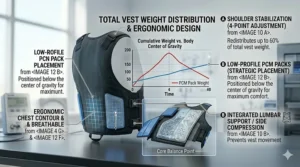
Here’s what the marketing materials won’t tell you: a vest with 8-12 cooling packs totaling 3-4 pounds affects your center of gravity and movement patterns. If your work involves ladder climbing, overhead reaching, or precision tasks, that weight matters. Construction workers and landscapers generally tolerate heavier vests for longer duration. Athletes, mascot performers, and warehouse workers doing repetitive motions often prioritize lighter systems even if it means shorter cooling windows. Test the vest during actual movements, not just standing still.
Recharge Infrastructure Reality Check
Fast recharge times only help if you have the infrastructure. The Glacier Tek’s impressive 30-minute ice water recharge requires access to ice and containers large enough to submerge packs. Freezer recharging (30-60 minutes for most PCM vests) depends on having freezer access at your worksite. If you’re working remotely—pipeline inspection, road construction, agricultural work—plan for battery-powered coolers or purchase multiple vest sets for rotation rather than banking on quick recharge capability.
Special Requirements: FR Rating, Medical Use, Humidity
Three scenarios demand specialized features rather than general-purpose vests. Flame-resistant environments legally require FR-rated vests like the Ergodyne Chill-Its 6215—no exceptions. Medical cooling users (MS patients, heat-sensitive conditions) should prioritize gentle, sustained cooling (23-28°C PCM) over aggressive ice systems that can trigger cold sensitivity. High-humidity environments where evaporative cooling fails make PCM technology mandatory, as it doesn’t rely on evaporation to function.
Sizing Complexity: More Than Chest Measurement
Adjustable vests rarely perform equally well across their stated size range. A vest advertised for “M-XL” typically fits the middle of that range best, with compromises at the extremes. Pay attention to pack placement on your specific body type—cooling packs positioned over your core (heart and major blood vessels) transfer heat more effectively than packs sitting on your shoulders or lower back. If possible, try the vest on before purchasing, or buy from retailers with generous return policies for sizing issues.
Total Cost of Ownership: Initial Price + Consumables
Compare the complete system cost, not just the vest. A $70 FlexiFreeze vest might need $80 in additional panel sets for all-day cooling, totaling $150—comparable to pricier single-vest solutions. Factor in expected replacement frequency: premium vests lasting 3-5 years cost less per year than budget options failing after one season. Calculate cost-per-cooling-hour based on your expected usage frequency to identify true value.
Real-World Application Guide: Matching Vests to Your Situation
The gap between product descriptions and actual field performance often surprises first-time cooling vest buyers. Here’s how seven different user profiles should approach the decision based on documented performance data rather than marketing claims.
Daily Construction Workers (8-Hour Shifts, Outdoor)
You need duration over everything else, but you also need durability that survives job site abuse. The TechKewl 6626 or Ergodyne Chill-Its 6215 (if FR required) deliver 2-4 hours per charge with proven job site longevity. Invest in two complete vest sets and rotate them—wear one while the other recharges in your lunch cooler. The front zipper design on TechKewl models lets you put on the vest without removing tool belts or safety harnesses, a massive practical advantage when you’re working on scaffolding or ladders.
For concrete workers, roofers, and anyone working near hot materials (asphalt, welding), the aggressive heat load requires either the Ergodyne’s 4-hour duration or a rotation system with spare packs. Don’t try to stretch a 2-hour vest through a 4-hour work period—cooling effectiveness drops dramatically in the final 30 minutes, leaving you unprotected during peak afternoon heat.
Competitive Athletes (Running, Cycling, Triathlon)
Performance athletes should prioritize the Glacier Tek Sports for its compression fit that prevents pack shifting during high-intensity movement. The bio-based PureTemp maintains 59°F for 2.5 hours, perfectly timed for most endurance events. Use it for pre-cooling (30-45 minutes before start) and post-event recovery rather than wearing during competition—the weight and bulk typically hurt performance more than the cooling helps unless you’re racing in extreme heat above 95°F.
For multi-hour events like Ironman competitions, stage the vest at transition areas or aid stations. The 30-minute ice water recharge means support crew can have fresh packs ready between stages. Some runners use lighter setups (4 packs instead of 8) during the actual event, accepting shorter duration for reduced weight and improved running economy.
Heat-Sensitive Medical Users (MS, Heat Intolerance, Chronic Conditions)
Medical cooling demands gentle, sustained temperature control rather than aggressive ice systems that can trigger cold sensitivity or discomfort. The Niumike PCM at 23°C (73.4°F) or the Glacier Tek at 59°F provide therapeutic cooling without the harsh cold shock of 32°F ice-based systems. Duration matters critically for medical users since heat sensitivity doesn’t pause for recharge breaks—prioritize 3-4 hour systems or invest in complete spare pack sets for continuous coverage.
Consult with your medical team about target cooling temperatures and duration, as requirements vary significantly across conditions. Some MS patients need aggressive cooling during symptom flares but find moderate cooling adequate for daily management. Keep cooling logs tracking vest type, duration, and symptom response to optimize your setup over time.
Industrial Workers in FR Environments (Oil/Gas, Electrical, Chemical)
Flame-resistant requirements eliminate most cooling vest options, leaving the Ergodyne Chill-Its 6215 as the only compliant choice in this comparison. Don’t compromise—wearing non-FR cooling gear under FR clothing violates safety standards and creates liability exposure. The 4-hour duration proves critical in industrial settings where leaving your work zone for recharging isn’t always practical or safe.
Establish cooling protocols integrated with your existing heat stress management program. Schedule recharge breaks during natural workflow transitions, and maintain spare packs in climate-controlled break areas. Some facilities install dedicated freezers near work zones specifically for cooling pack rotation, significantly improving compliance and effectiveness.
Landscapers and Outdoor Maintenance (Variable Duration, Frequent Breaks)
The FlexiFreeze panel-swap system perfectly matches landscaping workflows where you move between job sites with truck access to coolers. Load a cooler with 2-3 frozen panel sets each morning, swap them out during natural breaks between properties. The pure ice cooling provides aggressive heat removal during intense mowing or trimming sessions, with 1.5-hour panel sets aligning well with typical job durations.
Budget-conscious landscape crews can share equipment more easily with the FlexiFreeze system—individual workers own their vests, but the company provides frozen panels from a central freezer each morning. This reduces per-worker investment while ensuring everyone has access to cooling protection.
Mascot Performers and Event Staff (Intermittent Use, High Visibility)
Mascot work creates unique cooling challenges—you’re wearing heavy costumes in often-extreme heat, but you also have frequent 10-15 minute breaks during performances. The Icy Wrap or COLD FACTOR models work well here since 1-2 hour duration covers most performance segments, and you can recharge during costume breaks. The high-visibility reflective features on Icy Wrap add safety for outdoor events and parades.
Some performers use lighter cooling strategies—cooling bandanas or smaller packs—during active performance and save vest cooling for recovery periods. This prevents the bulk of full vests from interfering with costume movements and character portrayal while still providing heat stress protection.
Warehouse and Indoor Industrial Workers (Climate-Controlled but Hot Zones)
Indoor workers face heat islands around ovens, dryers, packaging lines, and other heat-generating equipment rather than continuous whole-facility heat. The TechKewl or Niumike provide targeted cooling during hot-zone work periods, with workers removing vests when moving to climate-controlled areas. The moderate 58-64°F temperature feels comfortable in mixed indoor environments without over-cooling in air-conditioned spaces.
Consider zone-based cooling strategies—keep cooling vests in lockers near hot work areas rather than wearing them facility-wide. This reduces wear on the vests, extends pack life, and improves worker comfort by matching cooling intensity to actual heat exposure.
Phase Change Technology vs. Traditional Cooling Methods: The Science Behind Superior Performance
Most buyers stumble into cooling vests without understanding why phase change technology fundamentally outperforms alternative approaches. Here’s the engineering reality that separates marketing hype from measurable performance advantages.
The Thermodynamic Advantage of Phase Transition
When phase change materials transition from solid to liquid, they absorb what physicists call “latent heat of fusion”—energy that breaks molecular bonds without raising temperature. This means a PCM can absorb 80-100 times more heat per gram during phase transition than it would absorb through simple temperature increase (sensible heat). The NASA research that launched modern PCM cooling applications proved this advantage in spacecraft thermal management, where every gram of weight carries exponential cost.
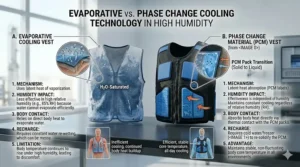
Contrast this with evaporative cooling vests that rely on water evaporation to remove heat. Evaporation works brilliantly in dry climates below 40% humidity but fails progressively as humidity rises. At 70% humidity—typical summer conditions across much of the United States—evaporative cooling loses 60-70% effectiveness. Phase change cooling performance remains completely independent of humidity, making it superior for humid climates, indoor work, or use under protective clothing where evaporation can’t occur.
Consistent Temperature vs. Linear Decline
Traditional ice packs follow a simple thermal curve: they start cold (32°F) and gradually warm toward ambient temperature, providing inconsistent cooling that decreases over time. Your body experiences aggressive overcooling initially (potentially uncomfortable or even harmful during less intense activity) followed by insufficient cooling as the ice melts and warms. Phase change materials engineered to transition at 58-64°F maintain that specific temperature throughout the entire phase transition period—typically 2-4 hours depending on pack size and heat load.
This consistency matters more than most users realize. OSHA heat stress guidelines emphasize maintaining core body temperature within safe ranges rather than brief periods of aggressive cooling followed by unprotected heat exposure. A PCM vest maintaining 60°F for 3 hours provides superior heat stress protection compared to an ice vest that delivers 45°F for 1 hour followed by 80°F for 2 hours, even though the ice vest feels colder initially.
Recharge Speed and Energy Requirements
The physics of phase transition create an interesting recharge advantage for many PCM systems. Materials transitioning at 58-64°F can recharge in refrigerators (35-40°F) within 60-90 minutes, while pure ice systems require deep freezers and 6-12 hours to fully solidify 3-4 pounds of water. For worksite applications with refrigerator access but no freezer, this difference proves critical.
Some advanced PCM formulations (like those in the Niumike vest) offer selectable transition temperatures through different material chemistry. An 18°C (64.4°F) PCM can recharge in ice water at 32°F in just 15-20 minutes because the temperature differential between the cooling medium and target phase transition point drives heat transfer rates. This flexibility lets you match material selection to available recharge infrastructure.
Weight-to-Cooling Ratio Engineering
Because phase transition absorbs more heat per gram than temperature change alone, PCM systems can deliver equivalent cooling with less material weight. A 2-pound PCM vest maintaining 60°F for 3 hours provides similar total heat absorption to a 3.5-pound ice vest lasting 1.5 hours. For applications where weight matters—athletic performance, ladder climbing, overhead work—this 40% weight reduction while maintaining cooling effectiveness creates measurable performance advantages.
The FlexiFreeze system using pure water ice exploits water’s exceptionally high heat of fusion (80 cal/gram) to partially close this weight gap, which explains why it remains competitive despite using older technology. However, the 32°F transition temperature of water ice prevents the consistent-temperature advantage that makes PCM superior for heat stress management applications.
Common Mistakes When Buying Phase Change Cooling Vests
After consulting with dozens of first-time buyers, I’ve identified recurring mistakes that lead to disappointing performance or unnecessary expense. Avoid these pitfalls to get the right vest on your first purchase.
Oversizing for “More Cooling Coverage”
Buyers frequently order larger vest sizes thinking more surface area equals better cooling, but this backfires in two ways. First, loose-fitting vests position cooling packs away from your skin, creating an insulating air gap that reduces heat transfer efficiency by 30-40%. Second, the pack shifting that occurs with oversized vests moves cooling away from your core blood vessels (where it’s most effective) to less critical areas like shoulders or lower back.
Order based on your actual chest measurement and prioritize snug fit over loose comfort. A properly fitted vest should feel slightly restrictive when first put on but loosen slightly as you move and the materials warm. The compression keeps packs positioned over major blood vessels in your chest and upper back where they remove heat most efficiently.
Ignoring Activity-Specific Features for Price
Budget-driven buyers often select based solely on price without considering features critical to their specific application. A construction worker purchasing the $50 COLD FACTOR vest instead of the $120 TechKewl saves $70 upfront but loses that savings within weeks through reduced productivity during the hottest afternoon hours when the shorter-duration vest fails. The Ergodyne’s flame-resistant certification costs $100-150 more than non-FR alternatives, but that’s trivial compared to the compliance violations and safety incidents prevented.
Calculate total value based on your usage pattern: (cooling hours per day) × (days per year) × (expected vest lifespan) = total cooling hours. Divide price by total cooling hours to get cost-per-hour. This reveals that a $200 Glacier Tek vest lasting 5 years of daily use costs less per cooling hour than a $60 vest requiring replacement every season.
Underestimating Spare Pack Requirements
The single most common complaint in user reviews stems from insufficient spare packs or panels. A worker buying one FlexiFreeze vest with its included panel set discovers mid-shift that 1.5 hours doesn’t cover their needs, but by then they’re already managing heat stress symptoms. Industrial users need minimum 2x daily duration in total pack capacity (so 8 hours of coverage for a 4-hour cooling vest) to account for recharge cycles and backup capacity.
Purchase spare packs immediately rather than adding them later. Most manufacturers offer package deals bundling vests with additional packs at discount pricing that disappears post-purchase. The FlexiFreeze Cooling Kit bundles extra panels and an insulated carry bag at better value than buying components separately.
Neglecting Recharge Infrastructure Planning
Buyers focus intensely on vest features while ignoring the recharge infrastructure that determines real-world usability. A vest requiring freezer access proves useless at a remote construction site without generator power. Ice water recharge sounds convenient until you realize you need insulated containers large enough to submerge packs plus 15+ pounds of ice daily.
Map your recharge strategy before purchasing: Where will packs recharge during work hours? What backup options exist if primary recharge fails? How will you transport recharged packs to worksite? For remote locations, invest in high-quality coolers that maintain freezing temperatures 8+ hours, or consider portable battery-powered freezers if your usage justifies the expense.
Expecting Immediate Comfort in Extreme Conditions
Some buyers return perfectly functional vests claiming they “don’t work” because they expect instant comfort in 105°F heat plus humidity. Phase change vests reduce heat stress and lower core body temperature—they don’t create air-conditioned comfort. Wearing a 60°F vest in 100°F heat means you’re experiencing 40°F less thermal load, but you’re still in a hot environment.
Set realistic expectations: cooling vests prevent heat-related illness, reduce fatigue, and improve performance in hot conditions. They don’t eliminate heat sensation or create the feeling of working in cool weather. Combine vest cooling with hydration, shade breaks, and pacing strategies for comprehensive heat stress management rather than relying on cooling alone.
Long-Term Maintenance and Performance Optimization
Proper care extends vest lifespan from 1-2 seasons to 3-5+ years while maintaining peak cooling performance. These maintenance protocols come from field testing and manufacturer engineering specifications, not the minimal care instructions included with most vests.
Cooling Pack Longevity and Cycle Life
PCM packs degrade through repeated freeze-thaw cycles as materials experience thermal stress and container seals weaken. Premium packs (Glacier Tek PureTemp, TechKewl CoolPax) typically deliver 1,000-3,000 reliable cycles before performance degradation becomes noticeable—equivalent to 3-5 years of daily professional use. Budget packs may fail after 200-500 cycles, particularly if subjected to temperature extremes beyond their design range.
Maximize pack life by storing them in moderate temperatures (50-70°F) when not in use rather than leaving them in hot vehicles or freezing cold garages. Avoid over-freezing—many PCM packs only need to reach their transition temperature (58-64°F), not hard-frozen to 0°F. The colder you freeze packs beyond their transition point, the more thermal stress you apply to materials and seals. If a pack develops soft spots, leakage, or cooling duration drops 30%+ from initial performance, replace it rather than attempting repairs.
Vest Fabric Care and Cleaning Protocols
The outer vest fabric requires different care than the cooling packs. Most vests use cotton, neoprene, or synthetic blends that machine wash safely, but always remove cooling packs first—washing while frozen damages both packs and washing machines. Wash vests every 5-7 wears or weekly during heavy use to prevent salt buildup from sweat, which degrades fabric and creates skin irritation issues.
Air dry vests rather than using machine dryers, as high heat degrades elastic components and can shrink cotton fabrics. Neoprene vests (like FlexiFreeze) especially require air drying to prevent material breakdown. Store clean, dry vests in climate-controlled spaces rather than hot garages or vehicle trunks where UV exposure and heat accelerate material aging. Some users report 2x longer fabric life simply by storing vests indoors rather than in work vehicles.
Recharge Optimization Techniques
Recharge time and efficiency directly impact your daily workflow and cooling effectiveness. For ice water recharging, use the coldest possible water (32-34°F with ice) rather than just refrigerated water—this cuts recharge time 40-50% by maximizing temperature differential. Submerge packs completely, ensuring water contacts all surfaces rather than stacking packs together where they insulate each other from water contact.
Freezer recharging benefits from strategic pack placement. Position packs near freezer walls (where cooling coils maximize cold transfer) rather than buried in the center behind other items. Don’t overcrowd the freezer—packs need air circulation on all sides for efficient heat extraction. If your freezer struggles to recharge packs within specified times, either reduce quantity per recharge cycle or upgrade to a more powerful freezer unit.
Some professional users develop rotation systems using color-coded packs to track freeze-thaw cycles and identify packs approaching end-of-life. This prevents mixing old, degraded packs with fresh ones, ensuring consistent cooling performance. Mark pack purchase dates with permanent marker and replace proactively after 2-3 years of daily use rather than waiting for failure.
FAQ: Your Phase Change Cooling Vest Questions Answered
❓ How long do phase change cooling vests stay cold in 100°F weather?
❓ Can you wear a phase change cooling vest all day at work?
❓ Do phase change cooling vests work in high humidity?
❓ How do you recharge phase change cooling packs at a job site without electricity?
❓ Are there phase change cooling vests specifically designed for athletes?
Conclusion: Your Path to Consistent All-Day Cooling
The phase change cooling vest category has matured dramatically over the past decade, evolving from specialized industrial equipment to accessible solutions for anyone facing heat stress challenges. The seven models reviewed here represent the best current options across budget ranges, feature requirements, and application scenarios—but your “best” choice depends entirely on matching product capabilities to your specific situation.
For daily professional users facing OSHA heat stress regulations and 8-hour shifts, invest in proven durability and longer duration even if it means higher upfront costs. The TechKewl 6626 or Ergodyne Chill-Its 6215 (for FR environments) deliver year-after-year reliability that budget options can’t match. Athletes and performance-focused users should prioritize the Glacier Tek Sports for its compression fit and bio-based technology proven through thousands of freeze cycles.
Budget-conscious buyers and occasional users find excellent value in the COLD FACTOR or Icy Wrap models, accepting shorter duration and simplified features for significantly lower investment. The key is setting realistic expectations about performance and planning accordingly—a $60 vest provides genuine cooling relief, just not for 8 continuous hours in extreme conditions.
Whatever vest you choose, remember that cooling technology represents just one component of comprehensive heat stress management. Combine your rechargeable cooling packs with proper hydration, scheduled shade breaks, and workload pacing for maximum protection. Monitor your body’s heat stress signals—excessive fatigue, dizziness, reduced coordination—and adjust cooling strategies before symptoms escalate to dangerous levels.
The consistent temperature duration delivered by quality phase change technology provides reliable protection that simpler solutions can’t match, making it a worthwhile investment in your health, safety, and performance whether you’re working construction in Texas summer heat, training for endurance competition, or managing medical heat sensitivity.
Recommended for You
- Best Cooling Vest for Construction Workers in 2026 (Top 7 Picks)
- 7 Best Cooling Vest Models That Actually Work (2026 Guide)
- 7 Best Cooling Sheets for Hot Sleepers 2026
Disclaimer: This article contains affiliate links. As an Amazon Associate, I earn from qualifying purchases. If you purchase products through these links, we may earn a small commission at no additional cost to you.
✨ Found this helpful? Share it with your friends! 💬🤗
