
In This Article
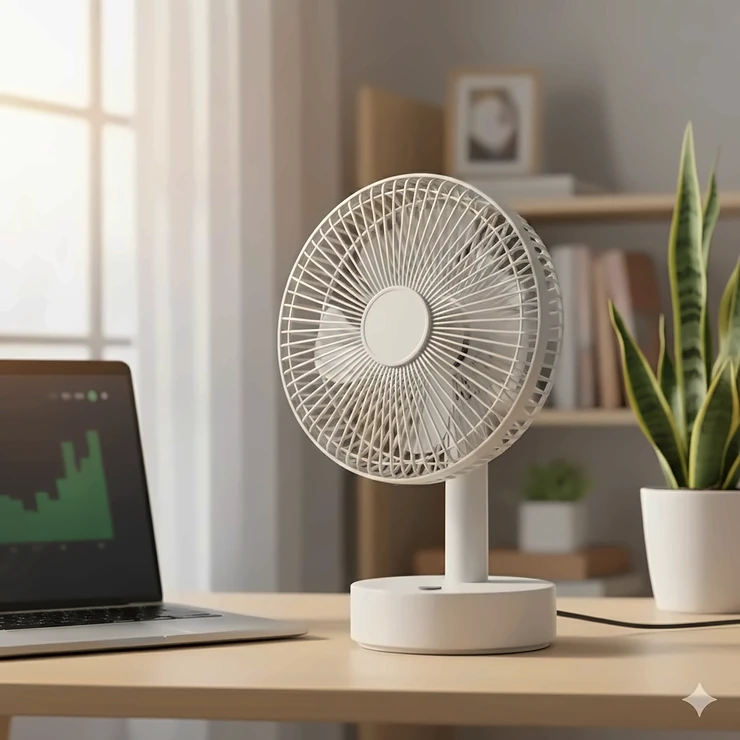
Ever felt like your workspace turns into a sauna during summer afternoons? You’re not alone. An oscillating desk fan can transform your stuffy office or cramped bedroom into a comfortable oasis, and in 2026, these little powerhouses have evolved far beyond the basic models your parents used.
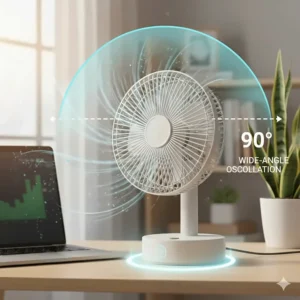
Unlike traditional stationary fans that blast air in one direction, an oscillating desk fan moves from side to side, distributing cool air across a wider area. This rotating motion means everyone in the room gets relief, not just the person sitting directly in front of it. According to Wikipedia, fans have been essential cooling devices since the 17th century, but modern designs now incorporate advanced features like bladeless technology, remote controls, and energy-efficient motors.
The beauty of a desk fan with oscillation lies in its versatility. Whether you’re working from home, studying late nights in your dorm, or just need better air circulation in your bedroom, these compact cooling solutions deliver impressive results without the hefty price tag of air conditioning. Research from the CDC shows that proper air circulation significantly improves indoor air quality by reducing stagnant air pockets where pollutants and odors accumulate.
In this comprehensive guide, I’ll walk you through the top seven oscillating desk fans currently available on Amazon, breaking down their features, performance, and value. You’ll discover which models offer the best wide angle coverage, which provide whisper-quiet operation for sleeping, and which deliver the most powerful automatic rotation to keep your entire room comfortable. Let’s dive in and find your perfect cooling companion.
Quick Comparison Table
| Product | Oscillation Range | Speed Settings | Noise Level | Price Range | Best For |
|---|---|---|---|---|---|
| Abolee Tower Fan | 70° | 4 speeds | 25 dB | $40-$50 | Bedrooms & Quiet Spaces |
| DR.PREPARE 16″ Tower | 60°-80° | 3 speeds | <40 dB | $35-$45 | Budget-Conscious Buyers |
| Honeywell HTF210B | Standard | 4 levels | Whisper-quiet | $30-$40 | Personal Cooling |
| Vornado STRATA 8T | 90°-180° | 10 speeds | <32 dB | $80-$100 | Premium Performance |
| Comfort Zone CZ121WT | Standard | 3 speeds | Low noise | $25-$35 | Basic Needs |
| DCVREDF 14″ Bladeless | 60° | 9 speeds | Ultra-quiet | $45-$60 | Safety & Style |
| Focket 90° Tower | 90° | Variable | 34 dB | $30-$40 | Compact Spaces |
💬 Just one click – help others make better buying decisions too!😊
Top 7 Oscillating Desk Fans: Expert Analysis
1. Abolee Tower Fan – Best Overall Bladeless Option
The Abolee Tower Fan delivers exceptional performance with its 70-degree oscillating mechanism and bladeless design that prioritizes safety and style. This 13-inch model features four distinct modes including AI mode that automatically adjusts fan speed based on ambient temperature.
Key Specifications:
- Airflow velocity: 23 ft/s
- Remote control included
- 12-hour timer function
Customer feedback consistently praises its whisper-quiet operation at just 25 decibels, making it perfect for bedrooms and home offices. One Amazon reviewer noted that “the AI mode is genuinely useful, not just a gimmick.”
✅ Pros:
- Ultra-quiet operation ideal for sleep
- Smart AI temperature adaptation
- Bladeless design safe for children and pets
❌ Cons:
- Slightly higher price point
- Limited oscillation angle compared to competitors
Price: $40-$50 | Rating: 4.4/5 stars
2. DR.PREPARE Oscillating Tower Fan – Best Value Pick
The DR.PREPARE Oscillating Tower Fan offers impressive versatility with selectable oscillation ranges of either 60 or 80 degrees. At 16 inches tall, this swivel desk fan provides excellent coverage without occupying much floor space.
Key Specifications:
- Dual oscillation options (60°/80°)
- Detachable washable design
- Energy-efficient operation
This rotating desk fan operates below 40 decibels and includes three automatic timer settings (2H, 4H, 8H). Customers appreciate the dual air circulation feature that creates powerful airflow while maintaining energy efficiency.
✅ Pros:
- Excellent price-to-performance ratio
- Easy to clean removable components
- Multiple timer options
❌ Cons:
- Basic remote functionality
- No advanced smart features
Price: $35-$45 | Rating: 4.3/5 stars
3. Honeywell HTF210B QuietSet – Best for Personal Cooling
The Honeywell HTF210B QuietSet stands out as a compact oscillating desk fan that delivers powerful cooling with remarkably quiet operation. This 13-inch tower design features Honeywell’s proprietary QuietSet technology with four distinct sound and power level combinations.
Key Specifications:
- 10-foot air circulation power
- Auto shut-off timer
- Slim, space-saving design
According to Honeywell’s research, their fans can help reduce air conditioning costs by up to 15% when used in conjunction with existing cooling systems. The oscillating function distributes air evenly across desktops and small rooms.
✅ Pros:
- Brand reliability and warranty
- Multiple sound/power combinations
- Compact footprint perfect for desks
❌ Cons:
- Limited oscillation customization
- No remote control included
Price: $30-$40 | Rating: 4.5/5 stars
4. Vornado STRATA 8T – Premium Choice with Advanced Features
If you’re willing to invest in premium quality, the Vornado STRATA 8T represents the pinnacle of desk fan with oscillation technology. This sophisticated model offers adjustable oscillation ranging from 90 to 180 degrees with ten precise speed settings.
Key Specifications:
- Energy-efficient DC motor
- RF remote with magnetic storage
- Removable grille for easy cleaning
The elevated airflow technology captures cool air from floor level and propels it upward, creating superior circulation on elevated surfaces. The Breeze Mode feature mimics natural outdoor wind patterns by gently varying fan speed.
✅ Pros:
- Exceptional 180-degree oscillation coverage
- Near-silent operation under 32 dB
- 5-year manufacturer warranty
❌ Cons:
- Premium pricing
- Larger footprint than basic models
Price: $80-$100 | Rating: 4.6/5 stars
5. Comfort Zone CZ121WT – Best Budget-Friendly Option
The Comfort Zone CZ121WT proves that effective cooling doesn’t require breaking the bank. This traditional 12-inch oscillating desk fan features a classic design with modern reliability at an incredibly affordable price point.
Key Specifications:
- 7.25 ft/sec airflow
- Adjustable tilt head
- Push-button controls
With three speed settings and a sturdy base, this model delivers straightforward performance without unnecessary complications. The oscillating function and adjustable tilt provide excellent customization for directing airflow exactly where needed.
✅ Pros:
- Extremely affordable
- Simple, intuitive controls
- Durable metal construction
❌ Cons:
- Basic features only
- Louder than premium models
Price: $25-$35 | Rating: 4.2/5 stars
6. DCVREDF 14-Inch Bladeless Fan – Best for Safety-Conscious Buyers
The DCVREDF 14-Inch Bladeless Fan combines cutting-edge bladeless technology with impressive functionality. This desk fan with oscillation offers nine adjustable speed settings and a rechargeable 5000mAh battery for cordless operation.
Key Specifications:
- 60-degree oscillation
- USB rechargeable battery
- Three light modes with touch control
The bladeless design eliminates safety concerns while maintaining easy cleaning access. Customers particularly appreciate the built-in LED lighting that doubles as a nightlight.
✅ Pros:
- Completely blade-free for maximum safety
- Portable with rechargeable battery
- Modern aesthetic design
❌ Cons:
- Battery life limits extended use
- Smaller oscillation range
Price: $45-$60 | Rating: 4.3/5 stars
7. Focket 90-Degree Oscillating Tower Fan – Best Compact Design
The Focket 90-Degree Oscillating Tower Fan maximizes cooling efficiency in minimal space. This bladeless tower design provides smooth 90-degree oscillation with USB-powered convenience.
Key Specifications:
- USB-powered operation
- Removable rear grille
- Built-in LED light
Operating at just 34 decibels, this compact swivel desk fan fits perfectly on crowded desks or small nightstands. The converging design enhances airflow distribution throughout confined spaces.
✅ Pros:
- Space-efficient vertical design
- USB power for versatility
- Easy to clean components
❌ Cons:
- USB power limits maximum airflow
- Basic feature set
Price: $30-$40 | Rating: 4.1/5 stars
✨ Don’t Miss These Exclusive Deals!
🔍 Take your cooling experience to the next level with these carefully selected products. Click on any highlighted item to check current pricing and availability. These tools will help you create authentic comfort your family will love!
Understanding Oscillating Desk Fan Technology
Modern oscillating desk fans have evolved dramatically from their predecessors. The automatic rotation mechanism uses a specialized motor that moves the fan head horizontally within a predetermined arc. This side-to-side movement ensures consistent air distribution across larger areas compared to stationary fans.
According to research published in ScienceDirect, oscillating mechanisms create vortical structures that enhance heat dissipation by up to 7.5°C compared to steady airflow conditions. The bladeless designs, popularized by Dyson in 2009 using Toshiba’s 1981 technology, employ the Coandă effect to multiply airflow without exposed spinning blades.
The key advantage of wide angle coverage lies in creating whole-room circulation rather than focused cooling. When an oscillating desk fan sweeps across a space, it disrupts stagnant air pockets, mixes temperature layers, and distributes both cool and warm air more evenly. This principle makes them effective for both summer cooling and winter heat distribution.
Energy efficiency represents another crucial benefit. Most desk fans consume between 16-53 watts compared to air conditioners that use 1,000-4,000 watts. By pairing an oscillating desk fan with your existing AC system, you can raise the thermostat by 3-4 degrees while maintaining comfort, potentially reducing cooling costs by 15-20% annually.
Key Features to Consider
Oscillation Range and Pattern
The adjustable oscillation range determines how much area your fan can cover. Entry-level models typically offer 60-70 degrees, which works well for personal use or small rooms. Mid-range options provide 80-120 degrees, suitable for medium-sized bedrooms and offices. Premium models like the Vornado STRATA 8T deliver up to 180 degree oscillating desk fan coverage, essentially creating half-circle airflow distribution.
Some advanced models allow you to customize the oscillation arc, enabling you to focus cooling on specific zones while avoiding others. This feature proves particularly useful in shared spaces where you might want to cool a work area without disturbing papers or creating drafts near a sleeping baby.
Motor Type and Energy Efficiency
Traditional AC motors are reliable but consume more power and generate additional noise. Modern DC motors, found in premium models, offer 50-80% better energy efficiency while running significantly quieter. They also provide more precise speed control, often supporting 8-10 different settings instead of the typical three.
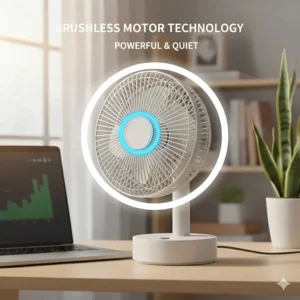
Brushless DC motors represent the latest advancement, delivering exceptional longevity with minimal maintenance requirements. These motors generate less heat during operation and maintain consistent performance even after years of daily use.
Noise Levels and Sleep-Friendly Operation
Decibel ratings provide crucial information for bedroom use. Fans operating below 30 dB are considered whisper-quiet and won’t disturb sleep. Models in the 30-40 dB range remain relatively quiet, comparable to a library or soft conversation. Above 40 dB, you’ll notice more audible operation that might interfere with concentration or rest.
Many modern fans include dedicated sleep modes that reduce both speed and noise while maintaining gentle air circulation. Some models feature “white noise” or “pink noise” profiles that actually help mask disruptive environmental sounds.
Oscillating vs. Non-Oscillating Fans
The choice between oscillating and stationary fans depends on your specific cooling needs. According to TechRadar’s analysis, oscillating fans excel at creating whole-room circulation, while non-oscillating models provide more concentrated cooling for individual use.
An oscillating desk fan continuously moves air across a broad area, preventing any single zone from becoming too cold or too warm. This makes them ideal for shared spaces, bedrooms where multiple people sleep, or rooms with irregular layouts where air tends to stagnate in corners.
Non-oscillating fans, conversely, deliver more powerful direct airflow to a specific location. They work better for personal cooling at a desk, supplementing AC output from a particular vent, or creating focused circulation in narrow spaces. Some modern fans offer the best of both worlds with switchable oscillation that you can enable or disable as needed.
Research from Vornado Australia demonstrates that proper air circulation can distribute temperature differences throughout a room, eliminating hot and cold spots that force HVAC systems to work harder. An oscillating desk fan facilitates this circulation pattern more effectively than stationary alternatives.
Placement Strategies for Maximum Cooling
Strategic positioning dramatically affects your oscillating desk fan’s performance. For optimal cooling, place your fan perpendicular to your air conditioning vent. The oscillating motion will capture the cold air and distribute it more evenly throughout the room, amplifying your AC’s effectiveness.
In rooms without air conditioning, position your fan near an open window to draw in cooler outdoor air while the oscillation spreads it across the interior space. This creates natural cross-ventilation that can lower indoor temperatures by several degrees during mild weather.
For desk work, elevate your fan slightly above desk surface level to avoid directly blowing papers while still providing comfortable cooling. The Vornado STRATA 8T specifically addresses this with its elevated airflow design that pulls cool air from floor level and projects it upward.
During winter, run your oscillating desk fan on low speed while positioned to push warm air down from the ceiling. Heat naturally rises and collects near the ceiling where it does little good. The gentle circulation redistributes that warmth without creating uncomfortable drafts.
Maintenance and Cleaning Tips
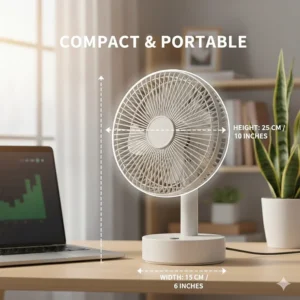
Regular maintenance extends your fan’s lifespan and maintains optimal performance. Dust accumulation on blades and grilles reduces airflow efficiency by up to 30% over time. For traditional fans, disconnect power and carefully remove the front grille following manufacturer instructions. Wipe blades with a damp cloth and vacuum grille openings to remove embedded dust.
Bladeless models offer significant maintenance advantages. Most feature removable rear filters that you can rinse under running water monthly. The smooth surfaces prevent dust buildup and require only occasional wiping with a microfiber cloth.
For fans with exposed motors, use compressed air to clear dust from ventilation slots quarterly. Never spray cleaning solutions directly onto electronic components. Instead, lightly dampen your cleaning cloth and avoid excess moisture that could damage internal circuits.
If your oscillating desk fan develops unusual noises, first check for loose screws or misaligned components. Many oscillation mechanisms include user-serviceable parts that simply need tightening. However, grinding or clicking sounds from the motor itself typically indicate professional service requirements.
Energy Savings and Environmental Impact
Oscillating desk fans represent one of the most energy-efficient cooling solutions available. According to Britannica’s technical specifications, fans move between 200 to 500,000 cubic feet of air per minute while consuming minimal electricity compared to compressor-based cooling systems.
A typical oscillating desk fan running 8 hours daily costs approximately $2-5 per month in electricity, depending on your local rates and the fan’s wattage. Compare this to central air conditioning at $50-150 monthly, and the savings become substantial. By using fans strategically to supplement rather than replace air conditioning, you can significantly reduce your carbon footprint while maintaining comfort.
Modern DC motor fans further enhance these savings. Models like the Vornado STRATA 8T consume as little as 16 watts on low settings, comparable to an LED light bulb. Even at maximum speed, premium efficient fans rarely exceed 50 watts, making them viable for continuous operation without guilt about energy waste.
The environmental benefits extend beyond electricity consumption. Manufacturing a desk fan requires far fewer resources and generates less pollution than producing and installing central AC systems. Additionally, fans don’t use refrigerants that can harm the ozone layer or contribute to greenhouse gas emissions when leaked or improperly disposed of.
Safety Features and Certifications
Modern oscillating desk fans incorporate multiple safety features addressing common hazards. Bladeless designs eliminate the primary risk of finger or hair entanglement that traditional models posed, making them ideal for households with children or pets.
For conventional blade fans, look for models with closely-spaced grille patterns that prevent small fingers from reaching moving parts. The spacing should be no more than half an inch between grille bars. Some manufacturers use reinforced grilles that can’t be easily removed by curious children.
Thermal protection circuits represent another critical safety feature. These sensors detect overheating motors and automatically shut down the fan before dangerous temperatures develop. Quality fans include automatic reset functions that allow resumption of operation once components cool to safe levels.
Stable base construction prevents tipping hazards, particularly important for tower-style models with higher centers of gravity. The best designs incorporate weighted bases or wide footprints that resist accidental knocks. Some premium models add anti-slip rubber feet for additional security on smooth surfaces.
Electrical safety certifications from UL, ETL, or CE indicate independent testing verified the fan meets recognized safety standards. These certifications confirm proper insulation, grounding, and protection against electrical hazards. Never use fans lacking these safety marks, especially in damp environments like bathrooms.
Smart Features and Connectivity
The latest oscillating desk fans integrate smart technology that enhances convenience and efficiency. Wi-Fi connectivity allows control via smartphone apps, enabling you to adjust settings from anywhere in your home. Some models work with Alexa or Google Assistant for voice control integration.
Programmable timers have evolved beyond simple on/off functions. Advanced models support custom schedules that align with your daily routine. Set your fan to start cooling your bedroom 30 minutes before bedtime, then gradually reduce speed throughout the night, and finally shut off automatically after you’ve fallen asleep.
Temperature sensors in premium fans like the Abolee enable automatic speed adjustment based on ambient conditions. As your room warms, the fan increases output to maintain comfort. When temperatures drop naturally, the fan reduces power consumption accordingly. This responsive automation optimizes both comfort and energy efficiency without manual intervention.
Some innovative models include air quality sensors that detect elevated CO2 levels or volatile organic compounds. These fans automatically increase ventilation when air quality degrades, helping maintain healthier indoor environments. While not yet common in desk fan sizes, this technology is rapidly advancing and becoming more affordable.
Comparing Price Points and Value
Budget models in the $25-40 range like the Comfort Zone CZ121WT provide basic oscillation and multiple speed settings without advanced features. These fans work reliably for simple cooling needs and represent excellent value if you don’t require smart controls or ultra-quiet operation.
Mid-range options between $40-60 introduce enhanced features such as remote controls, additional speed settings, and quieter operation. The DR.PREPARE and DCVREDF models exemplify this category, offering significant performance improvements over budget alternatives without premium pricing.
Premium fans exceeding $80, represented by the Vornado STRATA 8T, justify their cost through superior engineering, extended warranties, and exceptional performance. DC motors, precise oscillation control, and near-silent operation appeal to discerning users who prioritize quality and longevity over initial savings.
When evaluating value, consider total cost of ownership including energy consumption and lifespan. A $100 fan using 20 watts that lasts 10 years costs less long-term than a $30 fan using 50 watts that requires replacement every 2-3 years. Factor in the enhanced comfort and convenience of premium features when calculating true value.
✨ Don’t Miss These Exclusive Deals!
🔍 Take your cooling experience to the next level with these carefully selected products. Click on any highlighted item to check current pricing and availability. These tools will help you create authentic comfort your family will love!
Seasonal Uses and Year-Round Benefits
While most people associate oscillating desk fans with summer cooling, these versatile devices provide year-round utility. During winter, position your fan to circulate warm air that accumulates near ceilings in heated rooms. Running the fan on low speed redistributes this heat downward without creating uncomfortable cold drafts.
Spring and fall represent ideal seasons for fan-only cooling, eliminating the need for air conditioning during mild weather. Open windows on opposite sides of your room and position your oscillating desk fan to pull fresh outdoor air through the space. This natural ventilation strategy costs virtually nothing while providing pleasant cooling and improving indoor air quality.
Humidity control represents another overlooked benefit. Fans don’t remove moisture like dehumidifiers, but the constant air movement helps evaporate dampness from surfaces and prevents the stuffy feeling associated with high humidity. This makes rooms feel more comfortable even when temperatures remain unchanged.
Many users discover unexpected applications for their oscillating desk fans. Painters use them to accelerate drying times. Crafters employ them for ventilating spaces when working with adhesives or solvents. Pet owners appreciate the gentle breeze keeping furry friends comfortable during grooming sessions.
Troubleshooting Common Issues
If your oscillating desk fan stops rotating properly, first check for obstructions preventing the mechanism from moving freely. Accumulated dust or small objects wedged in the oscillation track often cause this problem. Disconnect power and carefully inspect the base, removing any debris you find.
Wobbling during operation usually indicates an unlevel surface or loose assembly components. Place the fan on a completely flat surface and verify all screws are properly tightened. If wobbling persists, check that the fan head is correctly aligned on its mounting bracket.
Reduced airflow despite normal operation suggests either blade contamination or motor wear. Clean all surfaces thoroughly and run the fan at maximum speed in an unobstructed area. If performance doesn’t improve, the motor may be aging and losing efficiency, indicating consideration for replacement.
Strange odors during initial use are typically harmless, resulting from manufacturing residues burning off. However, persistent burning smells signal potential electrical problems requiring immediate shutdown and professional inspection. Never ignore unusual odors as they may indicate fire hazards.
Intermittent operation or sudden shutdowns point toward thermal protection activation. This safety feature prevents overheating damage but recurring activation suggests inadequate ventilation around the motor or internal problems requiring professional service.
FAQ
❓ Can an oscillating desk fan really replace air conditioning?
❓ What oscillation range works best for bedroom use?
❓ How often should I clean my oscillating desk fan?
❓ Do DC motor fans really save significant energy compared to AC motors?
❓ What's the ideal placement for maximum cooling effectiveness?
Conclusion: Choose Your Perfect Oscillating Desk Fan
Selecting the right oscillating desk fan depends on balancing your specific needs against available options. If bedroom quietness tops your priority list, the Abolee Tower Fan or Vornado STRATA 8T deliver near-silent operation that won’t disturb sleep. Budget-conscious shoppers will appreciate the DR.PREPARE’s excellent value proposition, offering solid performance without premium pricing.
For families with children or pets, bladeless models like the DCVREDF provide peace of mind through enhanced safety features. Those seeking maximum versatility should consider models with adjustable oscillation ranges, allowing customization for different situations and room configurations.
Remember that the best oscillating desk fan isn’t necessarily the most expensive or feature-packed option. A reliable mid-range model that meets your core requirements often delivers better long-term satisfaction than a premium fan with unused capabilities or a budget option that struggles with basic performance.
Consider your typical usage patterns when making your decision. If you’ll run your fan continuously throughout summer, energy efficiency and durability become paramount. Occasional users might prioritize portability and storage convenience instead. Match the fan’s strengths to your actual needs rather than theoretical capabilities.
The oscillating desk fan market in 2026 offers unprecedented variety and value. Whether you choose a traditional blade design or cutting-edge bladeless technology, proper selection based on this guide will ensure comfortable, efficient cooling for years to come.
✨ Don’t Miss These Exclusive Deals!
🔍 Take your cooling experience to the next level with these carefully selected products. Click on any highlighted item to check current pricing and availability. These tools will help you create authentic comfort your family will love!
Recommended for You
- 7 Best Rechargeable Desk Fans – Cordless Power 2026
- 7 Best USB Desk Fans That’ll Keep You Cool in 2026
- 7 Best Quiet Desk Fans for Office: Silent Cooling 2026
Disclaimer: This article contains affiliate links. If you purchase products through these links, we may earn a small commission at no additional cost to you.
✨ Found this helpful? Share it with your friends! 💬🤗
