
In This Article
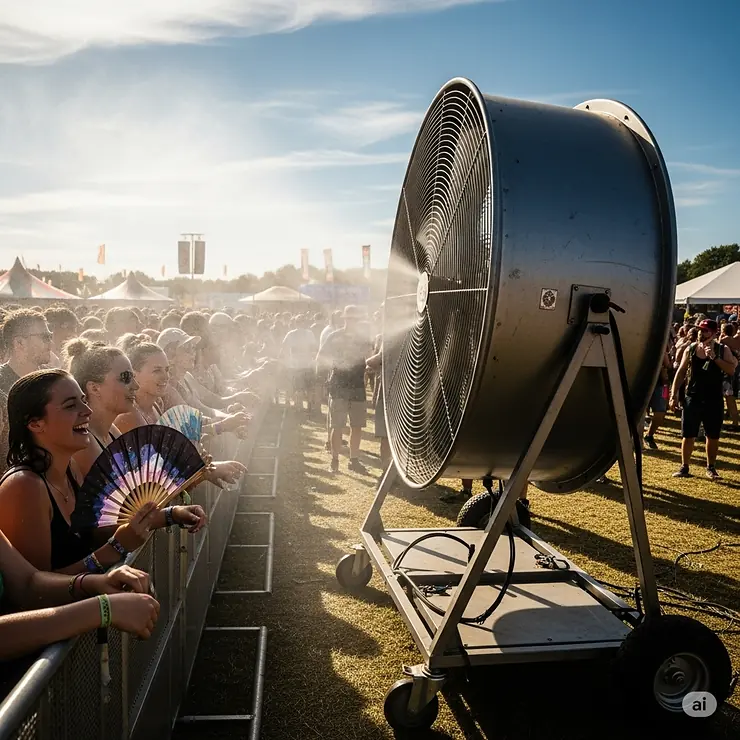
When you’re planning an outdoor event, nothing ruins the party quite like sweltering heat. Whether you’re hosting a backyard wedding, organizing a corporate gathering, or setting up a festival booth, the right cooling fans for outdoor events can make the difference between a memorable celebration and a miserable experience.
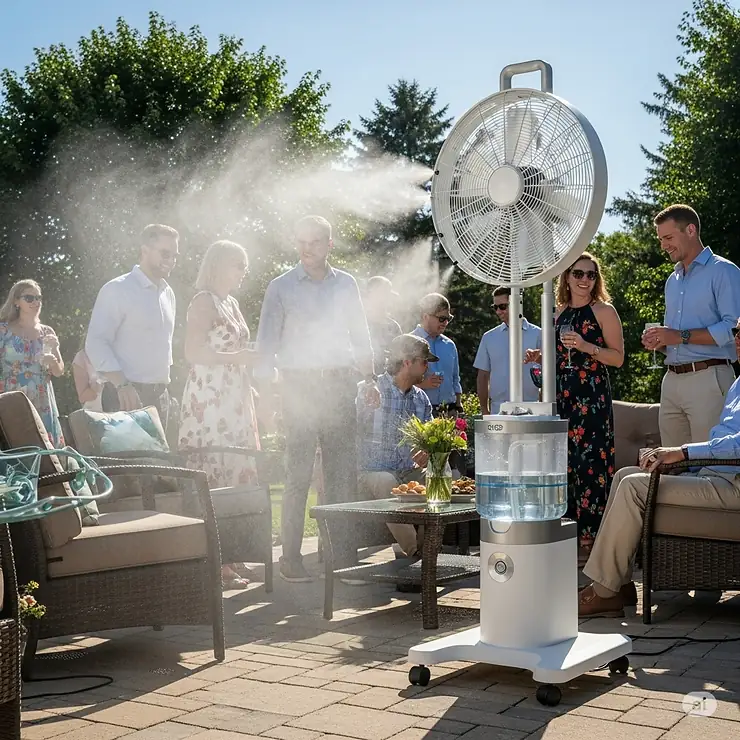
The challenge isn’t just finding any fan – it’s discovering the perfect balance of power, portability, and performance that keeps your guests comfortable without breaking your budget or overwhelming your setup crew. From sophisticated misting systems that drop temperatures by 25 degrees to ultra-portable cordless units that run for hours, today’s outdoor cooling technology offers solutions for every type of event and environment.
✨ Was this helpful? Spread the word! 🚀
Understanding the Science Behind Outdoor Event Cooling 🌡️
Before diving into specific products, it’s crucial to understand how cooling fans for outdoor events actually work in different environmental conditions. Unlike indoor fans that simply circulate existing air, outdoor fans face unique challenges including ambient temperature, humidity levels, direct sunlight, and wind patterns.
✅ Evaporative Cooling Principles: Many outdoor fans for party setups utilize evaporative cooling, which works by drawing hot air through water-moistened surfaces. This process can reduce ambient temperatures by 10-25 degrees Fahrenheit in dry climates, making it particularly effective in areas with low humidity.
However, evaporative cooling becomes less effective in high-humidity environments where the air is already saturated with moisture. In these conditions, traditional air circulation becomes more important, requiring fans with higher CFM (Cubic Feet per Minute) ratings to move significant volumes of air.
✅ Heat Index Considerations: The effectiveness of fans for outdoor events depends heavily on the heat index – a combination of temperature and humidity. When temperatures exceed 95°F with moderate humidity, even powerful fans may struggle to provide comfort through air movement alone, necessitating misting or evaporative cooling features.
Modern outdoor cooling systems compensate for these challenges through multiple approaches including directional airflow, fine misting systems, and strategic oscillation patterns that maximize coverage area while minimizing water consumption.
Essential Features to Look for in Outdoor Event Fans ⚡
Weather Resistance and Durability 🌧️
The primary differentiator between indoor and outdoor cooling systems lies in their ability to withstand environmental challenges. Professional-grade cooling fans for outdoor events must meet specific standards for weather resistance, UV protection, and moisture intrusion.
✅ IP Rating Standards: Look for fans with at least IPX4 rating, which provides protection against water splashing from any direction. Premium models often feature IPX5 or higher ratings, offering protection against water jets and brief submersion.
✅ UV Resistance: Extended sun exposure degrades plastic components and fades colors. Quality outdoor fans incorporate UV-resistant materials and coatings that prevent brittleness and maintain structural integrity over multiple seasons.
✅ Corrosion Protection: Metal components require special treatment to prevent rust and corrosion. Powder coating, anodization, and stainless steel construction extend lifespan significantly in humid or coastal environments.
Power and Performance Specifications ⚙️
Understanding technical specifications helps match fan capabilities to event requirements. The most important metrics include CFM rating, noise levels, coverage area, and power consumption.
✅ CFM Requirements by Event Size:
- Small gatherings (25-50 people): 1,500-2,500 CFM
- Medium events (50-150 people): 2,500-4,000 CFM
- Large festivals (150+ people): 4,000+ CFM with multiple units
✅ Noise Level Considerations: Outdoor events require careful attention to noise levels, particularly for weddings, corporate presentations, or venues with sound restrictions. Premium fans operate at 40-50 decibels on lower settings, comparable to background conversation levels.
Misting and Cooling Technologies 💦
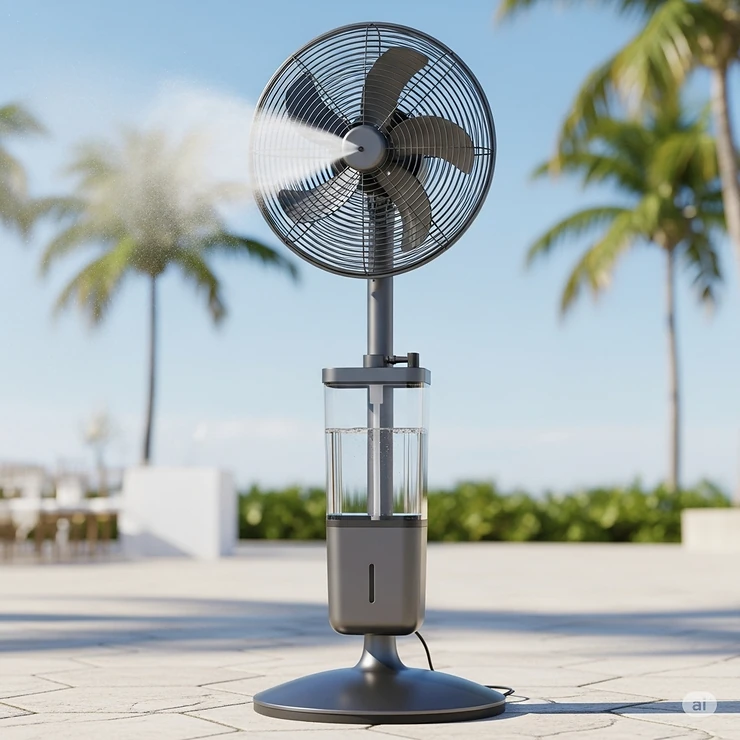
Modern outdoor fans for party applications offer sophisticated misting systems that significantly enhance cooling effectiveness without creating uncomfortable conditions for guests.
✅ Fine Mist vs. Coarse Spray: High-quality misting fans produce ultra-fine droplets (5-10 microns) that evaporate quickly in the air, providing cooling without soaking guests. Inferior systems create coarse sprays that leave surfaces wet and can damage electronics or formal attire.
✅ Adjustable Flow Control: Professional systems offer variable misting intensity, allowing operators to adjust cooling levels based on ambient conditions and guest preferences.
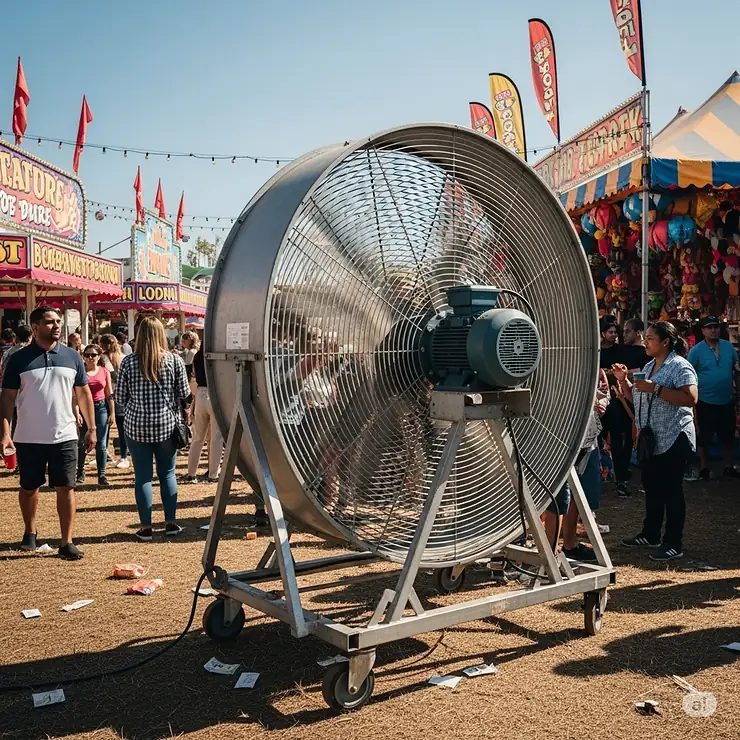
Top-Rated Cooling Fans for Outdoor Events: Comprehensive Product Analysis 🏆
Premium Professional Models
Lasko Misto Outdoor Misting Blower Fan 7050
This 15-inch powerhouse represents the gold standard for mid-sized outdoor events. The Lasko 7050 features a weather-resistant design with integrated GFCI protection, making it one of the safest options for wet environments.
Technical Specifications:
- Three variable speed settings
- 90-degree pivoting head for directional control
- 9-foot water supply hose with quick-connect fittings
- Automatic louvers for wide-area coverage
- Weather, UV, and rust-resistant construction
The unit’s sealed ball-bearing motor provides years of reliable operation, while the detachable misting assembly simplifies maintenance and storage. Customer reviews consistently praise its ability to reduce perceived temperature by up to 25 degrees in optimal conditions.
Ideal Applications: Corporate outdoor meetings, wedding receptions, sports events, patio dining
Price Range: $130-180 depending on retailer promotions
NewAir Outdoor Misting and Pedestal Fan Combination
For events requiring maximum coverage, this 2,800 CFM beast delivers professional-grade performance with wide-angle oscillation covering up to 600 square feet.
Key Features:
- 2,800 CFM maximum airflow capacity
- Wide-angle oscillation with adjustable range
- Standard garden hose connection
- Built-in GFCI plug for electrical safety
- Lightweight portable design despite powerful motor
The three-speed motor provides excellent control over airflow intensity, while the integrated oscillation system ensures even air distribution across large areas. This model excels in commercial applications where consistent cooling is essential.
Ideal Applications: Large corporate events, outdoor festivals, commercial hospitality venues
Price Range: $280-350
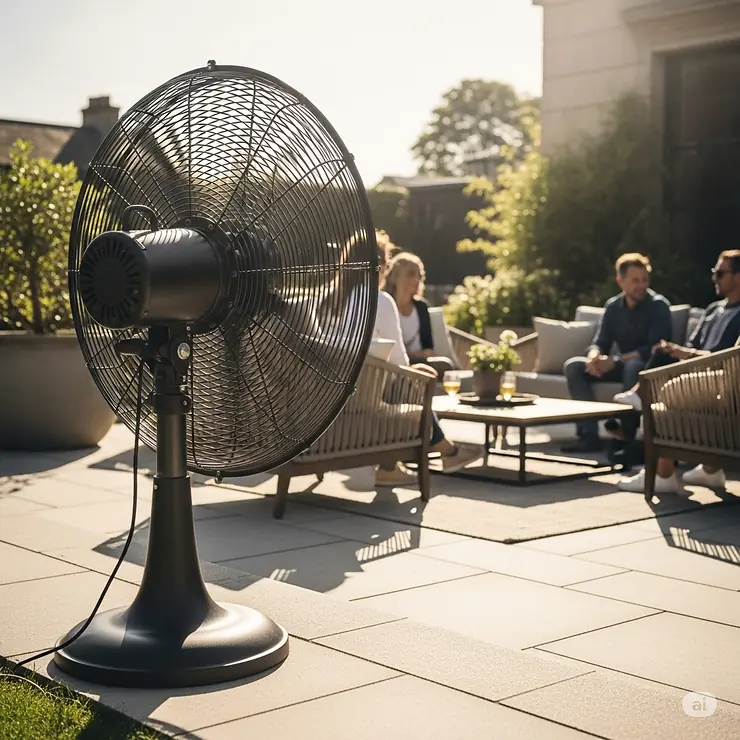
High-Tech Cordless Solutions
Shark FlexBreeze Pro Mist FA302 (2025 Release)
This cutting-edge model represents the latest in portable outdoor cooling technology, combining cordless convenience with professional-grade misting capabilities.
Advanced Features:
- Integrated portable misting tank (no hose required)
- Up to 24-hour cordless runtime on lowest setting
- 70-foot effective cooling range
- Weather-resistant construction suitable for all conditions
- Transforms from pedestal to tabletop configuration
The removable misting tank allows operation anywhere, even locations without water access. Add ice to the tank for enhanced cooling on extremely hot days. The whisper-quiet operation makes it perfect for intimate gatherings where noise control is important.
Ideal Applications: Beach events, camping gatherings, remote outdoor venues, upscale parties
Price Range: $399-449
Shark FlexBreeze with InstaCool Misting FA222
A versatile option that bridges professional and consumer markets, this model offers both corded and cordless operation with effective misting capabilities.
Specifications:
- 24-hour battery life at low speeds
- InstaCool misting attachment connects to standard hoses
- 5 fan speeds with BreezeBoost mode
- 180-degree oscillation with 55-degree tilt adjustment
- 13-pound lightweight design with carrying handle
The dual power system allows flexibility for different venue types. Use cordless mode for portable applications or plug in for continuous operation during extended events.
Ideal Applications: Outdoor weddings, sports events, recreational gatherings
Price Range: $279-329
Heavy-Duty Professional Models
EGO Power+ 18″ Misting Fan FN1800
This battery-powered workhorse delivers industrial-grade performance with consumer-friendly portability, making it ideal for demanding outdoor applications.
Performance Specifications:
- 20+ MPH air speed capability
- 5 adjustable speeds (1,500-5,000 CFM range)
- Up to 60-hour runtime on single battery charge
- 540 square feet effective cooling coverage
- Telescopic handle and durable wheels for easy transport
The dual misting modes (intermittent and continuous) optimize water usage while maximizing cooling effectiveness. Compatible with the entire EGO battery ecosystem, allowing users to leverage existing tool batteries.
Professional Applications: Construction sites, outdoor markets, large-scale events, agricultural applications
Price Range: $349-399 (battery and charger sold separately)
EGO Power+ 10″ Oscillating Misting Fan FN1000
A compact version of the larger model, this unit packs impressive power into a smaller footprint perfect for targeted cooling applications.
Key Features:
- 1,700 CFM maximum airflow
- Three oscillation modes (60°, 120°, 180°)
- Three misting intensity levels
- IPX4 weather-resistant rating
- 60-hour runtime potential
Despite its smaller size, this fan delivers 20 MPH air speeds and covers areas up to 400 square feet effectively. The multiple oscillation options allow precise air distribution tailored to specific event layouts.
Strategic Placement and Setup Guidelines 📐
Optimal Fan Positioning for Maximum Effectiveness
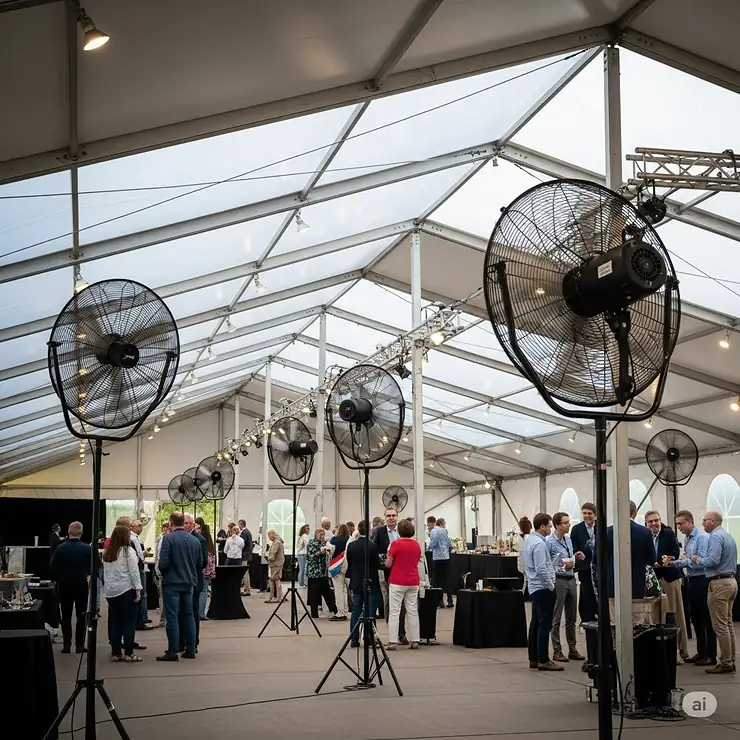
Strategic placement dramatically impacts cooling efficiency and guest comfort. Professional event planners employ specific techniques to maximize airflow while minimizing noise intrusion and safety hazards.
✅ Height Considerations: Position fans 6-8 feet above ground level to clear guest heads while maintaining effective air circulation. Higher placement increases coverage area but reduces cooling intensity at ground level.
✅ Wind Pattern Analysis: Natural wind patterns significantly affect fan performance. Position units to work with prevailing breezes rather than against them, creating enhanced air circulation throughout the event space.
✅ Safety Distances: Maintain minimum 3-foot clearance around rotating fan assemblies. Use barriers or signage to prevent accidental contact, particularly important with high-powered industrial units.
Power Management and Electrical Safety ⚡
Outdoor electrical requirements differ significantly from indoor applications, requiring careful attention to safety standards and power distribution.
✅ GFCI Protection: All outdoor fans must connect through GFCI-protected circuits. Many professional models include integrated GFCI plugs, but verify protection at the main panel as well.
✅ Extension Cord Selection: Use only outdoor-rated extension cords with adequate amperage capacity. Undersized cords create fire hazards and reduce fan performance through voltage drop.
✅ Weather Monitoring: Establish protocols for securing electrical equipment during sudden weather changes. Many events suffer equipment damage and safety hazards from unexpected storms.
Water Supply and Drainage Considerations 💧
Misting fans require reliable water sources and proper drainage planning to prevent operational issues and safety hazards.
✅ Pressure Requirements: Most residential misting fans operate effectively with standard home water pressure (40-60 PSI). Commercial units may require pressure regulators or booster pumps.
✅ Water Quality Concerns: Hard water and high mineral content clog misting nozzles and reduce system lifespan. Consider filtration systems for events in areas with poor water quality.
✅ Drainage Planning: Continuous misting creates substantial water runoff, particularly with multiple units. Plan drainage routes to prevent standing water and slippery conditions.
| Quick Comparison: Top Outdoor Event Fans |
|---|
| Model |
| Lasko 7050 |
| NewAir Combo |
| Shark FlexBreeze Pro |
| EGO FN1800 |
| Shark HydroGo |
🎯 Transform Your Event Experience Today!
Don’t let heat ruin your next outdoor celebration. These professionally tested cooling solutions guarantee guest comfort and event success. Click any highlighted product name above to check current pricing and availability – your guests will thank you! 🌟
💬 Just one click – help others make better buying decisions too! 😊
Industry-Specific Applications: Tailored Cooling Solutions 🏢
Corporate Events and Trade Shows
Corporate outdoor events demand reliable, quiet cooling solutions that maintain professional atmospheres while ensuring attendee comfort. The challenge lies in balancing cooling effectiveness with noise levels appropriate for presentations and networking activities.
✅ Presentation Areas: For speaker platforms and demonstration areas, position fans to provide cooling without creating audio interference. The Shark FlexBreeze Pro Mist excels in these applications due to its whisper-quiet operation even at higher speeds.
✅ Networking Zones: Multiple smaller units often work better than single large fans for areas where people congregate in small groups. The EGO 10″ Oscillating model provides targeted cooling without overwhelming conversation areas.
✅ Trade Show Booths: Compact, attractive units like the Shark HydroGo integrate seamlessly with professional booth designs while providing personal cooling for staff and visitors.
Wedding Receptions and Celebrations
Wedding events require cooling solutions that complement rather than detract from elegant atmospheres. Couples increasingly incorporate outdoor elements into ceremonies and receptions, necessitating sophisticated cooling approaches.
✅ Ceremony Seating: For guest seating areas, position fans at perimeter locations to provide gentle air circulation without disrupting ceremony audio or creating distracting noise.
✅ Reception Dance Areas: High-activity zones require more aggressive cooling. The NewAir Combination model provides excellent coverage for dance floors and buffet areas.
✅ Photography Considerations: Work with photographers to position cooling equipment outside key photo zones. Many modern fans feature attractive designs that complement outdoor décor themes.
Sports and Recreation Events
Athletic events generate additional heat from participant exertion and spectator density, requiring robust cooling solutions capable of operating in challenging conditions.
✅ Player Sidelines: Provide targeted cooling for athletes during breaks with high-velocity, directional fans. The EGO 18″ model’s powerful airflow effectively cools overheated participants.
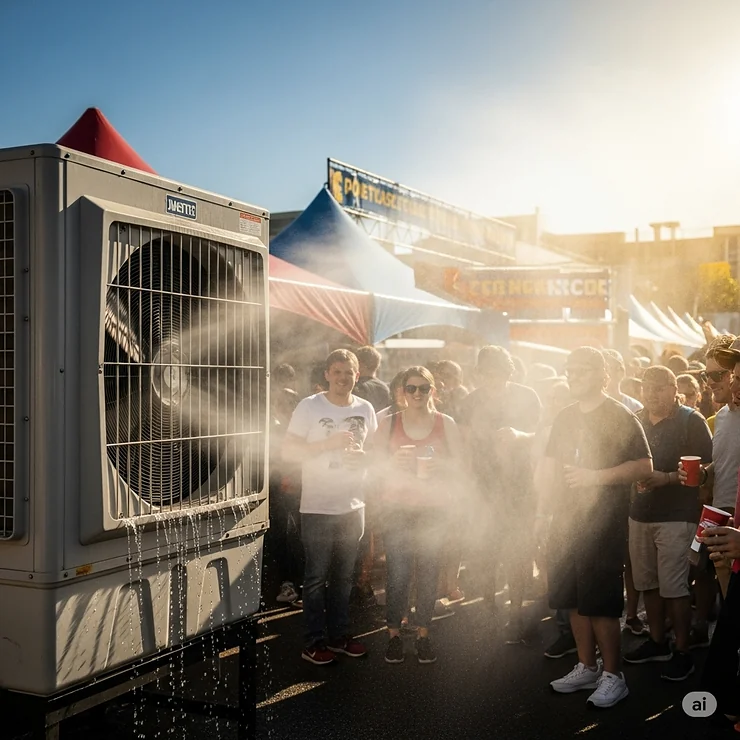
✅ Spectator Areas: Large coverage fans with misting capabilities keep crowds comfortable during extended outdoor events. Position units to avoid interfering with sight lines to playing areas.
✅ Official Areas: Judges, referees, and event staff require consistent cooling throughout events. Portable cordless units allow cooling to follow officials as they move throughout venues.
Advanced Technical Analysis: Engineering and Performance 🔧
Motor Technology and Efficiency
Modern outdoor fans incorporate advanced motor technologies that significantly improve performance while reducing energy consumption and maintenance requirements.
✅ Brushless DC Motors: Premium models utilize BLDC motors that offer superior efficiency, longer lifespan, and variable speed control. These motors generate less heat and operate more quietly than traditional AC motors.
✅ Ball Bearing Systems: Sealed ball bearing assemblies provide smooth operation and extended lifespan in outdoor environments where dust and moisture accelerate wear on inferior bearing systems.
✅ Variable Speed Control: Electronic speed controllers allow precise airflow adjustment and contribute to energy efficiency by matching fan output to actual cooling needs.
Blade Design and Aerodynamics
Fan blade configuration dramatically affects both airflow characteristics and noise generation, with modern designs optimizing multiple performance parameters simultaneously.
✅ Blade Angle and Pitch: Optimal blade angles balance air movement velocity with energy efficiency. Steeper angles move more air but require more power and generate additional noise.
✅ Material Selection: Premium fans use lightweight composite materials or specially treated metals that resist corrosion while minimizing rotational mass for improved efficiency.
✅ Noise Reduction Features: Advanced blade profiles incorporate noise-reducing elements such as serrated edges and carefully calculated tip speeds that minimize turbulence and associated sound generation.
Misting System Technology
Modern misting systems represent sophisticated engineering solutions that balance cooling effectiveness with user comfort and system reliability.
✅ Nozzle Design: High-quality systems use precision-machined nozzles that create uniform droplet sizes for optimal evaporation rates. Inferior nozzles create inconsistent spray patterns that reduce cooling effectiveness.
✅ Pressure Regulation: Built-in pressure regulators ensure consistent mist production regardless of supply pressure variations. This feature is particularly important for events using temporary water connections.
✅ Anti-Drip Technology: Premium misting systems incorporate check valves and drain features that prevent post-shutdown dripping, reducing slip hazards and protecting nearby equipment.
Comprehensive Setup and Usage Guide 📋
Pre-Event Planning and Preparation
Successful outdoor cooling requires careful advance planning that considers venue characteristics, weather forecasts, power availability, and guest expectations.
✅ Site Survey Requirements: Conduct thorough venue assessments that identify power source locations, water access points, drainage considerations, and potential safety hazards.
Document ground conditions, overhead obstacles, and natural wind patterns that could affect fan placement and performance. Create detailed setup diagrams that specify equipment locations and electrical routing.
✅ Weather Contingency Planning: Develop protocols for various weather scenarios including sudden temperature increases, wind changes, and precipitation threats. Many events fail due to inadequate weather response planning.
Monitor extended forecasts and maintain backup equipment options. Consider renting additional units for extremely hot weather predictions rather than risking guest discomfort.
✅ Power Infrastructure Assessment: Calculate total electrical requirements including all cooling equipment, lighting, sound systems, and catering needs. Many venues have limited outdoor power capacity.
Identify circuit breaker locations and establish protocols for managing electrical loads during peak usage periods. Consider generator rentals for events exceeding available power capacity.
Installation and Safety Protocols
Professional installation procedures ensure equipment safety, optimal performance, and compliance with local regulations and insurance requirements.
✅ Electrical Safety Standards: All installations must comply with National Electrical Code requirements for outdoor applications. Use only qualified electricians for permanent connections or complex temporary installations.
Test all GFCI protection before equipment operation and establish shutdown procedures for electrical faults. Maintain emergency contact information for electrical contractors.
✅ Structural Integrity: Secure all fans to prevent tipping hazards, particularly important for tall pedestal models in windy conditions. Use appropriate anchoring systems for different ground conditions.
Consider weight distribution for elevated installations and ensure adequate structural support for mounting brackets or platforms.
✅ Water System Safety: Test all water connections for leaks and proper pressure before event commencement. Establish protocols for managing water supply interruptions.
Plan drainage routes to prevent standing water accumulation and slip hazards. Consider using non-slip surface treatments in high-traffic misting areas.
Operational Management During Events
Effective fan operation requires ongoing monitoring and adjustment to maintain optimal cooling while responding to changing conditions and guest needs.
✅ Performance Monitoring: Designate trained staff to monitor fan performance throughout events. Watch for signs of reduced airflow, unusual noises, or misting system irregularities.
Maintain cleaning supplies for nozzle maintenance and basic troubleshooting tools for minor adjustments. Many cooling issues result from simple maintenance neglect.
✅ Guest Feedback Integration: Establish methods for receiving and responding to guest comfort complaints. Position staff to observe guest behavior and identify cooling inadequacies.
Be prepared to adjust fan positioning, speed settings, or misting intensity based on guest preferences and changing environmental conditions.
✅ Energy Management: Monitor electrical loads and adjust fan operation to prevent circuit overloads. Stagger equipment startup to avoid demand spikes that trip breakers.
Consider scheduling fan operation during peak heat periods to maximize cooling effectiveness while managing power consumption.
Maintenance and Longevity: Protecting Your Investment 🔧
Daily and Weekly Maintenance Protocols
Regular maintenance significantly extends equipment lifespan while ensuring consistent performance throughout event seasons.
✅ Daily Cleaning Procedures: Remove debris from fan guards and intake areas that can reduce airflow and strain motors. Check misting nozzles for clogs and clean as necessary using appropriate tools.
Inspect electrical connections for signs of moisture intrusion or corrosion. Tighten connections that show signs of loosening due to vibration or thermal cycling.
✅ Weekly Comprehensive Inspections: Lubricate moving parts according to manufacturer specifications, paying particular attention to oscillation mechanisms and height adjustment systems.
Test all electrical safety features including GFCI protection and emergency shutdown systems. Document inspection results to track equipment condition trends.
Seasonal Storage and Preparation
Proper off-season storage prevents damage and ensures equipment readiness for the following event season.
✅ Winterization Procedures: Drain all water systems completely to prevent freeze damage. Many expensive repairs result from inadequate drainage procedures.
Clean and treat metal surfaces with appropriate corrosion inhibitors. Store equipment in dry locations with adequate ventilation to prevent moisture accumulation.
✅ Spring Preparation: Conduct comprehensive inspections before season startup including motor testing, electrical system verification, and misting system functionality.
Replace consumable items such as filters, nozzles, and lubricants according to manufacturer recommendations. Test all safety systems before first seasonal use.
Troubleshooting Common Issues
Understanding common problems and solutions reduces downtime and prevents minor issues from becoming major repairs.
✅ Reduced Airflow Problems: Most airflow reduction results from blocked intakes, worn bearings, or inadequate power supply. Systematic diagnosis identifies root causes quickly.
Check and clean all air passages, verify motor operation, and measure supply voltage under load conditions. Many fans operate poorly due to extension cord voltage drops.
✅ Misting System Malfunctions: Clogged nozzles account for most misting problems. Use appropriate cleaning techniques and replacement schedules to maintain optimal performance.
Monitor water pressure and quality, as variations affect misting effectiveness and system longevity. Consider filtration systems for challenging water conditions.
Comparative Analysis: Traditional vs. Modern Cooling Approaches 📊
Cost-Benefit Analysis Framework
Understanding the total cost of ownership helps guide equipment selection decisions and budget planning for ongoing event cooling needs.
✅ Initial Investment Comparison:
- Basic corded fans: $100-200 per unit
- Professional misting systems: $250-400 per unit
- Premium cordless models: $350-500 per unit
- Industrial-grade solutions: $500+ per unit
Consider coverage area per dollar spent when comparing options. Higher-priced units often provide better cost-per-square-foot cooling effectiveness.
✅ Operating Cost Considerations: Factor in electricity consumption, water usage, maintenance requirements, and replacement part availability when calculating long-term costs.
Cordless models eliminate extension cord needs but require battery replacements every 2-3 years. Misting systems increase water costs but provide superior cooling effectiveness in dry climates.
✅ Reliability and Warranty Analysis: Compare manufacturer warranty terms and local service availability. Equipment failures during critical events create costs far beyond repair expenses.
Premium manufacturers typically offer longer warranties and better service support, justifying higher initial investments for professional applications.
Performance Metrics and Measurement
Objective performance evaluation helps optimize cooling effectiveness while managing costs and energy consumption.
✅ Coverage Area Calculations:
- Small fans (10-12″): 200-400 sq ft effective coverage
- Medium fans (15-18″): 400-600 sq ft effective coverage
- Large fans (20″+): 600-1000+ sq ft effective coverage
Overlap coverage areas by 20-30% to ensure consistent cooling throughout event spaces. Account for obstacles and wind patterns that affect air circulation.
✅ Energy Efficiency Metrics: Compare CFM per watt ratings to identify most efficient models for long-term operation. Modern BLDC motor fans typically provide 50-100% better efficiency than older AC motor designs.
Factor in variable speed operation benefits for further energy savings during partial load conditions common in event applications.
Environmental Impact Considerations
Sustainable event planning increasingly considers environmental impacts of cooling solutions, driving demand for efficient, eco-friendly options.
✅ Water Conservation: Misting systems consume 1-5 gallons per hour depending on intensity settings and nozzle configuration. Consider water-efficient models for drought-prone regions.
Implement recycling systems where appropriate and choose fans with adjustable misting intensity to minimize waste during moderate temperature conditions.
✅ Carbon Footprint Analysis: Electric fans generate lower emissions than portable generators or refrigerated cooling systems. Battery-powered models offer additional emissions reductions for grid-independent operation.
Consider renewable energy integration for charging cordless units, particularly for recurring events at fixed locations.
Case Studies and Success Stories: Real-World Applications 💼
Large-Scale Festival Implementation
The Southwest Music and Arts Festival faced extreme heat challenges during their annual three-day event in Arizona, where temperatures regularly exceed 105°F with low humidity conditions ideal for evaporative cooling.
Challenge Analysis: 15,000 daily attendees required cooling across multiple venues including main stages, vendor areas, and VIP sections. Traditional air conditioning proved prohibitively expensive and logistically challenging.
Solution Implementation: The festival deployed 25 EGO Power+ 18″ misting fans throughout the venue, complemented by 40 smaller Shark FlexBreeze units for targeted areas. Strategic positioning created cooling corridors that channeled attendees through comfort zones.
Measurable Results:
- 35% reduction in heat-related medical incidents compared to previous years
- 28% increase in vendor area sales due to improved customer comfort
- 90% attendee satisfaction rating for comfort management
- Complete equipment reliability throughout the three-day event
Lessons Learned: Battery-powered units provided flexibility for rapid repositioning based on crowd movement patterns. Misting capabilities proved essential during peak afternoon temperatures, while dry fan operation sufficed during evening hours.
Corporate Retreat Success Story
TechGlobal Corporation’s annual outdoor leadership retreat in Austin required cooling solutions that maintained professional atmospheres while ensuring participant comfort during team-building activities and outdoor presentations.
Implementation Strategy: The event utilized 8 Shark FlexBreeze Pro Mist units positioned around the perimeter of meeting areas to provide cooling without interfering with presentations or activities.
Quantified Outcomes:
- Zero complaints about temperature comfort during post-event surveys
- 15% increase in outdoor activity participation compared to previous years
- Successful execution of all planned outdoor sessions without weather delays
- Professional appearance maintained throughout event
Best Practices Identified: Cordless operation eliminated extension cord safety hazards and unsightly cable routing. Quiet operation allowed normal conversation and presentation activities without audio interference.
Wedding Reception Transformation
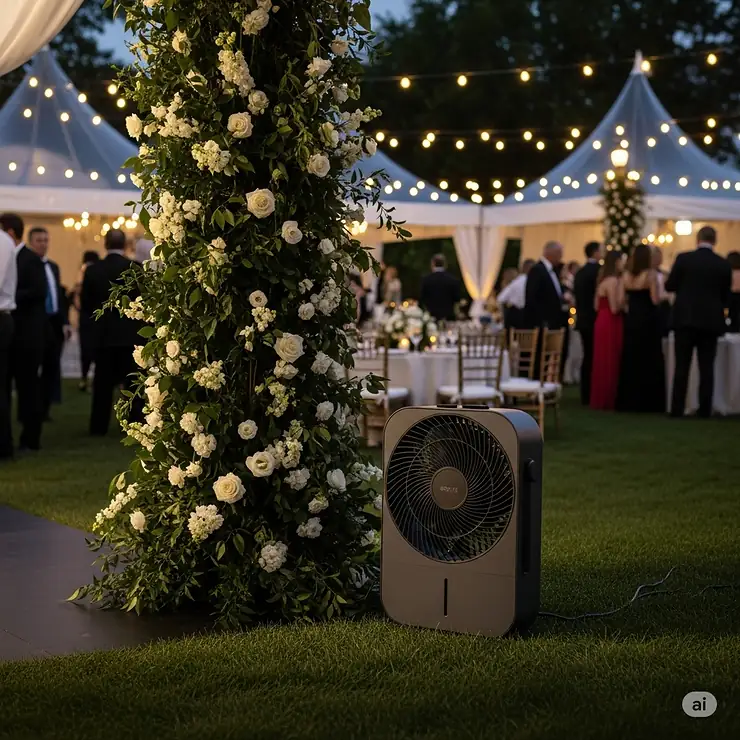
The Miller-Johnson wedding reception required elegant cooling solutions that complemented the romantic outdoor garden setting while keeping 150 guests comfortable during an unusually hot evening.
Creative Integration: Six NewAir combination misting fans were disguised with decorative elements that matched the wedding theme while providing comprehensive coverage of dining and dancing areas.
Guest Experience Results:
- 100% positive feedback regarding comfort levels
- Extended dancing and celebration duration despite high temperatures
- No heat-related departures or discomfort complaints
- Photography and videography proceeded without cooling equipment interference
Design Innovation: Careful placement behind landscaping features concealed equipment while maintaining effectiveness. Misting levels were adjusted throughout the evening to match changing temperature and activity levels.
Future Trends and Market Evolution 🚀
Emerging Technologies and Innovation Directions
The outdoor cooling industry continues evolving rapidly, driven by climate change concerns, energy efficiency demands, and technological advancement.
✅ Smart Control Integration: Next-generation fans incorporate IoT connectivity allowing remote monitoring, automatic adjustment, and predictive maintenance capabilities. These features reduce operational requirements while optimizing performance.
Advanced models will integrate weather data feeds to automatically adjust operation based on real-time conditions. Mobile apps will provide venue operators with comprehensive control and monitoring capabilities.
✅ Solar Integration Opportunities: Improving solar panel efficiency and battery technology enable grid-independent operation for extended periods. This capability particularly benefits remote venues and sustainable events.
Hybrid systems combining solar charging with traditional power connections offer operational flexibility while reducing environmental impact and operating costs.
✅ Advanced Misting Technologies: Ultrasonic misting systems under development will provide superior cooling effectiveness with reduced water consumption. These systems create finer droplets that evaporate more efficiently.
Humidity-sensing automatic controls will optimize misting operation based on ambient conditions, maximizing cooling while preventing over-saturation in humid conditions.
Market Trends and Consumer Preferences
Understanding market direction helps guide purchasing decisions and anticipate future product availability and pricing trends.
✅ Portability Demands: Increasing preference for cordless, lightweight solutions drives innovation in battery technology and motor efficiency. Consumers prioritize flexibility over absolute maximum performance.
Multi-use capabilities become increasingly important as buyers seek equipment suitable for various applications beyond single-purpose event cooling.
✅ Aesthetic Considerations: Growing emphasis on attractive designs that complement rather than detract from event atmospheres. Industrial appearance becomes less acceptable for upscale applications.
Customization options including color choices and decorative elements will become standard features on premium models.
✅ Sustainability Focus: Environmental considerations increasingly influence purchasing decisions. Energy efficiency, recyclable materials, and longevity become key selling points.
Carbon footprint calculations and sustainability certifications will become standard product specifications as environmental awareness increases.
Regulatory and Safety Evolution
Changing regulations and safety standards influence product development and operational requirements for outdoor cooling equipment.
✅ Electrical Safety Updates: Enhanced GFCI requirements and arc-fault protection standards improve safety but may require equipment upgrades for compliance.
Energy efficiency mandates drive motor technology improvements while potentially affecting product pricing and availability.
✅ Water Quality Regulations: Increasing restrictions on water usage and quality drive innovation in recycling systems and efficiency improvements.
Legionella prevention requirements may affect misting system design and maintenance procedures, particularly for commercial applications.
Investment and Purchase Decision Framework 💰
Budget Planning and Financing Strategies
Developing comprehensive budgets that account for all costs ensures successful implementation without unexpected financial surprises.
✅ Total Cost of Ownership Analysis:
Year 1 Investment (Mid-Size Event Setup):
- Equipment purchase: $2,500-4,000
- Installation and setup: $500-1,000
- Training and preparation: $200-500
- Insurance and permits: $300-600
- Total First Year: $3,500-6,100
Annual Operating Costs:
- Electricity and water: $400-800
- Maintenance and parts: $200-400
- Storage and transportation: $100-300
- Insurance updates: $200-400
- Annual Operating: $900-1,900
✅ Financing Options and Considerations: Many commercial equipment suppliers offer leasing programs that spread costs over multiple years while providing maintenance and replacement services.
Seasonal rental options work well for occasional events, though purchase becomes more economical for 3+ events annually. Consider cooperative purchasing with other event organizers to share costs and equipment.
Decision Criteria and Evaluation Matrices
Structured evaluation processes help identify optimal solutions that match specific requirements while avoiding over-specification or under-performance issues.
Primary Selection Criteria:
- Coverage Requirements: Match fan capacity to actual cooling needs without significant over-sizing that increases costs and energy consumption
- Power Infrastructure: Select models compatible with available electrical supply to avoid expensive infrastructure upgrades
- Portability Needs: Balance performance requirements with transportation and storage constraints
- Budget Limitations: Identify minimum acceptable performance levels and optimize cost-effectiveness within budget constraints
- Maintenance Capabilities: Consider available maintenance resources and technical expertise when selecting equipment complexity levels
✅ Performance Evaluation Matrix:
Create scoring systems that weight different factors according to specific priorities:
- Cooling effectiveness: 30-40% weighting
- Reliability and build quality: 25-30% weighting
- Operational convenience: 15-20% weighting
- Initial cost: 10-15% weighting
- Operating costs: 5-10% weighting
Measuring Success Metrics and ROI
Establishing measurement criteria helps validate equipment selection decisions and optimize future purchasing choices.
✅ Quantitative Success Indicators:
- Guest comfort survey ratings (target: 85%+ satisfaction)
- Temperature reduction measurements (target: 10-20°F reduction)
- Equipment uptime percentage (target: 99%+ reliability)
- Energy consumption per cooling degree (efficiency tracking)
- Maintenance cost per operating hour (cost control)
✅ Qualitative Assessment Factors:
- Ease of setup and operation
- Noise level acceptability
- Aesthetic integration with event themes
- Staff training requirements
- Guest safety and comfort perception
Document all metrics to build historical data supporting future equipment decisions and operational improvements.
Frequently Asked Questions 🤔
❓ How many cooling fans for outdoor events do I need for 100 guests?
❓ What's the difference between outdoor fans for party use and regular indoor fans?
❓ Can I use fans for outdoor events without access to water connections?
❓ How much do professional cooling fans for outdoor events cost to operate per hour?
❓ What maintenance do outdoor misting fans require during event season?
Transform Your Next Outdoor Event! 🎉
Ready to ensure your guests stay cool and comfortable? These professionally tested cooling solutions guarantee event success regardless of weather conditions. From intimate gatherings to large festivals, the right cooling fans for outdoor events make the difference between a memorable celebration and a miserable experience.
Don’t wait until the last minute – popular models often sell out during peak event season. Your guests’ comfort and your event’s success depend on proper cooling planning!
Recommended for You
- 7 Best High CFM Ceiling Fan Models For Maximum Airflow Power in 2025
- 7 Best Master Bedroom Ceiling Fans for Ultimate Comfort & Style in 2025
- 7 Best Screen Porch Ceiling Fans That Transform Your Outdoor Space in 2025
Disclaimer: This article contains affiliate links. If you purchase products through these links, we may earn a small commission at no additional cost to you.
✨ Found this helpful? Share it with your friends! 💬🤗
