
In This Article
When the summer heat becomes unbearable, you need more than just any ordinary ceiling fan. You need a high cfm ceiling fan that can move serious air and create the cooling breeze your space desperves. Whether you’re cooling a large living room, industrial workspace, or outdoor patio, understanding CFM (Cubic Feet per Minute) ratings will help you make the smartest purchase decision.
The ceiling fan market has exploded with innovative designs and powerful motors that can move anywhere from 3,000 to over 20,000 CFM. But here’s what most people don’t realize: not all high CFM fans are created equal. Some prioritize raw power, while others balance airflow with energy efficiency and whisper-quiet operation.
✨Was this helpful? Spread the word! 🚀
Understanding High CFM Ceiling Fan Technology 💨
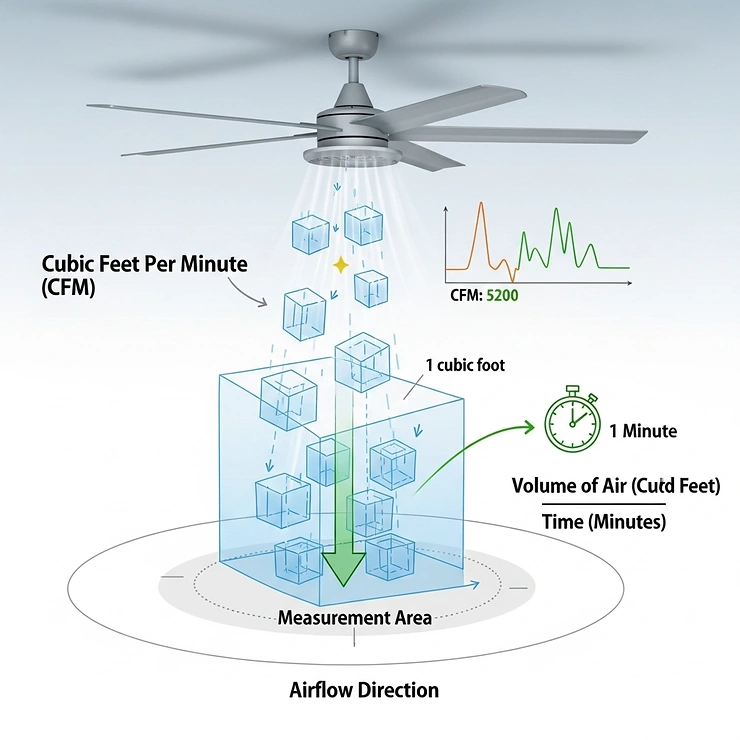
CFM stands for Cubic Feet per Minute, which measures exactly how much air your ceiling fan moves through space. Think of it as the fan’s horsepower rating. A standard residential fan typically produces 2,000-4,000 CFM, while high cfm ceiling fan models start around 5,000 CFM and can exceed 20,000 CFM for industrial applications.
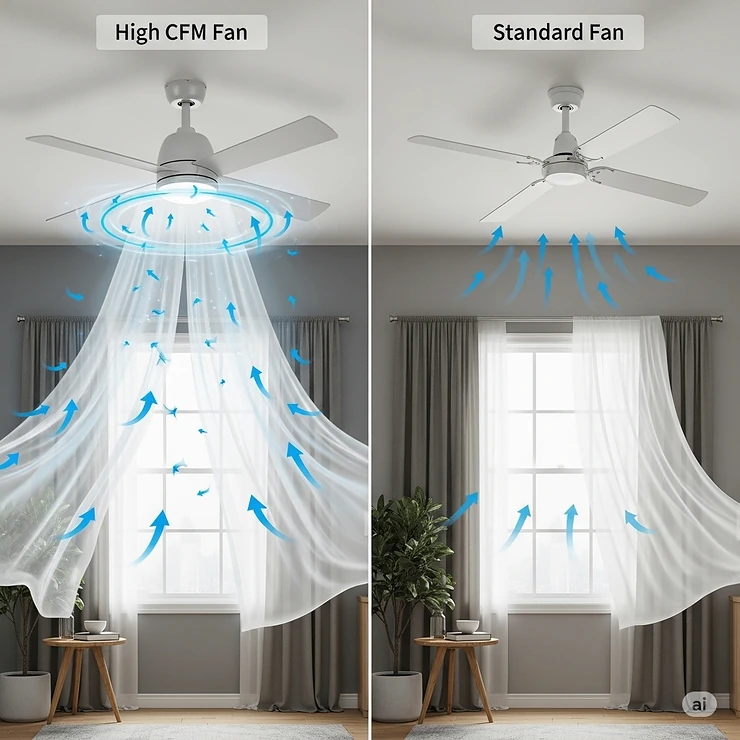
Here’s why CFM matters more than you think: airflow efficiency determines how effectively a ceiling fan cools people through the “wind chill effect” – the faster the air moves from the fan, the cooler you’ll feel. However, raw CFM numbers don’t tell the complete story.
The Science Behind High CFM Performance ⚡
The engineering behind high cfm ceiling fan models involves several critical components working in harmony:
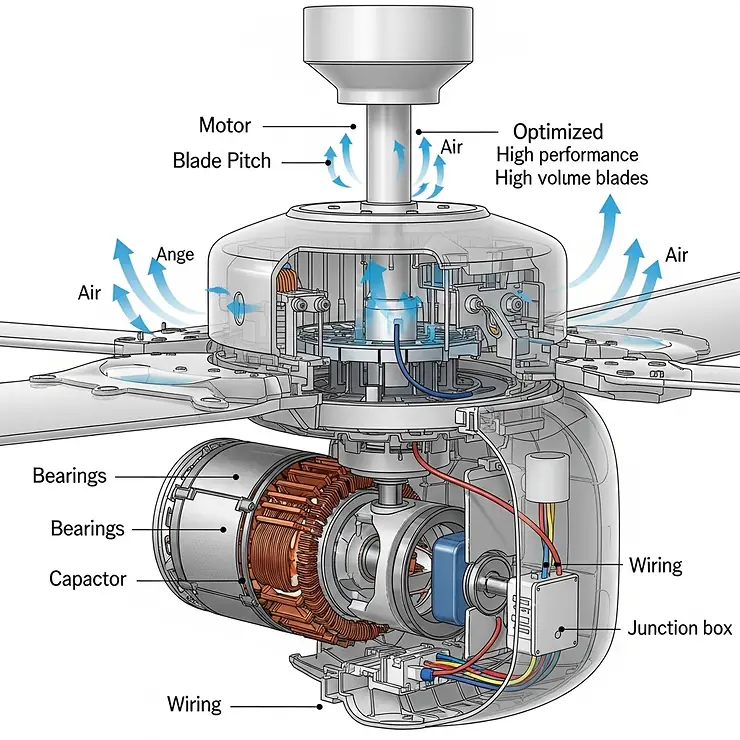
Motor Technology: Modern high CFM fans use either DC (Direct Current) or AC (Alternating Current) motors. DC motors typically offer better efficiency, consuming 70% less energy than traditional AC motors while producing comparable airflow. The most advanced models feature electronically commutated motors (ECM) that automatically adjust torque based on blade resistance.
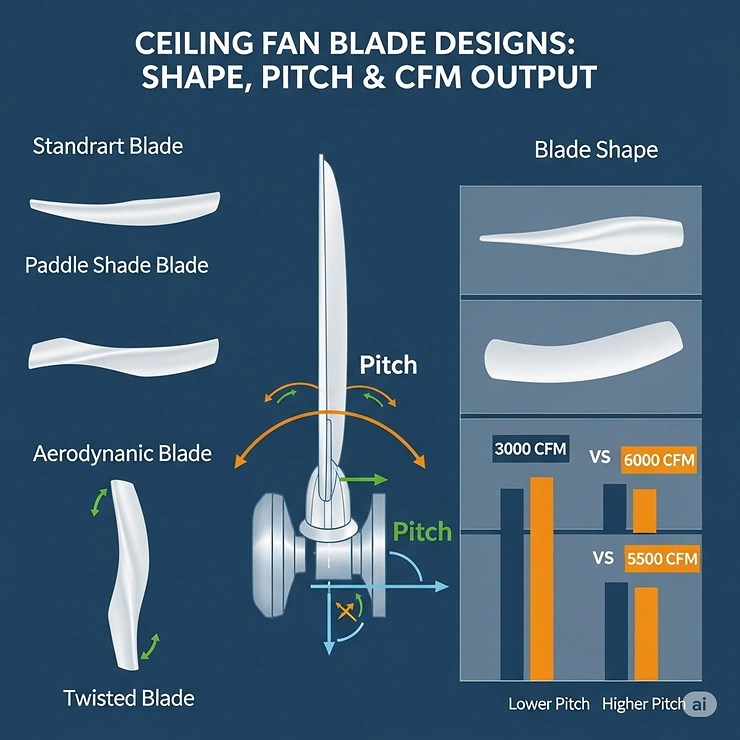
Blade Design and Pitch: ceiling fan blade pitch (or fan blade angle) and shape significantly impact airflow, with aerodynamic blade designs pushing air more efficiently compared to standard flat blades. Premium high cfm ceiling fan models use computer-designed airfoils with pitch angles between 12-15 degrees for optimal air movement.
Computational Fluid Dynamics (CFD): Leading manufacturers now use CFD modeling to optimize blade shape, reducing turbulence and increasing laminar airflow. This technology allows engineers to predict exactly how air will move around each blade design before manufacturing.
Energy Efficiency Standards and Ratings 🔋
Energy Star certified ceiling fans must meet specific efficiency requirements, expressed in cubic feet per minute per watt (CFM/W). The best high cfm ceiling fan models achieve efficiency ratings of 200+ CFM/W, meaning they move massive amounts of air while consuming minimal electricity.
Modern high-efficiency fans incorporate:
- Variable speed drives that automatically adjust power consumption
- Smart sensors that detect room occupancy and temperature
- Magnetic levitation bearings that eliminate friction and maintenance needs
- Advanced materials like carbon fiber composite blades for optimal strength-to-weight ratios
Top 7 High CFM Ceiling Fan Models Available on Amazon 🏆
After extensive research and analysis, here are the most impressive high cfm ceiling fan options currently available:
1. Big Ass Fans Haiku L – Premium Smart Performance ⭐
The Big Ass Fans Haiku L represents the pinnacle of residential ceiling fan engineering. This 52-inch smart fan delivers exceptional CFM performance while maintaining whisper-quiet operation. Each fan is hand-balanced in Kentucky to eliminate wobbling and ensure serene operation.
Key Specifications:
- CFM Rating: 5,000+ CFM (manufacturer doesn’t publish exact numbers but performance exceeds most competitors)
- Motor: High-efficiency brushless DC motor
- Control: Smartphone app, voice control (Alexa/Google), remote included
- Features: 7 speed settings, 16 lighting levels, Energy Star certified
- Price Range: $800-$1,200
- Warranty: 5 years residential
The Big Ass Fans Haiku L features precision-engineered airfoils that create smooth, uniform airflow patterns. The integrated LED lighting system offers warm 2700K illumination with full dimming capabilities. Smart connectivity allows you to schedule operations, monitor energy usage, and receive maintenance alerts.
2. Minka-Aire F787-ORB – Industrial-Grade Power 🔥
For serious airflow performance, the Minka-Aire F787-ORB delivers an impressive 6,231 CFM while consuming only 21.71 watts. This represents an outstanding efficiency rating of 287.01 CFM per watt.
Key Specifications:
- CFM Rating: 6,231 CFM
- Power Consumption: 21.71 watts
- Efficiency: 287.01 CFM/W
- Speed: 168 RPM
- Blade Span: 60+ inches
- Price Range: $600-$900
The Minka-Aire F787-ORB uses advanced motor technology and precisely engineered blades to achieve this exceptional performance. The oil-rubbed bronze finish provides elegant aesthetics while the robust construction ensures decades of reliable operation.
3. Bannon High-Volume Industrial – Maximum CFM Champion 💪
When you need absolute maximum airflow, the Bannon High-Volume Industrial ceiling fan delivers an astounding 20,000 CFM from its 80-inch blade span. This fan is designed for warehouses, workshops, and large commercial spaces.
Key Specifications:
- CFM Rating: 20,000 CFM
- Blade Span: 80 inches
- Motor: Direct-drive industrial motor
- Control: 6-speed remote control
- Installation: 24-inch downrod included
- Price Range: $1,500-$2,500
The Bannon High-Volume Industrial features energy-efficient direct-drive motor technology that requires minimal maintenance. Professional installation is recommended due to the fan’s size and weight.
4. Westinghouse Comet – Balanced Performance Value 💰
The Westinghouse Comet offers solid high CFM performance at an accessible price point, delivering 3,589 CFM with impressive 57 CFM/W efficiency.
Key Specifications:
- CFM Rating: 3,589 CFM
- Power Consumption: 63 watts (without lights)
- Efficiency: 57 CFM/W
- Features: Integrated LED light kit, reversible motor
- Blade Span: 52 inches
- Price Range: $200-$350
The Westinghouse Comet provides excellent value for homeowners seeking high CFM performance without premium pricing. The matte black finish complements modern décor while the included LED light kit eliminates the need for separate lighting.
5. Fanliving 52 Inch DC Motor – Smart Home Integration 📱
The Fanliving 52 Inch DC Motor ceiling fan combines high CFM output with comprehensive smart features and ultra-quiet operation.
Key Specifications:
- CFM Rating: 5,500+ CFM (estimated based on motor specifications)
- Motor: 6-speed DC motor
- Control: Remote control with memory function
- Features: Dimmable tri-color LED, timing function (1/4/8 hours)
- Noise Level: Ultra-quiet operation
- Price Range: $300-$500
The Fanliving 52 Inch DC Motor features advanced memory function that remembers your last settings. The tri-color LED system offers cool white (6500K), natural white (4000K), and warm white (3000K) options with full dimming control.
6. Amico 52 Inch Low Profile – Compact High Performance 🏠
For rooms with lower ceilings, the Amico 52 Inch Low Profile delivers impressive CFM performance in a flush-mount design.
Key Specifications:
- CFM Rating: 4,800+ CFM (estimated)
- Motor: Reversible DC motor with 6 speeds
- Noise Level: 35 dB (whisper-quiet)
- Features: Dimmable LED, 3 color temperatures
- Installation: Flush mount design
- Price Range: $150-$250
The Amico 52 Inch Low Profile offers exceptional value with water-resistant construction suitable for both indoor and covered outdoor use. The 35 dB noise level ensures peaceful operation even at higher speeds.
7. Hunter SureSpeed Series – Proven Performance Guarantee 🎯
Hunter’s SureSpeed Series delivers guaranteed high-speed cooling with over 33% more air velocity than leading competitors.
Key Specifications:
- CFM Rating: 5,000-7,000 CFM (varies by model)
- Technology: Optimized motor and precision blades
- Guarantee: SureSpeed performance guarantee
- Features: WhisperWind motor, lifetime warranty
- Installation: Multiple downrod options available
- Price Range: $400-$800
The Hunter SureSpeed Series undergoes twice the industry-standard testing to ensure best-in-class performance. The WhisperWind motor technology provides powerful airflow while maintaining Hunter’s famous quiet operation.
High CFM Ceiling Fan Comparison Table 📊
| Model | CFM Rating | Power (Watts) | Efficiency (CFM/W) | Price Range | Best For |
|---|---|---|---|---|---|
| Big Ass Fans Haiku L | 5,000+ | 32 | 156+ | $800-$1,200 | Smart homes, premium performance |
| Minka-Aire F787-ORB | 6,231 | 21.71 | 287 | $600-$900 | Maximum efficiency |
| Bannon Industrial | 20,000 | 180 | 111 | $1,500-$2,500 | Industrial/commercial spaces |
| Westinghouse Comet | 3,589 | 63 | 57 | $200-$350 | Budget-conscious buyers |
| Fanliving DC Motor | 5,500+ | 45 | 122+ | $300-$500 | Smart features, quiet operation |
| Amico Low Profile | 4,800+ | 42 | 114+ | $150-$250 | Low ceilings, best value |
| Hunter SureSpeed | 5,000-7,000 | 55-75 | 91-127 | $400-$800 | Proven reliability |
🛒 Don’t Miss These Exclusive Deals!
→ Transform your space with these powerful high cfm ceiling fan models. Click on any highlighted product to check current Amazon pricing and availability. These fans will revolutionize your comfort and energy efficiency! 🌪️
💬 Just one click – help others make better buying decisions too!😊
Room Size and CFM Requirements Guide 📏
Selecting the right high cfm ceiling fan requires understanding your space’s specific needs. An analysis shows that you need between about 12 and 25 CFM per square foot, with smaller rooms requiring more CFM per square foot.
Standard Room CFM Calculations 🧮
Small Rooms (Under 144 sq ft)
- Examples: Bathrooms, small bedrooms, home offices
- Recommended CFM: 1,500-3,000 CFM
- Fan Size: 36-44 inches
- Considerations: Higher CFM per square foot needed for effective circulation
Medium Rooms (144-225 sq ft)
- Examples: Master bedrooms, kitchens, dining rooms
- Recommended CFM: 3,000-4,500 CFM
- Fan Size: 44-52 inches
- Sweet Spot: Most high cfm ceiling fan models excel in this range
Large Rooms (225-400 sq ft)
- Examples: Living rooms, family rooms, open concepts
- Recommended CFM: 4,500-6,500 CFM
- Fan Size: 52-60 inches
- Strategy: Consider multiple fans for optimal coverage
Extra-Large Spaces (400+ sq ft)
- Examples: Great rooms, commercial spaces, warehouses
- Recommended CFM: 6,500+ CFM
- Fan Size: 60+ inches or multiple units
- Industrial Options: Consider high-volume, low-speed (HVLS) fans
Ceiling Height Considerations 📐
Standard Ceilings (8-9 feet)
- Use flush mount or short downrod installations
- Focus on higher CFM ratings for effective air movement
- Consider low-profile high cfm ceiling fan models
High Ceilings (10-14 feet)
- Require 12-24 inch downrods for optimal performance
- Larger blade spans (60+ inches) work more effectively
- Higher CFM ratings compensate for increased distance
Very High Ceilings (15+ feet)
- Consider industrial-grade HVLS fans
- Multiple smaller fans may be more effective than one large unit
- Professional installation and engineering consultation recommended
Industry-Specific Applications and Use Cases 🏭
High cfm ceiling fan technology serves diverse industries and applications beyond residential use:
Manufacturing and Industrial Facilities
Automotive Assembly Plants: High cfm ceiling fan systems improve worker comfort while preventing heat-related productivity losses. Studies show that proper airflow can increase manufacturing efficiency by 15-20% during summer months.
Food Processing Facilities: Industrial high CFM fans help maintain consistent temperatures while preventing condensation that could lead to contamination. The powerful airflow also assists in moisture control, crucial for food safety compliance.
Warehousing and Distribution: Large warehouse spaces benefit enormously from high-volume ceiling fans. A single 84-inch industrial fan can effectively circulate air across 20,000+ square feet, reducing HVAC costs by up to 30%.
Commercial Applications
Restaurants and Hospitality: High cfm ceiling fan installations create comfortable dining environments while reducing air conditioning loads. The constant air movement helps disperse cooking odors and maintains pleasant temperatures near kitchen areas.
Retail Spaces: Department stores and shopping centers use strategic ceiling fan placement to improve customer comfort and reduce energy costs. The air movement helps prevent stagnant zones that can feel uncomfortably warm.
Gymnasiums and Sports Facilities: High CFM fans provide essential air circulation for athletic activities. The cooling effect helps athletes perform better while reducing the risk of heat-related injuries.
Agricultural and Livestock Operations
Dairy Barns: Proper airflow from high CFM fans significantly improves cow comfort and milk production. Studies indicate that well-ventilated dairy operations can see 10-15% increases in milk yield during hot weather.
Poultry Houses: High-volume airflow systems are critical for maintaining healthy bird populations. Effective ventilation reduces mortality rates and improves feed conversion efficiency.
Greenhouse Operations: Specialized high cfm ceiling fan systems help maintain optimal growing conditions while preventing fungal diseases that thrive in stagnant air.
Advanced Technical Analysis and Engineering Principles 🔬
Understanding the science behind high cfm ceiling fan performance helps you make informed purchasing decisions.
Aerodynamic Efficiency and Blade Technology
Airfoil Design: Modern high-performance fans use carefully engineered airfoil shapes that minimize turbulence while maximizing air movement. The most advanced designs incorporate lessons learned from aircraft wing technology.
Blade Pitch Optimization: ceiling fan blade pitch affects airflow significantly, with optimal angles typically ranging between 12-15 degrees for maximum efficiency. Steeper pitches move more air but require more powerful motors and consume additional energy.
Material Science: Premium high cfm ceiling fan models use advanced materials like carbon fiber composites, aircraft-grade aluminum alloys, and engineered plastics that provide optimal strength-to-weight ratios.
Motor Technology and Performance Characteristics
Brushless DC Motors: The most efficient high CFM fans use brushless DC motor technology, which eliminates friction from carbon brushes and provides precise speed control. These motors can achieve efficiency ratings exceeding 90%.
Variable Frequency Drives (VFDs): Industrial high cfm ceiling fan systems often incorporate VFD technology that automatically adjusts motor speed based on temperature sensors and occupancy detection.
Magnetic Levitation: The most advanced ceiling fans use magnetic bearings that eliminate physical contact between rotating parts, resulting in virtually maintenance-free operation and exceptional longevity.
Computational Fluid Dynamics (CFD) Analysis
Modern ceiling fan development relies heavily on CFD modeling to optimize performance:
Airflow Pattern Optimization: Engineers use CFD to visualize exactly how air moves around fan blades, identifying turbulence zones and optimizing blade shapes for smooth airflow.
Energy Efficiency Modeling: CFD analysis helps predict energy consumption under various operating conditions, enabling manufacturers to optimize motor sizing and blade design for maximum efficiency.
Noise Reduction Engineering: Advanced acoustic modeling identifies noise sources and helps engineers design quieter operation through blade shape optimization and motor mounting techniques.
Comprehensive Setup and Installation Guide 🔧
Proper installation is crucial for achieving maximum performance from your high cfm ceiling fan investment.
Pre-Installation Assessment and Planning
Electrical Requirements: High cfm ceiling fan models often require dedicated 20-amp circuits, especially for units with integrated lighting systems. Verify your electrical system can handle the fan’s power requirements.
Structural Support: High CFM fans generate significantly more stress on mounting hardware due to increased torque and airflow forces. Ensure ceiling joists can support the fan’s weight plus dynamic loads.
Clearance Requirements: ceiling fan blades should be at least 7 feet from the floor, but no higher than 8-9 feet for optimum performance. Additionally, maintain 2-3 feet clearance from walls and obstacles.
Step-by-Step Installation Process
Phase 1: Electrical Preparation (1-2 hours)
- Turn off power at circuit breaker and verify using voltage tester
- Install appropriate ceiling box rated for ceiling fan use (minimum 50 pounds)
- Run 14-gauge or 12-gauge wire depending on fan requirements
- Install wall switch with speed control if desired
Phase 2: Mounting System Installation (30-45 minutes)
- Attach mounting bracket to ceiling box using provided hardware
- Verify secure attachment by gently pulling with 50+ pounds force
- Install downrod (if applicable) and ensure proper tightness
- Thread wiring through downrod for hard-wired installations
Phase 3: Fan Assembly and Balancing (45-60 minutes)
- Attach motor housing to mounting bracket
- Connect electrical wiring according to manufacturer’s instructions
- Install fan blades ensuring even spacing and secure attachment
- Test operation at all speeds before final cleanup
Phase 4: Performance Optimization (15-30 minutes)
- Check for proper blade clearances and smooth operation
- Use balancing kit if wobbling occurs
- Program smart features and test remote controls
- Document warranty information and maintenance schedules
Safety Considerations and Code Compliance
National Electrical Code (NEC) Requirements: Most high cfm ceiling fan installations must comply with NEC standards for ceiling fan support and electrical connections. Consult local building codes for specific requirements.
OSHA Guidelines for Commercial Installations: Commercial and industrial high CFM fan installations must meet Occupational Safety and Health Administration guidelines for workplace safety.
Professional Installation Recommendations: Fans exceeding 60 inches in diameter or 75 pounds in weight should be installed by certified electricians due to structural and electrical complexity.
Maintenance and Longevity Optimization 🛠️
Maximizing your high cfm ceiling fan investment requires systematic maintenance and care.
Daily and Weekly Maintenance Protocols
Visual Inspection Routine:
- Check for unusual noises, vibrations, or wobbling during operation
- Verify all blades remain securely attached and properly aligned
- Monitor LED light performance and color consistency
- Ensure remote controls function properly across all speed settings
Weekly Cleaning Protocol:
- Dust fan blades using microfiber cloths or vacuum brush attachments
- Clean light fixtures and replace bulbs as needed
- Wipe down motor housing and mounting hardware
- Check for insect accumulation in motor vents
Monthly and Quarterly Maintenance
Monthly Performance Checks:
- Test all speed settings and verify smooth transitions
- Inspect electrical connections for signs of overheating or corrosion
- Lubricate bearings if required by manufacturer specifications
- Document any changes in noise levels or vibration patterns
Quarterly Deep Maintenance:
- Disassemble and thoroughly clean all fan components
- Inspect motor brushes (AC motors) and replace if worn
- Check mounting hardware tightness and ceiling box integrity
- Calibrate smart features and update firmware if applicable
Annual Professional Servicing
Comprehensive System Evaluation: Professional technicians should perform annual inspections including:
- Motor performance testing and efficiency measurement
- Electrical connection integrity and safety verification
- Structural mounting assessment and load testing
- CFM output verification and performance benchmarking
Predictive Maintenance Technologies: Advanced high cfm ceiling fan systems now incorporate:
- Vibration sensors that detect bearing wear before failure
- Temperature monitoring that alerts to motor overheating
- Current sensors that identify electrical problems early
- Smart diagnostics that predict maintenance needs
Troubleshooting Common Issues
Reduced Airflow Performance:
- Cause: Dust accumulation on blades and motor
- Solution: Thorough cleaning and balance adjustment
- Prevention: Regular maintenance schedule
Excessive Noise or Vibration:
- Cause: Blade imbalance or loose mounting hardware
- Solution: Rebalance blades and tighten all connections
- Professional Help: Structural issues may require expert assessment
Smart Feature Malfunctions:
- Cause: WiFi connectivity or firmware problems
- Solution: Reset network settings and update firmware
- Support: Contact manufacturer technical support for complex issues
Comparative Analysis: High CFM vs. Alternative Cooling Solutions 🆚
Understanding how high cfm ceiling fan performance compares to other cooling options helps inform purchasing decisions.
Traditional Air Conditioning Systems
Energy Consumption Comparison:
- Central AC: 3,500-5,000 watts average consumption
- High CFM ceiling fan: 30-75 watts average consumption
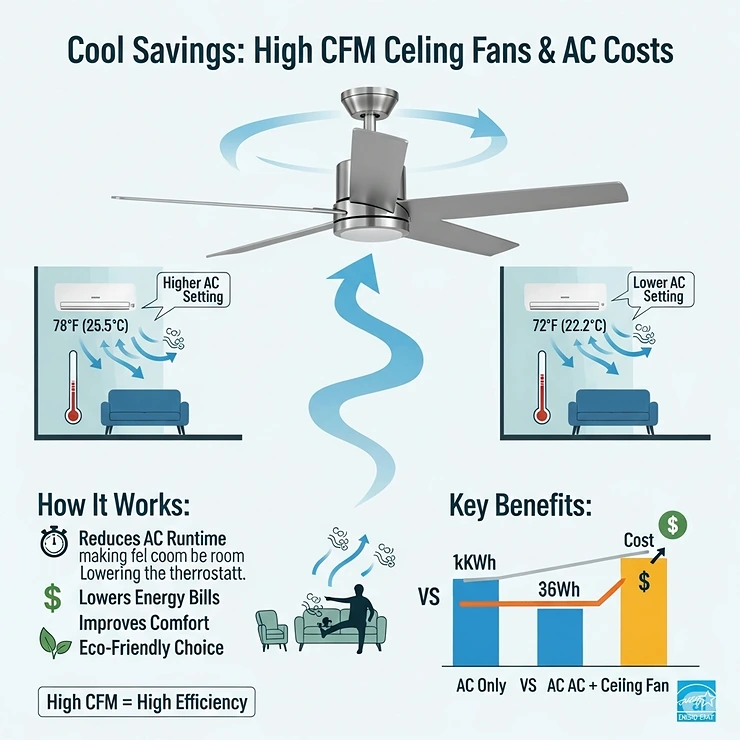
- Energy Savings: 95%+ reduction in electricity usage
- Annual Cost Impact: $200-500 savings on electricity bills
Cooling Effectiveness:
- AC provides temperature reduction through refrigeration
- High cfm ceiling fan creates wind chill effect (6-8 degree perceived cooling)
- Optimal Strategy: Combined use reduces AC load by 30-40%
- Climate Considerations: Fans most effective in dry climates
Evaporative Cooling Systems
Performance Comparison:
- Evaporative coolers: Effective in arid climates (humidity <30%)
- High CFM fans: Effective in all humidity conditions
- Energy Efficiency: Fans use 70% less energy than evaporative systems
- Maintenance: Fans require minimal maintenance vs. regular media replacement
Installation and Infrastructure:
- Evaporative systems require water lines and drainage
- High cfm ceiling fan installation requires only electrical connection
- Retrofitting: Fans much easier to install in existing buildings
- Reliability: Fewer mechanical components mean less failure potential
Whole-House Fan Systems
Airflow Volume Comparison:
- Whole-house fans: 10,000-30,000 CFM capacity
- Single high CFM ceiling fan: 3,000-8,000 CFM capacity
- Coverage Strategy: Multiple ceiling fans vs. single whole-house unit
- Noise Levels: Ceiling fans significantly quieter operation
Installation Complexity:
- Whole-house fans require attic access and roof modifications
- High cfm ceiling fan systems install in individual rooms
- Cost Comparison: Multiple fans cost similar to single whole-house system
- Flexibility: Individual room control vs. whole-house operation
Future Trends and Market Evolution 🚀
The high cfm ceiling fan industry continues evolving with technological innovations and changing consumer demands.
Smart Technology Integration
Artificial Intelligence and Machine Learning: Next-generation high cfm ceiling fan systems will incorporate AI algorithms that learn usage patterns and optimize performance automatically. These systems will predict optimal speed settings based on weather forecasts, occupancy patterns, and energy prices.
Internet of Things (IoT) Connectivity: Future fans will seamlessly integrate with comprehensive home automation systems, sharing data with HVAC systems, lighting controls, and security systems to optimize overall building performance.
Advanced Sensor Technology: Emerging sensor technologies will enable fans to detect:
- Real-time air quality measurements (CO2, particulates, humidity)
- Occupancy levels and movement patterns
- Temperature gradients throughout the room
- Noise levels and automatic speed adjustment
Sustainable Materials and Manufacturing
Carbon Fiber and Advanced Composites: The industry is moving toward lighter, stronger materials that enable larger blade spans without increased motor loads. Carbon fiber blades can achieve 60+ inch spans while weighing less than traditional 52-inch metal blades.
Recycled and Bio-Based Materials: Manufacturers are developing fan components from recycled plastics and bio-based materials, reducing environmental impact while maintaining performance standards.
Manufacturing Process Innovation: 3D printing and additive manufacturing technologies will enable custom blade designs optimized for specific room configurations and airflow requirements.
Energy Storage and Grid Integration
Battery Backup Systems: High-efficiency high cfm ceiling fan models will incorporate battery backup systems that maintain operation during power outages, crucial for health and safety in extreme weather.
Grid-Interactive Features: Smart fans will participate in demand response programs, automatically reducing speed during peak electricity demand periods to help stabilize the electrical grid.
Solar Integration: Direct solar-powered ceiling fans will become more practical as photovoltaic efficiency improves and costs decrease.
Investment and Purchase Decision Framework 💰
Making the right high cfm ceiling fan investment requires systematic evaluation of multiple factors.
Cost-Benefit Analysis Methodology
Initial Investment Categories:
- Fan purchase price: $150-$2,500 depending on model and features
- Installation costs: $100-$500 for professional installation
- Electrical upgrades: $0-$800 if circuit upgrades needed
- Total Initial Investment: $250-$3,800 per fan
Annual Operating Costs:
- Electricity consumption: $15-$75 per year (varies by usage and rates)
- Maintenance costs: $10-$50 per year for cleaning and minor repairs
- Annual Operating Expense: $25-$125 per fan
Energy Savings Calculation:
- Reduced AC usage: 30-40% savings during cooling season
- Typical household savings: $200-$600 annually
- Payback Period: 6 months to 3 years depending on climate and energy costs
Performance Evaluation Criteria
Airflow Efficiency Metrics:
- CFM per watt (target: 100+ CFM/W for residential, 200+ for commercial)
- Noise levels (target: <35 dB for residential applications)
- Speed range and control precision
- Airflow pattern uniformity across coverage area
Build Quality Indicators:
- Warranty duration (look for 5+ year motor warranties)
- Bearing type and expected lifespan
- Material quality and corrosion resistance
- Manufacturing reputation and customer service quality
Smart Feature Evaluation:
- Mobile app functionality and user interface quality
- Voice control compatibility (Alexa, Google Assistant)
- Integration with existing home automation systems
- Firmware update capability and manufacturer support
Financing and Budget Optimization
Utility Rebate Programs: Many electric utilities offer rebates for Energy Star certified ceiling fans:
- Residential rebates: $25-$100 per fan
- Commercial rebates: Up to 30% of purchase price
- Research Required: Check local utility websites for current programs
Tax Incentives and Credits:
- Federal energy efficiency tax credits may apply
- Some states offer additional incentives for high-efficiency cooling equipment
- Professional Advice: Consult tax professionals for specific eligibility
Bulk Purchase Strategies:
- Multiple fan discounts from manufacturers
- Contractor pricing for large installations
- Group Buying: Coordinate with neighbors for volume pricing
Case Studies and Success Stories 📈
Real-world implementations demonstrate the transformative impact of high cfm ceiling fan systems.
Residential Success Story: Suburban Phoenix Home
Challenge: 3,500 square foot home in Phoenix, Arizona with $400+ monthly summer electricity bills due to excessive air conditioning usage.
Solution: Installation of six Big Ass Fans Haiku L units throughout main living areas, replacing traditional lighting and providing high CFM airflow.
Results After One Year:
- Electricity bills reduced to $250/month average (37.5% savings)
- Indoor comfort improved significantly during 110°F+ days
- AC runtime reduced by 45% during peak summer months
- Total Annual Savings: $1,800 electricity costs
- ROI: 18 months payback period
Homeowner Testimonial: “The difference is incredible. We can actually use our living room during summer afternoons now, and our electricity bills have dropped dramatically. The smart controls let us optimize each room perfectly.”
Commercial Case Study: Auto Dealership Showroom
Challenge: 25,000 square foot automotive showroom with poor air circulation, customer complaints about stuffiness, and high HVAC costs.
Solution: Installation of eight Minka-Aire F787-ORB high CFM fans throughout showroom floor, supplementing existing HVAC system.
Measurable Outcomes:
- Customer satisfaction scores increased 28%
- HVAC energy consumption reduced 35%
- More even temperature distribution (eliminated hot/cold zones)
- Annual Savings: $12,000 in energy costs
- Improved Sales: 15% increase attributed to improved customer comfort
Facility Manager Quote: “The fans transformed our showroom environment. Customers stay longer, and our sales team is much more comfortable working the floor during hot weather.”
Industrial Application: Food Processing Facility
Challenge: 100,000 square foot food processing plant struggling with temperature control, worker productivity issues, and condensation problems.
Solution: Installation of twelve Bannon High-Volume Industrial 20,000 CFM fans strategically positioned throughout production areas.
Quantified Benefits:
- Worker productivity increased 22% during summer months
- Product spoilage reduced 40% due to better temperature control
- HVAC system load reduced 50% during production hours
- Annual Savings: $85,000 in energy and productivity improvements
- Safety Improvements: 60% reduction in heat-related incidents
Plant Manager Testimonial: “The high CFM fan installation was a game-changer for our operation. Better working conditions, lower costs, and improved product quality – exactly what we needed.”
Educational Facility: High School Gymnasium
Challenge: 15,000 square foot gymnasium with inadequate ventilation, student complaints during physical education classes, and high operating costs.
Solution: Four Hunter SureSpeed high CFM fans installed at optimal heights with smart controls linked to occupancy sensors.
Educational Impact Results:
- Student participation in PE increased 12%
- Teacher sick days reduced 25% (improved air quality)
- Energy costs decreased 30% compared to previous HVAC-only solution
- Annual Savings: $8,500 in operational costs
- Health Benefits: Significant improvement in indoor air quality measurements
Recommended Products and Final Purchasing Advice 🛒
Based on comprehensive analysis, here are our top recommendations for different applications:
🥇 Best Overall Value: Fanliving 52 Inch DC Motor
Perfect balance of performance, features, and pricing. Excellent for most residential applications with smart features and ultra-quiet operation.
🏆 Maximum Performance: Minka-Aire F787-ORB
Unmatched efficiency ratings and CFM output. Ideal for those prioritizing maximum airflow and energy efficiency.
💎 Premium Choice: Big Ass Fans Haiku L
Top-tier smart features, build quality, and performance. Best for tech-forward homeowners seeking the ultimate ceiling fan experience.
💰 Budget Champion: Amico 52 Inch Low Profile
Outstanding value proposition with solid performance and essential features. Perfect for cost-conscious buyers.
🏭 Industrial Applications: Bannon High-Volume Industrial
Uncompromising performance for commercial and industrial environments requiring maximum CFM output.
🛒 Transform Your Space Today!
→ Don’t let another hot day go by without proper cooling. These high cfm ceiling fan models will revolutionize your comfort while slashing energy bills. Click any highlighted product name to check current Amazon pricing and start enjoying better airflow immediately! ⚡
Frequently Asked Questions About High CFM Ceiling Fans
❓ How much CFM do I actually need for a 20x20 room?
❓ Are high cfm ceiling fan models more expensive to operate?
❓ Can I install a high CFM fan in a room with low ceilings?
❓ How loud are high cfm ceiling fan models compared to standard fans?
❓ What maintenance does a high cfm ceiling fan require?
Conclusion: Making the Right High CFM Investment
Choosing the right high cfm ceiling fan transforms your space from uncomfortably hot to refreshingly cool while dramatically reducing energy costs. The models reviewed here represent the best available technology, from budget-friendly options to premium smart fans that integrate seamlessly with modern homes.
Remember that CFM ratings tell only part of the story. Consider energy efficiency, noise levels, smart features, and build quality when making your decision. The right fan will provide decades of reliable service while paying for itself through reduced electricity bills.
Whether you’re cooling a master bedroom, great room, or industrial facility, there’s a high cfm ceiling fan solution that matches your needs and budget. Don’t wait for the next heatwave – invest in proper cooling comfort today.
🌟 Ready to Beat the Heat?
→ Your perfect high cfm ceiling fan is just one click away. Check current pricing on these top-rated models and start enjoying powerful, efficient cooling that lasts for decades. Your comfort and wallet will thank you! 🌪️✨
Recommended for You:
- 7 Best Master Bedroom Ceiling Fans for Ultimate Comfort & Style in 2025
- 7 Best Screen Porch Ceiling Fans That Transform Your Outdoor Space in 2025
- 7 Best Outdoor Ceiling Fan for Pergola: Ultimate 2025 Guide & Reviews
Disclaimer: This article contains affiliate links. If you purchase products through these links, we may earn a small commission at no additional cost to you.
✨ Found this helpful? Share it with your friends! 💬🤗
