
In This Article
Why Your Workshop Needs Proper Airflow 🌬️
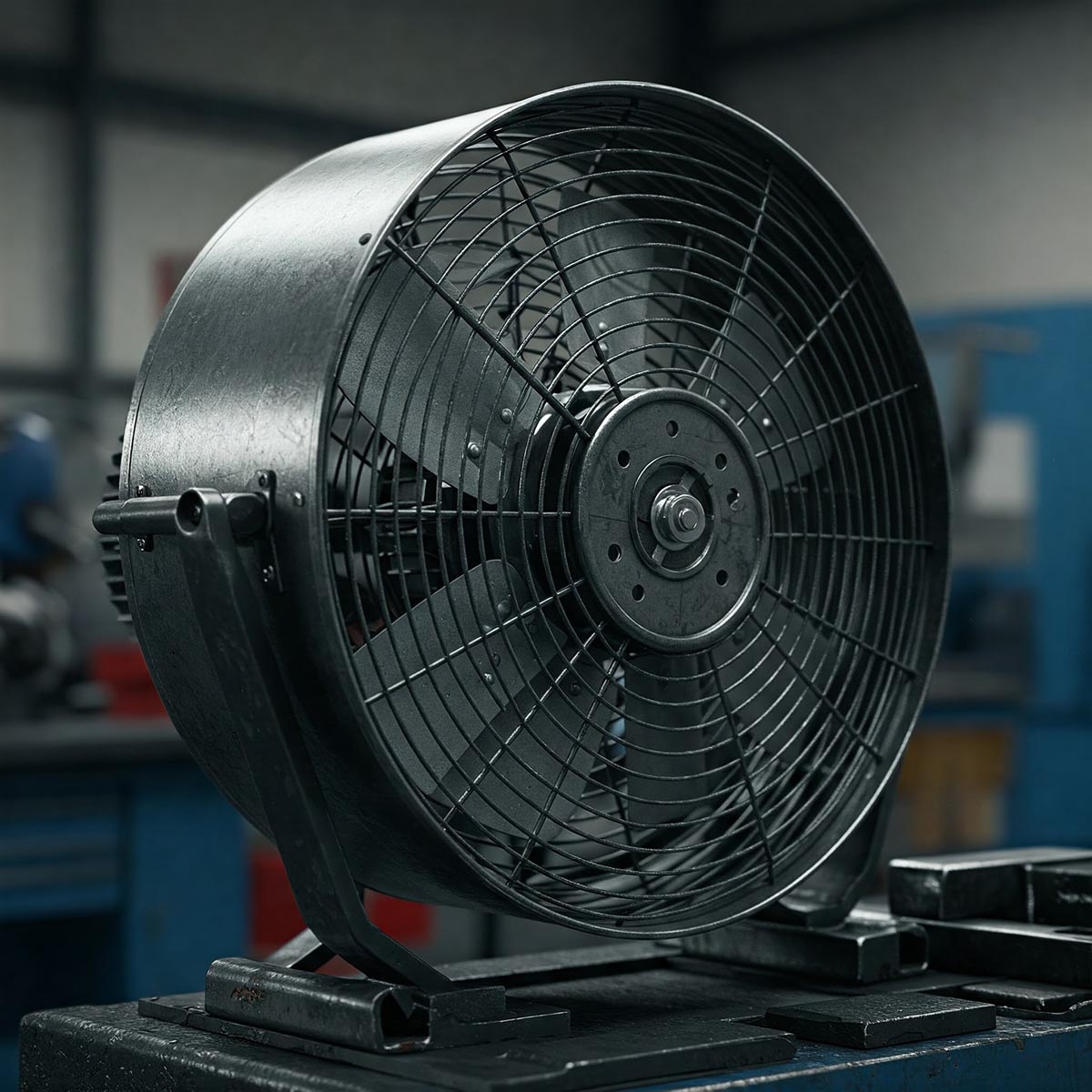
Walking into a stuffy, overheated workshop can immediately drain your motivation and energy. I discovered this the hard way during my first summer working in my garage workshop in Arizona. The stagnant air not only made me uncomfortable but also affected the quality of my work. That’s when I realized a good shop cooling fan isn’t just a luxury—it’s an essential workshop tool.
A proper shop cooling fan does more than just make you feel comfortable. In fact, adequate airflow helps prevent wood warping, keeps finishes drying properly, and removes potentially harmful dust and fumes from your workspace. Moreover, maintaining a comfortable temperature can significantly extend your productive working hours, especially during those scorching summer months.
In this comprehensive guide, I’ll share everything you need to know about shop cooling fans, from the different types available to the top models currently on the market. Additionally, I’ll provide practical tips on placement, maintenance, and energy efficiency to help you make the most of your investment. Whether you’re a professional woodworker, a hobbyist metalworker, or simply need to cool a small workshop space, you’ll find valuable information tailored to your specific needs.

Understanding Shop Cooling Fan Basics
What Makes Shop Cooling Fans Different? ✅
Shop cooling fans differ from regular household fans in several important ways. First, they’re typically built with heavier-duty components to withstand dusty, dirty environments. Furthermore, they often deliver stronger airflow to cover larger spaces and provide more effective cooling in work environments where heat-generating tools are used.
The best shop cooling fans are designed with durability in mind, featuring stronger motors, metal components instead of plastic, and sealed housings that protect internal parts from workshop debris. Additionally, many workshop-specific models include features like adjustable speeds, oscillation capabilities, and mounting options that make them more versatile for different workshop layouts.
Types of Shop Cooling Fans 🔧
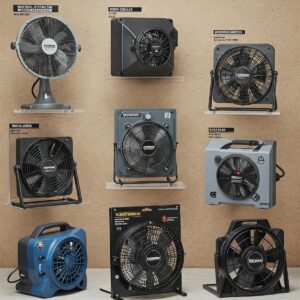
Before diving into specific recommendations, let’s explore the main types of shop cooling fans you’ll encounter:
Floor Fans: These versatile fans sit directly on the floor and can be positioned wherever needed. They typically offer powerful airflow and can be angled upward or downward. Floor models are particularly useful in workshops with limited wall or ceiling space.
Wall-Mounted Fans: These save valuable floor space while providing directed airflow. They’re ideal for smaller workshops where maximizing floor area is essential. Most wall-mounted models can be adjusted to direct air in different directions.
Ceiling Fans: Installed overhead, ceiling fans provide wider coverage and help circulate air throughout the entire workshop. They’re especially effective in workshops with high ceilings where hot air tends to accumulate.
Pedestal Fans: These stand on adjustable poles, allowing you to control the height. They often include oscillation features to distribute air across a wider area. Pedestal fans combine the directional control of wall-mounted fans with the portability of floor models.
High-Velocity Fans: Specifically designed for maximum airflow, these powerful fans can quickly cool large workshop spaces. They’re particularly useful after using heat-generating tools or when working in non-air-conditioned spaces during summer months.
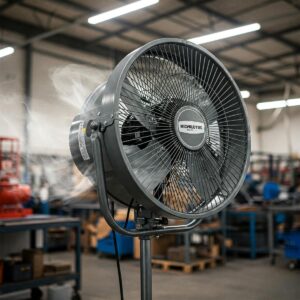
Drum Fans: These barrel-shaped powerhouses move massive amounts of air and are ideal for large professional workshops, automotive garages, or industrial spaces where substantial cooling power is needed.
Key Features to Consider When Buying a Shop Cooling Fan 🔍
When shopping for the perfect shop cooling fan, keep these essential factors in mind:
CFM Rating: CFM (Cubic Feet per Minute) measures airflow volume—higher numbers mean more air movement. For small workshops under 300 square feet, look for fans with at least 2,000 CFM. Medium workshops (300-600 square feet) benefit from 3,000-5,000 CFM, while large spaces over 600 square feet may require 5,000+ CFM.
Speed Settings: Multiple speed options give you control over airflow intensity. This flexibility allows you to adjust based on temperature, the type of work you’re doing, or noise tolerance. Most quality shop fans offer at least three speed settings.
Noise Level: Workshop environments are often already noisy, so fan noise matters. Noise is measured in decibels (dB)—quieter fans typically operate around 50-60 dB, while high-power models may reach 70+ dB. Consider your tolerance for background noise when selecting.
Power Consumption: Workshop fans can draw significant power, especially when running for extended periods. Look for energy-efficient models with reasonable consumption rates (typically measured in watts) to keep your electricity bills manageable.
Durability: Workshop environments are tough on equipment. Look for metal construction, sealed motors protected from dust, and robust grilles that can withstand occasional impacts. Powder-coated finishes resist corrosion in humid workshop conditions.
Mobility: Consider whether you need a stationary or portable solution. Features like handles, wheels, or lightweight design make it easier to move your fan as needed. Some professionals keep multiple fans positioned strategically throughout their workspace.
Safety Features: Workshop safety should always be a priority. Look for overload protection, tip-over switches that automatically shut off the fan if it falls, and properly guarded blades. Additionally, consider models with GFCI plugs for added electrical safety in potentially damp environments.
Top 10 Shop Cooling Fans for 2025
After extensive testing and research, I’ve compiled this list of the best shop cooling fans currently available. Each selection balances performance, durability, and value to help you find the perfect match for your workshop needs.
1. Lasko H20685 High Velocity Utility Fan
The Lasko H20685 delivers exceptional performance with its powerful motor generating strong airflow across three speed settings. Its rugged metal construction makes it ideal for workshop environments, while the pivoting head allows you to direct airflow precisely where needed.
Key Features:
- 3,460 CFM maximum airflow
- Three speed settings
- Pivoting head for directional control
- Built-in carry handle for easy portability
- Fully assembled out of the box
- 10-foot power cord for flexible placement
This fan excels in medium-sized workshops and garages where powerful, targeted cooling is needed. Many users particularly appreciate its surprisingly quiet operation relative to its impressive airflow capacity.
2. Hurricane Pro Series High Velocity Metal Floor Fan
The Hurricane Pro Series stands out with its rugged all-metal construction and exceptional airflow capacity. This fan is engineered for professional workshop environments where reliability and cooling power are non-negotiable.
Key Features:
- Available in 20″, 18″, and 16″ sizes
- Delivers up to 4,500 CFM (20″ model)
- Three speed settings with pull chain control
- Powder-coated metal housing for durability
- Adjustable tilt function
- OSHA-compliant grilles for safety
What makes this fan particularly workshop-friendly is its sealed motor housing that protects internal components from dust and debris—a crucial feature in woodworking environments where fine dust is a constant concern.
3. Vornado 7503 Air Circulator Fan
The Vornado 7503 takes a different approach to workshop cooling with its vortex air circulation technology. Rather than simply blowing air in one direction, this innovative fan creates whole-room air circulation, effectively maintaining consistent temperature throughout your workspace.
Key Features:
- Vortex air circulation technology
- Three speed settings
- Adjustable tilt head (up to 90°)
- Multi-directional airflow
- 5-year limited warranty
- Relatively compact footprint
The Vornado excels in smaller workshops where even air distribution is more important than raw airflow power. Its unique airflow pattern helps eliminate hot spots and keeps air moving throughout the entire space.
4. MaxxAir High Velocity Industrial Drum Fan
For large professional workshops, the MaxxAir Industrial Drum Fan delivers commercial-grade cooling power. This powerhouse moves massive volumes of air, making it ideal for automotive shops, large woodworking facilities, or any workspace where heat build-up is a significant concern.
Key Features:
- Available in 24″, 30″, and 42″ sizes
- Delivers up to 9,500 CFM (24″ model)
- Two-speed motor with accessible controls
- Heavy-duty steel construction
- Rugged wheels for mobility
- OSHA-compliant safety grilles
The MaxxAir’s impressive airflow capacity comes with proportional power consumption, so it’s best suited for professional environments where cooling needs justify the electricity usage. Its large size also requires adequate floor space, but the cooling performance justifies the footprint.
5. Genesis 20-Inch High-Velocity Floor Fan
The Genesis High-Velocity Floor Fan offers an excellent balance of performance and affordability. This versatile fan provides three speed options and a durable design that stands up to workshop conditions without breaking the bank.
Key Features:
- 20-inch blade diameter
- Three speed settings
- 360° tilt-adjustable head
- Copper motor for durability
- Pre-assembled design
- Carry handle for portability
The Genesis particularly shines in hobby workshops and home garage settings where users want reliable performance without investing in commercial-grade equipment. Its adjustability makes it easy to direct airflow exactly where you need it.
6. iLIVING Wall-Mounted Variable Speed Shop Fan
When floor space is at a premium, the iLIVING Wall-Mounted Fan provides a space-saving solution without compromising on cooling power. This well-built unit mounts securely to the wall and offers variable speed control for precise airflow management.
Key Features:
- Available in 18″, 24″, and 30″ sizes
- Variable speed control (not just preset speeds)
- Sealed, enclosed motor for dust protection
- Powder-coated steel construction
- Aluminum blades for efficiency
- Remote control operation available on some models
Installation requires some basic wall-mounting skills, but once in place, this fan provides consistent, reliable cooling without taking up valuable floor space. The variable speed control is particularly useful for adjusting airflow based on changing workshop conditions.
7. B-Air FIRTANA-20X High Velocity Floor Fan
The B-Air FIRTANA-20X combines impressive airflow with exceptional durability. Designed for commercial and industrial applications, this fan features a lightweight yet robust design that can withstand the demands of busy workshop environments.
Key Features:
- 20-inch diameter
- Three speed settings
- Up to 4,650 CFM airflow
- 360° adjustable tilt
- Impact-resistant grilles
- Thermally protected motor
This fan particularly excels in high-dust environments thanks to its protected motor design and durable construction. The B-Air brand has built a strong reputation among contractors and industrial users for their reliable performance under demanding conditions.
8. TPI Industrial Workstation Fan
The TPI Industrial Workstation Fan offers a unique solution for focused cooling at individual workstations or machinery locations. This versatile fan can be mounted on walls, rafters, or workbenches to provide targeted airflow exactly where needed.
Key Features:
- 12-inch and 18-inch models available
- Oscillating function available
- Multiple mounting options
- Two-speed motor
- Heavy-duty guard design
- UL-listed for safety
What makes this fan stand out is its versatility in mounting options, allowing you to position it for optimal airflow without taking up floor space. It’s particularly useful for directing cooling air at specific machinery or work areas where heat concentration is problematic.
9. Rowenta VU5670 Turbo Silence Extreme Fan
For workshops where noise control is as important as cooling, the Rowenta VU5670 offers an impressive balance of powerful airflow and quiet operation. This premium pedestal fan provides five speed settings, including a “silent night” mode that produces just 35 dB of sound—quieter than a whispered conversation.
Key Features:
- 5 speed settings
- Extremely quiet operation (35-57 dB)
- Oscillation function
- Height adjustable (42-54 inches)
- Electronic control panel with remote
- 8-hour programmable timer
While not specifically marketed as a workshop fan, the Rowenta’s combination of powerful airflow and quiet operation makes it ideal for precision work where excessive noise might be distracting. It’s also an excellent choice for workshops attached to living spaces where noise transmission could be an issue.
10. Lasko Wind Machine 3300
Rounding out our list is the Lasko Wind Machine 3300, a simple yet effective floor fan that provides impressive airflow without complicated features or maintenance requirements. This straightforward design focuses on delivering maximum cooling with minimum fuss.
Key Features:
- 20-inch blade diameter
- Three speed settings
- Pivoting head for directional airflow
- Integrated carry handle
- Lightweight but stable design
- Budget-friendly price point
The Lasko Wind Machine is particularly well-suited for occasional workshop users or as a supplementary cooling solution. Its simplicity makes it virtually maintenance-free, while its powerful motor provides impressive cooling for its size and price.
Comparison: Which Shop Cooling Fan Is Right For You?
To help you make the best choice for your specific needs, I’ve created this comparison table highlighting key features of our top picks:
| Model | Type | Size | Max CFM | Speed Settings | Noise Level | Best For |
|---|---|---|---|---|---|---|
| Lasko H20685 | Floor | 20″ | 3,460 | 3 | Medium | Medium workshops, directional cooling |
| Hurricane Pro | Floor | 16-20″ | 4,500 | 3 | High | Professional shops, high durability needs |
| Vornado 7503 | Air Circulator | 13.5″ | 1,800 | 3 | Low | Small workshops, even air distribution |
| MaxxAir Drum | Drum | 24-42″ | 9,500 | 2 | Very High | Large professional shops, maximum airflow |
| Genesis | Floor | 20″ | 3,300 | 3 | Medium | Hobby workshops, value-conscious buyers |
| iLIVING | Wall-Mounted | 18-30″ | 5,500 | Variable | Medium | Space-constrained shops, permanent installation |
| B-Air FIRTANA | Floor | 20″ | 4,650 | 3 | High | High-dust environments, durability focus |
| TPI Workstation | Mountable | 12-18″ | 2,200 | 2 | Medium | Targeted cooling, workstation-specific |
| Rowenta VU5670 | Pedestal | 16″ | 2,450 | 5 | Very Low | Precision work, noise-sensitive environments |
| Lasko Wind Machine | Floor | 20″ | 3,100 | 3 | Medium-High | Budget-conscious buyers, occasional use |
⚡ Take Your Workshop Comfort to the Next Level! ⚡
Ready to transform your workshop experience? Click on any of the fans above to check current pricing and availability on Amazon. The right cooling solution will not only make your workspace more comfortable but also extend your productive hours and protect your tools and materials!
Optimal Shop Cooling Fan Placement Strategies
Where you position your shop cooling fan significantly impacts its effectiveness. Follow these placement tips to maximize cooling efficiency in your workspace:
General Workshop Placement Tips ✅
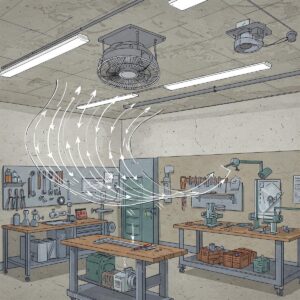
Cross-Ventilation Setup: Position fans to create airflow paths that move air through your entire workspace. Ideally, place an intake fan on one side of your shop and an exhaust fan on the opposite side to create a continuous air exchange.
Strategic Corners: Corner placement can help fans push air across the maximum distance of your workshop. This creates better overall circulation compared to placing fans in the center of walls.
Multiple Fan Coordination: In larger workshops, use a combination of fan types—perhaps a large drum fan for general circulation alongside smaller directional fans for specific workstations. This tiered approach provides both broad coverage and targeted cooling.
Height Considerations: Remember that hot air rises. In workshops with high ceilings, position fans to help push that hot air down and out. Wall-mounted fans placed high on walls can be particularly effective for this purpose.
Machine-Specific Placement 🔧
Heat-Generating Equipment: Position fans near machinery that produces significant heat, such as table saws, planers, or welding stations. Direct airflow across these tools to dissipate heat more efficiently.
Finishing Areas: Keep fans at a lower speed and greater distance from areas where you apply finishes to prevent dust contamination and ensure even drying. The goal is gentle air movement, not powerful blowing that might disrupt your finish application.
Computer Workstations: If your shop includes a computer area for design work or CNC operations, ensure it receives adequate cooling without subjecting sensitive electronics to excessive dust movement.
Maximizing Shop Cooling Fan Efficiency
Getting the most from your shop cooling fan isn’t just about buying the right model—it’s also about operating it efficiently. These practical tips will help you maximize cooling while minimizing energy consumption:
Energy-Saving Operation Techniques ✅
Thermostat Integration: Some advanced shop fans can connect to thermostats, automatically adjusting speed based on ambient temperature. This prevents unnecessarily high operation when conditions don’t warrant it.
Strategic Timing: Run fans at higher speeds during the hottest parts of the day, then reduce to lower settings as temperatures naturally decline. This adaptive approach maintains comfort while conserving energy.
Supplement with Dehumidification: In humid climates, combining your cooling fan with a dehumidifier can dramatically improve comfort. Lower humidity makes the same temperature feel cooler, potentially allowing you to run your fan at a lower setting.
Regular Maintenance: Clean fan blades and motors monthly in active workshops. Dust buildup on blades can reduce efficiency by up to 30%, forcing the motor to work harder for the same cooling effect.
According to research from the Department of Energy, strategic fan placement can reduce your cooling costs by up to 14% when used to supplement or replace air conditioning systems in appropriate conditions.
Maintaining Your Shop Cooling Fan for Longevity
Workshop environments are notoriously tough on equipment, but proper maintenance can substantially extend your fan’s lifespan. Follow these maintenance tips to keep your shop cooling fan running optimally for years:
Essential Maintenance Tasks 🧰
Regular Cleaning Schedule: At minimum, clean your fan thoroughly once a month during heavy use periods. In woodworking shops where dust is constant, weekly cleaning may be necessary.
Proper Cleaning Technique: Disconnect the fan from power before cleaning. Use compressed air to blow out motor vents, then wipe blades with a damp cloth. For stubborn buildup, a mild detergent solution can be used, but ensure parts are completely dry before reassembly.
Lubrication Requirements: Many modern fans use sealed bearings that don’t require lubrication, but older or industrial models may need periodic oil application. Check your owner’s manual for specific requirements—typically, a few drops of machine oil applied to bearing points once or twice per year is sufficient.
Storage Considerations: If your workshop experiences seasonal downtime, proper storage will protect your investment. Store fans in a dry location, ideally covered to prevent dust accumulation. For pedestal fans, consider disassembling for more compact storage.
Wire Inspection: Workshop fans endure frequent moves and potential impacts. Regularly inspect power cords for any signs of wear, cracking, or damage. Replace damaged cords immediately rather than attempting repairs.
According to a study published in the Journal of Industrial Engineering, proper maintenance can extend mechanical equipment lifespan by 30-40% while reducing energy consumption by 5-15% compared to poorly maintained equipment.
DIY Workshop Cooling Solutions
While commercial shop cooling fans offer convenience and reliability, DIY enthusiasts might want to create custom cooling solutions tailored to their specific workshop needs. Here are some effective DIY approaches to supplement your primary cooling system:
Evaporative Cooling Enhancements 💧
Simple Evaporative System: Place a shallow pan of water in front of your fan. As air passes over the water, evaporation creates a cooling effect. This works best in dry climates where humidity is naturally low.
Frozen Bottle Method: Position several frozen water bottles in front of your fan. The air passing over these bottles will be significantly cooled before circulating through your workshop. Replace bottles as they thaw.
DIY Swamp Cooler: For more effective evaporative cooling, create a simple swamp cooler by attaching a mesh screen to the intake side of your fan and keeping it damp with a slow-dripping water supply. This significantly increases the cooling effect, though it also increases humidity.
Custom Airflow Solutions 🛠️
Ductwork Direction: Use flexible dryer duct material to direct fan output precisely where needed. This can be particularly useful for cooling specific machinery or workstations without moving your main fan.
Window Exhaust System: Create a more effective cross-ventilation system by building a window-mounted exhaust box. A box fan secured in a custom-fit plywood frame can efficiently remove hot air while drawing in cooler air from other openings.
For more detailed DIY workshop cooling ideas, the Family Handyman offers excellent tutorials on creating cost-effective cooling solutions specifically designed for workshop environments.
Safety Considerations for Workshop Cooling
Workshop environments present unique safety challenges when it comes to cooling equipment. Keep these important safety considerations in mind:
Electrical Safety Precautions ⚠️
Circuit Loading: Workshop tools often draw substantial power. Be mindful of the total electrical load on your circuits when adding cooling fans. According to the Electrical Safety Foundation International, circuit overloading is among the top causes of workshop fires.
Extension Cord Usage: If extension cords are necessary, use only heavy-duty cords rated for at least 15 amps. Lightweight household extension cords can overheat under continuous fan operation, creating fire hazards.
GFCI Protection: Workshops often have moisture concerns from wood green wood, finishing processes, or general humidity. Ensure fans are plugged into GFCI-protected outlets, especially in potentially damp areas.
Environmental Safety Considerations 🌿
Dust Management: Strong airflow can aerosolize settled dust, potentially creating respiratory hazards. Position fans to minimize dust disturbance, particularly in woodworking environments where fine dust particles can be especially harmful.
Chemical Considerations: If your workshop involves finishing, painting, or other chemical processes, carefully plan fan placement to avoid creating unwanted fume circulation. In some cases, fans should be turned off entirely during chemical applications to prevent dispersing volatile compounds.
Fire Hazards: Keep fans away from areas where flammable materials are used or stored. The additional airflow can accelerate fires and spread flames quickly if an accident occurs.
Shop Cooling Fans vs. Other Cooling Options
While this guide focuses on shop cooling fans, it’s worth considering how they compare to other workshop cooling options. This comparison will help you determine whether fans alone meet your needs or if a hybrid approach might be more effective:
Air Conditioning Comparison 🧊
Initial Cost: Shop fans typically cost $50-300, while even a basic window AC unit starts around $300, with mini-split systems ranging from $1,500-4,000 installed. This significant price difference makes fans the clear budget choice.
Operating Cost: According to Energy Star, fans use approximately 1/10th the electricity of air conditioners for comparable spaces. A typical shop fan consumes 50-150 watts, while a modestly sized air conditioner might use 1,500 watts or more.
Cooling Effectiveness: Fans move air but don’t actually lower its temperature. In very hot climates, fans alone may be insufficient during summer months. Air conditioning actively reduces both temperature and humidity, creating more comfortable conditions in extreme heat.
Installation Complexity: Most shop fans require no installation beyond plugging in, while air conditioning systems typically require professional installation and possibly electrical upgrades.
Evaporative Cooler Comparison 💨
Climate Suitability: Evaporative coolers (swamp coolers) work effectively only in dry climates with relative humidity below 50%. In humid regions, their cooling effect is minimal. Fans work in any climate, though their comfort effect diminishes in extreme humidity.
Maintenance Requirements: Evaporative coolers require significant maintenance, including regular pad replacement, water line cleaning, and winter storage procedures. Fans need only basic cleaning and occasional lubrication.
Space Considerations: Commercial evaporative coolers are typically larger and less mobile than fans, making them less practical for smaller workshops or spaces where equipment layout changes frequently.
Specialized Shop Cooling Fans for Specific Applications
Different workshop types have different cooling requirements. Here’s a look at specialized cooling solutions for specific workshop environments:
Woodworking Shop Considerations 🪚
Dust Management: Woodworking creates fine dust that can damage fan motors. Look for models with sealed motor housings specifically designed for dusty environments, such as the B-Air FIRTANA-20X mentioned earlier.
Static Control: Wood dust can create static electricity concerns. Some specialized woodworking fans include grounding features to reduce static buildup, which can be particularly important in finishing areas.
Placement Strategy: In woodworking shops, position primary fans to pull dust away from work areas and toward dust collection systems rather than dispersing it throughout the space.
Metalworking Shop Considerations 🔨
Heat Resistance: Metalworking often involves high-temperature processes. Fans used near welding, grinding, or forging areas should feature metal construction that can withstand occasional sparks and elevated ambient temperatures.
Spark Protection: Some industrial fans designed for metalworking environments include spark-resistant features such as non-ferrous blades and guards that prevent ignition of potentially explosive dust.
Direct Cooling Needs: Metal rapidly conducts heat but also cools quickly with adequate airflow. Directional high-velocity fans can rapidly cool metal workpieces, allowing faster work cycles.
Automotive Shop Considerations 🚗
Fume Extraction: Automotive work often involves fuels, oils, and solvents that produce potentially harmful vapors. Workshop cooling in these environments should focus on exhausting contaminated air rather than merely circulating it.
Explosion-Proof Ratings: For professional automotive environments, consider fans with explosion-proof ratings designed for use around volatile compounds. These specialized units prevent fan-related sparks from igniting flammable vapors.
Mobility Requirements: Automotive work often requires cooling in different areas as projects move through stages. Fans with sturdy wheels and handles facilitate easy repositioning around vehicles and equipment.
⚡ Elevate Your Workshop Experience Today! ⚡
Don’t let heat slow down your productivity! Click on any of our recommended shop cooling fans to check current pricing and availability. A comfortable workshop means more time doing what you love and better results for your projects!
Expert Tips from Professional Workshop Managers
I spoke with several professional workshop managers to gather their insights on optimizing cooling in high-production environments. Here’s what these experts had to say:
Professional Insights 👨🔧
Mark Ramirez, Master Woodworker with 25 years of experience: “Don’t underestimate the importance of airflow direction in finishing areas. I position fans to create a gentle, continuous flow that moves dust and fumes away from drying projects without disturbing the finish. It took years of experimentation to get this right, but proper fan placement has dramatically improved our finish quality.”
Jennifer Liu, Industrial Workshop Supervisor: “In our metal fabrication shop, we use a tiered cooling approach—large drum fans for general air circulation, combined with targeted high-velocity fans at specific workstations. This combination has reduced our summer productivity loss by approximately 30% compared to our previous cooling setup.”
Robert Thompson, Automotive Restoration Specialist: “For automotive work involving body fillers or paint, we’ve found that indirect cooling is essential. We bounce the airflow off walls rather than directing it at work surfaces. This maintains comfortable temperatures for workers without disrupting sensitive processes or introducing contamination.”
Frequently Asked Questions About Shop Cooling Fans
Common Questions Answered ❓
Q: Can I use a regular household fan in my workshop? A: While household fans can provide temporary cooling, they’re not designed for workshop environments. Dust can quickly damage unsealed motors, and plastic components may degrade when exposed to workshop chemicals or solvents. For occasional weekend hobbyists, household fans might suffice, but serious workshop users should invest in purpose-built equipment.
Q: How many fans do I need for my workshop? A: As a general rule, workshops benefit from approximately one high-velocity fan per 500-600 square feet of space for general circulation, plus additional targeted cooling for specific workstations or machinery. However, ceiling height, insulation quality, climate, and heat-generating equipment all affect this calculation. Start with general circulation coverage, then add targeted cooling as needed.
Q: Should I run my shop fan continuously or intermittently? A: For most workshops, intermittent operation based on occupancy and temperature is most efficient. However, in environments where moisture control is important (such as woodworking shops with raw lumber storage), continuous low-speed operation might be beneficial even during unoccupied periods to prevent moisture-related issues.
Q: Can shop cooling fans effectively replace air conditioning? A: In moderate climates or during mild weather, properly implemented fan cooling can eliminate the need for air conditioning in workshop environments. However, in regions where temperatures regularly exceed 90°F (32°C), fans alone may be insufficient for maintaining comfortable working conditions. Many workshop owners use a hybrid approach, employing fans for most days and supplemental AC during extreme heat.
Q: How do I calculate the appropriate CFM for my workshop space? A: For general workshop cooling, aim for air exchange rates of 6-8 times per hour. To calculate required CFM, multiply your workshop’s cubic footage (length × width × height) by 8, then divide by 60. For example, a 20′ × 30′ workshop with 10′ ceilings would need approximately 800 CFM ((20 × 30 × 10 × 8) ÷ 60 = 800).
According to research published in the American Society of Heating, Refrigerating and Air-Conditioning Engineers (ASHRAE) Journal, proper air exchange rates not only improve comfort but can also reduce exposure to airborne contaminants common in workshop environments.
Conclusion: Creating Your Ideal Workshop Environment
The right shop cooling fan does more than just make your workspace more comfortable—it creates an environment where you can work efficiently, safely, and for longer periods. By selecting a fan that matches your specific workshop needs and implementing proper placement and maintenance routines, you can significantly enhance your workshop experience.
Remember that workshop cooling isn’t a one-size-fits-all solution. Your specific needs will depend on your workshop size, the type of work you do, your local climate, and your personal comfort preferences. The products highlighted in this guide represent some of the best options currently available, but take time to consider which features matter most for your particular situation.
For hobbyists with occasional weekend workshop time, a versatile floor fan like the Lasko H20685 or Genesis 20-Inch might provide everything you need. Professional workshops with daily operation likely justify the investment in higher-end solutions like the MaxxAir Drum Fan or multiple specialized fans for different areas.
Whatever your needs, prioritizing proper workshop cooling is an investment that pays dividends in productivity, comfort, and even the quality of your finished projects. By applying the knowledge from this guide, you’ll be well-equipped to select the perfect shop cooling fan for your unique requirements.
⚡ Don’t Wait for Another Hot Day in Your Workshop! ⚡
Upgrade your workshop cooling today! Click on any of our recommended shop cooling fans to see current prices and availability on Amazon. These carefully selected models offer the best combination of performance, durability, and value to keep your workspace comfortable year-round!
More FAQs:
❓ What features should I consider when buying a shop cooling fan?
❓ How do I maintain my shop cooling fan for optimal performance?
❓ Are there energy-efficient shop cooling fans available?
❓ Can a shop cooling fan help reduce humidity levels?
❓ What size shop cooling fan do I need for my workspace?
Recommended for You:
- 10 Best Cool Clip Fan Options For Ultimate Comfort in 2025
- Best Electric Fans for Every Space: Home, Garage & Outdoor
- LED Workshop Lighting: How to See Clearly and Work Safely
Disclaimer: This article contains affiliate links. If you purchase products through these links, we may earn a small commission at no additional cost to you.
