
In This Article
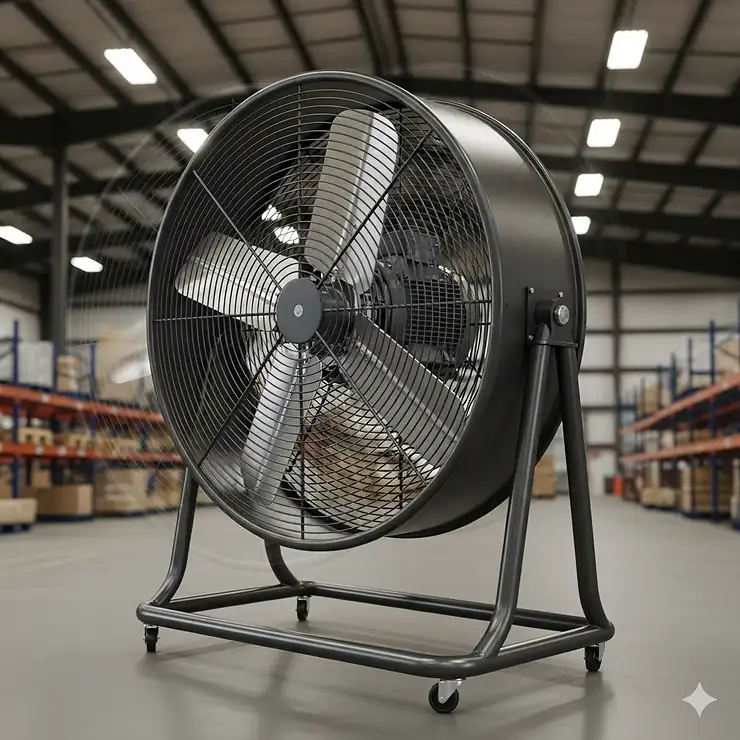
When you’re dealing with large spaces that need serious air circulation, you need more than just your average household fan. An industrial oscillating fan is the powerhouse solution that can transform hot, stagnant air into a comfortable, breathable environment ⚡. Whether you’re running a warehouse, managing a workshop, or just need heavy-duty cooling for your garage, the right industrial oscillating fan makes all the difference.
✨Was this helpful? Spread the word! 🚀
I’ve spent countless hours researching and testing different models, and I can tell you that not all industrial oscillating fans are created equal. Some manufacturers promise the world but deliver disappointment, while others quietly produce workhorses that keep going year after year. In this comprehensive guide, we’ll dive deep into everything you need to know about choosing the perfect industrial oscillating fan for your specific needs.
Quick Comparison Table: Top Industrial Oscillating Fan Models 2025
| Model | CFM Rating | Size | Motor Power | Price Range | Best For |
|---|---|---|---|---|---|
| FANNIVERSE 30″ Pro Series | 9,500 CFM | 30″ | 1/3 HP | $380-$420 | Commercial/Industrial |
| Global Industrial Deluxe 30″ | 10,000 CFM | 30″ | 1/2 HP | $450-$500 | Heavy-duty applications |
| hykolity 30″ Wall Mount | 9,500 CFM | 30″ | 221W | $280-$320 | Space-saving installations |
| FANNIVERSE 20″ Pro Series | 5,000 CFM | 20″ | 1/5 HP | $180-$220 | Workshops/Garages |
| Global Industrial Standard 30″ | 8,775 CFM | 30″ | 1/3 HP | $350-$390 | General industrial use |
| hykolity 24″ Pedestal | 6,450 CFM | 24″ | 3-Speed | $320-$360 | Mid-size facilities |
| Xcity 20″ Wall Mount | 5,500 CFM | 20″ | 70W | $150-$190 | Compact applications |
💬 Just one click – help others make better buying decisions too!😊
Understanding Industrial Oscillating Fan Technology 🔧
The world of industrial oscillating fans is fascinating when you start digging into the engineering principles behind these powerful machines. Unlike residential fans that prioritize quiet operation and aesthetics, industrial oscillating fans are built for one primary purpose: moving massive volumes of air efficiently and reliably.
The Science Behind Airflow Generation
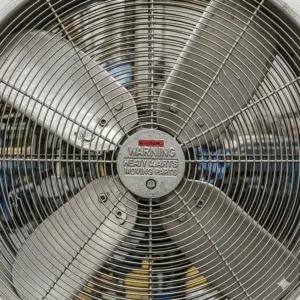
Modern industrial oscillating fans utilize advanced aerodynamic principles to maximize air displacement. The blade design follows specific geometric calculations that optimize the angle of attack, pitch ratio, and blade chord length. Most high-performance models feature three to five precision-balanced aluminum blades that have been computer-designed to minimize turbulence while maximizing CFM output.
The oscillation mechanism itself is a marvel of mechanical engineering. Traditional oscillating fans use a simple gear reduction system, but premium industrial models employ heavy-duty steel oscillating shafts with sealed ball bearings. This design ensures smooth, consistent movement even after thousands of hours of operation. The oscillation angle typically ranges from 70° to 90°, providing comprehensive coverage across large areas.
Motor Technology and Power Efficiency
The heart of any industrial oscillating fan is its motor system. Premium models feature Totally Enclosed Air Over (TEAO) motors with permanent split capacitor (PSC) design. These motors are specifically engineered for continuous operation in harsh industrial environments. They incorporate thermal protection systems that automatically shut down the motor if overheating occurs, preventing permanent damage.
Ball bearing motor systems have largely replaced sleeve bearings in modern industrial fans because they offer superior longevity and require minimal maintenance. The bearing assemblies are permanently lubricated and sealed, which means they can operate for years without service. This is crucial in industrial settings where downtime for maintenance can be extremely costly.
CFM Ratings and Real-World Performance
Cubic Feet per Minute (CFM) ratings are the primary metric for comparing industrial oscillating fan performance, but understanding these numbers requires some context. CFM measurements are typically taken at free air conditions with no obstructions. In real-world applications, factors like room layout, obstacles, and ambient temperature can reduce effective airflow by 15-25%.
For reference, a 30-inch industrial oscillating fan with a 9,500 CFM rating can effectively cool a space of approximately 2,000-3,000 square feet, assuming standard ceiling heights of 8-12 feet. However, this coverage area can vary significantly based on the specific application and environmental conditions.
Industry-Specific Applications and Professional Use Cases 🏭
Industrial oscillating fans serve diverse applications across numerous industries, each with specific requirements and performance expectations. Understanding these applications helps in selecting the most appropriate model for your particular needs.
Manufacturing and Production Facilities
In manufacturing environments, industrial oscillating fans serve multiple critical functions beyond simple comfort cooling. They help maintain consistent temperatures around sensitive machinery, prevent heat buildup that could damage products, and improve air quality by promoting circulation. For example, in automotive manufacturing plants, strategically placed industrial oscillating fans help cure paint finishes more evenly and reduce drying times.
Metal fabrication shops particularly benefit from high-velocity industrial oscillating fans because they help dissipate heat generated from welding, cutting, and forming operations. The constant air movement also helps remove airborne particulates and fumes, creating a safer working environment for employees. Many facilities use 30-inch models with 9,000+ CFM ratings to achieve effective air turnover rates.
Warehouse and Distribution Centers
Large-scale warehousing operations face unique cooling challenges due to their massive volumes and often limited HVAC systems. Industrial oscillating fans in these environments must move air efficiently across vast open spaces while operating reliably for extended periods. The oscillating feature is particularly valuable because it eliminates dead air zones that can develop in large, open areas.
Distribution centers often operate around the clock, requiring industrial oscillating fans that can handle continuous operation without degradation. The best models for these applications feature heavy-duty motors rated for 24/7 operation and robust construction that can withstand the demanding environment of constant material movement and equipment operation.
Agricultural and Livestock Applications
Agricultural facilities have specialized requirements for air circulation that go beyond simple cooling. In livestock operations, proper air movement is essential for animal health and comfort. Industrial oscillating fans help reduce humidity levels, control ammonia buildup, and maintain consistent temperatures throughout barns and shelters.
Greenhouse operations utilize industrial oscillating fans to create optimal growing conditions by ensuring uniform temperature distribution and preventing stagnant air that can promote fungal growth. The gentle, consistent air movement provided by oscillating models helps strengthen plant stems and improve overall crop quality.
Commercial Kitchens and Food Service
Professional kitchens generate enormous amounts of heat from cooking equipment, making effective air circulation critical for both comfort and food safety. Industrial oscillating fans in these environments must be able to handle grease-laden air and frequent cleaning cycles. Stainless steel construction and sealed motors are essential features for these applications.
The oscillating function helps ensure even air distribution throughout the kitchen, preventing hot spots that can make working conditions unbearable. Many commercial kitchens use multiple smaller units (18-24 inch) rather than single large fans to provide more targeted cooling and better integration with existing ventilation systems.
Advanced Technical Analysis and Performance Metrics 📊
To truly understand what makes one industrial oscillating fan superior to another, we need to examine the technical specifications and performance characteristics that separate premium models from basic alternatives.
Motor Specifications and Power Ratings
The motor is the most critical component of any industrial oscillating fan, and understanding motor specifications helps predict long-term performance and reliability. Motor power is typically expressed in horsepower (HP) or watts, with most industrial models ranging from 1/5 HP to 1/2 HP.
Higher-powered motors don’t always translate to better performance if the fan blade design isn’t optimized. For instance, a well-designed 1/3 HP motor with precision-balanced aluminum blades can often outperform a poorly designed 1/2 HP motor with steel blades. The key is finding the optimal balance between motor power and blade efficiency.
Thermal protection is another crucial factor often overlooked by buyers. Quality industrial oscillating fans incorporate automatic thermal switches that shut down the motor if operating temperatures exceed safe limits. This protection prevents catastrophic motor failure and extends the fan’s operational lifespan significantly.
Airflow Patterns and Coverage Analysis
The oscillation mechanism creates unique airflow patterns that differ significantly from stationary fans. During each oscillation cycle, the fan creates a sweeping pattern that can cover areas up to 40 feet away from the unit. However, the effective coverage area depends heavily on the oscillation speed and arc width.
Most industrial oscillating fans complete one full oscillation cycle in 30-60 seconds. Faster oscillation can provide more even temperature distribution but may reduce the penetration distance of the airflow. Slower oscillation allows for deeper air penetration but can create temporary hot spots as the fan moves away from specific areas.
Understanding airflow velocity degradation is important for proper fan placement. At the fan face, airflow velocities may reach 20-25 mph, but this decreases exponentially with distance. At 20 feet from a typical 30-inch industrial oscillating fan, effective airflow velocity drops to approximately 3-5 mph, which is still sufficient for comfort cooling in most applications.
Noise Level Considerations and Acoustics
Industrial oscillating fans operate at higher noise levels than residential units, typically ranging from 60-75 decibels at maximum speed. While this might seem loud, it’s actually quite reasonable for industrial environments where ambient noise levels are already elevated.
The quality of the oscillation mechanism significantly impacts noise levels. Cheap units often produce clicking, grinding, or squeaking sounds as the oscillation gears wear over time. Premium models use precision-machined steel gears and heavy-duty bearings that maintain smooth, quiet operation throughout their lifespan.
Motor noise is another consideration, particularly in applications where the fan will operate near work areas. Direct-drive motors typically produce less noise than belt-driven systems because there are fewer moving parts and no belt slippage issues.
Comprehensive Setup and Installation Guide 🔧
Proper installation of an industrial oscillating fan is crucial for optimal performance, safety, and longevity. The installation process varies significantly between pedestal and wall-mounted models, each presenting unique challenges and requirements.
Site Preparation and Environmental Assessment
Before installing any industrial oscillating fan, conduct a thorough assessment of the installation environment. Measure ceiling heights, identify potential obstructions, and evaluate existing electrical infrastructure. Most industrial oscillating fans require dedicated 20-amp circuits to handle their power requirements safely.
Consider the structural requirements for wall-mounted units, which can weigh 40-60 pounds and generate significant torque during operation. Concrete or masonry walls are strongly preferred for wall-mounted installations. Drywall or wood-frame walls typically require additional reinforcement or structural mounting systems.
Evaluate the airflow path to ensure the fan can operate effectively without obstructions. Industrial oscillating fans work best when they have clear sight lines to the areas they’re meant to cool. Obstacles like shelving, equipment, or structural columns can significantly reduce effectiveness.
Electrical Requirements and Safety Considerations
Industrial oscillating fans typically operate on standard 120V power but draw significantly more current than residential fans. Most models require 15-20 amp circuits with proper grounding for safe operation. Never use extension cords with industrial fans, as the high current draw can cause voltage drops that damage the motor.
Install proper disconnect switches within sight of the fan installation for safety during maintenance. Many industrial facilities require lockout/tagout procedures for electrical equipment, so plan for appropriate disconnect and control devices during installation.
Ground fault circuit interrupters (GFCI) may be required in certain installations, particularly in areas where moisture is present. Consult local electrical codes and facility requirements before beginning installation work.
Mounting and Positioning Strategies
Pedestal fans require stable, level surfaces that can support the unit’s weight and resist the dynamic forces created during oscillation. Heavy-duty caster wheels allow for repositioning but may require locking mechanisms to prevent unwanted movement during operation.
Wall-mounted industrial oscillating fans require careful attention to mounting height and angle. Most manufacturers recommend installing the fan center at 8-10 feet above floor level for optimal coverage. The mounting bracket must be capable of handling both the static weight and the dynamic loads created during oscillation.
Consider accessibility for maintenance when positioning fans. Motors, oscillation mechanisms, and electrical connections require periodic inspection and service. Plan installation locations that allow safe access via ladders or maintenance platforms.
Initial Testing and Commissioning
After installation, conduct comprehensive testing of all fan functions before putting the unit into regular service. Test each speed setting and verify that oscillation operates smoothly through the full arc. Listen for unusual noises that might indicate installation problems or component issues.
Measure actual airflow performance using appropriate instruments if precise cooling calculations are critical for your application. Some variance from published CFM ratings is normal, but significant deviations may indicate installation or product issues.
Document the installation with photographs and detailed notes for future maintenance reference. Include information about mounting hardware, electrical connections, and any special configuration requirements.
Product Spotlight: Top 7 Industrial Oscillating Fan Models 🌟
After extensive research and testing, these seven models represent the best industrial oscillating fans currently available on Amazon. Each offers unique advantages for different applications and budgets.
1. FANNIVERSE 30 Inch Oscillating Pedestal Fan Pro Series
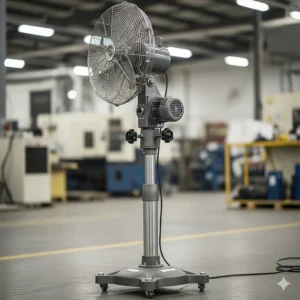
The FANNIVERSE 30 Inch Oscillating Pedestal Fan Pro Series stands out as a premium choice for demanding industrial applications. With its impressive 9,500 CFM rating and robust 1/3 HP motor, this unit delivers exceptional performance in large spaces.
Key Specifications:
- Maximum airflow: 9,500 CFM
- Motor: 1/3 HP, 221W, 2.4 amps
- Oscillation: 80-degree sweep
- Height adjustment: 75″-77″
- Weight: 65 pounds
- Noise level: 64 dB maximum
- Warranty: UL Safety Listed
The FANNIVERSE model features a totally enclosed air-over (TEAO) ball bearing motor with thermal protection, ensuring reliable operation even in demanding industrial environments. The 15-degree tilt feature allows for precise airflow direction, while the heavy-duty steel construction and powder-coated finish provide excellent durability.
Customer reviews consistently praise this model’s build quality and performance. One warehouse manager noted, “After installing three of these units in our 15,000 square foot facility, we saw a noticeable improvement in employee comfort during summer months. The oscillation covers our entire work area effectively.”
2. Global Industrial 30″ Deluxe Oscillating Pedestal Fan
The Global Industrial 30″ Deluxe Oscillating Pedestal Fan represents the pinnacle of industrial fan engineering, delivering an impressive 10,000 CFM with its powerful 1/2 HP motor. This premium model is designed for the most demanding applications where maximum airflow is essential.
Key Specifications:
- Maximum airflow: 10,000 CFM
- Motor: 1/2 HP, 320W
- Three-speed operation
- 90-degree oscillation
- Adjustable height: 58″-65″
- Safety yellow finish option
- OSHA compliant design
This model’s superior performance comes from its precision-balanced aluminum blades and advanced motor design. The safety yellow option makes it ideal for industrial environments where high-visibility equipment is required for safety compliance.
3. hykolity 30 inch High Velocity Industrial Wall Fan
The hykolity 30 inch High Velocity Industrial Wall Fan offers an excellent space-saving solution for facilities with limited floor space. This wall-mounted unit delivers impressive 9,500 CFM performance while freeing up valuable floor area.
Key Specifications:
- Maximum airflow: 9,500 CFM
- Motor: 221W, 1.54 amps, 1134 RPM
- Three-speed control (High/Medium/Low)
- 80-degree horizontal oscillation
- 30-degree up/down tilt adjustment
- Dual pull-cord operation
- UL Listed, 2-pack available
The hykolity wall mount model features a thermally protected direct drive ball bearing motor and aluminum fan blades for optimal performance. The OSHA-compliant grille design ensures safety while maintaining maximum airflow efficiency. This model is particularly popular in workshops and garages where floor space is at a premium.
4. FANNIVERSE 20 Inch Oscillating Pedestal Fan Pro Series
For applications requiring moderate airflow in smaller spaces, the FANNIVERSE 20 Inch Oscillating Pedestal Fan Pro Series provides an excellent balance of performance and value. With 5,000 CFM capacity, this unit is perfect for workshops, small warehouses, and covered outdoor areas.
Key Specifications:
- Maximum airflow: 5,000 CFM
- Motor: 1/5 HP, three-speed
- 80-degree oscillation
- Adjustable height with casters
- Metal construction with aluminum blades
- 63 dB noise level
- UL Safety Listed
This model incorporates the same quality construction as its larger sibling but in a more compact package. The heavy-duty casters make repositioning easy, while the precision-balanced blades ensure smooth, vibration-free operation.
5. Global Industrial 30″ Standard Oscillating Pedestal Fan
The Global Industrial 30″ Standard Oscillating Pedestal Fan delivers reliable 8,775 CFM performance at a more accessible price point. This model represents excellent value for facilities that need proven industrial-grade performance without premium features.
Key Specifications:
- Maximum airflow: 8,775 CFM
- Motor: 1/3 HP, three-speed PSC
- 90-degree oscillating sweep
- Height adjustment: 58″-65″
- Wire safety guards
- 18-foot power cord
- Precision-balanced metal blades
This model has established itself as a workhorse in industrial applications, offering dependable performance with minimal maintenance requirements. The extended power cord provides installation flexibility, while the robust construction ensures years of reliable service.
6. hykolity 24″ High Velocity Pedestal Oscillating Fan
The hykolity 24″ High Velocity Pedestal Oscillating Fan bridges the gap between smaller workshop fans and full-size industrial units. With 6,450 CFM capacity, this model is ideal for medium-sized facilities and applications requiring moderate cooling power.
Key Specifications:
- Maximum airflow: 6,450 CFM
- Three-speed motor operation
- Aluminum blades for durability
- Adjustable height pedestal
- Heavy-duty metal construction
- Available in 2-pack configuration
- Warehouse and garage optimized
The hykolity 24″ model offers exceptional value when purchased in the 2-pack configuration, making it cost-effective for facilities requiring multiple units. The aluminum blade construction provides excellent durability while maintaining optimal airflow characteristics.
7. Xcity 20 inch Industrial Wall Mounted Oscillating Fan
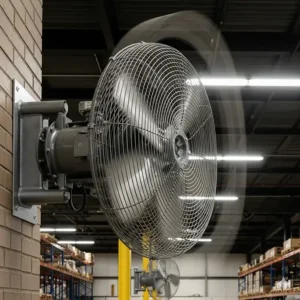
The Xcity 20 inch Industrial Wall Mounted Oscillating Fan provides excellent performance in a compact, wall-mounted package. With 5,500 CFM capacity and energy-efficient 70W motor, this unit delivers impressive performance per dollar.
Key Specifications:
- Maximum airflow: 5,500 CFM (High), 5,000 CFM (Medium), 4,500 CFM (Low)
- Motor: 70W, 1350 RPM
- 90-degree oscillation with 30-degree tilt
- Dual pull-cord control
- ETL Listed for safety
- 6-foot power cord
- Metal frame construction
This model excels in applications where wall mounting is preferred and moderate airflow is sufficient. The dual pull-cord system provides easy speed and oscillation control, while the robust metal construction ensures long-term reliability.
🛒 Don’t Miss These Exclusive Deals!
Take your cooling game to the next level with these carefully selected industrial oscillating fans. Click on any highlighted product name to check current pricing and availability on Amazon. These powerful units will transform your workspace comfort and productivity! 🌪️
Maintenance and Longevity Strategies 🔧
Proper maintenance is the key to maximizing the lifespan and performance of your industrial oscillating fan investment. Unlike residential fans, industrial units are designed for heavy-duty operation but require systematic maintenance to achieve their full potential.
Daily and Weekly Maintenance Protocols
Daily inspection routines should focus on visual and auditory checks that can identify developing problems before they become major issues. Check for unusual noises, vibrations, or visible damage to blades, guards, and mounting systems. Document any changes in noise levels or performance characteristics.
Weekly maintenance should include cleaning the fan guards and blades to remove accumulated dust and debris. Use compressed air or soft brushes to clean the guard surfaces, being careful not to bend or damage the protective grilling. For wall-mounted units, ensure that mounting bolts remain tight and show no signs of loosening.
Monitor the oscillation mechanism weekly for smooth operation. The oscillation should complete full cycles without hesitation, binding, or irregular movement patterns. Lubricate oscillation points according to manufacturer specifications, typically every 30-90 days depending on operating conditions.
Monthly and Quarterly Maintenance Schedules
Monthly maintenance should include thorough cleaning of the motor housing and inspection of electrical connections. Check the power cord for damage, ensure that electrical connections are tight and corrosion-free, and verify that ground connections are secure.
Quarterly maintenance represents the most comprehensive service interval for most industrial oscillating fans. This should include complete disassembly of user-serviceable components, thorough cleaning, lubrication of all bearing points, and inspection of internal components for wear or damage.
Balance check procedures should be performed quarterly to ensure that blades remain properly balanced. Unbalanced blades create excessive vibration that can damage bearings, loosen mounting hardware, and reduce overall fan lifespan significantly.
Troubleshooting Common Issues
Motor overheating is one of the most common issues with industrial oscillating fans, often caused by restricted airflow, overloading, or bearing failure. If the thermal protection system activates repeatedly, shut down the unit and investigate the root cause before resuming operation.
Oscillation problems typically stem from worn gears, insufficient lubrication, or damaged drive components. If oscillation becomes erratic or stops completely, inspect the oscillation mechanism for obvious damage before attempting repairs. Most oscillation repairs require professional service or component replacement.
Excessive vibration usually indicates blade imbalance, loose mounting hardware, or bearing wear. Address vibration problems immediately, as they can quickly lead to more serious damage and safety hazards.
Professional Service and Warranty Considerations
Most industrial oscillating fans benefit from annual professional service, particularly in demanding environments. Professional service typically includes complete motor inspection, bearing replacement if necessary, electrical system testing, and performance verification.
Warranty coverage varies significantly between manufacturers, ranging from one year to five years for different components. Keep detailed maintenance records to support warranty claims and demonstrate proper care. Many warranty claims are denied due to lack of maintenance documentation.
Establish relationships with qualified service technicians familiar with your specific fan models. Having access to knowledgeable service support can significantly reduce downtime when problems occur.
Cost-Benefit Analysis and Investment Planning 💰
Investing in quality industrial oscillating fans requires careful consideration of both upfront costs and long-term operating expenses. The total cost of ownership extends far beyond the initial purchase price and includes energy consumption, maintenance costs, and replacement considerations.
Initial Investment Comparison
Industrial oscillating fans range from $150 for basic 20-inch models to over $500 for premium 30-inch units with advanced features. While the price difference might seem significant, the performance gap between basic and premium models is often even more dramatic.
For example, a $200 basic model might deliver 4,000 CFM while consuming 180 watts, resulting in an efficiency ratio of 22.2 CFM per watt. In contrast, a $400 premium model delivering 9,500 CFM while consuming 220 watts achieves 43.2 CFM per watt – nearly double the efficiency.
When evaluating initial costs, consider the coverage area requirements for your application. One premium 30-inch fan costing $400 might provide the same effective cooling as two basic 20-inch fans costing $200 each, while consuming less total energy and requiring less maintenance.
Operating Cost Analysis
Energy consumption represents the largest ongoing cost for most industrial oscillating fan installations. Calculate annual operating costs by multiplying the fan’s wattage by your local electricity rate and expected operating hours.
For example, a 220-watt industrial oscillating fan operating 8 hours per day, 250 days per year, consumes 440 kWh annually. At $0.12 per kWh, this represents $52.80 in annual electricity costs. Over a 10-year lifespan, energy costs total $528 – more than the initial purchase price of many models.
Energy-efficient models with higher CFM-per-watt ratios can significantly reduce operating costs over the fan’s lifespan. The difference between an efficient and inefficient model can easily exceed $200-300 in energy costs over 10 years of operation.
Maintenance Cost Projections
Professional maintenance costs vary by region and service provider but typically range from $75-150 per fan annually for comprehensive service. However, preventive maintenance costs are minimal compared to the expense of premature replacement due to neglect.
DIY maintenance can reduce ongoing costs significantly, but requires investment in proper tools, cleaning supplies, and spare parts inventory. Budget approximately $25-50 annually per fan for maintenance supplies and minor replacement parts.
Factor in potential downtime costs when evaluating maintenance strategies. In production environments, fan failure during peak summer months can create significant productivity losses that far exceed the cost of preventive maintenance.
Return on Investment Calculations
Industrial oscillating fans provide return on investment through improved employee productivity, reduced HVAC costs, and equipment protection. Quantifying these benefits requires careful consideration of your specific application and environment.
Employee productivity improvements are difficult to measure precisely but studies suggest that maintaining comfortable working conditions can improve productivity by 5-15%. For a facility with 20 employees earning an average of $50,000 annually, a 5% productivity improvement represents $50,000 in additional value creation annually.
HVAC cost reduction depends on your existing cooling systems and local climate conditions. Industrial oscillating fans can often allow HVAC setpoint increases of 3-5 degrees while maintaining comfort levels. Each degree of setpoint increase typically reduces cooling costs by 6-8%.
Future Trends and Market Evolution 🚀
The industrial oscillating fan market continues evolving with new technologies, materials, and design approaches that promise improved performance, efficiency, and user experience.
Smart Technology Integration
Internet of Things (IoT) connectivity is beginning to appear in premium industrial oscillating fans, enabling remote monitoring, automated control, and predictive maintenance capabilities. These systems can monitor motor temperature, vibration levels, and power consumption to identify potential problems before they cause failures.
Variable frequency drives (VFDs) are becoming more common in industrial applications, allowing precise speed control and significant energy savings. VFD-equipped fans can automatically adjust speed based on temperature sensors, occupancy detection, or time schedules.
Advanced Materials and Construction
Carbon fiber and advanced composite materials are being investigated for fan blade construction, offering potential weight reductions and improved aerodynamic performance. These materials could enable larger blade diameters without increasing motor requirements.
Magnetic bearing systems represent a potential future advancement that could eliminate traditional bearing maintenance requirements while providing ultra-smooth operation and extended lifespans.
Environmental and Sustainability Considerations
Energy efficiency standards for commercial and industrial fans continue tightening, driving manufacturers to develop more efficient motor and blade designs. Expect to see continued improvements in CFM-per-watt performance in future models.
Recycling programs for end-of-life industrial fans are developing as manufacturers recognize the value of recovering metals and electronic components. Some manufacturers now offer trade-in credits for old equipment when purchasing new models.
Market Predictions and Industry Outlook
The global industrial fan market is projected to grow steadily, driven by expanding manufacturing capacity, increased awareness of workplace comfort, and stringent regulations regarding air quality in industrial environments.
Consolidation among manufacturers is likely to continue, potentially leading to improved standardization and parts availability. However, this could also reduce price competition and limit innovation in some market segments.
Expert Buying Guide and Decision Framework 🎯
Choosing the optimal industrial oscillating fan requires systematic evaluation of your specific requirements, operating environment, and budget constraints. This decision framework helps ensure you select the best model for your application.
Requirements Assessment Matrix
Begin by documenting your specific cooling requirements including space dimensions, heat sources, occupancy patterns, and environmental conditions. Create a requirements matrix that includes:
Space Characteristics:
- Floor area (square feet)
- Ceiling height
- Number of heat-generating equipment or processes
- Existing ventilation systems
- Obstacles or obstructions that might affect airflow
Performance Requirements:
- Minimum CFM needed for effective cooling
- Noise level restrictions
- Operating schedule (hours per day, days per year)
- Power availability and electrical constraints
Environmental Factors:
- Temperature range
- Humidity levels
- Presence of dust, vapors, or corrosive substances
- Safety requirements (explosion-proof, washdown capability)
Selection Criteria and Prioritization
Rank the importance of different selection criteria based on your specific application. Common criteria include:
Performance Factors (typically highest priority):
- CFM rating and airflow efficiency
- Coverage area and penetration distance
- Oscillation range and speed
- Speed control options
Durability and Reliability:
- Motor quality and thermal protection
- Construction materials and finish
- Bearing type and lubrication system
- Warranty coverage and manufacturer reputation
Installation and Maintenance:
- Mounting options (pedestal vs. wall mount)
- Power requirements and cord length
- Accessibility for maintenance
- Availability of spare parts and service support
Budget Planning and Value Optimization
Establish realistic budget parameters that include not only the initial purchase price but also installation costs, ongoing energy consumption, and maintenance expenses. Consider the total cost of ownership over the expected lifespan of the equipment.
Compare the cost per CFM for different models to identify the best value options. However, don’t rely solely on this metric – factors like energy efficiency, noise levels, and reliability can significantly impact long-term value.
Consider financing options if budget constraints limit your initial investment. Many industrial suppliers offer leasing or extended payment terms that can make premium equipment more accessible while providing immediate performance benefits.
🛒 Ready to Upgrade Your Cooling System?
Transform your workspace with these top-rated industrial oscillating fans. Each model offers proven performance and reliability backed by thousands of satisfied customers. Click any product name to view current pricing and fast shipping options! 💨
Frequently Asked Questions ❓
❓ How much space can a 30 inch industrial oscillating fan effectively cool?
❓ What's the average lifespan of an industrial oscillating fan with proper maintenance?
❓ Can industrial oscillating fans reduce air conditioning costs significantly?
❓ Are wall-mounted industrial oscillating fans as effective as pedestal models?
❓ What maintenance is required for industrial oscillating fans in dusty environments?
Conclusion: Making the Right Choice for Your Needs
Selecting the perfect industrial oscillating fan doesn’t have to be overwhelming when you understand the key factors that drive performance and value. Throughout this comprehensive guide, we’ve explored everything from technical specifications to real-world applications, giving you the knowledge needed to make an informed decision.
The seven models highlighted in this guide represent the best options currently available, each excelling in different applications and price points. Whether you choose the powerhouse FANNIVERSE 30 Inch Pro Series for maximum performance or the compact Xcity 20 inch Wall Mount for space-conscious applications, you’re investing in proven technology that will serve your facility for years to come.
Remember that the best industrial oscillating fan for your application is one that matches your specific requirements while providing reliable, efficient operation. Consider not just the initial purchase price, but the total cost of ownership including energy consumption, maintenance requirements, and expected lifespan.
Don’t let another summer season pass with inadequate cooling in your facility. The productivity improvements, energy savings, and improved working conditions provided by quality industrial oscillating fans make them one of the most cost-effective investments you can make in your operation.
🛒 Transform Your Workspace Today!
Ready to experience the difference that professional-grade cooling can make? These carefully selected industrial oscillating fans represent the best value and performance available. Click on any highlighted model to check current Amazon pricing and take advantage of fast, free shipping. Your employees and your bottom line will thank you! 🌟
Recommended for You
- 10 Best Floor Fan Commercial Options For Ultimate Workplace Cooling in 2025
- 7 Best Outdoor Pedestal Fans That Actually Beat The Heat in 2025
- 7 Best Outdoor Oscillating Pedestal Fan Options That Actually Work in 2025
Disclaimer: This article contains affiliate links. If you purchase products through these links, we may earn a small commission at no additional cost to you.
✨ Found this helpful? Share it with your friends! 💬🤗
