
In This Article
✨Was this helpful? Spread the word! 🚀
When summer heat threatens to shut down productivity in your workspace, choosing the right floor fan commercial solution becomes absolutely critical for maintaining comfortable working conditions. Whether you’re running a warehouse, managing a retail space, or operating an industrial facility, the perfect commercial floor fan can transform your environment from sweltering to comfortable in minutes.
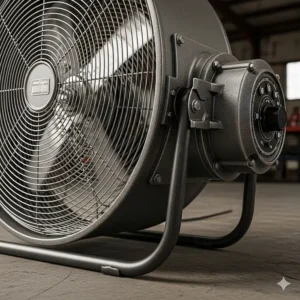
Today’s floor fan commercial market offers incredible variety, from compact 12-inch models perfect for focused cooling to massive 30-inch powerhouses capable of moving thousands of cubic feet of air per minute. However, navigating this landscape requires understanding what separates professional-grade equipment from consumer alternatives. Commercial floor fans must withstand continuous operation, resist industrial environments, and deliver consistent performance day after day.
Understanding Floor Fan Commercial Applications
Professional vs. Residential Floor Fans ⚡
The distinction between consumer and floor fan commercial units extends far beyond size differences. Commercial floor fans feature robust motor construction designed for extended operation cycles, typically running 12-16 hours daily without thermal stress. These industrial-grade motors incorporate ball bearing systems rather than sleeve bearings, ensuring smooth operation even under demanding conditions.
Additionally, floor fan commercial models utilize heavier gauge metal housing and reinforced mounting systems. While residential fans might use lightweight plastic components, commercial units require aluminum blades and steel housings to withstand warehouse environments, construction sites, and manufacturing facilities where durability matters most.
Key Industries Benefiting from Commercial Floor Fans 🏭
Manufacturing facilities represent the largest market for floor fan commercial equipment, where these units combat heat generated by machinery, welding operations, and industrial processes. Automotive repair shops rely heavily on commercial floor fans for ventilation during painting operations and to maintain comfortable working conditions in non-climate-controlled bays.
Retail establishments increasingly deploy floor fan commercial solutions during peak seasons when foot traffic and merchandise displays create excessive heat buildup. Restaurant kitchens, event venues, and temporary structures all depend on portable commercial floor fans to maintain acceptable working conditions.
Construction sites present unique challenges where floor fan commercial units must operate in dusty, demanding environments while providing essential cooling for workers. These applications require fans with sealed motors and protective housing designed specifically for harsh conditions.
Top 7 Commercial Floor Fan Models Available Now
1. Amazon Basics 20″ High Velocity Industrial Fan – Professional Powerhouse 💪
The Amazon Basics 20″ High Velocity Industrial Fan delivers exceptional performance with its impressive 3,542 CFM airflow output, making it an outstanding floor fan commercial choice for medium to large spaces. This ETL-listed unit features three-speed operation and an adjustable tilt head mechanism that allows precise airflow direction.
Key Specifications:
- Airflow: 3,542 CFM at high speed
- Power consumption: 125W
- Features: 3 speeds, tilt head, metal housing
- Safety: ETL-Listed compliance
- Application: Industrial/commercial spaces, garages, gyms
Customer reviews consistently praise this model’s robust construction and reliable performance in demanding environments. The metal housing and aluminum blades ensure longevity, while the tool-free assembly makes setup incredibly straightforward. At approximately $89-109, this represents exceptional value for professional-grade floor fan commercial applications.
2. VENTISOL 24 Inch Industrial Floor Fan – Maximum Air Movement 🌪️
For applications requiring maximum air circulation, the VENTISOL 24 Inch Industrial Floor Fan stands out with its impressive 9,500 CFM capacity and innovative 8-blade design. This floor fan commercial unit incorporates ultra-thin construction at just 6 inches deep, saving valuable floor space while delivering powerful performance.
Key Specifications:
- Airflow: 9,500 CFM maximum
- Blade design: 8 precision-engineered blades
- Tilt range: 360° adjustable
- Weight: 22.8 pounds
- Features: Overheat protection, 2 smooth wheels
The unit’s 360° tilt adjustment capability makes it incredibly versatile for directing airflow exactly where needed. Customer feedback highlights its effectiveness in warehouses, patios, and large commercial spaces. Priced around $149-179, this represents solid value for high-capacity floor fan commercial applications.
3. Maxx Air Industrial 30″ Pedestal Fan – Heavy-Duty Champion 🔥
The Maxx Air Industrial 30″ Pedestal Fan represents the pinnacle of floor fan commercial engineering, delivering up to 4,800 CFM through its massive 30-inch diameter. This unit features adjustable height from 60-80 inches and incorporates yoke-style mounting for exceptional stability.
Key Specifications:
- Airflow: Up to 4,800 CFM on high speed
- Height adjustment: 60-80 inches
- Construction: All-metal powder-coated finish
- Motor: 3-speed PSC motor with thermal protection
- Applications: Warehouses, factories, large commercial spaces
Professional users appreciate the unit’s commercial-grade construction and minimal maintenance requirements. The tool-free height adjustment and tilt mechanisms make positioning effortless, while the heavy-duty metal frame ensures years of reliable operation. At approximately $199-249, this floor fan commercial solution targets serious industrial applications.
4. BILT HARD 20″ High Velocity Floor Fan – Versatile Performer ⭐
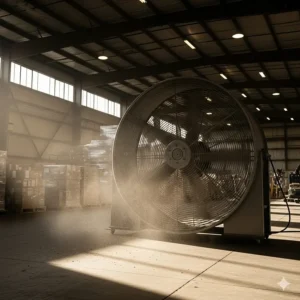
The BILT HARD 20″ High Velocity Floor Fan offers impressive versatility with its dual-mount design, functioning as both floor-mounted and wall-mounted equipment. This 4,650 CFM unit includes a complete wall-mounting system, making it ideal for space-constrained floor fan commercial installations.
Key Specifications:
- Airflow: 4,650 CFM maximum (three speeds: 4,650/3,750/2,980 CFM)
- Mounting: Floor or wall installation
- Tilt: 360-degree pivoting head
- Construction: All-metal with aluminum blades
- Warranty: 1-year manufacturer guarantee
The included wall-mounting bracket transforms this floor fan commercial unit into a space-saving wall mount solution without sacrificing performance. Customer reviews consistently mention its exceptional build quality and effective cooling capabilities. Priced around $79-99, this represents outstanding value for dual-purpose commercial applications.
5. Simple Deluxe 20 Inch Floor Fan – Budget-Friendly Professional 💰
The Simple Deluxe 20 Inch Floor Fan proves that effective floor fan commercial solutions don’t require massive budgets. Despite its affordable $36-45 price point, this unit delivers respectable 4,650 CFM performance through its all-metal construction and aluminum blade design.
Key Specifications:
- Airflow: 4,650 CFM maximum
- Construction: All-metal housing with aluminum blades
- Tilt: 360-degree adjustment
- Motor: Ball bearing, permanently lubricated
- Safety: Reinforced wire grille
This floor fan commercial option excels in applications where budget constraints matter without compromising essential performance characteristics. The ball bearing motor ensures reliable operation, while the 360-degree tilt provides excellent airflow control. Customer feedback highlights its exceptional value proposition and solid construction quality.
6. VENTISOL 12 Inch Portable Floor Fan – Compact Commercial Power 🎯
The VENTISOL 12 Inch Portable Floor Fan demonstrates that floor fan commercial effectiveness doesn’t always require massive size. This compact 1,800 CFM unit delivers focused cooling power with exceptional portability and quiet operation characteristics.
Key Specifications:
- Airflow: 1,800 CFM
- Size: 12-inch diameter
- Tilt: 180° adjustable
- Weight: 6 pounds
- Features: No assembly required, ETL listed
Perfect for targeted cooling applications, this floor fan commercial solution excels in workshops, small offices, and personal workstations. The compact design and integrated handle make repositioning effortless, while the quiet operation won’t disrupt nearby activities. At approximately $37-42, this represents exceptional value for focused commercial cooling needs.
7. Tornado 24″ Metal Drum Fan – Industrial Workhorse 🌊
The Tornado 24″ Metal Drum Fan epitomizes industrial-strength floor fan commercial design with its robust 8,540 CFM capacity and professional-grade construction. This UL-listed unit features a powerful 1/3 HP motor and extra-long 8-foot power cord for maximum flexibility.
Key Specifications:
- Airflow: 8,540 CFM (three speeds: 8,540/6,000/5,000 CFM)
- Motor: 1/3 HP with thermal cutoff protection
- Construction: Aluminum and powder-coated steel
- Tilt: Full 360-degree adjustment
- Cord: Extra-long 8-foot SJT-R power cord
This floor fan commercial powerhouse incorporates premium ball bearing motors and meets OSHA safety standards, making it suitable for the most demanding industrial applications. Customer reviews consistently praise its exceptional airflow and durable construction. Priced around $159-179, this represents solid value for heavy-duty commercial requirements.
🛒 Don’t Miss These Exclusive Deals!
Transform your workspace climate control with these carefully selected floor fan commercial products. Click on any highlighted item to check current pricing and availability. These professional-grade fans will deliver the cooling performance your business demands! 🌬️
Industry-Specific Applications and Use Cases
Manufacturing and Industrial Facilities 🏭
Manufacturing environments present unique challenges for floor fan commercial applications, requiring units capable of withstanding dust, debris, and continuous operation cycles. Welding operations generate intense heat requiring high-velocity airflow to maintain safe working conditions, while assembly lines benefit from strategic fan placement to prevent heat buildup around workers.
Metal fabrication shops rely heavily on floor fan commercial units to combat radiant heat from furnaces, forges, and cutting operations. These applications demand fans with sealed motors and robust construction capable of operating in environments with metal particles and industrial contaminants.
Automotive manufacturing facilities utilize floor fan commercial solutions throughout the production process, from paint booths requiring specific airflow patterns to final assembly areas where worker comfort directly impacts productivity. The ability to precisely direct airflow makes commercial floor fans essential tools for maintaining optimal working conditions.
Food Service and Restaurant Operations 🍳
Commercial kitchens represent demanding environments where floor fan commercial equipment must withstand heat, humidity, and frequent cleaning. Restaurant operations require fans capable of moving large air volumes while operating quietly enough to avoid disrupting dining experiences.
Food processing facilities depend on floor fan commercial units to maintain temperature control during packaging operations and to prevent condensation buildup that could compromise product quality. These applications often require stainless steel construction and NSF certification for food safety compliance.
Catering operations and food trucks utilize portable floor fan commercial solutions to maintain comfortable working conditions in temporary or mobile food service environments. The ability to quickly deploy and reposition fans makes commercial units invaluable for outdoor events and temporary installations.
Retail and Commercial Spaces 🏪
Large retail stores employ floor fan commercial units to supplement HVAC systems during peak shopping seasons when customer traffic generates excessive heat buildup. Strategic placement near checkout areas and high-traffic zones maintains comfortable shopping environments while reducing energy costs.
Warehouse stores and distribution centers rely on floor fan commercial equipment to maintain air circulation in large, open spaces where traditional HVAC systems prove insufficient. These applications require powerful units capable of moving air across substantial distances while operating efficiently.
Event venues and temporary structures depend on portable floor fan commercial solutions to provide cooling in spaces lacking permanent climate control systems. Wedding venues, exhibition halls, and outdoor events all benefit from strategically placed commercial fans that ensure guest comfort.
Construction and Temporary Installations ⚒️
Construction sites present the most challenging environments for floor fan commercial equipment, requiring units capable of operating in dusty, debris-filled conditions while providing essential worker cooling. OSHA regulations increasingly recognize the importance of heat stress prevention, making commercial fans essential safety equipment.
Concrete curing operations utilize specialized floor fan commercial units to accelerate drying processes and prevent cracking in large pours. These applications require precise airflow control and continuous operation capabilities to ensure proper concrete development.
Renovation projects in occupied buildings demand quiet floor fan commercial solutions that provide effective cooling without disrupting normal activities. Units with variable speed control and low-noise operation characteristics prove essential for these sensitive applications.
Advanced Technical Analysis and Performance Metrics
Motor Technology and Engineering Principles 🔧
Modern floor fan commercial units incorporate advanced motor technologies designed specifically for continuous-duty applications. PSC (Permanent Split Capacitor) motors represent the current standard, offering excellent starting torque and efficient operation across variable load conditions. These motors feature thermal protection systems that automatically shut down operation when internal temperatures exceed safe limits.
Ball bearing systems in floor fan commercial equipment provide superior longevity compared to sleeve bearing alternatives commonly found in residential units. Quality ball bearings reduce friction, minimize noise generation, and extend operational life significantly. Premium manufacturers often specify bearing life expectancy in thousands of operating hours rather than years.
Direct drive systems eliminate belts and pulleys, reducing maintenance requirements while improving efficiency. This design approach, common in modern floor fan commercial units, provides more reliable operation and eliminates the periodic belt adjustments required by older fan designs.
Variable speed control mechanisms range from simple three-position switches to sophisticated electronic controllers offering precise airflow adjustment. Advanced floor fan commercial units may incorporate remote control capabilities and programmable operation cycles for optimized energy consumption.
Airflow Physics and Performance Optimization 📊
Understanding CFM (Cubic Feet per Minute) ratings requires recognizing that manufacturer specifications represent maximum theoretical output under ideal conditions. Real-world floor fan commercial performance varies significantly based on installation factors, ambient conditions, and operational parameters.
Blade design significantly impacts both airflow volume and efficiency characteristics. Modern floor fan commercial units utilize computer-optimized blade profiles that maximize air movement while minimizing power consumption. The number of blades, pitch angles, and blade materials all influence overall performance characteristics.
Static pressure considerations become critical in floor fan commercial applications where fans must move air against resistance from building structures, equipment installations, or environmental factors. Units designed for high static pressure applications incorporate more powerful motors and specialized blade configurations.
Airflow patterns and distribution characteristics determine effectiveness in specific applications. Some floor fan commercial units prioritize focused, high-velocity streams for targeted cooling, while others emphasize wide-area air movement for general circulation applications.
Energy Efficiency and Operational Economics 💡
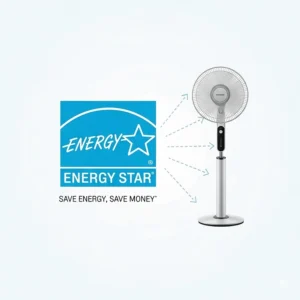
Power consumption analysis reveals significant differences between floor fan commercial models, with efficiency ratings varying by 300% or more between units of similar airflow capacity. Energy Star qualified models often provide 20-40% better efficiency than standard alternatives.
Motor efficiency ratings, typically expressed as percentages, directly impact operational costs over the unit’s service life. A floor fan commercial unit operating 12 hours daily can consume 1,000-3,000 kWh annually, making efficiency a critical economic factor for continuous-use applications.
Variable speed operation capabilities allow optimizing power consumption based on actual cooling requirements rather than operating constantly at maximum capacity. This feature can reduce energy consumption by 30-50% in applications with varying cooling demands.
Heat generation from motor operation affects overall cooling effectiveness, particularly in enclosed spaces. High-efficiency floor fan commercial units minimize waste heat production, improving net cooling performance while reducing facility air conditioning loads.
Comprehensive Setup and Installation Guidelines
Site Assessment and Placement Strategy 🎯
Proper floor fan commercial installation begins with comprehensive site assessment to identify optimal placement locations, power requirements, and safety considerations. Airflow patterns must complement existing ventilation systems rather than creating conflicting air currents that reduce overall effectiveness.
Electrical infrastructure evaluation ensures adequate power capacity for floor fan commercial equipment, particularly when installing multiple units or high-powered models. Professional installations often require dedicated circuits to prevent electrical system overloading and ensure reliable operation.
Safety zone establishment around floor fan commercial units prevents accidental contact with rotating components while maintaining unrestricted airflow paths. OSHA guidelines specify minimum clearance requirements for industrial fan installations, particularly in high-traffic work areas.
Mounting surface preparation varies depending on unit type and installation requirements. Floor-mounted units require level, stable surfaces capable of supporting operational vibrations, while wall-mounted installations demand proper structural support and electrical access.
Professional Installation Procedures 🔨
Floor fan commercial installation typically requires basic tools including screwdrivers, level instruments, and electrical testing equipment. Most units feature tool-free assembly for major components, though final adjustments and mounting may require additional hardware.
Electrical connections must comply with local codes and manufacturer specifications, particularly for hardwired installations or units requiring dedicated circuits. Professional electrical consultation ensures proper grounding, overcurrent protection, and compliance with workplace safety requirements.
Initial operation testing verifies proper rotation direction, speed control functionality, and safety system operation. This process includes checking thermal protection systems, vibration levels, and noise characteristics to ensure acceptable performance parameters.
Documentation requirements for floor fan commercial installations often include electrical certifications, maintenance schedules, and warranty registration information. Proper documentation ensures compliance with insurance requirements and facilitates future service needs.
Optimization and Performance Tuning ⚙️
Airflow direction adjustment maximizes cooling effectiveness for specific applications, with positioning options including direct worker cooling, general circulation, and exhaust assistance. Proper angle adjustment can improve cooling effectiveness by 50% or more compared to default positioning.
Speed selection optimization balances cooling performance with energy consumption and noise levels. Many floor fan commercial applications benefit from reduced speed operation during cooler periods, with automatic controls providing optimal performance without manual intervention.
Integration with existing HVAC systems requires careful coordination to avoid creating conflicting airflow patterns or reducing overall system efficiency. Proper integration can enhance HVAC effectiveness while reducing overall energy consumption.
Periodic performance monitoring ensures continued optimal operation through regular airflow measurements, power consumption tracking, and maintenance scheduling. This proactive approach prevents performance degradation and extends equipment service life.

Maintenance, Longevity, and Troubleshooting
Preventive Maintenance Schedules 🛠️
Daily maintenance for floor fan commercial equipment includes visual inspection of rotating components, verification of proper operation speeds, and checking for unusual noise or vibration patterns. These quick checks prevent minor issues from developing into major problems requiring costly repairs.
Weekly maintenance expands to include cleaning intake grilles, checking mounting stability, and verifying electrical connections remain secure. Dust accumulation on intake surfaces can reduce airflow capacity by 20-30%, making regular cleaning essential for maintaining performance.
Monthly maintenance involves comprehensive cleaning of fan blades, motor housing, and control components. This process requires temporary shutdown and may involve removing protective guards for thorough access to internal components.
Quarterly maintenance includes bearing lubrication (where applicable), electrical connection inspection, and thermal protection system testing. These procedures often require professional service technicians familiar with specific floor fan commercial equipment.
Annual maintenance encompasses complete disassembly for thorough cleaning, bearing replacement or service, and electrical system comprehensive testing. This level of service ensures optimal performance and maximum equipment service life.
Common Issues and Professional Solutions 🔍
Motor overheating represents the most common floor fan commercial problem, typically resulting from inadequate ventilation, overloading, or bearing deterioration. Early detection through temperature monitoring prevents catastrophic motor failure and costly replacement requirements.
Vibration problems often indicate unbalanced blades, worn bearings, or loose mounting hardware. Prompt attention to vibration issues prevents secondary damage to motor components and mounting structures while maintaining acceptable noise levels.
Electrical problems including intermittent operation, speed control failure, or power consumption anomalies require professional diagnosis to identify root causes. Many electrical issues result from inadequate installation practices or environmental contamination of control components.
Blade damage from impact or wear affects both performance and safety characteristics of floor fan commercial equipment. Damaged blades create vibration, reduce airflow capacity, and may pose safety hazards requiring immediate replacement.
Professional Servicing and Warranty Considerations 📋
Manufacturer warranty terms typically require professional installation and regular maintenance to maintain coverage validity. Understanding warranty requirements prevents voiding coverage through improper maintenance or unauthorized modifications.
Professional service networks provide access to genuine replacement parts, specialized tools, and technical expertise necessary for complex repairs. Attempting repairs without proper knowledge or tools often results in additional damage and voided warranty coverage.
Service documentation requirements include maintenance records, repair histories, and performance monitoring data. Proper documentation supports warranty claims and facilitates diagnostic procedures during service calls.
Replacement part availability varies significantly between manufacturers, with some brands offering comprehensive parts support while others provide limited availability for older models. Considering long-term parts availability influences initial floor fan commercial selection decisions.
Comparative Analysis: Commercial vs. Alternative Solutions
Traditional HVAC Integration Benefits 🌡️
Integrating floor fan commercial equipment with existing HVAC systems provides enhanced performance while reducing overall energy consumption. Strategic fan placement helps distribute conditioned air more effectively, allowing HVAC systems to operate more efficiently.
Zone cooling capabilities offered by portable floor fan commercial units provide targeted comfort control in areas where central systems prove inadequate. This approach particularly benefits large facilities with varying occupancy patterns or heat generation sources.
Energy cost analysis reveals significant savings potential when floor fan commercial units supplement rather than replace HVAC systems. Studies indicate 20-40% reduction in cooling costs through strategic fan deployment in appropriate applications.
Maintenance requirements for integrated systems often prove lower than standalone HVAC approaches, particularly in facilities with dedicated maintenance staff capable of servicing both systems comprehensively.
Ceiling Fan Comparison Analysis 🌀
Ceiling fans provide excellent general circulation but lack the focused cooling power of floor fan commercial units. Applications requiring targeted airflow or portable cooling solutions favor floor-mounted equipment over permanent ceiling installations.
Installation flexibility represents a significant advantage for floor fan commercial equipment, allowing repositioning based on changing facility requirements or seasonal cooling needs. Ceiling fans require permanent mounting with limited adjustment capabilities.
Maintenance accessibility differs dramatically between ceiling and floor fan commercial installations, with floor units providing easier access for cleaning, repairs, and component replacement. Ceiling installations often require lifts or scaffolding for routine maintenance.
Cost considerations include both initial purchase price and installation expenses, with floor fan commercial units typically requiring lower total investment for equivalent cooling capacity in many applications.
Portable Air Conditioning Comparison ❄️
Power consumption analysis reveals floor fan commercial units consume significantly less electricity than portable air conditioning systems while providing substantial cooling benefits through enhanced air circulation and evaporative cooling effects.
Installation requirements for portable air conditioning systems include exhaust ducting and condensate drainage, while floor fan commercial units require only electrical connections for immediate operation capability.
Mobility advantages favor floor fan commercial equipment for applications requiring frequent repositioning or seasonal deployment. Portable air conditioners often prove cumbersome for regular relocation despite “portable” designation.
Maintenance complexity differs substantially, with floor fan commercial units requiring minimal service compared to portable air conditioning systems needing refrigerant service, filter replacement, and condensate system maintenance.
💬 Just one click – help others make better buying decisions too!😊
Investment Decision Framework and ROI Analysis
Cost-Benefit Analysis Methodology 💰
Initial investment analysis for floor fan commercial equipment must consider not only purchase price but also installation costs, electrical infrastructure requirements, and training needs. Quality commercial units often provide superior long-term value despite higher upfront costs.
Operational cost calculations include energy consumption, maintenance expenses, and productivity impacts from improved working conditions. Studies indicate 5-15% productivity improvements in manufacturing environments with adequate cooling compared to unconditioned spaces.
Payback period analysis typically reveals 6-18 month returns on floor fan commercial investments through reduced air conditioning costs and improved worker productivity. Applications with high heat generation or extended operating schedules often achieve faster payback periods.
Total cost of ownership over 5-10 year periods includes purchase price, installation, maintenance, energy consumption, and eventual replacement costs. Quality floor fan commercial units often provide lower total ownership costs despite higher initial investments.
Performance Metrics and Success Measurement 📈
Temperature reduction measurements provide quantifiable data for evaluating floor fan commercial effectiveness. Professional installations often achieve 5-12°F apparent temperature reductions in worker zones through enhanced air circulation.
Energy consumption monitoring compares actual usage against baseline consumption patterns to verify projected savings. Smart meters and energy monitoring systems provide detailed consumption data for accurate ROI calculations.
Productivity metrics including output rates, quality measures, and worker satisfaction surveys quantify the broader benefits of improved working conditions through floor fan commercial deployment.
Safety improvements including reduced heat stress incidents and worker compensation claims provide additional quantifiable benefits that support floor fan commercial investment decisions.
Implementation Strategy Development 🎯
Phased deployment approaches allow organizations to evaluate floor fan commercial effectiveness through pilot installations before full-scale deployment. This strategy reduces initial investment risk while providing performance data for expansion decisions.
Budget planning considerations include not only equipment costs but also electrical infrastructure upgrades, installation labor, and training requirements. Comprehensive budget planning prevents cost overruns and ensures adequate resources for proper implementation.
Financing options including equipment leasing, energy service agreements, and utility rebate programs can reduce upfront costs while providing immediate cooling benefits. Many organizations find leasing arrangements attractive for maintaining equipment currency.
Staff training requirements ensure proper operation, basic maintenance, and safety compliance for floor fan commercial installations. Adequate training prevents equipment damage and ensures optimal performance throughout the equipment service life.
Future Trends and Market Evolution
Emerging Technologies and Innovation 🚀
Smart control integration represents the next major advancement in floor fan commercial technology, with IoT connectivity enabling remote monitoring, automated operation, and predictive maintenance capabilities. These systems optimize performance while reducing operational costs.
Variable frequency drive (VFD) technology provides precise speed control and improved energy efficiency compared to traditional motor control methods. VFD-equipped floor fan commercial units can reduce energy consumption by 30-50% in variable-load applications.
Advanced blade materials including composite constructions and aerodynamic optimization promise improved performance and reduced noise levels in next-generation floor fan commercial equipment. These developments target applications requiring high performance with minimal noise generation.
Sensor integration including temperature, humidity, and occupancy detection enables automatic operation adjustment based on environmental conditions and facility usage patterns. These smart systems provide optimal comfort while minimizing energy consumption.
Market Trends and Consumer Behavior Shifts 📊
Sustainability concerns increasingly influence floor fan commercial purchasing decisions, with organizations prioritizing energy-efficient models and manufacturers with environmental certifications. LEED and Energy Star requirements drive demand for high-efficiency equipment.
Total cost of ownership evaluation replaces simple low-price purchasing strategies as organizations recognize the long-term value of quality floor fan commercial equipment. This trend favors manufacturers offering comprehensive service support and extended warranties.
Customization requirements reflect increasingly specialized applications requiring tailored floor fan commercial solutions. Manufacturers respond with modular designs and application-specific configurations rather than one-size-fits-all approaches.
Service integration trends show growing demand for comprehensive service packages including installation, maintenance, and performance monitoring rather than equipment-only purchases. This shift creates opportunities for service-focused suppliers.
Sustainability and Environmental Considerations 🌱
Energy efficiency regulations continue tightening, requiring floor fan commercial manufacturers to develop more efficient designs while maintaining performance characteristics. Future regulations may mandate minimum efficiency standards for commercial fan equipment.
Recycling and end-of-life considerations influence design decisions as manufacturers incorporate recyclable materials and design for disassembly. These factors become increasingly important for organizations with sustainability commitments.
Carbon footprint analysis includes not only operational energy consumption but also manufacturing, transportation, and disposal impacts. Life cycle analysis tools help organizations make environmentally responsible floor fan commercial selections.
Renewable energy integration opportunities include solar-powered floor fan commercial units for remote applications and grid-tie systems that reduce facility energy consumption during peak demand periods.
Quick Comparison Tables
Power and Performance Comparison
| Model | Size | CFM Rating | Power | Price Range |
|---|---|---|---|---|
| Amazon Basics Industrial | 20″ | 3,542 CFM | 125W | $89-109 |
| VENTISOL 24″ Industrial | 24″ | 9,500 CFM | 320W | $149-179 |
| Maxx Air Pedestal | 30″ | 4,800 CFM | Variable | $199-249 |
| BILT HARD 20″ | 20″ | 4,650 CFM | Variable | $79-99 |
| Simple Deluxe 20″ | 20″ | 4,650 CFM | Variable | $36-45 |
| VENTISOL 12″ Portable | 12″ | 1,800 CFM | 63W | $37-42 |
| Tornado 24″ Drum | 24″ | 8,540 CFM | 220W | $159-179 |
Feature and Specification Matrix
| Feature | Amazon Basics | VENTISOL 24″ | Maxx Air 30″ | BILT HARD | Simple Deluxe |
|---|---|---|---|---|---|
| Speed Options | 3 speeds | 3 speeds | 3 speeds | 3 speeds | 3 speeds |
| Tilt Adjustment | Yes | 360° | 90° | 360° | 360° |
| Wall Mount | No | No | No | Yes | No |
| ETL/UL Listed | Yes | Yes | No | Yes | No |
| Warranty | Standard | 1 year | 1 year | 1 year | Standard |
| Assembly | Tool-free | Minimal | Moderate | Simple | Minimal |
🛒 Ready to Transform Your Workspace?
Don’t let heat compromise your productivity! These commercial-grade floor fans deliver the cooling power your business needs. Click any highlighted product above to check current prices and availability on Amazon. Your team will thank you for the instant comfort upgrade! ⚡
Frequently Asked Questions
❓ How much airflow does a floor fan commercial unit need for a 1000 sq ft space?
❓ What's the difference between CFM ratings and actual cooling performance?
❓ Can floor fan commercial units operate continuously for industrial applications?
❓ How do I calculate energy costs for running a floor fan commercial unit?
❓ What safety certifications should I look for in floor fan commercial equipment?
Conclusion: Making the Right Floor Fan Commercial Choice
Selecting the optimal floor fan commercial solution requires balancing performance requirements, budget constraints, and specific application needs. The models reviewed here represent the cream of the crop, each excelling in different scenarios while maintaining the reliability and durability essential for commercial applications.
For maximum versatility and value, the Amazon Basics 20″ High Velocity Industrial Fan provides exceptional performance with proven reliability, making it ideal for most commercial applications. Organizations requiring maximum airflow capacity should consider the VENTISOL 24 Inch Industrial Floor Fan with its impressive 9,500 CFM output.
Budget-conscious buyers will find the Simple Deluxe 20 Inch Floor Fan offers remarkable value without compromising essential performance characteristics. Meanwhile, the Maxx Air Industrial 30″ Pedestal Fan represents the ultimate choice for large-scale commercial cooling requirements.
The key to successful floor fan commercial deployment lies in matching equipment capabilities to actual application requirements rather than simply selecting the most powerful or least expensive option. Consider factors including space size, heat generation sources, operational schedules, and maintenance capabilities when making your final selection.
Remember that proper installation, regular maintenance, and strategic placement significantly impact performance regardless of which floor fan commercial model you choose. Invest in quality equipment from reputable manufacturers, follow manufacturer guidelines for installation and maintenance, and enjoy years of reliable cooling performance that keeps your workspace comfortable and productive.
🛒 Complete Your Cooling Solution Today!
Stop suffering through another hot workday! These commercial floor fans offer immediate relief and long-term value for any workspace. Click your preferred model above to secure the cooling power your business deserves. Transform your work environment in just days! 🌊
Recommended for You
- 7 Best Outdoor Pedestal Fans That Actually Beat The Heat in 2025
- 7 Best Outdoor Oscillating Pedestal Fan Options That Actually Work in 2025
- 7 Best Outdoor Pedestal Fan Models That Beat the Heat in 2025
Disclaimer: This article contains affiliate links. If you purchase products through these links, we may earn a small commission at no additional cost to you.
✨ Found this helpful? Share it with your friends! 💬🤗
