
In This Article
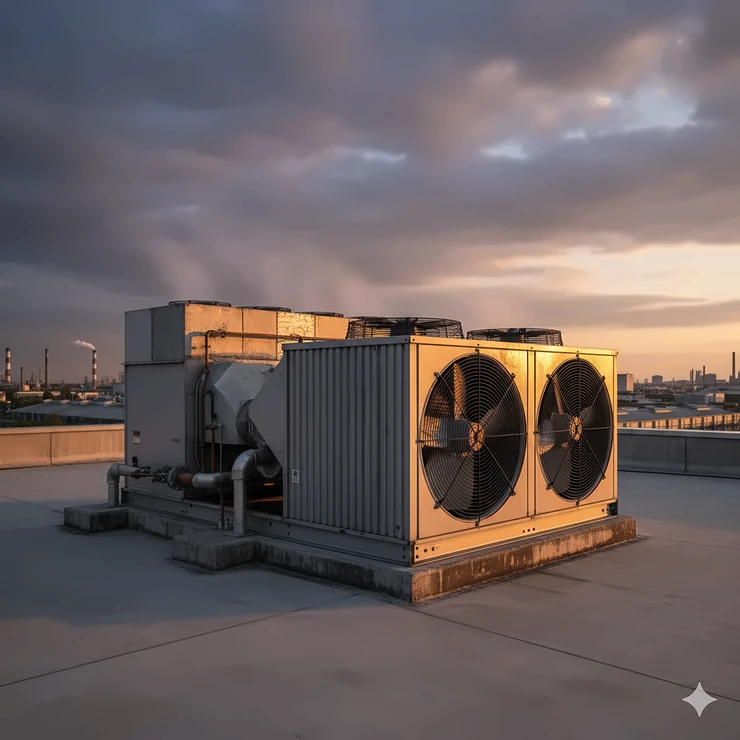
When it comes to maintaining optimal working conditions in large facilities, warehouses, and commercial spaces, choosing the right industrial air conditioner can make all the difference between a productive workforce and sweltering chaos. Whether you’re cooling a manufacturing plant or keeping server rooms at optimal temperatures, industrial air conditioner systems deliver the robust performance needed for demanding environments.
✨Was this helpful? Spread the word! 🚀
The industrial air conditioner market has exploded in recent years, with the global HVAC systems market reaching USD 241.52 billion in 2024 and expected to hit USD 445.73 billion by 2033, representing a 7.0% CAGR. This surge reflects the critical need for reliable cooling solutions across industries worldwide.
Understanding Industrial Air Conditioner Systems: The Foundation of Commercial Cooling ❄️
Industrial air conditioner units differ significantly from residential systems in several key aspects. While your home AC might handle 150-500 square feet, an industrial air conditioner typically manages 1,000-10,000+ square feet with BTU ratings ranging from 21,000 to over 100,000.
Key Specifications That Matter 📊
BTU Capacity Range:
- Light Commercial: 21,000-60,000 BTU/hr
- Heavy Industrial: 60,000-500,000+ BTU/hr
- Data Center/Precision: 10,000-100,000 BTU/hr with specialized controls
Voltage Requirements:
- 115V: Smaller portable units (up to 21,000 BTU)
- 208/230V: Most commercial applications
- 460V: Large-scale industrial installations
The beauty of modern industrial air conditioner technology lies in its adaptability. Unlike traditional fixed systems, today’s portable industrial units offer unprecedented flexibility for spot cooling, emergency backup, and temporary installations.
Top 7 Industrial Air Conditioner Models: Expert Reviews & Analysis 🏆
1. Global Industrial 7.5 Ton Portable Air Conditioner – The Heavy-Duty Champion
This powerhouse Global Industrial 7.5 Ton Portable Air Conditioner delivers an impressive 92,000 BTU of cooling capacity, making it ideal for large warehouses and manufacturing facilities. Operating on 460V three-phase power, it can effectively cool spaces up to 2,600 square feet.
Key Specifications:
- Cooling Capacity: 92,000 BTU/hr
- Coverage Area: Up to 2,600 sq ft
- Power Requirements: 460V, three-phase
- Refrigerant: R-454B (eco-friendly, low-GWP)
- Features: Three cold air nozzles, built-in condensation pump, galvanized steel housing
Customer Feedback Analysis: Based on professional reviews, users appreciate the unit’s robust construction and consistent cooling performance. The Global Industrial 7.5 Ton model excels in industrial plants, server rooms, and laboratories where electrical equipment generates substantial heat loads.
Price Range: $8,000-$12,000
Warranty: 2 years parts and labor
2. Whynter ARC-14S Dual Hose Portable Air Conditioner – The Versatile Professional
The Whynter ARC-14S represents the sweet spot between power and portability. This dual-hose design delivers 14,000 BTU nominal cooling with a real-world SACC rating of 9,500 BTU, making it perfect for offices, small workshops, and server rooms up to 500 square feet.
Key Specifications:
- Cooling Capacity: 14,000 BTU (9,500 SACC)
- Coverage Area: Up to 500 sq ft
- Power Requirements: 115V standard outlet
- Refrigerant: R-32 (CFC-free, environmentally friendly)
- Features: Activated carbon filter, auto-drain technology, digital controls
Performance Highlights: The Whynter ARC-14S earned recognition from Good Housekeeping as “2025 Best Overall” and TIME magazine’s “Best Technological Portable Air Conditioner.” Its dual-hose system prevents negative pressure issues common in single-hose units.
Price Range: $450-$650
Warranty: 1 year manufacturer warranty
3. Global Industrial 5 Ton Outdoor Rated Portable AC – Weather-Resistant Powerhouse
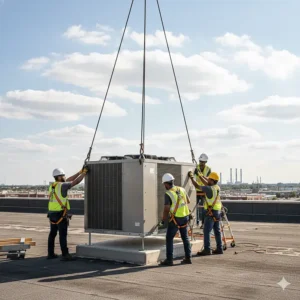
For outdoor applications and harsh environments, the Global Industrial 5 Ton Outdoor Rated unit stands as the ultimate weather-resistant solution. With 60,000 BTU capacity and IP54 weather protection, it handles everything from construction sites to outdoor events.
Key Specifications:
- Cooling Capacity: 60,000 BTU/hr
- Coverage Area: Up to 2,000 sq ft
- Power Requirements: 220V single-phase
- Construction: Galvanized steel, weather-resistant
- Features: Outdoor-rated components, heavy-duty casters, extended hose capability
Price Range: $6,500-$9,500
4. Whynter ARC-14SH Air Conditioner & Heater Combo – Year-Round Climate Control
The Whynter ARC-14SH combines cooling and heating capabilities in one versatile unit. With 14,000 BTU cooling and 13,000 BTU heating, it provides comprehensive climate control for workshops, offices, and specialized facilities requiring precise temperature management.
Key Specifications:
- Cooling Capacity: 14,000 BTU (9,200 SACC)
- Heating Capacity: 13,000 BTU heat pump
- Coverage Area: Up to 500 sq ft
- Power Requirements: 115V
- Modes: Cool, Heat, Dehumidify, Fan
User Experience: Reviews consistently praise the Whynter ARC-14SH for its quiet operation (59.5 dB) and rapid cooling performance. Professional testing showed an 8.1-degree temperature drop within 60 minutes.
Price Range: $550-$750
5. Global Industrial 2 Ton Commercial Portable AC – The Versatile Mid-Range Solution
The Global Industrial 2 Ton model delivers 21,000 BTU of cooling power specifically designed for spot cooling in industrial plants, server rooms, and laboratories. Its compact design and three cold air nozzles provide targeted cooling where needed most.
Key Specifications:
- Cooling Capacity: 21,000 BTU/hr
- Coverage Area: Up to 538 sq ft
- Power Requirements: 208/230V
- Features: Two fan speeds, auto-restart, thermostat protection
- Mobility: Four swivel casters (two locking)
Price Range: $3,500-$4,800
6. Global Industrial 2.5 Ton Heavy-Duty Portable AC – Enhanced Performance
Bridging the gap between mid-range and heavy-duty applications, the Global Industrial 2.5 Ton delivers 29,000 BTU of cooling power. This unit excels in medium-sized manufacturing facilities and larger commercial spaces requiring consistent temperature control.
Key Specifications:
- Cooling Capacity: 29,000 BTU/hr
- Power Requirements: 230V
- Construction: Galvanized steel housing
- Features: Dual-speed operation, cold air nozzles
Price Range: $4,200-$5,800
7. Global Industrial 1.5 Ton Compact Industrial AC – Space-Efficient Cooling
For smaller industrial applications, the Global Industrial 1.5 Ton provides 16,800 BTU of cooling in a compact, energy-efficient package. Operating on standard 115V power, it’s perfect for small workshops, equipment rooms, and temporary installations.
Key Specifications:
- Cooling Capacity: 16,800 BTU/hr
- Power Requirements: 115V (standard outlet)
- Coverage Area: Up to 400 sq ft
- Features: Compact design, easy mobility, digital controls
Price Range: $2,800-$3,800
🛡️ Don’t Miss These Exclusive Deals!
→ Transform your facility’s cooling with these professionally-selected industrial air conditioner units. Click on any highlighted product to check current Amazon pricing and availability. These powerful systems deliver the performance and reliability your operation demands! 🌟
💬 Just one click – help others make better buying decisions too! 😊
Industrial Air Conditioner Applications Across Industries 🏭
Manufacturing and Industrial Plants
Manufacturing facilities face unique cooling challenges due to heat-generating equipment, high occupancy, and process requirements. Industrial air conditioner systems in these environments must handle:
Heat Loads:
- Machinery operation: 10,000-50,000 BTU/hr per major equipment piece
- Lighting systems: 3.4 BTU/hr per watt
- Personnel: 400-500 BTU/hr per person during heavy work
Critical Applications:
- Pharmaceutical Manufacturing: Requires precise temperature control (±2°F) and HEPA filtration
- Food Processing: FDA-compliant cooling with stainless steel components
- Electronics Assembly: ESD-safe environments with controlled humidity (45-55% RH)
- Automotive Plants: Spot cooling for welding stations and paint booths
Data Centers and Server Rooms 🖥️
Data centers represent one of the most demanding applications for industrial air conditioner systems. With server densities reaching 15-20 kW per rack, cooling requirements have evolved dramatically.
Cooling Density Requirements:
- Legacy servers: 2-5 kW per rack
- Modern high-density: 15-25 kW per rack
- AI/GPU clusters: 40-60 kW per rack
- Quantum computing: 100+ kW specialized cooling
Specialized Features Needed:
- Precision Control: ±1°F temperature accuracy
- Hot Aisle Containment: Directed airflow management
- Redundancy: N+1 or 2N backup cooling systems
- Monitoring: Real-time temperature and humidity tracking
Recent industry data shows that data center investments will reach USD 200 billion by 2025, driving demand for high-performance industrial air conditioner solutions.
Healthcare and Laboratory Facilities 🏥
Healthcare facilities require industrial air conditioner systems that meet stringent infection control standards and provide precise environmental conditions for patient care and research.
Critical Requirements:
- Operating Rooms: 68-75°F, 45-55% humidity, positive pressure
- Laboratory Spaces: Temperature stability ±2°F, fume hood compensation
- Pharmaceutical Storage: Temperature logging, backup power integration
- Patient Areas: Quiet operation (<45 dB), individual room control
Regulatory Compliance:
- ASHRAE Standard 170 (healthcare facilities)
- CDC guidelines for infection control
- FDA requirements for pharmaceutical storage
- OSHA standards for laboratory safety
Warehousing and Distribution Centers 📦
Modern warehousing operations increasingly rely on industrial air conditioner systems to maintain product quality and worker comfort, especially with the growth of temperature-sensitive e-commerce fulfillment.
Cooling Strategies:
- Spot Cooling: Target high-activity areas (picking/packing stations)
- Product Zones: Climate-controlled sections for sensitive goods
- Loading Docks: Barrier systems to minimize heat infiltration
- Office Areas: Separate systems for administrative spaces
Economic Impact:
- Employee Productivity: 10-15% improvement in comfortable conditions
- Product Quality: Reduced returns from heat-damaged goods
- Energy Costs: Strategic cooling reduces overall HVAC expenses by 25-30%

Advanced Technical Analysis: Engineering Principles Behind Industrial Air Conditioner Performance ⚙️
Thermodynamic Fundamentals
Industrial air conditioner systems operate on the vapor compression refrigeration cycle, but at scales and efficiencies far beyond residential units. Understanding these principles helps optimize performance and troubleshoot issues.
Heat Transfer Calculations: The fundamental equation for cooling load calculation:
Q = U × A × ΔT + (CFM × 1.08 × ΔT) + Internal Heat Gains
Where:
- Q = Total cooling load (BTU/hr)
- U = Overall heat transfer coefficient
- A = Surface area (sq ft)
- ΔT = Temperature difference (°F)
- CFM = Air changes per hour
Refrigeration Cycle Efficiency: Modern industrial air conditioner units achieve Coefficient of Performance (COP) ratings of 3.0-4.5, meaning they move 3-4.5 times more heat energy than electrical energy consumed.
Compressor Technology Evolution 🔧
Variable Speed Drive (VSD) Compressors: Advanced industrial air conditioner systems increasingly utilize VSD technology, providing:
- 30-40% energy savings compared to fixed-speed units
- Better humidity control through lower operating speeds
- Reduced mechanical stress and extended equipment life
- Improved comfort through elimination of temperature swings
Scroll vs. Screw Compressor Comparison:
| Feature | Scroll Compressor | Screw Compressor |
|---|---|---|
| Capacity Range | 5-60 tons | 20-500+ tons |
| Efficiency | Higher at part-load | Better at full-load |
| Maintenance | Lower requirements | Higher, but serviceable |
| Initial Cost | Lower | Higher |
| Noise Level | Quieter operation | Moderate noise |
Refrigerant Technology and Environmental Impact 🌍
The industrial air conditioner industry has undergone significant refrigerant transitions driven by environmental regulations and efficiency improvements.
Current Refrigerant Classifications:
| Refrigerant | GWP Rating | Applications | Phase-Out Status |
|---|---|---|---|
| R-410A | 2,088 | Legacy systems | Phasing down 40% by 2024 |
| R-32 | 675 | New residential/light commercial | Growing adoption |
| R-454B | 466 | Industrial applications | EPA approved |
| R-290 (Propane) | 3 | Small commercial | Safety limitations |
EPA Regulations Impact: The American Innovation and Manufacturing (AIM) Act mandates an 85% reduction in HFC production by 2036, driving industrial air conditioner manufacturers toward low-GWP alternatives.
Comprehensive Setup and Installation Guide 🔧
Pre-Installation Planning and Site Assessment
Proper industrial air conditioner installation begins with thorough site assessment and planning. Unlike residential units, industrial systems require careful consideration of power requirements, ventilation, and integration with existing building systems.
Electrical Requirements Assessment:
- Load Calculations: Verify electrical service capacity
- Voltage Verification: Confirm 208/230V or 460V availability
- Circuit Protection: Install appropriate disconnect switches and fuses
- Grounding: Ensure proper electrical grounding per NEC codes
Structural Considerations:
- Floor Loading: Verify structural capacity for unit weight (150-800 lbs)
- Ceiling Height: Minimum 8-10 feet for proper airflow
- Access Routes: Plan for equipment delivery and future service
- Drainage: Provide condensate removal systems
Step-by-Step Installation Process
Phase 1: Site Preparation (Days 1-2)
✅ Electrical Infrastructure:
- Install dedicated electrical circuits
- Mount disconnect switches within sight of units
- Verify phase rotation for three-phase equipment
- Test voltage and amperage under load conditions
✅ Mechanical Preparation:
- Level installation surfaces within 1/4 inch
- Install vibration isolation if required
- Prepare condensate drainage connections
- Mark refrigerant line routing paths
Phase 2: Equipment Positioning (Day 3)
✅ Unit Placement:
- Position units allowing minimum 3-foot clearance on service sides
- Align with pre-planned ductwork or direct-discharge orientations
- Connect to power sources following manufacturer specifications
- Install flexible connections to minimize vibration transmission
Phase 3: System Integration and Testing (Days 4-5)
✅ Commissioning Process:
- Verify refrigerant charges and system pressures
- Test all operational modes (cooling, heating, dehumidification)
- Calibrate thermostats and control systems
- Document all settings and operational parameters
Environmental and Safety Considerations ⚠️
Safety Protocols:
- Refrigerant Handling: Only EPA-certified technicians should handle refrigerants
- Electrical Safety: Follow OSHA lockout/tagout procedures
- Lifting Safety: Use proper equipment for units exceeding 50 pounds
- Ventilation: Ensure adequate fresh air supply in equipment rooms
Environmental Compliance:
- Refrigerant Recovery: Required during service and disposal
- Energy Efficiency: Meet or exceed local energy codes
- Noise Control: Consider local noise ordinances
- Water Management: Proper condensate disposal
Maintenance and Longevity: Maximizing Industrial Air Conditioner Performance 🛠️
Preventive Maintenance Scheduling
Industrial air conditioner systems require systematic maintenance to achieve their 15-20 year design life and maintain peak efficiency. Proper maintenance reduces energy costs by 15-25% and prevents 70% of system failures.
Daily Inspection Checklist (5 minutes):
✅ Visual inspection of unit operation
✅ Check for unusual noises or vibrations
✅ Verify temperature and pressure readings
✅ Inspect for refrigerant leaks
✅ Check condensate drainage
Weekly Maintenance Tasks (30 minutes):
✅ Clean or replace air filters
✅ Inspect electrical connections
✅ Check belt tension and condition
✅ Test safety controls and alarms
✅ Record operating parameters
Monthly Deep Maintenance (2-3 hours):
🔧 Coil Cleaning and Inspection:
- Clean evaporator and condenser coils using approved cleaners
- Inspect for damage, corrosion, or blockages
- Verify proper airflow across coils (typically 400-450 CFM per ton)
🔧 Refrigerant System Analysis:
- Check superheat and subcooling temperatures
- Verify operating pressures against manufacturer specifications
- Inspect refrigerant lines for insulation integrity
- Test for leaks using electronic leak detectors
🔧 Electrical System Verification:
- Measure voltage and amperage on all phases
- Inspect contactors and relays for pitting or wear
- Test capacitors for proper microfarad values
- Verify control system operation and calibration
Quarterly Professional Service Requirements
Comprehensive System Analysis:
- Refrigerant charge verification and adjustment
- Compressor performance testing
- Heat exchanger efficiency measurements
- Control system calibration and programming updates
Performance Optimization: Professional technicians use specialized tools to optimize industrial air conditioner performance:
- Thermal imaging: Identifies hot spots and inefficiencies
- Refrigerant analyzers: Verify proper refrigerant composition
- Airflow measurement: Ensure proper CFM delivery
- Energy monitoring: Track kWh consumption and efficiency trends
Common Issues and Troubleshooting Solutions 🔍
Problem: Insufficient Cooling Capacity
Symptoms: Space temperature higher than setpoint, longer run times, high energy consumption
Diagnostic Steps:
- Measure actual airflow (should be 400 CFM per ton ±10%)
- Check coil cleanliness and refrigerant pressures
- Verify proper refrigerant charge using superheat/subcooling method
- Inspect for air leaks in ductwork or building envelope
Solutions:
- Clean coils and replace filters
- Repair refrigerant leaks and recharge system
- Seal ductwork and improve building insulation
- Consider upgrading to higher-capacity unit if building loads increased
Problem: High Energy Consumption
Symptoms: Elevated utility bills, frequent cycling, overheating
Root Causes Analysis:
- Dirty coils reduce efficiency by 10-25%
- Improper refrigerant charge affects capacity by 15-30%
- Worn compressors lose 20-40% efficiency over time
- Poor building insulation increases loads by 25-50%
Efficiency Restoration Process:
- Coil Restoration: Professional coil cleaning restores 90-95% of original efficiency
- Refrigerant Optimization: Proper charging improves efficiency 15-20%
- Component Replacement: New compressors can improve efficiency 30-40%
- Building Improvements: Enhanced insulation reduces loads 20-30%
Total Cost of Ownership Analysis 💰
10-Year Ownership Cost Breakdown:
| Cost Category | Percentage of Total | Annual Amount (50-ton system) |
|---|---|---|
| Initial Purchase | 25% | $3,000 |
| Installation | 15% | $1,800 |
| Energy Costs | 45% | $5,400 |
| Maintenance | 12% | $1,440 |
| Repairs | 3% | $360 |
ROI Optimization Strategies:
- Energy-Efficient Models: 20-30% higher initial cost, 40-50% lower operating costs
- Preventive Maintenance: $1 spent prevents $4 in repair costs
- Building Improvements: Enhanced insulation provides 3-5 year payback
- Controls Upgrades: Smart controls reduce energy use 15-25%
Comparative Analysis: Industrial Air Conditioner vs. Alternative Cooling Solutions 📈
Industrial Air Conditioner vs. Evaporative Cooling
Performance Comparison:
| Factor | Industrial AC | Evaporative Cooling |
|---|---|---|
| Temperature Reduction | 30-40°F below ambient | 15-25°F below ambient |
| Humidity Control | Excellent dehumidification | Adds humidity |
| Climate Suitability | All climates | Dry climates only (<40% RH) |
| Energy Consumption | Higher (3-4 kW/ton) | Lower (0.8-1.2 kW/ton) |
| Water Usage | Minimal | High (3-5 gallons/hour/ton) |
| Maintenance | Moderate | Higher (media replacement) |
Application Recommendations:
- Industrial Air Conditioner: Humid climates, precision cooling, enclosed spaces
- Evaporative Cooling: Arid regions, large open spaces, budget constraints
Centralized vs. Distributed Industrial Air Conditioner Systems
Centralized Systems: Advantages:
- Lower per-ton equipment costs
- Centralized maintenance and service
- Better integration with building automation
- Higher efficiency at full loads
Disadvantages:
- Single point of failure risk
- Higher ductwork installation costs
- Less flexibility for zone control
- Potential for overcooling/undercooling zones
Distributed Systems (Multiple Industrial Air Conditioner Units): Advantages:
- Redundancy and reliability
- Individual zone control
- Lower installation costs
- Easier capacity expansion
Disadvantages:
- Higher equipment costs per ton
- Multiple maintenance points
- Potential noise issues
- Less efficient at low loads
ROI Analysis: Traditional vs. High-Efficiency Industrial Air Conditioner
Standard Efficiency System:
- Initial Cost: $4,000 per ton
- SEER Rating: 13-15
- Annual Energy Cost: $450 per ton
- 10-Year Total: $8,500 per ton
High-Efficiency Industrial Air Conditioner:
- Initial Cost: $5,200 per ton (+30%)
- SEER Rating: 18-22
- Annual Energy Cost: $315 per ton (-30%)
- 10-Year Total: $8,350 per ton
Break-Even Analysis: High-efficiency industrial air conditioner systems typically achieve payback within 3-4 years through reduced energy costs, making them financially attractive for most commercial applications.
Case Studies: Real-World Industrial Air Conditioner Success Stories 📋
Case Study 1: Electronics Manufacturing Facility – Precision Cooling Solution
Challenge: A 50,000 square foot semiconductor fabrication facility required precise temperature control (±1°F) and ultra-clean air filtration to maintain product quality and yield rates.
Solution Implementation:
- Primary System: Six Global Industrial 5 Ton units with precision controls
- Backup System: Two portable Whynter ARC-14S units for emergency cooling
- Air Filtration: HEPA and activated carbon filtration systems
- Controls Integration: BACnet-compatible controllers for facility automation
Results Achieved:
- Temperature Stability: Achieved ±0.5°F control throughout the facility
- Energy Efficiency: 28% reduction in cooling energy consumption
- Production Yield: 15% improvement in semiconductor production rates
- Payback Period: 2.8 years through energy savings and improved yields
Lessons Learned:
- Redundant cooling prevents costly production shutdowns
- Precise control requires investment in quality sensors and controls
- Regular maintenance is critical for consistent performance
- Integration with facility management systems improves efficiency
Case Study 2: Food Processing Plant – Multi-Zone Cooling Strategy
Challenge: A 75,000 square foot food processing facility needed different temperature zones: freezer areas (-10°F), refrigerated sections (35°F), and ambient processing areas (70°F).
Industrial Air Conditioner Solution:
- Freezer Areas: Custom industrial refrigeration systems
- Processing Zones: Four Global Industrial 7.5 Ton units with zone controls
- Office Areas: Two Whynter ARC-14SH units for heating/cooling flexibility
- Backup Systems: Portable units for emergency situations
Performance Metrics:
- Food Safety Compliance: 100% HACCP compliance maintained
- Energy Reduction: 32% decrease in cooling costs through zone optimization
- Equipment Reliability: 99.8% uptime over 3-year period
- ROI Achievement: Full payback in 3.2 years
Best Practices Identified:
- Zone-specific cooling prevents energy waste
- Food-grade materials and cleanable surfaces essential
- Emergency backup systems prevent product loss
- Regular temperature monitoring and logging required
Case Study 3: Data Center Modernization – Efficiency Upgrade
Challenge: An aging 10,000 square foot data center needed cooling system modernization to handle increased server densities and improve energy efficiency.
Modernization Strategy:
- Hot Aisle Containment: Implemented with targeted Global Industrial 2.5 Ton units
- Precision Control: Whynter ARC-14S units with humidity control for sensitive equipment
- Monitoring Systems: IoT-enabled sensors for real-time optimization
- Efficiency Upgrades: Variable speed drives and economizer cooling
Quantified Benefits:
- Cooling Efficiency: PUE improved from 2.1 to 1.4 (33% improvement)
- Capacity Increase: Supported 40% higher server density
- Energy Savings: $180,000 annual reduction in cooling costs
- Reliability: Zero cooling-related downtime over 2-year period
Technical Insights:
- Hot aisle containment dramatically improves cooling efficiency
- Precision cooling prevents server thermal throttling
- Real-time monitoring enables predictive maintenance
- Proper sizing is critical for efficiency and reliability
Future Trends and Market Evolution in Industrial Air Conditioner Technology 🔮
Emerging Technologies Shaping Industrial Air Conditioner Innovation
Artificial Intelligence and Machine Learning Integration: Next-generation industrial air conditioner systems incorporate AI algorithms that continuously optimize performance based on:
- Occupancy Patterns: Learning daily and seasonal usage trends
- Weather Forecasting: Pre-cooling strategies based on temperature predictions
- Equipment Health: Predictive maintenance using vibration and thermal analysis
- Energy Markets: Load shifting during peak pricing periods
IoT Connectivity and Smart Controls: Modern industrial air conditioner systems feature:
- Remote Monitoring: Real-time status and performance data
- Predictive Alerts: Early warning systems for maintenance needs
- Energy Optimization: Automatic demand response capabilities
- Integration APIs: Seamless connection with building management systems
Refrigerant Technology Evolution 🌿
Next-Generation Low-GWP Refrigerants: The industrial air conditioner industry continues transitioning toward environmentally sustainable refrigerants:
| Refrigerant | GWP | Safety Class | Applications |
|---|---|---|---|
| R-454C | 148 | A2L (mildly flammable) | New commercial units |
| R-32 | 675 | A2L | Residential and light commercial |
| R-290 (Propane) | 3 | A3 (flammable) | Small commercial systems |
| R-744 (CO2) | 1 | A1 (non-toxic) | Industrial and cascade systems |
Implementation Timeline:
- 2025-2027: Continued R-410A phase-down, increased A2L adoption
- 2028-2030: R-454C becomes standard for new industrial air conditioner systems
- 2031-2035: Natural refrigerants gain market share in specialized applications
Market Trends and Consumer Behavior Shifts 📊
Sustainability and Corporate Responsibility: Companies increasingly prioritize environmental performance in industrial air conditioner procurement:
- Carbon Footprint Reduction: 40% of buyers consider lifecycle emissions
- Energy Efficiency Requirements: ENERGY STAR compliance becoming standard
- Sustainable Financing: Green bonds and efficiency incentives driving upgrades
- ESG Reporting: Environmental metrics affecting purchasing decisions
Digitization and Data Analytics: The convergence of industrial air conditioner systems with digital technologies creates new opportunities:
- Performance Analytics: Real-time efficiency tracking and optimization
- Maintenance Automation: Predictive replacement of components and filters
- Energy Management: Integration with smart grid and demand response programs
- Occupancy Optimization: AI-driven temperature control based on space utilization
Modular and Scalable Solutions: Growing demand for flexible industrial air conditioner systems that adapt to changing needs:
- Modular Design: Expandable capacity through additional units
- Plug-and-Play Installation: Simplified deployment and commissioning
- Cloud-Based Controls: Centralized management across multiple locations
- Rental and Service Models: Equipment-as-a-Service offerings
Innovation Directions: What’s Next? 🚀
Magnetic Bearing Technology: Advanced compressors using magnetic bearings eliminate mechanical wear, offering:
- Extended Lifespan: 25+ year equipment life
- Reduced Maintenance: No oil changes or bearing replacements
- Variable Speed Operation: Infinite capacity modulation
- Ultra-Quiet Performance: <50 dB operation
Thermal Energy Storage Integration: Industrial air conditioner systems incorporating phase-change materials:
- Peak Load Shifting: Store cooling during off-peak hours
- Grid Stabilization: Reduce electrical demand during peak periods
- Cost Optimization: Take advantage of time-of-use electricity pricing
- Backup Cooling: Maintain temperatures during power outages
Hybrid Cooling Technologies: Next-generation systems combining multiple cooling approaches:
- Direct/Indirect Evaporative: Adapt to varying humidity conditions
- Thermal Wheel Integration: Energy recovery for improved efficiency
- Desiccant Dehumidification: Independent temperature and humidity control
- Solar Thermal Assist: Renewable energy integration for reduced grid demand
Investment and Purchase Decision Framework 💼
Total Cost of Ownership (TCO) Analysis Methodology
Comprehensive Cost Categories:
1. Initial Investment (Years 0-1):
- Equipment purchase price
- Installation and commissioning costs
- Electrical infrastructure upgrades
- Permits and inspection fees
- Training and startup expenses
2. Operating Expenses (Years 1-15):
- Energy consumption costs
- Preventive maintenance expenses
- Repair and replacement parts
- Insurance and warranty extensions
- Regulatory compliance costs
3. End-of-Life Considerations (Year 15+):
- Refrigerant recovery and disposal
- Equipment salvage value
- Replacement system planning
- Environmental compliance costs
Decision Matrix Framework 📋
Performance Criteria Weighting:
| Criteria | Weight | Standard AC | High-Efficiency AC | Premium System |
|---|---|---|---|---|
| Initial Cost | 20% | 9 | 7 | 5 |
| Energy Efficiency | 25% | 6 | 8 | 9 |
| Reliability | 20% | 7 | 8 | 9 |
| Maintenance Requirements | 15% | 6 | 7 | 8 |
| Environmental Impact | 10% | 5 | 7 | 9 |
| Technology Features | 10% | 5 | 7 | 9 |
| Weighted Score | 100% | 6.8 | 7.4 | 7.8 |
Budget Planning and Financing Strategies 💰
Capital Budgeting Approaches:
Option 1: Direct Purchase
- Advantages: Full ownership, depreciation benefits, no interest costs
- Requirements: Available capital, internal financing capacity
- Best For: Companies with strong cash flow and tax advantages
Option 2: Equipment Financing
- Terms: 3-7 years, 4-8% interest rates
- Down Payment: 10-20% typical requirement
- Benefits: Preserve working capital, predictable payments
- Qualification: Good credit rating, financial stability
Option 3: Operating Lease
- Terms: 3-5 years with buyout options
- Monthly Payments: Typically 15-25% lower than financing
- Benefits: Off-balance sheet financing, included maintenance
- Considerations: No ownership equity, higher total cost
Option 4: Energy Service Agreement (ESA)
- Structure: Performance-based contracts with guaranteed savings
- Provider Responsibilities: Equipment, maintenance, energy optimization
- Customer Benefits: No upfront costs, guaranteed performance
- Term Length: 10-20 years typical agreements
Implementation Timeline and Project Management 📅
Phase 1: Planning and Design (Weeks 1-4)
- Week 1: Cooling load calculations and equipment sizing
- Week 2: Electrical and structural assessments
- Week 3: Vendor selection and proposal evaluation
- Week 4: Final design approval and contract execution
Phase 2: Procurement and Preparation (Weeks 5-8)
- Week 5-6: Equipment manufacturing and testing
- Week 7: Site preparation and electrical infrastructure
- Week 8: Delivery coordination and staging
Phase 3: Installation and Commissioning (Weeks 9-12)
- Week 9-10: Equipment installation and connections
- Week 11: System testing and calibration
- Week 12: Performance verification and handover
Critical Success Factors:
✅ Early involvement of qualified contractors
✅ Comprehensive site surveys and load calculations
✅ Proper electrical infrastructure planning
✅ Coordination with building operations and occupants
✅ Thorough commissioning and performance verification
ROI Measurement and Success Metrics 📊
Key Performance Indicators (KPIs):
Energy Performance:
- kWh per ton-hour: Target <3.0 for efficient systems
- Peak demand reduction: Measure maximum kW savings
- Power Usage Effectiveness (PUE): For data center applications
- Energy cost per square foot: Benchmark against industry standards
Operational Metrics:
- Equipment uptime: Target >99% availability
- Maintenance cost per ton: Track repair and service expenses
- Temperature stability: Measure comfort and process requirements
- Response time: Speed of temperature recovery after disturbances
Financial Returns:
- Simple Payback Period: Energy savings ÷ additional investment cost
- Net Present Value (NPV): Lifetime value creation assessment
- Internal Rate of Return (IRR): Profitability measurement
- Lifecycle Cost Savings: Total cost comparison over equipment life
Quick Reference Tables: Industrial Air Conditioner Specifications 📋
BTU Capacity Selection Guide
| Space Type | BTU per Sq Ft | Example (1000 sq ft) | Recommended Model |
|---|---|---|---|
| Office Space | 20-30 BTU/sq ft | 20,000-30,000 BTU | Whynter ARC-14S (dual units) |
| Light Industrial | 30-40 BTU/sq ft | 30,000-40,000 BTU | Global Industrial 2.5 Ton |
| Heavy Manufacturing | 40-60 BTU/sq ft | 40,000-60,000 BTU | Global Industrial 5 Ton |
| Server Room | 150-200 BTU/sq ft | 150,000-200,000 BTU | Multiple precision units |
Power Requirements Comparison
| Model | BTU Capacity | Voltage | Current Draw | Circuit Requirements |
|---|---|---|---|---|
| Whynter ARC-14S | 14,000 | 115V | 12.5A | 20A dedicated circuit |
| Global Industrial 1.5T | 16,800 | 115V | 15A | 20A dedicated circuit |
| Global Industrial 2T | 21,000 | 230V | 25A | 30A dedicated circuit |
| Global Industrial 5T | 60,000 | 230V | 55A | 70A dedicated circuit |
| Global Industrial 7.5T | 92,000 | 460V | 95A | 125A dedicated circuit |
Energy Efficiency Comparison
| Technology | SEER Rating | Annual kWh (per ton) | Operating Cost (per ton/year) |
|---|---|---|---|
| Standard Efficiency | 13-15 | 2,400-2,800 | $288-$336 |
| High Efficiency | 16-18 | 2,000-2,250 | $240-$270 |
| Premium Variable Speed | 19-22 | 1,650-1,900 | $198-$228 |
| Heat Pump System | 15-20 SEER | 1,800-2,200 | $216-$264 |
Maintenance Schedule Matrix
| Task | Daily | Weekly | Monthly | Quarterly | Annually |
|---|---|---|---|---|---|
| Visual Inspection | ✅ | ✅ | ✅ | ✅ | ✅ |
| Filter Replacement | ✅ | ||||
| Coil Cleaning | ✅ | ||||
| Refrigerant Check | ✅ | ||||
| Electrical Testing | ✅ | ||||
| Professional Service | ✅ |
⚡ Supercharge Your Facility Today!
→ Don’t let inadequate cooling hold back your operation’s potential. These industrial air conditioner systems deliver the power, efficiency, and reliability your facility demands. Click any product name to discover current pricing and start transforming your space! 🚀
Frequently Asked Questions About Industrial Air Conditioner Systems
❓ How much does an industrial air conditioner typically cost per BTU?
❓ What's the difference between SEER and SACC ratings for industrial units?
❓ Can industrial air conditioner systems operate in outdoor environments?
❓ How long do industrial air conditioner units typically last with proper maintenance?
❓ What size backup power system is needed for industrial air conditioner units?
Conclusion: Choosing Your Ideal Industrial Air Conditioner Solution
Selecting the right industrial air conditioner represents a critical investment in your facility’s productivity, equipment protection, and operational efficiency. Throughout this comprehensive guide, we’ve explored the technical specifications, real-world applications, and economic considerations that drive successful cooling system implementations.
The industrial air conditioner market continues evolving rapidly, with innovations in energy efficiency, smart controls, and environmental sustainability reshaping the landscape. Whether you need the robust power of a Global Industrial 7.5 Ton for heavy manufacturing or the versatile performance of a Whynter ARC-14S for office environments, today’s systems offer unprecedented capability and efficiency.
Key Takeaways for Your Decision:
- Size systems properly using professional load calculations
- Invest in energy efficiency for long-term operational savings
- Plan for maintenance to achieve full equipment lifespan
- Consider total cost of ownership beyond initial purchase price
- Future-proof installations with expandable and upgradeable systems
The convergence of IoT connectivity, AI-driven optimization, and sustainable refrigerants promises even greater capabilities in the coming years. By choosing quality industrial air conditioner systems today and maintaining them properly, you’re not just solving immediate cooling needs—you’re building a foundation for decades of reliable, efficient operation.
Your facility deserves cooling systems that match its importance. The industrial air conditioner units featured in this guide represent the best combination of performance, reliability, and value available today.
🔥 Transform Your Space Right Now!
→ Ready to experience the difference proper industrial cooling makes? These expertly-selected systems are just one click away from revolutionizing your facility’s performance. Check current availability and pricing today! 💪
Recommended for You:
- 7 Best Portable Boat Air Conditioner Options for Ultimate Cooling in 2025
- 7 Best Warehouse Air Conditioner Units for Maximum Cooling Power in 2025
- Top 10 Portable Industrial Air Conditioner Units for Maximum Cooling Power in 2025
Disclaimer: This article contains affiliate links. If you purchase products through these links, we may earn a small commission at no additional cost to you.
✨ Found this helpful? Share it with your friends! 💬🤗
