
In This Article
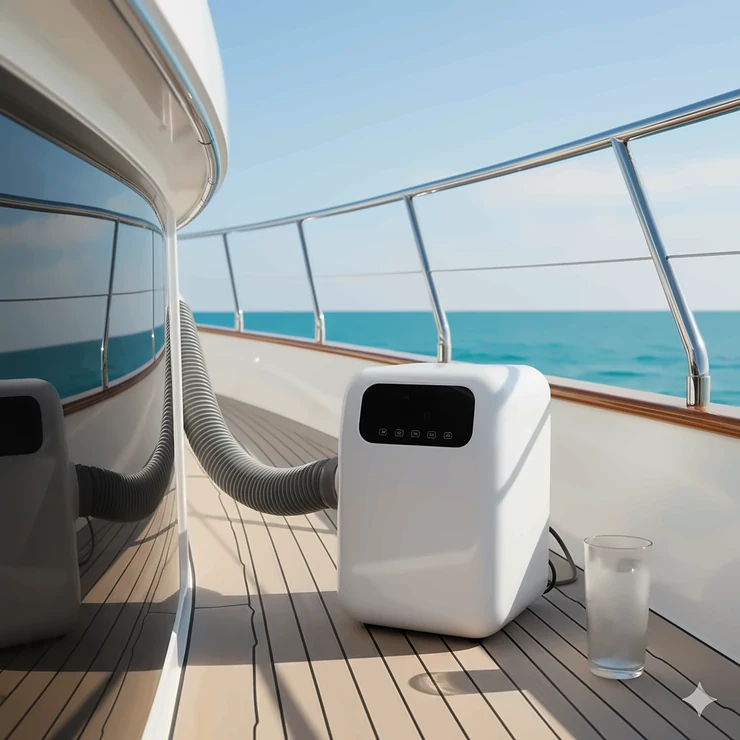
When the summer sun blazes down on your boat’s deck and the cabin becomes unbearably hot, nothing beats the relief of a portable boat air conditioner. Unlike permanently installed marine AC systems that require extensive modifications and professional installation, portable air conditioning units offer boaters an immediate cooling solution that’s both effective and budget-friendly.
✨Was this helpful? Spread the word! 🚀
I’ve spent countless hours on the water during sweltering summer days, and I can tell you from experience that having the right portable boat air conditioner transforms your boating experience from enduring the heat to actually enjoying every moment on the water. Whether you’re anchored in a secluded cove for the weekend or cruising coastal waters, these versatile cooling systems provide the comfort you need without the complexity of traditional marine air conditioning installations.
Why Choose a Portable Boat Air Conditioner? ⚡
The beauty of portable boat air conditioner systems lies in their simplicity and flexibility. Unlike built-in marine AC units that can cost upwards of $5,000 including installation, portable solutions offer cooling comfort at a fraction of the cost. These units require no permanent modifications to your vessel, making them perfect for renters, charter boats, or anyone who wants cooling without the commitment.
Modern portable boat air conditioner technology has evolved significantly, offering impressive cooling power in compact, lightweight packages. The latest models feature energy-efficient compressors, quiet operation, and innovative power management systems that work well with marine electrical systems. Some units even operate on battery power, providing true off-grid cooling capabilities that traditional marine AC simply cannot match.
🏆 Top 7 Portable Boat Air Conditioner Reviews
1. Zero Breeze Mark 3 – Premium Battery-Powered Solution
The Zero Breeze Mark 3 represents the pinnacle of portable boat air conditioner innovation. This remarkable unit delivers 5,280 BTU of cooling power while weighing just 22 pounds, making it the most powerful portable AC unit in its weight class.
Key Specifications:
- ✅ Cooling Capacity: 5,280 BTU
- ✅ Weight: 22 lbs (10 kg)
- ✅ Coverage Area: 100-150 sq ft
- ✅ Battery Life: 2-7 hours (mode dependent)
- ✅ Temperature Range: 61°F – 88°F
- ✅ Price: $1,299
Why It’s Perfect for Boats: The Zero Breeze Mark 3 operates entirely on battery power, eliminating the need for shore power or generator operation. Its built-in drainage system automatically removes condensation, while the dual-hose design ensures efficient operation even in high-humidity marine environments. The unit features seven operating modes including a specialized “Care” mode designed for pets and sensitive electronics.
Customer reviews consistently praise its quiet operation (46 dB in sleep mode) and impressive cooling performance. One boat owner noted: “I was part of the funding group for this new Zero Breeze Mark3, it just arrived. This thing rocks. The unit sells for $1299 which is way cheaper than a DC inverter marine AC.”
2. Whynter ARC-122DS Elite – Best Overall Performance
The Whynter ARC-122DS Elite stands out as the most awarded portable boat air conditioner, earning recognition from USA Today, Forbes, and Good Housekeeping. This dual-hose system delivers superior cooling efficiency compared to single-hose competitors.
Key Specifications:
- ✅ Cooling Capacity: 12,000 BTU / 7,000 BTU SACC
- ✅ Coverage Area: Up to 400 sq ft
- ✅ Weight: Approximately 78 lbs
- ✅ Noise Level: 55.9 dBa (very quiet)
- ✅ Dehumidification: 76 pints/24 hours
- ✅ Price: $550-650
Marine-Specific Advantages: The Whynter ARC-122DS features a self-evaporating design that minimizes manual drainage—crucial for marine applications where water management is critical. Its activated carbon filter improves air quality in enclosed boat cabins, while the dual-hose system prevents the negative pressure issues common with single-hose units on boats.
The unit’s compact footprint and caster wheels make it easy to move between cabin spaces. Professional marine installers frequently recommend this model for its reliability and performance in challenging marine environments.
3. Frigidaire FHPC082AC1 – Best Mid-Range Option
The Frigidaire FHPC082AC1 offers reliable cooling performance with user-friendly features that make it ideal for recreational boating. This 8,000 BTU unit strikes an excellent balance between power and portability.
Key Specifications:
- ✅ Cooling Capacity: 8,000 BTU (ASHRAE) / 5,500 BTU (DOE)
- ✅ Coverage Area: Up to 350 sq ft
- ✅ Power Consumption: 830W
- ✅ Operating Voltage: 115V
- ✅ Noise Level: 50 dBA
- ✅ Price: $300-400
Boat-Friendly Features: The Frigidaire FHPC082AC1 includes a 24-hour programmable timer, allowing you to pre-cool your cabin before arrival. Its sleep mode automatically adjusts temperature for comfortable overnight stays, while the dehumidifying dry mode is particularly valuable in marine environments where humidity control is essential.
The unit’s washable dust filter is easy to maintain with limited onboard tools, and the clean filter alert ensures optimal performance. The compact design with smooth-rolling casters makes repositioning simple in tight cabin spaces.

4. BLACK+DECKER BPACT08WT – Best Budget Choice
For budget-conscious boaters, the BLACK+DECKER BPACT08WT delivers solid cooling performance without breaking the bank. This 9,000 BTU unit offers excellent value for smaller boats and weekend getaways.
Key Specifications:
- ✅ Cooling Capacity: 9,000 BTU (ASHRAE) / 5,300 BTU (SACC)
- ✅ Coverage Area: Up to 400 sq ft
- ✅ Dimensions: 15.3″ x 14″ x 24.8″
- ✅ Energy Consumption: Very efficient (950.4 kWh annually)
- ✅ Price: $200-300
Value Proposition: The BLACK+DECKER BPACT08WT features the innovative “Follow Me” remote control that acts as a portable thermostat, ensuring accurate temperature control regardless of where you place the unit in your cabin. Its three-in-one functionality (cooling, dehumidifying, and fan) provides versatility for different weather conditions.
Despite its budget-friendly price, this unit includes essential marine-friendly features like a 24-hour timer, sleep mode, and LCDI-protected grounded plug for electrical safety. Energy efficiency testing shows it among the most economical portable ACs to operate, making it perfect for extended cruising.
5. Dometic ECD Self-Contained – Professional Marine Grade
The Dometic ECD Self-Contained represents professional-grade marine air conditioning in a portable format. Designed specifically for marine applications, this unit offers the reliability and performance that serious cruisers demand.
Key Specifications:
- ✅ Cooling Capacity: 16,000 BTU
- ✅ Refrigerant: R410A (environmentally friendly)
- ✅ Voltage: 230V
- ✅ Drain Pan: Stainless steel (corrosion resistant)
- ✅ Installation: Horizontal or vertical blower
- ✅ Price: $1,500-2,000
Marine Engineering Excellence: The Dometic ECD features a high-velocity rotatable blower that can be installed horizontally or vertically, accommodating various boat layouts. Its stainless-steel drain pan resists the corrosion that destroys standard units in marine environments, while the compact design maximizes installation flexibility.
The digital control system with remote electrical box mounting allows convenient operation from the helm or salon. Professional marine technicians praise its robust construction and serviceability, making it ideal for extended cruising or live-aboard applications.
6. Zero Breeze Mark 2 – Compact Battery Solution
The Zero Breeze Mark 2 offers proven battery-powered cooling for smaller boats and tight spaces. While superseded by the Mark 3, this unit remains popular for its reliability and lower price point.
Key Specifications:
- ✅ Cooling Capacity: 2,300 BTU
- ✅ Weight: 16.5 lbs
- ✅ Power Consumption: 240W
- ✅ Battery Life: 3-5 hours
- ✅ Coverage Area: 25-40 sq ft (ideal conditions)
- ✅ Price: $800-1,000
Advantages for Boats: The Zero Breeze Mark 2 excels in applications where space and weight are critical. Its ultra-low power consumption allows operation from solar panels or small battery banks, making it perfect for sailboats or fishing boats without generators. The micro dual-cylinder inverter compressor operates quietly, preserving the peaceful marine environment.
7. evaCHILL – Ultra-Portable Personal Cooler
The evaCHILL takes a different approach to boat cooling, using evaporative technology to provide personal climate control. This USB-powered unit offers an eco-friendly alternative for individual cooling needs.
Key Specifications:
- ✅ Cooling Method: Evaporative
- ✅ Power Consumption: 10W (USB powered)
- ✅ Coverage Area: Personal space (3-5 feet)
- ✅ Water Tank: 800ml
- ✅ Operating Time: Up to 9 hours
- ✅ Price: $99
Perfect for Personal Cooling: The evaCHILL works by evaporating water to cool the surrounding air, making it most effective in dry climates. Its 10W power consumption is 100 times less than traditional AC units, allowing operation from any USB power source including power banks, laptops, or marine USB outlets.
While not suitable for cooling entire cabins, the evaCHILL excels for personal comfort at the helm, in cockpit seating areas, or for spot cooling in small spaces. Its whisper-quiet operation (50 dB) and natural humidification make it ideal for overnight comfort.
🔄 Quick Comparison Table
| Model | BTU | Weight | Power | Price | Best For |
|---|---|---|---|---|---|
| Zero Breeze Mark 3 | 5,280 | 22 lbs | Battery | $1,299 | Premium off-grid cooling |
| Whynter ARC-122DS | 12,000 | 78 lbs | 115V AC | $600 | Best overall performance |
| Frigidaire FHPC082AC1 | 8,000 | 65 lbs | 115V AC | $350 | Mid-range reliability |
| BLACK+DECKER BPACT08WT | 9,000 | 63 lbs | 115V AC | $250 | Budget-friendly choice |
| Dometic ECD | 16,000 | 95 lbs | 230V AC | $1,750 | Professional marine |
| Zero Breeze Mark 2 | 2,300 | 16.5 lbs | Battery | $900 | Compact battery solution |
| evaCHILL | N/A | 3.3 lbs | USB (10W) | $99 | Personal cooling |
💬 Just one click – help others make better buying decisions too! 😊
⚙️ How to Choose the Right Portable Boat Air Conditioner
Selecting the perfect portable boat air conditioner requires careful consideration of your specific boating needs, vessel characteristics, and cooling requirements. The marine environment presents unique challenges that differ significantly from home or RV applications, making informed selection crucial for satisfaction and performance.
Calculating BTU Requirements for Your Boat 📐
Determining the correct cooling capacity for your portable boat air conditioner involves more than simple square footage calculations. Marine environments present additional heat loads that must be considered for effective cooling performance.
Basic BTU Calculation Formula:
- Cabin Area (sq ft) × Heat Load Factor = Required BTU
- Below deck cabins: 14 BTU per sq ft
- Main deck areas: 17 BTU per sq ft
- Upper deck/flybridge: 23 BTU per sq ft
Additional Heat Load Considerations: Marine applications typically require 30-50% more cooling capacity than equivalent land-based spaces due to:
- ✅ Reflective water surfaces amplifying solar heat
- ✅ Limited insulation in fiberglass hulls
- ✅ Metal surfaces conducting external heat
- ✅ Engine room heat transfer
- ✅ Multiple occupants in confined spaces
Example Calculation: For a 200 sq ft main salon with large windows:
- Base requirement: 200 sq ft × 17 BTU = 3,400 BTU
- Marine load factor: 3,400 × 1.4 = 4,760 BTU
- Recommended capacity: 6,000-8,000 BTU unit
Power System Compatibility ⚡
Your boat’s electrical system significantly impacts portable boat air conditioner selection. Understanding power requirements and limitations prevents disappointment and ensures safe operation.
12V DC Systems: Most smaller boats operate on 12V systems that cannot directly power standard AC units. Options include:
- Battery-powered units (Zero Breeze series)
- Inverter systems (1500W minimum for small AC units)
- Low-power evaporative coolers (evaCHILL)
Shore Power/Generator Systems: Boats with 115V AC capability offer more options:
- Standard portable ACs (8,000-16,000 BTU range)
- Higher efficiency with adequate power supply
- Multiple units for larger vessels
Power Consumption Guidelines:
- 8,000 BTU units: 800-1,000 watts
- 12,000 BTU units: 1,100-1,400 watts
- 16,000 BTU units: 1,500-2,000 watts
Always verify your boat’s electrical capacity before purchasing. Undersized electrical systems lead to voltage drops, reduced performance, and potential safety hazards.
Space and Installation Considerations 🏗️
Unlike home installations, boat air conditioner placement requires careful planning for safety, efficiency, and practicality. The marine environment demands solutions that account for vessel movement, limited space, and accessibility.
Ventilation Requirements: All portable boat air conditioner units require exhaust venting to remove heat. Common solutions include:
- Hatch-mounted exhaust systems
- Through-hull venting (professional installation)
- Temporary porthole adapters
- Cabin window modifications
Stability and Safety: Boat movement requires secure mounting or positioning:
- Non-slip pads prevent unit sliding
- Secure drain line routing
- Electrical cord management
- Emergency shut-off accessibility
Drainage Solutions: Condensate removal is critical in marine environments:
- Gravity drain systems (through-hull preferred)
- Internal evaporation (self-evaporating units)
- Collection tank systems (manual emptying)
- Pump-assisted drainage for below-waterline installations
🛠️ Installation and Setup Guide
Proper installation of your portable boat air conditioner ensures optimal performance, safety, and longevity. While these units are designed for portability, marine applications require attention to details that land-based installations don’t face.
Pre-Installation Planning
Before installing any portable boat air conditioner, conduct a thorough assessment of your vessel’s capabilities and limitations. This planning phase prevents costly mistakes and ensures optimal performance.
Electrical System Assessment:
- Verify available AC voltage and amperage
- Check for adequate circuit protection (breakers/fuses)
- Ensure proper grounding systems
- Calculate total electrical load including other systems
Ventilation Planning: Every portable boat air conditioner requires both air intake and exhaust pathways. Plan these routes before purchase:
- Identify suitable exhaust locations (hatches, portholes, or custom openings)
- Ensure adequate clearance for air circulation
- Plan for weather protection of external components
- Consider impact on boat’s weather integrity
Space Allocation: Marine installations require more planning than simple floor placement:
- Account for unit dimensions plus required clearances
- Plan for drain line routing and collection
- Ensure access for maintenance and filter cleaning
- Consider weight distribution impact on vessel trim
Step-by-Step Installation Process
Phase 1: Preparation (30-60 minutes)
- Unpack and inspect the portable boat air conditioner and all components
- Review manufacturer instructions specific to your model
- Gather required tools: drill, hole saws, marine sealants, electrical connections
- Test unit operation before final installation
Phase 2: Ventilation Setup (60-120 minutes)
- Mark hose routing from unit to exhaust location
- Install exhaust fitting using marine-grade sealants
- Connect exhaust hose ensuring proper securing against movement
- Test fit all connections before final assembly
Phase 3: Electrical Connection (30-60 minutes)
- Verify power requirements match available supply
- Install dedicated circuit if required for larger units
- Test GFCI protection (required for marine applications)
- Complete ground connections following marine electrical standards
Phase 4: Testing and Commissioning (30 minutes)
- Initial startup following manufacturer procedures
- Test all operating modes and safety features
- Verify proper drainage operation
- Document installation for warranty and maintenance
Safety Considerations for Marine Use
Marine environments present unique safety challenges that require special attention during portable boat air conditioner installation and operation.
Electrical Safety:
- All circuits must include GFCI protection
- Use marine-grade electrical components and connections
- Ensure proper grounding to boat’s electrical system
- Install appropriate overcurrent protection
Water Intrusion Protection:
- Seal all through-hull penetrations with marine sealants
- Install proper drainage with check valves if below waterline
- Use weatherproof connections for external components
- Plan for emergency water intrusion response
Fire Safety:
- Maintain proper clearances from combustible materials
- Install smoke detection in air conditioner compartments
- Ensure adequate ventilation for heat dissipation
- Have appropriate fire suppression equipment readily available
🔧 Maintenance and Troubleshooting
Regular maintenance of your portable boat air conditioner extends its lifespan and ensures reliable operation in the demanding marine environment. The combination of salt air, humidity, and constant movement requires more frequent attention than land-based units.
Daily and Weekly Maintenance Routines
Daily Checks (During Use):
- Verify proper drainage operation
- Check for unusual noises or vibrations
- Monitor air output temperature and volume
- Inspect electrical connections for corrosion
Weekly Maintenance:
- Clean or replace air filters (marine environments clog filters quickly)
- Empty condensate collection tanks if manually drained
- Inspect exhaust hoses for blockages or damage
- Check unit stability and securing mechanisms
Monthly Deep Cleaning:
- Disassemble and clean evaporator coils
- Inspect and clean condenser coils
- Check refrigerant lines for signs of corrosion
- Lubricate fan motors if specified by manufacturer
Seasonal Maintenance Requirements
Pre-Season Preparation: Before each boating season, perform comprehensive maintenance:
- Complete electrical system inspection
- Replace air filters and clean all components
- Test all operating modes and safety features
- Check and refresh marine sealants around installations
End-of-Season Storage: Proper storage prevents off-season damage:
- Thoroughly clean and dry all components
- Remove and store batteries (battery-powered units)
- Apply corrosion prevention to metal components
- Store in climate-controlled environment when possible
Common Issues and Solutions
Reduced Cooling Performance:
- Cause: Dirty filters or coils
- Solution: Clean or replace filters, professionally clean coils
Excessive Noise:
- Cause: Loose mounting, worn bearings, or debris
- Solution: Secure mounting points, lubricate bearings, remove debris
Water Leakage:
- Cause: Blocked drainage, damaged seals
- Solution: Clear drainage paths, replace seals with marine-grade components
Electrical Issues:
- Cause: Corrosion, loose connections, GFCI trips
- Solution: Clean connections, apply dielectric grease, check GFCI operation
Professional Service Recommendations
While routine maintenance can be performed by boat owners, certain services require professional expertise:
Annual Professional Service:
- Refrigerant system inspection and service
- Electrical system comprehensive testing
- Major component replacement (compressors, motors)
- Warranty service and repairs
When to Call Professionals:
- Refrigerant leaks (environmental regulations require proper handling)
- Electrical issues beyond basic connections
- Compressor or major component failures
- Installation modifications or upgrades
🌊 Marine-Specific Considerations
Operating a portable boat air conditioner in the marine environment presents unique challenges that don’t exist in land-based applications. Understanding these factors ensures optimal performance and prevents costly damage.
Dealing with Salt Air and Corrosion
Salt air is the enemy of all electrical and mechanical equipment on boats. Your portable boat air conditioner requires special protection to survive in this harsh environment.
Corrosion Prevention Strategies:
- Apply marine-grade anti-corrosion sprays to metal components monthly
- Use dielectric grease on all electrical connections
- Choose units with corrosion-resistant materials (stainless steel, marine-grade aluminum)
- Rinse external components with fresh water after salt spray exposure
Component Protection: External components face direct salt exposure and require enhanced protection:
- Coat exposed metal with protective wax or marine paint
- Install sacrificial anodes on large metal components
- Use marine-grade gaskets and seals exclusively
- Consider covers for units during non-use periods
Power Management on Boats
Effective power management extends battery life and prevents electrical system overload when operating your portable boat air conditioner from marine power systems.
Battery System Optimization: For battery-powered units or inverter systems:
- Install adequate battery capacity (minimum 400 Ah for extended AC use)
- Use deep-cycle marine batteries designed for high-draw applications
- Implement battery monitoring systems to prevent damaging discharge
- Consider lithium upgrades for weight savings and performance
Generator Integration: When using generator power:
- Size generators with 25% capacity margin above AC requirements
- Install proper voltage regulation to protect sensitive electronics
- Use marine-grade transfer switches for shore power/generator switching
- Implement automatic start/stop controls for efficiency
Solar Integration: Modern portable boat air conditioner systems can integrate with solar charging:
- Install adequate solar capacity (minimum 400W for small AC units)
- Use MPPT charge controllers for maximum efficiency
- Plan for weather-dependent performance variations
- Consider portable solar panels for additional capacity when anchored
Weather Protection and Operation
Marine weather conditions significantly impact portable boat air conditioner performance and require operational adjustments.
High Wind Conditions: Strong winds affect both performance and safety:
- Secure all external components against wind loading
- Adjust air intake/exhaust for wind direction
- Monitor unit stability during rough weather
- Consider shutdown procedures for severe conditions
Rain and Moisture Protection: Marine environments expose equipment to constant moisture:
- Install rain covers over external air intakes/exhausts
- Use marine-grade electrical boxes for all connections
- Implement positive drainage for all water accumulation
- Check weatherstripping and seals regularly
Temperature Extremes: Marine environments experience rapid temperature changes:
- Allow units to acclimate before startup after temperature extremes
- Monitor performance during extreme heat conditions
- Protect units from direct sunlight when possible
- Consider insulation upgrades for extreme climate operation
💡 Expert Tips for Maximum Efficiency
Maximizing the efficiency of your portable boat air conditioner reduces power consumption, improves comfort, and extends equipment life. These professional tips come from years of marine air conditioning experience.
Optimizing Placement and Airflow
Strategic Unit Positioning:
- Place units in central locations for balanced air distribution
- Avoid placement near heat sources (engines, galleys, electronics)
- Ensure adequate clearance (minimum 18 inches) around all sides
- Position intake away from exhaust to prevent short-cycling
Airflow Enhancement Techniques:
- Use auxiliary fans to improve air circulation
- Install ceiling fans to supplement air conditioning
- Create positive air circulation patterns throughout vessel
- Remove obstructions from air pathways
Insulation Improvements: Even small insulation upgrades significantly improve portable boat air conditioner efficiency:
- Add reflective window film to reduce solar heat gain
- Install thermal curtains for large windows and hatches
- Seal air leaks around hatches, windows, and penetrations
- Consider hull insulation upgrades for extended cruising
Power Optimization Strategies
Load Management:
- Operate AC during cooler parts of day when possible
- Use programmable timers to pre-cool spaces
- Coordinate AC operation with other high-draw equipment
- Implement stepped loading to prevent electrical system overload
Temperature Control Optimization:
- Set thermostats 2-3 degrees higher than desired (system will cycle more efficiently)
- Use ceiling fans to create wind-chill effect, allowing higher thermostat settings
- Close off unused areas to concentrate cooling
- Pre-cool spaces before high heat periods
Integration with Boat Systems
Ventilation System Coordination:
- Coordinate AC operation with natural ventilation
- Use boat’s existing ventilation fans to assist air circulation
- Time AC operation with wind patterns when anchored
- Integrate with boat’s environmental control systems where possible
Monitoring and Control:
- Install temperature/humidity monitoring for optimization
- Use smart plugs for remote control and monitoring
- Implement automatic controls based on occupancy
- Log performance data for troubleshooting and optimization
🏆 Don’t Miss These Exclusive Deals! 🚀
Transform your boating experience with these carefully selected portable boat air conditioner options. Click on any highlighted product to check current pricing and availability on Amazon. These units will keep you cool and comfortable during those hot summer days on the water!
📊 Comparison Analysis: Portable vs Built-in Marine AC
Understanding the differences between portable boat air conditioner systems and built-in marine AC helps make informed decisions about cooling investments.
Cost Comparison Analysis
| Aspect | Portable Boat Air Conditioner | Built-in Marine AC |
|---|---|---|
| Initial Equipment Cost | $200-$1,500 | $2,000-$8,000+ |
| Installation Cost | $0-$500 (DIY possible) | $1,500-$5,000 |
| Total Initial Investment | $200-$2,000 | $3,500-$13,000 |
| Annual Operating Cost | $150-$400 | $300-$800 |
| Maintenance Cost | $100-$300/year | $300-$800/year |
Performance Comparison
Cooling Capacity:
- Portable Units: 2,000-16,000 BTU typical range
- Built-in Systems: 6,000-72,000 BTU available
- Efficiency: Built-in systems typically 15-25% more efficient
- Multi-zone Capability: Built-in systems excel at whole-vessel cooling
Power Requirements:
- Portable: 240W-2,000W power consumption
- Built-in: 800W-5,000W+ power consumption
- System Integration: Built-in systems better integrate with boat electrical
- Generator Sizing: Portable units allow smaller generator requirements
Flexibility and Convenience
Installation Flexibility:
- Portable: Move between boats, seasonal use, no permanent modifications
- Built-in: Permanent installation, integrated controls, whole-boat cooling
- Rental/Charter: Portable units ideal for temporary cooling needs
- Resale Impact: Built-in systems may increase boat value
Suitability by Boat Type
Small Boats (Under 30 feet): Portable boat air conditioner systems are typically the best choice due to:
- Limited electrical capacity
- Space constraints
- Cost considerations
- Flexibility for different activities
Mid-size Boats (30-45 feet): Both options viable depending on:
- Intended use patterns (day trips vs extended cruising)
- Electrical system capability
- Budget considerations
- Comfort expectations
Large Boats (45+ feet): Built-in systems often preferred for:
- Multiple cabin cooling requirements
- Adequate electrical capacity available
- Extended cruising needs
- Luxury comfort expectations
🎯 Industry-Specific Applications
Different types of boating activities require specific portable boat air conditioner solutions. Understanding these applications helps select the optimal cooling system for your specific needs.
Commercial Fishing Applications
Commercial fishing operations present unique challenges for portable boat air conditioner systems due to extended operations, harsh conditions, and power limitations.
Operational Requirements:
- Extended run times (12-24 hours daily)
- High reliability in challenging conditions
- Minimal maintenance requirements
- Resistance to salt spray and moisture
Recommended Solutions: Commercial fishing vessels benefit most from:
- Dometic ECD systems for their marine-grade construction
- Zero Breeze Mark 3 for energy efficiency and battery operation
- Whynter ARC-122DS for reliability and performance
Power Management: Commercial operations typically require:
- Dedicated generator capacity for AC operation
- Battery backup systems for refrigeration integration
- Shore power connections when available
- Solar supplementation for extended trips
Charter and Tourism Applications
Charter boats and tourism operations prioritize guest comfort while managing operational costs and maintenance complexity.
Guest Comfort Requirements:
- Quiet operation (noise levels under 55 dB)
- Rapid cooling capability for guest comfort
- Multiple cooling zones for privacy
- Easy operation for crew members
Operational Considerations:
- High reliability to prevent guest satisfaction issues
- Easy maintenance between charters
- Cost-effective operation to maintain profitability
- Weather-independent operation
Recommended Systems: Charter operations typically choose:
- Frigidaire FHPC082AC1 for reliability and ease of use
- Whynter ARC-122DS for superior performance and quiet operation
- Multiple evaCHILL units for personal guest comfort
Recreational and Family Boating
Family recreational boating encompasses the largest segment of portable boat air conditioner users, with diverse needs ranging from day trips to extended cruising.
Family-Specific Requirements:
- Budget-conscious solutions
- Easy setup and operation
- Flexible cooling for different activities
- Safety considerations for children
Weekend Cruising Applications:
- BLACK+DECKER BPACT08WT for budget-friendly weekend comfort
- Frigidaire FHPC082AC1 for reliable mid-range performance
- Zero Breeze Mark 2 for flexible battery-powered cooling
Extended Cruising Applications:
- Zero Breeze Mark 3 for comprehensive off-grid capability
- Whynter ARC-122DS for high-performance cooling
- Dometic ECD for professional-grade reliability
Live-Aboard Applications
Live-aboard boaters require portable boat air conditioner systems that provide home-like comfort while managing space and power constraints.
Live-Aboard Specific Needs:
- 24/7 operational capability
- Integration with boat’s electrical and water systems
- Minimal noise for sleeping comfort
- Efficient operation to manage utility costs
System Integration Requirements:
- Professional installation with proper drainage
- Integration with battery and charging systems
- Backup cooling systems for redundancy
- Maintenance accessibility for extended use
Professional Recommendations: Live-aboard installations typically require:
- Dometic ECD systems for reliability and serviceability
- Zero Breeze Mark 3 with multiple battery modules
- Professional installation and system integration
🔬 Advanced Technical Analysis
Understanding the technical aspects of portable boat air conditioner systems helps optimize performance and make informed upgrade decisions.
Refrigeration Cycle Optimization
Modern portable boat air conditioner systems use various refrigeration technologies, each with specific advantages for marine applications.
Compressor Technologies:
- Rotary Compressors: Most common, good efficiency, moderate noise
- Scroll Compressors: Quieter operation, higher efficiency, more expensive
- Inverter Compressors: Variable speed operation, maximum efficiency
- Micro Compressors: Ultra-compact, battery-friendly, limited capacity
Refrigerant Considerations:
- R410A: Standard refrigerant, good performance, environmentally acceptable
- R32: Newer refrigerant, improved efficiency, lower global warming potential
- R290 (Propane): Natural refrigerant, excellent efficiency, requires special handling
Heat Exchanger Design: Marine applications benefit from:
- Corrosion-resistant materials (copper, aluminum alloys)
- Enhanced surface treatments for salt air resistance
- Compact designs for space efficiency
- Easy cleaning access for maintenance
Electrical System Integration
Proper electrical integration ensures optimal portable boat air conditioner performance while protecting boat electrical systems.
Power Quality Considerations: Marine electrical systems often suffer from:
- Voltage fluctuations from generator operation
- Harmonic distortion from inverter systems
- Ground loop issues in complex electrical systems
- Lightning and surge damage risks
Protection Systems: Professional installations include:
- Surge protection devices rated for marine environments
- Isolation transformers for ground loop elimination
- Power monitoring systems for electrical health
- Emergency shutdown systems for safety
Load Management: Advanced systems incorporate:
- Automatic load shedding to prevent overloads
- Smart start controllers to reduce inrush current
- Power factor correction for improved efficiency
- Battery state monitoring for system protection
Performance Optimization Technologies
Modern portable boat air conditioner systems incorporate advanced technologies for improved performance and efficiency.
Smart Controls:
- Wi-Fi connectivity for remote monitoring and control
- Smartphone apps for operation and diagnostics
- Automatic operation based on occupancy and weather
- Integration with boat management systems
Energy Recovery:
- Heat recovery systems for water heating
- Waste heat utilization for dehumidification
- Thermal storage systems for load shifting
- Solar thermal integration for enhanced efficiency
Air Quality Enhancement:
- UV sterilization systems for improved air quality
- Advanced filtration for allergen removal
- Humidity control for comfort and preservation
- Fresh air integration for ventilation
📈 Future Trends and Market Evolution
The portable boat air conditioner market continues evolving with new technologies and changing boater expectations driving innovation.
Emerging Technologies
Battery Technology Advances:
- Lithium iron phosphate (LiFePO4) batteries improving energy density
- Solid-state batteries promising even greater capacity
- Wireless charging systems for seamless operation
- Battery management systems extending operational life
Smart System Integration:
- IoT connectivity for predictive maintenance
- Machine learning optimization for efficiency
- Voice control integration (Alexa, Google Assistant)
- Blockchain technology for warranty and service tracking
Sustainable Cooling Technologies:
- Solar-powered air conditioning systems
- Thermoelectric cooling for ultra-low power consumption
- Phase change materials for thermal storage
- Biomimetic cooling inspired by natural systems
Market Trends and Consumer Preferences
Environmental Consciousness: Increasing demand for:
- Eco-friendly refrigerants with minimal environmental impact
- Energy-efficient systems reducing carbon footprint
- Solar integration for sustainable operation
- Recyclable materials and sustainable manufacturing
Connectivity and Control: Modern boaters expect:
- Smartphone app control and monitoring
- Integration with boat management systems
- Remote diagnostics and maintenance alerts
- Cloud-based performance analytics
Customization and Modularity: Growing interest in:
- Modular systems scalable to boat size
- Customizable control interfaces
- Flexible installation options
- Upgrade paths for evolving needs
Industry Predictions
Technology Evolution (2025-2030):
- 50% improvement in energy efficiency through advanced compressor technology
- 75% reduction in system weight through material advances
- Universal wireless charging for battery-powered units
- AI-powered optimization reducing energy consumption by 30%
Market Growth Projections:
- Portable boat air conditioner market expected to grow 15% annually
- Battery-powered systems projected to capture 40% market share
- Smart features becoming standard rather than premium options
- Integration with renewable energy systems becoming commonplace
Regulatory Changes:
- Stricter environmental regulations driving refrigerant changes
- Energy efficiency standards improving minimum performance
- Safety regulations enhancing electrical protection requirements
- International standards harmonizing global market requirements
💰 Investment and Purchase Decision Framework
Making the right portable boat air conditioner investment requires careful analysis of costs, benefits, and long-term value.
Total Cost of Ownership Analysis
Initial Investment Components:
- Equipment purchase price
- Installation costs (professional vs DIY)
- Required accessories and modifications
- Electrical system upgrades if needed
Operational Costs:
- Electricity consumption during operation
- Fuel costs for generator operation
- Battery replacement costs for battery-powered units
- Regular maintenance and filter replacement
Long-term Costs:
- Major component replacement (compressors, fans)
- System upgrades for technology improvements
- Professional service and repairs
- End-of-life disposal and replacement
5-Year Cost Comparison
| System Type | Initial Cost | Annual Operating | 5-Year Total |
|---|---|---|---|
| Budget Portable | $300 | $200 | $1,300 |
| Mid-Range Portable | $600 | $250 | $1,850 |
| Premium Battery | $1,300 | $150 | $2,050 |
| Professional Marine | $2,000 | $300 | $3,500 |
Return on Investment Calculations
Comfort Value Assessment:
- Increased boat usage during hot weather
- Enhanced guest experience and satisfaction
- Improved sleep quality during overnight trips
- Expanded seasonal boating opportunities
Financial Benefits:
- Increased boat value for premium systems
- Reduced need for shore-based accommodations
- Extended equipment life through climate control
- Potential charter income enhancement
Break-even Analysis: Most portable boat air conditioner systems break even within 2-3 years when considering:
- Increased boat usage and enjoyment
- Avoided costs of alternative cooling methods
- Health and comfort benefits quantified
- Enhanced boat value and marketability
🛒 Ready to Beat the Heat? Transform Your Boating Experience! 🌊
Don’t let another hot day ruin your time on the water. These top-rated portable boat air conditioner systems will keep you cool and comfortable all season long. Click now to check the latest prices and availability!
❓ Frequently Asked Questions
❓ What size portable boat air conditioner do I need for a 30-foot cabin cruiser?
❓ Can I run a portable boat air conditioner on battery power all night?
❓ How much does it cost to operate a portable boat air conditioner?
❓ Do portable boat air conditioners work well in high humidity?
❓ What maintenance does a portable boat air conditioner require in saltwater environments?
Recommended for You
- 7 Best Warehouse Air Conditioner Units for Maximum Cooling Power in 2025
- Top 10 Portable Industrial Air Conditioner Units for Maximum Cooling Power in 2025
- 7 Best Portable Mini Split Systems: Ultimate Comfort Guide for 2025
✨ Found this helpful? Share it with your friends! 💬🤗
