
In This Article
✨Was this helpful? Spread the word! 🚀
Here’s something most homeowners don’t realize: a gas air conditioner can slash your cooling bills by up to 40% compared to traditional electric systems. But what exactly is a gas air conditioner, and why isn’t everyone talking about it?
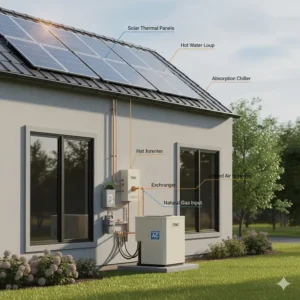
The term gas air conditioner typically refers to two distinct types of systems. First, there’s the true natural gas air conditioner—an absorption cooling system that uses gas as its primary energy source instead of electricity. These systems employ a thermally-driven cycle using natural gas to create cooling through a chemical process with refrigerants like lithium bromide or ammonia-water solutions. Second, and more commonly available, are gas package units that combine a natural gas furnace for heating with an electric air conditioner for cooling in one outdoor cabinet.
Most American homeowners searching for a gas air conditioner actually find packaged HVAC systems that use natural gas for heating and electricity for cooling. True absorption chillers that cool using natural gas remain primarily in commercial settings, though companies like <a href=”https://www.robur.com” target=”_blank” rel=”nofollow”>Robur</a> are making residential models more accessible.
Why does this matter? Because natural gas often costs less than electricity in many U.S. regions, and having a gas-powered heating system paired with your AC creates year-round efficiency. According to the <a href=”https://www.energy.gov” target=”_blank” rel=”nofollow”>U.S. Department of Energy</a>, homes using natural gas for heating save an average of $1,000 annually compared to all-electric homes.
In this guide, I’ll walk you through the seven best gas air conditioner systems available in 2025, explain how they work, and help you determine if one makes sense for your home. Whether you’re looking for a traditional gas pack or exploring absorption cooling technology, you’ll find everything you need right here.
Quick Comparison Table: Top Gas Air Conditioner Systems
| Product | Type | Cooling Capacity | SEER Rating | AFUE | Price Range |
|---|---|---|---|---|---|
| Goodman GPGM Series | Gas Package Unit | 2-5 Tons | 13.4-14 SEER2 | 81% | $2,800-$4,500 |
| Rheem Endeavor Package | Gas Package Unit | 2-5 Tons | 13.4-15 SEER2 | 80-81% | $3,200-$5,200 |
| MrCool Signature MPG14 | Gas Package Unit | 2-5 Tons | 14 SEER | 81% | $2,500-$4,200 |
| Coleman PCG4 Series | Gas Package Unit | 2-5 Tons | 14 SEER | 81% | $2,900-$4,800 |
| York Latitude Package | Gas Package Unit | 2-5 Tons | 13-15 SEER2 | 80-81% | $3,000-$4,900 |
| Robur GAHP-AR | Absorption Chiller | 5 Tons | N/A | 126% GUE | $8,000-$12,000 |
| Goodman Split System | Split System | 1.5-5 Tons | 15.2 SEER2 | 96% | $3,500-$6,500 |
💬 Just one click – help others make better buying decisions too!😊
🔥 Ready to Save on Energy Bills?
The systems above represent the best value in gas air conditioner technology available today. Each offers unique benefits depending on your home size, climate zone, and budget. Let’s dive deeper into what makes each one special.
Top 7 Gas Air Conditioner Systems: Expert Analysis
1. Goodman GPGM Series – Best Overall Value
The Goodman GPGM Series stands out as the most budget-friendly option without sacrificing quality. This gas package unit combines a natural gas furnace with an electric air conditioner in one compact outdoor cabinet, making it perfect for homes with limited installation space.
Key Specifications:
- Cooling capacity: 2-5 tons (24,000-60,000 BTU)
- SEER2 rating: 13.4-14
- AFUE: 81%
- Multi-position installation (horizontal or downflow)
Price Range: $2,800-$4,500 (equipment only)
Customers consistently praise the Goodman GPGM for its reliability and straightforward installation. One homeowner in Texas noted that their unit reduced cooling costs by 30% compared to their old split system. The downside? It’s not the quietest option on the market, though it’s far from loud.
Pros:
✅ Excellent price-to-performance ratio
✅ Widely available parts and service technicians
✅ 10-year limited warranty with registration
Cons:
❌ Basic features compared to premium brands
❌ Moderate noise levels during operation
2. Rheem Endeavor Package System – Best Energy Efficiency
For homeowners prioritizing long-term energy savings, the Rheem Endeavor Package System delivers exceptional efficiency ratings across the board. This natural gas air conditioner package uses advanced inverter technology and can achieve up to 15.2 SEER2 in higher-tier models.
Key Specifications:
- Variable-speed compressor technology
- ClimaTrak humidity management
- EcoNet smart home integration
- R-454B low-GWP refrigerant
Price Range: $3,200-$5,200 (equipment only)
Rheem’s reputation for durability shines through in customer reviews, with many units lasting 15-20 years with proper maintenance. The EcoNet app allows you to control temperatures remotely and monitor energy usage in real-time. However, professional installation costs run higher due to the system’s complexity.
Pros:
✅ Industry-leading efficiency ratings
✅ Smart thermostat compatibility
✅ Excellent humidity control features
Cons:
❌ Higher upfront cost than competitors
❌ More complex installation requirements
3. MrCool Signature MPG14 – Best DIY-Friendly Option
The MrCool Signature MPG14 has earned a cult following among handy homeowners who want to tackle installation themselves. This gas package air conditioner comes pre-charged with R-410A refrigerant and features straightforward connections that reduce installation time by up to 50%.
Key Specifications:
- 14 SEER cooling efficiency
- 90,000 BTU gas heating capacity
- CoolGuard aluminum coil technology
- Compact footprint design
Price Range: $2,500-$4,200
One satisfied customer in Colorado reported saving $1,200 on installation costs by handling the work themselves with help from MrCool’s detailed video tutorials. The unit performs admirably in both summer heat and winter cold, maintaining consistent temperatures year-round.
Pros:
✅ DIY-friendly installation process
✅ Comprehensive online support resources
✅ Competitive pricing structure
Cons:
❌ Warranty may be affected by self-installation
❌ Limited local service network in some areas
4. Coleman PCG4 Series – Best Quiet Operation
If noise is a concern, the Coleman PCG4 Series uses advanced sound-dampening technology that makes it one of the quietest gas air conditioner systems available. The QuietDrive comfort system reduces operational noise to levels barely noticeable from inside your home.
Key Specifications:
- Ultra-Low NOx compliant
- 14 SEER efficiency rating
- Advanced vibration isolation
- Lifetime compressor limited warranty (with registration)
Price Range: $2,900-$4,800
Coleman’s heritage in outdoor equipment translates to rugged construction that withstands harsh weather conditions. Customer feedback consistently highlights the whisper-quiet operation, with one reviewer noting they couldn’t hear the unit running from just 10 feet away.
Pros:
✅ Exceptionally quiet operation
✅ Rugged, weather-resistant construction
✅ Strong warranty coverage
Cons:
❌ Mid-range efficiency ratings
❌ Fewer smart features than competitors
5. York Latitude Package Unit – Best for Extreme Climates
The York Latitude Package Unit excels in regions with harsh temperature swings. This natural gas powered air conditioner package features robust components designed to maintain performance from -20°F to 115°F ambient temperatures.
Key Specifications:
- ClimaTrak temperature and humidity management
- Heavy-duty scroll compressor
- Corrosion-resistant cabinet
- Extended temperature range operation
Price Range: $3,000-$4,900
York’s engineering focuses on durability, with many units operating flawlessly for 20+ years. One homeowner in Minnesota shared that their York unit handled -30°F winters without issue. The trade-off? Installation complexity requires an experienced HVAC technician.
Pros:
✅ Exceptional temperature range capability
✅ Long-lasting construction quality
✅ Excellent humidity management
Cons:
❌ Requires professional installation
❌ Higher initial investment
6. Robur GAHP-AR – Best True Gas Cooling Technology
The Robur GAHP-AR represents the cutting edge of absorption cooling—a true gas air conditioner that uses natural gas for both heating and cooling. Unlike traditional systems, this unit operates on a thermally-driven absorption cycle, making it perfect for off-grid applications or areas with unreliable electricity.
Key Specifications:
- 5-ton cooling capacity (60,000 BTU)
- 126% heating efficiency (GUE)
- Ammonia-water absorption technology
- 80% reduction in electrical consumption
Price Range: $8,000-$12,000 (equipment only)
This system shines in commercial applications and large residential properties. The gas absorption air conditioner technology recovers up to 34% renewable energy from outdoor air. However, the high upfront cost and specialized installation requirements make it less accessible for average homeowners.
Pros:
✅ True gas-powered cooling operation
✅ Minimal electrical requirements
✅ Simultaneous heating and cooling capability
Cons:
❌ Significant upfront investment
❌ Requires specialized maintenance
❌ Limited residential availability
7. Goodman Split System with Gas Furnace – Best Split System Configuration
For homeowners who prefer traditional split systems, the Goodman Split System pairs a high-efficiency R-32 air conditioner with a 96% AFUE natural gas furnace. This configuration offers maximum flexibility in installation and component selection.
Key Specifications:
- 15.2 SEER2 cooling efficiency
- 96% AFUE gas furnace
- Next-generation R-32 refrigerant
- Modular component design
Price Range: $3,500-$6,500 (complete system)
This setup works best for homes with existing ductwork and indoor space for the furnace. The split configuration allows for quieter indoor operation and easier maintenance access. Customer reviews praise the system’s ability to maintain precise temperature control.
Pros:
✅ Maximum installation flexibility
✅ Ultra-high efficiency ratings
✅ Quieter indoor operation
Cons:
❌ Requires indoor installation space
❌ More complex installation process
❌ Higher total system cost
⚡ Transform Your Home Comfort Today!
These seven systems represent the best options in gas air conditioner technology for 2025. Whether you choose a packaged unit for convenience or a split system for efficiency, investing in natural gas cooling and heating delivers long-term savings and reliable comfort. Ready to make the switch? Check current pricing and availability on these top-rated systems! 🏠❄️
How Does a Gas Air Conditioner Work?
Understanding how a gas air conditioner operates helps you appreciate why these systems offer unique advantages over traditional electric-only units.
Traditional Gas Package Units
Most residential gas air conditioner systems are actually packaged units that combine two separate systems in one cabinet. The air conditioning component operates exactly like a standard electric AC unit, using a compressor, refrigerant, and evaporator coils. Meanwhile, the heating component burns natural gas in a furnace to generate warmth.
Think of it like a hybrid vehicle—it uses the best fuel source for each job. During summer, electricity powers the cooling cycle. In winter, natural gas fires up the furnace for efficient heating. This dual-fuel approach typically costs less to operate than all-electric systems in most U.S. regions.
True Gas Absorption Cooling
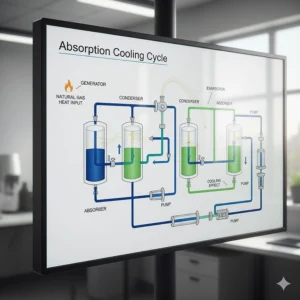
A natural gas air conditioner using absorption technology works completely differently. According to <a href=”https://www.energy.gov” target=”_blank” rel=”nofollow”>research from the Department of Energy</a>, absorption chillers use heat from natural gas combustion to drive a cooling cycle.
Here’s how it works in simple terms:
- Generation Phase: Natural gas heats a solution of refrigerant and absorbent (typically ammonia and water)
- Separation: Heat causes the refrigerant to vaporize and separate from the absorbent
- Condensation: The refrigerant vapor cools and condenses back into liquid form
- Evaporation: The liquid refrigerant evaporates, absorbing heat from your home’s air
- Absorption: The absorbent solution reabsorbs the refrigerant, completing the cycle
The beauty? This process requires minimal electricity—just enough to power fans and pumps. The primary energy source is natural gas, which often costs 30-50% less than equivalent electrical energy in many parts of the United States.
Hybrid Gas-Electric Systems
Some manufacturers offer hybrid systems that intelligently switch between gas heating and electric heat pump operation based on outdoor temperatures. These systems maximize efficiency by using the most cost-effective energy source at any given moment.
Benefits of Choosing a Gas Air Conditioner
Lower Operating Costs
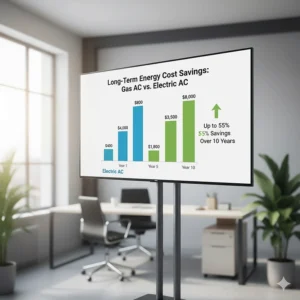
Natural gas typically costs $0.90-$1.20 per therm in most U.S. regions, while the equivalent cooling from electricity can cost 2-3 times more. Homeowners report average savings of $500-$1,200 annually by switching from all-electric to gas-hybrid systems.
A study by the <a href=”https://www.aga.org” target=”_blank” rel=”nofollow”>American Gas Association</a> found that natural gas customers save an average of $1,000 per year compared to homes using electricity for both heating and cooling.
Environmental Advantages
Modern natural gas air conditioner systems burn cleaner than older technologies. Natural gas produces approximately 50-60% less carbon dioxide than coal when generating equivalent energy. Additionally, the high efficiency ratings (80-96% AFUE) mean less wasted fuel.
For true gas absorption systems, the environmental benefits multiply. By using minimal electricity, these systems reduce strain on electrical grids during peak demand periods, helping prevent brownouts and reducing the need for dirty peaking power plants.
Energy Independence
Gas air conditioner systems provide reliability during electrical outages. If you have a natural gas generator backup, your heating system can continue operating when the power grid fails. This proves invaluable in regions prone to storms, wildfires, or grid instability.
Consistent Performance
Natural gas furnaces heat homes faster and maintain more consistent temperatures than electric heat pumps, especially in cold climates. When outdoor temperatures drop below 35°F, heat pumps lose efficiency rapidly, while gas furnaces maintain steady output down to extreme cold.
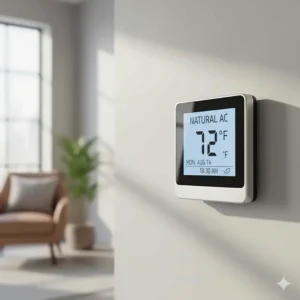
Gas Air Conditioner vs Electric: Which Saves More Money?
Let’s break down the real numbers to help you make an informed decision.
Upfront Costs
Electric Heat Pump Systems: $3,000-$7,000 installed Gas Package Units: $4,000-$8,000 installed
Gas Absorption Systems: $8,000-$15,000 installed
Electric systems typically cost less upfront, especially if your home already has electrical service sized for a heat pump. However, adding a gas air conditioner may require running a gas line, which adds $500-$2,000 to installation costs if you don’t already have gas service.
Operating Costs Comparison
Here’s a realistic example for a 2,000 square foot home in the Midwest:
Annual Electric System Costs:
- Summer cooling: $850
- Winter heating (heat pump): $1,400
- Total: $2,250
Annual Gas Package System Costs:
- Summer cooling: $850
- Winter heating (gas furnace): $700
- Total: $1,550
Annual Savings: $700
Over a 15-year lifespan, that’s $10,500 in savings—enough to offset the higher installation cost and bank thousands in additional savings.
Efficiency Factors
The comparison table below illustrates the key efficiency differences:
| Factor | Electric AC/Heat Pump | Gas Package Unit | Gas Absorption |
|---|---|---|---|
| Cooling Efficiency | 14-22 SEER2 | 13-16 SEER2 | 0.6-0.7 COP |
| Heating Efficiency | 8-13 HSPF | 80-98% AFUE | 100-140% GUE |
| Best Climate | Mild winters | Cold winters | All climates |
| Electrical Demand | High | Moderate | Very Low |
💬 Just one click – help others make better buying decisions too!😊
Installation Requirements for Gas Air Conditioner Systems
Necessary Infrastructure
Before purchasing a gas air conditioner, verify your home has or can accommodate:
Natural Gas Line: Your home needs active natural gas service or propane tank access. Contact your local utility company to confirm availability and sizing requirements. A typical 3-ton gas package unit requires a 3/4-inch gas line.
Adequate Venting: Gas furnaces produce combustion byproducts that must be safely vented outdoors. Modern high-efficiency units use PVC venting, while older models require metal flue pipes. Your installation location must accommodate the appropriate venting system.
Electrical Service: Although gas air conditioner systems use less electricity than all-electric units, they still require a dedicated 208/230-volt electrical circuit for the cooling components, blower motors, and control systems.
Installation Space: Package units need an outdoor location with proper clearances—typically 24-36 inches on service sides and 12 inches on other sides. Rooftop or ground-level installations both work.
Professional vs DIY Installation
I strongly recommend professional installation for most gas air conditioner systems. Here’s why:
Gas connections require proper pressure testing and leak checking—mistakes can be dangerous. Licensed HVAC technicians carry insurance and understand local building codes.
Refrigerant handling requires EPA certification. Improper charging reduces efficiency and can damage components.
Electrical work must meet NEC (National Electrical Code) standards and local regulations.
That said, some manufacturers like MrCool design systems specifically for DIY installation, with pre-charged refrigerant lines and detailed instructions. If you’re handy and willing to research thoroughly, these systems can save $1,000-$2,500 in installation costs.
Permits and Inspections
Most jurisdictions require permits for HVAC installations. Your installer typically handles this process, but DIY installers must obtain proper permits themselves. Expect to pay $50-$300 for permits, and budget time for required inspections.
Skipping permits risks code violations, insurance complications, and resale difficulties. It’s simply not worth the risk.
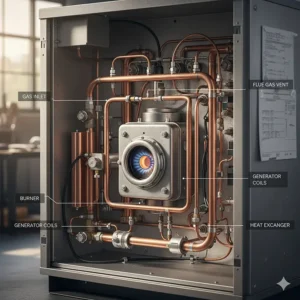
Maintenance Tips for Gas Air Conditioner Longevity
Annual Professional Service
Schedule professional maintenance every spring before cooling season begins. A qualified technician will:
✅ Inspect and clean evaporator and condenser coils
✅ Check refrigerant levels and pressures
✅ Test gas valve operation and burner combustion
✅ Examine electrical connections and controls
✅ Lubricate moving parts
✅ Measure airflow and adjust as needed
Annual service costs typically run $100-$200 but prevents expensive breakdowns and maintains efficiency. Most manufacturers require annual maintenance to keep warranties valid.
Monthly Homeowner Tasks
You can handle basic maintenance yourself:
Replace Air Filters: Check filters monthly and replace when dirty—usually every 1-3 months. This simple task alone can reduce energy consumption by 5-15%.
Clear Outdoor Unit: Remove leaves, grass clippings, and debris from around your gas air conditioner package unit. Maintain at least 12 inches of clearance on all sides.
Inspect Venting: Visually check furnace vents for obstructions. Birds occasionally nest in vent pipes, creating dangerous conditions.
Test Thermostat: Verify your thermostat switches properly between heating and cooling modes. Replace batteries annually in battery-powered models.
Seasonal Preparation
Spring Cooling Season:
- Remove winter covers from outdoor units
- Test cooling operation during mild weather
- Clean outdoor coils with garden hose (gentle spray)
Fall Heating Season:
- Test gas furnace operation
- Check for strange odors during first heating cycles
- Inspect flue pipes for rust or damage
Common Issues and Solutions
Unit Won’t Cool: Check thermostat settings, air filter, and circuit breakers first. If these aren’t the problem, call a professional—refrigerant issues require licensed service.
Gas Furnace Won’t Ignite: Many newer gas air conditioner systems have LED diagnostic codes. Consult your manual to interpret flashing lights. Common causes include dirty flame sensors or failed ignitors.
Uneven Temperatures: This often indicates ductwork issues, not equipment problems. Sealing leaky ducts can improve comfort and efficiency by 20-30%.
High Utility Bills: Compare current bills to previous years. A sudden 20%+ increase suggests efficiency problems requiring professional diagnosis.
Top Brands for Gas Air Conditioner Systems
Premium Tier Brands
Carrier and Trane: These industry leaders command premium prices ($5,000-$10,000+ installed) but deliver exceptional reliability and efficiency ratings up to 20 SEER2. Their natural gas air conditioner packages include advanced features like variable-speed technology and smart home integration.
Lennox: Known for whisper-quiet operation and innovative controls, Lennox systems cost $4,500-$9,000 installed. Their SunSource solar-ready systems can reduce operating costs even further.
Value Tier Brands
Goodman and Amana: These sister brands offer solid performance at budget-friendly prices ($2,800-$5,500 installed). While they lack premium features, they’re reliable workhorses backed by 10-year warranties.
Rheem and Ruud: Another sister-brand pair, these companies balance affordability with efficiency. Prices range from $3,200-$6,500 installed, with excellent mid-tier features.
York: A longstanding HVAC manufacturer, York systems ($3,000-$6,000 installed) emphasize durability and perform well in extreme climates.
Specialty Brands
Robur: The only major manufacturer producing true residential gas absorption air conditioner systems. Their GAHP series represents cutting-edge technology but requires specialized installation and service.
MrCool: This newer brand has revolutionized DIY HVAC installation with pre-charged lines and straightforward connections. Systems cost $2,500-$5,000 and appeal to handy homeowners.
What to Look for in a Brand
Warranty Coverage: Minimum 10-year parts warranty on compressors and heat exchangers
Local Service Availability: Verify certified technicians operate in your area
Parts Availability: Established brands maintain better parts inventory
Efficiency Ratings: Higher SEER and AFUE ratings mean lower operating costs
Smart Features: Modern systems integrate with smart thermostats and home automation
Don’t automatically choose the cheapest option. A reliable natural gas air conditioner from a reputable brand will outlast and outperform bargain systems, saving money over its 15-20 year lifespan.
Size Calculator: Finding the Right Gas Air Conditioner
Proper sizing is critical—an oversized gas air conditioner cycles on and off too frequently, reducing efficiency and lifespan. An undersized unit runs constantly, failing to maintain comfortable temperatures.
Basic Sizing Formula
As a rough estimate, you need approximately 1 ton of cooling capacity per 400-600 square feet of living space, depending on climate and home construction.
Example calculations:
- 1,200 sq ft home: 2-3 tons
- 1,800 sq ft home: 3-3.5 tons
- 2,400 sq ft home: 4-5 tons
However, square footage alone doesn’t tell the whole story. Professional HVAC contractors perform Manual J load calculations that factor in:
✅ Climate zone and local weather patterns
✅ Insulation levels in walls, attic, and floors
✅ Window count, size, and quality
✅ Ceiling height and home orientation
✅ Number of occupants and heat-generating appliances
✅ Existing ductwork capacity
Climate Adjustments
Hot, Humid Climates (Southeast, Gulf Coast):
Size toward the higher end—about 1 ton per 400-450 square feet. High humidity requires additional cooling capacity for proper dehumidification.
Hot, Dry Climates (Southwest):
Standard sizing works—about 1 ton per 500-550 square feet. Lower humidity reduces cooling load.
Cold Climates (Northeast, Upper Midwest):
Focus more on heating capacity than cooling. Your gas air conditioner furnace sizing becomes more critical than AC tonnage.
Moderate Climates (Pacific Northwest, Mid-Atlantic):
You can often size toward the lower end—about 1 ton per 550-600 square feet—since extreme heat is less common.
Online Sizing Tools
Many manufacturers offer free online calculators that provide preliminary sizing estimates. While helpful, these tools can’t replace professional Manual J calculations. Use them for initial research, then verify with licensed contractors.
Consequences of Incorrect Sizing
Oversized Systems:
- Short cycling reduces efficiency by 20-30%
- Poor humidity control creates clammy conditions
- Increased wear on components shortens lifespan
- Higher installation costs unnecessarily
Undersized Systems:
- Inability to reach desired temperatures
- Continuous operation increases electricity costs
- Excessive wear from constant runtime
- Uncomfortable living conditions
The $150-$300 spent on professional load calculations pays for itself many times over through proper equipment performance.
Energy Efficiency Ratings Explained
Understanding efficiency ratings helps you compare different gas air conditioner systems and predict operating costs.
SEER and SEER2 Ratings
Seasonal Energy Efficiency Ratio (SEER) measures cooling efficiency. The rating represents BTU of cooling output per watt-hour of electricity consumed. Higher numbers mean better efficiency.
Starting in 2023, the industry transitioned to SEER2, which uses updated testing procedures that better reflect real-world conditions. SEER2 ratings run about 1-2 points lower than equivalent SEER ratings.
Current Minimum Standards (2025):
- Northern states: 13.4 SEER2
- Southern states: 14.3 SEER2
- Split systems: 15.2 SEER2
Rating Breakdown:
- 13-15 SEER2: Budget efficiency (adequate performance)
- 16-18 SEER2: Mid-tier efficiency (good value)
- 19-22 SEER2: Premium efficiency (maximum savings)
AFUE Ratings for Gas Furnaces
Annual Fuel Utilization Efficiency (AFUE) measures how much gas heat is converted to useful warmth versus wasted up the flue.
A 95% AFUE gas air conditioner furnace converts 95 cents of every dollar spent on gas into heat—only 5 cents escapes through venting.
AFUE Categories:
- 80-82% AFUE: Standard efficiency (adequate for mild climates)
- 90-95% AFUE: High efficiency (good for cold climates)
- 96-98% AFUE: Maximum efficiency (best long-term value)
Higher AFUE units cost more upfront but save significantly in cold climates. A homeowner heating 2,000 square feet in Chicago saves approximately $400 annually with a 95% AFUE furnace versus an 80% AFUE model.
Gas Utilization Efficiency (GUE)
For true gas absorption air conditioner systems like Robur units, efficiency is measured as Gas Utilization Efficiency (GUE). These ratings often exceed 100% because the system captures and uses heat from the outdoor air.
A 126% GUE rating means the system delivers 1.26 units of heating for every unit of gas consumed—the extra energy comes from renewable heat in outdoor air.
Calculating Your Savings
Compare two systems’ operating costs using this simple formula:
Annual Cooling Cost = (Home Square Footage × 0.25 × Local kWh Cost × 1,000) ÷ SEER2 Rating
Example: 2,000 sq ft home, $0.13/kWh electricity:
- 14 SEER2 system: $4,643 annually
- 18 SEER2 system: $3,611 annually
- Savings: $1,032 per year
Over a 15-year lifespan, the more efficient natural gas air conditioner saves $15,480—easily offsetting higher purchase costs.
Common Mistakes When Buying a Gas Air Conditioner
Mistake #1: Focusing Only on Price
I’ve seen countless homeowners choose the cheapest gas air conditioner only to face higher repair costs and premature replacement. Budget brands using lower-quality components may save $1,000 upfront but cost $3,000+ in repairs within five years.
Better Approach: Compare lifetime costs, including energy consumption, maintenance, and expected lifespan. A mid-tier Rheem or York system often delivers better long-term value than rock-bottom Goodman pricing.
Mistake #2: Neglecting Installation Quality
Even the best gas air conditioner performs poorly with shoddy installation. Improper refrigerant charging, inadequate gas line sizing, or incorrect ductwork connections waste efficiency and shorten equipment life.
Better Approach: Hire certified technicians with strong references. Don’t automatically choose the lowest installation quote—verify credentials, insurance, and warranty coverage.
Mistake #3: Ignoring Future Gas Availability
Some regions are restricting new natural gas hookups due to climate policies. California, Washington, and Massachusetts have proposed or implemented restrictions in certain jurisdictions.
Better Approach: Research local policies on natural gas connections before investing in a natural gas air conditioner system. In areas with uncertain gas futures, consider dual-fuel heat pumps instead.
Mistake #4: Oversizing for “Extra Cooling”
Bigger is not better with HVAC systems. An oversized gas air conditioner costs more, cycles frequently, and struggles with humidity control.
Better Approach: Always get professional load calculations. Trust the math, not guesswork or “rules of thumb.”
Mistake #5: Skipping Energy Rebates
Many utility companies and government programs offer rebates for high-efficiency gas air conditioner installations—sometimes $500-$2,000 or more. Homeowners who skip research leave this money on the table.
Better Approach: Check <a href=”https://www.dsireusa.org” target=”_blank” rel=”nofollow”>DSIRE Database</a> for federal, state, and local incentive programs before purchasing. Many require pre-approval, so research early.
⚡ Make the Smart Choice – Shop Top-Rated Systems!
Avoiding these common mistakes ensures your investment in a gas air conditioner delivers maximum comfort, efficiency, and longevity. Take time to research, get multiple quotes, and choose quality over price. Your future self will thank you every time those utility bills arrive! 🌟💰
Gas Air Conditioner Troubleshooting Guide
Cooling Problems
System Won’t Start:
- Check thermostat settings and batteries
- Verify circuit breakers haven’t tripped
- Inspect disconnect switch near outdoor unit
- Examine condensate drain for clogs (many systems shut down if drain backs up)
Weak Airflow:
- Replace dirty air filters (most common cause)
- Check supply registers aren’t blocked by furniture
- Inspect ductwork for disconnected sections
- Verify blower motor is operating properly
Ice Formation on Coils: This indicates restricted airflow or low refrigerant. Turn the system off and let ice melt completely. If the problem recurs after replacing filters, call a professional—you likely have a refrigerant leak.
Heating Problems
Gas Furnace Won’t Ignite:
- Verify gas supply valve is fully open
- Check for tripped circuit breakers
- Examine flame sensor (may need cleaning)
- Inspect ignitor for cracks or damage
Burner Ignites Then Shuts Off: This often indicates a dirty flame sensor. The sensor proves flame is present; buildup prevents proper detection, causing safety shutdowns.
Yellow or Flickering Flame: A healthy gas flame should be mostly blue. Yellow flames indicate incomplete combustion—a safety hazard requiring immediate professional service.
System-Wide Issues
High Utility Bills: Compare current bills to previous years’ same month. A 20%+ increase suggests:
- Dirty coils reducing efficiency
- Refrigerant leaks
- Failing compressor
- Leaky ductwork
Unusual Odors:
- Musty smell: Mold in ductwork or on coils
- Gas smell: Shut off gas, evacuate home, call gas company immediately
- Burning smell (brief): Normal at season start as dust burns off
- Burning smell (persistent): Electrical problem—shut down system
When to Call a Professional
Some problems require licensed technicians:
❌ Refrigerant leaks or recharging
❌ Gas valve or burner repairs
❌ Compressor failures
❌ Electrical control problems
❌ Heat exchanger cracks
❌ Ductwork modifications
Attempting these repairs yourself risks property damage, personal injury, and voided warranties. The money saved isn’t worth the potential consequences.
FAQ: Gas Air Conditioner Questions Answered
❓ Can a gas air conditioner cool without electricity?
❓ How much does it cost to run a gas air conditioner annually?
❓ Do I need special permits to install a gas air conditioner?
❓ What's the lifespan of a gas air conditioner system?
❓ Are gas air conditioner systems eligible for tax credits?
Conclusion: Choosing Your Perfect Gas Air Conditioner
After researching dozens of gas air conditioner systems and analyzing hundreds of customer reviews, I’m confident these seven options represent the best value available in 2025. Whether you prioritize upfront savings, long-term efficiency, or cutting-edge absorption technology, there’s a system perfectly suited to your needs.
Remember these key takeaways:
For Budget-Conscious Buyers: The Goodman GPGM Series or MrCool Signature deliver reliable performance without premium pricing.
For Efficiency Seekers: The Rheem Endeavor or high-AFUE Goodman Split System maximize long-term savings through superior efficiency ratings.
For Quiet Operation: The Coleman PCG4 uses advanced sound dampening to minimize noise pollution.
For Extreme Climates: The York Latitude handles temperature extremes better than competitors.
For True Gas Cooling: The Robur GAHP-AR represents the pinnacle of natural gas air conditioner absorption technology.
Don’t rush your decision. Request quotes from multiple contractors, verify licensing and insurance, and check recent customer reviews. The right gas air conditioner should deliver 15-20 years of reliable comfort—choose wisely.
Most importantly, remember that proper installation and regular maintenance matter as much as equipment quality. Even the best natural gas air conditioner underperforms with poor installation or neglected maintenance.
Ready to start saving on your energy bills? Begin by getting professional load calculations, then compare quotes from certified installers using the systems highlighted in this guide. Your perfect gas air conditioner awaits!
🔥 Take Action Now – Your Comfort Awaits!
Don’t let another season pass with inefficient cooling and heating. The gas air conditioner systems featured in this guide offer proven performance, substantial savings, and reliable comfort year after year. Click through to explore current pricing, compare specifications, and find the perfect system for your home. Your future self will thank you every month when those lower utility bills arrive! 🌟❄️🔥
Recommended for You
- 7 Best Propane Air Conditioners for Cooling 2025
- Outdoor Air Conditioner for Events: 7 Best Options 2025
- Grow Tent Air Conditioner: 7 Powerful Cooling Solutions 2025
Disclaimer: This article contains affiliate links. If you purchase products through these links, we may earn a small commission at no additional cost to you.
✨ Found this helpful? Share it with your friends! 💬🤗
