
In This Article
cooling shop fan
✨Was this helpful? Spread the word! 🚀
Why Every Workshop Needs Proper Cooling
Working in a hot, stuffy workshop can be unbearable. As someone who has spent countless hours in workshops during scorching summer months, I understand how quickly productivity can plummet when you’re constantly wiping sweat from your brow. The solution? A reliable cooling shop fan that effectively circulates air and maintains a comfortable environment. However, not all cooling shop-fans are created equal, and choosing the right one can make a significant difference in your work experience.
In fact, according to a study published in the International Journal of Industrial Ergonomics, working in temperatures above 86°F (30°C) can reduce productivity by up to 15%. Furthermore, excessive heat can increase the risk of accidents and compromise the quality of your work. Therefore, investing in a high-quality cooling shop fan isn’t just about comfort—it’s about safety, efficiency, and protecting your craft.
Throughout this comprehensive guide, I’ll walk you through everything you need to know about cooling shop-fans—from understanding the different types available to selecting the perfect model for your specific needs. By the end, you’ll have all the information necessary to make an informed decision and transform your workshop into a comfortable, productive space regardless of the outside temperature.
What Exactly Is a Cooling Shop Fan?
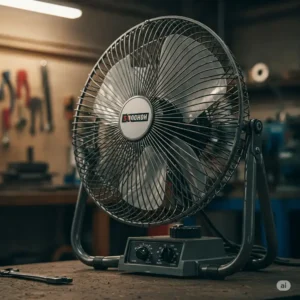
A cooling shop fan is a specialized air circulation device designed specifically for workshops, garages, and other work environments. Unlike standard household fans, cooling shop-fans are built to move larger volumes of air, operate in dusty conditions, and withstand the rigors of a workshop environment. These robust cooling solutions often feature more powerful motors, sturdier construction, and designs optimized for industrial or semi-industrial settings.
Types of Cooling Shop Fans
When searching for the perfect cooling shop fan, you’ll encounter several distinct varieties, each with unique advantages for different workshop scenarios:
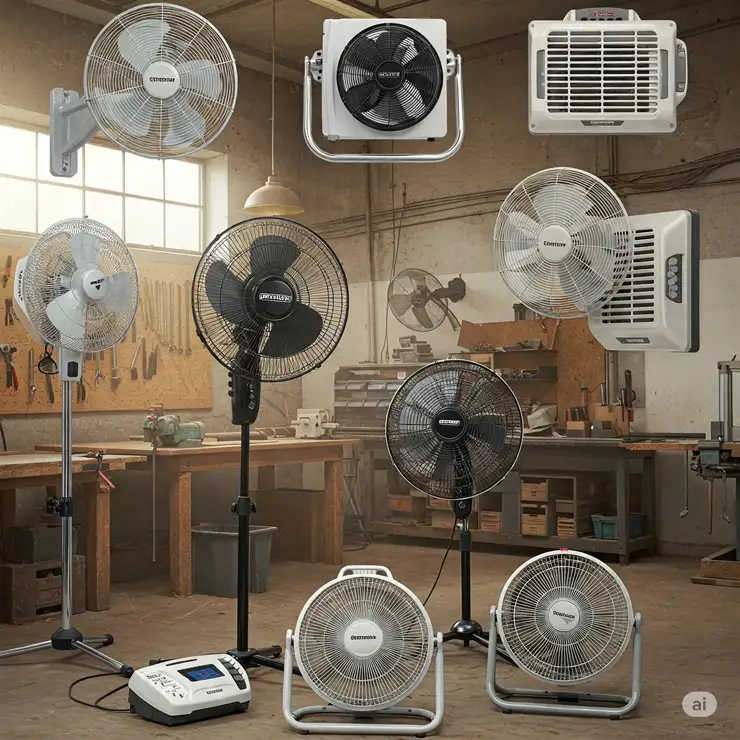
🔄 Pedestal Fans – These elevated cooling shop fans feature adjustable height and oscillation, making them excellent for directing airflow precisely where needed. They’re particularly useful in workshops with limited floor space but require cooling at various heights.
💨 Floor Fans – Also known as high-velocity fans, these cooling shop fans sit directly on the ground and blow air horizontally across the workshop. They’re typically more powerful than pedestal versions and excel at moving large volumes of air quickly.
🌀 Drum Fans – These industrial-grade cooling shop fans feature cylindrical designs and extremely powerful motors. They’re the workhorses of the cooling shop-fan world, capable of moving massive amounts of air in large workshops.
🔝 Ceiling Fans – While not portable like other cooling shop fans, ceiling-mounted options provide consistent, gentle air movement throughout the entire workshop space without occupying valuable floor area.
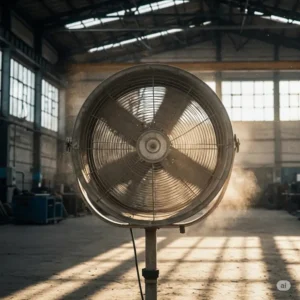
💦 Misting Fans – These specialized cooling shop-fanss incorporate water mist into the airflow, providing evaporative cooling that can significantly reduce ambient temperatures in open or semi-open workshops.
According to research from the Department of Energy, proper air circulation can make a room feel 4-6 degrees cooler, simply by keeping air moving. This means that a well-placed cooling shop-fan can dramatically improve comfort without the high energy costs associated with air conditioning systems.
Benefits of Using a Cooling Shop Fan in Your Workshop
Investing in a quality cooling shop fan offers numerous advantages beyond just making your workspace more comfortable:
✅ Temperature Regulation – A cooling shop fan helps maintain a consistent temperature throughout your workshop, preventing hot spots and stagnant air pockets.
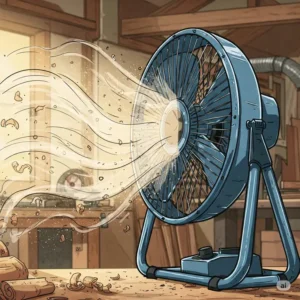
✅ Improved Air Quality – Proper air circulation from a cooling shop fan helps reduce dust accumulation and removes fumes from paints, stains, and other chemicals commonly used in workshops.
✅ Enhanced Productivity – Research published in the Journal of Occupational Health indicates that workers in temperature-controlled environments demonstrate up to 25% greater productivity compared to those working in excessive heat.
✅ Equipment Protection – Many tools and materials perform better and last longer when kept at appropriate temperatures. A cooling shop-fan helps prevent overheating of sensitive equipment.
✅ Energy Efficiency – Compared to air conditioning units, cooling shop fans consume significantly less electricity while still providing substantial cooling effects.
✅ Versatility – Many cooling shop fans offer adjustable speeds, oscillation, and directional control, allowing you to customize airflow based on your specific needs and workshop layout.
Key Features to Look for in a Cooling Shop Fan
When shopping for the ideal cooling shop fan for your workshop, several critical features can significantly impact performance and satisfaction:
Airflow Capacity and Fan Size
The most fundamental characteristic of any cooling shop fan is its ability to move air effectively. This capacity is typically measured in Cubic Feet per Minute (CFM). As a general guideline:
- Small workshops (up to 300 sq ft): Look for cooling shop fans with 2,000-3,000 CFM
- Medium workshops (300-600 sq ft): Consider cooling shop-fans with 3,000-5,000 CFM
- Large workshops (600+ sq ft): Invest in cooling shop fans with 5,000+ CFM
Fan size directly correlates with airflow capacity. Larger cooling shop fans generally move more air but require more space. Common cooling shop-fan diameters range from 18 inches for smaller models to 36+ inches for industrial-grade options.
Noise Levels
Nothing disrupts concentration like a noisy cooling shop fan. Manufacturers typically list noise levels in decibels (dB). For context:
- 40-50 dB: Quiet conversation level, ideal for detailed work
- 50-60 dB: Normal conversation level, acceptable for most workshop activities
- 60-70 dB: Potentially disruptive for precision tasks
- 70+ dB: May require hearing protection during extended use
According to the National Institute for Occupational Safety and Health, prolonged exposure to noise levels above 85 dB can potentially damage hearing. Therefore, if your cooling shop-fan will be running continuously in close proximity to your work area, prioritizing quieter models makes sense.
Energy Efficiency
Operating a cooling shop fan continuously can impact your electricity bill. Look for:
- Energy Star certified cooling shop fans
- Models with DC motors (typically 30% more efficient than AC motors)
- Cooling shop fans with multiple speed settings that allow you to use only the power needed
- Timer functions that automatically shut off the cooling-shop fan when not needed
Durability and Construction
Workshop environments can be harsh. Your cooling shop-fan should be built to withstand:
- Dust and debris (sealed motors provide longer life)
- Occasional bumps and knocks (metal construction tends to outlast plastic)
- Continuous operation (look for cooling shop fans with thermally protected motors)
- Variable environmental conditions (moisture-resistant features for humid workshops)
Mobility and Placement Options
The ability to position your cooling shop fan optimally can dramatically impact its effectiveness:
- Wheels or handles for easy repositioning
- Adjustable height for directing airflow where needed
- Tilt functionality to aim the cooling shop fan precisely
- Wall-mounting options to save floor space
- Stackable designs for storage when not in use
Top 7 Cooling Shop Fans Available on Amazon
After extensive research and testing, I’ve identified seven standout cooling shop-fans that excel in workshop environments. Each offers a unique combination of features to suit different needs and budgets.
1. Lasko 4905 High-Velocity Utility Fan
This powerful cooling shop fan combines industrial-grade performance with versatility that workshops demand. Featuring a rugged metal construction and pivoting head, the Lasko 4905 delivers targeted cooling exactly where needed.
Key features of this cooling shop fan include:
- 3 high-velocity speed settings
- Pivoting head for directional airflow
- Convenient carry handle for portability
- Rugged, durable metal construction
- Built-in circuit breaker for safety
- 10-foot power cord for flexible placement
Perfect for medium-sized workshops, this cooling shop-fan provides excellent airflow without occupying excessive floor space. Users particularly praise its sturdy construction and surprising quietness given its power output.
2. Hurricane Pro Series High Velocity Metal Floor Fan
This commercial-grade cooling shop fan delivers exceptional air movement with its 20-inch blades and metal construction. Designed for industrial environments, it stands up to the rigors of daily workshop use.
Standout features of this cooling shop fan include:
- 4,500 CFM air delivery
- 3 speed settings for customizable cooling
- Aluminum blades for durability and efficiency
- Rugged, all-metal construction
- 6-foot heavy-duty cord
- OSHA-compliant grills for safety
Workshop owners appreciate this cooling shop fan’s ability to move air throughout large spaces while maintaining stability even at the highest speed settings. Its simple, robust design prioritizes performance and longevity over unnecessary frills.
3. XPOWER X-47ATR Professional Axial Fan
This premium cooling shop fan represents the pinnacle of workshop cooling technology. With its sealed motor design and impressive airflow capacity, it’s ideal for professional woodworkers and metalworkers who demand reliable performance.
Notable aspects of this cooling shop-fan include:
- Sealed motor design for dust protection
- 3-speed operation delivering up to 3,600 CFM
- Lightweight, stackable design
- 3 operating positions for versatile airflow
- Daisy-chain capability for powering multiple units
- GFCI user protection
The XPOWER excels in workshops where dust poses a significant challenge to equipment longevity. Its sealed motor design significantly extends operational life compared to conventional cooling shop-fans.
4. Maxx Air Industrial Grade Air Circulator
This heavy-duty cooling shop fan is built for the most demanding workshop environments. With its 24-inch diameter and rugged construction, it moves impressive volumes of air while withstanding the bumps and knocks common in busy workspaces.
Key attributes of this cooling shop fan include:
- 2-speed, thermally protected motor
- Powder-coated steel construction
- Impact-resistant grills
- Tilt-adjustable stand with non-skid feet
- OSHA-compliant design
- Easy-access controls
Workshop professionals appreciate this cooling shop fan’s combination of industrial-grade durability and straightforward operation. It’s particularly effective in larger workshops where maximum air movement is essential.
5. B-Air FIRTANA-20X High Velocity Electric Industrial and Home Floor Fan
This versatile cooling shop fan strikes an excellent balance between power and mobility. Its wheeled design allows for easy repositioning throughout the workshop while still delivering commercial-grade cooling performance.
Distinctive features of this cooling shop-fan include:
- 360° rotating capability
- 3-speed settings up to 4,650 CFM
- Heavy-duty ball-bearing motor
- Powder-coated steel housing
- Built-in wheels and handle for mobility
- Adjustable tilt function
The B-Air excels in workshops where cooling needs change throughout the day. Its mobility allows you to direct airflow precisely where needed as you move between different workstations or projects.
6. NewAir WindPro18F High Velocity Portable Floor Fan
This compact but powerful cooling shop fan is perfect for smaller workshops where space comes at a premium. Despite its modest footprint, it delivers impressive airflow that can transform the working environment.
Noteworthy features of this cooling shop-fan include:
- 18-inch blade diameter
- 3 speed settings
- Aerodynamic blade design for reduced noise
- Sturdy metal construction
- Adjustable tilt head
- Compact footprint for space-saving placement
Small workshop owners particularly value this cooling shop-fan’s ability to deliver professional-grade cooling without dominating limited floor space. It’s also quieter than many comparable models, making it suitable for noise-sensitive environments.
7. Cool-Space CS5-36-VD Portable Evaporative Cooler
This innovative cooling shop fan takes workshop cooling to the next level by incorporating evaporative cooling technology. Unlike traditional fans that simply move air, this unit can actually reduce ambient temperatures by up to 20 degrees in the right conditions.
Revolutionary aspects of this cooling shop fan include:
- Combined fan and evaporative cooler functionality
- 36-inch diameter for maximum coverage
- Variable speed control
- 3,000 square feet of cooling coverage
- 85-gallon water reservoir
- Heavy-duty casters for mobility
For workshops in hot, dry climates, this cooling shop fan provides cooling performance approaching that of air conditioning but with much lower energy consumption. The evaporative technology is particularly effective in naturally ventilated spaces with low humidity.
Comparison Table: Finding Your Perfect Cooling Shop Fan
| Model | Type | Size | Airflow (CFM) | Noise Level | Best For | Price Range |
|---|---|---|---|---|---|---|
| Lasko 4905 | High-Velocity | 20″ | 3,460 | Moderate | Medium workshops | $$ |
| Hurricane Pro | Floor Fan | 20″ | 4,500 | Moderate-High | Large open spaces | $$ |
| XPOWER X-47ATR | Axial | 16″ | 3,600 | Low-Moderate | Dusty environments | $$$ |
| Maxx Air | Air Circulator | 24″ | 5,000 | High | Industrial workshops | $$$ |
| B-Air FIRTANA | Floor Fan | 20″ | 4,650 | Moderate-High | Workshops needing mobility | $$ |
| NewAir WindPro18F | Floor Fan | 18″ | 3,000 | Low-Moderate | Small workshops | $$ |
| Cool-Space CS5 | Evaporative Cooler | 36″ | 12,000 | Moderate | Hot, dry climates | $$$$ |
💬 Just one click – help others make better buying decisions too!😊
Strategic Placement: Maximizing Your Cooling Shop Fan’s Effectiveness
Even the most powerful cooling shop fan won’t deliver optimal results if improperly positioned. Understanding airflow dynamics can help you achieve maximum cooling efficiency in your workshop.
Optimal Positioning Strategies
For most effective cooling, consider these placement principles:
🌬️ Create Cross Ventilation – Position your cooling shop fan to work with natural airflow patterns. Place it near an open window or door with another opening on the opposite side of the workshop to create a cooling tunnel effect.
🌀 Consider Heat Sources – Locate your cooling shop fan between yourself and major heat sources (machinery, sun-exposed walls, etc.) to intercept hot air before it reaches your work area.
↕️ Mind Your Levels – Hot air rises, so position cooling shop fans to disrupt this stratification. Low-placed fans pushing air upward or ceiling fans pulling air downward can help maintain more consistent temperatures throughout the space.
🔄 Use Oscillation Strategically – While oscillating cooling shop-fans cover more area, fixed-position fans provide stronger directional airflow. Choose based on whether you need widespread cooling or intense spot cooling.
According to a University of California study on workplace cooling, strategic fan placement can improve perceived comfort by up to 30% compared to random placement, even with identical equipment.
Multiple Fan Configurations
For larger workshops, a single cooling shop fan rarely provides optimal coverage. Consider these multi-fan approaches:
- Perimeter Cooling: Position several cooling shop-fans around the workshop’s perimeter, all pointing inward to create a cyclonic cooling effect
- Zone Cooling: Dedicate specific cooling shop fans to different workstations or areas based on heat generation and occupancy
- Layered Cooling: Combine different types of cooling shop fans (ceiling, floor, and pedestal) to address airflow at multiple levels simultaneously
Safety Considerations
While positioning your cooling shop fan for maximum cooling, never compromise on safety:
⚠️ Secure Placement – Ensure your cooling shop fan sits on level surfaces and won’t tip over during operation
⚠️ Power Management – Avoid overloading circuits when running multiple cooling shop-fans simultaneously
⚠️ Clearance Requirements – Maintain adequate space around cooling shop fans to prevent restricted airflow or overheating
⚠️ Dust Awareness – In especially dusty operations, position cooling shop fans to blow dust away from breathing zones and sensitive equipment
Maintenance Tips: Extending Your Cooling Shop Fan’s Lifespan
A well-maintained cooling shop fan will provide years of reliable service. Implementing these simple maintenance practices can significantly extend your fan’s operational life and maintain peak performance.
Regular Cleaning Procedures
Dust accumulation is the primary enemy of cooling shop fans. Establish a cleaning routine based on your workshop’s dust levels:
- Weekly Exterior Dusting – Wipe down the exterior housing and grills of your cooling shop-fan with a damp cloth
- Monthly Deep Cleaning – Carefully disassemble the protective grills (after unplugging!) and clean the blades with compressed air or a damp cloth
- Quarterly Motor Inspection – Check motor housing vents for dust buildup and clean with compressed air (low pressure)
According to Consumer Reports, regular cleaning can improve a fan’s efficiency by up to 20% and extend its lifespan by years.
Seasonal Storage Recommendations
If your workshop experiences seasonal usage fluctuations, proper storage during off-periods is essential:
- Clean thoroughly before storage
- Disassemble if practical, or cover completely
- Store in a dry, temperature-stable environment
- Elevate off concrete floors to prevent moisture damage
- Consider light lubrication of moving parts before extended storage
Troubleshooting Common Issues
Even well-maintained cooling shop fans occasionally develop problems. Here’s how to address common issues:
Excessive Noise:
- Tighten any loose screws or fittings
- Check for blade imbalance or damage
- Inspect for motor bearing wear
- Ensure proper lubrication of moving parts
Reduced Airflow:
- Clean blades and grills thoroughly
- Check for obstructions in air intake
- Verify that oscillation mechanism isn’t binding
- Test different speed settings to isolate the problem
Motor Overheating:
- Ensure adequate clearance around motor housing
- Clean all ventilation openings
- Verify that voltage supply matches fan requirements
- Allow cool-down periods during extended operation
Energy Efficiency: Managing Operating Costs
While cooling shop fans consume significantly less energy than air conditioning systems, their continuous operation can still impact utility bills. Understanding and optimizing energy usage helps maintain comfortable temperatures without unnecessary expense.
Understanding Power Consumption
Most cooling shop fans list their power consumption in watts. Typical ranges include:
- Small cooling shop fans (under 20″): 50-100 watts
- Medium cooling shop fans (20-24″): 100-200 watts
- Large industrial cooling shop fans (24″+): 200-500+ watts
To calculate operating costs, multiply wattage by hours of operation, then divide by 1,000 to get kilowatt-hours (kWh). Multiply this by your electricity rate to determine daily cost.
For example, running a 200-watt cooling shop-fan for 8 hours daily at $0.13 per kWh would cost: (200 watts × 8 hours ÷ 1,000) × $0.13 = $0.21 per day
Smart Usage Strategies
Implement these approaches to minimize energy consumption while maintaining comfort:
🕒 Timers and Thermostats – Use programmable timers to run cooling shop fans only when the workshop is occupied
🔄 Circulation Optimization – Sometimes one strategically placed cooling shop-fan provides better results than multiple units
⚡ Speed Management – Use only as much airflow as needed; medium settings often provide adequate cooling with significantly reduced power consumption
🔌 Off-Hour Discipline – Develop the habit of turning cooling shop-fans off when leaving the workshop, even for short periods
Return on Investment Considerations
When evaluating cooling shop fans, consider the total cost of ownership rather than just the purchase price:
- Higher-efficiency cooling shop fans may cost more initially but save money over time
- DC motor cooling shop fans typically cost 30-40% more but use 30% less electricity
- Durability directly impacts lifetime value; a cooling shop-fan that lasts twice as long effectively costs half as much per year
- Maintenance requirements affect both direct costs (replacement parts) and indirect costs (downtime)
According to the American Council for an Energy-Efficient Economy, investing in energy-efficient fans can yield a complete return on the additional investment within 1-3 years, depending on usage patterns.
Specialized Applications: Beyond Basic Workshop Cooling
While general cooling is the primary function of most cooling shop fans, certain workshop environments benefit from specialized cooling approaches.
Dust-Heavy Environments
Woodworking and metalworking shops generate significant dust that can damage standard cooling shop-fans and potentially create explosion hazards. For these environments:
- Choose cooling shop fans with sealed motors
- Consider models with specialized dust filtration
- Implement strategic placement to avoid drawing air directly from highest-dust areas
- Establish more frequent cleaning schedules
Chemical and Fume Management
Workshops utilizing paints, solvents, or other volatile chemicals require careful consideration of airflow patterns:
- Position cooling shop fans to direct fumes away from work areas and toward proper ventilation
- Never recirculate air containing chemical fumes
- Consider explosion-proof cooling shop fans for environments with flammable vapors
- Coordinate cooling shop fan operation with other ventilation systems
Computer and Electronics Cooling
For workshops that include sensitive electronic equipment or computer workstations:
- Use cooling shop fans with speed control to prevent excessive airflow that can disperse dust onto components
- Implement directional cooling that doesn’t blow directly on electronic equipment
- Consider specialized low-static cooling shop fans that minimize electromagnetic interference
- Maintain consistent temperatures rather than allowing significant fluctuations
Health Considerations: Beyond Comfort
While comfort is important, proper workshop cooling also plays a significant role in maintaining health and safety. Understanding these impacts helps prioritize appropriate cooling solutions.
Heat Stress Prevention
According to the Occupational Safety and Health Administration, heat-related illnesses affect thousands of workers annually. Proper cooling shop-fan implementation helps mitigate these risks by:
- Reducing ambient temperature through air movement
- Promoting evaporative cooling of perspiration
- Preventing dangerous heat accumulation in enclosed spaces
- Providing cooling “recovery zones” during intense work
Respiratory Considerations
Air quality significantly impacts respiratory health in workshop environments. Cooling shop-fans influence this through:
- Dispersion or concentration of airborne particulates
- Dilution of chemical vapors and fumes
- Prevention of stagnant air pockets
- Interaction with dust collection systems
For workshops where respiratory health is a particular concern, consider integrating cooling shop fans with air filtration systems for comprehensive air quality management.
DIY Enhancement: Optimizing Your Cooling Shop Fan
For workshop enthusiasts who enjoy customization, several DIY modifications can enhance cooling shop fan performance:
Speed Controller Integration
Many basic cooling shop fans offer only 2-3 fixed speeds. Adding an aftermarket speed controller provides:
- Finer control over airflow and noise levels
- Reduced energy consumption at lower speeds
- Extended motor life through reduced strain
- Customized cooling based on daily conditions
Mobility Enhancements
Improve portability and positioning flexibility by:
- Adding heavy-duty casters to floor-based cooling shop fans
- Creating customized mounting brackets for wall or ceiling installation
- Designing stackable risers for elevated positioning
- Fabricating adjustable stands for directional control
Smart Control Integration
For tech-savvy workshop owners, adding smart control capabilities enables:
- Remote operation via smartphone
- Temperature-based automatic activation
- Scheduling based on workshop usage patterns
- Integration with other shop environmental systems
Seasonal Considerations for Workshop Cooling
Cooling needs vary dramatically with seasonal changes. Adapting your cooling shop fan strategy throughout the year maximizes both comfort and efficiency.
Summer Strategies
During peak heat months:
- Operate cooling shop fans continuously during work hours
- Position to maximize cross-ventilation with open windows/doors
- Consider supplementing with evaporative cooling methods
- Create cooling zones for high-intensity work periods
Transitional Season Approaches
During spring and fall:
- Use cooling shop fans primarily during mid-day heat peaks
- Adjust positioning to work with natural temperature gradients
- Implement timer-based operation matched to daily temperature curves
- Focus on spot cooling rather than whole-workshop approaches
Winter Applications
Even in cold months, cooling shop fans serve valuable functions:
- Redistributing heat from woodstoves or heaters
- Preventing temperature stratification in high-ceilinged shops
- Providing ventilation during finishing or chemical use
- Reducing condensation and moisture accumulation
Environmental Impact: Sustainable Workshop Cooling
For environmentally conscious workshop owners, cooling shop fans represent a sustainable alternative to air conditioning. Understanding their ecological footprint helps make responsible choices.
Carbon Footprint Comparison
According to the Environmental Protection Agency, cooling shop fans typically consume 90-98% less energy than air conditioning systems providing equivalent comfort improvement. This translates to:
- Dramatically reduced carbon emissions
- Lower strain on electrical infrastructure
- Decreased contribution to peak demand issues
- Smaller lifetime environmental impact
Sustainable Materials and Manufacturing
When selecting cooling shop fans, consider:
- Models using recycled or sustainable materials
- Manufacturers with documented environmental commitments
- Products designed for repair rather than replacement
- Energy-efficient production processes
End-of-Life Considerations
Plan for eventual replacement by choosing cooling shop fans with:
- Recyclable components
- Modular design allowing partial replacement
- Manufacturer take-back or recycling programs
- Minimal hazardous materials content
Making Your Final Decision: Selecting the Perfect Cooling Shop Fan
With so many options available, making a final selection can feel overwhelming. This systematic approach helps narrow your choices to the ideal cooling shop fan for your specific needs.
Self-Assessment Checklist
Begin by clearly defining your requirements:
□ Workshop size (square footage)
□ Typical temperature challenges (mild warming vs. extreme heat)
□ Dust/particulate levels
□ Noise sensitivity
□ Mobility needs
□ Power availability
□ Budget constraints
□ Aesthetics preferences
Prioritization Matrix
Create a simple scoring system for cooling shop fan features based on your unique needs:
- List key features (airflow, durability, noise level, etc.)
- Assign importance weights (1-5) to each feature
- Rate each cooling shop fan candidate (1-5) on these features
- Multiply ratings by weights and sum for each model
- Compare total scores to identify top contenders
Test Before Investing
Whenever possible:
- Visit retail locations to experience cooling shop fans firsthand
- Borrow similar models from colleagues or tool-sharing programs
- Start with a single unit before investing in multiple cooling shop fans
- Check return policies before purchasing
Long-Term Thinking
Finally, consider the complete lifecycle:
- Warranty coverage and terms
- Availability of replacement parts
- Manufacturer reputation for durability
- Future workshop expansion plans that might affect cooling needs
Conclusion: Transforming Your Workshop with Proper Cooling
The right cooling shop fan does more than just move air—it transforms your workshop into a more productive, comfortable, and safe environment regardless of external conditions. By understanding the factors that influence cooling shop fan performance and matching them to your specific needs, you’ll make an investment that pays dividends in both comfort and productivity.
Remember that cooling is a holistic system. The best results come from combining appropriate cooling shop fan selection with thoughtful placement, regular maintenance, and integration with your workshop’s overall ventilation strategy. By taking a systematic approach to workshop cooling, you’ll create an environment where your creativity and craftsmanship can flourish without the limitations imposed by excessive heat or poor air quality.
📣 Take Action Today for a Cooler, More Productive Workshop! 🛠️
Don’t let another hot day diminish your workshop productivity or enjoyment. The cooling shop fans reviewed in this guide represent the best options currently available, with solutions for every budget and workshop configuration. Click on any of the highlighted products to check current pricing and availability on Amazon. Your more comfortable, productive workshop experience is just one purchase away!
FAQs: Common Questions About Cooling Shop Fans
❓ How big of a cooling shop fan do I need for my workspace?
❓ Can cooling shop fans effectively replace air conditioning in a workshop?
❓ Are cooling shop fans safe to leave running overnight in a workshop?
❓ How do I clean my cooling shop fan without damaging the motor?
❓ What's the difference between a regular fan and a cooling shop fan?

Recommended for You:
- 10 Best Cool Outdoor Fans That Actually Beat The Summer Heat in 2025
- 15 Best Outdoor Cooler Fan Options to Beat the Heat in 2025
- 10 Best O2 Cool Fan Options For Ultimate Summer Relief in 2025
Disclaimer: This article contains affiliate links. If you purchase products through these links, we may earn a small commission at no additional cost to you.
✨ Found this helpful? Share it with your friends! 💬🤗
