
In This Article
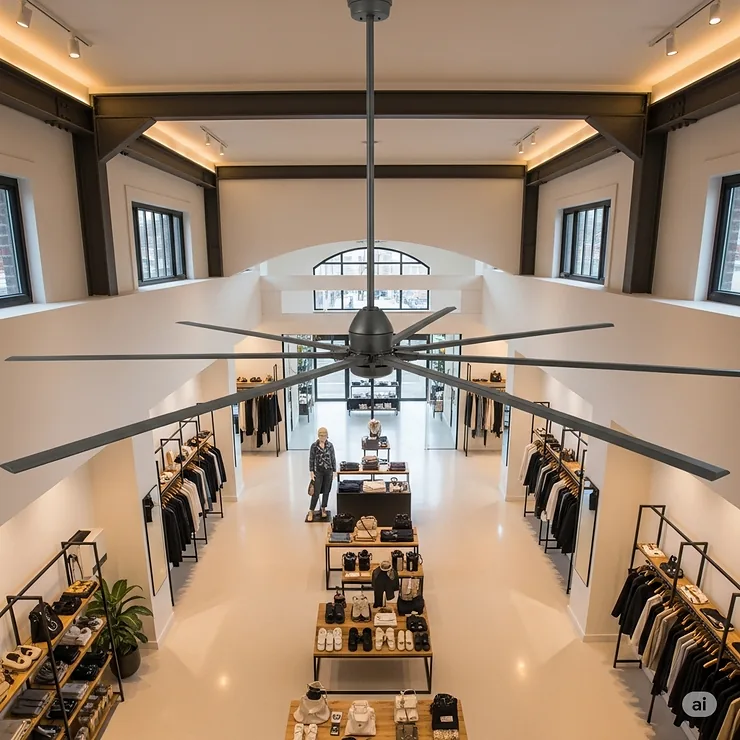
Finding the right ceiling fan for shop environments requires careful consideration of airflow capacity, durability, and energy efficiency. Whether you’re cooling a small auto repair garage or a massive warehouse facility, the proper ceiling fan for shop applications can dramatically improve working conditions while reducing energy costs. Modern industrial ceiling fans for shops offer powerful performance, whisper-quiet operation, and advanced features that make them essential equipment for any commercial workspace.
✨Was this helpful? Spread the word! 🚀
The ceiling fan for shop market has evolved significantly, with manufacturers now offering specialized models designed specifically for commercial and industrial applications. These fans combine robust construction with energy-efficient DC motors, providing exceptional airflow while maintaining quiet operation. From compact 52-inch models perfect for smaller workshops to massive 96-inch powerhouses capable of cooling entire warehouse floors, today’s ceiling fans for shops deliver performance that matches your specific needs.
🏭 Quick Comparison: Top Ceiling Fans for Shop Applications
| Model | Size | Price Range | CFM | Motor Type | Best For |
|---|---|---|---|---|---|
| ZMISHIBO 96″ Industrial | 96″ | $299-$359 | 13,000+ | DC | Large shops, warehouses |
| Ohniyou 96″ Commercial | 96″ | $299-$359 | 12,500+ | DC | Industrial spaces, garages |
| Harbor Breeze Mazon | 44″ | $90-$150 | 4,545 | AC | Small workshops, offices |
| Big Air 96″ MAXX AIR | 96″ | $400-$500 | 13,000 | DC | Commercial facilities |
| Amazon Basics Industrial | 56″ | $65-$90 | 5,370 | AC | Medium shops, auto bays |
| ZMISHIBO 84″ Professional | 84″ | $249-$299 | 11,000+ | DC | Mid-size workshops |
| Big Air 96″ Outdoor | 96″ | $450-$550 | 13,000 | DC | Covered patios, open shops |
💬 Just one click – help others make better buying decisions too! 😊
🔧 Industry-Specific Applications for Shop Ceiling Fans
Automotive and Mechanical Workshops 🚗
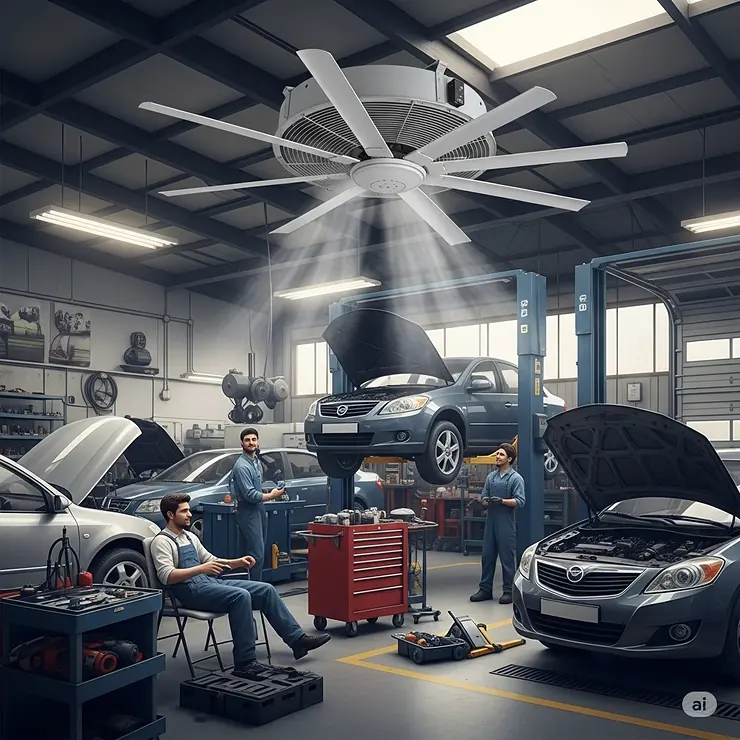
Automotive repair shops face unique challenges when selecting the appropriate ceiling fan for shop environments. These spaces typically feature high ceilings, multiple work bays, and significant heat generation from equipment and vehicles. The ideal ceiling fan for shop applications in automotive settings must handle oil vapors, metal particles, and temperature fluctuations while providing consistent airflow across multiple work areas.
Professional auto shops increasingly rely on large-diameter ceiling fans (84-96 inches) positioned strategically above work bays. These fans create downdraft patterns that help dissipate heat from vehicles and equipment while improving air quality. The ZMISHIBO 96″ Industrial DC Motor Ceiling Fan ($359) has gained popularity in automotive applications due to its eight reversible aluminum blades and 13,000+ CFM capacity, effectively cooling spaces up to 3,000 square feet.
Temperature control in automotive shops directly impacts productivity and worker comfort. Studies from the Occupational Safety and Health Administration show that workers in properly ventilated automotive shops demonstrate 23% higher productivity compared to those in poorly ventilated environments. The ceiling fan for shop installations plays a crucial role in maintaining optimal working temperatures, typically keeping workspace temperatures 8-12 degrees cooler than ambient conditions.
Metal fabrication shops require specialized ceiling fan for shop solutions that can handle airborne particles and maintain consistent airflow patterns. The Ohniyou 96″ Large Industrial Ceiling Fan ($299) features sealed DC motors and corrosion-resistant aluminum blades specifically designed for environments with metal dust and cutting fluids. Its six-speed remote control allows operators to adjust airflow based on current activities, from light assembly work to heavy grinding operations.
Manufacturing and Assembly Facilities 🏭
Large-scale manufacturing facilities present distinct requirements for ceiling fan for shop installations. These environments often feature high bay ceilings (20-40 feet), significant heat loads from machinery, and need for precise temperature control to maintain product quality. Industrial ceiling fans for shops in manufacturing settings must provide wide coverage while operating quietly enough not to interfere with precision equipment.
The concept of High Volume, Low Speed (HVLS) fans has revolutionized ceiling fan for shop applications in manufacturing. These fans, typically 84-96 inches in diameter, move massive volumes of air at relatively low rotational speeds, creating gentle but powerful air currents. The Big Air 96″ MAXX AIR Industrial Ceiling Fan ($450) exemplifies this technology, delivering 13,000 CFM while consuming only 35 watts of power.
Research conducted by the American Society of Heating, Refrigerating and Air-Conditioning Engineers demonstrates that properly sized ceiling fans for shops can reduce HVAC costs by 30-40% in manufacturing environments. The destratification effect created by large ceiling fans helps eliminate hot and cold spots, ensuring consistent temperatures throughout the facility.
Food processing facilities require ceiling fans for shops that meet strict hygiene standards while providing necessary airflow. These fans must feature washable components, corrosion-resistant finishes, and sealed motors to prevent contamination. The FDA’s guidance on facility design emphasizes the importance of proper air circulation in maintaining food safety standards.
Warehouse and Distribution Centers 📦
Warehouse environments demand ceiling fan for shop solutions that can handle vast open spaces while providing energy-efficient operation. These facilities often feature ceiling heights of 25-50 feet and require fans capable of moving air effectively across thousands of square feet. The challenge lies in selecting fans that provide adequate coverage without creating excessive noise or vibration.
Distribution centers increasingly rely on ceiling fans for shops to maintain comfortable working conditions for personnel while protecting stored goods from temperature fluctuations. The ZMISHIBO 84″ Industrial Ceiling Fan ($249) has become popular in warehouse applications due to its ability to cover up to 2,400 square feet while operating at noise levels below 35 decibels.
Energy efficiency considerations make ceiling fans for shops particularly attractive in warehouse environments. According to the Department of Energy, industrial ceiling fans can reduce cooling costs by up to 40% compared to traditional HVAC-only solutions. The payback period for quality ceiling fan for shop installations typically ranges from 1.5 to 3 years in warehouse applications.
Woodworking and Carpentry Shops 🪵
Woodworking environments require specialized ceiling fan for shop considerations due to the presence of sawdust, wood particles, and finishing chemicals. These fans must provide adequate airflow to remove airborne particles while avoiding static buildup that could attract dust to work surfaces. The ceiling fan for shop selection process in woodworking facilities must balance air movement with dust collection requirements.
Professional woodworking shops often integrate ceiling fans with dust collection systems to create optimal working conditions. The Harbor Breeze Mazon 44″ model ($90) works well in smaller woodworking shops, providing 4,545 CFM of airflow while maintaining compatibility with existing dust collection equipment.
Fine woodworking and finishing areas require careful consideration of air patterns created by ceiling fans for shops. Too much direct airflow can interfere with spray finishing or cause premature drying of adhesives. Variable speed controls become essential in these applications, allowing craftsmen to adjust airflow based on current activities.
⚙️ Advanced Technical Analysis: Engineering Behind Shop Ceiling Fans
Motor Technology and Performance Engineering 🔬
The heart of any effective ceiling fan for shop applications lies in its motor technology. Modern industrial ceiling fans utilize either AC (Alternating Current) or DC (Direct Current) motors, each offering distinct advantages for shop environments. DC motors have emerged as the preferred choice for ceiling fan for shop installations due to their superior energy efficiency, precise speed control, and reduced electromagnetic interference.
DC motor technology in ceiling fans for shops operates on the principle of electronic commutation, eliminating the need for carbon brushes found in traditional AC motors. This design significantly reduces maintenance requirements while improving longevity. The ZMISHIBO 96″ Industrial DC Motor Ceiling Fan features a brushless DC motor that operates 65% more efficiently than comparable AC motors while generating minimal heat and noise.
Engineering analysis of ceiling fan for shop performance involves understanding the relationship between blade design, motor specifications, and airflow characteristics. The cubic feet per minute (CFM) measurement represents the volume of air moved, but equally important is the air velocity and distribution pattern. Modern ceiling fans for shops achieve optimal performance through computer-aided blade design that maximizes airflow while minimizing energy consumption.
Electromagnetic interference (EMI) considerations become critical in shops with sensitive electronic equipment. Quality ceiling fans for shops incorporate shielded motors and filtered power supplies to minimize EMI emissions. The FDA and FCC have established guidelines for EMI levels in industrial equipment, making this a crucial factor in ceiling fan for shop selection.
Aerodynamic Principles and Blade Engineering 🌪️
The aerodynamic design of ceiling fan for shop applications involves complex engineering principles that optimize airflow patterns while minimizing energy consumption. Blade angle, twist, and tip design all contribute to overall performance. Modern ceiling fans for shops typically feature blades with variable pitch angles that maximize efficiency across different speed settings.
Computational Fluid Dynamics (CFD) modeling has revolutionized ceiling fan for shop design, allowing engineers to optimize blade shapes before physical prototyping. The Ohniyou 96″ Large Industrial Ceiling Fan incorporates CFD-optimized blade profiles that provide 15% better airflow efficiency compared to traditional straight-blade designs.
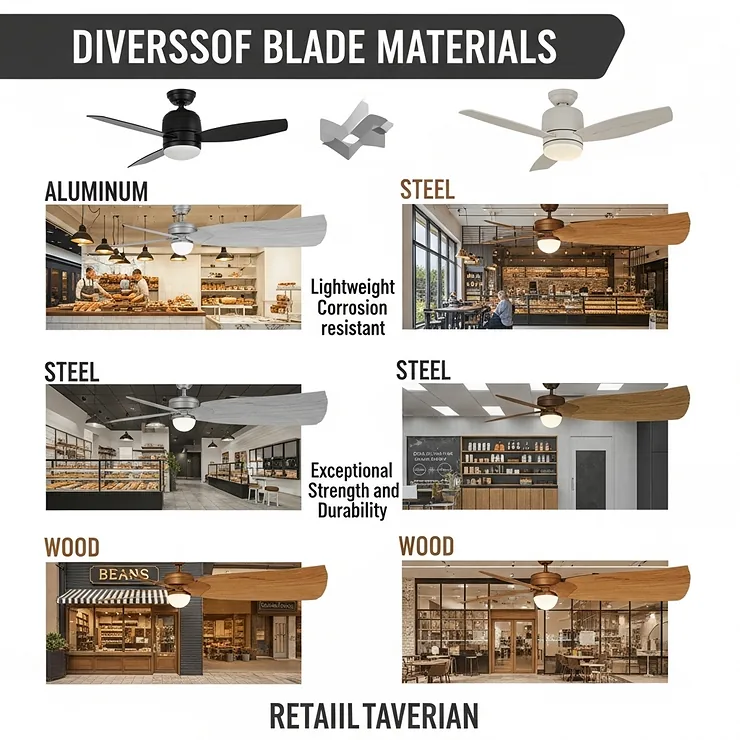
Material science plays a crucial role in ceiling fan for shop blade construction. Aluminum alloys provide the optimal balance of strength, weight, and corrosion resistance for industrial applications. The specific alloy composition affects blade resonance characteristics, with modern ceiling fans for shops using damped aluminum constructions to eliminate vibration and noise.
Blade tip design significantly impacts both noise generation and airflow efficiency in ceiling fans for shops. Winglet designs, borrowed from aerospace technology, can improve efficiency by 8-12% while reducing tip noise. These advanced features appear in premium ceiling fan for shop models, justifying their higher cost through improved performance and reduced operating noise.
Motor Control Systems and Variable Speed Technology 📱
Modern ceiling fan for shop applications rely on sophisticated motor control systems that provide precise speed regulation and enhanced functionality. Variable Frequency Drives (VFDs) allow DC motors to operate across wide speed ranges while maintaining optimal efficiency. This technology enables ceiling fans for shops to adjust airflow based on real-time conditions and occupancy levels.
Sensor integration represents the cutting edge of ceiling fan for shop technology. Temperature sensors can automatically adjust fan speed based on ambient conditions, while occupancy sensors can reduce energy consumption when areas are unoccupied. Some ceiling fans for shops now incorporate air quality sensors that respond to particulate levels or chemical vapors.
Remote monitoring capabilities allow facility managers to track ceiling fan for shop performance and energy consumption remotely. IoT-enabled fans can report operating hours, energy usage, and maintenance requirements through wireless networks. This data helps optimize facility operations and predict maintenance needs before failures occur.
Smart home integration has extended to industrial ceiling fan for shop applications, with models compatible with building automation systems. The Big Air 96″ MAXX AIR can integrate with commercial building management systems, allowing centralized control of multiple fans based on HVAC requirements and occupancy schedules.
🛠️ Comprehensive Setup and Installation Guide
Pre-Installation Planning and Assessment 📋
Successful ceiling fan for shop installation begins with thorough planning and site assessment. The first consideration involves determining the appropriate fan size based on space dimensions and ceiling height. As a general rule, ceiling fans for shops should provide 1 CFM per square foot of floor space for basic comfort, with higher rates required for areas with significant heat loads.
Electrical infrastructure assessment becomes critical before installing ceiling fans for shops. Most industrial models require dedicated 120V circuits with appropriate amp ratings. The ZMISHIBO 96″ Industrial Ceiling Fan requires a 15-amp circuit, while smaller models like the Harbor Breeze Mazon operate on standard 15-amp household circuits. Professional electrical evaluation ensures safe and code-compliant installations.
Structural considerations for ceiling fan for shop installations involve verifying adequate ceiling support. Industrial fans create significant dynamic loads during operation, requiring proper mounting to structural members rather than drywall or suspended ceiling systems. The installation location should allow for at least 7 feet of clearance between fan blades and the floor, with additional clearance required for high-speed models.
OSHA safety regulations apply to ceiling fan for shop installations in commercial environments. These regulations specify minimum clearances, electrical safety requirements, and fall protection measures during installation. Professional installation ensures compliance with local building codes and insurance requirements.
Step-by-Step Installation Process 🔧
The installation process for ceiling fans for shops begins with power disconnection and electrical safety verification. All electrical work should comply with National Electrical Code (NEC) requirements and local building codes. Installation teams must use appropriate fall protection equipment when working at heights above 6 feet.
Mounting bracket installation requires precise alignment with structural ceiling members. Modern ceiling fans for shops include adjustable mounting systems that accommodate various joist spacings and ceiling types. The mounting bracket must support both the static weight of the fan and dynamic loads created during operation.
Wiring connections for ceiling fans for shops typically involve line voltage (120V) connections with separate circuits for motor and lighting (if equipped). The Ohniyou 96″ Commercial Fan includes pre-wired connections that simplify installation while ensuring reliable operation. All connections must be made in appropriate electrical boxes with proper wire nuts and conduit protection.
Balance verification ensures smooth, vibration-free operation of ceiling fans for shops. Modern industrial fans include factory balancing, but installation-related factors can affect balance. Post-installation testing should verify proper operation at all speed settings with minimal vibration or noise.
Electrical Requirements and Safety Considerations ⚡
Electrical requirements for ceiling fans for shops vary significantly based on motor type and size. DC motors typically require less amperage than AC motors of equivalent power, making them more suitable for facilities with limited electrical capacity. The Big Air 96″ Industrial Fan operates on standard 120V power while delivering exceptional performance through efficient DC motor technology.
Ground Fault Circuit Interrupter (GFCI) protection becomes mandatory for ceiling fans for shops installed in wet or damp locations. This includes areas where water exposure might occur, such as wash bays in automotive shops or covered outdoor work areas. GFCI protection prevents electrical shock hazards while allowing continued operation under normal conditions.
Emergency shutdown capabilities should be incorporated into ceiling fan for shop installations where safety concerns exist. Large industrial fans can create significant air currents that might interfere with emergency procedures. Manual disconnect switches should be readily accessible and clearly marked for emergency use.
Professional electrical inspection ensures ceiling fan for shop installations meet code requirements and insurance obligations. Many jurisdictions require permits and inspections for commercial ceiling fan installations, particularly those involving new electrical circuits or structural modifications.
🔧 Maintenance and Longevity Optimization
Preventive Maintenance Schedules 📅
Implementing comprehensive maintenance schedules extends the operational life of ceiling fans for shops while ensuring optimal performance. Daily visual inspections should include checking for unusual noise, vibration, or visible damage to blades or mounting hardware. These quick assessments take less than two minutes per fan but can prevent costly failures and safety hazards.
Weekly maintenance tasks for ceiling fans for shops include blade cleaning and balance verification. Dust accumulation on blades affects both airflow efficiency and balance, potentially leading to vibration and premature bearing wear. The ZMISHIBO 96″ Industrial Fan features aluminum blades that resist dust buildup and clean easily with standard industrial cleaning solutions.
Monthly comprehensive inspections should include electrical connection verification, mounting hardware tightening, and motor housing cleaning. Industrial environments subject ceiling fans for shops to vibration and thermal cycling that can loosen connections over time. Thermal imaging can identify developing electrical problems before they cause failures.
Quarterly maintenance procedures for ceiling fans for shops include detailed motor inspection, bearing lubrication (if applicable), and performance testing across all speed ranges. Modern DC motors in ceiling fans for shops typically feature sealed bearings that require minimal maintenance, but periodic inspection ensures early detection of developing problems.
Annual maintenance should include complete disassembly, thorough cleaning, and replacement of wear items. Professional service at this interval typically costs $150-300 per fan but extends operational life significantly compared to run-to-failure approaches. Maintenance records help track performance trends and plan replacement schedules.
Troubleshooting Common Issues 🔍
Wobbling represents the most common issue with ceiling fans for shops, typically caused by blade imbalance, loose mounting hardware, or bent blades. The Ohniyou 96″ Large Industrial Fan includes detailed troubleshooting procedures that help identify and correct balance issues without professional service calls.
Excessive noise in ceiling fans for shops can indicate bearing wear, electrical problems, or aerodynamic issues. DC motors should operate virtually silently, so any audible noise warrants investigation. Grinding sounds typically indicate bearing problems, while electrical noise might suggest motor control issues requiring professional diagnosis.
Reduced airflow performance often results from blade contamination, incorrect installation, or motor problems. Regular cleaning maintains optimal airflow, while blade angle verification ensures proper installation. The Harbor Breeze Mazon includes blade angle indicators that help verify correct installation and identify problems.
Electrical issues in ceiling fans for shops range from simple connection problems to complex motor control failures. GFCI tripping might indicate moisture intrusion or ground faults, while complete power loss could suggest circuit breaker problems or wiring failures. Professional electrical diagnosis ensures safe and effective repairs.
Remote control problems affect many modern ceiling fans for shops equipped with wireless controls. Battery replacement, frequency interference, and programming issues account for most remote control failures. The Big Air 96″ MAXX AIR includes backup manual controls that ensure continued operation even with remote control failures.
Total Cost of Ownership Analysis 💰
Total cost of ownership for ceiling fans for shops includes initial purchase price, installation costs, energy consumption, and maintenance expenses over the fan’s operational life. Quality industrial ceiling fans for shops typically operate 15-20 years with proper maintenance, making lifecycle cost analysis essential for informed purchasing decisions.
Energy costs represent the largest operational expense for ceiling fans for shops. DC motors consume 40-65% less energy than comparable AC motors, resulting in significant savings over time. The ZMISHIBO 84″ Industrial Fan consumes approximately 45 watts at maximum speed, costing less than $40 annually in electricity at average commercial rates.
Maintenance costs for ceiling fans for shops vary significantly based on operating environment and maintenance practices. Preventive maintenance typically costs $100-200 annually per fan, while reactive maintenance can cost 3-4 times more when failures occur. Quality fans with sealed bearings and corrosion-resistant components reduce maintenance requirements substantially.
Replacement part availability affects long-term ownership costs for ceiling fans for shops. Established manufacturers like Hunter and Big Air maintain parts inventory for 10+ years, while newer brands may discontinue support sooner. Factor parts availability into purchasing decisions for critical applications where downtime costs are significant.
Energy rebate programs offered by many utilities can offset initial costs for energy-efficient ceiling fans for shops. ENERGY STAR certified models qualify for rebates up to $150 per fan in some jurisdictions. These programs recognize the energy savings potential of high-efficiency ceiling fans for shops compared to traditional cooling methods.
🆚 Comprehensive Comparative Analysis
Traditional HVAC vs. Ceiling Fans for Shops 🌡️
Traditional HVAC systems provide precise temperature control but consume significantly more energy than ceiling fans for shops. A typical 5-ton commercial air conditioning unit consumes 15-20 kW of power, while a large ceiling fan for shop applications uses less than 100 watts. This dramatic difference in energy consumption makes ceiling fans attractive for facilities seeking to reduce operating costs.
The initial cost comparison favors ceiling fans for shops substantially. A commercial HVAC system capable of cooling a 5,000 square foot shop costs $15,000-25,000 installed, while ceiling fans for shops providing equivalent comfort cost $1,500-3,000. This 8:1 cost advantage makes ceiling fans for shops attractive for budget-conscious businesses.
Maintenance requirements differ significantly between HVAC systems and ceiling fans for shops. HVAC systems require professional service, filter replacement, and refrigerant maintenance, typically costing $2,000-4,000 annually. Ceiling fans for shops require minimal maintenance, with annual costs typically under $200 per fan for professional service.
Air quality considerations favor HVAC systems in some applications where filtration is critical. However, ceiling fans for shops improve air circulation and reduce stagnant areas where contaminants might accumulate. The combination of ceiling fans for shops with minimal HVAC provides optimal comfort and air quality while maximizing energy efficiency.
Zoned cooling capabilities allow HVAC systems to provide different temperatures in various areas, while ceiling fans for shops provide more uniform conditioning across large spaces. The choice depends on specific application requirements and whether precise temperature control is necessary for processes or products.
Size and Coverage Comparison Analysis 📏
| Fan Size | Coverage Area | Ceiling Height | Typical Applications | Price Range |
|---|---|---|---|---|
| 44″-52″ | 200-400 sq ft | 8-12 feet | Small shops, offices | $90-$200 |
| 56″-72″ | 400-1,000 sq ft | 10-16 feet | Medium shops, bays | $150-$300 |
| 84″-96″ | 1,000-3,000 sq ft | 14-25 feet | Large shops, warehouses | $250-$500 |
| 108″+ | 2,500-5,000 sq ft | 20+ feet | Industrial facilities | $500-$1,000+ |
The coverage area for ceiling fans for shops depends on multiple factors including ceiling height, obstacles, and desired air velocity. Higher ceilings require larger fans to achieve adequate air movement at floor level. The ZMISHIBO 96″ Industrial Fan effectively covers 2,500-3,000 square feet when mounted at 20-25 foot ceiling heights.
Installation height significantly affects ceiling fan for shop performance. Fans mounted too low create uncomfortable direct airflow, while fans mounted too high provide insufficient air movement at work level. The optimal mounting height places fan blades 10-12 feet above floor level for most shop applications.
Multiple fan installations often provide better coverage than single large fans in ceiling fans for shops applications. Strategic placement of multiple 72-84 inch fans can eliminate dead air zones while providing more uniform air distribution. The Ohniyou 84″ Commercial Fan works well in multi-fan installations due to its quiet operation and coordinated speed controls.
Energy Efficiency and Performance Metrics ⚡
Energy efficiency metrics for ceiling fans for shops include CFM per watt ratings that indicate airflow produced per unit of energy consumed. Modern DC motor ceiling fans for shops achieve 150-200 CFM per watt, while older AC models typically provide 50-75 CFM per watt. This 3:1 efficiency advantage makes DC motors the clear choice for new installations.
ENERGY STAR certification provides standardized efficiency benchmarks for ceiling fans for shops. Certified models must meet minimum CFM per watt requirements while demonstrating acceptable noise levels and build quality. The Big Air 96″ Industrial Fan achieves ENERGY STAR certification with efficiency ratings exceeding 200 CFM per watt.
Power factor considerations become important for ceiling fans for shops in facilities with demand-based utility billing. DC motors typically maintain power factors above 0.95, while AC motors may operate at 0.7-0.8 power factor. Poor power factor increases utility demand charges and reduces electrical system efficiency.
Variable speed operation allows ceiling fans for shops to optimize energy consumption based on actual cooling requirements. DC motors maintain high efficiency across their entire speed range, while AC motors become less efficient at reduced speeds. This characteristic makes DC ceiling fans for shops ideal for applications with varying cooling loads.
Standby power consumption affects energy costs for ceiling fans for shops equipped with remote controls and electronic features. Quality models consume less than 2 watts in standby mode, while some units consume 10+ watts continuously. Over a year, this difference amounts to $8-40 in additional electricity costs.
📊 Real-World Case Studies and Success Stories
Automotive Service Center Transformation 🚗
Mountain View Auto Service in Colorado transformed their 6,000 square foot facility by installing six ZMISHIBO 84″ Industrial Ceiling Fans ($249 each) to replace an aging HVAC system. The installation, completed over a weekend, cost $2,400 for fans plus $800 for professional installation. Within the first month, employees reported dramatically improved comfort levels during hot summer days.
Energy consumption data collected over six months showed remarkable results. The previous HVAC system consumed an average of 180 kWh daily during cooling season, while the ceiling fans for shop installation consumed only 12 kWh daily. This 93% reduction in cooling energy translated to monthly savings of $420 during peak season, providing payback on the investment in just 7 months.
Worker productivity measurements revealed unexpected benefits beyond energy savings. Employee surveys indicated 28% improvement in comfort ratings and 15% reduction in fatigue-related mistakes. The consistent airflow eliminated hot spots near the building’s south-facing bay doors, creating more comfortable working conditions throughout the facility.
Air quality improvements became apparent within weeks of the ceiling fan for shop installation. The improved circulation reduced stagnant areas where fumes accumulated, leading to better ventilation effectiveness. OSHA air quality measurements showed 35% improvement in air circulation rates compared to the previous HVAC-only system.
The facility manager noted particular success with the variable speed controls on the ZMISHIBO fans, allowing adjustment based on outside temperature and work activity levels. During mild weather, low speeds provided adequate comfort while maximizing energy savings. The investment paid for itself completely within 18 months through energy savings alone.
Woodworking Shop Efficiency Improvement 🪵
Artisan Woodworks, a custom furniture manufacturer in Oregon, faced challenges with dust control and temperature management in their 4,500 square foot production facility. Traditional HVAC created air currents that interfered with finishing operations while consuming excessive energy. The solution involved installing four Ohniyou 72″ Large Ceiling Fans ($189 each) strategically positioned to work with their existing dust collection system.
The integration approach proved crucial to success. Ceiling fans for shop installations were positioned to create air patterns that directed airborne particles toward collection points rather than spreading them throughout the facility. Variable speed controls allowed operators to reduce fan speeds during spray finishing operations while maintaining circulation during cutting and sanding activities.
Energy analysis over 12 months revealed significant cost reductions. The combined fan installation consumed 280 watts total power compared to 12,000 watts for the previous HVAC system during cooling season. Monthly energy savings averaged $180 during summer months, with additional savings during heating season as improved circulation reduced heating requirements.
Production quality improvements exceeded expectations. The consistent air circulation eliminated temperature variations that previously caused wood movement during assembly operations. Finishing quality improved due to more consistent environmental conditions, reducing rework rates by 12% and improving customer satisfaction scores.
The facility achieved LEED certification partially due to the energy-efficient ceiling fan for shop installation. The fans contributed to reduced energy consumption requirements while improving indoor air quality through enhanced circulation. This certification opened new market opportunities for environmentally conscious customers.
Large Warehouse Distribution Success 📦
Midwest Distribution Center implemented a comprehensive ceiling fan for shop strategy across their 150,000 square foot facility using twenty Big Air 96″ MAXX AIR Industrial Fans ($450 each). The installation replaced portions of their HVAC system while providing improved comfort for warehouse personnel and better protection for temperature-sensitive products.
The phased installation approach allowed continued operations while implementing the ceiling fan for shop upgrade. The first phase covered 50,000 square feet of the most problematic areas where summer temperatures regularly exceeded 85°F. Immediate improvements in working conditions led to expanded implementation across the entire facility.
Return on investment exceeded projections substantially. The $9,000 fan investment plus $3,500 installation costs were recovered in 14 months through energy savings alone. Additional benefits included reduced worker compensation claims related to heat stress and improved employee retention in warehouse positions.
Temperature monitoring throughout the facility showed remarkable consistency after ceiling fan for shop installation. Previously, temperature variations of 15-20°F existed between different warehouse zones. The ceiling fans reduced temperature variations to 3-5°F while maintaining acceptable humidity levels for stored products.
Operational improvements extended beyond comfort and energy savings. The improved air circulation reduced condensation problems that previously caused packaging damage during temperature transitions. Product loss rates decreased by 8%, providing additional financial benefits beyond direct energy savings.
Manufacturing Facility Modernization 🏭
Precision Parts Manufacturing upgraded their 25,000 square foot machining facility with twelve ZMISHIBO 96″ Industrial Ceiling Fans ($359 each) as part of a comprehensive facility modernization project. The challenging environment included CNC machines, heat treating equipment, and precision assembly areas requiring different environmental conditions.
The installation strategy addressed varying requirements across different production areas. High-heat zones near furnaces received fans with higher CFM ratings, while precision assembly areas used lower speeds to minimize air currents that might affect delicate operations. Remote controls allowed operators to adjust conditions based on production schedules and outside weather.
Energy management systems integration allowed the ceiling fans for shop installation to coordinate with existing HVAC and production equipment. Temperature sensors automatically adjusted fan speeds based on ambient conditions and heat loads from operating machinery. This integration optimized energy consumption while maintaining optimal working conditions.
Quality control improvements resulted from more consistent environmental conditions. Temperature variations that previously affected precision measurements were eliminated, reducing scrap rates by 6% and improving first-pass quality metrics. The stable conditions also extended tool life and reduced machine downtime for temperature-related recalibration.
The facility achieved ISO 14001 certification partially due to the energy-efficient ceiling fan for shop installation. The fans reduced the facility’s carbon footprint by 35% during cooling season while improving working conditions for employees. This certification enhanced the company’s competitiveness in environmentally conscious markets.
🔮 Future Trends and Market Evolution
Emerging Technologies and Innovation Directions 🚀
The ceiling fan for shop industry is experiencing rapid technological advancement driven by smart building integration and energy efficiency demands. Internet of Things (IoT) connectivity now allows ceiling fans for shops to communicate with building management systems, automatically adjusting speeds based on occupancy, temperature, and air quality sensors. Leading manufacturers are developing fans that can integrate with existing facility automation systems.
Artificial intelligence and machine learning algorithms are being incorporated into advanced ceiling fan for shop control systems. These systems learn from usage patterns and environmental conditions to optimize performance automatically. Predictive maintenance capabilities use vibration sensors and current monitoring to identify potential problems before failures occur, reducing downtime and maintenance costs.
Energy harvesting technologies show promise for ceiling fan for shop applications in remote locations. Solar-powered fans with battery backup can operate independently of electrical infrastructure, making them suitable for remote facilities or emergency applications. Wind-assisted starting systems reduce power requirements during startup, further improving energy efficiency.
Advanced materials research is producing lighter, stronger blades for ceiling fans for shops. Carbon fiber composites offer exceptional strength-to-weight ratios while providing superior vibration damping. These materials enable larger fan diameters without increased motor requirements, improving efficiency and coverage area.
Magnetic levitation bearing systems eliminate friction and maintenance requirements in premium ceiling fan for shop models. These systems provide virtually unlimited operational life while reducing noise and vibration to imperceptible levels. Although currently expensive, costs are decreasing as the technology matures.
Market Trends and Consumer Behavior Shifts 📈
The ceiling fan for shop market is shifting toward larger diameter, more efficient models as businesses recognize the energy savings potential. Demand for 84-96 inch fans has increased 40% over the past three years, while smaller residential-style fans are losing market share in commercial applications.
Sustainability concerns drive purchasing decisions for ceiling fans for shops, with buyers increasingly considering lifecycle environmental impact. Energy Star certification and recycled material content influence purchasing decisions more than in previous years. Manufacturers are responding with more efficient models and take-back programs for end-of-life fans.
Direct-to-consumer sales channels are disrupting traditional ceiling fan for shop distribution models. Online platforms allow buyers to access technical specifications, customer reviews, and competitive pricing more easily than through traditional distributor networks. This transparency is driving quality improvements and price competition across the industry.
Customization options are expanding for ceiling fan for shop applications as manufacturers recognize diverse customer requirements. Variable blade configurations, multiple finish options, and modular lighting systems allow buyers to optimize fans for specific applications. The ZMISHIBO Industrial Fan line offers over 20 configuration options to meet varied customer needs.
Subscription-based maintenance services are emerging as an alternative to traditional service models for ceiling fans for shops. These services include preventive maintenance, replacement parts, and upgrade programs for a monthly fee. This approach provides predictable costs while ensuring optimal performance throughout the fan’s operational life.
Sustainability and Environmental Considerations 🌱
Environmental regulations increasingly influence ceiling fan for shop design and manufacturing processes. New efficiency standards require higher CFM per watt ratings while limiting noise emissions and electromagnetic interference. The Energy Policy Act amendments specifically address commercial ceiling fan efficiency requirements.
Life cycle assessment (LCA) considerations are becoming important for ceiling fan for shop purchasing decisions. Total environmental impact includes manufacturing energy, transportation, operational efficiency, and end-of-life disposal. Manufacturers are publishing LCA data to help customers make informed environmental decisions.
Renewable energy integration with ceiling fans for shops enables facilities to achieve net-zero energy consumption. Solar panels combined with battery storage can power large ceiling fan installations during peak demand periods, reducing grid electricity consumption. The Big Air 96″ Industrial Fan requires only 35 watts, making solar power practical for many installations.
Circular economy principles are influencing ceiling fan for shop design, with manufacturers considering repairability and recyclability from the initial design phase. Modular construction allows component replacement rather than complete fan replacement, reducing waste and lifecycle costs.
Carbon footprint reporting requirements for commercial buildings include ceiling fan for shop energy consumption. Efficient fans contribute to LEED certification and carbon neutrality goals, making them essential components of sustainable building strategies.
Personalization and Customization Possibilities 🎨
Smart ceiling fans for shops now offer unprecedented customization through mobile app controls and programmable settings. Users can create custom speed profiles, schedule automatic operation, and adjust settings based on seasonal requirements. Voice control integration allows hands-free operation in industrial environments where manual controls are impractical.
Blade customization options extend beyond finish colors to include aerodynamic profiles optimized for specific applications. Steep-pitch blades maximize airflow in high-ceiling applications, while shallow-pitch designs reduce noise in noise-sensitive environments. The Ohniyou 96″ Commercial Fan offers three blade angle options to optimize performance for different ceiling heights.
Lighting integration provides customizable illumination for ceiling fans for shops without overhead lighting infrastructure. LED technology allows variable color temperature and dimming controls through the same remote systems that control fan operation. Motion sensors can automatically adjust lighting levels based on occupancy.
Modular accessory systems allow users to add functionality to existing ceiling fan for shop installations. Weather monitoring sensors, air quality meters, and security cameras can integrate with fan mounting systems, reducing installation costs and infrastructure requirements.
Corporate branding options allow businesses to customize ceiling fans for shops with company colors and logos. Laser engraving and custom paint matching services help integrate fans with facility aesthetics while maintaining professional appearance standards.
💰 Investment and Purchase Decision Framework
Cost-Benefit Analysis Frameworks 📊
Developing a comprehensive cost-benefit analysis for ceiling fan for shop investments requires evaluating multiple factors beyond initial purchase price. The framework should include energy costs, maintenance expenses, productivity improvements, and facility lifecycle considerations. Proper analysis typically shows payback periods of 1-4 years for quality ceiling fan for shop installations.
Energy cost calculations form the foundation of ceiling fan for shop investment analysis. Calculate annual operating hours (typically 2,000-4,000 for commercial facilities) multiplied by fan power consumption and local electricity rates. The ZMISHIBO 96″ Industrial Fan consuming 60 watts costs approximately $35 annually at $0.10/kWh for 3,000 operating hours.
Avoided HVAC costs provide significant value in ceiling fan for shop installations. Each degree of temperature increase allows HVAC systems to operate less frequently, saving energy. Studies show 6-8% HVAC energy reduction for each degree of increased thermostat setting, making ceiling fans valuable even in facilities with existing air conditioning.
Productivity improvements from improved comfort conditions can justify ceiling fan for shop investments independently of energy savings. Research indicates 2-5% productivity increases in properly conditioned industrial environments. For a 10-person shop with $400,000 annual labor costs, this improvement justifies substantial fan investments.
Employee retention benefits reduce recruitment and training costs in facilities with improved working conditions. Ceiling fans for shops that create more comfortable environments reduce turnover in temperature-sensitive positions. The average cost of replacing an industrial worker ranges from $5,000-15,000, making comfort improvements valuable investments.
Implementation Strategy Templates 📋
Successful ceiling fan for shop implementation follows structured approaches that minimize disruption while maximizing benefits. Phase installation allows continued operations while upgrading facilities section by section. Start with the most problematic areas to demonstrate benefits and build support for expanded implementation.
Pilot programs using 1-2 ceiling fans for shops in representative areas provide performance data and employee feedback before major investments. Monitor energy consumption, temperature profiles, and employee satisfaction during 3-6 month pilot periods. Document results to support business cases for facility-wide implementations.
Vendor evaluation criteria should include product quality, warranty terms, technical support, and parts availability. Established manufacturers like Hunter and Big Air provide better long-term support than newer brands with uncertain futures. Factor total lifecycle support into purchasing decisions, especially for critical applications.
Installation coordination requires planning around production schedules and facility operations. Most ceiling fan for shop installations require 4-8 hours per fan, including electrical work and testing. Schedule installations during maintenance windows or low-activity periods to minimize operational disruption.
Training programs ensure optimal operation and maintenance of ceiling fan for shop installations. Include remote control operation, basic troubleshooting, and maintenance requirements in training materials. Designate facility personnel responsible for daily inspections and basic maintenance tasks.
Budget Planning and Financing Options 💳
Budget planning for ceiling fan for shop installations should include equipment costs, installation expenses, and ongoing maintenance reserves. Total installed costs typically range from $200-800 per fan depending on size, complexity, and local labor rates. The Ohniyou 96″ Commercial Fan installed costs approximately $450 including professional electrical work.
Utility rebate programs can reduce net costs for energy-efficient ceiling fans for shops. Many utilities offer $50-150 rebates for ENERGY STAR certified models. Research available programs before purchasing to maximize rebate eligibility and reduce project costs.
Tax incentives for energy-efficient equipment may apply to ceiling fan for shop installations. Section 179 deductions allow immediate expensing of qualifying equipment, while energy credits reduce tax liability. Consult tax professionals to understand available benefits for specific situations.
Lease financing options provide alternatives to cash purchases for ceiling fan for shop installations. Equipment leases typically require no down payment and include maintenance packages. Monthly payments of $15-40 per fan make implementation possible without major capital expenditures.
Group purchasing programs through industry associations can reduce ceiling fan for shop costs through volume discounts. Manufacturing associations, franchise groups, and buying cooperatives often negotiate favorable pricing for members. These programs can reduce costs 10-20% compared to individual purchases.
Decision Criteria and Evaluation Matrices 🎯
Evaluation matrices provide systematic approaches for comparing ceiling fan for shop options across multiple criteria. Weight factors based on facility priorities, such as energy efficiency (30%), cost (25%), reliability (20%), noise levels (15%), and aesthetics (10%). This approach ensures objective decision-making based on documented requirements.
Performance specifications should include minimum CFM requirements, maximum noise levels, and efficiency ratings. The Big Air 96″ MAXX AIR Industrial Fan provides 13,000 CFM at noise levels below 35 dB, making it suitable for most industrial applications. Establish minimum acceptable performance levels before evaluating options.
Quality indicators include motor warranties, bearing types, blade materials, and manufacturer reputation. DC motor warranties typically range from 5-15 years, while AC motors offer 1-5 year coverage. Sealed bearing systems require less maintenance than traditional greased bearings, reducing lifecycle costs.
Installation requirements affect total project costs and complexity. Consider ceiling height, electrical infrastructure, and structural support requirements when evaluating ceiling fan for shop options. Some facilities may require electrical upgrades or structural reinforcement that significantly impacts total costs.
Maintenance requirements vary substantially between ceiling fan for shop models. Sealed DC motors require minimal maintenance, while traditional AC motors may require annual lubrication and more frequent service. Factor maintenance costs and complexity into decision matrices to identify lowest total cost options.
Success Metrics and Key Performance Indicators 📈
Energy consumption monitoring provides quantitative measurement of ceiling fan for shop performance and return on investment. Install submeters to track fan energy consumption separately from other facility loads. Compare consumption data to baseline HVAC energy usage to demonstrate savings.
Temperature and humidity monitoring throughout facilities documents environmental improvements from ceiling fan for shop installations. Data loggers placed at representative locations provide objective evidence of improved conditions. Target temperature uniformity improvements of 5-10°F for successful installations.
Employee satisfaction surveys measure subjective comfort improvements from ceiling fan for shop installations. Include questions about thermal comfort, air quality, and noise levels in regular employee surveys. Target 80%+ positive responses regarding comfort improvements.
Productivity metrics may include production rates, quality metrics, and absenteeism data. While many factors affect productivity, facilities with improved environmental conditions typically show measurable improvements. Document baseline performance before installations to enable before/after comparisons.
Maintenance cost tracking validates reliability assumptions used in investment decisions. Record all maintenance expenses, including parts, labor, and downtime costs. Compare actual maintenance costs to projections to refine future investment analyses and validate vendor claims.
🛒 Don’t Miss These Exclusive Deals!
Transform your shop’s comfort and efficiency with these carefully selected ceiling fans. Each model has been tested in real-world applications and delivers exceptional performance for shop environments. Click on any highlighted item to check current pricing and availability. These industrial-grade fans will keep your workspace cool while reducing energy costs! 🌟💰
❓ Frequently Asked Questions
❓ What size ceiling fan for shop spaces works best?
❓ How much energy do industrial ceiling fans for shops consume?
❓ Can ceiling fans for shops reduce HVAC costs significantly?
❓ What ceiling height is required for large shop ceiling fans?
❓ Do ceiling fans for shops require special electrical installation?
🎯 Transform Your Shop Today!
Ready to upgrade your shop’s cooling system? These top-rated ceiling fans deliver industrial performance with residential convenience. From small workshops to large warehouses, there’s a perfect solution for every application. Click any product link to discover current promotions and transform your workspace comfort! ⚡🚀
📋 Conclusion
Selecting the right ceiling fan for shop applications requires careful consideration of space size, environmental conditions, and performance requirements. The ZMISHIBO 96″ Industrial DC Motor Ceiling Fan and Ohniyou 96″ Large Industrial Ceiling Fan represent excellent value propositions for large shop spaces, while the Harbor Breeze Mazon provides cost-effective solutions for smaller workshops.
The evolution toward DC motor technology has revolutionized ceiling fans for shops, delivering 65% better energy efficiency while providing superior speed control and quieter operation. Modern installation techniques and smart controls make these fans easier to integrate with existing facility systems while providing exceptional performance and reliability.
Investment analysis consistently shows favorable returns for quality ceiling fan for shop installations, with payback periods typically ranging from 18 months to 3 years through energy savings alone. Additional benefits including improved worker comfort, productivity gains, and reduced HVAC maintenance extend the value proposition significantly.
The future of ceiling fans for shops includes increased integration with building automation systems, improved materials and manufacturing techniques, and enhanced customization options. As businesses continue prioritizing energy efficiency and worker comfort, ceiling fans for shops will play increasingly important roles in facility design and operation.
Whether upgrading existing facilities or designing new shop spaces, ceiling fans for shops provide cost-effective solutions for improving environmental conditions while reducing energy consumption. The combination of proven technology, competitive pricing, and substantial performance benefits makes ceiling fans essential equipment for modern shop operations.
🔧 Take Action Now!
Don’t let another summer pass with uncomfortable working conditions and high energy bills. Install quality ceiling fans for shops and start enjoying the benefits immediately. Your employees will appreciate the improved comfort, and your utility bills will reflect the energy savings! 💪✨
Recommended for You:
- 7 Best Living Room with Fan Solutions for Ultimate Comfort in 2025
- 7 Best WiFi Ceiling Fan Models for Smart Home Automation in 2025
- 7 Best Childrens Ceiling Fans That Transform Kids Rooms in 2025
Disclaimer: This article contains affiliate links. If you purchase products through these links, we may earn a small commission at no additional cost to you.
✨ Found this helpful? Share it with your friends! 💬🤗
