
In This Article
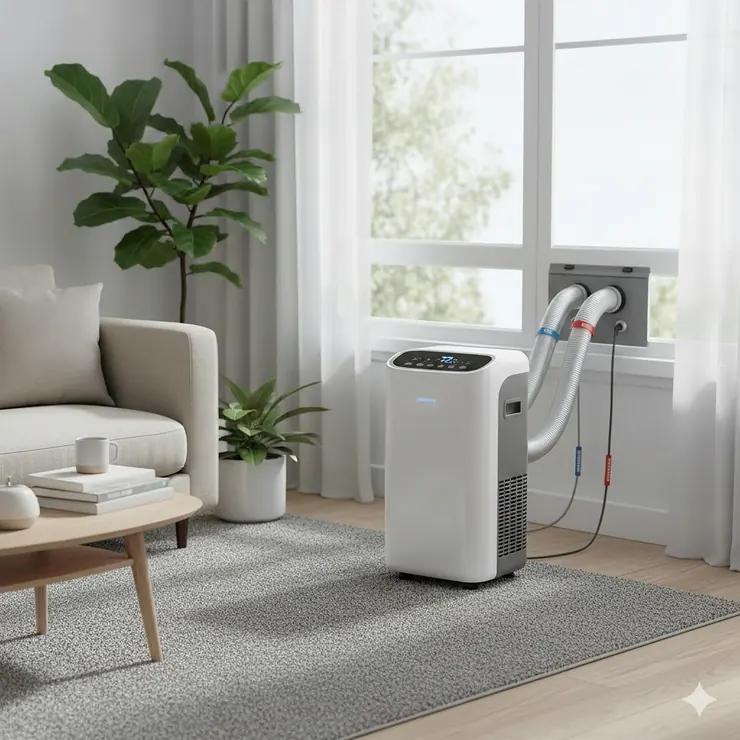
Here’s something most people don’t realize until it’s too late: that budget-friendly single hose portable air conditioner you just bought might actually be making your room hotter. I’ve tested dozens of cooling units over the past decade, and the difference between single and dual hose systems is night and day.
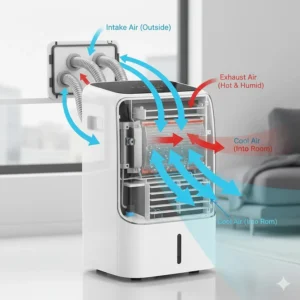
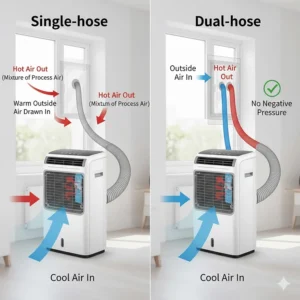
A dual hose portable air conditioner operates fundamentally differently from its single hose cousin. While single hose units create negative pressure by pulling conditioned air out of your room (yes, the cool air you just paid to create), a two hose portable air conditioner uses separate pathways for intake and exhaust. One hose brings in outside air specifically to cool the compressor, while the other expels heat. Your room’s cool air stays exactly where it belongs.
Think of it this way: would you run your home heater with all the windows open? That’s essentially what happens with single hose models. According to research from the Appliance Standard Awareness Project, single hose portable ACs can use nearly twice as much energy as window units due to the negative pressure issue.
This comprehensive guide examines seven top-performing dual hose portable air conditioner models available in 2026, helping you choose a unit that actually delivers on its cooling promises.
Quick Comparison Table
| Model | BTU | Coverage | Price Range | Noise Level | Best Feature |
|---|---|---|---|---|---|
| Whynter ARC-14S | 14,000 (9,500 SACC) | 500 sq ft | $500-$600 | 51 dBA | Award-winning reliability |
| Midea Duo Inverter | 14,000 (12,000 SACC) | 550 sq ft | $600-$750 | 42 dBA | Ultra-quiet inverter tech |
| Gasbye Dual Hose | 14,000 (10,500 SACC) | 500 sq ft | $450-$550 | 45 dBA | 3-year warranty |
| Hisense HAP0824TWD | 8,000 | 350 sq ft | $350-$450 | 42 dBA | Budget-friendly Wi-Fi |
| Whynter ARC-147WF | 14,000 (10,000 SACC) | 500 sq ft | $550-$650 | 51 dBA | HEPA filtration |
| Whynter ARC-122DS | 12,000 (7,000 SACC) | 400 sq ft | $450-$550 | 47 dBA | Compact design |
| BLACK+DECKER BPACT14WT | 14,000 (10,200 SACC) | 700 sq ft | $400-$500 | Standard | Smart connectivity |
💬 Just one click – help others make better buying decisions too! 😊
Top 7 Dual Hose Portable Air Conditioner: Expert Analysis
1. Whynter ARC-14S – The Gold Standard
The Whynter ARC-14S isn’t just another dual hose portable AC unit; it’s the benchmark everyone else gets measured against. Good Housekeeping crowned it “Best Overall Portable Air Conditioner” for 2025, and TIME Stamped it as the “Best Technological Portable AC” in 2024.
Key Specifications:
- 14,000 BTU cooling (9,500 BTU SACC)
- Covers up to 500 square feet
- 71 pint/day dehumidification capacity
- CFC-free R-32 refrigerant
This unit operates at a whisper-quiet 51 dBA on low speed, making it bedroom-approved. The patented auto-drain function automatically exhausts condensate in most environments, eliminating the bucket-emptying hassle that plagues cheaper models.
Customer feedback consistently highlights the Whynter ARC-14S’s exceptional build quality. One verified buyer noted it cooled their 450 sq ft bedroom in Phoenix summers without breaking a sweat, while maintaining conversation-level noise.
Price range: $500-$600
✅ Award-winning performance
✅ Auto-drain technology
✅ Eco-friendly refrigerant
❌ Higher initial investment
❌ Heavier than compact models
2. Midea Duo 14,000 BTU Inverter – The Efficiency Champion
If you cringe at high electricity bills, the Midea Duo represents the cutting edge of energy-efficient cooling. This dual hose air conditioner uses variable-speed inverter technology that saves over 40% energy compared to federal standards.
Key Specifications:
- 14,000 BTU (12,000 BTU SACC)
- Ultra-quiet 42 dBA operation
- Covers up to 550 square feet
- Alexa and Google Assistant compatible
The Midea Duo features an innovative hose-in-hose design that maximizes cooling efficiency while minimizing installation hassle. The single combined hose system looks cleaner than traditional dual hose setups but maintains all the dual hose AC benefits.
Customers rave about the silence. Multiple reviews mention falling asleep with it running on high, something impossible with traditional portable units. The mobile app control adds convenience for tech-savvy users who want to pre-cool rooms before arriving home.
Price range: $600-$750
✅ Library-quiet operation (42 dB)
✅ 40% more energy efficient
✅ Smart home integration
❌ Premium pricing
❌ Requires stable Wi-Fi for app features
3. Gasbye Dual Hose Inverter – The Value Play
The Gasbye Dual Hose Portable Air Conditioner delivers premium features at mid-range pricing, backed by an industry-leading 3-year quality coverage that includes full refunds or free replacements if you’re unsatisfied.
Key Specifications:
- 14,000 BTU (10,500 SACC)
- Full DC inverter compressor
- 13.6 CEER energy efficiency rating
- 45 dBA noise level
What sets Gasbye apart is the full DC inverter compressor, which eliminates the constant buzzing that plagues non-inverter models. The compressor operates variably rather than cycling on and off, providing consistent temperatures without the annoying noise spikes.
Customer feedback emphasizes the responsive support team, typically responding within 12 hours to inquiries. One user mentioned the elevated drainage outlet on the back makes manual draining much easier than bottom-mounted ports on competing models.
Price range: $450-$550
✅ Exceptional 3-year warranty
✅ DC inverter quietness
✅ Responsive customer support
❌ Newer brand with less track record
❌ May require drainage in high humidity
4. Hisense HAP0824TWD – The Budget-Friendly Smart Choice
For smaller spaces or budget-conscious buyers, the Hisense HAP0824TWD proves you don’t need to spend $600+ for quality dual hose cooling. This 8,000 BTU unit packs Wi-Fi connectivity and inverter technology at an accessible price point.
Key Specifications:
- 8,000 BTU capacity
- Covers up to 350 square feet
- ConnectLife app with Alexa/Google compatibility
- Whisper-quiet 42 dBA in quiet mode
The Hisense eliminates the vacuum effect that makes single hose units struggle, providing faster cooling in compact spaces like bedrooms, home offices, or studio apartments. The cross-flow fan design delivers strong airflow without the jet engine noise typical of budget portables.
Customer reviews highlight the easy snap-together window kit that fits windows 25″ to 50″ wide without cutting or modification. The drain-free operation in cooling mode means one less maintenance task to remember.
Price range: $350-$450
✅ Most affordable dual hose option
✅ Smart connectivity included
✅ Perfect for apartments
❌ Limited to smaller rooms
❌ Lower BTU capacity
5. Whynter ARC-147WF – The Air Quality Specialist
Beyond just cooling, the Whynter ARC-147WF tackles indoor air quality with its integrated HEPA filtration system, making it ideal for allergy sufferers or homes in high-pollution areas.
Key Specifications:
- 14,000 BTU (10,000 SACC)
- HEPA filter + activated carbon filter
- 134 pint/day dehumidification
- 500 square feet coverage
This best dual hose portable AC model combines powerful cooling with premium air purification. The HEPA filter captures 99.97% of airborne particles down to 0.3 microns, while the activated carbon filter removes odors and VOCs.
Customer feedback frequently mentions noticeable air quality improvements within days of operation. Pet owners particularly appreciate the combination of cooling and allergen removal. The three operational modes (cool, dehumidify, fan) with three fan speeds provide flexible climate control.
Price range: $550-$650
✅ Premium HEPA filtration
✅ Exceptional dehumidification
✅ Improved indoor air quality
❌ Filters require periodic replacement
❌ Slightly heavier at 30+ lbs
6. Whynter ARC-122DS Elite – The Compact Powerhouse
Rated “Best Overall” by USA Today Reviewed in 2024, the Whynter ARC-122DS delivers impressive cooling in a more compact footprint perfect for medium-sized rooms.
Key Specifications:
- 12,000 BTU (7,000 SACC)
- 16″D x 17″W x 29.5″H dimensions
- 82 pint/day dehumidification
- Ultra-quiet 47 dBA on low
The ARC-122DS excels in 300-400 square foot spaces where larger units would be overkill. The smaller dual hose design means easier storage during off-season months and simpler room-to-room portability.
Customers appreciate the platinum and black aesthetic that looks more sophisticated than typical portable AC units. The CFC-free refrigerant and energy-efficient operation align with environmentally conscious buying decisions. The included storage bag protects the unit during seasonal storage.
Price range: $450-$550
✅ Space-efficient design
✅ Award-winning performance
✅ Easier to move and store
❌ Lower coverage area
❌ May struggle in extreme heat
7. BLACK+DECKER BPACT14WT – The Smart Budget Option
The BLACK+DECKER BPACT14WT brings smart home integration to the budget-friendly price bracket, offering excellent value for first-time portable AC buyers.
Key Specifications:
- 14,000 BTU (10,200 SACC)
- Covers up to 700 square feet
- Follow Me remote technology
- 24-hour programmable timer
BLACK+DECKER’s Follow Me remote feature is cleverly designed. The remote contains a temperature sensor, so the unit adjusts based on your actual location rather than the temperature near the floor-mounted AC. This prevents over-cooling and saves energy.
Customer reviews mention the straightforward installation process. The window kit fits horizontal or vertical openings from 20.5″ to 49″ with no modifications required. The integrated carry handles and four castor wheels make repositioning effortless. The sleep mode automatically controls temperature overnight for comfortable, energy-efficient rest.
Price range: $400-$500
✅ Excellent price-to-performance ratio
✅ Smart Follow Me technology
✅ Large coverage area
❌ Basic aesthetics
❌ Standard noise levels
Understanding Dual Hose vs Single Hose Portable AC Systems
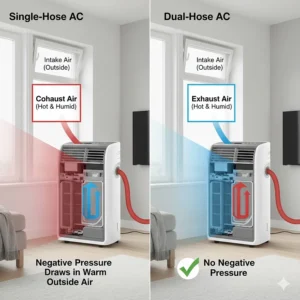
The fundamental difference between these systems dramatically impacts cooling efficiency. Single hose models create what HVAC professionals call negative pressure. As the unit expels hot air outside, it simultaneously removes conditioned air from your room. Nature abhors a vacuum, so hot outdoor air gets sucked back in through door cracks, window gaps, and any available opening.
According to Energy.gov’s air conditioning guidelines, this infiltration can reduce efficiency by 30-50%. You’re essentially cooling your room with one door slightly open.
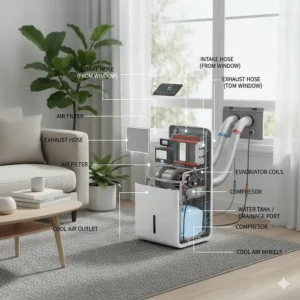
A two hose portable air conditioner solves this problem elegantly. The intake hose draws outside air specifically to cool the compressor and condenser coils. This hot air never enters your living space. The exhaust hose expels this heated air back outside. Meanwhile, your room air circulates through a completely separate system, getting cooled and returned without any loss.
The GE Appliances technical documentation explains that dual hose systems eliminate negative pressure entirely, allowing for balanced air circulation and faster temperature reduction.
The Negative Pressure Problem Explained
Picture your room as a sealed container. When a single hose unit pushes air outside, it creates lower pressure inside. Hot air from adjacent rooms, hallways, or outdoors rushes in to equalize pressure. You’re fighting a losing battle, cooling air that immediately gets replaced by unconditioned air.
Dual hose technology maintains neutral pressure. Air flows in through one hose and out through another in equal volumes. Your carefully cooled room air stays put, dramatically improving cooling efficiency and reducing runtime.
Key Benefits of Dual Hose AC Units
⚡ Superior Cooling Efficiency
Dual hose systems cool rooms approximately 2X faster than comparable single hose units. The balanced airflow allows the compressor to operate at peak efficiency without fighting pressure imbalances.
🔇 Enhanced Intake Exhaust Airflow
With dedicated pathways for intake and exhaust, air movement becomes more organized and efficient. The compressor receives consistent cooling without robbing your room of conditioned air.
💰 Long-Term Energy Savings
While dual hose units cost $100-$200 more upfront, they recover this investment through lower electricity consumption. Reduced runtime means less wear on components and longer lifespan.
🌡️ Consistent Temperature Maintenance
Once your room reaches the target temperature, dual hose systems maintain it with minimal cycling. Single hose units constantly battle infiltrating hot air, leading to temperature fluctuations.
How to Choose the Best Dual Hose Portable Air Conditioner
Step 1: Calculate Your Room Size Accurately
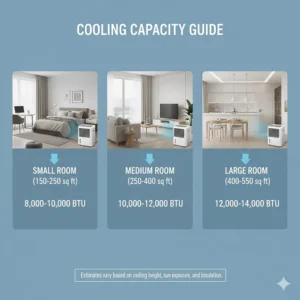
Measure length × width in feet to get square footage. Add 20% if the room receives direct sunlight for several hours daily. Kitchens need an additional 4,000 BTU to account for heat-generating appliances.
Step 2: Match BTU to Square Footage
- 8,000-10,000 BTU: 300-400 sq ft
- 12,000-14,000 BTU: 400-550 sq ft
- 16,000+ BTU: 550-800 sq ft
Step 3: Evaluate Noise Tolerance
Bedrooms require units operating below 50 dBA. Living rooms can handle 52-56 dBA. Office spaces benefit from ultra-quiet inverter models around 42-45 dBA.
Step 4: Consider Smart Features
Wi-Fi connectivity adds convenience but increases price by $50-$100. Evaluate whether app control, voice commands, and scheduling justify the premium for your lifestyle.
Step 5: Assess Window Compatibility
Most dual hose kits accommodate windows 20″-50″ wide. Casement windows require special adapters. Measure your windows before purchasing to avoid installation headaches.
Step 6: Factor in Seasonal Storage
Dual hose units typically measure 28″-35″ tall and weigh 60-75 lbs. Ensure you have storage space for off-season months, preferably climate-controlled to protect components.
Step 7: Review Warranty Coverage
Standard warranties cover 1 year parts and labor. Premium brands extend compressor coverage to 5 years. Extended warranties from retailers rarely prove cost-effective for portable ACs.
Dual Hose AC Benefits vs Traditional Window Units
| Feature | Dual Hose Portable | Window Unit | Central AC |
|---|---|---|---|
| Installation | 10-15 minutes, no tools | Requires window modification | Professional installation |
| Portability | Move room-to-room easily | Permanent window installation | Fixed system |
| Cooling Power | 8,000-16,000 BTU typical | 5,000-24,000 BTU range | Whole-home coverage |
| Energy Efficiency | Moderate to good | Excellent | Variable, often best |
| Rental-Friendly | Yes, fully reversible | May violate lease terms | Typically prohibited |
| Initial Cost | $350-$750 | $150-$600 | $3,000-$8,000+ |
Installation and Maintenance Tips
Quick Installation Guide
Position your dual hose portable air conditioner within 4-6 feet of a suitable window. Attach both hoses securely to the unit’s rear ports, ensuring tight connections. Install the window kit according to manufacturer instructions, typically sliding into the window opening and securing with provided hardware. Route hoses through the kit opening, minimizing bends and kinks that restrict airflow. Seal any gaps around the kit with foam weatherstripping to prevent hot air infiltration.
Essential Maintenance Tasks
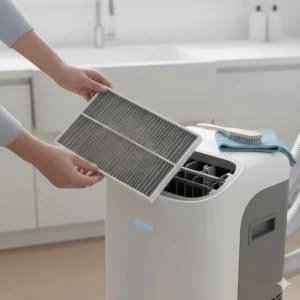
Every 2 Weeks: Remove and rinse the air filter under running water. Let it dry completely before reinstalling. Dirty filters reduce airflow by up to 25%, forcing your unit to work harder.
Monthly: Inspect hoses for cracks, tears, or disconnections. Check window seals for gaps. Vacuum around exterior vents to remove dust accumulation.
Before Storage: Drain any remaining condensate. Run the fan-only mode for 2-3 hours to dry internal components. Clean filters thoroughly. Store in a cool, dry location with a protective cover.
✨ Don’t Miss These Exclusive Deals!
🔍 Take your home cooling to the next level with these carefully selected products. Click on any highlighted item to check current pricing and availability. These tools will help you create authentic comfort your family will love!
Top Accessories for Your Dual Hose System
Window Sealing Kits
Aftermarket window seals from brands like gulrear offer better insulation than stock kits. Look for dual-layer foam strips and adjustable panels that accommodate various window sizes. The gulrear kit includes security locks for peace of mind when your AC occupies a window or door gap.
Hose Extensions
Standard hoses extend 4-5 feet. Extension hoses allow placement flexibility but reduce efficiency by 5-10% for each additional foot. Use only when necessary and select same-diameter hoses to maintain proper airflow.
Drain Pumps
For high-humidity environments where manual drainage becomes frequent, condensate pumps automatically remove water to external drains or windows. Budget $40-$80 for reliable models.
Smart Thermostats
Third-party smart thermostats like those from Cielo add app control and automation to non-smart AC units. Schedule temperature changes, monitor energy usage, and integrate with home automation systems.
Common Issues and Troubleshooting
Unit Runs But Doesn’t Cool
Check that both hoses are properly connected and not kinked. Verify the exhaust hose isn’t pushing into the intake, recycling hot air. Clean or replace the air filter. Ensure windows and doors remain closed during operation.
Excessive Noise
Rumbling typically indicates a loose drain plug or unstable surface. Place the unit on a rubber mat to dampen vibrations. Squealing suggests fan blade obstruction; power off and inspect for debris.
Frequent Water Tank Alerts
High humidity environments produce more condensate than auto-evaporation can handle. Run a dehumidifier separately to reduce moisture load. Connect a continuous drain hose to eliminate manual emptying. Consider upgrading to a model with higher dehumidification capacity.
E1 or Error Codes
Most error codes indicate sensor malfunctions. Unplug the unit for 5 minutes to reset the control board. If codes persist, contact manufacturer support before attempting repairs, as DIY troubleshooting often voids warranties.
Energy Efficiency and Operating Costs
Running a 14,000 BTU dual hose portable air conditioner approximately 8 hours daily costs $40-$65 monthly at average U.S. electricity rates ($0.13/kWh). Inverter models reduce this by 30-40% through variable-speed compressor operation.
Compare this to window units drawing $25-$45 monthly for equivalent coverage, or central AC systems costing $150-$300+ monthly for whole-home cooling. Portable dual hose systems occupy the middle ground, offering targeted cooling efficiency without whole-home system installation costs.
Maximize efficiency by closing doors to contain cool air, using window treatments during peak sun hours, and setting temperatures to 76-78°F rather than sub-70°F extremes. Each degree above 72°F reduces energy consumption by approximately 3%.
Real User Experiences and Reviews
Sarah from Phoenix shares: “I was skeptical about portable ACs after my old single hose unit barely made a dent in my bedroom heat. The Whynter dual hose changed everything. My 400 sq ft bedroom goes from 85°F to 72°F in about 20 minutes now.”
Mike in Florida notes: “The Midea Duo’s quietness impressed me most. I can have conversations while it runs on high, something impossible with my previous portable. The app control means I pre-cool my home office before my workday starts.”
Jennifer from Texas emphasizes: “The Gasbye’s 3-year warranty sealed the deal. When my unit developed a minor issue after 18 months, they sent a brand new replacement within a week. That’s the kind of customer service that creates loyal customers.”
FAQ
❓ How much electricity does a dual hose portable air conditioner use daily?
❓ Can you run a dual hose portable AC all night safely?
❓ Do two hose portable air conditioner units need drainage?
❓ What's the lifespan of a quality dual hose portable air conditioner?
❓ Are dual hose portable ACs more energy efficient than single hose models?
Conclusion: Making Your Dual Hose Investment Count
The dual hose portable air conditioner landscape in 2026 offers compelling options across every budget range. From the award-winning reliability of the Whynter ARC-14S to the budget-friendly smart features of the Hisense HAP0824TWD, there’s a perfect match for your cooling needs.
Remember that the cheapest option rarely provides the best value. A $200 single hose unit that runs constantly, creates uncomfortable drafts, and fails after two seasons costs more than a $500 dual hose system that delivers consistent cooling for a decade.
Prioritize quiet operation if bedroom or office use is primary. Invest in inverter technology for long-term energy savings. Select appropriate BTU capacity for your space rather than oversizing, which causes short-cycling and inefficiency.
Your comfort during summer heat waves depends on choosing equipment that actually works as advertised. Dual hose technology isn’t marketing hype; it’s physics applied correctly to portable cooling. Make the informed choice that keeps your space comfortable without draining your wallet or patience.
Recommended for You
- 7 Best Portable Air Conditioner Without Hose 2026
- 7 Best Portable Air Conditioner for Bedroom 2026 – Quiet & Efficient
- Best Portable Air Conditioner 2026: Top 7 Tested & Reviewed
Disclaimer: This article contains affiliate links. If you purchase products through these links, we may earn a small commission at no additional cost to you.
✨ Found this helpful? Share it with your friends! 💬🤗
