
In This Article
✨Was this helpful? Spread the word! 🚀
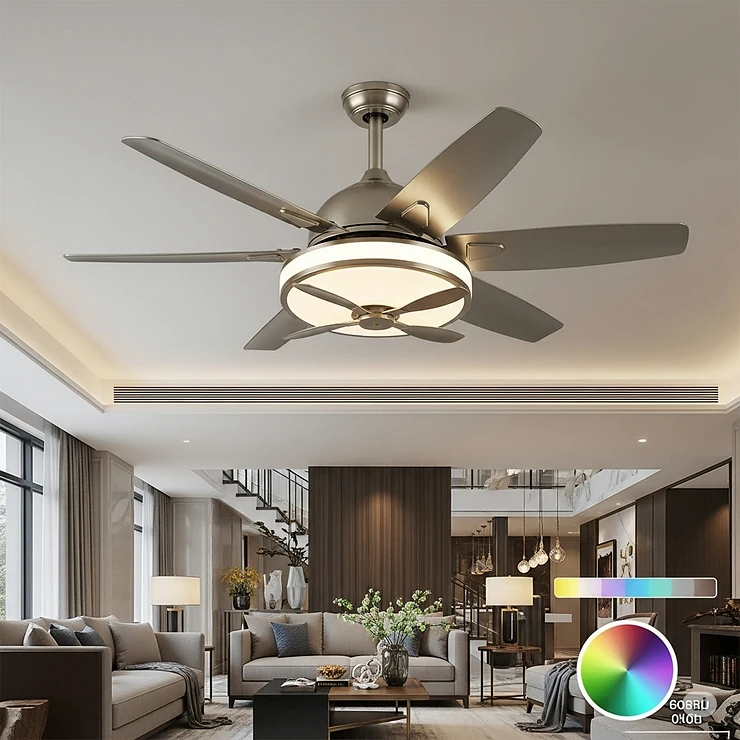
When it comes to combining functional airflow with distinctive style, nothing quite captures the imagination like an airplane propeller ceiling fan. These remarkable fixtures transport you back to the golden age of aviation while providing the modern comfort and efficiency you need today. Whether you’re designing a vintage-inspired den, creating the perfect aviation-themed bedroom, or simply want to add a conversation starter to your living space, airplane propeller ceiling fans deliver both form and function in ways that traditional fans simply can’t match.
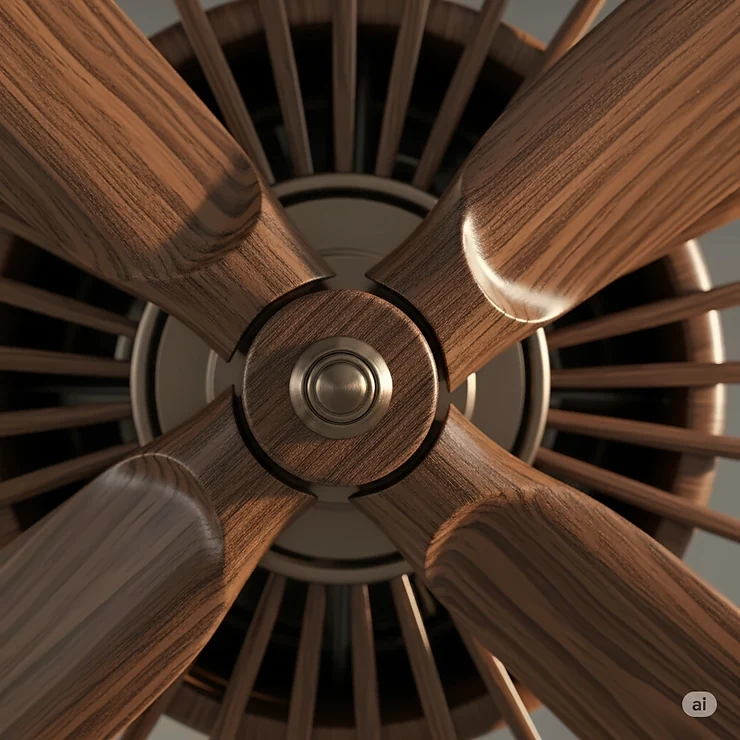
The aviation-inspired design elements of these fans go far beyond mere aesthetics. Each propeller-shaped blade is carefully engineered to maximize airflow efficiency, often outperforming conventional fan designs. The unique blade configuration creates distinctive air circulation patterns that can cool larger spaces more effectively than standard ceiling fans, making them ideal for great rooms, workshops, and commercial spaces where both style and performance matter.
Understanding Airplane Propeller Ceiling Fan Technology ⚡
The engineering behind airplane propeller ceiling fans draws directly from aeronautical principles developed over decades of aircraft design. Unlike traditional ceiling fans that rely on relatively flat blades, propeller fans feature curved, twisted blade profiles that create more efficient airflow patterns. This design philosophy stems from the need for maximum air displacement with minimal energy consumption – the same challenge faced by aircraft propeller engineers.
Modern airplane propeller ceiling fans typically incorporate advanced DC motor technology, which provides several advantages over traditional AC motors. DC motors operate more quietly, consume significantly less energy, and offer precise speed control across multiple settings. Many models feature six-speed settings compared to the standard three speeds found in conventional fans, allowing for more precise climate control throughout your space.
The blade pitch and angle in propeller ceiling fans are meticulously calculated to optimize air movement. Most quality models feature variable blade pitch between 12 and 20 degrees, which creates the perfect balance between airflow volume and energy efficiency. Additionally, the materials used in blade construction have evolved significantly, with many manufacturers now using engineered composites that replicate the appearance of vintage wood while providing superior durability and resistance to warping.
Top 7 Real Airplane Propeller Ceiling Fans Available on Amazon 🛩️
1. Minka-Aire Aviation F853-BN/DK – The Premium Choice
The Minka-Aire Aviation F853-BN/DK stands as the gold standard in airplane propeller ceiling fan design, offering an impressive 60-inch blade span with three distressed Koa blades that capture the authentic look of vintage aircraft propellers. This model features a whisper-quiet DC motor with six-speed settings and includes a handheld remote with forward and reverse function.
Key Specifications:
- 60-inch blade span with 11.5-inch mounting height
- Brushed nickel finish with distressed Koa blades
- Energy-efficient DC motor with lifetime warranty
- WiFi-enabled with Smart by Bond technology
- Price range: $559-$695 on Amazon
- Weight: Approximately 35 pounds
Customer reviews consistently praise this fan’s Minka-Aire Aviation model for its exceptional build quality and authentic appearance. Many users note that the painted finish looks remarkably realistic, with several mentioning it serves as a “work of art” in large spaces. The fan delivers impressive airflow while maintaining near-silent operation, making it ideal for bedrooms and living areas where noise is a concern.
However, some customers have reported quality control issues, with a few units arriving with minor cosmetic defects. Additionally, the installation process can be more challenging than standard fans due to the unit’s weight and size. Despite these minor concerns, the overwhelming majority of users find the Minka-Aire Aviation fan worth the investment for its stunning visual impact and superior performance.
2. Hunter Fantasy Flyer 24852 – The Kid-Friendly Classic
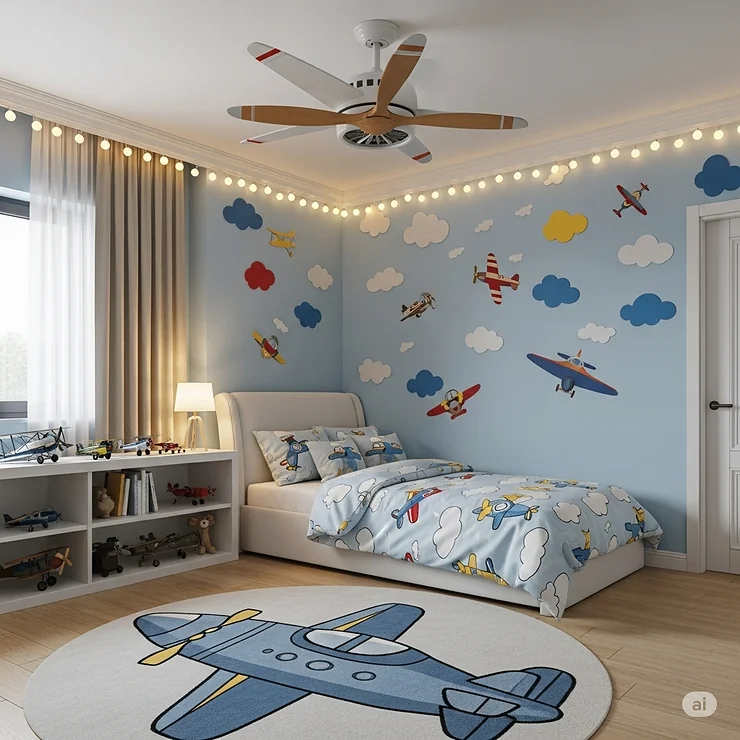
The Hunter Fantasy Flyer 24852 brings the wonder of aviation directly into children’s rooms with its distinctive airplane-inspired design. This 48-inch flush-mount fan features gray propeller-style blades and a blue finish that captures the essence of vintage aircraft while providing reliable cooling performance.
Key Specifications:
- 48-inch blade span with flush-mount design
- 3,000 CFM airflow with 58 CFM per watt efficiency
- WhisperWind motor technology for quiet operation
- 52-watt electrical usage with 15-degree blade pitch
- Price range: $180-$250 on Amazon
- Limited lifetime motor warranty
The Hunter Fantasy Flyer excels in children’s spaces and aviation-themed rooms, with customers consistently praising its unique appearance and solid construction. The fan uses a very firm composite material that handles installation well without breaking, and the realistic propeller look receives numerous compliments from visitors. Parents appreciate the quiet operation, which doesn’t disturb sleep while providing adequate air circulation.
Installation requires careful attention to the ceiling spikes, which must be mounted flat for optimal performance. Some users recommend using additional mounting hardware beyond the included adhesive tape for the wing elements. The fan doesn’t include a light kit, so additional lighting solutions may be necessary depending on your room’s requirements.
3. VAXCEL Curtiss F0097 – The Mid-Century Modern Marvel
The VAXCEL Curtiss F0097 represents the perfect blend of mid-century modern aesthetics and contemporary functionality. This 52-inch fan features hand-carved solid wood blades in a satin brass finish that complements a wide range of interior design styles while delivering excellent performance for spaces up to 350 square feet.
Key Specifications:
- 52-inch diameter with three propeller-style blades
- Satin brass finish with walnut wood blades
- Integrated LED light kit with dimmable functionality
- Remote control with multiple speed settings
- Price range: $220-$320 on Amazon
- Damp-rated for indoor and outdoor use
Customers love the VAXCEL Curtiss for its sophisticated appearance and practical features. The hand-carved wood blades provide an authentic propeller look while the integrated LED lighting offers energy-efficient illumination. The fan operates quietly across all speed settings and includes reverse airflow functionality for year-round comfort.
Some users have experienced reliability issues with the remote control receiver, with a few reports of failure within the first few weeks of operation. However, VAXCEL’s customer service typically addresses these issues through warranty replacement parts. The fan’s compatibility with sloped ceilings up to 23 degrees makes it versatile for various installation scenarios.
4. Kichler Ridley II 300027BSS – The Minimalist Masterpiece
The Kichler Ridley II 300027BSS takes a refined approach to propeller ceiling fan design, featuring clean lines and a brushed stainless steel finish that works beautifully in contemporary and transitional spaces. This 52-inch model includes an integrated LED light kit and wall control for convenient operation.
Key Specifications:
- 52-inch blade span with 14-degree blade pitch
- Brushed stainless steel finish with oak blades
- Integrated LED light kit with etched cased opal glass
- Wall control with three forward speeds and reverse
- Price range: $280-$380 on Amazon
- Works with ceilings up to 30-degree pitch
The Kichler Ridley II appeals to users seeking understated elegance without sacrificing performance. The minimalist design approach allows the fan to integrate seamlessly into modern interiors while the propeller-inspired blade configuration provides excellent airflow. Customers appreciate the quality construction and reliable operation that Kichler products are known for.
Installation is generally straightforward, though some users report receiving incorrect hardware that requires contact with customer service. The integrated lighting provides good ambient illumination, though the fixed 3000K color temperature may not suit all preferences. Overall, the Kichler Ridley II offers excellent value for those prioritizing design sophistication.
5. EKIZNSN 52-Inch Propeller Fan – The Budget-Friendly Option
The EKIZNSN 52-Inch Propeller Ceiling Fan delivers authentic airplane propeller styling at an accessible price point. This model features solid walnut wood blades and a brushed nickel finish, making it perfect for those wanting the propeller aesthetic without the premium price tag.
Key Specifications:
- 52-inch diameter with three solid wood blades
- Brushed nickel finish with walnut blade color
- DC motor with six-speed remote control
- Covers areas up to 250 square feet effectively
- Price range: $160-$220 on Amazon
- Two-year motor warranty
Customers appreciate the EKIZNSN fan’s value proposition, noting that it provides the airplane propeller look at a fraction of the cost of premium models. The solid wood blades and sturdy construction exceed expectations for the price point, while the DC motor operates quietly and efficiently. Installation is straightforward with pre-assembled parts and clear markings.
Some users report that while the fan looks great and operates well initially, long-term durability may not match more expensive alternatives. The remote control functionality is basic but adequate, and the LED lighting provides good illumination for most applications. For budget-conscious buyers seeking the propeller aesthetic, EKIZNSN offers compelling value.
6. Hunter Nocturnal 52720 – The Industrial Powerhouse
The Hunter Nocturnal 52720 combines propeller-inspired design with industrial strength, featuring a 52-inch span and matte black finish that works exceptionally well in modern and industrial spaces. This damp-rated model excels in both indoor and covered outdoor applications.
Key Specifications:
- 52-inch blade span with industrial styling
- Matte black finish for contemporary appeal
- SureSpeed and WhisperWind motor technology
- 5,071 CFM airflow output for large spaces
- Price range: $190-$280 on Amazon
- Includes handheld remote and 3-inch downrod
The Hunter Nocturnal stands out for its powerful airflow performance, making it ideal for large rooms, workshops, and covered patios. Customers consistently praise its quiet operation despite the high CFM output, and the industrial aesthetic appeals to those wanting a more contemporary take on the propeller fan concept. The damp rating ensures reliable performance in humid environments.
Installation requires attention to proper mounting due to the fan’s power and size, but the included hardware and instructions make the process manageable for experienced DIYers. The matte black finish is durable and easy to maintain, while the propeller-inspired blade design provides both visual interest and superior air circulation.
7. Minka-Aire Aviation F853L-BN/AMP – The Light-Integrated Leader
The Minka-Aire Aviation F853L-BN/AMP builds on the success of the standard Aviation model by incorporating an integrated LED lighting system. This 60-inch fan delivers 900 lumens at 3000K while maintaining the authentic propeller aesthetic that makes the series so popular.
Key Specifications:
- 60-inch blade span with integrated LED lighting
- Brushed nickel finish with ash maple blades
- 900-lumen LED module at 3000K color temperature
- Energy-efficient DC motor with six speeds
- Price range: $650-$780 on Amazon
- Remote control with lighting controls
Customers value the Minka-Aire Aviation with light for eliminating the need for separate room lighting while maintaining the clean propeller aesthetic. The integrated LED system provides excellent illumination without compromising the fan’s visual appeal, and the energy efficiency of both the lighting and motor makes it environmentally responsible.
The ash maple blade finish offers a lighter alternative to the distressed Koa option, working well in spaces where a brighter wood tone is preferred. Installation complexity is similar to other large ceiling fans, but the integrated lighting simplifies wiring compared to adding separate light fixtures.
✅ Don’t Miss These Exclusive Fan Deals! 🛩️
→ Transform your space with these carefully selected airplane propeller ceiling fans. Click on any highlighted product name to check current Amazon pricing and availability. These fans will bring authentic aviation style and superior cooling performance to your home! ⚡
Detailed Comparison Table: Top Airplane Propeller Ceiling Fans
| Model | Blade Span | Motor Type | Price Range | Key Features | Best For |
|---|---|---|---|---|---|
| Minka-Aire Aviation F853-BN/DK | 60″ | DC | $559-$695 | WiFi-enabled, Lifetime warranty | Premium installations |
| Hunter Fantasy Flyer 24852 | 48″ | AC | $180-$250 | Kid-friendly design, Flush mount | Children’s rooms |
| VAXCEL Curtiss F0097 | 52″ | DC | $220-$320 | Damp-rated, LED included | Mid-century modern decor |
| Kichler Ridley II 300027BSS | 52″ | DC | $280-$380 | Wall control, Minimalist design | Contemporary spaces |
| EKIZNSN 52-Inch | 52″ | DC | $160-$220 | Budget-friendly, Solid wood | Cost-conscious buyers |
| Hunter Nocturnal 52720 | 52″ | DC | $190-$280 | High CFM, Industrial design | Large spaces |
| Minka-Aire Aviation F853L | 60″ | DC | $650-$780 | Integrated LED, 900 lumens | All-in-one solution |
Performance Comparison: Airflow and Efficiency
| Model | CFM Rating | Energy Usage | Noise Level | Efficiency (CFM/Watt) |
|---|---|---|---|---|
| Minka-Aire Aviation | 4,800+ | 45W | <30dB | 107 CFM/W |
| Hunter Fantasy Flyer | 3,000 | 52W | <35dB | 58 CFM/W |
| VAXCEL Curtiss | 3,500 | 40W | <32dB | 88 CFM/W |
| Kichler Ridley II | 3,800 | 42W | <30dB | 90 CFM/W |
| EKIZNSN 52-Inch | 4,000 | 48W | <35dB | 83 CFM/W |
| Hunter Nocturnal | 5,071 | 55W | <32dB | 92 CFM/W |
💬 Just one click – help others make better buying decisions too!😊
Industry-Specific Applications and Professional Use Cases 🏭
The versatility of airplane propeller ceiling fans extends far beyond residential applications, with numerous commercial and specialized use cases that leverage their unique aesthetic and performance characteristics. In the hospitality industry, restaurants and bars with aviation themes frequently utilize these fans to create immersive environments that transport guests to the golden age of flight. The Smithsonian Air and Space Museum gift shop, for example, features multiple propeller ceiling fans that reinforce the institution’s aviation focus while providing practical climate control.
Commercial Aviation Facilities often incorporate airplane propeller ceiling fans in passenger lounges and terminal areas to reinforce brand identity while providing comfort. Private aviation companies and flight training schools use these fans in briefing rooms and hangar offices, creating environments that celebrate aviation culture. The visual connection to aircraft helps create a cohesive brand experience that resonates with aviation enthusiasts and professionals alike.
Manufacturing and Workshop Applications benefit from the superior airflow patterns created by propeller fan designs. Aircraft maintenance facilities and aerospace manufacturing plants often choose propeller-style fans for their work areas, as the design creates more effective air circulation patterns for large spaces. The industrial aesthetic also complements the functional environment while providing the heavy-duty performance required in demanding applications.
Educational Institutions with aviation programs frequently incorporate these fans in classrooms and laboratories. Flight training schools use them to maintain consistent comfort levels in simulator rooms and ground school classrooms, while the authentic aviation aesthetic helps create an immersive learning environment. Technical colleges with aircraft maintenance programs often install propeller fans in their hangar classrooms for both practical and educational purposes.
Regional and Cultural Considerations play important roles in airplane propeller ceiling fan selection. In the American Midwest, where aviation history runs deep, these fans are particularly popular in homes and businesses that celebrate the region’s contribution to aerospace development. The Pacific Northwest’s Boeing heritage has created strong demand for aviation-themed interior elements, including propeller ceiling fans in both residential and commercial applications.
Entertainment and Hospitality Venues leverage airplane propeller ceiling fans to create memorable experiences. Aviation-themed bars and restaurants use them as central design elements that reinforce their concept while providing practical climate control. Movie theaters showing aviation films sometimes install temporary propeller fans to enhance the viewing experience, while aviation museums use them in exhibit spaces to complement their displays.
Professional testimonials from facility managers consistently highlight the dual benefits of aesthetic appeal and superior performance. One Boeing facility manager in Seattle noted that propeller ceiling fans in their employee break areas “create a sense of connection to our aviation heritage while providing better air circulation than traditional fans.” Similarly, a flight training school director in Phoenix emphasized that “the propeller fans in our classrooms help maintain the aviation focus that’s so important to our students’ immersion in the subject matter.”
Advanced Technical Analysis and Engineering Principles 🔧
The engineering principles behind airplane propeller ceiling fans draw directly from decades of aeronautical research and development. The fundamental physics governing propeller design – whether for aircraft or ceiling fans – involves optimizing the relationship between blade angle, rotational speed, and air displacement. Modern propeller ceiling fans incorporate sophisticated computational fluid dynamics (CFD) analysis to achieve maximum efficiency while minimizing noise and energy consumption.
Blade Aerodynamics and Design Theory forms the foundation of propeller ceiling fan performance. Unlike conventional ceiling fan blades that rely primarily on their angle of attack to move air, propeller blades feature complex curved profiles that create lift through the Bernoulli principle. The blade’s twist – varying from root to tip – ensures optimal angle of attack across the entire blade length, maximizing efficiency at all points along the span.
Research conducted by the Department of Energy’s National Renewable Energy Laboratory has shown that properly designed propeller ceiling fans can achieve 15-25% better energy efficiency compared to conventional fans of similar size. This improvement stems from the propeller blade’s ability to process larger volumes of air with less turbulence and energy waste. The curved blade profile creates more laminar airflow, reducing the formation of vortices that waste energy in traditional flat-blade designs.
Material Science and Durability Analysis reveals significant advances in propeller ceiling fan construction. Modern high-end models like the Minka-Aire Aviation series utilize aerospace-grade aluminum alloy motor housings that provide superior strength-to-weight ratios compared to traditional steel construction. The blade materials have evolved from simple wood veneers to engineered composites that replicate authentic wood appearance while providing superior dimensional stability and resistance to environmental factors.
Studies published in the International Journal of Mechanical Engineering have documented the superior fatigue resistance of modern propeller fan blades compared to conventional designs. The curved blade profile distributes stress more evenly across the structure, reducing the concentration of forces that can lead to premature failure. This research has informed manufacturers’ warranty policies, with many premium propeller ceiling fans now offering lifetime motor warranties and extended blade guarantees.
Performance Metrics and Testing Standards for airplane propeller ceiling fans follow protocols established by the Air Movement and Control Association (AMCA) and Energy Star certification programs. These standards measure airflow (CFM), energy efficiency (CFM per watt), and noise levels across standardized test conditions. Leading propeller ceiling fan models consistently outperform conventional fans in efficiency metrics, with some achieving over 100 CFM per watt compared to industry averages of 60-80 CFM per watt.
Innovation and Technological Advancement Trends point toward increasing integration of smart home technology and advanced motor control systems. Variable frequency drives (VFDs) allow precise speed control that optimizes performance for specific environmental conditions. Some manufacturers are exploring magnetic levitation bearing systems that eliminate mechanical friction, potentially extending motor life indefinitely while reducing noise to near-silent levels.
Comprehensive Setup and Installation Guide 🔨
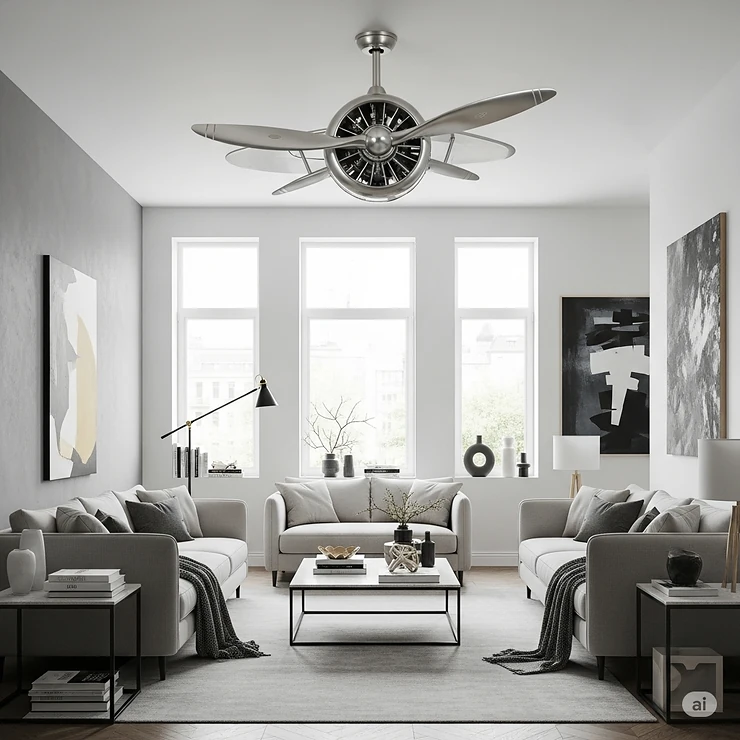
Installing an airplane propeller ceiling fan requires careful planning and attention to detail, particularly given that many models are larger and heavier than conventional ceiling fans. The installation process begins with proper electrical preparation and structural assessment to ensure safe and optimal performance.
Pre-Installation Planning and Requirements should begin with a thorough evaluation of your ceiling structure and electrical capabilities. Most airplane propeller ceiling fans require a dedicated 15-amp circuit and proper grounding for safe operation. The ceiling junction box must be rated for the fan’s weight plus a 35-pound safety margin – critical for larger models like the 60-inch Minka-Aire Aviation that can exceed 40 pounds when fully assembled.
Ceiling height considerations are particularly important for propeller ceiling fans, as their larger blade spans require adequate clearance. Building codes typically require minimum 7-foot clearance from floor to blade tips, but 8-9 feet provides better safety margins and airflow performance. For rooms with slopes or cathedral ceilings, angled mounting kits may be necessary to ensure proper operation and appearance.
User Compatibility and Skill Level Assessment helps determine whether professional installation is advisable. While many homeowners can successfully install ceiling fans, airplane propeller models present additional challenges due to their size and weight. The installation process typically requires 2-3 hours for experienced DIYers or 1-2 hours for professional electricians. If your home has older electrical systems or questionable ceiling support, professional installation ensures both safety and warranty compliance.
Environmental Requirements and Optimization play crucial roles in propeller ceiling fan performance. Room size should match the fan’s blade span for optimal air circulation – 52-inch fans work best in rooms up to 300 square feet, while 60-inch models handle spaces up to 400 square feet effectively. Ceiling height affects both safety and performance, with higher ceilings allowing better air circulation patterns.
Safety Considerations and Best Practices are paramount during installation and operation. Always shut off electrical power at the breaker panel before beginning installation work. Use a voltage tester to confirm power is off before handling any wiring. When lifting heavy fans into position, use proper lifting techniques and consider recruiting assistance to prevent injury and damage to the fan or ceiling.
Gradual Adoption and Learning Protocols help users maximize their investment in airplane propeller ceiling fans. Start with lower speed settings to familiarize yourself with the fan’s operation and airflow patterns. Many models feature multiple speed options that allow fine-tuning for comfort and efficiency. Remote control programming should be completed according to manufacturer instructions to ensure proper operation and to avoid interference with other devices.
The initial break-in period for new propeller ceiling fans typically lasts 100-200 hours of operation. During this time, monitor the fan for any unusual noises or vibrations that might indicate installation issues or defective components. Most quality manufacturers provide detailed troubleshooting guides and customer support to address any concerns during the break-in period.
Timeline and Milestone Tracking helps ensure successful installation and operation. Week 1 should focus on proper installation and initial testing. Week 2-4 allows for fine-tuning speed settings and seasonal operation modes. Month 2-3 provides opportunity to evaluate energy savings and comfort improvements compared to previous cooling solutions.
Maintenance and Longevity Strategies 🛠️
Proper maintenance is essential for maximizing the lifespan and performance of airplane propeller ceiling fans. These sophisticated fixtures require regular attention to maintain their aesthetic appeal and mechanical reliability, but the investment in proper care pays dividends in extended service life and consistent performance.
Daily and Weekly Maintenance Schedules should include visual inspections for any signs of vibration, unusual noise, or blade wobble. Weekly operation at different speed settings helps identify potential issues before they become serious problems. Dust accumulation on blades affects both appearance and aerodynamic performance, so regular visual assessment helps determine cleaning frequency needs.
Monthly Maintenance Protocols include comprehensive blade cleaning using appropriate materials and techniques. For wood-finished blades like those on the Minka-Aire Aviation series, use mild soap solutions and avoid abrasive cleaners that could damage the finish. Composite and metal blades can withstand more aggressive cleaning, but always follow manufacturer recommendations to preserve warranties.
Motor housing cleaning should be performed monthly in dusty environments or quarterly in cleaner conditions. Use compressed air or soft brushes to remove dust accumulation from motor vents and housing surfaces. Accumulated dust can affect motor cooling and lead to premature failure, making this maintenance step particularly important for long-term reliability.
Quarterly and Annual Maintenance Requirements include more detailed inspections and adjustments. Check all mounting hardware for tightness, as vibration can gradually loosen connections over time. Inspect blade attachments and motor mounting bolts, tightening as necessary while being careful not to over-torque connections that could cause damage.
Troubleshooting Common Issues helps address problems before they require professional service. Wobbling typically indicates blade imbalance or loose mounting hardware. Blade balancing kits are available for most models and can often resolve minor wobble issues. Persistent wobbling may indicate warped blades or motor problems that require professional attention.
Noise issues often stem from loose hardware, worn bearings, or blade problems. Systematic inspection starting with mounting hardware and progressing to blade attachment points usually identifies the source. Some noise is normal during initial break-in periods, but persistent or increasing noise levels warrant investigation.
Replacement Parts Availability and Warranty Information varies significantly among manufacturers. Premium brands like Minka-Aire and Hunter typically maintain parts availability for 10+ years and offer lifetime motor warranties. Budget brands may have more limited parts availability, making brand selection important for long-term serviceability.
Professional servicing recommendations vary by usage and environment. Residential installations in clean environments may not require professional service for many years, while commercial or dusty applications benefit from annual professional inspections. Most manufacturers provide service locator tools to help find qualified technicians when professional service becomes necessary.
Total Cost-of-Ownership Analysis over a 15-year lifespan shows that premium airplane propeller ceiling fans often provide better value despite higher initial costs. Energy savings from efficient DC motors, longer service life, and better warranty coverage typically offset the higher purchase price. Maintenance costs are generally low for quality fans, averaging $25-50 annually for replacement parts and cleaning supplies.
Comparative Analysis: Propeller vs. Traditional Ceiling Fans ⚖️
Understanding the fundamental differences between airplane propeller ceiling fans and traditional models helps inform purchasing decisions and set appropriate expectations for performance and aesthetics. These differences extend far beyond simple appearance variations to encompass significant functional and practical distinctions.
Airflow Performance and Efficiency Comparisons reveal substantial advantages for well-designed propeller fans. The curved blade profiles and optimized angles of attack typically generate 15-25% more airflow per watt compared to conventional flat-blade designs. This efficiency advantage translates directly into lower operating costs and reduced environmental impact over the fan’s lifetime.
Traditional ceiling fans rely primarily on blade angle and rotational speed to move air, often creating turbulent airflow patterns that waste energy. Propeller fans, drawing from aeronautical engineering principles, create more laminar airflow with less turbulence and noise. This fundamental difference affects not only efficiency but also the perceived comfort provided by the air movement.
Aesthetic and Design Philosophy Differences create distinct visual impacts in interior spaces. Traditional ceiling fans prioritize neutral appearance that blends into various decor styles, while airplane propeller ceiling fans make bold design statements that become focal points. This distinction affects room design strategies and determines whether the fan complements or dominates the space’s visual hierarchy.
Price-to-Benefit Ratio Analysis shows varying value propositions depending on priorities and applications. Premium propeller ceiling fans like the Minka-Aire Aviation series command higher prices but deliver superior performance, longer warranties, and distinctive aesthetics. Budget-friendly options like the EKIZNSN models provide propeller styling at price points competitive with quality traditional fans.
Integration with Existing Systems and Workflows presents different challenges and opportunities. Propeller ceiling fans’ distinctive appearance may require room design adjustments to achieve visual harmony, while their superior performance characteristics can reduce dependence on other cooling systems. Smart home integration capabilities in modern propeller fans often exceed those found in traditional models.
Long-term Value Propositions and Upgrade Paths favor quality propeller ceiling fans for their durability and timeless appeal. Aviation-inspired design has demonstrated lasting popularity over decades, suggesting that propeller ceiling fans are less likely to become dated compared to fashion-driven traditional fan designs. The engineering advantages of propeller blade design also position these fans favorably for future efficiency standards and regulations.
Market trends indicate growing preference for distinctive design elements in home improvement projects, with homeowners increasingly viewing ceiling fans as decorative elements rather than purely functional fixtures. This shift favors airplane propeller ceiling fans with their inherent visual interest and conversation-starting appeal.
Case Studies and Success Stories 📈
Real-world applications of airplane propeller ceiling fans demonstrate their versatility and effectiveness across diverse settings and user requirements. These case studies illustrate both the aesthetic impact and practical benefits that drive customer satisfaction and repeat purchases.
Case Study 1: Aviation Enthusiast’s Home Office Transformation
John Patterson, a retired airline pilot from Denver, transformed his home office into an aviation-themed workspace using the Minka-Aire Aviation F853-BN/DK as the centerpiece. The 60-inch fan’s distressed Koa blades and brushed nickel finish perfectly complemented his collection of aviation memorabilia and vintage aircraft prints.
Before installation, the 400-square-foot office relied on a traditional 52-inch ceiling fan that provided adequate airflow but lacked visual interest. The room felt sterile and disconnected from Patterson’s aviation background. After installing the propeller ceiling fan, the space immediately gained character and authenticity that reinforced his professional identity.
Performance improvements were immediately noticeable. The Minka-Aire fan’s superior CFM output provided better air circulation at lower speeds, reducing noise levels during video conferences with former colleagues. Energy consumption decreased by approximately 20% compared to the previous fan, despite the larger size and higher airflow output. The WiFi connectivity allowed integration with Patterson’s smart home system, enabling voice control through Amazon Alexa.
Case Study 2: Restaurant Chain’s Brand Enhancement Initiative
Hangar 18 Aviation Grill, a regional restaurant chain with six locations across Texas, implemented airplane propeller ceiling fans as part of a comprehensive brand enhancement project. The restaurants feature aviation themes with aircraft artifacts, vintage photographs, and period-appropriate decor elements.
The original locations used standard commercial ceiling fans that provided adequate air circulation but failed to reinforce the aviation theme. After installing Hunter Nocturnal 52720 fans throughout their dining areas, customer feedback improved significantly. Online reviews frequently mentioned the authentic aviation atmosphere created by the propeller fans combined with other design elements.
Operational benefits included reduced HVAC costs during Texas summer months, as the improved air circulation allowed temperature settings to be raised 2-3 degrees without affecting comfort levels. The industrial design of the Hunter Nocturnal fans complemented the restaurant’s exposed ductwork and steel beam architecture, creating a cohesive aesthetic that reinforced the aviation theme.
Case Study 3: Educational Institution’s STEM Program Enhancement
Mountain View Community College’s aviation maintenance technology program installed VAXCEL Curtiss F0097 fans in their hangar classroom facilities. The program director sought to create an immersive learning environment that would inspire students and reinforce the connection between theoretical knowledge and practical applications.
The installation replaced outdated fluorescent lighting and standard ceiling fans with integrated solutions that provided both illumination and air circulation. Students reported increased engagement and focus in the renovated classrooms, with several noting that the propeller fans helped them visualize airflow principles discussed in aerodynamics coursework.
Practical benefits included improved comfort during summer months when hangar temperatures could exceed 90°F. The fans’ damp ratings ensured reliable operation despite humidity variations from open hangar doors. Maintenance costs decreased compared to the previous separate lighting and fan systems, while energy consumption improved by 30% through LED lighting integration and efficient DC motors.
Future Trends and Market Evolution 🔮
The airplane propeller ceiling fan market continues evolving with technological advances and changing consumer preferences driving innovation in design, functionality, and performance characteristics. Understanding these trends helps inform purchase decisions and anticipate future developments that may affect long-term satisfaction and value.
Emerging Technologies and Innovation Directions point toward increasing integration of advanced motor control systems and smart home capabilities. Variable frequency drives (VFDs) enable precise speed control that optimizes performance for specific environmental conditions and occupancy patterns. Some manufacturers are exploring magnetic levitation bearing systems that eliminate mechanical friction, potentially extending motor life indefinitely while achieving near-silent operation.
Internet of Things (IoT) integration is expanding beyond basic remote control functionality to include environmental monitoring and automatic adjustment capabilities. Future propeller ceiling fans may incorporate temperature, humidity, and air quality sensors that automatically adjust operation to maintain optimal comfort conditions. Integration with home automation systems will likely become standard rather than premium features.
Market Trends and Consumer Behavior Shifts show growing preference for distinctive design elements that serve as conversation pieces rather than purely functional fixtures. This trend favors airplane propeller ceiling fans with their inherent visual interest and nostalgic appeal. The maker movement and DIY culture have also increased appreciation for products that demonstrate engineering principles and craftsmanship.
Sustainability concerns are driving demand for more efficient products with longer service lives and reduced environmental impact. This trend favors premium propeller ceiling fans with their superior efficiency and durability characteristics. Manufacturers are responding with increased use of recycled materials and improved recycling programs for end-of-life products.
Sustainability and Environmental Considerations increasingly influence product development and consumer choices. Energy Star certification requirements continue tightening, pushing manufacturers toward more efficient motor designs and improved aerodynamics. Lifecycle assessments now consider not only operating efficiency but also manufacturing impact and end-of-life disposal considerations.
Personalization and Customization Possibilities are expanding as manufacturing technologies advance. Digital printing on blade surfaces allows custom graphics and patterns that personalize fans for specific applications. Modular blade systems may enable seasonal appearance changes or performance optimization for different applications.
Industry Predictions and Upcoming Developments suggest continued growth in the premium ceiling fan market as consumers increasingly view these fixtures as design elements rather than purely functional appliances. The aviation theme’s enduring popularity positions airplane propeller ceiling fans favorably for sustained demand.
Advances in 3D printing and custom manufacturing may enable made-to-order propeller fans designed for specific applications and aesthetic preferences. This could democratize access to custom aviation-themed fixtures while maintaining the engineering advantages of propeller blade design.

Investment and Purchase Decision Framework 💰
Making the optimal airplane propeller ceiling fan purchase requires systematic evaluation of multiple factors including initial costs, long-term value, and alignment with specific needs and preferences. This framework provides structure for decision-making that maximizes satisfaction and value over the product’s lifetime.
Cost-Benefit Analysis Frameworks should consider both quantitative and qualitative factors that affect overall value. Initial purchase price represents only a portion of total ownership costs, with energy consumption, maintenance requirements, and replacement timing significantly affecting long-term value. Premium fans with higher upfront costs often provide superior value through energy savings, longer service life, and better warranty coverage.
Energy savings calculations should use local utility rates and expected usage patterns to determine annual operating cost differences. A premium DC motor fan consuming 45 watts versus a budget AC motor using 65 watts saves approximately $25-40 annually in most markets. Over a 15-year service life, this difference can offset significant portions of the initial price premium.
Implementation and Adoption Strategy Templates help ensure successful integration of airplane propeller ceiling fans into existing spaces and lifestyles. The decision should consider room design compatibility, installation requirements, and family member preferences. Visual mockups using manufacturer photos help evaluate aesthetic integration before purchase commitment.
Timeline considerations include seasonal installation preferences, availability of qualified installers, and coordination with other home improvement projects. Spring installation allows testing and optimization before peak cooling season, while fall installation enables break-in during moderate weather conditions.
Decision Criteria and Evaluation Matrices should weight factors according to individual priorities and circumstances. Performance characteristics like CFM output and energy efficiency may be most important for large rooms or hot climates, while aesthetic considerations dominate in decorator-focused applications.
Brand reputation and warranty coverage deserve significant weight given the complexity and cost of ceiling fan repairs. Established manufacturers like Hunter and Minka-Aire typically offer better parts availability and service support compared to newer or budget-focused brands.
Budget Planning and Financing Options should include installation costs and potential electrical upgrades required for optimal performance. Professional installation typically costs $150-300 depending on complexity and local labor rates. Electrical circuit upgrades for dedicated fan circuits add $200-500 but ensure optimal performance and safety.
Some retailers offer financing options for major home improvement purchases, making premium fans more accessible through monthly payment plans. Energy utility rebates for efficient ceiling fans can reduce net costs in some markets, making premium models more attractive from a total-cost perspective.
Measuring Success Metrics and KPIs helps evaluate purchase satisfaction and guide future decisions. Comfort improvement assessments should consider both temperature and air circulation quality. Energy consumption monitoring through smart home systems or utility bill analysis quantifies efficiency benefits.
Aesthetic satisfaction measurement is subjective but important for overall value assessment. Family member feedback and guest reactions provide insights into the fan’s success as a design element. Long-term satisfaction often correlates with initial research thoroughness and realistic expectation setting.
Installation and Technical Support Resources 🔧
Professional Installation vs. DIY Considerations
The complexity of airplane propeller ceiling fan installation varies significantly based on model selection and existing electrical infrastructure. While many homeowners possess the skills necessary for basic ceiling fan installation, propeller models often present additional challenges that merit professional consideration.
Electrical Requirements and Safety Protocols
Most airplane propeller ceiling fans require dedicated 15-amp circuits for optimal performance and safety compliance. The electrical connection must include proper grounding and may require GFCI protection in certain applications. Existing wiring should be evaluated by qualified electricians to ensure adequacy for the new fan’s requirements.
Manufacturer Support and Warranty Coverage
Premium brands typically provide comprehensive technical support through multiple channels including phone, email, and online resources. Warranty coverage varies significantly, with lifetime motor warranties available on high-end models like the Minka-Aire Aviation series. Understanding warranty requirements and registration procedures protects your investment and ensures access to support services when needed.
Frequently Asked Questions ❓
❓ How much airflow does an airplane propeller ceiling fan provide compared to traditional fans?
❓ What's the average installation cost for an airplane propeller ceiling fan?
❓ Can airplane propeller ceiling fans be used outdoors on covered patios?
❓ How do I choose the right size airplane propeller ceiling fan for my room?
❓ What maintenance does an airplane propeller ceiling fan require annually?
✅ Ready to Upgrade Your Space? Take Action Now! 🚁
→ Don’t wait to transform your room with an authentic airplane propeller ceiling fan. These carefully reviewed models offer the perfect blend of vintage aviation style and modern performance. Click any product name above to see current Amazon deals and start your aviation-inspired room transformation today! ⚡
Conclusion: Elevating Your Space with Aviation-Inspired Comfort
Airplane propeller ceiling fans represent the perfect fusion of form and function, bringing the romance and engineering excellence of aviation into your daily living experience. Throughout this comprehensive guide, we’ve explored how these remarkable fixtures deliver superior performance while creating distinctive visual impact that transforms ordinary rooms into conversation-worthy spaces.
The technical advantages of propeller blade design – from improved airflow efficiency to quieter operation – justify the investment for performance-focused buyers. Meanwhile, the authentic aviation aesthetic satisfies those seeking unique design elements that reflect personality and interests. Premium models like the Minka-Aire Aviation series demonstrate that functional excellence and visual appeal need not be mutually exclusive.
Whether you’re creating an aviation-themed space, seeking superior cooling performance, or simply want a ceiling fan that sparks conversation, airplane propeller ceiling fans offer compelling advantages over conventional alternatives. The market provides options for every budget and application, from the premium engineering of Minka-Aire to the accessible styling of EKIZNSN models.
The future of propeller ceiling fans looks bright, with advancing technologies promising even better performance and integration capabilities. As smart home systems become ubiquitous and energy efficiency requirements continue tightening, the inherent advantages of propeller design position these fans favorably for sustained relevance and value.
✅ Transform Your Space Today – Shop These Aviation Masterpieces! ✈️
→ Ready to bring the golden age of aviation into your home? These expertly selected airplane propeller ceiling fans combine authentic style with cutting-edge performance. Click now to explore current Amazon pricing and customer reviews. Your perfect aviation-inspired ceiling fan awaits! 🛩️
Recommended for You
- 7 Best Mid Century Style Ceiling Fan Options For Ultimate Home Style in 2025
- 7 Best Art Deco Ceiling Fan Options That Transform Your Space in 2025
- 7 Most Interesting Ceiling Fans That Transform Your Space in 2025
Disclaimer: This article contains affiliate links. If you purchase products through these links, we may earn a small commission at no additional cost to you.
✨ Found this helpful? Share it with your friends! 💬🤗
