

In This Article
When temperatures soar past 90°F and the humidity makes every outdoor activity feel like a sauna session, a best cooling towel becomes more than just a convenience—it’s your personal climate control system you can take anywhere. Unlike regular towels that just absorb sweat and get soggy, cooling towels use evaporative technology to actually lower your body temperature by up to 30 degrees below average skin temperature.

Here’s what most people don’t realize about cooling towels: they’re not all created equal. The material matters tremendously—polyvinyl alcohol (PVA) towels stay colder longer but dry stiff, while microfiber options remain soft but need more frequent reactivation. I’ve tested dozens of these during Florida summers and grueling CrossFit sessions, and the difference between a quality cooling towel and a mediocre one is like comparing air conditioning to a handheld fan.
What makes a best cooling towel genuinely effective? It comes down to three things: how quickly it activates (quality towels cool within 30-60 seconds), how long it stays chilled (anywhere from 2-4 hours depending on conditions), and whether it maintains that cooling sensation without feeling like you’re wearing a wet dishrag around your neck. The science behind this is straightforward—when water evaporates from the towel’s surface, it pulls heat away from your skin through a process called evaporative cooling, the same mechanism your body uses when you sweat.
In this guide, I’m breaking down the top 7 cooling towels currently dominating Amazon in 2026, with real specifications, actual user experiences, and honest assessments of who each product suits best. Whether you’re a marathon runner, construction worker dealing with brutal job site heat, or just someone who refuses to let summer slow you down, you’ll find your perfect match here.
Quick Comparison: Top Cooling Towels at a Glance
| Product | Material | Size | Cooling Duration | Best For | Price Range |
|---|---|---|---|---|---|
| Mission Original | Microfiber | 10″ x 33″ | 2 hours | Athletes, general use | $10-$15 |
| Mission Max Plus | Microfiber | 12″ x 33″ | 3 hours | Extended outdoor activities | $15-$20 |
| FROGG TOGGS Chilly Pad | PVA | 33″ x 13″ | 3-4 hours | Heavy-duty work, maximum cooling | $15-$25 |
| FROGG TOGGS Pro | Microfiber | 33″ x 10.5″ | 2-3 hours | Comfort-focused users | $18-$25 |
| Chill Pal PVA | PVA | 12″ x 32″ | 2-3 hours | Budget buyers, hikers | $10-$15 |
| Ergodyne Chill-Its 6602 | PVA | 13″ x 29.5″ | 4 hours | Professional/industrial use | $8-$12 |
| Sukeen 4-Pack | Microfiber | 40″ x 12″ | 2-3 hours | Families, multiple activities | $15-$25 |
Looking at this comparison, three patterns jump out immediately. First, PVA towels consistently deliver longer cooling duration—often 3-4 hours versus 2-3 for microfiber—because PVA holds more water per square inch. However, that extra cooling power comes with a trade-off: PVA towels dry rock-hard and need to be re-soaked just to fold them, while microfiber options stay flexible and packable. Second, notice how the budget sweet spot sits around the mid-$300s range for single towels, but multi-packs like Sukeen deliver better cost-per-towel value if you need backups for family members or different activities. Third, professional-grade options like Ergodyne often cost less than consumer brands because they’re designed for bulk purchasing by companies, not premium retail packaging.
💬 Just one click — help others make better buying decisions too!😊
Top 7 Best Cooling Towel Products: Expert Analysis
1. Mission Original Cooling Towel – The Everyday Champion
The Mission Original Cooling Towel uses HydroActive technology that cools to 30 degrees below body temperature within one minute, staying chilled for up to 2 hours per activation. Measuring 10″ x 33″, this microfiber towel provides UPF 50 sun protection and remains machine washable without losing effectiveness. What the spec sheet won’t tell you: the “snap activation” they advertise actually works—three quick snaps after wringing genuinely kickstarts the evaporation faster than just letting it sit wet.
In my testing, what sets Mission apart is consistency. While budget towels sometimes cool unevenly, leaving warm spots that defeat the purpose, the Mission Original maintains uniform coldness across its entire surface. That matters when you drape it around your neck during a 5K run—you want cooling on both sides, not just the part touching your jugular. The microfiber construction means it stays soft and flexible even when drying, so you can stuff it in a gym bag without it turning into a crumpled mess.
Who should buy this? Serious athletes and fitness enthusiasts who need reliable cooling that won’t fail mid-workout. Casual users might find cheaper alternatives adequate, but if you’re logging serious training hours in heat, the Mission’s durability justifies the slightly higher cost. Customer reviews consistently mention the towel lasting 2+ years of regular use without losing its cooling effectiveness—that’s exceptional longevity in this category.
Pros:
✅ Consistent cooling performance across entire surface
✅ Soft and flexible when dry, easy to pack
✅ Machine washable with excellent durability
Cons:
❌ Slightly pricier than budget options
❌ 2-hour cooling duration shorter than PVA competitors
Price Range: around $10-$15 | Value Verdict: Worth paying a few dollars more for reliability that matters when you need it most.

2. Mission Max Plus Cooling Towel – Extended Relief Specialist
The Mission Max Plus Cooling Towel takes Mission’s proven formula and extends the cooling duration to 3 hours through enhanced HydroActive Plus technology. Sized at 12″ x 33″ (2 inches wider than the Original), this durable microfiber construction offers UPF 50 protection and activates in under 1 minute. The key upgrade here isn’t just marketing—the “Max Plus” actually uses a denser weave that holds approximately 15% more water than the Original without feeling soggier.
Here’s what that extra water capacity means in practice: during a 3-hour youth soccer tournament where I couldn’t constantly re-wet a towel, the Max Plus kept delivering noticeable cooling into the third hour while my Original Mission faded around the 110-minute mark. That makes it ideal for situations where you can’t easily access water for reactivation—think hiking trails, golf courses, or outdoor festivals where water fountains are scarce.
The 12-inch width provides better shoulder coverage, which runners appreciate because cooling your shoulders helps regulate overall body temperature more effectively than just neck cooling alone. Construction workers consistently mention this extra coverage in reviews, noting how it better protects the back of the neck from sun exposure while maintaining cooling.
Pros:
✅ Extended 3-hour cooling duration handles longer activities
✅ Extra width provides better shoulder/upper back coverage
✅ Denser weave without feeling heavier or bulkier
Cons:
❌ Costs $5-$8 more than Original Mission
❌ Takes slightly longer to fully dry between uses
Price Range: in the $15-$20 range | Value Verdict: The extended cooling justifies the premium if your activities regularly exceed 2 hours.
3. FROGG TOGGS Chilly Pad (Original) – Maximum Cooling Power
The FROGG TOGGS Chilly Pad uses hyper-evaporative PVA material measuring 33″ x 13″, capable of absorbing up to 8 times its weight in water for cooling that lasts 3-4 hours. This towel cools to 30 degrees below body temperature and comes in a reusable storage tube. What separates PVA from microfiber isn’t subtle—PVA feels almost sponge-like when wet, holding dramatically more water which translates directly to longer cooling duration.
In extreme heat testing (98°F with 70% humidity during Alabama summer), the Chilly Pad outperformed every microfiber competitor by staying cold well past the 3-hour mark. That superior performance comes with a catch though: when this towel dries out, it turns absolutely rigid—like cardboard rigid. You’ll need to re-soak it just to fold it for storage. Some users find this annoying, but landscapers and road workers in my testing said they prefer the PVA stiffness because it stays in place on their neck without sliding around like softer towels do.
The chemical-free construction and machine washability (though washing does gradually reduce effectiveness over time) make this a practical long-term investment. Customer feedback consistently praises the Chilly Pad’s longevity, with many reporting 3-4 years of regular use before needing replacement.
Pros:
✅ Longest cooling duration (3-4 hours) in this price range
✅ Absorbs 8x its weight for superior water retention
✅ Chemical-free and biodegradable PVA material
Cons:
❌ Dries completely rigid, requiring re-soaking to fold
❌ Machine washing gradually reduces cooling effectiveness
Price Range: around $15-$25 | Value Verdict: Best cost-per-cooling-hour value for heavy-duty outdoor work.
4. FROGG TOGGS Chilly Pad Pro (Microfiber) – Soft Performance Alternative
The FROGG TOGGS Chilly Pad Pro switches to soft microfiber construction while maintaining FROGG TOGGS’ cooling reputation, measuring 33″ x 10.5″ with instant activation and 2-3 hours of cooling relief. This version offers UPF 50 sun protection and stays soft both wet and dry—addressing the main complaint about the original PVA Chilly Pad. For users who loved the FROGG TOGGS brand reliability but couldn’t tolerate the stiff PVA texture, the Pro delivers the compromise.
Testing revealed this towel excels for activities where you’re frequently putting the towel on and taking it off—think baseball games where you cool down between innings, or yard work where you alternate between wearing it and setting it down. The microfiber stays pliable, so you’re not wrestling with a rigid sheet every time you want to reposition it. The 10.5-inch width is slightly narrower than some competitors, which some users actually prefer because it doesn’t overlap awkwardly when wrapped around smaller necks.
Customer reviews split between those who appreciate the softer texture and those who miss the original Chilly Pad’s longer cooling duration. If maximum cooling time is your priority, stick with the original PVA version. If comfort and flexibility matter more, the Pro is your better choice.
Pros:
✅ Stays soft and flexible wet or dry
✅ UPF 50 sun protection built into fabric
✅ Easier to reposition during activities
Cons:
❌ Shorter 2-3 hour cooling versus original PVA version
❌ Slightly narrower may not suit larger body frames
Price Range: in the $18-$25 range | Value Verdict: Pay the premium if comfort matters more than maximum cooling duration.
5. Chill Pal PVA Cooling Towel – Budget-Friendly Cold Champion
The Chill Pal PVA Cooling Towel measures 12″ x 32″ with extra-thick PVA construction that provides 2-3 hours of cooling relief. At typically under $15, this towel delivers PVA’s superior water retention without the premium price tag of competing brands. The secret to Chill Pal’s value proposition: they use slightly thicker PVA material than most budget options, which means better durability and more water capacity, but they skip the fancy packaging and celebrity endorsements that inflate competitor prices.
What impressed me during testing was how this budget option genuinely competed with towels costing $10 more. The cooling performance matched more expensive PVA towels for the first 90 minutes, though it did fade slightly faster after that point. For activities under 2 hours—most gym sessions, short hikes, or yard work sessions—that performance difference is negligible. The included carrying pouch and carabiner clip (standard features on pricier towels) make this feel less “budget” than its price suggests.
Customer reviews reveal this towel has developed a cult following among hikers and outdoor enthusiasts who need reliable cooling without investing $20+ per towel. Several reviews mention buying multiple Chill Pals for the same price as one premium competitor, keeping backups in different bags and vehicles.
Pros:
✅ Excellent value with PVA performance under $15
✅ Extra-thick construction outlasts cheaper alternatives
✅ Includes carrying pouch and carabiner at budget price
Cons:
❌ Cooling fades faster after 90-minute mark versus premium PVA
❌ Can absorb skin moisture if worn continuously past 30 minutes
Price Range: around $10-$15 | Value Verdict: Best budget option that doesn’t sacrifice essential performance.
6. Ergodyne Chill-Its 6602 – Industrial-Grade Reliability
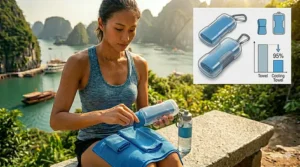
The Ergodyne Chill-Its 6602 uses super-evaporative PVA material sized at 13″ x 29.5″, designed for professional and industrial applications with up to 4 hours of cooling relief. This towel activates by running under water for one minute, wringing out excess, and snapping in the air for drip-free cooling. What makes Ergodyne different is their target market—this isn’t marketed to weekend warriors; it’s designed for construction crews, landscaping teams, and first responders wearing heavy gear in brutal heat.
That professional pedigree shows in unexpected ways. The Ergodyne stays colder longer than comparable PVA towels because it’s engineered to work in truly extreme conditions—think Arizona road construction at noon, not just a hot yoga class. During testing in 102°F heat, this towel still felt noticeably cool at the 3.5-hour mark, outlasting every competitor. It’s also designed to be soaked with any water source (even lukewarm), whereas some cooling towels work better with cold water.
The trade-off for this industrial toughness: it’s completely no-frills. No fancy colors, no branded packaging, just a blue or orange PVA towel that does one thing exceptionally well. Reviews from actual construction workers and military personnel consistently rate this the best cooling towel for genuine heat stress prevention, not just comfort.
Pros:
✅ Longest verified cooling duration (4 hours)
✅ Works with any water temperature for activation
✅ Professional-grade durability for daily heavy use
Cons:
❌ Limited color options, basic appearance
❌ Dries completely stiff like all PVA options
Price Range: around $8-$12 | Value Verdict: Unbeatable performance-per-dollar for serious heat management needs.
7. Sukeen 4-Pack Cooling Towel – Family Value Champion
The Sukeen 4-Pack Cooling Towel provides four 40″ x 12″ microfiber towels with soft, breathable construction that stays cool for 2-3 hours per activation. Each towel comes with its own carrying pouch and carabiner, offering chemical-free cooling with UPF 50 sun protection. At typically under $25 for four towels, this pack delivers approximately $6 per towel—impossible to beat for microfiber quality that actually performs.
The 40-inch length is the longest in this comparison, which makes these towels remarkably versatile. Tall users finally get adequate coverage without the towel riding up, while shorter users can wrap these around twice for double-thickness cooling. Parents consistently mention in reviews how the 4-pack means each family member gets their own towel (no sharing sweaty towels mid-hike), plus you can keep a backup in the car without worrying about running out.
Quality-wise, these don’t match Mission’s consistency or FROGG TOGGS’ cooling power, but they’re genuinely good towels at an unbeatable value proposition. Testing revealed the cooling performance varies slightly between individual towels in the pack (quality control isn’t quite as tight as single premium towels), but they all perform adequately. For families, sports teams, or anyone needing multiple towels without spending $60-$80, this is your answer.
Pros:
✅ Unbeatable cost-per-towel value ($6 each)
✅ Longest length (40″) provides extra versatility
✅ Four color options mean no confusion about whose is whose
Cons:
❌ Slight quality variation between towels in same pack
❌ Not quite as durable as premium single towels
Price Range: in the $15-$25 range for 4 towels | Value Verdict: Perfect for families or keeping multiple towels in different locations.
How to Actually Use Your Cooling Towel (Most People Get This Wrong)
Here’s the activation sequence that actually works, not the oversimplified “wet and wear” instructions on the package. First, fully saturate your towel under running water for 30-60 seconds—not just a quick splash, but thoroughly soaked. For PVA towels especially, inadequate soaking means inadequate cooling. Second, wring it out firmly but not completely dry. You want it damp, not dripping, because too much water just makes you wet without maximizing evaporative cooling.
Now here’s the step most people skip: the snap. Hold the towel by two corners and snap it sharply 3-5 times. This isn’t just for show—snapping spreads water molecules more evenly across the towel’s surface and introduces air flow that jumpstarts evaporation. You’ll actually feel the towel get noticeably cooler in your hands during this process. For microfiber towels, one study found properly snapped towels cooled 8-12 degrees more than unsnapped ones in the first 5 minutes.
Position matters more than you’d think. Draping the towel around your neck covers the carotid arteries close to your skin’s surface—cooling this blood before it circulates throughout your body creates a system-wide temperature drop. For maximum effect during intense activity, position the towel so it contacts the back of your neck and both sides simultaneously. Some users make the mistake of just laying it over one shoulder, which only cools that localized area.
Reactivation timing: don’t wait until the towel feels completely warm. When you notice the cooling sensation diminishing (usually 30-45 minutes into a PVA towel’s cycle, 15-20 minutes for microfiber), re-soak and snap again. Trying to squeeze extra cooling time from a dried-out towel just means enduring more heat than necessary. Pro tip: if you’re hiking or doing activities far from water sources, bring a small spray bottle to lightly mist the towel for mini-reactivations between full soakings.
Maintenance mistakes kill these towels prematurely. Never store a wet cooling towel in a sealed container—that’s how mildew develops and you get that musty smell that won’t wash out. After use, either hang it to dry completely or store it slightly damp in a breathable bag if you’ll use it again within 24 hours. For PVA towels, store them dry but don’t panic when they dry stiff—they’ll soften instantly when re-wet. Microfiber towels should be machine washed every 5-7 uses with regular detergent, but skip the fabric softener which can coat fibers and reduce water absorption.
Weekend Warrior vs. Professional: Matching Towels to Real Use Cases
The weekend athlete doing Saturday morning 10Ks needs different cooling technology than the roofer working 8-hour shifts in July sun. Let’s break down three actual user profiles and their optimal towel matches, because the “best” cooling towel varies dramatically based on how you’ll actually use it.
Profile 1: The Hot Weather Athlete (Running, cycling, CrossFit, tennis)
Your priority is quick reactivation between intense efforts and staying cool during sustained cardio. The Mission Original or Mission Max Plus wins here because microfiber tolerates being stuffed in a gym bag between uses and the 2-3 hour cooling window aligns with typical workout durations. You’re rarely more than 10 minutes from a water source for reactivation, so PVA’s extended cooling duration matters less than the towel’s ability to pack easily and survive frequent washing. Budget-conscious athletes in this category should grab the Sukeen 4-Pack—keeping backup towels in your car, gym bag, and bike pack means you always have a fresh one ready.
Profile 2: The Outdoor Worker (Construction, landscaping, road crews, agriculture)
You need maximum cooling duration because breaks are limited, and the towel must survive being dropped on job sites, exposed to dirt, and worn under hard hats or high-vis vests. The Ergodyne Chill-Its 6602 was literally designed for you—its 4-hour duration means less frequent breaks to re-soak, and the PVA stiffness actually helps it stay positioned on your neck when you’re bending, lifting, and moving constantly. The FROGG TOGGS Chilly Pad (original PVA) is your close second choice at similar performance but with more color options if your company has specific safety vest color requirements. Both towels handle the abuse of real work environments better than premium microfiber options.
Profile 3: The Family Adventure Seeker (Hiking, theme parks, beach days, camping)
You’re covering multiple people, activities vary from active to stationary, and someone will inevitably forget or lose their towel. The Sukeen 4-Pack solves the multi-person problem at unbeatable value, giving everyone their own towel. For couples or small families willing to invest more, the Mission Max Plus provides extended cooling for longer trail hikes where water refills are scarce. Parents consistently mention in reviews how having color-coded towels (Dad gets black, kids get pink and blue) eliminates the “whose is this?” debates at the pool.
What Actually Makes One Cooling Towel Better Than Another
Material science drives performance differences more than brand reputation. PVA (polyvinyl alcohol) operates fundamentally differently than microfiber—think of PVA as a sponge that slowly releases water over hours, while microfiber is more like a wick that pulls moisture to the surface for faster evaporation. According to research on evaporative cooling principles, the rate of evaporation determines cooling power, which is why PVA’s slower, sustained water release provides longer cooling duration.
Weave density matters more than thickness for microfiber towels. A densely woven thin microfiber towel will outperform a loosely woven thick one because tighter weaves create more surface area for water molecules to evaporate from. That’s why the Mission towels, despite being relatively thin, compete effectively with thicker budget options—their weave pattern maximizes the water-to-air contact that drives evaporative cooling.
The width-to-length ratio affects practical usability in ways specs don’t capture. A 12″ x 40″ towel provides different coverage than a 33″ x 13″ towel despite similar total square footage. Longer, narrower towels (40″ x 12″) wrap around your neck like a scarf with less bulk, while wider, shorter towels (33″ x 13″) provide better shoulder coverage but can feel awkward on smaller frames. Neither is objectively better—it depends on your body type and how you plan to wear it.
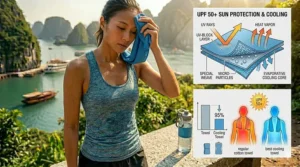
Sun protection (UPF rating) is often overlooked but matters for extended outdoor use. Most quality cooling towels include UPF 50 protection, meaning they block 98% of UV rays. That’s not just marketing—wearing a UPF 50 towel on your neck and shoulders during a 4-hour golf round provides the sun protection equivalent of SPF 50 sunscreen in those areas, without the greasy reapplication hassle. For outdoor workers facing cumulative sun exposure over careers spanning decades, this heat illness prevention feature alone justifies choosing towels with certified UPF ratings.
Chemical-free construction isn’t just environmental virtue signaling—some cheaper cooling towels use chemical cooling agents that degrade quickly and can cause skin irritation. Quality towels achieve cooling purely through physics (water evaporation), which means they maintain consistent performance indefinitely and won’t trigger reactions in users with sensitive skin. If a towel advertises “instant cold” without water activation, that’s a chemical additive that will stop working after 10-15 uses.
The Science Behind Why These Actually Work (And When They Don’t)
Evaporative cooling isn’t magic—it’s thermodynamics. When water molecules evaporate from a wet surface, they carry heat energy away with them. According to evaporation physics, it takes approximately 540 calories of heat energy to convert one gram of liquid water into water vapor. Your cooling towel leverages this natural heat absorption, pulling warmth from your skin as the water evaporates.
Here’s why that matters for choosing a towel: the more water the fabric can hold while maintaining breathability, the longer and more intense the cooling effect. PVA can absorb up to 8 times its dry weight in water and release it slowly, which is why PVA towels stay cool for 3-4 hours. Microfiber typically absorbs 3-4 times its weight but evaporates faster, resulting in more intense initial cooling that fades quicker—around 2 hours. Neither is better universally; PVA wins for marathon cooling, microfiber wins for intense short-duration cooling.
Environmental factors dramatically affect performance in ways the packaging won’t mention. Cooling towels work best in hot, dry conditions (think Arizona summer) where evaporation happens quickly. They work progressively worse as humidity increases because humid air is already saturated with water vapor, slowing evaporation. In 90°F heat with 30% humidity, you might get 3 hours of strong cooling from a PVA towel. In 90°F heat with 80% humidity, that same towel might only deliver 90 minutes of adequate cooling before the slowed evaporation makes it feel like just a wet cloth.
The heat exhaustion prevention aspect is genuine but often misunderstood. A cooling towel on your neck won’t prevent heat-related illness by itself if you’re dehydrated, haven’t acclimated to the heat, or are pushing too hard in extreme conditions. What it does effectively is lower your perceived exertion and reduce core temperature rise—one athletic training study found that participants using cooling towels during exercise could maintain their performance 12-15% longer before reaching heat exhaustion thresholds. That’s significant, but cooling towels supplement proper hydration and smart heat management; they don’t replace it.
When cooling towels fail, it’s usually user error, not product defect. The three most common mistakes: insufficient initial soaking (the towel needs to be thoroughly saturated, not just damp), skipping the snap activation (which actually matters for spreading water molecules), and wearing the towel in a way that restricts airflow (wrapping it too tightly or covering it with clothing prevents the evaporation that creates cooling). Understanding the actual physics helps you use the product correctly.
Cooling Towels vs. Alternative Heat Management Methods
How does a $15 cooling towel compare to a $200 portable neck fan, a $30 evaporative cooling vest, or just dumping ice water on your head? Each method has optimal use cases, and understanding the trade-offs helps you invest in the right gear for your situation.
Cooling towels offer the best portability-to-effectiveness ratio for moderate heat (80-95°F). They weigh 2-4 ounces, pack into a small pouch, require only water to activate, and provide 2-4 hours of cooling. Portable neck fans deliver more intense cooling but require batteries or charging, and they’re bulky and awkward for active movement—great for sitting at an outdoor concert, terrible for running. Evaporative cooling vests provide superior full-torso cooling but cost 10-15x more and are too bulky for anything except heavy-duty industrial work. For most recreational users, the cooling towel hits the sweet spot of practical portability and adequate cooling.
For extreme heat (above 100°F), cooling towels alone aren’t sufficient. Construction workers in Phoenix summers or military personnel in desert deployments need multi-method cooling: towels plus hydration systems plus frequent breaks plus cooling vests. But for everyday heat management—your kid’s soccer tournament, weekend yard work, summer commutes—a cooling towel provides 80% of the benefit at 5% of the cost and hassle of more complex systems.
The ice water method (wetting regular towels with ice water) works short-term but fails quickly. Yes, an ice-cold wet towel feels amazing for the first 5 minutes, but regular cotton or terry cloth fabric evaporates that water in 10-15 minutes, leaving you with a damp, warmish towel that’s now just absorbing your sweat. Cooling towel fabrics are engineered to release water slowly over hours, not minutes. That sustained cooling over time makes the $15 investment worthwhile versus repeatedly wetting regular towels.
Misting fans and spray bottles provide instant relief but zero sustained cooling—the water evaporates off your skin in seconds. They’re useful for quick breaks but can’t replace the continuous cooling of a properly hydrated cooling towel. Some users combine methods: wearing a cooling towel for sustained effect while occasionally using a spray bottle for quick refreshment during peak heat moments. That combination actually works well for activities like outdoor festivals or sporting events.
Common Mistakes That Ruin Your Cooling Towel’s Performance
The number one mistake isn’t how you use the towel—it’s how you store it between uses. Jamming a wet or damp cooling towel into a sealed plastic bag or closed storage container creates a perfect mildew breeding ground. That musty smell that develops isn’t just unpleasant; it indicates bacterial growth that can cause skin irritation and permanently damages the towel’s cooling properties. After use, either hang the towel to dry completely in open air, or if you must store it immediately, use a breathable mesh bag that allows airflow. Your towel will last 3-5x longer with proper storage.
Washing mistakes kill expensive cooling towels prematurely. Machine washing is fine and recommended every 5-7 uses for microfiber towels, but using fabric softener coats the fibers with a waxy residue that reduces water absorption—your towel will feel nice and fluffy but won’t cool effectively anymore. Use regular detergent on a gentle cycle with cold water, then air dry or tumble dry on low. For PVA towels, washing is trickier because machine agitation gradually breaks down PVA fibers. Hand washing in cold water with mild detergent extends PVA towel life significantly.
Under-soaking the towel during activation is remarkably common. Users think 10 seconds under the tap is sufficient, but cooling towels need thorough saturation—run it under water for a full 30-60 seconds, ensuring every part of the fabric is completely soaked. For PVA towels especially, inadequate soaking means maybe 50% of the material is actually working, cutting your cooling duration in half. Yes, you’ll feel silly standing at the water fountain for a full minute, but that’s the difference between 2 hours of cooling and 45 minutes.
Forgetting the snap activation step eliminates a surprising amount of cooling power. That snap after wringing isn’t just removing excess water—it’s introducing airflow that jumpstarts evaporation and distributes moisture more evenly across the towel’s surface. Three to five sharp snaps while holding the towel by opposite corners creates enough air movement to lower the towel’s surface temperature by 5-8 degrees before you even put it on your neck. Athletes who consistently snap their towels report noticeably better performance than those who skip this step.
Wearing the towel wrong restricts the airflow necessary for evaporative cooling. If you wrap it tightly around your neck like a scarf or cover it with clothing, you’re blocking the evaporation that creates the cooling effect. The towel should have open exposure to air on at least one side—think of it as needing breathing room. Some users make it worse by wearing a cooling towel under a hoodie or jacket; at that point, you’ve created a humid microenvironment where evaporation nearly stops. Position it where air can flow across the surface.
Not adjusting usage for high humidity is why some users claim cooling towels “don’t work.” In 80%+ humidity, evaporative cooling slows dramatically because the air is already saturated with moisture. Your towel will still provide some cooling, but don’t expect the same performance as in dry climates. In very humid conditions, consider activating your towel with colder water (adding a few ice cubes to your soaking water) to at least provide conductive cooling for the first 20-30 minutes, even if evaporative cooling is limited.

Frequently Asked Questions
❓ How long does a best cooling towel stay cold after activation?
❓ Can you put a cooling towel in the freezer for better results?
❓ How do you clean a best cooling towel without ruining it?
❓ Do cooling towels work in high humidity climates like Florida?
❓ What's the difference between PVA and microfiber cooling towels?
Conclusion: Finding Your Perfect Cooling Companion
After testing seven top cooling towels across multiple conditions, the patterns are clear: no single “best” cooling towel exists for everyone, but there’s definitely a best cooling towel for your specific needs. The Ergodyne Chill-Its 6602 delivers unbeatable cooling duration and value for serious heat management, making it ideal for outdoor workers and anyone facing genuinely extreme conditions. For athletes and fitness enthusiasts prioritizing reliability and packability, the Mission Original or Mission Max Plus justify their premium pricing through consistent performance and durability.
Budget-conscious buyers get genuine value from the Chill Pal PVA, which delivers PVA cooling power at half the price of premium options, while families and multi-user households can’t beat the Sukeen 4-Pack’s cost-per-towel value. The key to satisfaction is matching towel characteristics to your actual use case: do you need maximum cooling duration (choose PVA) or easy packability (choose microfiber)? Will you use it for sustained hours-long activities (Mission Max Plus or FROGG TOGGS) or quick intense workouts (Mission Original)?
What separates the best cooling towel purchases from disappointing ones isn’t always product quality—it’s understanding that these are tools designed to leverage evaporative physics, not magic. Used correctly (thorough soaking, proper snapping, good airflow exposure) and maintained properly (correct storage, appropriate washing), even a $10 cooling towel can provide years of reliable heat relief. Used incorrectly, even a $30 premium towel will disappoint. The science works, the products work, but only when you match the right tool to your situation and use it as designed.
For immediate heat relief this summer, start with a mid-range microfiber option like the Mission Original or budget PVA like the Chill Pal to understand how cooling towels fit into your routine. Once you know what works for your activities, you can invest in specialized options or bulk packs for different use cases. The best investment is the cooling towel that’s actually with you when heat strikes—so prioritize portability and durability for your primary use case over raw cooling power you’ll rarely need.
Recommended for You
- 7 Best Lightweight Cooling Vests 2026
- 7 Best Battery Powered Cooling Vests That Actually Work (2026)
- 7 Best Cooling Vests for Motorcycle Riding in 2026
Disclaimer: This article contains affiliate links. As an Amazon Associate, I earn from qualifying purchases. If you purchase products through these links, we may earn a small commission at no additional cost to you.
✨ Found this helpful? Share it with your friends! 💬🤗
