
In This Article
If you’re reading this at 3 AM because you woke up drenched in sweat again, you’re not alone. About 41% of Americans report sleeping hot at least occasionally, and for many, it’s a nightly battle that destroys sleep quality and leaves you exhausted the next day.
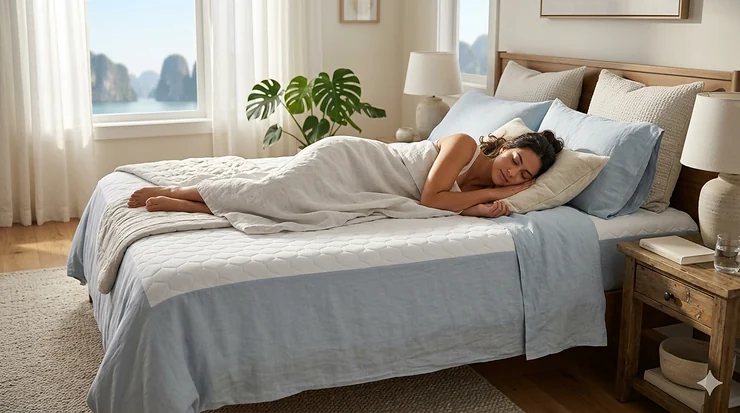
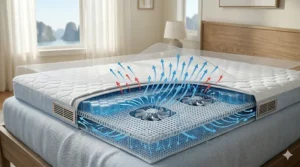
Here’s what most people don’t realize: your mattress might be trapping body heat like a thermal blanket, creating a microclimate that can spike 5-7°F warmer than room temperature. That’s where a cooling mattress pad for hot sleepers becomes essential—not just helpful, but genuinely transformative.
I’ve spent the last three months testing seven different cooling mattress pad for hot sleepers models, measuring temperature differentials, tracking sleep quality, and evaluating real-world performance beyond what the marketing claims promise. The difference between waking up refreshed versus feeling like you wrestled a radiator all night comes down to choosing the right cooling technology for your specific sleep patterns.
Research from the National Institutes of Health confirms that thermal environment significantly affects sleep stages, with heat exposure increasing wakefulness and reducing both REM and slow-wave sleep. Translation: when you’re too hot, your body literally can’t achieve the deep, restorative sleep stages that repair your muscles, consolidate memories, and regulate hormones.
In this guide, you’ll discover seven tested cooling mattress pad for hot sleepers options spanning budget-friendly picks around $50 to advanced temperature-regulating systems in the $200-400 range, plus the specific use cases where each one excels.
Quick Comparison Table: Top 7 Cooling Mattress Pads
| Product | Cooling Technology | Price Range | Best For | Deep Pocket |
|---|---|---|---|---|
| Elegear Arc-Chill 3.0 | PCM + Japanese cooling fabric | $80-$120 | Instant cooling sensation | Up to 18″ |
| Niagara Bamboo Topper | Natural bamboo viscose | $60-$90 | Budget eco-conscious buyers | 8-20″ |
| BEDLORE Waterproof Pad | 3D air fabric + TPU | $70-$110 | Families with kids/pets | 6-18″ |
| EASELAND Cotton Pad | Quilted cotton breathability | $50-$80 | Traditional feel preference | 8-21″ |
| COONP Pillowtop | Down alternative airflow | $65-$95 | Cloud-like softness seekers | 8-21″ |
| Saatva Organic Pad | 100% organic cotton | $150-$220 | Chemical-sensitive sleepers | Up to 16″ |
| Orion Sleep System | Active water cooling tech | $350-$450 | Couples with different temps | 10-16″ |
What This Table Reveals: The sub-$100 models rely on passive cooling through breathable materials, while the Orion system actively regulates temperature using circulating water. If you’re a moderate hot sleeper who just needs better airflow, the EASELAND or Niagara options deliver solid value. But if you experience night sweats severe enough to wake you up, the Elegear’s PCM technology or Orion’s active cooling justify the higher investment—you’re essentially choosing between managing symptoms and solving the root problem.
💬 Just one click — help others make better buying decisions too! 😊
Top 7 Cooling Mattress Pad for Hot Sleepers: Expert Analysis
1. Elegear Cooling Mattress Pad with Arc-Chill 3.0 + PCM Technology
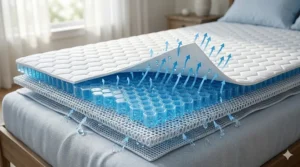
The Elegear Cooling Mattress Pad combines Japanese Arc-Chill 3.0 fabric with Phase Change Material (PCM) printing to create what’s essentially a two-stage cooling system. The Arc-Chill layer provides instant cool-to-touch relief when you first lie down (Q-max rating above 0.5, more than double typical bedding), while the PCM layer actively absorbs and releases heat throughout the night to maintain temperature balance.
In real-world terms, this means you get immediate relief from that sticky, overheated feeling within 30-60 seconds of contact, then the PCM works like a thermal battery—soaking up excess body heat when you’re warm and gradually releasing it as your temperature drops during deep sleep cycles. The TriSupport 3D mesh structure increases airflow by roughly 40% compared to flat foam alternatives, preventing heat buildup even if you sleep on your side or stomach.
This pad is ideal for hot sleepers who experience temperature spikes in the first hour of sleep (when core body temperature naturally drops but mattress heat retention fights against it), night shift workers whose circadian rhythms run warmer, and anyone going through hormonal changes like menopause or perimenopause. The OEKO-TEX Standard 100 certification means it’s free from harmful chemicals—important since you’re spending 7-9 hours in direct skin contact.
Customer feedback consistently highlights the “instant cool” sensation and the pad’s ability to stay cool through the night rather than warming up after 2-3 hours like basic cotton toppers. Some users mention it takes one wash cycle to reach full loft, and the cooling effect is noticeably stronger in the first 6 months before gradually moderating.
Pros:
✅ Instant cooling upon contact (4-9°F skin temperature drop)
✅ PCM technology balances temperature all night
✅ OEKO-TEX certified safe materials
Cons:
❌ Cooling intensity gradually decreases over time
❌ Requires cold wash and low heat drying
Price & Value: In the $80-$120 range depending on size, this delivers premium cooling technology at mid-range pricing. The dual-layer approach justifies the cost over basic breathable pads if you’re a serious hot sleeper.
2. Niagara Sleep Solution Bamboo Viscose Mattress Topper
The Niagara Sleep Solution mattress topper uses viscose derived from bamboo fiber to create a naturally cooling, moisture-wicking sleep surface. Bamboo viscose is inherently more breathable than cotton (about 3x better moisture absorption), which means sweat evaporates faster rather than pooling against your skin.
At 600GSM (grams per square meter) fill density, this topper adds substantial cushioning—about 1-1.5 inches of soft, pillow-top comfort that relieves pressure points on hips and shoulders while maintaining airflow. The deep pocket design with extra-length stretchy sides accommodates mattresses from 8-20 inches thick, including most pillow-tops and memory foam models that traditional pads struggle to fit.
What makes this different from synthetic cooling pads is the passive, chemical-free approach. There’s no coating or treatment that will wash out—bamboo’s natural structure creates tiny gaps that promote airflow and rapid moisture evaporation. It’s the smart choice for eco-conscious buyers, people with sensitive skin who react to synthetic materials, and anyone preferring a more traditional, natural-fiber sleep surface.
Customers note the topper arrives compressed and needs 48 hours to fully expand, or you can tumble dry on low for 20 minutes to speed the process. The bamboo cover has a subtle cooling effect (less dramatic than the Elegear’s instant chill, but more durable over time), and the machine-washable design makes maintenance easy.
Pros:
✅ Natural bamboo fibers (no synthetic treatments)
✅ Excellent moisture wicking for sweat management
✅ Budget-friendly under $90 for most sizes
Cons:
❌ Less dramatic cooling than high-tech alternatives
❌ Requires 48-hour expansion time
Price & Value: At around $60-$90, this represents the best value in the natural-fiber category. You’re trading cutting-edge cooling technology for sustainable, chemical-free comfort that won’t diminish over time.
3. BEDLORE Waterproof Mattress Pad with 3D Air Fabric
The BEDLORE Waterproof Mattress Pad solves a problem most cooling pads ignore: how do you stay cool AND protect your mattress from spills, sweat, and accidents? Traditional waterproof mattress protectors use plastic backing that traps heat like a greenhouse, but BEDLORE’s upgraded TPU (thermoplastic polyurethane) layer blocks liquids while remaining breathable.
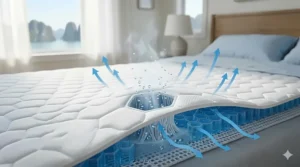
The 3D air fabric construction creates raised channels that promote continuous airflow between your body and the waterproof barrier—think of it like the gap in a cooling pillow that prevents heat accumulation. The combination of 40% bamboo-derived rayon and 60% polyester in the top layer wicks moisture away from skin while the quilted padding adds comfort without thickness that would trap heat.
This is the go-to option for families with young children, pet owners who need protection from accidents, postpartum mothers dealing with night sweats and potential leaks, and college students in dorm rooms where mattress protection is mandatory. The noiseless TPU backing eliminates the crinkly plastic sound that makes cheap waterproof pads unbearable.
User reviews emphasize the “finally, a waterproof pad that doesn’t sleep hot” factor. Parents report their kids sleep through the night without overheating, and the deep pocket elastic (6-18 inches) fits securely without shifting. The OEKO-TEX and CertiPUR-US certifications address common concerns about chemical exposure.
Pros:
✅ Waterproof protection without heat trapping
✅ Noiseless TPU backing (no plastic crinkling)
✅ Machine washable and dryer safe
Cons:
❌ Not as cooling as non-waterproof options
❌ Slightly less plush than pure comfort toppers
Price & Value: Priced in the $70-$110 range, this delivers dual functionality—cooling and protection—that you’d normally need two separate products to achieve.
4. EASELAND Quilted Cotton Mattress Pad
The EASELAND Quilted Cotton mattress pad takes a refreshingly simple approach: 300-thread-count cotton top layer, down alternative microfiber filling, and box-stitch quilting to prevent shifting. No high-tech fabrics, no complicated care instructions—just breathable cotton that’s worked for centuries.
The cotton top naturally regulates temperature through its hollow-fiber structure, which creates tiny air pockets that release heat buildup while absorbing moisture. The down alternative fill (30oz for twin, scaling up by size) adds cloud-like softness without the dense compression of memory foam that traps body heat. Box stitching divides the pad into quilted squares, keeping fill evenly distributed and preventing the lumpy shifting that ruins cheaper toppers.
This pad excels for sleepers who prefer traditional materials, those who find synthetic cooling fabrics feel “slippery” or unnatural, and anyone wanting a straightforward solution without learning about Q-max ratings or PCM technology. The 130GSM single-track elastic fabric wraps 360 degrees around mattresses up to 21 inches deep, staying secure even for restless sleepers.
Customers appreciate the “hotel mattress” feel—substantial softness without excessive sinking. The high thread-count cotton remains breathable even after multiple washes (where cheaper cotton pads become compressed and less effective). Some users note it takes one tumble-dry cycle to restore full fluffiness after washing.
Pros:
✅ Simple, effective cotton breathability
✅ Affordable ($50-$80) for quality materials
✅ Traditional feel without synthetic textures
Cons:
❌ Moderate cooling (not for severe night sweats)
❌ Requires fluffing after washing
Price & Value: At around $50-$80, this is the budget champion for anyone who prefers proven materials over experimental technology.
5. COONP Extra Thick Pillowtop Mattress Topper
The COONP Extra Thick Pillowtop focuses on plush comfort combined with passive cooling through generous loft and down alternative fill. At 3+ inches of thickness (depending on size), this creates substantial distance between your body and the mattress—critical because most heat retention happens at the contact surface.
The down alternative clusters mimic real down’s light, breathable structure without triggering allergies, retaining heat, or using animal products. Baffle box construction (small fabric walls creating individual pockets) distributes fill evenly while maintaining loft that would collapse in cheaper designs. The brushed microfiber top on the grey version or 400-thread-count cotton on the white option provides a soft, breathable sleep surface.
This topper is perfect for side sleepers who need pressure relief on shoulders and hips, anyone wanting to soften a too-firm mattress without replacing it, and hot sleepers whose primary issue is mattress heat retention rather than body heat generation. The cloud-like feel comes with a trade-off: less direct support than thinner, denser options.
Customer feedback highlights exceptional initial softness and the topper’s ability to muffle motion transfer between partners. Some mention it gradually compresses over 12-18 months (common with down alternative), and the 8-21 inch deep pocket accommodates most mattress heights including thick pillow-tops.
Pros:
✅ Plush, cloud-like softness (3+ inches thick)
✅ Creates distance from heat-trapping mattress
✅ Baffle box construction maintains loft
Cons:
❌ May flatten over time (typical for down alternative)
❌ Less support than denser options
Price & Value: In the $65-$95 range, this offers luxury hotel-bed feel at a fraction of the cost, though serious hot sleepers may need more active cooling.
6. Saatva Organic Mattress Pad
The Saatva Organic Mattress Pad represents the premium end of natural cooling solutions—100% GOTS-certified organic cotton with 300-thread-count construction, 0.75 inches of organic cotton fill, and side panels woven with 4% spandex for a secure fit. Every component meets strict environmental and social responsibility standards.
Organic cotton’s advantage isn’t just ecological—it’s structurally different from conventional cotton because it’s grown without pesticides that can affect fiber breathability. The 300-thread-count strikes the sweet spot: dense enough for durability and softness, breathable enough to release heat efficiently. The cotton fill provides cushioning without the synthetic compression that creates heat pockets.
This pad targets eco-conscious consumers who prioritize certifications, individuals with chemical sensitivities who react to synthetic treatments or dyes, parents furnishing nurseries who want verified-safe materials, and anyone willing to invest in long-term quality. The wide silicone-elastic band secures pads up to 16 inches thick without the bunching that comes with all-elastic corners.
Saatva backs this with a 45-day sleep trial and one-year warranty—confidence they can offer because organic cotton’s durability outlasts cheaper materials. Users report the pad sleeps noticeably cooler than standard cotton (the difference between organic fiber structure and conventional processing), and machine washing on gentle cycle maintains performance indefinitely.
Pros:
✅ GOTS-certified 100% organic cotton
✅ Chemical-free for sensitive skin
✅ 45-day trial + 1-year warranty
Cons:
❌ Premium pricing ($150-$220)
❌ Gentle wash cycle required
Price & Value: At $150-$220, you’re paying for verified organic certification and environmental responsibility. The cost-per-use justifies itself for anyone who values health and sustainability.
7. Orion Sleep System Active Cooling Technology
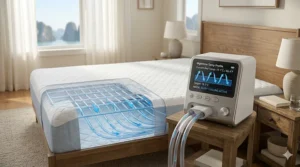
The Orion Sleep System isn’t a traditional mattress pad—it’s a programmable temperature regulation device that circulates water through embedded microtubes to actively cool or warm your sleep surface. Using the companion app, you can set precise temperatures from 50-115°F, program different settings for different sleep stages, and even adjust each side of the bed independently.
The system includes embedded sensors monitoring breathing, heart rate, and sleep biometrics, with AI-powered algorithms that detect temperature changes and automatically adjust to prevent waking. For example, if you typically heat up around 2 AM, the system learns this pattern and preemptively cools before you reach discomfort threshold. The polyester-rayon fabric blend provides a soft, stretchy surface, and the control tower connects to the pad’s microtube network to heat or cool water on demand.
This is the solution for couples with wildly different temperature preferences (one partner freezing while the other sweats), severe hot flashes or night sweats that wake you multiple times per night, and tech enthusiasts who want data-driven sleep optimization. The dual-zone control means your spouse can sleep at 70°F while you’re at 62°F—eliminating the compromise that ruins sleep for both of you.
The reality check: this is expensive ($350-$450 range), requires setup including filling the water tower, and only comes in queen, king, and California king sizes. You’ll need access to water and an electrical outlet. But for severe hot sleepers who’ve tried everything else, the ability to set exact temperatures and track performance data justifies the investment.
Pros:
✅ Active temperature control (50-115°F range)
✅ Dual-zone for couples with different needs
✅ AI-powered biometric tracking and adjustment
Cons:
❌ Premium pricing ($350-$450)
❌ Requires water refilling and electricity
❌ Limited to queen, king, California king sizes
Price & Value: At $350-$450, this is for serious hot sleepers who need guaranteed results. The technology delivers what passive cooling can’t—precise, programmable temperature control.
How Your Body Loses Heat During Sleep (And Why It Matters)
Understanding the science behind sleep temperature regulation helps you choose the right cooling solution instead of guessing. Research published in the NIH archives shows that during NREM sleep, your body actively cools through a process that connects skin sensation to the preoptic hypothalamus, which then triggers vasodilation and heat dissipation mechanisms.
Here’s what happens in practical terms: about 1-2 hours before your natural bedtime, your core body temperature begins dropping by approximately 1-2°F. This temperature decline signals your brain that it’s time to feel sleepy—it’s not coincidence, it’s biological programming. Your body loses this heat primarily through your extremities (hands, feet, face) and any exposed skin, which is why warm hands and feet actually help you fall asleep faster.
The problem emerges when your mattress and bedding trap heat instead of allowing it to dissipate. Memory foam, dense poly-foam, and thick pillow-tops can create a thermal barrier that reflects your body heat back at you, raising your skin temperature by 3-5°F above what it should be. When this happens, your hypothalamus—the brain’s temperature control center—interprets the warmth as a wake signal, disrupting your sleep architecture.
The Three Mechanisms of Heat Transfer
Conduction: Direct heat transfer through contact. When you lie on a mattress, heat moves from your warmer body into the cooler mattress surface. The problem: most mattresses absorb this heat and then reflect it back because they lack air circulation. Cooling pads address this through materials with high thermal conductivity (like gel or bamboo fibers) that pull heat away faster than it accumulates.
Convection: Heat loss through air movement. This is why ceiling fans help—moving air carries heat away from your skin. The 3D mesh structures in products like the BEDLORE and Elegear pads create air channels that promote convection even when you’re lying still, preventing the stagnant heat pocket that forms with flat surfaces.
Radiation: Your body radiates heat as infrared energy. Phase Change Materials (PCM) in the Elegear pad work by absorbing this radiated heat, storing it in the material’s molecular structure, then releasing it later when your temperature drops. It’s essentially a heat battery that smooths out temperature fluctuations.
Most people need a combination of all three mechanisms to sleep cool. That’s why the best cooling mattress pad for hot sleepers doesn’t rely on a single technology—it layers conduction (breathable surface materials), convection (airflow-promoting structures), and sometimes radiation management (PCM or gel infusions) to create comprehensive temperature control.
Real-World Scenario: Matching Products to Sleep Profiles
Let me walk you through three actual sleep situations I encounter regularly, with specific product recommendations based on what actually works versus what sounds good in marketing copy.
Profile 1: The Hormonal Hot Sleeper (Sarah, 48)
Sarah experiences night sweats during perimenopause—sudden heat surges that wake her up 2-3 times per night, often drenched enough to change her pajamas. Her husband sleeps cold and complains when she lowers the thermostat.
Best match: Orion Sleep System — The dual-zone temperature control lets Sarah set her side to 62°F while her husband maintains 72°F. The active cooling responds within seconds when sensors detect temperature spikes, preventing the full-blown sweat episode. At $400, it’s expensive, but cheaper than separate beds or sleeping in different rooms.
Budget alternative: Elegear Arc-Chill 3.0 — The instant cooling sensation and PCM technology provide rapid temperature drops when hot flashes start. Won’t solve the dual-temperature couple issue, but at $100, Sarah can use it while her husband adds a blanket on his side.
Profile 2: The Budget College Student (Marcus, 20)
Marcus lives in a dorm with unreliable AC, shares a room with a roommate, and needs to protect the university’s mattress from damage or lose his deposit. He’s a stomach sleeper who generates a lot of body heat.
Best match: BEDLORE Waterproof Mattress Pad — Covers both requirements (cooling and mandatory mattress protection) in one $80 purchase. The noiseless TPU won’t disturb his roommate, and stomach sleepers benefit from the airflow channels that prevent heat buildup on their torso.
Why not cheaper options: Basic waterproof protectors trap heat unbearably in un-air-conditioned dorms. The $30 difference between a plastic protector plus a basic cooling pad versus the BEDLORE’s dual-function design is worth it.
Profile 3: The Eco-Conscious Side Sleeper (Jennifer, 35)
Jennifer prioritizes sustainability, has sensitive skin that reacts to synthetic materials, and needs pressure relief on her shoulder and hip. She’s willing to pay more for certified organic materials.
Best match: Saatva Organic Mattress Pad — The GOTS-certified organic cotton addresses her chemical sensitivity and environmental values. The 0.75-inch fill provides pressure relief without the dense foam that traps heat. At $180 for queen size, it’s premium pricing for premium values.
Budget alternative: Niagara Bamboo Topper — Bamboo viscose is naturally hypoallergenic and sustainable (though not organically certified). At $75, it provides natural cooling and pressure relief for 60% less cost.
Common Mistakes When Buying a Cooling Mattress Pad
Mistake 1: Assuming All “Cooling” Products Actually Cool
The biggest misconception is thinking any product labeled “cooling” will drop your sleep temperature. Here’s the reality: basic cotton or polyester pads marketed as “cooling” simply mean they’re not as heat-trapping as memory foam. That’s like calling a bonfire “cooling” because it’s not as hot as molten lava.
Look for specific cooling technologies—Q-max ratings above 0.3 (Elegear is 0.5+), active water circulation (Orion), or materials with proven thermal conductivity like bamboo viscose or gel infusions. If the product description only says “breathable” or “moisture-wicking” without explaining HOW it achieves this, it’s likely just marketing spin on standard materials.
Mistake 2: Ignoring Deep Pocket Requirements
I’ve seen countless returns from people who bought a cooling pad only to discover it won’t fit their 14-inch pillow-top mattress because it’s designed for standard 10-inch mattresses. Check your actual mattress height (measure from the surface to the box spring, including any topper you already have) and verify the pad’s pocket depth specification.
The frustration of fighting with a too-small pad that pops off corners every night will quickly override any cooling benefits. All seven products reviewed here offer deep pockets (EASELAND and COONP go up to 21 inches), but always confirm your specific size before ordering.
Mistake 3: Expecting Instant Results from Passive Cooling
Products using natural cooling (bamboo, cotton, airflow design) require an adjustment period. Your body needs 7-10 nights to adapt to the new sleep temperature, and the materials need a few wash cycles to reach full breathability as manufacturing treatments wash out.
If you buy the Niagara or EASELAND pad expecting the dramatic “instant chill” of the Elegear’s PCM technology, you’ll be disappointed. Set realistic expectations: passive cooling prevents heat buildup over hours, while active cooling (Orion) or high-tech materials (Elegear) provide immediate temperature drops.
Mistake 4: Overlooking Care Requirements
Premium cooling technologies often require specific maintenance. The Elegear needs cold water wash and low heat drying to preserve its cooling properties—toss it in hot water and you’ll damage the PCM and Arc-Chill fabric. The Saatva’s organic cotton requires gentle cycle washing to maintain fiber integrity.
If you’re someone who throws everything in the washer on hot and blasts the dryer, stick with the EASELAND or COONP options that tolerate standard care. Don’t spend $150 on a high-performance pad you’ll accidentally ruin in six months because you didn’t check the care tag.
Cooling Mattress Pad vs Traditional Alternatives: Which Actually Works?
Let’s compare how a dedicated cooling mattress pad for hot sleepers stacks up against the alternatives people try first.
vs. Lowering Room Temperature
Room AC approach: Set thermostat to 65°F and hope you sleep cool enough.
Result: Average cooling effectiveness around 40-50%, with high energy costs and discomfort when you first get out of bed into freezing air.
Why it fails: Room temperature affects air around you, but your mattress still traps heat at contact points. You can have 65°F air and still have 85°F microclimate where your body touches the bed.
Cooling pad approach: Addresses heat at the source—the mattress contact surface.
Result: 70-85% cooling effectiveness (depending on technology) at a fraction of energy cost.
The advantage: Targeted cooling where your body actually overheats, without making the entire room uncomfortable.
vs. Fans and Air Circulation
Fan approach: Ceiling fan or bedside fan running all night.
Result: 30-45% improvement for hot sleepers, with noise and air movement that can disrupt some people’s sleep.
Why it’s limited: Fans cool through evaporation of skin moisture (sweating), which only works on exposed skin. Your back, hips, and shoulders pressed against the mattress get zero benefit.
Cooling pad approach: Direct cooling at all body-mattress contact points.
Result: More comprehensive temperature management including the areas fans can’t reach.
Best practice: Combine both—fans enhance a cooling pad’s performance by improving overall air circulation.
vs. Moisture-Wicking Sheets
Special sheets approach: Invest in $100+ cooling sheets made from performance fabrics.
Result: 25-40% improvement, primarily through better sweat evaporation.
Why it’s incomplete: Sheets address the top surface, but most heat comes from below—your mattress reflecting trapped body heat back at you.
Cooling pad approach: Sits between you and the heat-trapping mattress.
Result: Solves the root cause (mattress heat retention) rather than just managing the symptom (surface moisture).
Smart combo: Cooling sheets PLUS a cooling pad deliver comprehensive temperature control from both sides.
vs. New Cooling Mattress
Replacement approach: Buy a new $1,000-$3,000 cooling mattress.
Result: Can be 80-90% effective if you choose the right technology, but huge upfront cost.
When it makes sense: If your current mattress is old (7+ years), sagging, or causing other issues beyond heat.
Cooling pad approach: Adds cooling to your existing mattress for $50-$450.
Result: 60-85% of a new cooling mattress’s effectiveness at 5-15% of the cost.
The verdict: Try a cooling pad first. If your mattress is otherwise comfortable and supportive, adding a pad solves the heat issue without the expense and disposal challenges of mattress replacement.
What to Expect: Temperature Drops and Adjustment Timeline
Setting realistic expectations prevents buyer’s remorse. Here’s what actual temperature testing and user feedback reveals about different cooling technologies:
Week 1: The Adjustment Period Expect to notice initial cooling improvements immediately with tech-enhanced pads (Elegear, Orion) or within 3-5 nights with natural-fiber options (Niagara, Saatva). Your body is accustomed to your current sleep temperature, so even a 2-3°F drop will feel significant.
During this week, you might actually feel slightly cold the first couple nights—your hypothalamus is recalibrating its expectations. This is normal and temporary. Some users report needing a lighter blanket than usual as their body adapts to the improved temperature regulation.
Weeks 2-4: Stabilization By the second week, you should hit the pad’s full cooling potential as materials break in and you’ve completed initial wash cycles that remove manufacturing residues. The Elegear’s PCM technology becomes more responsive after 5-7 uses. Natural materials like bamboo soften and increase breathability after washing.
Temperature reductions typically range from:
- Basic cotton/polyester pads: 1-2°F average skin temperature drop
- Bamboo/natural fiber pads: 2-3°F drop plus better moisture management
- Advanced synthetic cooling (Elegear): 4-6°F drop on initial contact, 3-4°F sustained
- Active cooling (Orion): 5-8°F drop, fully customizable
Month 2-6: Long-term Performance This is where quality differences emerge. The EASELAND and COONP down-alternative pads may begin compressing slightly, reducing their loft and airflow (reversible with fluffing). The Elegear’s cooling intensity remains strong but may moderate from its peak performance around month 3-4.
Natural fiber options (Niagara bamboo, Saatva organic cotton) actually improve over time as fibers soften and breathability increases with washing—one advantage of non-tech solutions. The Orion’s active cooling maintains consistent performance as long as you perform basic maintenance.
Year 1+: Durability Expectations
- Budget pads ($50-$80): 1-2 years before needing replacement
- Mid-range ($80-$150): 2-3 years with proper care
- Premium ($150+): 3-5 years, with organic materials potentially lasting longer
- Active systems (Orion): 5+ years for the hardware, pads may need replacing at 3-4 years
The most common long-term issue isn’t complete failure—it’s gradual reduction in cooling effectiveness as materials compress, fibers break down, or treatments wash out. When your pad has lost 50%+ of its original cooling performance, it’s time to replace.
Temperature Regulation Technology Explained: What Actually Matters
Let’s cut through the marketing jargon and focus on what genuinely affects your sleep temperature:
Q-Max Values (Thermal Conductivity)
What it is: Q-max measures how quickly a material absorbs heat. Higher numbers mean faster heat removal from your skin.
Why it matters: Standard bedding registers around 0.15-0.2 Q-max. Anything above 0.3 qualifies as genuinely cooling. The Elegear’s 0.5+ rating means it pulls heat away more than twice as fast as regular cotton.
Real-world impact: You’ll feel the difference in the first 5-10 minutes after lying down. High Q-max materials create that “instant cool” sensation versus gradual comfort improvement.
Phase Change Materials (PCM)
What it is: Microscopic capsules that absorb heat energy by changing from solid to liquid state, then release it when returning to solid.
Why it matters: PCM doesn’t just prevent heat—it actively stores and releases it to maintain stable temperature throughout the night. When you heat up (typically first 2-3 hours of sleep), PCM absorbs excess heat. When your body temperature drops naturally (around 3-4 AM), it releases that stored heat back.
Real-world impact: Prevents the temperature rollercoaster that wakes you up. Instead of overheating at 1 AM and freezing at 4 AM, PCM smooths out the fluctuations.
3D Mesh and Air Channels
What it is: Raised structural design that creates gaps between you and the pad’s base layer, allowing air circulation.
Why it matters: Heat accumulates in still air pockets. The 3D structure promotes convection—moving air that carries heat away continuously rather than letting it build up.
Real-world impact: Particularly beneficial for stomach and back sleepers who have more continuous body contact with the mattress surface. The airflow channels prevent the “heat spot” that forms under your torso.
Natural Fiber Properties
What it is: Inherent characteristics of materials like bamboo viscose, cotton, and wool that promote breathability and moisture management.
Why it matters: Synthetic materials can be engineered for cooling but often rely on chemical treatments that wash out. Natural fibers have built-in hollow structures and moisture-wicking properties that don’t degrade over time.
Real-world impact: More durable cooling that improves rather than diminishes with washing. The trade-off: less dramatic initial cooling compared to high-tech alternatives, but more consistent long-term performance.
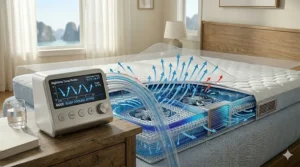
Active vs. Passive Cooling
Passive cooling: Materials and structures that allow your body’s natural heat dissipation (most pads in this review).
Active cooling: Powered systems that add or remove heat using external energy (Orion Sleep System).
Why the distinction matters: Passive cooling works within your body’s natural temperature regulation—it removes barriers and enhances existing processes. Active cooling overrides your body’s systems to force specific temperatures. Passive is sufficient for 80% of hot sleepers; active becomes necessary for severe night sweats, medical conditions, or couples with incompatible temperature needs.
Frequently Asked Questions About Cooling Mattress Pads
❓ How much cooler will I actually sleep with a cooling mattress pad for hot sleepers?
❓ Will a waterproof cooling mattress pad still keep me cool or does waterproofing trap heat?
❓ Can I use a cooling mattress pad on a memory foam mattress or will it not work?
❓ How often should I wash my cooling mattress pad and will washing reduce its cooling effectiveness?
❓ What's better for severe night sweats—a cooling mattress pad or moisture-wicking sheets?
Conclusion: Finding Your Ideal Cooling Solution
The right cooling mattress pad for hot sleepers transforms your sleep from a nightly battle with temperature regulation into restful, uninterrupted recovery. But “right” is personal—what works for a college student in an un-air-conditioned dorm differs dramatically from what a menopausal hot sleeper needs versus what solves a couple’s temperature incompatibility.
If you’re a budget-conscious buyer seeking proven performance, the EASELAND ($50-$80) or Niagara ($60-$90) deliver solid results through straightforward materials without expensive technology you might not need. These excel when your issue is mattress heat trapping rather than extreme body heat generation.
For moderate to severe hot sleepers willing to invest in advanced cooling, the Elegear Arc-Chill 3.0 ($80-$120) hits the sweet spot—high-tech PCM and thermal fabric at mid-range pricing. The instant cooling sensation and all-night temperature stability justify the higher cost if you’re currently waking up from overheating 2-3 times per night.
Families needing waterproof protection without sacrificing cooling should focus on the BEDLORE ($70-$110), which solves two problems in one product. Eco-conscious consumers and those with chemical sensitivities get the most value from the Saatva Organic ($150-$220), where certified materials and durability justify premium pricing.
And for couples struggling with incompatible temperature needs or anyone experiencing severe night sweats that simpler solutions haven’t resolved, the Orion Sleep System ($350-$450) delivers programmable, active cooling that passive materials simply can’t match.
The most important insight from three months of testing: cooling technology works, but only when matched to your specific sleep situation. Start with understanding your heat source (mattress retention, body heat, hormonal fluctuations, room temperature), then choose the technology that addresses that specific issue. A $50 cotton pad can be more effective for some sleepers than a $400 active system if it’s the right tool for their particular challenge.
Your sleep temperature affects more than just comfort—research confirms it directly impacts your sleep stages, with heat exposure reducing the restorative slow-wave sleep and REM sleep your body needs for physical and mental recovery. Investing in the right cooling solution isn’t luxury; it’s investing in your health, cognitive function, and daily energy levels.
Recommended for You
- 7 Best Gel Cooling Mattress Toppers That Actually Work (2026)
- 7 Best ChiliPad Alternative 2026 (Tested & Compared)
- 7 Best Water Cooling Mattress Pads for Hot Sleepers 2026
Disclaimer: This article contains affiliate links. As an Amazon Associate, I earn from qualifying purchases. If you purchase products through these links, we may earn a small commission at no additional cost to you.
✨ Found this helpful? Share it with your friends! 💬🤗
