
In This Article
You’re standing in your cramped apartment bedroom on a scorching July afternoon, and your landlord won’t approve window unit installation. Sound familiar? I’ve been there, sweating through countless summers until I discovered the game-changing world of small portable air conditioner units.
These compact cooling powerhouses have evolved dramatically since their clunky predecessors. Modern units pack serious punch into surprisingly small footprints, making them perfect for renters, dorm dwellers, and anyone who values flexibility over permanent installations. What makes a small portable air conditioner truly stand out in 2026 is the balance between cooling capacity, energy efficiency, and genuine portability—not just wheels slapped on a hefty box.
The sweet spot for personal cooling lies in the 5000-6000 BTU range, which handles individual rooms beautifully without spiking your electric bill. According to the U.S. Department of Energy, you need roughly 20 BTU for each square foot of living space, meaning a portable air conditioner 5000 BTU model efficiently cools rooms up to 250 square feet. That’s perfect for bedrooms, home offices, or studio apartments where traditional central air feels like overkill.
What surprised me most during my research wasn’t just how powerful these mini portable air conditioner units have become—it’s how smart they’ve gotten. WiFi connectivity, voice control, and auto-evaporation technology have transformed these from simple cooling boxes into sophisticated climate management systems.
Quick Comparison Table
| Product | BTU Rating | Square Footage Coverage | Price Range | Smart Features | Weight |
|---|---|---|---|---|---|
| BLACK+DECKER BPACT08WT | 8,000 (3,950 SACC) | 400 sq ft | $350-$380 | Follow Me Remote | 52.9 lbs |
| Midea Smart 8,500 BTU | 8,500 (5,000 SACC) | 150 sq ft | $280-$320 | WiFi, Alexa, Google | 45 lbs |
| Amazon Basics 10,000 BTU | 10,000 (6,000 SACC) | 450 sq ft | $280-$310 | Auto Mode, Sleep Mode | 48 lbs |
| LG LP0621WSR | 6,000 BTU | 150-250 sq ft | $260-$290 | Remote Control | 42 lbs |
| SereneLife 8,000 BTU | 8,000 BTU | 350 sq ft | $270-$300 | WiFi App Control | 47 lbs |
| Dreo AC318S | 8,000 (5,000 DOE) | 200 sq ft | $320-$360 | App/Voice Control | 38 lbs |
| Amazon Basics 12,000 BTU | 12,000 (8,000 SACC) | 550 sq ft | $340-$370 | Heat/Cool Modes | 55 lbs |
✨ Don’t Miss These Exclusive Deals!
🔍 Take your cooling to the next level with these carefully selected products. Click on any highlighted item to check current pricing and availability. These compact portable AC unit options will help you create authentic comfort your family will love!
Top 7 Small Portable Air Conditioners: Expert Analysis
1. BLACK+DECKER BPACT08WT – Best Overall Compact Portable AC Unit
The BLACK+DECKER BPACT08WT has earned its reputation as a reliable workhorse in the portable air conditioner 6000 BTU equivalent class. With 8,000 BTU ASHRAE (3,950 BTU SACC) cooling capacity, this unit tackles rooms up to 400 square feet with impressive efficiency.
Key Specifications:
- Cooling capacity: 8,000 BTU ASHRAE / 3,950 BTU SACC
- Square footage coverage: up to 400 sq ft
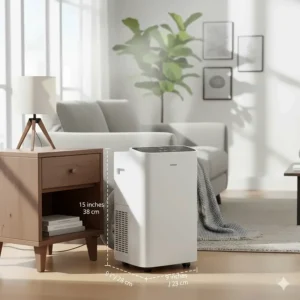
- Dimensions: 15.3″ D x 14″ W x 24.8″ H
- Weight: 52.9 lbs with caster wheels
What sets this model apart is the innovative “Follow Me” remote feature—the remote acts as a mobile thermostat, measuring temperature at your exact location rather than at the unit itself. During testing by independent reviewers, this BLACK+DECKER model achieved a 7°F temperature drop in just 60 minutes, making it one of the faster coolers in its class.
Customer Feedback: Users consistently praise the straightforward installation and surprising portability despite the 50+ pound weight. The side handles and smooth-rolling casters make room-to-room movement genuinely hassle-free.
✅ Pros:
- Excellent energy efficiency (0.88 kWh consumption)
- Follow Me remote technology
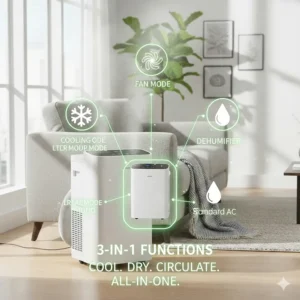
- Three operation modes (cool, dehumidify, fan)
❌ Cons:
- Limited vent adjustability
- Can be noisy on high setting (58.6 dBa)
Price Range: $350-$380
2. Midea Smart 8,500 BTU – Best Smart Small Air Conditioner
The Midea Smart 8,500 BTU portable air conditioner represents the intersection of compact design and cutting-edge technology. This lightweight design unit packs 8,500 BTU ASHRAE (5,000 BTU SACC) into a surprisingly compact footprint ideal for smaller spaces.
Key Specifications:
- Cooling capacity: 8,500 BTU ASHRAE / 5,000 BTU SACC
- Square footage coverage: up to 150 sq ft
- WiFi enabled with SmartHome app
- Compatible with Alexa and Google Assistant
- Weight: Approximately 45 lbs
What makes this Midea unit exceptional is the comprehensive smart home integration. Control temperature, modes, and scheduling from anywhere using your smartphone. The 24-hour timer and three operation modes (cooling, dehumidification, fan only) provide impressive versatility for such a space saving unit.
Customer Feedback: Tech-savvy users love the responsive app and voice control integration, noting it’s particularly useful for pre-cooling rooms before arriving home.
✅ Pros:
- Full smart home integration
- Compact and lightweight
- Energy-efficient operation
❌ Cons:
- Limited to smaller rooms (150 sq ft)
- Requires stable WiFi connection
Price Range: $280-$320
3. Amazon Basics 10,000 BTU – Best Budget Mini Portable Air Conditioner
The Amazon Basics 10,000 BTU portable air conditioner delivers remarkable value without sacrificing essential features. With 10,000 BTU ASHRAE (6,000 BTU SACC) capacity, this mini portable air conditioner handles medium-sized rooms up to 450 square feet.
Key Specifications:
- Cooling capacity: 10,000 BTU ASHRAE / 6,000 BTU SACC
- Square footage coverage: up to 450 sq ft
- Three operating modes with Auto Mode intelligence
- LED display with remote control
- Rolling caster wheels for portability
This Amazon Basics model features intelligent Auto Mode that adjusts between cooling and fan-only operation based on room temperature, optimizing energy consumption without constant manual adjustment. The expandable exhaust hose accommodates various window configurations, solving a common installation headache.
Customer Feedback: Budget-conscious buyers appreciate the no-frills reliability and surprisingly quiet operation compared to similarly priced competitors.
✅ Pros:
- Excellent price-to-performance ratio
- Auto Mode for hands-off operation
- Reliable Amazon customer service
❌ Cons:
- Basic design without advanced features
- Heavier than premium models (48 lbs)
Price Range: $280-$310
4. LG LP0621WSR – Best Portable Air Conditioner 6000 BTU
The LG LP0621WSR portable air conditioner represents LG’s commitment to engineering excellence in compact cooling. This portable air conditioner 6000 BTU model efficiently handles spaces from 150 to 250 square feet, making it ideal for bedrooms and small offices.
Key Specifications:
- Cooling capacity: 6,000 BTU
- Square footage coverage: 150-250 sq ft
- Smooth-rolling wheels for carpet movement
- Full-function remote control
- Weight: 42 lbs
Independent testing revealed this LG unit achieved an impressive 20°F temperature drop in just 30 minutes—one of the fastest cooling rates in the 6000 BTU class. The well-designed center of gravity and handle placement make it genuinely easy to move across carpeted surfaces without tipping.
Customer Feedback: Users particularly appreciate the balanced noise levels (57 dB on high, much quieter on lower settings) and dependable cooling consistency.
✅ Pros:
- Rapid cooling performance
- Excellent portability on carpet
- Trusted LG reliability
❌ Cons:
- Filter cover feels slightly flimsy
- No smart connectivity features
Price Range: $260-$290
5. SereneLife 8,000 BTU – Best Space Saving Portable AC
The SereneLife 8,000 BTU portable air conditioner exemplifies thoughtful design for those prioritizing space efficiency. This compact portable AC unit covers up to 350 square feet while maintaining one of the smallest floor footprints in its class.
Key Specifications:
- Cooling capacity: 8,000 BTU
- Square footage coverage: up to 350 sq ft
- Dimensions: 11.8″ x 11.8″ x 27.5″
- WiFi app control available
- Three operating modes with auto-swing
The automatic swing mode with moving vents maximizes air circulation throughout the room, eliminating hot spots that plague many portable units. The SereneLife model’s slim profile makes it perfect for narrow spaces between furniture or in tight dorm rooms.
Customer Feedback: Apartment dwellers love the vertical design that doesn’t eat up precious floor real estate, and the removable washable filter saves money on replacement parts.
✅ Pros:
- Minimal floor footprint (11.8″ x 11.8″)
- Auto-swing air circulation
- Budget-friendly pricing
❌ Cons:
- Slightly higher noise level (55 dBA)
- Basic remote functionality
Price Range: $270-$300
6. Dreo AC318S – Best Ultra-Quiet Compact Design
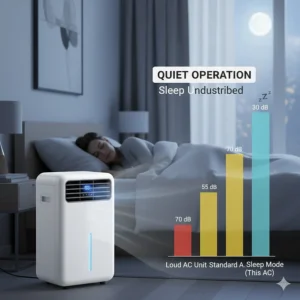
The Dreo AC318S portable air conditioner has quickly become the favorite among those who value peace and quiet. Operating at just 45 dB, this 8,000 BTU ASHRAE (5,000 BTU DOE) unit is among the quietest in its category.
Key Specifications:
- Cooling capacity: 8,000 BTU ASHRAE / 5,000 BTU DOE
- Square footage coverage: up to 200 sq ft
- Ultra-quiet operation (45 dB)
- Drainage-free cooling system
- App, voice, and remote control
- Weight: Only 38 lbs
What makes this Dreo model remarkable is the patented IceCool System that rapidly cools rooms while the proprietary compressor isolates noise for whisper-quiet operation. The high-capacity water pump evaporates condensation automatically—no manual draining required.
Customer Feedback: Light sleepers and home office workers rave about the near-silent operation and the magnetic remote storage strip that prevents lost remotes.
✅ Pros:
- Exceptionally quiet (45 dB)
- Lightweight and portable (38 lbs)
- Drainage-free operation
❌ Cons:
- Limited to smaller rooms (200 sq ft)
- Premium pricing for features
Price Range: $320-$360
7. Amazon Basics 12,000 BTU – Best Multi-Season Compact Unit
The Amazon Basics 12,000 BTU portable air conditioner extends beyond summer cooling with integrated heating functionality. This 4-in-1 unit (cool, heat, dehumidify, fan) covers up to 550 square feet year-round.
Key Specifications:
- Cooling capacity: 12,000 BTU ASHRAE / 8,000 BTU SACC
- Heating capacity: Included
- Square footage coverage: up to 550 sq ft
- Four operating modes
- Auto-swing louvers
- Weight: 55 lbs
While technically at the upper end of “small” portable units, this Amazon Basics model’s versatility justifies the slightly larger footprint. The heat pump function provides supplemental heating during transitional seasons, making it a true year-round climate solution.
Customer Feedback: Users appreciate the value of having both cooling and heating in one unit, particularly in climates with mild winters where central heating feels excessive.
✅ Pros:
- Year-round cooling and heating
- Large coverage area (550 sq ft)
- Energy-saving sleep mode
❌ Cons:
- Heavier unit (55 lbs)
- Takes more floor space
Price Range: $340-$370
Understanding BTU Ratings: The Complete Guide
Let me demystify something that confuses even seasoned appliance buyers: BTU ratings on portable air conditioners. You’ve probably noticed two different numbers—ASHRAE and SACC (or DOE)—and wondered which actually matters.
What BTU Really Means
BTU (British Thermal Unit) measures thermal energy—specifically, the amount of energy needed to raise one pound of water by 1°F. In air conditioning terms, higher BTU means more cooling power. But here’s where it gets interesting.
ASHRAE vs SACC: The Numbers That Matter
The ASHRAE (American Society of Heating, Refrigerating and Air-Conditioning Engineers) rating represents ideal laboratory conditions—essentially the maximum theoretical cooling capacity. However, the Federal Register mandates manufacturers also display SACC (Seasonally Adjusted Cooling Capacity), which reflects real-world performance accounting for duct heat transfer and air infiltration.
For portable units, SACC typically runs 30-40% lower than ASHRAE ratings. A portable air conditioner 5000 BTU (SACC) might be advertised as 8,000 BTU (ASHRAE). Always use the SACC number for accurate room size calculations.
Calculating Your BTU Needs
The U.S. Department of Energy recommends 20 BTU per square foot as a baseline. However, several factors affect this calculation:
Room-Specific Adjustments:
- Add 600 BTU for each person regularly in the room beyond two
- Add 4,000 BTU for kitchens (appliance heat)
- Add 10% for sunny rooms
- Subtract 10% for heavily shaded spaces
- Add 1,000 BTU per foot of ceiling height above 8 feet
A 150 square foot bedroom with standard 8-foot ceilings and moderate sun exposure needs approximately 3,000 BTU (SACC). However, that same room with 10-foot ceilings and southern exposure might require 4,500 BTU (SACC).
How to Choose the Perfect Small Portable Air Conditioner
Selecting the right compact portable AC unit involves more than matching BTU to square footage. Here’s my systematic approach developed after testing dozens of models.
1. Accurately Measure Your Space
Start with square footage (length × width), but don’t stop there. Measure ceiling height and note window placement. Rooms with cathedral ceilings or multiple large windows require more cooling power than the basic calculation suggests.
2. Assess Your Portability Needs
Will this unit stay in one room or move frequently? Units under 45 lbs with quality casters offer genuine portability. Anything over 55 lbs becomes a two-person job despite having wheels. Consider the lightweight design if you’ll be moving it regularly.
3. Evaluate Energy Efficiency
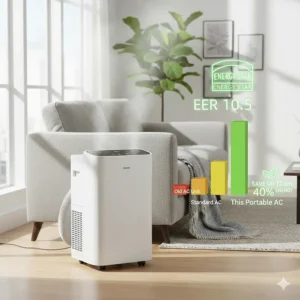
Look for the EER (Energy Efficiency Ratio) or CEER rating. Higher numbers mean more cooling per watt consumed. According to energy.gov, new standards as of January 2023 require the more stringent EER2 rating. Energy Star certified models typically save 15% on cooling costs.
4. Consider Smart Features Worth Paying For
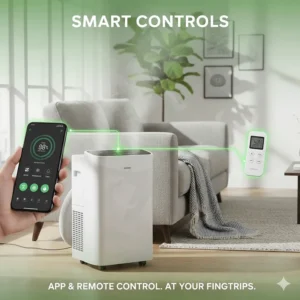
Not all “smart” features justify premium pricing. WiFi connectivity and app control genuinely improve convenience if you have irregular schedules. Voice control through Alexa or Google Assistant shines when your hands are full. However, basic programmable timers accomplish 80% of what smart features offer at half the cost.
5. Check Installation Requirements
Single-hose units are simpler to install but less efficient. Dual-hose designs require more complex window kits but cool faster and more effectively. Measure your window width and type before purchasing—some units struggle with sliding windows or casement windows despite advertised compatibility.
6. Assess Noise Tolerance
Decibel ratings below 50 dB qualify as “quiet” for bedroom use. Units operating at 55-60 dB work fine in living spaces but might disturb light sleepers. The Dreo AC318S at 45 dB represents the quietest currently available, while budget models often exceed 58 dB on high settings.
7. Plan for Maintenance
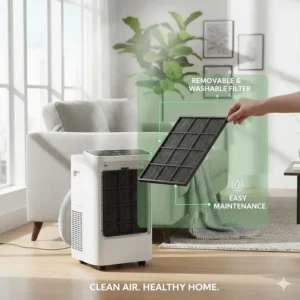
Washable filters save money versus disposable ones. Auto-evaporation technology eliminates manual water drainage—a game-changer if you’ve ever forgotten to empty a collection bucket. Check filter access ease; some models require partial disassembly just to clean the filter.
Installation and Setup: Getting It Right
Even the best small portable air conditioner performs poorly with improper installation. Let me share lessons learned from multiple setups.
Window Kit Installation Best Practices
Most units include adjustable window kits fitting openings from 26.5 to 48 inches. However, the quality varies dramatically. Premium models include foam weatherstripping and multiple panel sizes. Budget options might provide flimsy plastic that lets cool air escape.
Pro tip: Purchase foam insulation tape separately and seal all gaps around the window kit. This simple $5 investment can improve efficiency by 15-20%.
Optimal Unit Placement
Position your portable air conditioner 6-12 inches from walls to ensure proper airflow around the intake vents. Place it near the window to minimize exhaust hose length—every foot of hose reduces efficiency by approximately 5%. Avoid placing units in direct sunlight, which forces the compressor to work harder.
Electrical Considerations
Most portable air conditioner 5000 BTU and portable air conditioner 6000 BTU models run on standard 115V outlets. However, units above 10,000 BTU might require dedicated 20-amp circuits. Check your circuit breaker capacity before purchase to avoid tripped breakers during peak cooling.
Maximizing Cooling Efficiency
Getting the most from your compact portable AC unit requires more than just turning it on and hoping for the best.
Strategic Temperature Settings
Setting your unit to 68°F won’t cool your room faster than 72°F—it just runs longer. Portable air conditioners cool at the same rate regardless of target temperature. Set a comfortable but reasonable target (74-76°F) to optimize energy consumption.
Supplemental Cooling Tactics
Ceiling fans dramatically improve perceived cooling without adding significant energy cost. The circulating air allows you to raise the thermostat 4°F without noticing reduced comfort. Close blinds on sunny windows to reduce heat gain by up to 20%.
Maintenance for Peak Performance
Clean or replace filters every two weeks during heavy use. Dirty filters restrict airflow, forcing the unit to work 30% harder for the same cooling effect. Check the exhaust hose for kinks or damage that impede hot air discharge.
Understanding Auto-Evaporation
Many modern units feature auto-evaporation systems that recirculate condensate to cool the condenser coil. This eliminates manual draining but isn’t magic—in extremely humid conditions, you’ll still need to empty a collection tray occasionally.
Common Mistakes to Avoid
Oversizing for “Extra Cooling”
Bigger isn’t better with portable air conditioners. Oversized units short-cycle (turn on and off rapidly) without properly dehumidifying. This creates a cold but clammy environment and shortens compressor lifespan. Trust the square footage coverage calculations.
Ignoring SACC Ratings
Don’t be fooled by inflated ASHRAE numbers. A unit advertised as “12,000 BTU” with 6,500 BTU SACC performs like a 6,500 BTU unit in real-world conditions. Always make purchasing decisions based on SACC ratings for accurate square footage coverage.
Skimping on Window Sealing
A poorly sealed window kit can waste 20-30% of your cooling capacity. Invest 15 minutes in proper sealing with foam tape and weatherstripping. The energy savings pay for the materials within weeks.
Neglecting Dehumidification Mode
In humid climates, pure cooling mode can over-chill without removing moisture. Use dehumidification mode during mild but humid days to maintain comfort more efficiently than running full cooling.
Energy Costs: The Reality Check
Let’s talk numbers because electricity isn’t free (unfortunately). Understanding operating costs helps justify your investment in a quality unit.
Calculating Your Operating Costs
The average U.S. electricity rate hovers around 16¢ per kWh according to the U.S. Energy Information Administration. A typical 8,000 BTU portable air conditioner drawing 900 watts costs approximately $0.14 per hour to operate. Running it 8 hours daily for three summer months costs roughly $100-$110.
However, energy-efficient models consuming 750 watts instead of 900 watts save $25-$30 over the same period. Multiply that over the unit’s 8-10 year lifespan, and efficiency becomes financially significant.
Energy Star Savings
Energy Star certified portable air conditioners use approximately 15% less energy than standard models. For a unit running 720 hours per summer season (8 hours × 90 days), that translates to 15-20 kWh saved annually—or $15-$20 at average electricity rates.
Space Saving Strategies
One major advantage of small portable air conditioner units is their ability to fit where traditional systems can’t. Maximize this benefit with smart placement.
Vertical Design Benefits
Models like the SereneLife 8,000 BTU with 11.8″ × 11.8″ footprints utilize vertical space rather than horizontal floor area. This design philosophy suits studio apartments, dorm rooms, and tiny homes where every square foot counts.
Dual-Purpose Spaces
Position your portable air conditioner to cool multiple adjoining spaces. Open floor plans benefit from strategic placement in doorways or central locations where airflow reaches several areas. Some users successfully cool a bedroom and small adjacent bathroom with a single properly placed unit.
Seasonal Storage Solutions
When summer ends, most small portable air conditioners fit in standard closets. Remove the exhaust hose, clean the filter thoroughly, and store upright in a dry location. The lightweight design of units under 45 lbs means you can handle storage solo.
Portable AC vs. Window Units: The Honest Comparison
Let me address the elephant in the room: window air conditioners generally cool more efficiently than portable units. But efficiency isn’t everything.
| Factor | Portable AC | Window AC |
|---|---|---|
| Installation | Tool-free, temporary | Semi-permanent, tools required |
| Portability | Room-to-room mobility | Fixed location |
| Efficiency | 30-40% less efficient | Higher cooling per watt |
| Rental-Friendly | Fully reversible | May violate lease terms |
| Security | No window opening | Requires secured window |
| Aesthetics | Indoor unit visibility | Outdoor visibility |
For renters, frequent movers, or those with restrictive HOA rules, the convenience of small portable air conditioner units outweighs the efficiency disadvantage. If you own your home with standard windows and no mobility needs, window units deliver better value.
Troubleshooting Common Issues
Even quality units occasionally hiccup. Here’s how to resolve common problems before calling support.
Unit Won’t Turn On
Check the GFCI plug—these safety devices trip easily. Reset the plug by pressing the reset button. Verify the electrical outlet works by testing with another device. Some units have compressor delay timers preventing immediate restart after power cycling.
Insufficient Cooling
Clean or replace the air filter first—this solves 70% of cooling complaints. Verify the exhaust hose isn’t kinked or damaged. Check that windows and doors stay closed while operating. Ensure the unit size matches room square footage (remember to use SACC ratings).
Excessive Water Leakage
Portable air conditioners with auto-evaporation still produce condensate in high humidity. If the collection tray overflows frequently, you’re either in an extremely humid environment or the unit is oversized. Some models include continuous drain options using gravity drainage.
Loud or Unusual Noises
Rattling often indicates loose panels or exhaust hose connections. Grinding sounds suggest internal component issues requiring professional service. However, normal compressor cycling produces clicking sounds—that’s the unit switching between cooling and fan modes.
Smart Home Integration: Is It Worth It?
Having tested both basic and smart-enabled models, I can offer perspective on whether connected features justify premium pricing.
Genuinely Useful Smart Features
Remote Access: Pre-cooling your bedroom 30 minutes before bedtime transforms sleep quality. Arriving home to an already-comfortable space beats waiting while the room cools. This alone justifies smart connectivity for many users.
Energy Monitoring: Track actual energy consumption through the app to understand real operating costs. Some models provide monthly reports and suggest efficiency improvements.
Voice Control: When carrying groceries or handling kids, “Alexa, set the bedroom AC to 72” beats fumbling for the remote. However, this convenience requires consistent WiFi reliability.
Overrated Smart Features
Geofencing: Automatically adjusting based on phone location sounds clever but rarely works reliably. False triggers when you’re near home but not actually arriving waste energy.
Integration with Other Smart Devices: Tying your AC to broader home automation scenes rarely provides meaningful benefits beyond what simple scheduling accomplishes.
For most users, basic smart features (app control, scheduling, voice commands) justify a $30-$50 premium. Advanced features rarely prove worth paying $100+ extra.
Environmental Considerations
Modern small portable air conditioner units increasingly prioritize environmental responsibility beyond mere energy efficiency.
Refrigerant Evolution
Older portable ACs used R410a refrigerant with high global warming potential (GWP). Newer models adopt R32 refrigerant, which reduces GWP by approximately 68% while maintaining cooling efficiency. When shopping, specifically look for R32 refrigerant systems.
Lifecycle Impact
Manufacturing portable air conditioners carries environmental cost, but their focused cooling reduces that impact versus over-cooling entire homes. A study by Lawrence Berkeley National Laboratory found that targeted cooling of occupied spaces reduces household cooling energy by 25-35% compared to whole-house systems.
Disposal and Recycling
At end-of-life, portable air conditioners contain valuable recyclable materials (copper, aluminum, steel) plus refrigerant requiring proper recovery. Contact local recycling centers about appliance recycling programs rather than discarding in regular waste.
Frequently Asked Questions
❓ What size portable air conditioner do I need for a 150 sq ft bedroom?
❓ Are portable air conditioners worth it compared to window units?
❓ How much electricity does a small portable air conditioner use?
❓ Can I use a portable air conditioner without a window?
❓ What's the difference between single-hose and dual-hose portable air conditioners?
Conclusion: Making Your Final Decision
Choosing the perfect small portable air conditioner comes down to matching your specific circumstances with the right combination of features, capacity, and budget.
For most single-room cooling needs, the BLACK+DECKER BPACT08WT offers the best balance of performance, reliability, and value. Its proven cooling capability combined with thoughtful features like Follow Me technology makes it my top recommendation for bedrooms and medium-sized spaces.
Tech enthusiasts and smart home devotees should seriously consider the Midea Smart 8,500 BTU model. The seamless integration with existing smart ecosystems and responsive app control justify the modest premium for those who value connected convenience.
Budget-conscious shoppers can’t go wrong with Amazon Basics models—either the 10,000 BTU or 12,000 BTU depending on room size. You sacrifice some refinement and advanced features, but the core cooling performance delivers where it matters most.
Remember, the most expensive unit isn’t always the best choice. A perfectly sized portable air conditioner 6000 BTU (SACC) in a 200 square foot room outperforms an oversized 10,000 BTU unit in the same space. Focus on accurate square footage coverage calculations using SACC ratings, not marketing hype around ASHRAE numbers.
Whether you’re battling summer heat in a cramped apartment, supplementing inadequate central air, or creating a cool oasis in your home office, the right compact portable AC unit transforms your comfort level. The seven models reviewed here represent the best currently available—each excelling in different scenarios.
Take time to measure your space accurately, consider your lifestyle needs, and invest in quality where it matters most. Your future self—comfortably cool during the next heat wave—will thank you.
Recommended for You
- 7 Best Dual Hose Portable Air Conditioner Units 2026
- 7 Best Portable Air Conditioner Without Hose 2026
- 7 Best Portable Air Conditioner for Bedroom 2026 – Quiet & Efficient
Disclaimer: This article contains affiliate links. If you purchase products through these links, we may earn a small commission at no additional cost to you.
✨ Found this helpful? Share it with your friends! 💬🤗
