
In This Article
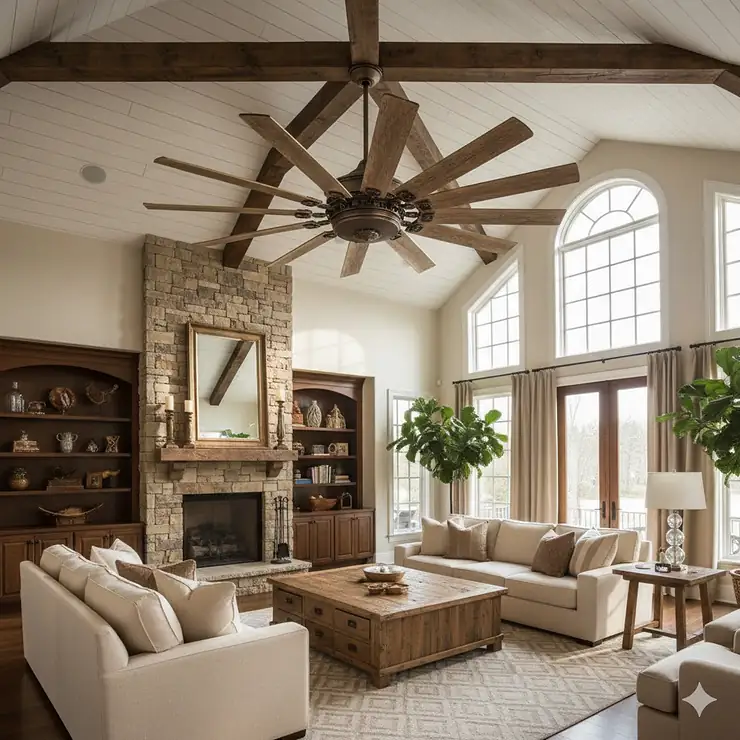
Remember walking into that restaurant with the spectacular fan overhead that made you forget it was 95 degrees outside? That’s the magic of a windmill ceiling fan. These aren’t your grandmother’s standard three-blade models. I’ve spent years helping homeowners transform their cavernous living rooms, great rooms, and vaulted ceiling spaces into comfortable sanctuaries, and windmill ceiling fans consistently deliver where conventional fans fall short.
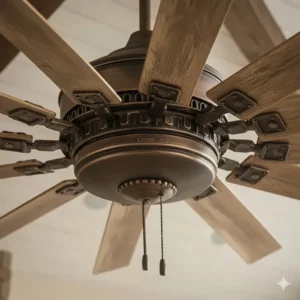
A windmill ceiling fan represents a bold fusion of rustic charm and modern engineering. With their distinctive multi-blade design—typically featuring 8 to 18 blades arranged in a wagon-wheel configuration—these fans move massive volumes of air at surprisingly low speeds, creating gentle, pervasive breezes rather than harsh gusts. According to the U.S. Department of Energy, ceiling fans allow you to raise your thermostat setting by up to four degrees during cooling season with no reduction in comfort, potentially cutting cooling costs by 4–8%. When you’re dealing with a 500+ square foot space, that difference adds up quickly.
Quick Comparison Table
| Model | Size | Blades | Motor | CFM | Price Range | Best For |
|---|---|---|---|---|---|---|
| WINGBO 84″ | 84″ | 10 | DC Motor | 9,697 | $400-$500 | Massive spaces (400+ sq ft) |
| Monte Carlo Prairie 72″ | 72″ | 14 | DC Motor | 7,128 | $600-$800 | Premium large rooms |
| Quorum 97215-86 | 72″ | 15 | Standard | 6,800 | $500-$650 | Traditional farmhouse style |
| WINGBO 72″ | 72″ | 10 | DC Motor | 8,500 | $350-$450 | Budget-friendly large spaces |
| Progress Springer P250000-129 | 60″ | 12 | DC Motor | 5,200 | $300-$400 | Mid-size rooms |
| Monte Carlo Prairie 62″ | 62″ | 14 | DC Motor | 7,233 | $550-$700 | Energy-conscious buyers |
| ELEHINSER 60″ | 60″ | 6 | DC Motor | 9,205 | $250-$350 | Contemporary aesthetics |
💬 Just one click – help others make better buying decisions too!😊
Top 7 Windmill Ceiling Fans: Expert Analysis
1. WINGBO 84″ Windmill Ceiling Fan with Lights
If you’ve got a great room that feels more like an aircraft hangar, the WINGBO 84″ delivers industrial-strength airflow without the industrial noise. With its 10 lightweight plywood blades spanning a full 7 feet, this beast pushes an impressive 9,697 CFM—enough to make you actually feel those utility bill savings.
Key Specifications:
- 6-speed reversible DC motor
- 3-color temperature LED lighting (3CCT)
- Indoor and covered outdoor approved
The aged brass and black finish combo brings that perfect farmhouse-meets-modern vibe. I particularly appreciate the 6-speed remote control that includes a natural breeze mode, because who wants constant hurricane-force winds while watching TV? Customer feedback consistently highlights the whisper-quiet operation despite its size, though some mention the installation weight (around 45 lbs) requires proper ceiling support and possibly a helper.
✅ Pros:
- Exceptional CFM for extra-large spaces
- Reversible for year-round use
- Energy-efficient DC motor saves on electricity
❌ Cons:
- Requires robust ceiling support
- Higher price point than smaller models
Price: $400-$500
Ideal Room Size: 400+ square feet
2. Monte Carlo Prairie 14PRR72AGPD 72″
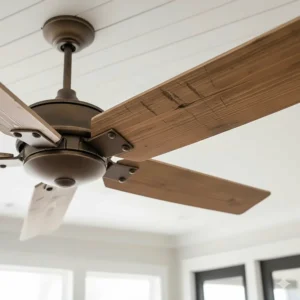
The Monte Carlo Prairie 72″ represents the pinnacle of windmill ceiling fan engineering. This premium model features 14 light grey weathered oak blades with an aged pewter motor housing that screams “I have excellent taste.” According to independent testing, this fan achieves an efficiency rating of 204 CFM/Watt—ENERGY STAR certified models are up to 44% more efficient than conventional fans, and this one exceeds those standards.
Key Specifications:
- 14° blade pitch for optimal air movement
- 125 X 20 mm DC motor
- 7,128 CFM airflow delivery
What sets this apart? The integrated 15W LED downlight with 740 lumens provides ambient lighting without adding bulk. The 6-speed remote includes dimming functionality, and the reversible motor makes winter heating distribution a breeze (pun intended). Customer reviews mention the exceptionally quiet operation—one buyer noted it’s “quieter than any other fan I’ve ever owned.” However, some users experienced reliability issues with the receiver after a few years, so extended warranty coverage is worth considering.
✅ Pros:
- Premium build quality
- Extremely energy efficient
- Beautiful aesthetic for transitional decor
❌ Cons:
- Premium price tag
- Some reports of receiver failures after 2-3 years
Price: $600-$800
Ideal Room Size: 350-500 square feet
3. Quorum 97215-86 Indoor Windmill Ceiling Fan
For pure rustic authenticity, the Quorum 97215-86 brings serious farmhouse credibility with its 15 weathered oak blades arranged in a dramatic wagon-wheel configuration. This 72″ statement piece doesn’t just cool your space—it becomes the focal point of your room. The oiled bronze finish develops character over time, much like quality leather furniture.
Key Specifications:
- 15 weathered oak blades
- 6-speed remote control
- Dry-rated for indoor use
With approximately 6,800 CFM of airflow, this fan handles great rooms up to 450 square feet without breaking a sweat. The 6″ downrod comes standard, though you can customize the height for sloped ceilings. Customer feedback praises the dramatic visual impact and solid construction, though a few noted the standard motor isn’t quite as whisper-quiet as DC alternatives. The tradeoff? A more accessible price point that doesn’t sacrifice performance.
✅ Pros:
- Authentic farmhouse aesthetic
- Solid construction quality
- Excellent value for 72″ diameter
❌ Cons:
- Standard motor slightly louder than DC models
- Heavier than composite-blade alternatives
Price: $500-$650
Ideal Room Size: 350-450 square feet
4. WINGBO 72″ Windmill Ceiling Fan
The WINGBO 72″ model hits the sweet spot between capability and affordability. Don’t let the lower price fool you—this fan delivers 8,500 CFM of airflow, making it perfect for budget-conscious homeowners with big spaces. The 10-blade design in aged brass and black finish offers similar aesthetics to premium models without the premium price tag.
Key Specifications:
- Reversible 6-speed DC motor
- 3-downrod options for installation flexibility
- 3CCT LED lighting
What I love about this model is the practical approach to features. You get the essential smart functionality—remote control, multiple speeds, adjustable color temperature—without paying for bells and whistles you’ll never use. Multiple customers report excellent performance in covered patios and sunrooms. The one caveat? The assembly instructions could be clearer, so budget extra time for installation or hire a professional.
✅ Pros:
- Outstanding value for 72″ diameter
- DC motor efficiency at budget price
- Versatile installation options
❌ Cons:
- Assembly instructions need improvement
- Slightly less refined finish than premium brands
Price: $350-$450
Ideal Room Size: 300-400 square feet
5. Progress Lighting P250000-129 Springer Collection
The Progress Springer represents the Goldilocks solution for many homeowners: not too big, not too small, just right. This 60″ model with 12 distressed walnut finish blades brings farmhouse charm to mid-sized rooms without overwhelming the space. The architectural bronze accents add visual interest without competing with your existing decor.
Key Specifications:
- 12-blade windmill design
- Dual-mount canopy for flat or sloped ceilings
- 5,200 CFM airflow
According to research from the University of Florida, properly sized ceiling fans can reduce cooling costs by 4-8%. This 60″ diameter suits rooms 225-350 square feet perfectly, giving you that sweet spot of efficiency. The full-function remote with batteries comes included, and the powerful yet quiet DC motor delivers consistent performance. Customer feedback highlights the easy installation process and the Limited Lifetime warranty that backs up the quality claims.
✅ Pros:
- Perfect size for most great rooms
- Quiet DC motor performance
- Limited Lifetime warranty
❌ Cons:
- Not suitable for extremely large spaces
- Mid-range price for 60″ diameter
Price: $300-$400
Ideal Room Size: 225-350 square feet
6. Monte Carlo Prairie 14PRR62AGPD 62″
If energy efficiency keeps you up at night, the Monte Carlo Prairie 62″ will help you sleep better—literally and figuratively. This model achieves a stunning 213 CFM/Watt efficiency rating while delivering 7,233 CFM of airflow. That’s the kind of performance that makes utility companies nervous.
Key Specifications:
- 14 light grey weathered oak blades
- 14° blade pitch optimization
- Integrated 15W LED with 740 lumens
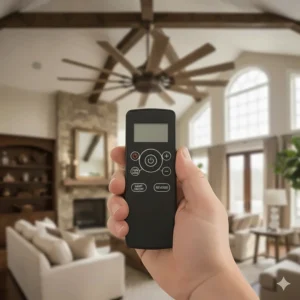
The 62″ diameter occupies that perfect middle ground between the 52″ and 72″ models, offering serious airflow without requiring cathedral ceilings. The 6-speed remote includes full dimming functionality, and the DC motor operates at a barely-there 34 watts on high speed. One customer eloquently noted the fan “pushes a lot of air and operates silently.” The only consideration is ensuring proper clearance—with the included 6″ downrod, you’ll need at least 8.5-foot ceilings for code compliance.
✅ Pros:
- Exceptional energy efficiency
- Professional-grade quiet operation
- Ideal mid-size diameter
❌ Cons:
- Requires adequate ceiling height
- Premium pricing tier
Price: $550-$700
Ideal Room Size: 300-400 square feet
7. ELEHINSER 60″ Ceiling Fan with Lights
For those who want windmill functionality with contemporary aesthetics, the ELEHINSER 60″ breaks the mold. Its 6 ABS plastic blades in brass and transparent finish create a lighter, more modern interpretation of the windmill style. This fan proves you don’t need 12+ blades to move serious air—9,205 CFM speaks for itself.
Key Specifications:
- 6 lightweight ABS blades
- 19° blade pitch for aggressive air movement
- 3 downrod options for versatility
The ABS construction means easier installation (lighter weight) and zero maintenance concerns about wood weathering. The 6-speed DC motor includes summer/winter reversing modes, and the 3CCT lighting adapts from warm 2700K to cool 5000K depending on your mood. Customer reviews appreciate the modern aesthetic and straightforward installation. The fan works equally well indoors and in covered outdoor applications, though the transparent blades may not suit traditional farmhouse interiors.
✅ Pros:
- Contemporary design aesthetic
- High CFM from just 6 blades
- Low-maintenance ABS construction
❌ Cons:
- Modern look not for everyone
- Light not dimmable
Price: $250-$350
Ideal Room Size: 250-400 square feet
What is Windmill Ceiling Fan? Understanding This Game-Changing Design
A windmill ceiling fan is a specialized large-diameter ceiling fan characterized by multiple blades (typically 8-18) arranged in a wagon-wheel or windmill-inspired configuration. Unlike standard 3-5 blade fans that rely on high-speed rotation, windmill ceiling fans employ numerous blades operating at lower RPMs to move exceptional volumes of air with reduced noise and energy consumption.
The design draws direct inspiration from agricultural windmills, featuring elongated blade arms extending from a central hub. Modern iterations incorporate DC motors, LED lighting, and smart controls while maintaining the distinctive aesthetic. These fans excel in spaces over 225 square feet where conventional fans struggle to provide adequate air circulation.
Windmill Ceiling Fan vs Traditional Ceiling Fan: Performance Comparison
| Feature | Windmill Ceiling Fan | Traditional Ceiling Fan |
|---|---|---|
| Blade Count | 8-18 blades | 3-5 blades |
| Typical Diameter | 60″-84″+ | 42″-56″ |
| CFM Output | 5,000-10,000+ CFM | 2,000-6,000 CFM |
| Operating Speed | Low RPM, high airflow | Higher RPM, moderate airflow |
| Noise Level | Whisper-quiet operation | Moderate to noticeable |
| Energy Efficiency | 150-250 CFM/Watt (DC models) | 60-120 CFM/Watt |
| Price Range | $250-$800+ | $100-$400 |
| Installation Complexity | Moderate (heavier weight) | Simple to moderate |
| Best Room Size | 300-500+ sq ft | 150-300 sq ft |
How to Choose the Perfect Windmill Ceiling Fan: 7 Essential Factors
1. Measure Your Room Size Accurately
Match blade diameter to room dimensions. For 225-350 sq ft spaces, choose 60″ models. Rooms 350-450 sq ft need 72″ fans. Spaces exceeding 450 sq ft benefit from 84″ models or multiple 72″ units. Remember the Department of Energy’s guideline: use 36-44″ fans for rooms up to 225 square feet, and 52″+ for larger spaces.
2. Verify Ceiling Height and Clearance
Building codes mandate 7-foot minimum clearance between blades and floor. With standard 8″ downrods plus fan height, you’ll need minimum 8.5-9 foot ceilings. Vaulted ceilings? Most windmill fans include dual-mount canopies compatible with slopes up to 30 degrees.
3. Calculate Required CFM (Cubic Feet per Minute)
Target 75-100 CFM per square foot for optimal comfort. A 400 sq ft room needs 30,000-40,000 CFM total airflow. Since fans don’t cool continuously in one spot, divide by 4-5 to get per-fan requirements: 6,000-10,000 CFM per unit. This explains why windmill fans dominate large spaces.
4. Prioritize DC Motors for Efficiency
DC motor technology delivers 40-70% energy savings compared to AC motors. A quality DC windmill fan consumes 30-50 watts on high speed versus 70-120 watts for AC equivalents. Over a typical 10-year lifespan running 8 hours daily, that’s $200-400 in electricity savings at average U.S. rates.
5. Assess Lighting Integration Needs
Many windmill fans include integrated LED downlights (15-20 watts, 700-1000 lumens). Consider whether you need ambient lighting or prefer focused task lighting elsewhere. Dimmable LED options provide flexibility for different activities and times of day. Some models offer 3CCT (3-color temperature) adjustment from warm 2700K to cool 5000K.
6. Consider Indoor vs Outdoor Rating
Dry-rated fans suit climate-controlled interior spaces. Damp-rated models withstand covered patios and high-humidity areas like bathrooms. Wet-rated fans tolerate direct rain exposure on uncovered decks. Most windmill ceiling fans carry damp ratings as a standard feature, making them versatile for sunrooms and covered porches.
7. Budget for Quality and Longevity
Entry-level windmill fans ($250-400) offer good value but may compromise on motor quality or noise levels. Mid-range options ($400-600) balance performance and price effectively. Premium models ($600-800+) deliver whisper-quiet operation, exceptional efficiency ratings, and robust warranties. Calculate total cost including installation—professional mounting for large fans runs $150-300.
✨ Don’t Miss These Exclusive Deals!
🔍 Take your home comfort to the next level with these carefully selected windmill ceiling fans. Click on any highlighted item to check current pricing and availability. These fans will help you create authentic comfort your family will love while reducing energy costs!
Installation Considerations for Windmill Ceiling Fans
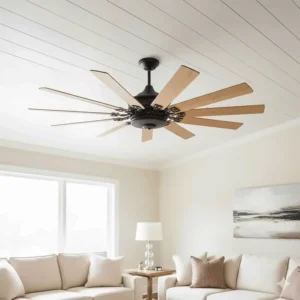
Installing a windmill ceiling fan requires more preparation than standard models due to increased weight and diameter. Most 72″ windmill fans weigh 25-45 pounds before assembly, necessitating proper ceiling joist mounting with an approved fan-rated electrical box. Never attempt mounting to drywall alone—the rotating mass generates significant stress.
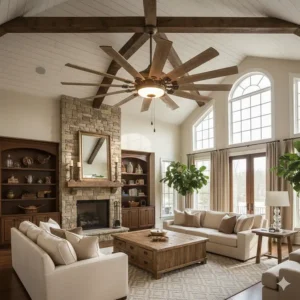
For vaulted or cathedral ceilings, utilize adjustable downrods to position the fan 8-10 feet from the floor for optimal air circulation. The angled blades of windmill fans create a “scooping” effect that pulls air upward along the ceiling slope and redirects it downward toward living spaces. This destratification (mixing warm and cool air layers) proves especially valuable in rooms with 12+ foot ceilings where temperature stratification becomes pronounced.
Professional installation costs $150-300 but ensures proper mounting, electrical connections, and balancing. Many retailers offer installation services bundled with purchase. If you’re reasonably handy with electrical work and have a helper for lifting, DIY installation saves money—just allocate 2-3 hours for the project.
Energy Efficiency Benefits: Real Numbers That Matter
According to the U.S. Department of Energy, ceiling fans enable raising your thermostat by one degree per level of perceived cooling, with each degree potentially reducing energy consumption by 1%. A windmill ceiling fan in a 400 sq ft room allowing a 4-degree thermostat increase could save $80-150 annually depending on local electricity rates and climate.
ENERGY STAR certified ceiling fans use up to 60% less energy than conventional models while moving the same air volume. The key metric is CFM/Watt efficiency:
- Budget AC motor fans: 40-70 CFM/Watt
- Standard fans: 70-120 CFM/Watt
- Quality DC motor windmill fans: 150-250 CFM/Watt
A 200 CFM/Watt fan running 8 hours daily consumes approximately 110 kWh annually at 30 watts. At $0.13/kWh average U.S. electricity rate, that’s $14.30 per year. Compare that to 500+ kWh for equivalent air conditioning runtime—the math is compelling.
Maintenance and Longevity: Keeping Your Fan Running Smoothly
Windmill ceiling fans require minimal maintenance when properly installed. Here’s your seasonal checklist:
Monthly Tasks:
- Wipe blades with microfiber cloth to prevent dust buildup (dust increases weight and wobble)
- Check for any loosened screws in blade attachments
- Test remote control batteries
Quarterly Tasks:
- Verify blade-to-ceiling clearance hasn’t changed (settling foundations can affect this)
- Clean motor housing and canopy with slightly damp cloth
- Inspect downrod connection security
Annual Tasks:
- Deep clean all blades with wood-safe cleaner (for wood blades) or mild soap (for composites)
- Check electrical connections at ceiling junction box
- Test reversing function and all speed settings
- Balance blades if wobble develops (balancing kits available for $10-15)
Quality DC motor windmill fans typically last 15-20 years with proper maintenance. The motors run cooler than AC equivalents, reducing wear on internal components. LED light kits last 25,000-50,000 hours—that’s 6-12 years of daily use. When purchasing, verify manufacturer warranty details: quality brands offer 10-15 year motor warranties and lifetime warranties on mechanical components.
Smart Features and Control Options
Modern windmill ceiling fans embrace smart home integration:
Remote Control Capabilities:
- 6-8 speed settings (vs traditional 3-speed chains)
- LED dimming and color temperature adjustment
- Timer functions (1-8 hour auto-shutoff)
- Natural breeze mode (variable speed patterns)
- Memory function (remembers last settings)
Wi-Fi and Smart Home Integration: Some premium models connect directly to Wi-Fi networks, enabling:
- Smartphone app control (iOS and Android)
- Voice commands through Alexa, Google Home, or Siri
- Integration with smart thermostats
- Scheduling and automation
- Remote access when away from home
Wall Control Options: Upgraded wall controls replace standard light switches with:
- Digital LED displays showing speed and settings
- Touch-sensitive buttons
- Preset scene programming
- Compatible with home automation systems
For the ultimate convenience, look for fans with receiver-less DC motors that accept universal remote controls. This eliminates the receiver failure issues some users report and provides greater control flexibility.
Styling Your Space: Design Integration Tips
Windmill ceiling fans make bold visual statements. Here’s how to integrate them seamlessly:
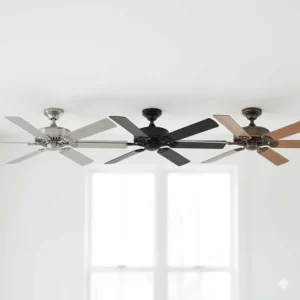
Rustic and Farmhouse Interiors: Choose weathered oak, distressed walnut, or reclaimed wood blade finishes. Pair with oiled bronze, aged pewter, or galvanized steel motor housings. Complement with Edison bulb chandeliers, shiplap walls, and distressed furniture. The fan becomes an architectural focal point that anchors the room’s aesthetic.
Industrial Modern Spaces: Select brushed steel, matte black, or aged brass finishes. Look for geometric blade shapes and minimalist motor housings. Combine with exposed brick, concrete floors, and metal furniture. The windmill fan’s mechanical aesthetic aligns perfectly with industrial design principles.
Transitional Designs: Blend traditional and contemporary elements with dual-finish fans (like aged brass with black blades). These versatile options work in spaces mixing modern furniture with classic architectural details. Choose neutral colors that don’t compete with existing decor.
Contemporary Minimalist Rooms: Opt for transparent or light-colored composite blades with simple motor housings. The ELEHINSER model exemplifies this approach—maximum function with minimal visual weight. Pair with clean lines, neutral palettes, and uncluttered spaces.
Color Coordination: Match or complement the fan finish to existing light fixtures, cabinet hardware, or furniture accents for cohesive design. Alternatively, use the fan as a contrasting focal point—a dark bronze fan against white ceilings creates dramatic emphasis.
Common Installation Mistakes to Avoid
Even experienced DIYers can stumble with windmill ceiling fan installations. Watch out for these pitfalls:
Inadequate Ceiling Support: Standard electrical boxes support 50 pounds maximum. Most windmill fans exceed this. Install an approved fan-rated brace box secured directly to ceiling joists. Retrofit kits are available for existing construction.
Incorrect Downrod Length: Too short creates inadequate airflow beneath the fan; too long violates the 7-foot clearance requirement. Measure carefully and account for the fan motor housing height plus blade drop.
Improper Electrical Connections: Windmill fans typically require separate controls for fan and light. Ensure your wiring includes separate switched circuits or plan to use remote control exclusively. Never connect both to a single switch.
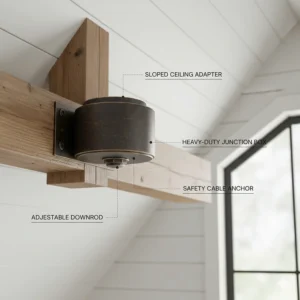
Forgetting Ceiling Slope Accommodation: Sloped ceiling installations require special canopy mounts. Standard canopies create unsafe angles. Use manufacturer-supplied sloped ceiling kits or universal adapters.
Skipping the Balancing Process: Large-diameter fans magnify minor weight imbalances. Even slight wobble stresses the motor and ceiling mounting. Use blade balancing kits to ensure smooth, quiet operation.
Ignoring Blade Clearance to Walls: While 7-foot floor clearance is mandatory, also maintain 24-30 inches from blade tips to walls and obstacles. Closer distances create turbulence and reduce efficiency.
Seasonal Use: Summer Cooling and Winter Heating
Maximizing your windmill ceiling fan’s benefits requires understanding directional operation:
Summer Mode (Counterclockwise Rotation): Blades spin counterclockwise when viewed from below, pushing air straight down. This creates wind-chill effect, making you feel 4-8 degrees cooler. Position yourself within the fan’s primary downwind cone (slightly wider than the blade diameter) for maximum cooling. Run continuously during occupied hours on medium-high speed settings.
Winter Mode (Clockwise Rotation): Reverse rotation pulls cool air upward along the motor shaft and pushes warm air down along the ceiling perimeter. This redistributes heat trapped near ceilings without creating cooling drafts. Run on lowest speed settings (higher speeds create noticeable drafts that negate heating benefits). The Department of Energy notes this destratification can reduce heating costs 10-15% in rooms with high ceilings.
Transition Seasons: During mild spring and fall weather, use medium speeds with windows open to enhance natural ventilation. The fan creates negative pressure that draws fresh outdoor air through windows while exhausting stale indoor air.
Programmable Scheduling: Smart-enabled fans can automatically adjust based on seasons. Program summer schedule: medium-high counterclockwise during occupied hours, off when away. Winter schedule: low clockwise for 15-20 minutes per hour during heating periods.
Addressing Common Concerns About Windmill Ceiling Fans
“Will it be too loud?” Quality DC motor windmill fans operate at 35-45 decibels on high speed—quieter than normal conversation (60 dB). The multiple blades spinning at lower RPMs actually generate less noise than traditional 3-blade fans at equivalent airflow levels. Budget models with AC motors may produce 55-65 dB on high settings.
“Are they difficult to clean?” The multiple blades do require more time than standard fans—figure 15-20 minutes versus 5-10 minutes. However, the same low-RPM operation that makes them quiet also means less dust accumulation from turbulent airflow. Most owners clean quarterly rather than monthly.
“Will it overwhelm my room?” Large windmill fans suit large rooms. In a properly sized space (300+ sq ft for 72″ models), the fan becomes a design feature rather than an eyesore. The key is maintaining proportional scale—a 72″ fan in a 150 sq ft bedroom would overwhelm, but in a 400 sq ft great room it feels appropriate.
“What about wobble issues?” Properly installed and balanced windmill fans exhibit minimal wobble. The precision-balanced blades from quality manufacturers operate smoothly. If wobble develops, it typically indicates loose mounting hardware, unbalanced blades (fix with balancing kit), or inadequate ceiling support. These issues affect all ceiling fans equally.
“How much weight can my ceiling support?” Standard residential ceilings with proper joist mounting support 150+ pounds when using fan-rated electrical boxes. Most windmill fans weigh 25-50 pounds—well within limits. The concern isn’t static weight but dynamic stress from rotation. Always use approved ceiling fan mounting systems.
Price vs Performance: Finding Your Sweet Spot
Budget Tier ($250-400): Entry-level windmill fans from brands like ELEHINSER and value-focused WINGBO models provide excellent CFM output with basic features. Expect standard DC motors, simple remote controls, and 3-5 year warranties. Suitable for infrequent use spaces like seasonal rooms or covered patios.
Mid-Range ($400-600): This sweet spot delivers quality construction, efficient motors, and reliable operation. Brands like Progress Lighting and value models from Monte Carlo offer professional-grade performance at reasonable prices. You get better warranties (10+ years), quieter operation, and premium finishes.
Premium ($600-800+): Top-tier options from Monte Carlo, Quorum, and specialized manufacturers justify premium pricing with exceptional efficiency ratings (200+ CFM/Watt), whisper-quiet operation, lifetime mechanical warranties, and superior aesthetic execution. These fans treat air movement as both science and art.
Return on Investment: Calculate total ownership costs including purchase, installation, and 10-year energy consumption. A $700 premium fan consuming 35 watts costs $796 over 10 years ($700 + $96 electricity @ 8 hrs/day). A $300 budget fan consuming 75 watts costs $537 ($300 + $237 electricity). However, the premium fan delivers better cooling (allowing 4° vs 2° thermostat increase), potentially saving $700+ in reduced AC costs over that decade. The “expensive” fan actually costs less long-term.
Indoor vs Outdoor Applications: Location Considerations
Indoor Dry-Rated Installations: Climate-controlled interior spaces require standard dry-rated windmill fans. These offer the widest selection of finishes and features. Ideal locations include great rooms, living rooms, master bedrooms, home offices, and bonus rooms. Maintain consistent temperature (50-95°F) and moderate humidity (<70% RH) for optimal performance and longevity.
Damp-Rated Covered Areas: Covered porches, sunrooms, screened patios, and bathrooms with shower steam require damp-rated fans. These models resist humidity and temperature fluctuations but shouldn’t face direct water exposure. Look for weather-resistant blade coatings and sealed motor housings. The Monte Carlo Prairie and similar outdoor-approved models excel here.
Wet-Rated Exposed Locations: Fully exposed decks and uncovered patios need wet-rated fans with completely sealed electronics and rust-resistant finishes. Fewer windmill fans carry wet ratings—most top out at damp rating. Consider galvanized steel motor housings and composite blades over wood in harsh weather conditions.
Altitude Considerations: High-altitude installations (5,000+ feet elevation) may affect motor performance slightly. DC motors handle altitude better than AC motors due to different operating principles. Verify manufacturer specifications if you live in mountain regions.
FAQ
❓ How much does it cost to run a windmill ceiling fan year-round?
❓ Can windmill ceiling fans really replace air conditioning?
❓ What size windmill ceiling fan do I need for a 400 square foot room?
❓ Are windmill ceiling fans louder than regular ceiling fans?
❓ How often should I clean my windmill ceiling fan blades?
Conclusion: Transform Your Space with the Right Windmill Ceiling Fan
Choosing the perfect windmill ceiling fan boils down to matching size, performance, and aesthetics to your specific space. A 400-square-foot great room with vaulted ceilings demands different solutions than a 250-square-foot covered patio. The WINGBO 84″ dominates massive spaces with brute-force airflow, while the Monte Carlo Prairie 62″ maximizes efficiency for mid-sized rooms. Budget-conscious buyers find excellent value in the WINGBO 72″ or Progress Springer, and style-forward homeowners appreciate the contemporary ELEHINSER design.
Remember the fundamentals: match blade diameter to room size, prioritize DC motors for efficiency, ensure adequate ceiling height and support, and consider long-term operating costs alongside purchase price. The best windmill ceiling fan isn’t necessarily the most expensive—it’s the one perfectly suited to your space, usage patterns, and aesthetic preferences.
Your comfort awaits. Whether you’re building new construction, renovating existing spaces, or simply tired of sweltering summers and inefficient air conditioning bills, a well-chosen windmill ceiling fan transforms livability while trimming energy consumption. The investment pays dividends through enhanced comfort, reduced utility bills, and elevated interior design for years to come.
Recommended for You
- 7 Best Farmhouse Ceiling Fans That’ll Transform Your Home in 2025
- 7 Best Crystal Ceiling Fans 2025: Expert Reviews & Guide
- 7 Best Three Blade Ceiling Fans 2025: Smart Buying Guide
Disclaimer: This article contains affiliate links. If you purchase products through these links, we may earn a small commission at no additional cost to you.
✨ Found this helpful? Share it with your friends! 💬🤗
