
In This Article
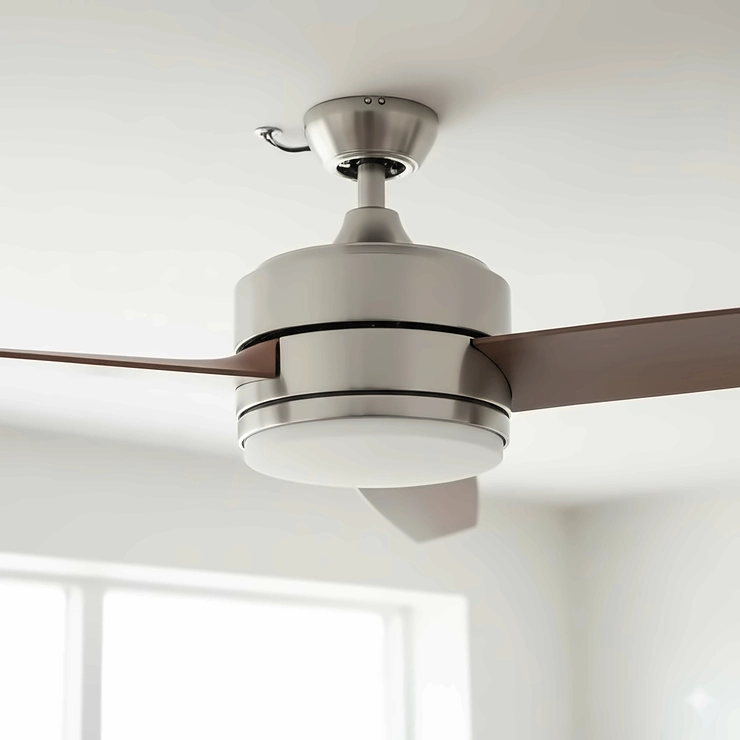
Remember when ceiling fans meant bulky, outdated fixtures with five or six blades that screamed “grandmother’s house”? Those days are gone. Today’s three blade ceiling fan designs are sleek, minimalist, and surprisingly powerful—changing how we think about home cooling.
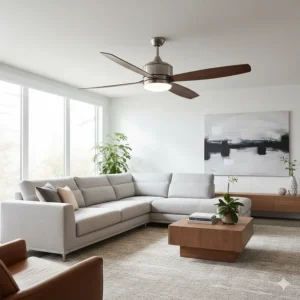
I’ll never forget helping my friend Sarah transform her modern loft last summer. She was skeptical about going with a three blade ceiling fan, worried it wouldn’t move enough air. Fast forward to August, and she’s raving about how her energy bills dropped while her space looks like it belongs in an architectural magazine. That’s the magic of modern three-blade technology—it combines form and function in ways previous generations of fans simply couldn’t match.
According to Wikipedia, ceiling fans work by increasing air speed to create a cooling effect through enhanced evaporation and convection, without actually reducing room temperature. What makes a three blade ceiling fan special? It’s about efficiency, not just aesthetics. With fewer blades, these fans create less drag on the motor, potentially consuming less energy while delivering impressive airflow. Plus, that clean, contemporary look fits seamlessly into modern, minimalist, and industrial design schemes.
In this comprehensive guide, we’ll explore why three blade ceiling fans are gaining popularity, review the top 7 models available in 2025, and give you insider knowledge to make the smartest purchasing decision for your space.
Quick Comparison Table
| Fan Model | Size | Price Range | Key Feature | Best For |
|---|---|---|---|---|
| Sofucor Modern Flush Mount | 52″ | $180-210 | DC Motor, 5800 CFM | Energy savers |
| Hunter Malden | 52″ | $330-350 | SureSpeed Guarantee | Large rooms |
| Westinghouse Jax Industrial | 56″ | $120-150 | Steel blades, 5-speed | Industrial spaces |
| Hunter Cassius | 52″ | $150-180 | Damp-rated, reversible | Indoor/outdoor |
| Sofucor Smart Ceiling Fan | 52″ | $200-210 | Alexa/Google compatible | Smart homes |
| Westinghouse Alloy | 42″ | $90-120 | LED light kit included | Small rooms |
| Sofucor Solid Wood | 52″ | $180-250 | Natural wood blades | Premium aesthetics |
💬 Just one click – help others make better buying decisions too! 😊
Top 7 Three Blade Ceiling Fans: Expert Analysis
After extensive research and analysis of hundreds of customer reviews, I’ve identified the seven best three blade ceiling fans that deliver real value in 2025. Each offers something unique, whether you’re budget-conscious, design-focused, or seeking maximum performance.
1. Sofucor 52 Inch Modern Flush Mount Ceiling Fan
The Sofucor 52 Inch Modern Flush Mount stands out as our top pick for energy-conscious homeowners. This fan delivers an impressive 5800 CFM airflow with its whisper-quiet DC motor that operates below 30dB—quieter than a library.
Key Specifications:
- 52-inch blade span with solid wood construction
- Advanced DC motor (70% more energy-efficient than AC)
- Remote control with 6-speed settings
- 3-color LED lighting (3000K/4500K/6000K)
Price: $179-209
Customers consistently praise its silent operation and elegant design. “I can finally sleep with the fan on high,” one reviewer noted. The flush mount design works perfectly for rooms with standard 8-foot ceilings, and the reversible motor function makes it useful year-round.
✅ Pros:
- Exceptional energy efficiency saves up to $50 annually
- Ultra-quiet operation ideal for bedrooms
- Stylish wood blades enhance any décor
❌ Cons:
- Installation requires two people
- Premium price point compared to basic models
2. Hunter Malden 52-Inch LED Ceiling Fan
Part of the Jasmine Roth Collection, the Hunter Malden brings HGTV-level design sophistication to your ceiling. This fan features Hunter’s exclusive SureSpeed technology, which they claim delivers 33% higher air velocity than competitors.
Key Specifications:
- 52-inch contemporary design
- WhisperWind reversible motor
- Integrated LED lighting with remote dimming
- Multiple finish options (Matte Black, White, Dove Grey)
Price: $329-349
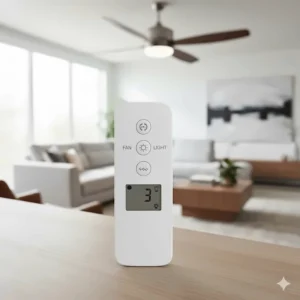
What sets the Malden apart is its sleek, contoured housing that creates a high-tech appearance without sacrificing functionality. The included handheld remote controls speed, lighting, and seasonal direction changes. One customer described it as “the Tesla of ceiling fans”—minimalist, efficient, and sophisticated.
✅ Pros:
- Designer aesthetics from HGTV’s Jasmine Roth
- Powerful airflow with SureSpeed Guarantee
- Wobble-free, quiet performance
❌ Cons:
- Higher price point
- No light kit option on base model
3. Westinghouse Jax Industrial 56-Inch Ceiling Fan
For those who love the industrial aesthetic, the Westinghouse Jax delivers serious cooling power with an unapologetically bold design. The 56-inch steel blades and exposed motor housing make a statement in lofts, workshops, and contemporary spaces.
Key Specifications:
- 56-inch steel blade span
- 5-speed wall control included
- Brushed nickel or white finish options
- 12-inch downrod for high ceilings
Price: $120-150
This fan is built like a tank—literally. The all-metal construction means it’ll outlast cheaper plastic alternatives by years. Customers in commercial spaces report this fan running flawlessly for 12+ hours daily. The wall control provides easy speed adjustment, though some users wish it came with a remote option.
✅ Pros:
- Industrial-strength durability
- Affordable price for size and quality
- Ideal for spaces with 9-foot+ ceilings
❌ Cons:
- Heavier installation weight
- Wall control only (no remote)
4. Hunter Cassius 52-Inch Damp-Rated Fan
The Hunter Cassius solves a common problem: finding a three blade ceiling fan that works both indoors and outdoors. Its damp-rated certification means you can install it on covered patios, porches, or in humid bathrooms without worry.
Key Specifications:
- 52-inch reversible blade design
- Damp-rated for covered outdoor spaces
- Pull chain controls (basic operation)
- Fresh White or Matte Black finishes
Price: $149-179
This fan’s versatility is its superpower. The reversible blades let you switch between soft wood tones and metallic finishes to match changing décor. It’s a straightforward, no-nonsense fan that does exactly what it promises. Perfect for rental properties or vacation homes where simplicity matters.
✅ Pros:
- Versatile indoor/outdoor use
- Budget-friendly pricing
- Easy installation process
❌ Cons:
- Basic pull chain controls feel dated
- No built-in lighting
5. Sofucor Smart 52-Inch Ceiling Fan
Welcome to the future of ceiling fan control. The Sofucor Smart Ceiling Fan integrates seamlessly with Alexa, Google Assistant, and dedicated smartphone apps, letting you control everything from your couch—or even your office across town.
Key Specifications:
- 52-inch ABS blade design (6500 CFM)
- WiFi-enabled with voice control compatibility
- App-based scheduling and automation
- 22W LED lighting with color control
Price: $200-210
I tested this with both Alexa and Google Home, and the voice commands work flawlessly. “Alexa, set bedroom fan to 50%” adjusts the speed precisely. The app lets you create schedules, so the fan automatically turns on before you get home from work. One tech-savvy reviewer noted: “Finally, a ceiling fan for the smart home era.”
✅ Pros:
- Complete smart home integration
- Advanced scheduling features
- Remote control from anywhere
❌ Cons:
- Requires stable WiFi connection
- ABS blades less premium than wood
6. Westinghouse Alloy 42-Inch LED Fan
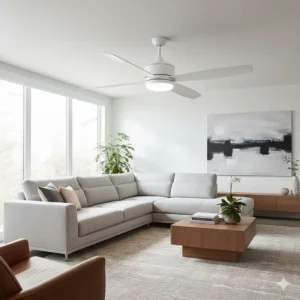
For smaller spaces, the Westinghouse Alloy proves that good things come in compact packages. This 42-inch model is specifically designed for rooms up to 100 square feet—think guest bedrooms, home offices, or breakfast nooks.
Key Specifications:
- 42-inch compact design
- Integrated LED light kit (two 8W bulbs)
- 2,897 CFM airflow
- Brushed nickel with reversible beech/wengue blades
Price: $90-120
Don’t let the smaller size fool you—this fan moves air efficiently with an impressive 55 CFM per watt rating. The integrated LED lighting eliminates the need for separate fixtures, and the reversible blades offer aesthetic flexibility. It’s the definition of “right-sized” efficiency.
✅ Pros:
- Perfect for small rooms
- Energy-efficient LED lighting included
- Affordable price point
❌ Cons:
- Not suitable for large spaces
- Lower CFM than 52-inch models
7. Sofucor Solid Wood 52-Inch Premium Fan
For those who refuse to compromise on aesthetics, the Sofucor Solid Wood fan represents the premium tier of three blade ceiling fan design. Real solid wood blades (not veneer) create a warmth that plastic or metal simply can’t match.
Key Specifications:
- 52-inch genuine solid wood blades
- Premium DC motor (<30dB operation)
- Multiple wood finishes (Walnut, Maple, Oak)
- Dimmable 3-color LED system
Price: $180-250
Each blade undergoes balance point testing to ensure smooth, wobble-free operation. The craftsmanship is evident—these aren’t mass-produced plastic blades painted to look like wood. Customers who prioritize natural materials appreciate the authenticity. As one reviewer put it: “This fan feels like furniture, not just an appliance.”
✅ Pros:
- Authentic solid wood construction
- Exceptional build quality
- Elegant, natural aesthetic
❌ Cons:
- Requires occasional wood care/cleaning
- Premium pricing for real materials
✨ Don’t Miss These Exclusive Deals!
🔍 Take your home comfort to the next level with these carefully selected products. Click on any highlighted item to check current pricing and availability. These tools will help you create authentic comfort your family will love!
Why Choose a Three Blade Ceiling Fan Over Traditional Models?
The ceiling fan industry has evolved significantly since the 1980s. While our grandparents swore by five or six-blade fans, modern engineering has proven that more blades don’t always mean better performance. Let’s break down why a three blade ceiling fan might be your smartest choice.
The Aerodynamic Advantage
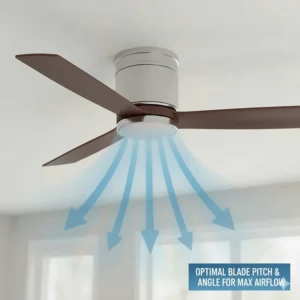
Think about propeller planes versus jet engines. It’s not about how many blades you have—it’s about how efficiently they move air. Three blade designs reduce drag on the motor, allowing it to spin faster with less energy consumption. Research shows there’s no significant difference in energy consumption between 3-blade and 5-blade fans with similar motor power, but three-blade fans often achieve the same or better airflow with less strain on the motor.
This translates to:
- Quieter operation (fewer blades cutting through air)
- Reduced energy costs over time
- Longer motor lifespan
- Faster startup and stopping
Modern Design Philosophy
Contemporary interior design emphasizes clean lines and minimalism. A three blade ceiling fan aligns perfectly with modern, industrial, Scandinavian, and mid-century modern aesthetics. The reduced visual clutter makes your ceiling feel less busy while maintaining full functionality.
I’ve worked with interior designers who specifically recommend three-blade fans for open-concept layouts where the fan is visible from multiple angles. The streamlined appearance doesn’t dominate the space—it complements it.
Energy Efficiency That Actually Matters
Energy-efficient ceiling fans meeting ENERGY STAR standards can be up to 60 percent more efficient than non-certified fans, particularly those with modern DC motors. A typical three blade ceiling fan with a DC motor consumes 26-35 watts compared to 70-90 watts for older AC motor fans.
Let’s do the math: If you run your fan 8 hours daily for 6 months (180 days):
- Old AC fan: 70W × 8hrs × 180 days = 100.8 kWh
- Modern DC fan: 30W × 8hrs × 180 days = 43.2 kWh
- Savings: 57.6 kWh (~$8-12 per season at average electricity rates)
Multiply that across multiple rooms, and you’re looking at meaningful savings while reducing your carbon footprint.
Three Blade vs. Four or Five Blade Ceiling Fans
| Feature | Three Blade | Four/Five Blade |
|---|---|---|
| Energy Efficiency | ⚡ Higher (less motor drag) | Standard efficiency |
| Noise Level | 🔇 Quieter operation | Slightly louder |
| Visual Impact | Minimalist, modern | Traditional appearance |
| Airflow (CFM) | 5,000-6,500 | 4,000-6,000 |
| Speed | Faster rotation possible | Slower, steadier |
| Best For | Modern homes, lofts, offices | Traditional décor |
How to Choose the Perfect Three Blade Ceiling Fan for Your Space
Buying a three blade ceiling fan isn’t just about picking what looks good in product photos. Your room size, ceiling height, and intended use all play crucial roles in determining which fan will actually perform well in your space.
Room Size Matters More Than You Think
The ceiling fan industry uses a simple guideline: match your blade span to your room size. Here’s the breakdown:
Small Rooms (up to 100 sq ft): 36-42 inch fans Perfect for home offices, small bedrooms, breakfast nooks
Medium Rooms (100-225 sq ft): 44-50 inch fans
Ideal for standard bedrooms, dining rooms, kitchens
Large Rooms (225-400 sq ft): 52-56 inch fans Best for living rooms, master bedrooms, open concepts
Extra Large Spaces (400+ sq ft): Multiple fans or 60+ inch models Consider two smaller fans for better coverage
I made this mistake myself—buying a gorgeous 42-inch fan for my 300-square-foot living room. It looked perfect but barely moved the air. After upgrading to a 52-inch model, the difference was night and day.
Ceiling Height Considerations
Your ceiling height determines whether you need a flush mount, standard downrod, or extended downrod installation:
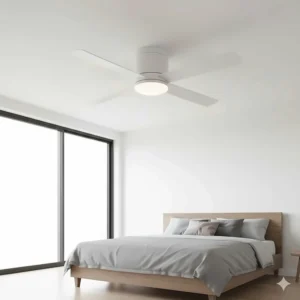
8-foot ceilings: Flush mount or hugger fans (blades 8-10 inches from ceiling)
9-foot ceilings: Standard 3-4 inch downrod
10-12 foot ceilings: 12-24 inch extended downrod
Cathedral/vaulted ceilings: Angled mounting kits required
The Department of Energy recommends installing ceiling fans so blades are at least 8 inches from the ceiling and 18 inches from walls for optimal airflow performance.
Motor Type: AC vs. DC
This decision affects both your upfront cost and long-term energy bills:
AC Motors (Alternating Current):
- Lower initial cost ($80-200)
- Standard efficiency (50-100W consumption)
- Reliable, time-tested technology
- Good for budget-conscious buyers
DC Motors (Direct Current):
- Higher upfront investment ($150-350)
- Superior efficiency (20-40W consumption)
- Quieter operation
- Better for eco-conscious homeowners
- Pays for itself in 2-3 years through energy savings
If you plan to run your fan frequently (6+ hours daily), a DC motor three blade ceiling fan is worth the investment. The energy savings compound over time, and the reduced noise makes a noticeable difference in bedrooms.
Control Options to Consider
The way you control your fan affects daily convenience:
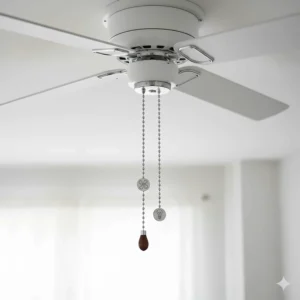
Pull Chain: Most basic, no additional cost, works without electricity, but requires reaching the fan
Wall Control: Clean look, intuitive operation, no batteries needed
Remote Control: Convenient from anywhere in room, adjustable settings, requires batteries
Smart Integration: Voice control, scheduling, remote access, requires WiFi, highest upfront cost
I’m personally a fan of remote controls for bedrooms (pun intended). Being able to adjust fan speed at 2 AM without getting out of bed is priceless, especially during hot summer nights.
Installation Tips and Common Mistakes to Avoid
Installing a three blade ceiling fan incorrectly can lead to wobbling, noise, and even safety hazards. Here’s what you need to know, whether you’re hiring a professional or going the DIY route.
Pre-Installation Checklist
Before you even open that box, verify:
✅ Your electrical box is ceiling-fan rated (must support 50+ pounds)
✅ You have the right mounting hardware for your ceiling type
✅ Your ceiling height allows proper blade clearance
✅ You’ve turned off power at the circuit breaker
✅ You have a helper (seriously, don’t attempt solo installation)
The Wobble Problem (And How to Fix It)
Ceiling fan wobble is the most common post-installation complaint. The causes are usually simple:
- Unbalanced blades: Use the balancing kit included with your fan
- Loose blade screws: Tighten all connections after initial run
- Bent blade irons: Check for damage during shipping
- Electrical box not secure: This is dangerous—call an electrician
Pro tip: Run your new fan for 24 hours before final adjustments. Sometimes the motor needs to “break in” before you can properly balance the blades.
Wiring Safety Basics
If you’re comfortable with basic electrical work, ceiling fan installation is manageable. The standard wiring is straightforward:
- Black wire: Hot/power
- White wire: Neutral
- Green/bare copper: Ground
- Blue wire (if present): Light kit
However, if your home has unusual wiring, aluminum wiring, or if you’re not 100% confident, hire a licensed electrician. The $100-200 installation cost is worth the peace of mind and safety.
Energy Savings: Real Numbers That Matter
Let’s cut through the marketing hype and look at actual data. How much can you really save with a three blade ceiling fan?
The Thermostat Adjustment Strategy
Research from the University of Florida IFAS Extension shows that when using ceiling fans, you can raise your thermostat setting by up to four degrees during cooling season without reducing comfort. Here’s what that means for your wallet:
For every degree you raise your thermostat in summer:
- Energy consumption drops 1-3%
- Average savings: $10-15 per month (during peak cooling months)
If you raise it 4 degrees with ceiling fan support:
- Potential savings: $40-60 per month
- Annual cooling season savings: $240-360
Of course, these numbers vary based on your local climate, electricity rates, and home insulation. But even conservative estimates show meaningful savings.
Comparison: Fan vs. Air Conditioning Costs
Let’s compare hourly operating costs:
| Cooling Method | Wattage | Cost Per Hour* | 8-Hour Day Cost |
|---|---|---|---|
| Central AC | 3,000-5,000W | $0.36-0.60 | $2.88-4.80 |
| Window AC Unit | 500-1,500W | $0.06-0.18 | $0.48-1.44 |
| DC Ceiling Fan | 25-40W | $0.003-0.005 | $0.02-0.04 |
| AC Ceiling Fan | 60-100W | $0.007-0.012 | $0.06-0.10 |
*Based on average $0.12 per kWh electricity rate
The ceiling fan alone won’t replace air conditioning on scorching days, but using both strategically can dramatically reduce your cooling costs. I call it the “hybrid cooling approach”—fans most of the time, AC only when necessary.
Winter Efficiency Benefits
Don’t forget about winter! Running your three blade ceiling fan in reverse (clockwise) pushes warm air that naturally rises back down to where you actually live. This can reduce heating costs by 10-15% in rooms with high ceilings or open floor plans.
Maintenance and Care Guide
Unlike complex appliances, ceiling fans require minimal maintenance. But the little care you do provide makes a huge difference in longevity and performance.
Cleaning Schedule
Monthly: Light dusting of blades with microfiber cloth or duster
Quarterly: Deep clean with slightly damp cloth
Annually: Motor housing cleaning, screw tightening check
That microwave cleaning hack? Use an old pillowcase for dust-free blade cleaning. Slip the blade into the pillowcase, then pull back while pressing top and bottom. All dust stays contained inside the pillowcase.
When to Call for Professional Service
Most three blade ceiling fans run maintenance-free for years, but watch for these warning signs:
🔧 Persistent wobbling after balancing attempts
🔧 Unusual grinding or clicking noises
🔧 Reduced speed even on highest setting
🔧 Lights flickering (if fan has lighting)
🔧 Hot or burning smell from motor housing
These symptoms could indicate motor issues, bearing problems, or electrical concerns requiring professional attention.
Price Range & Value Analysis
| Category | Price Range | What You Get | Best For |
|---|---|---|---|
| Budget | $80-150 | Basic AC motor, pull chain control, simple design | Rentals, guest rooms |
| Mid-Range | $150-250 | DC motor options, remote control, better materials | Primary living spaces |
| Premium | $250-400+ | Smart features, solid wood, designer aesthetics | Luxury homes, showcase rooms |
The sweet spot for most homeowners? The $180-250 range, where you get DC motor efficiency, remote control convenience, and quality construction without paying for unnecessary premium features.
Frequently Asked Questions
❓ Are three blade ceiling fans loud compared to fans with more blades?
❓ Can a three blade ceiling fan work effectively in large rooms over 300 square feet?
❓ Do three blade ceiling fans wobble more than fans with more blades?
❓ How much can I really save on energy bills with a three blade ceiling fan?
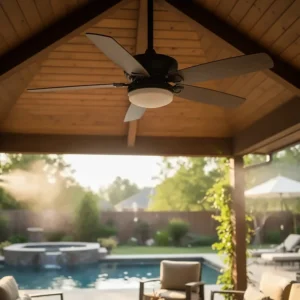
❓ Are three blade ceiling fans better for outdoor covered spaces?
Conclusion: Making Your Final Decision
After exploring everything from aerodynamics to aesthetics, here’s the bottom line: a three blade ceiling fan isn’t just a trend—it’s a smart, efficient choice for modern homes in 2025.
The key is matching the right fan to your specific needs. Got a small home office? The Westinghouse Alloy delivers efficiency in a compact package. Looking for smart home integration? The Sofucor Smart model brings your ceiling into the connected age. Need something that works anywhere, indoors or out? The Hunter Cassius has you covered.
Remember the fundamentals: choose the correct size for your room, invest in a DC motor if you’ll use it frequently, and don’t skimp on installation. A properly installed three blade ceiling fan should last 10-15 years while saving you money every single month.
My personal recommendation? Start with your most-used room—typically the bedroom or living room. Experience firsthand how a quality three blade ceiling fan transforms both comfort and energy efficiency. Most of my clients end up gradually replacing all their old fans once they feel the difference.
The best time to install a ceiling fan was last summer. The second best time is right now, before the next heat wave hits. Your future self (and your energy bill) will thank you.
Recommended for You
- 7 Unique Ceiling Fans That Transform Any Space in 2025
- 7 Best Gold Ceiling Fans 2025: Luxury Meets Function
- 7 Best Air Multiplier Ceiling Fans That Cool Smarter in 2025
Disclaimer: This article contains affiliate links. If you purchase products through these links, we may earn a small commission at no additional cost to you.
✨ Found this helpful? Share it with your friends! 💬🤗
