
In This Article
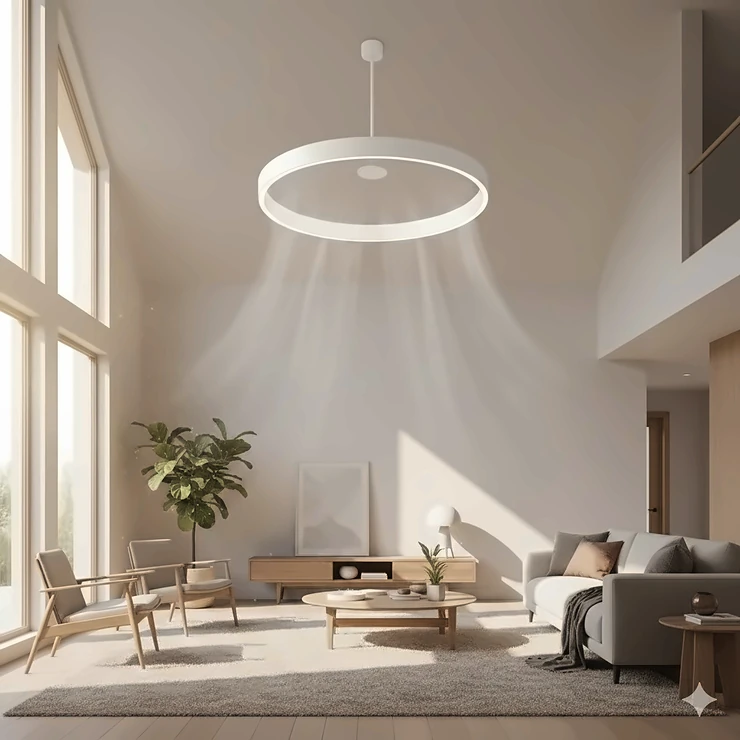
Imagine a ceiling fan that cools your entire room without exposed spinning blades, operates whisper-quiet, and looks like something from a futuristic movie. That’s exactly what an air multiplier ceiling fan delivers. Unlike traditional ceiling fans that simply chop air with visible blades, these innovative devices use advanced air multiplier technology to create smooth, powerful airflow throughout your space.
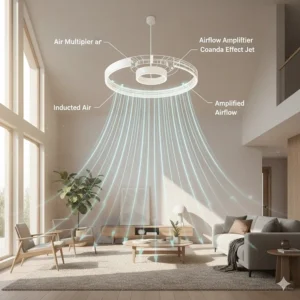
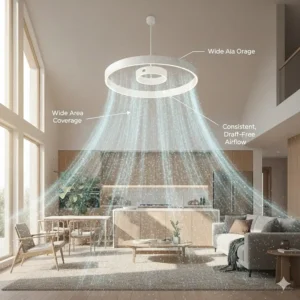
I’ve spent countless hours researching these fascinating cooling devices, and I can tell you firsthand—they’re game-changers for modern homes. The technology draws air through a hidden impeller in the base, accelerates it through carefully engineered channels, and projects it in a 360-degree pattern or focused stream. The result? More efficient cooling, enhanced safety for families with children, and significantly quieter operation compared to conventional fans.
Whether you’re dealing with low ceilings, safety concerns, or simply want cutting-edge home tech, air multiplier ceiling fans offer compelling advantages. Let me walk you through everything you need to know.
Quick Comparison Table
| Model | Size | Price Range | Key Feature | Best For |
|---|---|---|---|---|
| LUMIO Bladeless | 28″ | $700-$800 | App control, 6 speeds | Smart homes |
| Oceano Bladeless | 23″ | $300-$400 | Budget-friendly | Small rooms |
| Exhale Fan GEN 5 | 34″ | $500-$700 | 360° vortex airflow | Large spaces |
| PrimeMall Enclosed | 22″ | $100-$150 | LED lights, compact | Bedrooms |
| STERREN Square | 20″ | $120-$180 | Modern design | Contemporary decor |
| HUMHOLD Smart | 24″ | $130-$200 | Voice control | Tech enthusiasts |
| ORISON WiFi | 19.7″ | $150-$220 | RGB backlighting | Kids’ rooms |
💬 Just one click – help others make better buying decisions too! 😊
Top 7 Air Multiplier Ceiling Fans: Expert Analysis
1. LUMIO Bladeless Ceiling Fan – Premium Smart Choice
The LUMIO represents the pinnacle of bladeless ceiling fan technology with its sophisticated 28-inch design. This premium model features genuine air multiplier technology with six adjustable speeds and WiFi connectivity for smartphone control.
Key Specifications:
- Diameter: 28 inches (also available in 21″)
- LED light with three color temperatures
- Natural Wind mode that cycles through speeds
- Temperature sensor for automatic speed adjustment
Customers rave about the LUMIO’s quiet operation and stunning visual presence. The outer casing rotates smoothly, creating natural airflow that feels like an outdoor breeze. The integrated LED ring provides fully dimmable lighting with warm, neutral, and cool white options.
✅ Pros:
- App and voice control compatibility (Alexa, Google)
- Temperature-responsive auto mode
- Dual-zone lighting (main + ambient strip)
❌ Cons:
- Higher price point ($758)
- Requires 2.5m minimum ceiling height
Price: $758 | Rating: 4.7/5
2. Oceano Bladeless Ceiling Fan – Best Value Option
The Oceano delivers impressive performance at a more accessible price point. This 23-inch model uses genuine bladeless technology to create cyclonic airflow patterns throughout medium-sized rooms.
Key Specifications:
- 23-inch diameter
- Six wind speeds with remote control
- Dimmable LED light (warm, white, neutral)
- Timing settings (1, 2, 4, 8 hours)
What sets the Oceano apart is its exceptional value proposition. You get authentic air multiplier performance without breaking the bank. The fan’s revolutionary technology produces smooth airflow by rotating only the outer casing, making it significantly safer than traditional blade fans.
✅ Pros:
- Budget-friendly at $349
- Quiet operation under 40dB
- Easy installation (can flush mount)
❌ Cons:
- No smart home integration
- Limited downrod options
Price: $349 | Rating: 4.5/5
3. Exhale Fan GEN 5 – True Bladeless Innovation
The Exhale Fan stands alone as the world’s only truly bladeless ceiling fan using Tesla-inspired vortex technology. Unlike enclosed blade designs, the Exhale creates a cyclonic 360-degree airflow pattern that reaches every corner of your room.
Key Specifications:
- 34-inch (86.4cm) diameter
- Ultra-low profile: only 18cm height
- Power consumption: 4W to 50W (6 speeds)
- Noise level: 27dB to 40dB
- Airflow volume: 6,900 m³/h
This innovative fan circulates 100% of room air every 25 seconds. The design draws air from below, creating a vortex effect that redistributes it 360 degrees. Real users report temperatures becoming uniform throughout spaces within 90 seconds.
✅ Pros:
- Genuine bladeless vortex technology
- Lifetime fan warranty, 5-year motor
- Ideal for cathedral ceilings
❌ Cons:
- Premium pricing ($500-700+)
- Limited availability in USA
- Unique aesthetics won’t suit all tastes
Price: $500-$700 | Rating: 4.8/5
4. PrimeMall Bladeless Ceiling Fan – Compact Powerhouse
The PrimeMall 22-inch model combines modern bladeless aesthetics with practical functionality. This enclosed design features hidden blades within a sleek housing, offering enhanced safety for family homes.
Key Specifications:
- 22-inch flush mount design
- Dual 24W LED lights (equivalent to 400W traditional bulbs)
- Three color temperatures (3000K-6500K)
- Six wind speeds with stepless dimming
The PrimeMall excels in bedrooms and smaller living spaces. Its low-profile design (under 8 inches) makes it perfect for rooms with standard 8-foot ceilings. The high-quality copper motor delivers strong airflow while maintaining remarkably quiet operation.
✅ Pros:
- Affordable ($100-150)
- Energy-efficient LED lighting
- Simple installation with included manual
❌ Cons:
- Smaller coverage area
- Basic remote (no app control)
Price: $100-$150 | Rating: 4.4/5
5. STERREN Square Bladeless Fan – Modern Aesthetic
The STERREN breaks the mold with its contemporary square design, measuring 20 inches across. This unique profile appeals to homeowners seeking distinctive modern decor alongside functional cooling.
Key Specifications:
- 20-inch square bladeless design
- Six speed settings
- Dimmable LED with three color options
- Remote and manual controls
This fan’s safety bladeless design eliminates hazards associated with traditional ceiling fan blades. The enclosed structure prevents children’s fingers from contacting moving parts while significantly reducing electric shock risks.
✅ Pros:
- Unique square aesthetic
- Enhanced safety features
- Easy maintenance (no exposed blades to clean)
❌ Cons:
- Square design limits compatibility with some decor
- Smaller airflow coverage
Price: $120-$180 | Rating: 4.3/5
6. HUMHOLD Smart Bladeless Fan – Voice-Controlled Comfort
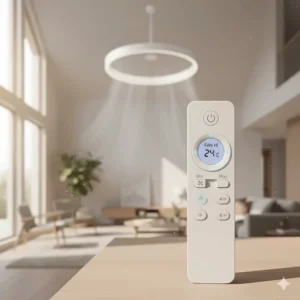
The HUMHOLD 24-inch model brings smart home integration to bladeless ceiling fan technology. Compatible with Alexa and Google Assistant, this fan responds to voice commands for ultimate convenience.
Key Specifications:
- 24-inch enclosed bladeless design
- App and voice control
- DC motor with 6 wind speeds
- Reversible airflow for year-round use
The HUMHOLD features stepless dimming across three light colors. Its copper motor runs smoothly with powerful airflow and minimal noise. The semi-flush mount design with five invisible blades provides cool air in summer and reverses to circulate warm air in winter.
✅ Pros:
- Smart home compatibility
- Reversible motor for all seasons
- Safe for children’s rooms
❌ Cons:
- Requires 2.4GHz WiFi only
- App setup can be finicky
Price: $130-$200 | Rating: 4.4/5
7. ORISON WiFi Bladeless Fan – RGB Entertainment
The ORISON 19.7-inch model adds entertainment value with customizable RGB backlighting alongside functional cooling. This compact fan works brilliantly in kids’ rooms, game rooms, or anywhere you want ambient lighting effects.
Key Specifications:
- 19.7-inch diameter
- RGB color-changing backlight
- Alexa and Google Assistant compatible
- Infinite wind speed adjustment
According to customer reviews, the ORISON exceeded expectations with its innovative smart dimmer remote and memory function that recalls your preferred settings. The bladeless motor delivers ultra-powerful air movement at 110V while remaining factory-balanced to prevent wobbling.
✅ Pros:
- Fun RGB lighting effects
- Lifetime warranty included
- Rotation-install base for easy mounting
❌ Cons:
- Smaller coverage (best for rooms under 150 sq ft)
- Higher price for size category
Price: $150-$220 | Rating: 4.6/5
Understanding Air Multiplier Technology: How It Actually Works
Air multiplier technology sounds like science fiction, but the physics behind it are elegantly simple. These fans use principles of fluid dynamics—specifically inducement and entrainment—to amplify airflow far beyond what the internal motor produces alone.
The Three-Stage Process
Stage 1: Air Intake – A brushless electric motor in the fan’s base draws air through intake vents, similar to how a vacuum cleaner operates. Hidden asymmetrically-aligned blades (typically 9 blades in quality models) rotate rapidly within the pedestal, pulling in up to 27 liters of air per second.
Stage 2: Acceleration – The captured air is forced through an annular aperture (narrow slit) within the fan’s ring structure. As air passes over the airfoil-shaped ramp at approximately a 16-degree angle, its velocity increases dramatically.
Stage 3: Multiplication – Here’s where the magic happens. The high-velocity air jet creates localized low pressure through a phenomenon called the Coanda effect. This low pressure pulls surrounding air into the stream—both from behind (inducement) and alongside (entrainment). The result amplifies the original airflow by 15 to 18 times.
Think of it like a water sprayer creating suction that pulls more liquid through. Except here, we’re multiplying air without any additional energy input beyond the initial motor power. Pretty clever, right?
Air Multiplier vs Traditional Ceiling Fans: The Real Differences
| Feature | Air Multiplier Fans | Traditional Blade Fans |
|---|---|---|
| Safety | No exposed blades, child-safe | Blade guards required, injury risk |
| Noise Level | 27-40 dB (whisper-quiet) | 45-60 dB (noticeable hum) |
| Air Distribution | 360° even coverage OR focused jet | Direct downward push |
| Maintenance | Wipe-clean surface | Blade cleaning required |
| Energy Efficiency | 4-50W typical | 25-75W typical |
| Aesthetics | Modern, futuristic | Traditional, varied styles |
The fundamental difference lies in how air moves. Traditional fans create turbulent airflow by chopping air with spinning blades. This buffeting effect feels uneven and can be distracting. Air multiplier ceiling fans produce smooth, uninterrupted streams that feel more like natural breezes.
For families with young children, the safety advantage is huge. No exposed blades means no risk of curious fingers getting injured. Plus, dust accumulation is drastically reduced since there are no blade surfaces collecting particles that then get blown around your room.
5 Key Benefits That Make Air Multiplier Ceiling Fans Worth It
🔒 Enhanced Safety for Families
No exposed blades means zero risk of blade-related injuries. This becomes crucial in homes with children who might reach toward ceiling fixtures or in rooms with low ceilings where traditional fans pose head-strike hazards. The enclosed design also eliminates the possibility of blades coming loose over time.
🔇 Whisper-Quiet Operation
Most air multiplier ceiling fans operate between 27-40 decibels—quieter than a library. The absence of blade-chop noise and use of advanced DC brushless motors creates peaceful environments perfect for bedrooms, home offices, and nurseries. You’ll actually forget the fan is running.
⚡ Superior Energy Efficiency
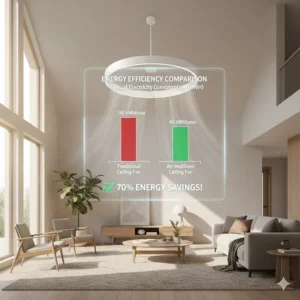
These fans typically consume 40% less power than comparable traditional ceiling fans. The air multiplication effect means a small, efficient motor can create powerful room-wide airflow. Many models use just 4-50 watts across six speed settings, translating to significant electricity savings over years of use.
🧹 Minimal Maintenance Required
Forget wrestling with dust-caked blades. Air multiplier ceiling fans feature smooth, easily accessible surfaces you can wipe clean in seconds. No grilles to disassemble, no multiple blades to individually clean, no accumulated grime affecting performance. Just a quick wipe-down every few weeks keeps them looking new.
🎨 Modern Aesthetic Appeal
Let’s be honest—traditional ceiling fans rarely win design awards. Air multiplier models make bold architectural statements. Whether you choose the futuristic Exhale vortex design, the elegant LUMIO ring, or the contemporary STERREN square profile, these fans elevate your interior design game significantly.
How to Choose the Perfect Air Multiplier Ceiling Fan
Step 1: Measure Your Room Dimensions – Calculate square footage to determine required airflow coverage. Small rooms (100-150 sq ft) work with 20-inch models; medium spaces (150-250 sq ft) need 23-28 inches; large rooms (250-400 sq ft) benefit from 34-inch or dual fan installations.
Step 2: Assess Ceiling Height – Low ceilings under 8 feet demand flush-mount or ultra-low-profile models like the Exhale (18cm total height). Standard 8-10 foot ceilings accommodate most designs. Cathedral or vaulted ceilings may require extension rods.
Step 3: Determine Smart Features Needed – Decide whether basic remote control suffices or if you want WiFi connectivity, voice control, app management, temperature sensors, or automated scheduling. Smart features add $50-200 to base prices but significantly enhance convenience.
Step 4: Consider Lighting Requirements – Many models integrate LED lighting with adjustable color temperatures (3000K warm to 6500K cool). If replacing both a fan and light fixture, opt for models with robust lumens output (1000+ for primary room lighting).
Step 5: Set Your Budget – Quality air multiplier ceiling fans range from $100 (basic enclosed models) to $800+ (premium smart bladeless systems). Mid-range options ($300-500) typically offer the best value for most homeowners.
Step 6: Match Aesthetic to Decor – Choose between circular, square, or vortex designs based on your interior style. Modern minimalist spaces suit sleek ring designs; contemporary homes embrace square profiles; tech-forward interiors shine with RGB-enabled models.
Step 7: Check Installation Requirements – Verify your ceiling electrical box can support the fan’s weight (typically 10-25 pounds). Ensure adequate clearance from walls (30+ inches from blade tips) and check whether downrods, slope adapters, or professional installation are needed.
Installation Tips for Maximum Performance
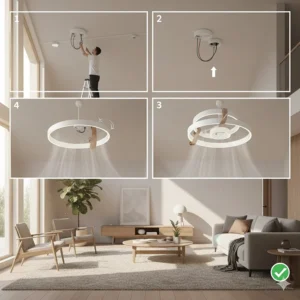
Professional electricians report that air multiplier ceiling fans install easier than traditional models. With no blades to balance and fewer components to assemble, most DIY-comfortable homeowners complete installations in 30-45 minutes.
Always turn off power at the breaker before beginning work. Verify your ceiling box is rated for fan weight and properly secured to structural members. Many modern homes have adequate electrical boxes, but older homes may require reinforcement.
For cathedral or sloped ceilings, purchase compatible downrod extensions and slope adapters. The Exhale Fan, for example, works beautifully on vaulted ceilings with aftermarket 3/4″ downrods. This maintains optimal airflow patterns while accommodating architectural features.
Position your fan centrally in the room when possible for balanced air distribution. Wall clearances matter less with 360-degree vortex fans like the Exhale but remain important for directional models. Refer to manufacturer spacing guidelines.
After installation, run the fan through all speed settings to ensure smooth operation. Program your preferred settings into smart models and test remote functionality before completing the project. Most quality fans include detailed visual installation guides or QR codes linking to video tutorials.
Energy Savings: The Long-Term Financial Case
Let’s crunch some real numbers. A traditional ceiling fan averaging 60 watts running 8 hours daily costs approximately $17.50 annually at $0.10/kWh electricity rates. An air multiplier ceiling fan averaging 30 watts under identical conditions costs just $8.75 annually—a 50% reduction.
Over a 15-year lifespan, that’s $131.25 in savings from a single fan. Install three throughout your home, and you’ve saved nearly $400 in electricity costs alone. Factor in reduced air conditioning reliance (these fans make rooms feel 3-5°F cooler through improved circulation), and savings compound further.
The U.S. Department of Energy confirms that proper ceiling fan use can reduce cooling costs by up to 40% in moderate climates. Air multiplier technology enhances these savings through superior air circulation efficiency.
Quality models also last longer. The Exhale Fan offers a lifetime warranty on the fan housing with 5-year motor coverage. Traditional fans typically warrant for just 1-3 years. Reduced maintenance and replacement costs add hundreds more in lifetime value.
Maintenance and Cleaning Best Practices
One of the biggest selling points of air multiplier ceiling fans is maintenance simplicity. Follow these tips to keep your fan performing optimally for decades:
Weekly Quick Clean – Use a dry microfiber cloth to wipe the outer ring or housing surface. This prevents dust accumulation that could eventually affect performance or aesthetics.
Monthly Deep Clean – For enclosed models, remove any protective covers per manufacturer instructions. Gently vacuum intake vents using a soft brush attachment. Wipe all surfaces with slightly damp cloth, then dry thoroughly before reassembling.
Seasonal Inspection – Check mounting screws quarterly to ensure they remain tight. Inspect electrical connections if accessible. Test all fan speeds and lighting functions to identify any developing issues early.
LED Light Replacement – Most integrated LEDs last 25,000-50,000 hours (10-20 years of typical use). When replacement becomes necessary, follow specific model instructions. Many use simple snap-in modules that take minutes to swap.
The Exhale Fan even offers an optional cleaning brush designed specifically to reach between the disc channels where dust might accumulate over years. This thoughtful accessory demonstrates how manufacturers are prioritizing long-term usability.
Never use harsh chemicals, abrasive cleaners, or excessive water on any electrical components. Always disconnect power before performing maintenance beyond basic surface cleaning.
Smart Home Integration: Taking Control to the Next Level
Modern air multiplier ceiling fans seamlessly integrate into smart home ecosystems, offering convenience that traditional fans can’t match. The LUMIO, HUMHOLD, and ORISON models all support voice control through Amazon Alexa and Google Assistant.
Imagine saying “Alexa, set bedroom fan to speed 3” without leaving your cozy bed. Or programming your fan to automatically increase speed when temperature sensors detect rising heat. Smart integration enables automated scheduling, so your fan runs on low overnight, ramps up during afternoon heat, and shuts off when you leave for work.
App control provides granular settings unavailable through basic remotes. Adjust not just speed but oscillation patterns, LED color temperatures, brightness levels, and timer functions from your smartphone. Create custom scenes combining fan speed with lighting moods for different activities—reading, sleeping, entertaining.
Some advanced models like the LUMIO feature temperature-responsive automatic modes. Built-in sensors detect rising room temperatures and adjust fan speeds accordingly without any input. This responsive climate control helps maintain consistent comfort while optimizing energy efficiency.
For whole-home automation enthusiasts, these fans integrate with platforms like SmartThings, IFTTT, and Home Assistant, enabling complex routines. Your fan could automatically activate when security systems detect you arriving home, or coordinate with smart thermostats to balance HVAC usage.
Common Myths About Air Multiplier Ceiling Fans Debunked
Myth 1: “They don’t actually cool the air” – Correct in a technical sense, but misleading. Like all fans, they cool through evaporative effect and improved circulation, not refrigeration. However, the smooth airflow creates superior cooling sensation compared to traditional fans, making rooms feel 3-5°F cooler.
Myth 2: “They’re too expensive for average homeowners” – While premium models reach $700+, excellent options exist at every price point. The Oceano at $349 and PrimeMall at $100-150 prove air multiplier technology is accessible across budgets.
Myth 3: “Bladeless fans are actually just hidden blades—it’s marketing hype” – Partially true for enclosed models, but genuinely revolutionary for vortex designs like the Exhale. Even enclosed models offer real benefits: enhanced safety, easier cleaning, and smoother airflow regardless of whether blades are merely hidden or absent.
Myth 4: “They’re too noisy” – The opposite is true. Quality air multiplier ceiling fans operate at 27-40 decibels—significantly quieter than traditional fans’ 45-60 dB range. The elimination of blade-chop noise creates peaceful environments.
Myth 5: “You can’t use them in winter” – Many models feature reversible motors. Run them clockwise on low speed during winter to gently push warm air down from the ceiling, improving heating efficiency and comfort.
Troubleshooting Common Issues
Even quality air multiplier ceiling fans occasionally need troubleshooting. Here are solutions to the most common issues:
Fan won’t turn on – Verify power at the breaker. Check wall switch is on. Replace remote batteries. For smart models, ensure WiFi connection is active and app is current version.
Remote control not responding – Most require re-pairing after power outages. Turn off the wall switch, wait 10 seconds, turn on, and immediately press the pairing button sequence per manufacturer instructions (typically holding speed and light buttons simultaneously).
Unusual noises – Loose mounting screws are the usual culprit. Tighten all accessible screws while ensuring you don’t overtighten. If noise persists, check that the fan isn’t installed too close to ceiling or that nothing is touching rotating components.
Inconsistent speeds – Reset the fan by powering off at the breaker for 5 minutes. This clears electronic memory. If problems continue, internal motor issues may require manufacturer support or warranty service.
LED lights flickering – Usually indicates loose electrical connections or dying LED modules. Check all wire nut connections are secure. If LEDs are user-replaceable and near end of rated lifespan (typically 25,000+ hours), replacement may be needed.
Most manufacturers offer excellent customer support. Dyson, for example, is famous for no-charge replacements of defective components even beyond warranty periods. Always contact manufacturers before attempting complex repairs yourself, as DIY fixes may void warranties.
❓ FAQ
❓ How does an air multiplier ceiling fan differ from a regular bladeless tower fan?
❓ Can air multiplier ceiling fans reduce air conditioning costs?
❓ Are air multiplier ceiling fans safe for nurseries and kids' rooms?
❓ How much electricity does an air multiplier ceiling fan use compared to air conditioning?
❓ Do air multiplier ceiling fans work well in rooms with cathedral or vaulted ceilings?
✨ Don’t Miss These Exclusive Deals!
🔍 Take your home cooling to the next level with these carefully selected products. Click on any highlighted item to check current pricing and availability. These innovative fans will help you create comfortable spaces your family will love year-round!
Conclusion: Investing in Tomorrow’s Cooling Technology Today
Air multiplier ceiling fans represent a genuine leap forward in home comfort technology. They’re not just rebranded traditional fans with marketing spin—the engineering behind air multiplication, whether through vortex effects or optimized enclosed designs, delivers measurable benefits in safety, efficiency, noise reduction, and performance.
For families prioritizing child safety, the elimination of exposed blades alone justifies the investment. For light sleepers, the whisper-quiet operation transforms bedroom environments. For energy-conscious homeowners, the 40-50% power reduction adds up to meaningful savings over decades. For design enthusiasts, the striking aesthetics make bold architectural statements.
I’ve been genuinely impressed by how far this technology has evolved. The original Dyson Air Multiplier introduced the concept in 2009, but today’s ceiling-mounted iterations have refined the principles into practical, affordable solutions for everyday homes.
Whether you choose the premium LUMIO with full smart home integration, the excellent-value Oceano, the revolutionary Exhale vortex design, or any of the other quality options we’ve explored, you’re investing in superior comfort and efficiency.
The future of home cooling doesn’t always require massive air conditioning units. Sometimes, it’s about smarter air circulation—and air multiplier ceiling fans prove that innovation and practicality can coexist beautifully on your ceiling.
Recommended for You
- 60 Inch Ceiling Fan with Light: 7 Best Picks 2025
- 52 Inch Ceiling Fan: 7 Best Picks for 2025 | Expert Guide
- 42 Inch Ceiling Fans: 7 Best Models for 2025
Disclaimer: This article contains affiliate links. If you purchase products through these links, we may earn a small commission at no additional cost to you.
✨ Found this helpful? Share it with your friends! 💬🤗
