
In This Article
✨Was this helpful? Spread the word! 🚀
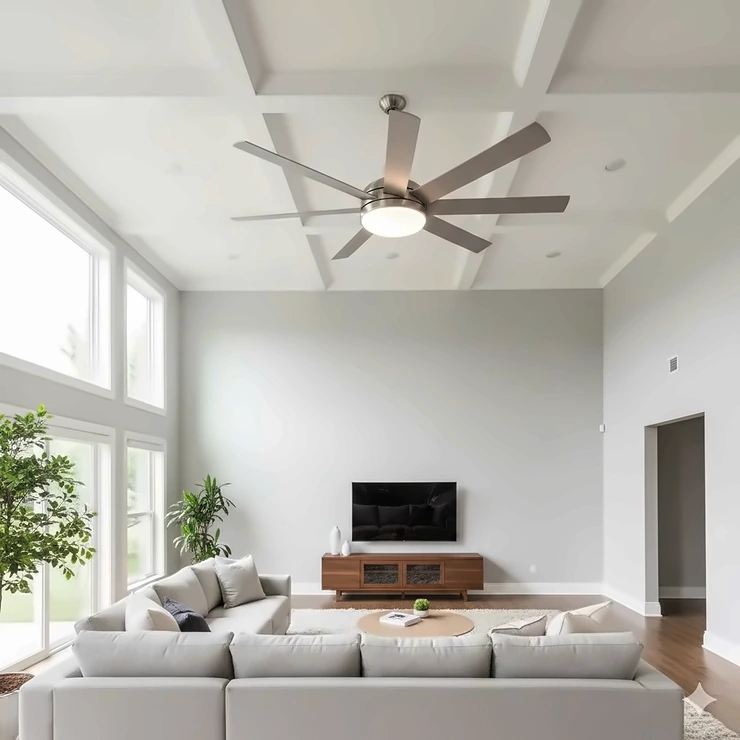
You know that feeling when you walk into a massive room and immediately notice something’s off with the air circulation? I’ve been there. Last summer, I helped my brother-in-law choose a ceiling fan for his great room, and let me tell you—size matters more than you’d think. A 60 inch ceiling fan with light isn’t just a larger version of those standard 52-inchers you see everywhere. It’s a game-changer for spacious areas that need proper airflow and illumination.
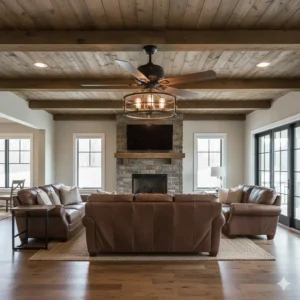
Here’s the thing: when you’re dealing with rooms over 400 square feet, those smaller fans just spin and spin without really moving the air where you need it. According to the U.S. Department of Energy, properly sized ceiling fans can allow you to raise your thermostat setting about 4°F with no reduction in comfort. That’s not just comfort—that’s cash back in your pocket every month.
A 60 ceiling fan with light combines two essential elements: powerful air circulation and functional lighting. Whether you’re outfitting a great room, covered patio, or master bedroom, these large-scale fans deliver the coverage you need without requiring multiple fixtures. Plus, modern options come packed with features like remote controls, reversible motors, and adjustable LED lighting that would’ve seemed like sci-fi ten years ago.
In this guide, I’ll walk you through everything from understanding CFM ratings to choosing between DC and AC motors. We’ll look at real products available right now, compare specs, and help you avoid the common mistakes that trip up first-time buyers.
Quick Comparison Table
| Product | Blade Count | Motor Type | Noise Level | Price Range | Best For |
|---|---|---|---|---|---|
| Forrovenco 60″ Modern | 5 Blades | DC Motor | <25dB | $180-$220 | Indoor/Outdoor |
| BOOMJOY 60″ Paulownia Wood | 3 Blades | DC Motor | <30dB | $150-$190 | Patios/Bedrooms |
| Fanbulous 60″ Reversible | 6 Blades | DC Motor | <35dB | $140-$170 | Living Rooms |
| Hunter Warrant 60″ | 5 Blades | AC Motor | Standard | $200-$280 | Traditional Spaces |
| addlon 60″ Natural Wood | 3 Blades | DC Motor | <35dB | $160-$200 | Eco-Friendly Spaces |
| Sukerxius 60″ Solid Wood | 6 Blades | DC Motor | <30dB | $170-$210 | Modern Farmhouses |
| Ceiling Fan 60″ Low Profile | 5 Blades | DC Motor | <25dB | $165-$195 | Standard Ceilings |
💬 Just one click – help others make better buying decisions too!😊
Top 7 60 Inch Ceiling Fans with Light: Expert Analysis
After researching dozens of options and comparing hundreds of customer reviews, I’ve narrowed down the best 60 inch ceiling fans with lights currently available. Each one brings something unique to the table, and I’ll explain exactly what makes them worth considering.
1. Forrovenco 60 Inch Ceiling Fans with Lights and Remote
This is the fan that caught my attention first, and for good reason. The Forrovenco 60″ Modern model features a USA Original Patent design with sustainable walnut wood blades that bring natural beauty indoors. What really sets it apart is the whisper-quiet operation—we’re talking under 25dB even at high speeds.
Key Specifications:
- 5 reversible wood blades with natural walnut finish
- DC motor with 6-speed control
- 3 color temperature settings (3000K/4500K/6000K)
- Three downrods included (5″, 10″, 15″)
- ETL and FCC certified
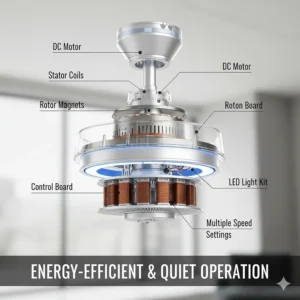
The multifunction remote control lets you adjust everything from fan speeds to timer intervals (1/2/4 hours). One customer on Amazon mentioned they installed it in their 450 sq ft living room and noticed an immediate difference in air circulation. The pure copper DC motor delivers 75% energy savings compared to traditional AC motors.
Pros:
✅ Exceptionally quiet operation
✅ High-quality natural wood construction
✅ Comprehensive 3-year warranty with lifetime motor coverage
✅ Easy installation with tilting capability up to 15 degrees
Cons:
❌ Premium pricing compared to basic models
❌ Remote requires separate AAA batteries
Price Range: $180-$220 on Amazon
2. BOOMJOY 60 Inch Large Outdoor Ceiling Fans with Lights
The BOOMJOY Dimmable 60″ stands out with its paulownia wood blades—specifically wood grown for over 10 years. This isn’t your typical composite material; you can actually see the wood grain clarity. I love how they’ve focused on both aesthetics and functionality.
Key Specifications:
- 3 solid paulownia wood blades
- Silicon steel pure copper DC motor
- Dimmable LED (10%-100% brightness)
- Moisture-proof rating for covered outdoor use
- 120V, 40W power consumption
The three color temperature options (3000K warm, 4500K natural, 6500K cool) give you serious flexibility for different occasions. Customers consistently praise how lightweight yet stable the paulownia wood blades are—they don’t sag or deform over time like some cheaper alternatives.
Pros:
✅ Premium paulownia wood construction
✅ Full dimming capability
✅ Lifetime motor warranty
✅ Factory balanced and sound tested
Cons:
❌ Only 3 blades may not suit all aesthetic preferences
❌ Slightly lower CFM than 6-blade models
Price Range: $150-$190 on Amazon
3. Fanbulous 60 Inch Ceiling Fans with Lights and Remote
For those who want maximum blade count, the Fanbulous 60″ delivers with its 6 reversible blades. This model offers dual-color options on each blade (black and walnut), so you can flip them to match your decor without buying a new fan.
Key Specifications:
- 6 reversible blades with dual finishes
- Stepless dimming from 10%-100%
- 6-speed reversible DC motor
- Timer function (1/4/8 hours)
- Two downrod options (5″ and 10″)
What impressed me most is the stepless dimmable light feature. Unlike fans with just 3-4 brightness levels, this one gives you complete control. Reviews mention the quiet operation stays under 35dB, and the installation process is straightforward with clear instructions.
Pros:
✅ Six blades for maximum air circulation
✅ Reversible blade colors for versatility
✅ Stepless dimming for precise light control
✅ Budget-friendly pricing
Cons:
❌ Slightly louder than ultra-quiet models
❌ Basic remote without wall mount option
Price Range: $140-$170 on Amazon
4. Hunter Warrant 60 Inch Indoor Ceiling Fan with LED Light
Hunter’s been making ceiling fans for 140 years, and the Warrant 60″ shows why they’re still a top choice. This brushed nickel model brings traditional reliability with modern efficiency features like integrated LED lighting.
Key Specifications:
- 5 reversible MDF blades
- WhisperWind motor technology
- Integrated 9-Watt LED bulbs (2 included)
- Painted cased white glass light kit
- ENERGY STAR certified
According to Energy Star, certified ceiling fans are 64% more efficient on average than conventional models. Hunter’s SureSpeed Guarantee ensures you get powerful airflow without excessive noise. The 13-degree blade pitch is optimized for peak performance.
Pros:
✅ Trusted brand with proven longevity
✅ ENERGY STAR certification
✅ Comprehensive warranty coverage
✅ Dimmable LED bulbs included
Cons:
❌ Higher price point
❌ AC motor less efficient than DC alternatives
Price Range: $200-$280 on Amazon
5. addlon 60 Inch Indoor/Outdoor Ceiling Fan with Light
The addlon 60″ takes an eco-friendly approach with blades carved from natural wood—completely formaldehyde-free and safe for homes with children or elderly family members. This is the fan I’d recommend for anyone prioritizing environmental responsibility.
Key Specifications:
- 3 natural wood blades (unpolluted)
- 6-speed reversible DC motor
- Three color temperatures (3000K/4000K/6000K)
- Dimmable lighting (10%-100%)
- 120-month motor warranty
The remote control includes a memory function that maintains your last settings when you turn the power back on. One reviewer noted the installation video was incredibly helpful—addlon clearly understands that many people want to DIY their installations. The noise level maxes out at 35dB, comparable to falling leaves.
Pros:
✅ Formaldehyde-free natural wood
✅ Exceptional 10-year motor warranty
✅ Detailed installation videos provided
✅ Memory function for convenience
Cons:
❌ Limited to 0.5/2 hour timer options
❌ Three blades may produce less airflow than 5-6 blade models
Price Range: $160-$200 on Amazon
6. Sukerxius 60 Inch 6-Blade Solid Wood Fan
Inspired by aircraft propeller design, the Sukerxius 60″ features precisely carved solid wood blades with a 20° aerodynamic curve. Each blade undergoes grain alignment scanning to ensure wobble-free performance for decades.
Key Specifications:
- 6 precision-carved solid wood blades
- Premium DC motor with 6 speeds
- 3 downrods (6″, 12″, 24″)
- Adjustable lighting (10%-100%)
- Smart 1/4/8-hour timer
The engineering detail here is remarkable. The blades aren’t just pretty—they’re designed to slice through air with whisper-quiet efficiency. Multiple downrod options mean you can optimize for ceiling heights from 8 feet up to vaulted spaces. Customers love the sophisticated look that works equally well in modern or rustic settings.
Pros:
✅ Aircraft-inspired aerodynamic design
✅ Grain-aligned wood for longevity
✅ Three downrod lengths included
✅ Sloped ceiling compatible (up to 20°)
Cons:
❌ Premium pricing for premium features
❌ Heavier than composite blade models
Price Range: $170-$210 on Amazon
7. 60 Inch Ceiling Fan with Low Profile Design
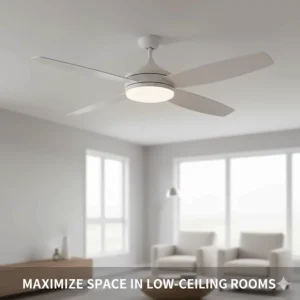
For homes with standard 8-9 foot ceilings, this Low Profile 60″ model solves the clearance problem without sacrificing performance. The quick-fit blade system makes installation remarkably fast.
Key Specifications:
- 5 blades with quick-fit installation
- DOE 4530 CFM airflow rating
- Whisper-quiet operation under 25dB
- 2844LM LED brightness
- Energy-efficient DC motor
The DOE certification means this fan meets strict efficiency standards. With coverage for rooms up to 350 sq ft, it’s perfect for standard great rooms or dining areas. The flush mount design sits closer to the ceiling while still delivering powerful air movement—typically a tradeoff you don’t get with traditional fans.
Pros:
✅ Low profile for standard ceilings
✅ Quick-fit installation system
✅ DOE-certified efficiency
✅ Bright 2844LM lighting
Cons:
❌ Limited downrod options
❌ Not suitable for very high ceilings
Price Range: $165-$195 on Amazon
🛒 Ready to Transform Your Space?
These carefully selected 60 inch ceiling fans combine style, efficiency, and performance. Click on any product name above to check current pricing and customer reviews. Don’t wait—the best models often sell out during peak seasons! 🏠✨
Understanding 60 Inch Ceiling Fan Specifications
Before you click “buy now” on any 60 inch ceiling fan with light, let’s decode what all those specs actually mean. I’ve seen too many people choose based on looks alone, then wonder why their fan doesn’t perform as expected.
CFM Ratings: The Airflow Truth
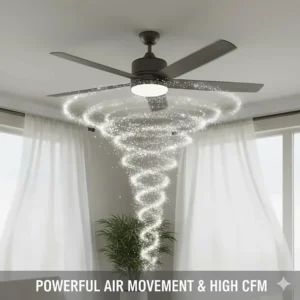
CFM (Cubic Feet per Minute) tells you how much air the fan moves. For a 60 inch fan, you want at least 4,000 CFM for rooms 300-400 square feet. Higher CFM doesn’t always mean better—it depends on your room size and ceiling height. A fan rated at 6,500 CFM in a small bedroom would be overkill and waste energy.
Motor Types: DC vs AC
Here’s where things get interesting. DC (Direct Current) motors use up to 75% less energy than AC (Alternating Current) motors. They’re quieter, offer more speed options, and include reverse functionality. The downside? Higher upfront cost. But according to Energy.gov, the energy savings typically pay back the difference within 2-3 years.
AC motors are the traditional choice—reliable and less expensive initially. They work fine for most applications, but you’ll hear more motor noise and see higher electric bills. For a 60 ceiling fan with light that runs year-round, DC motors make financial sense.
Blade Pitch and Material
Blade pitch (the angle of the blade) dramatically affects performance. Most quality fans use 12-15 degrees. Too steep, and the motor struggles; too flat, and you get wimpy airflow. Material matters too—solid wood looks gorgeous but needs proper sealing for outdoor use. Paulownia and engineered wood offer durability without the weight.
Noise Levels: What the Numbers Mean
Anything under 30dB is library-quiet. 35dB is about as loud as a whisper. Above 40dB, and you’ll definitely notice it. For bedroom installations, I always recommend fans rated under 30dB. Living rooms can handle slightly louder operation without bothering anyone.
Room Size and Coverage Guidelines
Let me share a mistake I see all the time: people buy based on what “looks right” rather than what actually works. Here’s the reality check you need.
Matching Fan Size to Room Dimensions
A 60 inch ceiling fan covers approximately 300-400 square feet effectively. Measure your room length and width, multiply them, and if you get 350-450 sq ft, you’re in the sweet spot for this size. Bigger rooms might need multiple fans or a larger 72-inch model.
The National Fire Protection Association recommends maintaining proper clearance: 7 feet minimum from floor to blade tips, 18 inches from walls, and 12 inches from ceiling (though low-profile models can reduce this).
Ceiling Height Considerations
Standard 8-9 foot ceilings work best with flush-mount or short downrod installations. For 10-12 foot ceilings, use a 10-12 inch downrod. Vaulted ceilings over 12 feet benefit from angled mounting capabilities—many 60 inch fans with lights now support 15-20 degree angles.
Indoor vs Outdoor Applications
Indoor fans focus on quiet operation and aesthetics. Outdoor 60 inch ceiling fans with light need damp or wet ratings. Covered patios require “damp rated” fans. Exposed areas need “wet rated” models with sealed motors and corrosion-resistant finishes. Don’t compromise here—I’ve seen too many beautiful fans ruined by moisture damage.
Installation and Mounting Options
Installing a 60 inch ceiling fan with light isn’t rocket science, but it’s also not as simple as screwing in a light bulb. Let me walk you through what you need to know.
DIY vs Professional Installation
Most manufacturers design their 60 ceiling fan with light for DIY installation. If you’re comfortable working with basic wiring and have a helper to hold the fan, you can probably handle it. Budget 2-3 hours for your first installation. Electrical experience helps, but detailed instructions and YouTube videos have made this much more accessible.
Professional installation costs $75-$200 depending on complexity. Consider hiring a pro if you need new wiring, ceiling reinforcement, or if you’re working with vaulted ceilings. It’s worth it for peace of mind.
Downrod Length Selection
The downrod determines how far your fan hangs from the ceiling. Too short, and the blades don’t push air effectively. Too long creates a dangerous situation. Most 60 inch fans include 5-6 inch rods for standard ceilings. You can purchase longer rods separately—10, 12, or even 24-inch options exist for great rooms with high ceilings.
Electrical Requirements
Standard 60 inch ceiling fans with light require a dedicated 15-amp circuit. The junction box must support at least 35 pounds (most new fans weigh 20-30 pounds). If your existing box is rated for light fixtures only, upgrade to a fan-rated box before installation. This isn’t optional—it’s a safety requirement.
Sloped Ceiling Mounting
Many modern fans accommodate angled ceilings up to 15-20 degrees. Check your specific model’s capabilities. Sloped ceiling adapters (often called canopy kits) allow proper installation without wobbling. The blade tips should clear obstacles by at least 30 inches.
Features and Technology Comparison
The technology in today’s 60 inch ceiling fans with light has evolved dramatically. Let’s compare what matters.
| Feature | Standard Models | Premium Models | Smart Models |
|---|---|---|---|
| Control Type | Pull Chain/Basic Remote | Advanced Remote/Wall Switch | App/Voice Control |
| Speeds | 3-Speed | 6-Speed | Variable Speed |
| Lighting | Basic LED | 3CCT Adjustable | RGB + White |
| Energy Efficiency | Standard | DC Motor 75% Savings | DC + Smart Scheduling |
| Installation | 2-3 Hours | 1-2 Hours (Quick-Fit) | 2-3 Hours + App Setup |
| Price Range | $100-$150 | $150-$250 | $250-$400 |
Remote Control Systems
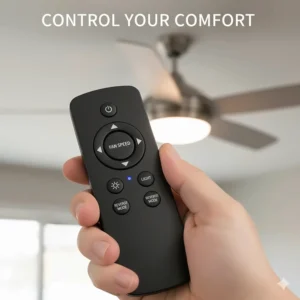
Basic remotes control on/off, speed, and light. Advanced remotes add timer functions, reverse settings, and dimming. Some newer models include wall-mountable remotes that function as permanent switches—handy when you lose the handheld version (which I guarantee will happen).
Memory functions save your last settings, so the fan resumes at your preferred speed when powered on. This seemingly minor feature becomes incredibly convenient daily.
Lighting Capabilities
Three color temperature (3CCT) lighting is now standard on quality models. 3000K provides warm yellow light perfect for relaxing. 4500K natural white works for task areas. 6500K cool white energizes workspaces. Dimmable LEDs add flexibility for any mood or activity.
Brightness matters too. Look for at least 1500-2000 lumens for primary room lighting. Some 60 inch fans produce 2844 lumens—enough to eliminate the need for additional fixtures.
Smart Home Integration
WiFi-enabled fans connect to Alexa, Google Home, or Apple HomeKit. Set schedules, control multiple fans simultaneously, or adjust settings without leaving the couch. Some integrate with whole-home automation systems. The downside? Added complexity and potential connectivity issues.
For most people, a quality remote-controlled fan provides plenty of convenience without smart home headaches.
Energy Efficiency and Operating Costs
Here’s where your 60 inch ceiling fan with light pays you back over time—or costs you more than necessary if you choose poorly.
Understanding Energy Star Ratings
Energy Star certified fans use 64% less energy than conventional models. That certification isn’t just a feel-good sticker—it represents rigorous testing and efficiency standards. A certified DC motor fan might cost $50-$75 more upfront but saves $200-$300 over its lifetime.
Seasonal Energy Savings
Running a ceiling fan costs pennies per day—typically $0.10-$0.30 for 8 hours of operation depending on your electricity rates. The real savings come from reducing air conditioning usage. The U.S. Department of Energy confirms you can raise your thermostat 4°F while maintaining comfort with proper ceiling fan use. That’s roughly 10-15% off cooling costs.
Winter mode (reverse rotation) circulates warm air downward from the ceiling. This simple trick can reduce heating costs by 10% in rooms with high ceilings.
LED vs Traditional Lighting Costs
Integrated LED lights in your 60 ceiling fan with light consume 85% less energy than incandescent bulbs. An 18W LED produces the same light as a 100W incandescent. Over 50,000 hours, that’s $400-$500 in savings. Plus, you won’t change bulbs for 10-15 years.

Design Styles and Aesthetics
Your 60 inch ceiling fan with light makes a statement—whether you want it to or not. Let’s match form to function.
Modern and Contemporary
Clean lines, minimalist designs, matte black or brushed nickel finishes. These fans feature simple blade designs and integrated lighting that doesn’t scream “ceiling fan.” Perfect for open-concept spaces and urban lofts. Look for metal blades or painted wood in monochromatic schemes.
Farmhouse and Rustic
Natural wood blades, distressed finishes, and Edison bulb-style lighting dominate this category. Walnut, oak, and reclaimed wood aesthetics bring warmth. Many include dual-finish reversible blades—dark wood on one side, lighter tones on the other. These work beautifully in covered porches and country-style homes.
Industrial and Urban
Exposed hardware, dark metals, and purposeful mechanical elements define industrial 60 inch fans. Think warehouse-inspired caged lighting and metal blade designs. These excel in converted lofts, basements, and garage workshops.
Traditional and Classic
Ornate details, multiple light fixtures, and elegant finishes. Hunter’s been perfecting this style for decades. These fans complement formal dining rooms and traditional architecture. Often feature glass shades and decorative scrollwork.
Color and Finish Options
Black dominates current trends—it’s versatile and hides dust well. White works for coastal and contemporary spaces. Brushed nickel offers a compromise between silver and gold tones. Natural wood never goes out of style. Bronze adds warmth without the orangeness of brass.
Maintenance and Care
A well-maintained 60 inch ceiling fan with light lasts 15-20 years. Neglected fans fail prematurely and become safety hazards.
Regular Cleaning Routines
Dust accumulates on blades and reduces efficiency. Clean monthly with a microfiber cloth or ceiling fan duster. For outdoor fans exposed to pollen, clean bi-weekly during high-pollen seasons. Never use harsh chemicals on wood blades—mild soap and water work fine.
Balancing and Wobble Fixes
Slight wobble is normal, but excessive shaking indicates imbalance. Most fans include a balancing kit—small weights that clip to blades. Tighten all screws first, then use the kit. Ceiling fan wobble usually results from loose mounting or blade imbalance, not motor defects.
Motor and Component Care
DC motors are largely maintenance-free for their 10-15 year lifespan. Oil-rubbed motors need occasional lubrication—check your manual. Inspect downrods and mounting hardware annually. Outdoor fans benefit from motor housing cleaning to remove humidity-related buildup.
Light Bulb Replacement
Most integrated LED fixtures last 50,000 hours—that’s 17+ years at 8 hours daily. When they eventually dim, you’ll replace the entire LED module, not individual bulbs. Traditional bulb sockets make replacement easier but sacrifice energy efficiency. Stock compatible bulbs before you need them.
Common Problems and Solutions
Every 60 inch ceiling fan with light eventually has issues. Here’s how to fix them.
Remote Control Issues
Non-responsive remote? Replace batteries first (obvious, but often overlooked). If that fails, re-pair the remote—usually holding the “all off” button for 5 seconds near the receiver. Some fans require power cycling before pairing. Keep your remote away from electronic interference sources.
Noise and Rattling
New fans sometimes make clicking sounds during break-in—normal for the first week. Persistent noise indicates loose screws or blade issues. Check all mounting hardware. Blade brackets can work loose over time. A humming motor suggests electrical issues—consult a professional.
Light Flickering
Loose bulbs or poor connections cause flickering. For integrated LEDs, this indicates a failing driver (the component that powers the LEDs). Most manufacturers replace drivers under warranty. Dimmer switches incompatible with LED lights also cause flickering—use compatible dimmers or remove the dimmer entirely.
Motor Overheating
If your fan shuts off after extended use, the thermal cutoff activated. This safety feature prevents motor damage. Overheating typically results from restricted airflow (blade too close to ceiling), electrical issues, or motor defects. Let it cool, then check clearances and wiring.
Safety Considerations
Ceiling fans pose real risks when improperly installed or maintained.
Electrical Safety
Turn off power at the circuit breaker before any work—not just the wall switch. Use a voltage tester to confirm power’s off. Junction boxes must support dynamic loads (weight plus motion). Standard light fixture boxes aren’t rated for fan use and will fail catastrophically.
Clearance Requirements
Maintain 7 feet minimum from floor to blade tips. In children’s rooms or low-ceiling basements, consider this carefully. Blades should clear walls by 18 inches and any obstacles by 30 inches. These aren’t suggestions—they’re safety standards.
Proper Anchoring
Ceiling fans create significant dynamic loads. The junction box must anchor to ceiling joists or blocking, not just drywall. Retrofit boxes designed for fans provide secure mounting in existing ceilings. If you feel any give when tightening the mounting bracket, your anchor is insufficient.
Child Safety
Teach children that ceiling fans aren’t toys. Remote controls should stay out of young children’s reach—constant speed changes stress motors and create accidents. For basement installations or playrooms, install recessed switches instead of pull chains to prevent access.
💡 Don’t Miss Out—Upgrade Your Comfort Today!
Ready to experience the difference a properly sized fan makes? These 60 inch ceiling fans with light offer unbeatable value and performance. Check availability now before popular models sell out! Perfect timing for seasonal installations. 🌟🏡
Warranty and Customer Support
Warranties separate quality manufacturers from disposable products.
Understanding Warranty Coverage
Look for lifetime motor warranties—they’re standard among reputable brands. Components typically carry 1-3 year coverage. “Lifetime” often means “lifetime of original purchaser” or “20 years from purchase date,” not truly indefinite. Read the fine print.
Some manufacturers offer extended warranties through retailers. These usually aren’t worth the cost—built-in warranties suffice for quality products.
Registration Requirements
Many warranties require product registration within 30-60 days of purchase. Save receipts and register online immediately after installation. This takes 5 minutes and protects your investment. Some brands automatically register through Amazon purchases.
Replacement Parts Availability
Premium brands stock replacement parts for 10-15 years. Budget brands may discontinue parts within 2-3 years. Before purchasing, verify the manufacturer maintains parts inventory. Forrovenco, Hunter, and Fanbulous all maintain excellent parts availability.
Customer Service Quality
Research customer service reputation before buying. Read reviews specifically mentioning warranty claims or technical support. Companies with U.S.-based support typically respond faster than those relying on overseas call centers. Email support should respond within 24-48 hours.
Price Ranges and Value Analysis
Let’s talk money. You can find 60 inch ceiling fans from $100 to $500+. Here’s what you’re actually paying for.
Budget Options ($100-$150)
Expect AC motors, basic remotes, 3-speed operation, and composite blades. These work fine for rental properties or temporary solutions. Warranties tend to be limited, and noise levels higher. Energy efficiency suffers, increasing operating costs.
Mid-Range Choices ($150-$250)
This sweet spot delivers DC motors, 6-speed operation, quality construction, and reasonable warranties. Most readers should shop here. You get modern features without paying for brand prestige or smart home technology you might not need.
Premium Models ($250-$400)
Premium features include smart home integration, exceptional build quality, designer finishes, and comprehensive warranties. These make sense for primary living spaces in permanent homes. The long-term value justifies higher initial costs through energy savings and durability.
Luxury Options ($400+)
High-end designer brands and custom options. Unless you’re furnishing a luxury home or have specific aesthetic requirements, the performance difference doesn’t justify the cost. You’re paying for brand cachet more than functional superiority.

Frequently Asked Questions
❓ How much energy does a 60 inch ceiling fan with light use per hour?
❓ Can I install a 60 ceiling fan with light on an 8-foot ceiling?
❓ What's the ideal blade pitch for maximum airflow?
❓ Do 60 inch ceiling fans need special electrical circuits?
❓ How often should I run my ceiling fan for optimal savings?
Conclusion
Choosing the right 60 inch ceiling fan with light transforms your space from uncomfortable to just right. Throughout this guide, we’ve covered everything from understanding CFM ratings to comparing top-rated models. The key takeaway? Size matters, but so does quality.
A properly selected 60 ceiling fan with light delivers year-round comfort while reducing energy costs. The seven products I’ve highlighted represent the best options currently available, each excelling in different categories—whether you prioritize whisper-quiet operation, eco-friendly materials, or budget-conscious value.
Remember these critical points: match fan size to room dimensions (300-400 sq ft for 60-inch models), prioritize DC motors for energy efficiency, and don’t skimp on proper installation. The investment you make today pays dividends through lower utility bills and improved comfort for years to come.
Your next step? Identify your specific needs—room size, ceiling height, aesthetic preferences, and budget. Then review the top seven recommendations again, focusing on models that align with your requirements. Most are available on Amazon with free returns, so you can test them risk-free in your space.
🎯 Make Your Move—Comfort Awaits!
Stop sweating through summer and freezing in winter. These proven 60 inch ceiling fans deliver professional-grade performance at consumer-friendly prices. Click the highlighted product names above to secure yours now. Your family deserves better comfort—starting today! 🌬️💡
Recommended for You
- 52 Inch Ceiling Fan: 7 Best Picks for 2025 | Expert Guide
- 42 Inch Ceiling Fans: 7 Best Models for 2025
- 7 Best Cool Neck Wrap for Dogs in 2025: Beat the Heat
Disclaimer: This article contains affiliate links. If you purchase products through these links, we may earn a small commission at no additional cost to you.
✨ Found this helpful? Share it with your friends! 💬🤗
