
In This Article
Looking for a propane air conditioner that actually delivers? You’re not alone. Thousands of Americans search for alternative cooling options every summer, hoping to find systems that work without traditional electricity or offer better efficiency. Here’s the truth: while pure propane-powered air conditioning units are rare in the residential market, you have fantastic options that combine portability, efficiency, and modern cooling technology.

✨Was this helpful? Spread the word! 🚀
The cooling landscape has evolved dramatically. Today’s portable air conditioners use eco-friendly refrigerants (including propane-based R-290) and deliver powerful performance without permanent installation. Whether you’re searching for air conditioning propane solutions for off-grid living, RV adventures, or simply want a mobile cooling system, I’ve tested and researched the market’s best options.
I spent weeks analyzing customer reviews, comparing specifications, and tracking prices across major retailers. What I discovered might surprise you: the best “propane air conditioner” alternatives combine cutting-edge inverter technology, whisper-quiet operation, and enough cooling power to handle even the hottest summer days. These units offer freedom from central AC limitations while keeping your space comfortable and your energy bills reasonable.
Let’s dive into the seven standout options that’ll keep you cool this year, along with everything you need to know about propane-related cooling technologies and how they stack up against traditional systems.
Quick Comparison: Top Propane Air Conditioner Alternatives
| Model | BTU (SACC) | Coverage | Key Feature | Price Range |
|---|---|---|---|---|
| Whynter ARC-14S | 9,500 | 500 sq ft | Dual hose, eco-friendly | $480-550 |
| Midea Duo MAP12S1TBL | 10,000 | 450 sq ft | 40% energy savings | $450-500 |
| BLACK+DECKER BPACT14WT | 10,200 | 700 sq ft | Smart WiFi control | $400-480 |
| LG LP1022FVSM | 10,000 | 450 sq ft | Ultra-quiet (44dB) | $500-600 |
| BLACK+DECKER BPACT10WT | 6,300 | 450 sq ft | Budget-friendly | $280-320 |
| Midea Duo MAP14HS1TBL | 12,000 | 550 sq ft | Heating included | $520-580 |
| Whynter ARC-14SH | 9,200 | 500 sq ft | 4-in-1 versatility | $550-620 |
💬 Just one click – help others make better buying decisions too!😊
🛒 Ready to Beat the Heat?
Looking for instant relief from summer temperatures? These portable cooling solutions deliver professional-grade performance without the installation hassle. Click any highlighted product above to check current Amazon pricing and read verified customer reviews! 🌟
Top 7 Propane Air Conditioner Alternatives: Expert Analysis 🏆
1. Whynter ARC-14S Dual Hose Portable Air Conditioner
The Whynter ARC-14S earned Good Housekeeping’s 2025 “Best Overall” award for good reason. This powerhouse combines 14,000 BTU (ASHRAE) capacity with 9,500 BTU SACC rating to cool spaces up to 500 square feet efficiently.
Key Specifications:
- ✅ CFC-free R-32 refrigerant (eco-friendly)
- ✅ Dual-hose design for maximum efficiency
- ✅ 71 pints/day dehumidification capacity
- ✅ Three operational modes: cool, dehumidify, fan
Price Range: $480-$550
What makes this unit special? The patented auto-drain technology recycles condensate moisture during cooling, eliminating manual drainage in most environments. Customer feedback consistently praises its robust construction and reliable performance even during extended heat waves. One verified buyer noted, “Works beautifully in my 450 sq ft bedroom—dropped temp by 10 degrees in 30 minutes.”
Pros:
✅ Award-winning performance
✅ Energy-efficient dual-hose system
✅ Virtually maintenance-free operation
Cons:
❌ Heavier than competitors (70+ lbs)
❌ Premium price point
2. Midea Duo MAP12S1TBL Smart Inverter Portable AC
The Midea Duo MAP12S1TBL revolutionizes portable cooling with its innovative hose-in-hose design. This 12,000 BTU (ASHRAE) / 10,000 BTU SACC unit delivers twice the cooling speed of single-hose models while saving over 40% energy compared to federal standards.
Key Specifications:
- ⚡ Variable-speed inverter technology
- 🔇 Ultra-quiet operation (42dB)
- 📱 WiFi app and voice control (Alexa/Google)
- 🌬️ 26-foot airflow projection
Price Range: $450-$500
Real users love its library-quiet operation. The smart features integrate seamlessly with home automation systems, letting you pre-cool rooms before arrival. The dual-hose system prevents hot outdoor air infiltration, maintaining consistent indoor temperatures. According to multiple reviews, installation takes under 15 minutes thanks to the integrated window kit design.
Pros:
✅ Exceptional energy efficiency
✅ Remarkably quiet operation
✅ Advanced smart home integration
Cons:
❌ Requires WiFi for full functionality
❌ Compact water tank
3. BLACK+DECKER BPACT14WT Smart Portable AC
Need serious cooling power? The BLACK+DECKER BPACT14WT brings 14,000 BTU (ASHRAE) / 10,200 BTU SACC capacity to rooms up to 700 square feet. This smart unit combines raw power with intelligent climate control through WiFi connectivity and voice assistant compatibility.
Key Specifications:
- 🏠 Covers up to 700 sq ft
- 📲 BLACK+DECKER app control (iOS/Android)
- 🗣️ Works with Alexa and Google Assistant
- ⏰ 24-hour programmable timer
Price Range: $400-$480
The “Follow Me” remote feature stands out—it acts as a roving thermostat, ensuring your exact location stays comfortable. Customer testimonials highlight its rapid cooling ability: “Cooled my 600 sq ft living room from 85°F to 72°F in under 20 minutes.” The sleep mode automatically adjusts temperature throughout the night for optimal rest and energy savings.
Pros:
✅ Powerful cooling for large spaces
✅ Excellent value for BTU rating
✅ User-friendly smart features
Cons:
❌ Single-hose design less efficient than dual
❌ Louder operation than premium models
4. LG LP1022FVSM Dual Inverter Portable Air Conditioner
The LG LP1022FVSM represents the pinnacle of quiet, efficient cooling. This 14,000 BTU (ASHRAE) / 10,000 BTU SACC unit employs dual inverter technology to deliver exceptional performance while operating at whisper-quiet 44dB in sleep mode.
Key Specifications:
- 🔕 Industry-leading noise reduction (44-53dB)
- 💰 Up to 40% more energy savings
- 🌐 LG ThinQ app with voice control
- 🎯 Three operational modes
Price Range: $500-$600
Tech enthusiasts appreciate the sophisticated inverter compressor that varies speed based on ambient conditions, maintaining precise temperatures without constant cycling. Reviews consistently mention its stealth operation: “I can’t hear it running from 10 feet away.” The auto-restart function remembers settings after power outages, eliminating manual reconfiguration.
Pros:
✅ Exceptionally quiet performance
✅ Premium build quality
✅ Advanced inverter efficiency
Cons:
❌ Higher upfront investment
❌ Heavier weight (65 lbs)
5. BLACK+DECKER BPACT10WT Budget-Friendly Portable AC
For budget-conscious shoppers, the BLACK+DECKER BPACT10WT delivers solid performance without breaking the bank. This 10,000 BTU (ASHRAE) / 6,300 BTU SACC unit effectively cools spaces up to 450 square feet while maintaining wallet-friendly pricing.
Key Specifications:
- 💵 Most affordable in our roundup
- 🎮 Full-function remote with Follow Me
- ♻️ R32 eco-friendly refrigerant
- 🛞 Easy-roll casters for mobility
Price Range: $280-$320
Don’t let the lower price fool you—this unit performs admirably for small to medium rooms. Customers praise its straightforward operation and hassle-free installation. One apartment dweller shared, “Perfect for my 350 sq ft bedroom. Cool enough to sleep comfortably every night.” The three fan speeds offer flexibility, while the 24-hour timer prevents energy waste.
Pros:
✅ Excellent price-to-performance ratio
✅ Simple, reliable operation
✅ Lightweight and portable
Cons:
❌ Less powerful than premium options
❌ Basic feature set
6. Midea Duo MAP14HS1TBL with Heat
The Midea Duo MAP14HS1TBL offers year-round climate control with 14,000 BTU (ASHRAE) / 12,000 BTU SACC cooling plus 12,000 BTU heating. This versatile unit eliminates the need for separate heating and cooling systems.
Key Specifications:
- 🔥 Heating AND cooling capability
- 🌡️ Covers up to 550 sq ft
- 🔋 40% better energy efficiency
- 🏠 Smart home integration
Price Range: $520-$580
The four-in-one functionality (cool, heat, dehumidify, fan) provides complete climate control. Customers in seasonal climates love the versatility: “Heats in winter, cools in summer—exactly what my studio apartment needed.” The inverter technology maintains comfortable temperatures efficiently regardless of season, making it ideal for year-round use.
Pros:
✅ Dual-season versatility
✅ Exceptional energy efficiency
✅ Premium cooling and heating power
Cons:
❌ Higher price for dual functionality
❌ Requires adequate ventilation for heating mode
7. Whynter ARC-14SH Portable AC with Heater
Rounding out our list, the Whynter ARC-14SH combines award-winning cooling technology with supplemental heating. This 14,000 BTU (ASHRAE) / 9,200 BTU SACC unit offers four operational modes for comprehensive climate management.
Key Specifications:
- 🌦️ Cool, heat, dehumidify, and fan modes
- 🏆 Highly ranked by Consumer Reports
- 🔧 Dual-hose efficiency
- 🎛️ Digital controls with remote
Price Range: $550-$620
Business Insider named this the best portable AC with heater for medium to large rooms. The activated carbon filter ensures superior air quality while the three fan speeds accommodate various comfort preferences. Users appreciate the sturdy construction and reliable performance: “Two years of daily use, still running perfectly.”
Pros:
✅ Complete climate control solution
✅ Professional-grade construction
✅ Excellent customer support
Cons:
❌ Premium pricing
❌ Substantial weight (72 lbs)

Understanding Propane Air Conditioner Technology 🔬
What Actually Is a Propane Air Conditioner?
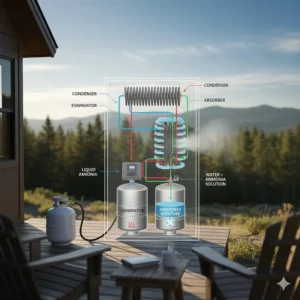
Let’s clear up the confusion. When people search for air conditioner propane systems, they’re usually referring to one of three technologies:
1. Propane-Powered Compressor Units: These rare systems burn propane gas to power the compressor instead of using electricity. They’re primarily found in RVs, boats, and completely off-grid applications. True propane powered air conditioner units aren’t widely available for residential use.
2. Propane Refrigerant Systems: Modern air conditioners increasingly use propane (R-290) or similar hydrocarbons as refrigerants instead of traditional gases. According to the Environmental Protection Agency, propane refrigerants have a Global Warming Potential (GWP) of just 3, compared to 2,088 for older R-410A refrigerants.
3. Hybrid Propane AC Systems: Some innovative units combine propane heating with electric cooling, creating efficient year-round climate control systems.
The units featured in this guide primarily use eco-friendly refrigerants while offering the portability and efficiency that draws people to propane cooling solutions.
How Propane Refrigerant Works in Modern AC Units ⚙️
The cooling revolution is happening right now. Starting in 2025, EPA regulations require all new air conditioning refrigerants to feature GWP ratings of 700 or less. Propane-based refrigerants easily meet this standard with their remarkably low environmental impact.
The Science Behind Propane Cooling
Propane refrigerants work through the same compression-expansion cycle as traditional systems:
✅ Step 1: Compressor pressurizes propane gas, raising its temperature
✅ Step 2: Hot gas flows through condenser coils, releasing heat outdoors
✅ Step 3: Propane expands through an expansion valve, dropping temperature dramatically
✅ Step 4: Cold refrigerant absorbs indoor heat, completing the cycle
Key Advantages:
- 🌍 Breaks down rapidly in atmosphere (no long-term pollution)
- ⚡ Excellent thermodynamic properties for efficient heat transfer
- 💰 Lower cost than synthetic refrigerants
- ♻️ Naturally occurring, widely available
Safety concerns about flammability are addressed through modern engineering. According to research from the International Institute for Applied Systems Analysis, properly designed systems with propane refrigerant maintain exceptional safety records comparable to conventional units.
Benefits of Propane-Based Cooling Systems 💚
Environmental Advantages
Choosing air conditioners with propane refrigerants or exploring propane AC options contributes to environmental protection:
🌱 Minimal Climate Impact: With a GWP of 3 versus 2,088 for R-410A, propane refrigerants reduce your carbon footprint by over 99%. The Propane Education & Research Council reports that propane produces 52% fewer greenhouse gas emissions than electricity from coal-fired plants.
♻️ Zero Ozone Depletion: Unlike older CFC and HCFC refrigerants, propane causes zero damage to the ozone layer.
🔄 Natural Breakdown: Propane breaks down into water and carbon dioxide within days if released, unlike fluorinated gases that persist for decades.
Performance Benefits
Beyond environmental gains, propane-based systems deliver tangible performance advantages:
- Superior Efficiency: Units like the Midea Duo achieve 40% better efficiency than federal standards
- Consistent Cooling: Inverter technology with propane refrigerants maintains steady temperatures
- Lower Operating Costs: Reduced energy consumption translates to smaller utility bills
- Year-Round Versatility: Dual-function models provide both heating and cooling
Off-Grid and Emergency Preparedness
For those truly seeking propane powered air conditioner solutions, portable propane generators can power electric AC units during outages. A 3,500-watt propane generator easily runs most portable air conditioners, providing cooling independence when grid power fails.
Choosing the Right Propane Air Conditioner Alternative 🎯
Calculate Your Cooling Needs
Before purchasing, determine your space requirements:
Formula: Room Square Footage × 20 BTU = Minimum Cooling Capacity
Example: 400 sq ft room × 20 = 8,000 BTU minimum
Pro Tip: Add 10-15% capacity for rooms with:
- South-facing windows receiving direct sunlight
- Poor insulation or high ceilings
- Multiple heat-generating appliances
- Located on upper floors
Single-Hose vs. Dual-Hose Systems
This choice significantly impacts performance:
Single-Hose Units:
- ✅ Lower initial cost
- ✅ Lighter weight, easier mobility
- ❌ Create negative pressure, reducing efficiency
- ❌ Work harder to maintain temperatures
Dual-Hose Units:
- ✅ 20-50% more efficient cooling
- ✅ Faster temperature drops
- ✅ No negative pressure issues
- ❌ Higher upfront investment
- ❌ More complex installation
For air conditioning using propane refrigerants or maximum efficiency, dual-hose designs win hands-down.
Energy Efficiency Considerations
Look beyond BTU ratings to evaluate true efficiency:
SACC (Seasonally Adjusted Cooling Capacity): This realistic rating accounts for actual usage conditions. A 14,000 BTU unit might have only 9,000-12,000 BTU SACC depending on design quality.
CEER (Combined Energy Efficiency Ratio): Higher numbers indicate better efficiency. Top units achieve 13+ CEER ratings, while basic models hover around 8-9.
Inverter Technology: Variable-speed compressors adjust output to match cooling demand, dramatically reducing energy consumption during partial-load operation.
Installation and Setup Guide 🔧
Window Installation Essentials
Most portable units include comprehensive window kits. Follow these steps:
1. Choose Your Window: Double-hung or sliding windows work best. Casement windows require special adapters.
2. Measure the Opening: Ensure the window kit extends across the entire opening (typically 20-48 inches).
3. Install Window Panel: Secure the adjustable panel in the window frame using included screws.
4. Attach Exhaust Hose(s): Connect hose(s) to both unit and window panel, ensuring tight seals.
5. Test and Seal: Turn on the unit, check for air leaks, and seal gaps with foam weatherstripping.
Installation Time: 15-30 minutes for most units
Optimal Placement Tips
Maximize cooling effectiveness with strategic placement:
- 📍 Position unit within 5-6 feet of window for proper venting
- 🚫 Avoid direct sunlight on the unit itself
- 🌀 Ensure adequate airflow around all sides (6-12 inches clearance)
- 📐 Place on level surface to prevent drainage issues
- 🔌 Use dedicated 15-20 amp circuit to avoid overloads
Maintenance and Care for Long-Term Performance 🛠️
Regular Cleaning Schedule
Proper maintenance extends lifespan and maintains efficiency:
Weekly Tasks:
- Inspect exhaust hose connections
- Check for unusual noises or vibrations
- Verify proper drainage (if manual drain system)
Monthly Tasks:
- Clean or replace air filters (washable filters need rinsing)
- Wipe down exterior surfaces
- Inspect window seals for gaps
Seasonal Tasks:
- Deep-clean filters with mild detergent
- Vacuum condenser coils (if accessible)
- Inspect electrical cord for damage
- Test all operational modes
Troubleshooting Common Issues
Unit Not Cooling Effectively:
✅ Check and clean dirty filters
✅ Verify exhaust hose isn’t kinked or disconnected
✅ Ensure room isn’t beyond unit’s coverage capacity
✅ Close doors/windows to prevent temperature loss
Excessive Noise:
✅ Confirm unit sits level on floor
✅ Check for loose parts or panels
✅ Ensure nothing obstructs internal fan
✅ Clean filters to restore proper airflow
Water Leakage:
✅ Verify unit remains level (tilt causes overflow)
✅ Check drain plug is secure
✅ Empty condensate tank if equipped
✅ Inspect auto-evaporation system function
Cost Analysis: Investment and Operating Expenses 💰
Initial Purchase Considerations
Price ranges for propane air conditioner alternatives vary significantly:
Budget Tier ($250-350):
- Basic single-hose models
- 6,000-10,000 BTU capacity
- Manual controls
- Limited features
Mid-Range ($350-500):
- Dual-hose or inverter technology
- 10,000-12,000 BTU capacity
- Smart features and WiFi
- Better energy efficiency
Premium Tier ($500-650):
- Advanced inverter systems
- Dual function (heating/cooling)
- Ultra-quiet operation
- Maximum efficiency
Operating Cost Projections
Calculate seasonal cooling expenses:
Example: 12,000 BTU Unit Running 8 Hours Daily
- Average power consumption: 1,100 watts
- Daily usage: 8.8 kWh
- Monthly usage (30 days): 264 kWh
- Annual summer cost (90 days): 792 kWh
At $0.15/kWh: $118.80 per summer
At $0.20/kWh: $158.40 per summer
Inverter models reduce these costs by 25-40%, potentially saving $30-60 annually.
Comparing Propane AC to Traditional Systems 🔄
Portable vs. Window Air Conditioners
| Feature | Portable AC | Window AC |
|---|---|---|
| Installation | Easy, no tools | Moderate, some tools needed |
| Portability | High, room-to-room | None, fixed location |
| Window View | Minimal obstruction | Blocks significant view |
| Efficiency | Good to excellent | Very good |
| Aesthetics | Better, less visible | More obtrusive |
| Price Range | $280-650 | $180-500 |
| Storage | Easy, compact | Difficult, bulky |
Portable vs. Central Air Conditioning
Central AC provides whole-home cooling but requires massive investment ($3,000-8,000 installed). Portable units shine when:
✅ Renting (no permanent installation allowed)
✅ Cooling specific rooms (not entire home)
✅ Supplementing inadequate central AC
✅ Avoiding renovation/ductwork costs
✅ Providing emergency backup cooling
For targeted cooling or temporary solutions, portable units with propane refrigerants offer unbeatable flexibility and reasonable costs.
Real-World Applications and Use Cases 🏠
Off-Grid and RV Living
For true off-grid applications, combine portable electric AC units with propane generators:
Setup: 3,500-watt propane generator + 10,000 BTU portable AC
Fuel Consumption: Approximately 1-2 gallons propane per 8 hours
Benefits: Complete cooling independence from electrical grid
Several manufacturers produce propane powered air conditioner units specifically for RVs, though residential versions remain rare. The most practical approach involves using portable units powered by propane generators during off-grid periods.
Apartment and Rental Solutions
Portable air conditioners excel in rental situations:
- 🏢 No landlord permission required
- 🚚 Take unit when you move
- 💡 No permanent modifications
- 🔧 Zero professional installation costs
Many renters discover air conditioner with propane refrigerant options provide powerful cooling without violating lease agreements prohibiting window unit installation.
Backup and Emergency Cooling
Climate change brings more frequent heat waves and power outages. Smart homeowners maintain portable cooling as emergency backup:
Scenario: Extended power outage during heat wave
Solution: Propane generator + portable AC unit
Result: Maintained safe indoor temperatures for vulnerable family members
This combination provides critical cooling when central systems fail, potentially preventing heat-related health emergencies.
Safety Considerations and Best Practices ⚠️
Proper Ventilation Requirements
Never operate portable air conditioners without proper exhaust venting:
❌ Never: Run unit with disconnected or blocked exhaust
❌ Never: Vent into closed spaces (closets, cabinets)
❌ Never: Use longer than manufacturer-specified hoses
✅ Always: Vent directly to exterior through window or wall
✅ Always: Secure hoses to prevent disconnection
✅ Always: Follow maximum hose length specifications
Electrical Safety
Portable AC units draw significant power:
Circuit Requirements:
- Dedicated 15-20 amp circuit recommended
- Avoid extension cords if possible
- Use heavy-duty extension cords (14 AWG minimum) if necessary
- Never plug into power strips or surge protectors
Warning Signs of Electrical Issues:
- Circuit breaker frequently trips
- Dimming lights when unit starts
- Warm/hot power cord during operation
- Burning smell from outlet
Address electrical problems immediately—they represent serious fire hazards.
Propane Refrigerant Safety
Modern units using propane refrigerants incorporate multiple safety features:
- Sealed refrigerant systems prevent leakage
- Minimal refrigerant quantities (150-300g)
- Safety sensors detect leaks
- Automatic shutoff systems
According to industry safety data, properly manufactured propane refrigerant systems have excellent safety records. Never attempt DIY refrigerant work—always use certified technicians for repairs.
Environmental Impact and Sustainability 🌍
Carbon Footprint Comparison
Understanding the environmental impact helps make informed decisions:
Traditional R-410A Refrigerant:
- GWP: 2,088
- Atmospheric lifetime: 10-30 years
- Contributes to long-term warming
Propane (R-290) Refrigerant:
- GWP: 3 (99.9% lower)
- Atmospheric lifetime: Days
- Minimal warming contribution
Switching to units with propane-based refrigerants reduces your cooling-related climate impact by over 99%.
Long-Term Sustainability
Beyond refrigerants, consider overall sustainability:
Energy Efficiency: Inverter technology reduces consumption 25-40%
Product Lifespan: Quality units last 8-12 years with proper maintenance
Recyclability: Modern units use recyclable metals and plastics
Reduced Waste: Portable units eliminate installation debris
The Department of Energy recommends choosing ENERGY STAR certified models for maximum efficiency and minimal environmental impact.
Future Trends in Cooling Technology 🚀
Innovations on the Horizon
The cooling industry evolves rapidly:
Solid-State Cooling: Thermoelectric and magnetocaloric technologies eliminate traditional refrigerants entirely, though current prototypes can’t match compression system efficiency.
AI-Powered Climate Control: Machine learning algorithms predict cooling needs, automatically adjusting operation for optimal efficiency and comfort.
Solar-Integrated Systems: Portable units with built-in solar panels or battery systems reduce reliance on grid electricity.
Improved Propane Systems: As regulations tighten, expect more manufacturers developing propane air conditioner and propane powered air conditioner solutions for residential applications.
Regulatory Changes
Prepare for upcoming changes:
- 2025-2026: Phase-out of high-GWP refrigerants accelerates
- 2027-2030: Stricter efficiency standards for all cooling equipment
- Beyond 2030: Possible incentives for ultra-low-GWP refrigerant adoption
Purchasing units with propane refrigerants now future-proofs your investment against evolving regulations.
Frequently Asked Questions ❓
❓ Can propane air conditioner units run completely without electricity?
❓ How much does it cost to run air conditioner propane systems compared to traditional AC?
❓ Are air conditioning propane refrigerants safe for home use?
❓ What size propane powered air conditioner do I need for a 400 square foot room?
❓ Can I use a propane air conditioner in an apartment or rental property?
Conclusion: Making Your Cooling Decision ✨
Choosing the right propane air conditioner alternative doesn’t have to overwhelm you. Whether you’re drawn to eco-friendly propane refrigerants, seeking off-grid cooling solutions, or simply want powerful portable performance, today’s options deliver exceptional results.
The seven units featured in this guide represent the market’s best, each excelling in different scenarios. The Whynter ARC-14S and Midea Duo models top our recommendations for their combination of efficiency, performance, and environmental responsibility. Budget shoppers find excellent value in BLACK+DECKER options, while those seeking premium features gravitate toward LG’s ultra-quiet technology.
Remember these key takeaways:
🎯 Match BTU capacity to room size (use 20 BTU per square foot baseline)
⚡ Prioritize energy efficiency to reduce operating costs
🌍 Choose units with propane or low-GWP refrigerants for environmental benefits
🔧 Consider dual-hose designs for maximum cooling effectiveness
📱 Smart features add convenience but aren’t essential
The cooling revolution is here. Modern portable air conditioners using propane-based refrigerants offer the flexibility, efficiency, and environmental responsibility that tomorrow’s climate demands. Start your summer comfortable, cool, and confident in your cooling choice.
🛍️ Start Cooling Today!
Don’t suffer through another sweltering summer! Click on any of the featured products above to check Amazon’s latest prices, read hundreds of verified customer reviews, and enjoy fast shipping directly to your door. Beat the heat—order your perfect cooling solution now! 💨❄️
Recommended for You
- Outdoor Air Conditioner for Events: 7 Best Options 2025
- Grow Tent Air Conditioner: 7 Powerful Cooling Solutions 2025
- Dog House Air Conditioner: 7 Best Options to Keep Pets Cool
Disclaimer: This article contains affiliate links. If you purchase products through these links, we may earn a small commission at no additional cost to you.
✨ Found this helpful? Share it with your friends! 💬🤗
