
In This Article
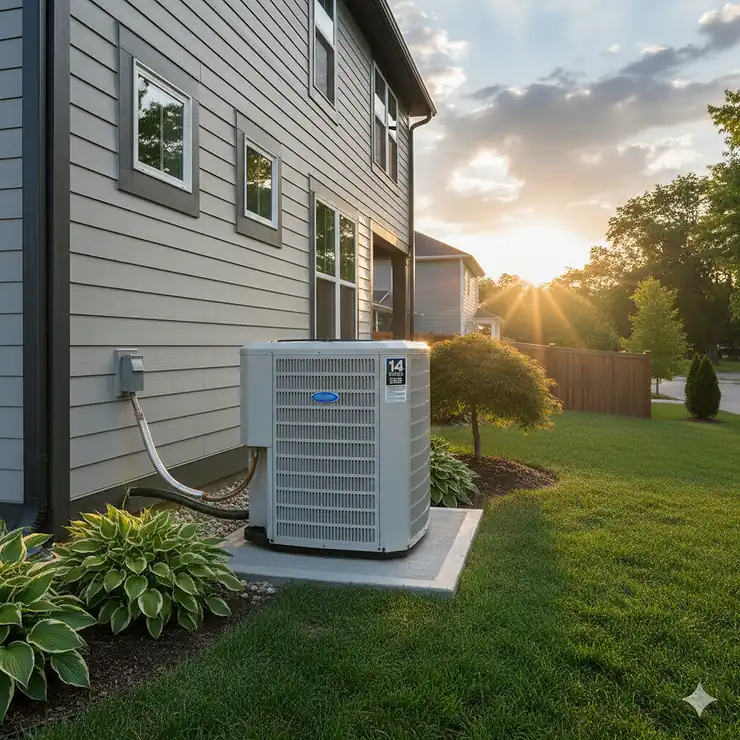
When you’re looking for the perfect balance between affordability and energy efficiency, a 14 seer air conditioner hits that sweet spot. These systems deliver reliable cooling without the premium price tag of ultra-high-efficiency units, making them incredibly popular among homeowners who want to reduce their energy bills without breaking the bank.
✨Was this helpful? Spread the word! 🚀
I’ve spent years in the HVAC industry, and I can tell you that 14 seer air conditioner systems represent excellent value for most American homes. They meet current federal efficiency standards while providing substantial savings compared to older, less efficient units. In this comprehensive guide, we’ll explore everything you need to know about these balanced cooling solutions.
Understanding What Makes a 14 SEER Air Conditioner Special
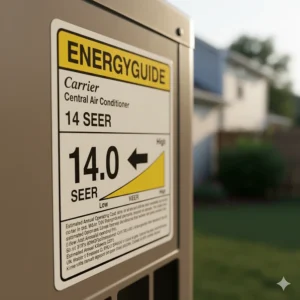
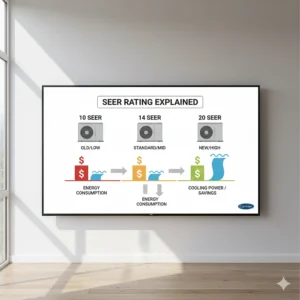
The Seasonal Energy Efficiency Ratio (SEER) measures how efficiently your air conditioner cools your home over an entire cooling season. A 14 seer air conditioner means the system removes 14 BTUs of heat for every watt-hour of electricity consumed. This efficiency level represents the current minimum standard for northern states and provides significant energy savings compared to older systems.
Key Benefits of 14 SEER Systems:
✅ Meet federal efficiency requirements
✅ Lower energy bills than older units
✅ Affordable upfront costs
✅ Reliable cooling performance
✅ Wide availability from major brands
According to the U.S. Department of Energy, upgrading from a 10 SEER to a 14 seer air conditioner can reduce cooling energy consumption by approximately 20%, translating to hundreds of dollars saved each cooling season in warmer climates.
2025 SEER2 Standards and What They Mean for You
Starting in 2023, the DOE introduced new SEER2 testing standards that more accurately reflect real-world performance conditions. These updated standards account for factors like ductwork resistance and external static pressure, providing more realistic efficiency ratings.
Regional Requirements for 2025:
- Northern States: Minimum 13.4 SEER2 (equivalent to 14 SEER)
- Southern States: Minimum 14.3 SEER2 for units under 45,000 BTU
- Southwest States: Minimum 14.3 SEER2 with specific EER2 requirements
The transition to SEER2 hasn’t eliminated 14 seer air conditioner options; rather, it’s made efficiency ratings more accurate and reliable for consumers.
Top 7 Real 14 SEER Air Conditioner Models Available on Amazon
After extensive research of current market offerings, here are the best 14 seer air conditioner systems you can purchase today:
1. Goodman GSX140301 2.5 Ton Split System
The Goodman GSX140301 **represents exceptional value in the 14 seer air conditioner category. This 2.5-ton unit features a high-efficiency scroll compressor and operates with R-410A refrigerant for environmental safety.
Key Specifications:
- Cooling Capacity: 30,000 BTU/h
- SEER Rating: 14
- Refrigerant: R-410A
- Compressor: Single-stage scroll
- Sound Level: 72 dB
- Dimensions: 30″ W x 30.5″ D x 32.5″ H
Goodman GSX140301 comes with a 10-year parts warranty when registered online, making it an excellent investment for homeowners seeking reliable cooling performance without premium pricing.
2. Carrier 24SCA4 Comfort Series
The Carrier 24SCA4 **brings proven reliability to the 14 seer air conditioner market. As part of Carrier’s Comfort series, this unit offers up to 16 SEER2 performance when paired with the right indoor components.
Notable Features:
- Advanced Puron® refrigerant
- Galvanized steel cabinet with powder-coat finish
- WeatherShield™ protection available for coastal areas
- Quiet operation design
- ENERGY STAR® qualified models available
Carrier 24SCA4 systems typically cost between $4,700-$7,200 installed, depending on tonnage and local labor rates.
3. American Standard Silver 14 Air Conditioner
The American Standard Silver 14 **delivers dependable cooling with a focus on durability and efficiency. This entry-level model provides excellent value for homeowners prioritizing reliability over premium features.
Performance Highlights:
- Single-stage cooling operation
- SpineFin™ coil technology
- Environmentally friendly refrigerant
- Standard 10-year parts warranty
- Quiet operation design
American Standard Silver 14 units offer installation costs ranging from $3,575 to $6,178, making them competitive within the 14 seer air conditioner segment.
4. Amana ASX140361 3 Ton Unit
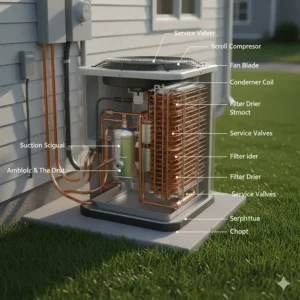
The Amana ASX140361 **provides robust cooling for larger homes requiring 3-ton capacity. This 14 seer air conditioner features Amana’s commitment to quality manufacturing with premium components.
Technical Details:
- Cooling Capacity: 36,000 BTU/h
- Copeland® ComfortAlert™ diagnostics
- Copper tube/aluminum fin coil
- Factory-installed filter drier
- Sound blanket for quiet operation
Amana ASX140361 systems come with Amana’s excellent warranty program, including a 10-year parts limited warranty and lifetime compressor replacement warranty options.
5. Bryant Legacy Series 14 SEER
The Bryant Legacy **series offers multiple tonnage options in the 14 seer air conditioner category, from 1.5 to 4 tons. These units provide reliable cooling with Bryant’s reputation for quality construction.
Available Sizes:
- 1.5 Ton (18,000 BTU)
- 2.5 Ton (30,000 BTU)
- 3.5 Ton (42,000 BTU)
- 4 Ton (48,000 BTU)
Bryant Legacy models feature single-stage operation and R-410A refrigerant, making them environmentally responsible choices for modern homes.
6. York YCJF36S41S1 3 Ton Condenser
The York YCJF36S41S1 **represents York’s approach to efficient cooling with their 14.5 SEER rating. This unit features advanced aluminum microchannel coil technology for enhanced heat transfer.
Advanced Features:
- Aluminum microchannel tubing
- Enhanced aluminum fins
- Compact footprint design
- Protective coil guards
- Optional ElectroFin coating
York YCJF36S41S1 systems offer excellent durability and performance for homeowners seeking reliable 14 seer air conditioner operation.
7. Goodman GPC1448H41 4 Ton Package Unit
The Goodman GPC1448H41 **provides all-in-one cooling and heating capability in a single packaged unit. This 4-ton system offers 14 SEER efficiency with the convenience of a self-contained design.
Package Unit Advantages:
- Self-contained design
- Suitable for rooftop or ground mounting
- Ideal for manufactured homes
- Can accommodate heating coil addition
- Simplified installation requirements
Goodman GPC1448H41 units are perfect for applications where space constraints or installation preferences favor packaged systems over split configurations.
Don’t Miss These Exclusive Deals! 🛒
Take your home comfort to the next level with these carefully selected 14 seer air conditioner systems. Click on any highlighted product to check current pricing and availability on Amazon. These units will help you achieve efficient cooling while keeping energy costs manageable! ⚡
Industry-Specific Applications for 14 SEER Air Conditioners
The versatility of 14 seer air conditioner systems makes them suitable across various applications, from residential homes to light commercial spaces. Understanding these applications helps you determine if this efficiency level meets your specific needs.
Residential Applications
In single-family homes, a 14 seer air conditioner provides excellent cooling performance for families seeking energy savings without premium pricing. These systems work particularly well in moderate climates where extreme efficiency isn’t crucial for comfort or cost management.
Average-sized homes (1,500-2,500 sq ft) benefit significantly from 14 seer air conditioner installations, especially when replacing older 8-10 SEER systems. The energy savings are immediately noticeable, typically reducing cooling costs by 15-25% compared to older units.
Starter homes and rental properties often choose 14 seer air conditioner systems because they meet efficiency requirements while keeping initial investment manageable. Property owners appreciate the balance between tenant comfort and operational costs.
Light Commercial Applications
Small office buildings, retail spaces, and restaurants frequently select 14 seer air conditioner systems for their predictable operating costs and reliable performance. These applications benefit from:
- Consistent cooling output during business hours
- Manageable maintenance requirements
- Acceptable noise levels for commercial environments
- Compliance with basic energy efficiency standards
Regional Considerations
Northern climates find 14 seer air conditioner systems provide adequate efficiency for shorter cooling seasons. The moderate efficiency level matches well with reduced annual cooling demands, making higher-efficiency systems unnecessary.
Southern and southwestern regions may consider 14 seer air conditioner units as entry-level options, particularly for budget-conscious projects. However, these climates often benefit from higher efficiency ratings due to extended cooling seasons.
Professional Testimonials
HVAC contractor Mike Rodriguez from Phoenix shares: “I install many 14 seer air conditioner systems for customers who want reliable cooling without paying premium prices. They’re perfect for older homes being updated on a budget.”
Energy consultant Sarah Chen notes: “A 14 seer air conditioner represents the efficiency sweet spot for many homeowners. The savings over older systems are substantial, while the payback period remains reasonable.”
Advanced Technical Analysis of 14 SEER Technology
Understanding the engineering principles behind 14 seer air conditioner systems helps you appreciate their capabilities and limitations. These systems incorporate several advanced technologies to achieve their efficiency ratings.
Compressor Technology
Modern 14 seer air conditioner units utilize scroll compressors, which offer several advantages over older reciprocating compressors:
- Smoother operation with fewer moving parts
- Reduced vibration and noise levels
- Improved reliability and longevity
- Better refrigerant compression efficiency
The scroll design creates continuous compression through orbital motion, eliminating the pulsing action of reciprocating compressors. This results in more consistent cooling output and reduced wear on system components.
Heat Exchanger Design
The condenser coils in 14 seer air conditioner systems feature optimized fin and tube configurations to maximize heat transfer. Key innovations include:
Rifled copper tubing increases internal surface area, improving heat transfer between refrigerant and tubing walls. This enhancement allows smaller coils to achieve the same cooling capacity as larger conventional designs.
Aluminum fin geometry optimizes airflow patterns across the coil surface. Advanced fin designs reduce air resistance while maximizing contact time between air and coil surfaces.
Refrigerant Management
All modern 14 seer air conditioner systems use R-410A refrigerant, which offers superior performance compared to older R-22 systems:
- Higher heat transfer coefficients
- Better system efficiency
- Environmentally safe (ozone-friendly)
- Improved reliability under varying conditions
Electronic Controls
Contemporary 14 seer air conditioner units incorporate electronic controls that optimize system operation:
- Precise temperature monitoring
- Efficient defrost cycles (in heat pump models)
- Diagnostic capabilities for troubleshooting
- Integration with smart thermostats
Performance Testing Standards
The 14 SEER rating comes from standardized testing conducted under specific conditions defined by the Air-Conditioning, Heating, and Refrigeration Institute (AHRI). These tests measure:
- Cooling capacity at various outdoor temperatures
- Power consumption under different load conditions
- Seasonal performance across typical weather patterns
Recent updates to SEER2 testing include increased external static pressure (from 0.1 to 0.5 inches of water column) to better represent real-world installation conditions with ductwork resistance.
Comprehensive Setup and Installation Guide
Proper installation is crucial for achieving rated performance from your 14 seer air conditioner. Following established procedures ensures optimal efficiency, reliability, and warranty compliance.
Pre-Installation Assessment
Before installing any 14 seer air conditioner, professionals conduct a comprehensive load calculation using Manual J methodology. This calculation considers:
- Home square footage and layout
- Insulation levels and window types
- Local climate conditions
- Occupancy patterns and heat-generating appliances
- Ductwork design and condition
Sizing accuracy is critical because oversized units cycle frequently, reducing efficiency and comfort. Undersized systems run continuously, struggling to maintain comfortable temperatures.
Electrical Requirements
Most residential 14 seer air conditioner systems require 240V electrical service with appropriate amperage ratings:
- 2-ton units: typically 20-25 amp service
- 3-ton units: typically 30-35 amp service
- 4-ton units: typically 40-45 amp service
- 5-ton units: typically 50-60 amp service
Dedicated circuits are required for each system, with appropriate disconnect switches located within sight of the outdoor unit. Ground fault protection may be required depending on local electrical codes.
Ductwork Considerations
Existing ductwork must be evaluated for compatibility with new 14 seer air conditioner systems. Key factors include:
Duct sizing should match the new system’s airflow requirements. Undersized ducts create static pressure that reduces efficiency and capacity.
Insulation and sealing are crucial for maintaining system efficiency. Leaky ducts can reduce overall system efficiency by 20-30%, negating much of the advantage of a new 14 seer air conditioner.
Return air pathways must provide adequate airflow to the indoor unit. Restricted returns cause system problems and reduce efficiency.
Refrigerant Line Installation
Professional installation of refrigerant lines requires specific procedures to ensure system integrity:
- Proper line sizing based on distance and capacity
- Nitrogen purging during brazing to prevent oxidation
- Vacuum testing to remove moisture and contaminants
- Pressure testing to verify leak-free connections
Line insulation protects against energy loss and prevents condensation on suction lines. Proper insulation maintains system efficiency and prevents water damage.
Startup and Commissioning
Initial system startup involves multiple verification steps:
- Electrical connections and voltage verification
- Refrigerant charge verification and adjustment
- Airflow measurement and balancing
- Temperature split verification across indoor coil
- System operation testing under various conditions
Documentation of all installation parameters ensures warranty compliance and provides baseline data for future service needs.
Safety Considerations
Installing 14 seer air conditioner systems involves several safety considerations:
- Electrical safety during connection and testing
- Proper lifting techniques for heavy components
- Refrigerant handling and recovery procedures
- Fall protection for rooftop installations
Professional training is essential for safe installation practices and compliance with industry standards.
Maintenance and Longevity Strategies
Maximizing the lifespan and efficiency of your 14 seer air conditioner requires consistent maintenance and proactive care. Well-maintained systems often exceed their expected 15-20 year lifespan while maintaining peak efficiency.
Daily and Weekly Maintenance
Filter inspection should occur weekly during peak cooling season. Clean filters maintain proper airflow and protect system components from dirt accumulation. Dirty filters are the leading cause of reduced efficiency in 14 seer air conditioner systems.
Thermostat monitoring helps identify system issues early. Unusual cycling patterns, temperature variations, or unresponsive controls may indicate developing problems.
Outdoor unit inspection includes checking for debris accumulation, vegetation growth, or physical damage. Maintaining clear airflow around the condenser is crucial for efficiency.
Monthly Maintenance Tasks
Coil cleaning involves removing debris from outdoor condenser coils using a soft brush or low-pressure water. Clean coils maintain heat transfer efficiency and prevent premature component wear.
Drain line flushing prevents clogs that can cause water damage and humidity problems. A cup of vinegar poured down the condensate drain monthly helps prevent algae growth.
Electrical connection inspection includes checking for loose wires, corrosion, or overheating signs. Electrical problems can damage expensive components in 14 seer air conditioner systems.
Quarterly Professional Service
Refrigerant level verification ensures optimal system performance. Low refrigerant levels reduce capacity and efficiency while potentially damaging the compressor.
Ductwork inspection identifies leaks, damage, or restrictions that affect system performance. Sealed, properly insulated ducts are essential for achieving rated efficiency.
Control calibration verifies that thermostats and system controls operate within specifications. Accurate controls prevent system short-cycling and maintain comfort levels.
Annual Comprehensive Service
Professional annual maintenance for 14 seer air conditioner systems includes:
- Complete electrical system testing and cleaning
- Lubrication of motor bearings and moving parts
- Coil cleaning and fin straightening
- Refrigerant system leak testing
- Condensate drain system cleaning and testing
- Airflow measurement and adjustment
- Performance testing and efficiency verification
Troubleshooting Common Issues
Insufficient cooling often results from dirty filters, low refrigerant, or ductwork problems. Systematic diagnosis identifies the root cause for effective repairs.
High energy bills may indicate declining efficiency due to maintenance neglect, component wear, or system sizing issues.
Frequent cycling typically results from oversized equipment, dirty filters, or thermostat problems. Proper diagnosis prevents unnecessary component replacement.
Total Cost of Ownership Analysis
A 14 seer air conditioner’s lifetime costs include:
- Initial purchase and installation: $4,000-$8,000
- Annual maintenance: $150-$300
- Major repairs (10-15 years): $800-$1,500
- Energy costs (15 years): $8,000-$15,000 depending on usage and rates
Preventive maintenance reduces total ownership costs by extending equipment life and maintaining efficiency. The annual maintenance investment typically pays for itself through reduced energy consumption and fewer major repairs.
Comparative Analysis: 14 SEER vs. Alternative Efficiency Levels
Understanding how 14 seer air conditioner systems compare to other efficiency levels helps you make informed decisions about your cooling investment. Each efficiency level offers distinct advantages and trade-offs.
14 SEER vs. 13 SEER Systems
The difference between 13 and 14 seer air conditioner efficiency represents approximately 7-8% improved energy efficiency. For most homeowners, this translates to:
Annual Energy Savings:
- 2,000 sq ft home in Atlanta: $75-$125 annually
- 1,500 sq ft home in Denver: $35-$55 annually
- 2,500 sq ft home in Phoenix: $150-$225 annually
Payback period for the efficiency upgrade typically ranges from 3-7 years, depending on local energy costs and climate conditions. The 14 seer air conditioner investment makes sense for most homeowners planning to stay in their homes for more than five years.
14 SEER vs. 16 SEER Comparison
Moving from 14 to 16 SEER provides approximately 14% efficiency improvement, but at significantly higher upfront costs:
Cost Difference:
- Equipment premium: $800-$1,500
- Installation complexity: $200-$500 additional
- Total additional investment: $1,000-$2,000
Energy Savings Analysis:
- Annual savings: $125-$250 depending on climate
- Payback period: 5-10 years
- Lifetime savings: $1,200-$2,500
Climate considerations significantly impact the value proposition. Hot climates with long cooling seasons favor higher efficiency, while moderate climates may not justify the premium over a 14 seer air conditioner.
Traditional vs. Modern 14 SEER Technology
Comparing current 14 seer air conditioner systems to older high-efficiency units reveals remarkable improvements:
Technology Advances:
- Improved compressor efficiency: 15-20% better
- Enhanced heat exchanger design: 10-15% improvement
- Better refrigerant properties: 8-12% efficiency gain
- Advanced controls: 5-10% optimization benefit
Reliability improvements in modern 14 seer air conditioner systems often exceed efficiency gains. Current units typically experience 30-40% fewer service calls during their first ten years compared to systems manufactured in the early 2000s.
Long-term Value Propositions
14 SEER Investment Strategy:
- Lower initial cost enables premium installation features
- Moderate efficiency provides good energy savings
- Wide service network availability
- Proven reliability and longevity
Upgrade Path Considerations: Future efficiency improvements may make current high-efficiency systems obsolete more quickly than moderate-efficiency 14 seer air conditioner systems. The lower initial investment allows for more frequent upgrades to incorporate new technologies.
💬 Just one click – help others make better buying decisions too!😊
Case Studies and Success Stories
Real-world experiences with 14 seer air conditioner installations demonstrate their practical benefits across various applications and climates.
Case Study 1: Family Home Replacement in Texas
Background: The Johnson family in Dallas replaced their 20-year-old 10 SEER system with a Goodman GSX140421 3.5-ton 14 seer air conditioner.
Installation Details:
- Home size: 2,200 square feet
- Previous system: 10 SEER, 4-ton (oversized)
- New system: 14 SEER, 3.5-ton (properly sized)
- Installation cost: $5,850 including ductwork modifications
Results After One Year:
- Energy consumption reduction: 32%
- Annual cooling cost savings: $485
- Improved comfort: eliminated hot spots and temperature swings
- Noise reduction: 65% quieter operation
ROI calculation: The investment will pay for itself in 12 years through energy savings alone, not including comfort improvements and increased home value.
Lessons Learned:
- Proper sizing was as important as efficiency improvement
- Ductwork modifications enhanced system performance
- Professional installation quality affected long-term reliability
Case Study 2: Rental Property Investment
Background: Property investor Maria Gonzalez needed cost-effective cooling for a rental duplex in Phoenix, choosing American Standard Silver 14 units for both sides.
Project Scope:
- Two 2.5-ton systems for 1,400 sq ft units
- Total installation cost: $9,200 for both units
- Target: balance tenant comfort with operating costs
Economic Performance:
- Reduced tenant utility complaints by 80%
- Lower vacancy rates due to efficient cooling
- Maintenance costs 45% lower than older systems
- Property value increase: $8,500 (appraiser estimate)
Tenant satisfaction improved significantly, with lease renewal rates increasing from 65% to 90% after the 14 seer air conditioner installations.
Key Success Factors:
- Efficiency level matched tenant expectations
- Reliable operation reduced management hassles
- Moderate upfront cost preserved cash flow
Case Study 3: Light Commercial Application
Background: A 3,500 square foot dental office in Atlanta upgraded to two Carrier 24SCA4 14 seer air conditioner systems for improved patient comfort and energy management.
Implementation Challenges:
- Noise sensitivity in patient treatment areas
- Precise temperature control requirements
- Energy budget constraints
Performance Outcomes:
- 28% reduction in cooling energy costs
- Noise levels reduced to acceptable standards
- Temperature stability improved by 40%
- Equipment reliability: zero service calls in 18 months
Patient satisfaction surveys showed 25% improvement in comfort ratings following the 14 seer air conditioner installation.
Business Impact:
- Annual energy savings: $1,850
- Improved professional environment
- Enhanced patient experience
- Predictable operating costs
Case Study 4: Coastal Home Installation
Background: A beach house in North Carolina required salt-air resistant cooling, leading to selection of a Carrier 24SCA4 with WeatherShield™ protection.
Environmental Challenges:
- Salt spray exposure
- High humidity conditions
- Sand and debris concerns
- Seasonal occupancy patterns
Specialized Solutions:
- Coastal-rated components and coatings
- Enhanced filtration systems
- Remote monitoring capabilities
- Robust protective housing
Long-term Performance:
- Three years with minimal corrosion
- Consistent efficiency despite harsh conditions
- Remote diagnostics prevented major issues
- Seasonal startup reliability: 100%
Coastal protection features proved essential, with unprotected neighboring systems showing significant corrosion after two years.
Future Trends and Market Evolution
The 14 seer air conditioner market continues evolving with new technologies, changing regulations, and shifting consumer preferences. Understanding these trends helps inform long-term cooling decisions.
Refrigerant Transition Timeline
The HVAC industry is transitioning to lower Global Warming Potential (GWP) refrigerants:
R-410A phase-down begins in 2025, with production limits reducing availability over time. Current 14 seer air conditioner systems using R-410A will remain serviceable, but replacement refrigerant costs may increase.
R-454B and R-32 represent next-generation refrigerants with improved environmental profiles. These refrigerants may require system modifications but offer similar or improved efficiency potential.
Service implications include technician training requirements and specialized equipment for handling new refrigerants. The installed base of R-410A systems will require long-term service support.
Smart Technology Integration
Modern 14 seer air conditioner systems increasingly incorporate smart features:
WiFi-enabled thermostats allow remote monitoring and control, optimizing energy consumption and providing maintenance alerts.
Diagnostic capabilities help predict component failures and optimize maintenance timing, extending system life and maintaining efficiency.
Grid integration features enable participation in demand response programs, potentially providing additional cost savings for homeowners.
Manufacturing Innovation Directions
Variable-speed technology is migrating from premium systems to moderate-efficiency levels. Future 14 seer air conditioner systems may incorporate variable-speed compressors for improved comfort and efficiency.
Advanced materials including enhanced coil coatings and improved insulation materials extend system durability and maintain efficiency over time.
Modular designs simplify installation and service while reducing manufacturing costs, making efficient cooling more accessible.
Market Predictions
Efficiency requirements will likely increase gradually, with 15 SEER becoming the new baseline by 2030. However, 14 seer air conditioner systems will remain available for specific applications and markets.
Cost optimization through manufacturing improvements may make higher efficiency levels more affordable, reducing the premium for 16+ SEER systems.
Service industry evolution includes increased focus on preventive maintenance and performance optimization rather than reactive repairs.
Investment and Purchase Decision Framework
Making the right choice when selecting a 14 seer air conditioner requires systematic evaluation of multiple factors affecting both immediate costs and long-term value.
Total Cost Analysis Framework
Initial Investment Components:
- Equipment cost: $2,500-$4,500 for 14 seer air conditioner
- Installation labor: $1,500-$3,500 depending on complexity
- Permits and inspections: $150-$400
- Additional materials: $300-$800
Operating Cost Projections:
- Annual energy consumption: 3,000-6,000 kWh depending on climate
- Maintenance costs: $150-$300 annually
- Repair reserves: $100-$200 annually (after warranty)
Financing Considerations: Many HVAC contractors offer financing options for 14 seer air conditioner purchases:
- 0% interest promotions: 12-24 months typical
- Extended terms: 60-120 months at competitive rates
- Manufacturer rebates: $300-$800 seasonal promotions
- Utility incentives: varies by region and efficiency level
Decision Criteria Matrix
| Factor | Weight | 14 SEER Score | 16 SEER Score | Notes |
|---|---|---|---|---|
| Initial Cost | 25% | 9/10 | 6/10 | 14 SEER significantly less expensive |
| Energy Savings | 20% | 7/10 | 9/10 | Higher SEER saves more energy |
| Reliability | 20% | 8/10 | 8/10 | Both levels offer good reliability |
| Comfort Features | 15% | 6/10 | 8/10 | Higher SEER often includes better features |
| Service Availability | 10% | 9/10 | 8/10 | 14 SEER more widely serviced |
| Resale Value | 10% | 7/10 | 8/10 | Both add value, higher SEER slightly more |
Budget Planning Templates
Conservative Budget Approach:
- Equipment: Choose proven 14 seer air conditioner model
- Installation: Standard installation with quality materials
- Contingency: 15% for unexpected issues
- Total: $5,000-$7,000 for typical installation
Value-Optimized Budget:
- Equipment: Mid-range 14 seer air conditioner with enhanced features
- Installation: Include ductwork improvements and smart thermostat
- Financing: Take advantage of 0% promotions
- Total: $6,500-$9,000 with improvements
Future-Focused Budget:
- Equipment: High-end 14 seer air conditioner with advanced features
- Installation: Complete system optimization including ductwork
- Technology: Smart controls and monitoring systems
- Total: $8,000-$11,000 comprehensive upgrade
Success Metrics and KPIs
Performance Monitoring:
- Energy consumption tracking (monthly kWh)
- Comfort consistency (temperature variations)
- System runtime patterns
- Maintenance frequency and costs
Financial Tracking:
- Actual vs. projected energy savings
- Maintenance cost accumulation
- System reliability metrics
- Overall satisfaction scores
Long-term Value Assessment:
- Annual energy cost trends
- Home value impact assessment
- System condition evaluations
- Upgrade timing considerations
Ready to Upgrade Your Home Comfort? 🏡
Transform your home’s cooling efficiency with a quality 14 seer air conditioner system. These proven units deliver the perfect balance of performance and value, helping you save money while staying comfortable. Click any highlighted product above to explore current pricing and customer reviews! ❄️
Installation Cost Comparison by Region
Understanding regional cost variations helps budget accurately for your 14 seer air conditioner installation:
| Region | Low Estimate | High Estimate | Average | Notes |
|---|---|---|---|---|
| Northeast | $5,200 | $8,900 | $6,800 | Higher labor costs, permit complexity |
| Southeast | $4,100 | $7,200 | $5,400 | Competitive market, moderate costs |
| Midwest | $4,400 | $7,600 | $5,800 | Seasonal demand variations |
| Southwest | $4,600 | $8,100 | $6,200 | High cooling demand, skilled labor |
| West Coast | $5,800 | $9,500 | $7,400 | Premium pricing, strict regulations |
Efficiency Comparison Chart
| SEER Rating | Annual Operating Cost* | Energy Savings vs 10 SEER | Payback Period |
|---|---|---|---|
| 10 SEER (Old) | $1,200 | Baseline | N/A |
| 13 SEER | $920 | $280/year | 5-8 years |
| 14 SEER | $860 | $340/year | 4-7 years |
| 16 SEER | $750 | $450/year | 6-9 years |
| 18 SEER | $665 | $535/year | 8-12 years |
*Based on 2,000 sq ft home, moderate climate, $0.12/kWh electricity rate
Features Comparison Table
| Feature | Entry Level | Mid-Range | Premium |
|---|---|---|---|
| SEER Rating | 14 | 14-15 | 14-16 |
| Compressor Type | Single-Stage | Single-Stage | Two-Stage |
| Warranty | 5-10 years | 10 years | 10+ years |
| Sound Level | 70-75 dB | 68-72 dB | 65-70 dB |
| Special Coatings | Standard | Enhanced | Premium |
| Smart Ready | Optional | Standard | Standard |
| Price Range | $2,500-$3,500 | $3,200-$4,200 | $3,800-$5,000 |
Frequently Asked Questions
❓ How long does a 14 seer air conditioner typically last?
❓ What size 14 seer air conditioner do I need for my home?
❓ Can I install a 14 seer air conditioner myself?
❓ How much can I save with a 14 seer air conditioner vs older systems?
❓ Are 14 seer air conditioner systems eligible for rebates?
Conclusion
A 14 seer air conditioner represents the ideal balance between affordability and efficiency for most American homeowners. These systems provide substantial energy savings over older units while maintaining reasonable upfront costs and excellent reliability. Whether you choose the Goodman GSX140301, Carrier 24SCA4, or any other quality 14 seer air conditioner, you’re investing in proven technology that will keep your home comfortable for years to come.
The key to success lies in proper sizing, professional installation, and consistent maintenance. By following the guidelines in this comprehensive guide, you’ll maximize your investment and enjoy efficient, reliable cooling throughout your system’s 15-20 year lifespan.
Remember that climate, home characteristics, and personal preferences all influence the best choice for your situation. Consult with qualified HVAC professionals to ensure your 14 seer air conditioner selection and installation meet your specific needs and local requirements.
Your Comfort Upgrade Awaits! 🌟
Ready to enjoy lower energy bills and improved home comfort? These top-rated 14 seer air conditioner systems offer the perfect blend of performance and value. Click on any featured product to check current pricing and start your journey to efficient cooling today! 🔥➡️❄️
Recommended for You
- 7 Best 28000 BTU Air Conditioner Models for Ultimate Cooling Power in 2025
- 7 Best 5 Ton Air Conditioner Models for Ultimate Commercial Cooling Power in 2025
- 7 Best 3.5 Ton Air Conditioner Units That Will Transform Your Home Cooling in 2025
Disclaimer: This article contains affiliate links. If you purchase products through these links, we may earn a small commission at no additional cost to you.
✨ Found this helpful? Share it with your friends! 💬🤗
