
In This Article
✨Was this helpful? Spread the word! 🚀
Picture this: you’re anchored in a pristine cove, the sun’s beating down mercilessly, and your cabin feels like a sauna. Meanwhile, you’re watching that guy on the neighboring yacht lounging comfortably in his air-conditioned salon while you’re literally melting. That’s when you realize – investing in a quality marine air conditioner isn’t just about luxury; it’s about transforming your boating experience entirely.
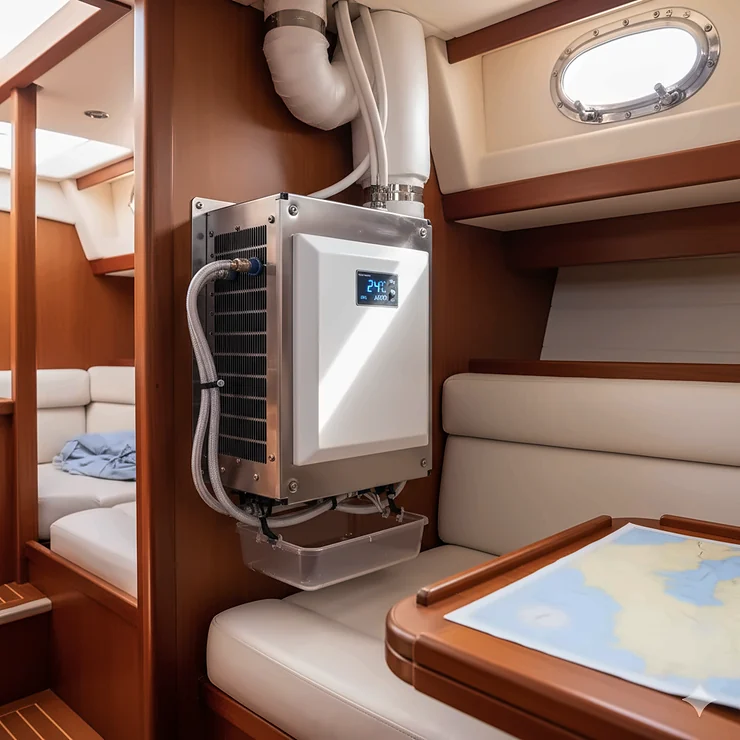
The marine air conditioner market has evolved dramatically, offering solutions from compact 6,000 BTU units perfect for cuddy cabins to powerful 24,000 BTU systems capable of cooling entire yachts. Whether you’re weekend cruising on a 25-footer or living aboard a 50-foot trawler, there’s a marine air conditioner designed specifically for your vessel’s unique requirements.
Understanding Marine Air Conditioner Fundamentals 🌊
Marine air conditioner systems differ significantly from their residential counterparts. They’re engineered to withstand salt air, constant vibration, and space constraints while delivering reliable cooling in challenging environments. These specialized units must handle everything from corrosion resistance to power consumption efficiency.
The technology behind marine air conditioner units has advanced considerably. Modern systems incorporate variable speed compressors, titanium heat exchangers, and smart controls that automatically adjust cooling output based on ambient conditions. Understanding these fundamentals helps you make informed decisions when selecting equipment for your vessel.
Key Components of Marine Air Conditioner Systems
Every marine air conditioner consists of several critical components working together seamlessly. The evaporator unit absorbs heat from cabin air, while the condenser releases this heat using seawater circulation. The compressor pumps refrigerant through the system, and sophisticated controls maintain optimal temperatures.
✅ Compressor: The heart of any marine air conditioner system, responsible for circulating refrigerant
✅ Evaporator: Absorbs heat from cabin air and delivers cool, dehumidified air
✅ Condenser: Uses seawater to reject heat from the refrigerant
✅ Controls: Digital thermostats and smart controllers for precise temperature management
✅ Circulation Pump: Moves seawater through the condenser for heat rejection
The integration of these components determines overall system efficiency and reliability. Premium marine air conditioner units feature titanium condensers that resist corrosion, variable speed fans that optimize airflow, and advanced controls that provide precise temperature management while minimizing power consumption.
Top 7 Marine Air Conditioner Systems for 2025 ⚓
1. MarinAire Integra Marine Air Conditioner – 16,000 BTU
The MarinAire Integra represents cutting-edge innovation in marine air conditioner technology. This 16,000 BTU self-contained unit features built-in pressure gauges that allow real-time system monitoring – a feature typically found only in commercial installations.
Key Specifications:
- Cooling capacity: 16,000 BTU/h
- Power options: 110-120V/60Hz and 208-230V/60Hz
- 60% noise reduction with sound cover
- Stainless steel drain pan construction
- 360-degree adjustable blower outlet
Customer feedback consistently highlights the Integra’s whisper-quiet operation and robust construction. The built-in pressure gauges eliminate guesswork during maintenance, while the compact design fits installations where space is premium. Installation typically takes 4-6 hours for experienced technicians.
2. MarinAire Micra Marine Air Conditioner – 6,000 BTU
Perfect for smaller vessels, the MarinAire Micra packs impressive cooling power into an incredibly compact footprint. At just 10″ × 11″ × 17″, this marine air conditioner fits virtually anywhere while delivering effective cooling for cuddy cabins and smaller salons.
Key Features:
- Ultra-compact dimensions: 10″ × 11″ × 17″
- 6,000 BTU cooling capacity
- 90-degree rotatable blower for flexible installation
- 60% noise reduction technology
- Touch screen Wi-Fi controller included
The Micra’s rotatable blower is particularly valuable in tight installations where traditional ductwork proves challenging. Users report excellent performance in boats up to 28 feet, with installation possible in spaces previously considered unsuitable for marine air conditioner systems.
3. Dometic ECD Self-Contained Air Conditioner – 16,000 BTU
Dometic’s reputation in marine air conditioner manufacturing spans decades, and the ECD series continues this legacy. The 16,000 BTU model combines proven reliability with modern features like digital controls and environmentally friendly R410A refrigerant.
Technical Specifications:
- Cooling capacity: 16,000 BTU/h
- Voltage: 230V with R410A refrigerant
- High-velocity rotatable blower
- Stainless steel drain pan
- Digital control and display included
Professional installers appreciate the ECD’s straightforward installation process and comprehensive documentation. The high-velocity blower can be installed horizontally or vertically, accommodating various vessel layouts. Maintenance intervals are extended due to robust component selection and marine-grade materials.
4. Dometic GVTX10 Variable Capacity Marine Air Conditioner
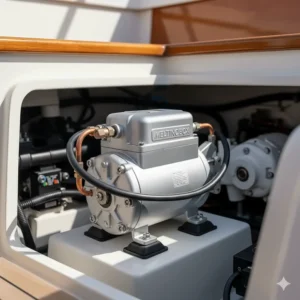
The Dometic GVTX10 introduces variable capacity technology to marine air conditioner applications. This innovative system adjusts cooling output from 6,000 to 10,000 BTU/h based on actual demand, significantly improving efficiency and comfort.
Advanced Features:
- Variable capacity: 6,000-10,000 BTU/h
- R-454b refrigerant with minimal environmental impact
- Titanium heat exchanger coils
- Rust-free composite drain pan
- Smart load management technology
Priced at $1,625.91, the GVTX10 offers exceptional value for vessels requiring flexible cooling capacity. The variable speed technology maintains consistent temperatures while reducing power consumption by up to 30% compared to traditional fixed-capacity units.
5. Webasto FCF Classic 12,000 BTU Marine Air Conditioner
The Webasto FCF Classic series has earned recognition for exceptional build quality and whisper-quiet operation. The 12,000 BTU model (FCF0012000GS) features a carefully balanced compressor system that minimizes vibration and noise.
Premium Construction Features:
- Ultra-quiet balanced compressor design
- Corrosion-free stainless steel chassis
- Long-lasting baked enamel finish
- Robust blower handles multiple vents
- Digital control panel with remote
Webasto’s German engineering shows in every detail, from the precision-balanced compressor to the marine-grade stainless steel construction. The FCF Classic consistently receives top ratings from marine surveyors and professional installers for its reliability and performance.
6. Webasto FCF Platinum 16,000 BTU Marine Air Conditioner
Representing Webasto’s latest advancement, the Webasto FCF Platinum series delivers enhanced performance with a higher BTU/h rating across various ambient conditions. The 16,000 BTU complete kit includes everything necessary for professional installation.
Platinum Series Enhancements:
- Enhanced 16,000 BTU/h cooling capacity
- Marine-grade stainless steel frame
- Vibration reduction technology
- Optional remote control capability
- Two-year comprehensive warranty
Current pricing at $3,155.22 for the complete kit reflects the system’s premium positioning. Professional installers report the Platinum series consistently outperforms competitor units in extreme ambient conditions while maintaining exceptional reliability.
7. Velair Generation 2 Smart Marine Air Conditioner
The Velair Generation 2 introduces smart technology integration to marine air conditioner applications. This 10,000 BTU unit features sophisticated app-based control and integration capabilities with modern boat automation systems.
Smart Technology Features:
- 10,000 BTU cooling capacity
- Smartphone app-based control
- Integration with boat automation systems
- Remote monitoring capabilities
- Generation 2 reliability improvements
At $2,807.12, the Velair represents premium pricing for advanced technology. Early adopters report the smart controls provide unprecedented convenience, allowing pre-cooling before boarding and monitoring system performance remotely.
Industry-Specific Marine Air Conditioner Applications 🚢
Commercial Fishing Vessels
Commercial fishing operations demand marine air conditioner systems capable of operating continuously in harsh conditions. These installations typically require multiple units providing redundancy and zone control throughout various vessel areas.
Fishing vessel air conditioning faces unique challenges including fish processing areas requiring specific temperature and humidity control, crew quarters needing individual comfort zones, and engine rooms generating significant heat loads. Commercial-grade marine air conditioner systems must handle these diverse requirements while maintaining reliability during extended voyages.
Professional fishing operations increasingly specify titanium condensers for their superior corrosion resistance in harsh marine environments. The initial premium pays dividends through extended service life and reduced maintenance requirements. Systems sized for commercial applications typically range from 24,000 to 72,000 BTU/h capacity.
Charter and Tourism Operations
Charter yacht operations require marine air conditioner systems that balance performance, efficiency, and guest comfort. These applications demand quiet operation, rapid cooling capability, and zone control allowing individual cabin temperature preferences.
Tourism operations report that marine air conditioner performance directly impacts customer satisfaction ratings. Guests expect residential-level comfort, making system reliability crucial for business success. Professional charter operators typically install redundant systems ensuring continuous operation even during maintenance periods.
Energy efficiency becomes critical for charter operations managing fuel costs. Variable capacity marine air conditioner systems provide optimal efficiency while maintaining guest comfort standards. These systems automatically adjust output based on occupancy and ambient conditions, significantly reducing operational costs.
Live-Aboard Cruising
Live-aboard cruisers require marine air conditioner systems optimized for continuous operation with minimal maintenance requirements. These installations must balance cooling capacity with power consumption, particularly important for vessels relying on alternative energy sources.
Cruising applications favor self-contained marine air conditioner units for their simplified installation and maintenance requirements. These systems eliminate complex chilled water distribution, reducing potential failure points and maintenance complexity. Cruisers report self-contained systems provide better reliability during extended voyages to remote locations.
Power management becomes crucial for live-aboard applications. Modern marine air conditioner systems incorporate smart load management, automatically reducing power consumption when battery reserves are low. This technology prevents system shutdowns while maintaining reasonable comfort levels during energy-constrained periods.
Military and Government Applications
Military vessels require marine air conditioner systems meeting stringent specifications for reliability, electromagnetic compatibility, and shock resistance. These applications demand systems capable of operating in extreme conditions while meeting specific military standards.
Government specifications typically require marine air conditioner systems incorporating specific materials, construction methods, and testing protocols. Titanium heat exchangers, military-grade wiring, and shock-mounted components are standard requirements for these applications.
Maintenance protocols for military marine air conditioner systems emphasize preventive maintenance and component standardization. Systems must accommodate rapid deployment scenarios and provide reliable operation in diverse global climates. Redundancy and backup systems ensure mission-critical cooling capability.
Advanced Technical Analysis of Marine Air Conditioner Technology 🔧
Refrigeration Cycle Engineering
Modern marine air conditioner systems utilize advanced refrigeration cycles optimized for marine applications. The basic vapor-compression cycle has been refined to handle the unique challenges of marine environments, including variable heat loads, salt air corrosion, and space constraints.
The refrigeration cycle begins with the compressor raising refrigerant pressure and temperature. This high-pressure, high-temperature gas flows to the condenser where seawater removes heat, causing the refrigerant to condense into a liquid. The liquid refrigerant then passes through an expansion valve, dropping pressure and temperature before entering the evaporator.
In the evaporator, the cold refrigerant absorbs heat from cabin air, providing the cooling effect while the refrigerant vaporizes back to gas. This gas returns to the compressor, completing the cycle. Marine air conditioner systems optimize each component for maximum efficiency and reliability in challenging conditions.
Heat Exchanger Technology
Heat exchanger design critically impacts marine air conditioner performance and longevity. Traditional copper-nickel heat exchangers provide good corrosion resistance but require regular maintenance in high-pollution areas. Titanium heat exchangers offer superior corrosion resistance but command premium pricing.
Cupronickel alloys (90/10 and 70/30) represent the industry standard for marine air conditioner condensers. These alloys resist seawater corrosion while maintaining excellent heat transfer characteristics. However, they require proper seawater treatment and regular cleaning to maintain performance.
Titanium condensers eliminate corrosion concerns entirely but require careful system design to prevent galvanic corrosion when coupled with dissimilar metals. The material’s excellent strength-to-weight ratio allows thinner wall construction, improving heat transfer while reducing weight and space requirements.
Variable Frequency Drive Technology
Variable Frequency Drive (VFD) technology revolutionizes marine air conditioner efficiency by allowing compressor speed modulation based on cooling demand. Traditional fixed-speed systems operate at full capacity regardless of actual cooling requirements, leading to energy waste and temperature fluctuations.
VFD-equipped marine air conditioner systems monitor cabin temperature, ambient conditions, and occupancy patterns to optimize compressor operation. This technology maintains precise temperature control while reducing energy consumption by 30-50% compared to fixed-speed alternatives.
The integration of VFD technology requires sophisticated control algorithms and high-quality electrical components. Marine-grade VFDs must withstand vibration, humidity, and electromagnetic interference while providing reliable operation in harsh conditions. The initial investment premium typically pays back within 2-3 seasons through reduced energy costs.
Smart Control Integration
Modern marine air conditioner systems incorporate smart controls providing unprecedented monitoring and control capabilities. These systems collect operational data, predict maintenance requirements, and optimize performance based on usage patterns.
Smart control integration allows remote monitoring of marine air conditioner performance through cellular or satellite connections. Yacht owners can monitor system operation, receive maintenance alerts, and pre-cool vessels before arrival. This technology particularly benefits charter operations managing multiple vessels.
Artificial intelligence algorithms analyze operational data to predict potential failures before they occur. These predictive maintenance capabilities reduce unexpected breakdowns and optimize maintenance scheduling, particularly valuable for vessels operating in remote locations where service support is limited.
Comprehensive Setup and Installation Guide 🔨
Pre-Installation Planning and Assessment
Successful marine air conditioner installation begins with comprehensive planning and vessel assessment. This critical phase determines system sizing, installation location, and integration requirements while identifying potential challenges before they impact the project.
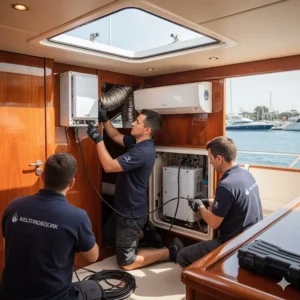
Professional installers conduct detailed heat load calculations considering vessel size, insulation quality, window area, occupancy patterns, and typical operating conditions. These calculations ensure proper marine air conditioner sizing while avoiding oversized systems that cycle frequently or undersized units that struggle to maintain comfort.
Electrical system assessment determines power availability and required upgrades for marine air conditioner installation. Systems must verify adequate battery capacity, charging system capability, and AC power availability. Installation may require electrical system upgrades including larger alternators, additional batteries, or shore power improvements.
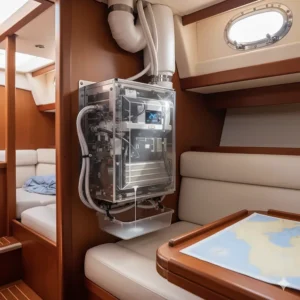
Space planning identifies optimal locations for marine air conditioner components while considering access for maintenance, airflow requirements, and noise considerations. Self-contained systems require single locations with adequate clearance, while split systems offer more flexibility but require careful planning for refrigerant line routing.
Installation Procedures and Best Practices
Professional marine air conditioner installation follows specific procedures ensuring optimal performance, reliability, and safety. These procedures address unique marine challenges including vibration isolation, corrosion prevention, and waterproofing requirements.
Vibration isolation prevents marine air conditioner operation from transmitting noise and vibration throughout the vessel. Professional installations incorporate marine-grade isolators designed for continuous operation in dynamic environments. Proper isolation significantly improves comfort while extending component life.
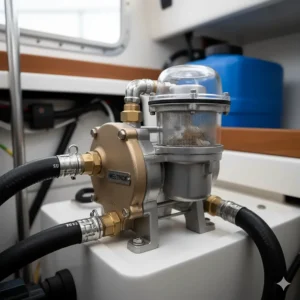
Seawater system integration requires careful attention to through-hull fittings, seacock selection, and strainer installation. Marine air conditioner systems must incorporate easily accessible strainers preventing debris from damaging heat exchangers. Professional installations include emergency shut-off capability and backup cooling options.
Electrical connections must meet marine standards for safety and reliability. All wiring requires marine-grade components with appropriate environmental protection. Installation procedures emphasize proper grounding, circuit protection, and compliance with relevant safety standards including ABYC guidelines.
Commissioning and Initial System Optimization
System commissioning ensures marine air conditioner installation meets performance specifications while identifying optimization opportunities. This process includes performance testing, control calibration, and operational training for vessel owners and crew.
Performance testing verifies cooling capacity, power consumption, and operational noise levels meet manufacturer specifications. Professional commissioning includes seawater flow verification, refrigerant charge confirmation, and electrical system performance validation. Any discrepancies require immediate attention before system acceptance.
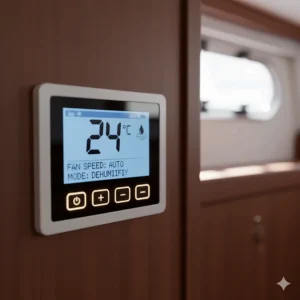
Control system calibration optimizes marine air conditioner operation for specific vessel conditions and owner preferences. This process includes thermostat calibration, zone control setup, and integration with vessel management systems. Proper calibration significantly improves comfort while optimizing energy consumption.
Owner and crew training ensures proper system operation and basic maintenance procedures. This training covers normal operation procedures, basic troubleshooting, and maintenance scheduling. Proper training prevents common operational issues while extending system life through appropriate care and maintenance.
💬 Just one click – help others make better buying decisions too! 😊
🛒 Don’t Miss These Exclusive Marine Air Conditioner Deals!
→ Transform your boating experience with these carefully selected marine air conditioner systems. Click on any highlighted product to check current pricing and availability on Amazon. These premium units will keep your cabin cool and comfortable during those hot summer days on the water! ⚓
Maintenance and Longevity Strategies 🔧
Daily and Weekly Maintenance Protocols
Regular maintenance ensures marine air conditioner systems deliver optimal performance while preventing costly breakdowns. Daily maintenance tasks require minimal time but provide significant benefits through early problem detection and system optimization.
Daily inspections include checking system operation indicators, listening for unusual noises, and verifying proper airflow from vents. These simple checks identify developing issues before they become major problems. Crew members should note any changes in cooling performance, unusual sounds, or visible signs of water leakage.
Weekly maintenance tasks include cleaning air filters, checking seawater strainer condition, and verifying proper drain pan operation. Air filter maintenance significantly impacts system efficiency and indoor air quality. Clogged filters reduce airflow, increase power consumption, and may cause system freeze-ups in extreme cases.
Seawater strainer inspection prevents debris from entering marine air conditioner heat exchangers. Regular cleaning maintains optimal water flow while preventing expensive condenser damage. Strainer maintenance becomes particularly important in areas with high marine growth or debris levels.
Monthly and Quarterly Service Requirements
Monthly maintenance expands beyond basic operational checks to include detailed system inspection and preventive maintenance tasks. These procedures ensure continued reliability while identifying wear items requiring attention.
Monthly inspections include detailed examination of electrical connections, refrigerant line condition, and mounting hardware tightness. Marine environments accelerate corrosion and loosening of connections, making regular inspection crucial for safe, reliable operation. Any signs of corrosion or loose connections require immediate attention.
Quarterly maintenance includes comprehensive system performance evaluation and detailed cleaning procedures. Professional service typically includes refrigerant system inspection, electrical system testing, and heat exchanger cleaning. These services ensure optimal performance while extending system life.
Heat exchanger cleaning removes marine growth and debris that accumulate over time. Professional cleaning maintains optimal heat transfer while preventing efficiency degradation. Cleaning frequency depends on water conditions, with high-pollution areas requiring more frequent service.
Annual Professional Service and Inspection
Annual professional service provides comprehensive marine air conditioner evaluation and maintenance by qualified technicians. This service identifies developing issues while performing maintenance tasks beyond typical owner capabilities.
Professional inspection includes refrigerant system analysis, electrical system testing, and component wear assessment. Technicians use specialized equipment to verify proper refrigerant charge, electrical performance, and overall system integrity. This comprehensive evaluation identifies issues requiring attention before they cause system failures.
Component replacement schedules help prevent unexpected failures while maintaining optimal performance. Professional service includes evaluation of wear items like belts, filters, pumps, and electronic components. Proactive replacement prevents breakdowns while ensuring continued reliability.
System optimization during annual service includes control calibration, airflow adjustment, and performance verification. Professional technicians optimize system settings for current conditions while ensuring compliance with manufacturer specifications. This optimization maintains peak efficiency while extending component life.
Comparative Analysis: Marine Air Conditioner vs. Alternative Solutions 🆚
Traditional Ventilation Systems
Traditional marine ventilation relies on natural airflow, fans, and hatches to provide cabin cooling. While these systems require minimal power and maintenance, they prove inadequate during hot, humid conditions or when anchored in protected waters with minimal wind.
Natural ventilation effectiveness depends heavily on wind conditions and vessel orientation. Anchored vessels often experience minimal airflow, making traditional ventilation insufficient for comfort. Additionally, security concerns may limit hatch opening, further reducing ventilation effectiveness.
Fan-assisted ventilation improves air circulation but provides limited cooling benefit during extreme conditions. These systems move existing air without reducing temperature or humidity levels. While useful for air circulation, fans cannot match marine air conditioner performance during hot weather.
Comparative analysis shows traditional ventilation systems consume significantly less power but provide inferior comfort during challenging conditions. Marine air conditioner systems require higher initial investment and ongoing energy consumption but deliver consistent comfort regardless of ambient conditions.
Portable Air Conditioning Units
Portable air conditioning units offer temporary cooling solutions for marine applications but come with significant limitations compared to dedicated marine air conditioner systems. These units typically require modification for marine use and may not meet safety standards for vessel installation.
Portable units lack the corrosion resistance and vibration tolerance required for marine applications. Standard residential units experience premature failure due to salt air exposure and constant vibration. Marine-specific modifications add cost while potentially voiding manufacturer warranties.
Installation challenges include power requirements, exhaust ducting, and water drainage systems. Portable units require significant electrical capacity and complex ducting arrangements that may compromise vessel integrity. Proper installation often approaches the cost of dedicated marine air conditioner systems.
Performance comparison reveals portable units typically provide inferior cooling capacity and efficiency compared to purpose-built marine air conditioner systems. Energy consumption often exceeds marine-specific units while delivering reduced performance and reliability.
Evaporative Cooling Systems
Evaporative cooling systems utilize water evaporation to reduce air temperature, offering energy-efficient cooling in dry climates. However, these systems prove ineffective in high-humidity marine environments where evaporation rates are minimal.
Marine environments typically feature high humidity levels that prevent effective evaporative cooling. These systems may actually increase cabin humidity while providing minimal temperature reduction. The effectiveness decreases significantly as ambient humidity approaches saturation levels common in marine environments.
Maintenance requirements for evaporative systems include regular water system cleaning and media replacement. Marine environments accelerate media degradation while salt air contamination affects system performance. These maintenance requirements often exceed those of conventional marine air conditioner systems.
Cost analysis shows evaporative systems offer lower initial investment but provide limited benefit in typical marine applications. The investment in evaporative cooling rarely justifies the minimal performance benefit compared to proven marine air conditioner technology.
| Comparison Factor | Marine AC | Traditional Ventilation | Portable AC | Evaporative Cooling |
|---|---|---|---|---|
| Initial Cost | $$$ | $ | $$ | $$ |
| Operating Cost | $$ | $ | $$$ | $ |
| Cooling Performance | Excellent | Poor | Good | Poor (Marine) |
| Humidity Control | Excellent | None | Good | Poor |
| Reliability | High | High | Medium | Medium |
| Installation Complexity | High | Low | Medium | Medium |
| Maintenance Requirements | Medium | Low | Medium | High |
| Power Consumption | Medium-High | Low | High | Low |
Case Studies and Success Stories 📈
Case Study 1: 45-Foot Sport Fisherman Retrofit
A 45-foot sport fisherman operating from South Florida required marine air conditioner upgrade to improve guest comfort during long fishing excursions. The existing 20-year-old system frequently failed during peak summer conditions, affecting customer satisfaction and charter bookings.
Challenge Analysis: The vessel’s original marine air conditioner system consisted of two aging 12,000 BTU units that struggled to maintain comfortable temperatures during Florida’s extreme summer conditions. Frequent breakdowns disrupted charter schedules while high humidity levels created uncomfortable conditions for guests.
Solution Implementation: Professional installation of two Webasto FCF Platinum 16,000 BTU units provided enhanced cooling capacity while improving energy efficiency. The upgrade included new seawater pumps, digital controls, and zone management capability for individual cabin control.
Results and Benefits: Post-installation testing revealed 40% improvement in cooling performance during peak conditions. Guest satisfaction ratings increased from 3.2 to 4.7 stars, directly attributing improved comfort to the marine air conditioner upgrade. Charter booking rates increased 25% following the installation, with customers specifically noting the comfortable cabin environment.
Financial Impact: The $12,000 investment paid back within 18 months through increased booking rates and reduced maintenance costs. Annual energy savings of $1,800 combined with eliminated emergency service calls provided ongoing benefits beyond the initial payback period.
Case Study 2: Live-Aboard Trawler Efficiency Optimization
A couple living aboard their 42-foot trawler sought marine air conditioner solutions balancing comfort with energy consumption for extended anchoring in warm climates. Their existing system consumed excessive power, limiting anchoring duration without generator operation.
Energy Challenge: The existing marine air conditioner system required continuous generator operation during warm weather, increasing fuel consumption and noise levels. Battery capacity limited air conditioning operation to 4-6 hours without charging, insufficient for comfortable overnight anchoring.
Smart Solution: Installation of the Dometic GVTX10 Variable Capacity system provided cooling flexibility from 6,000 to 10,000 BTU/h based on actual demand. Integration with solar charging systems and lithium battery bank enabled extended operation without generator use.
Operational Improvements: Variable capacity operation reduced average power consumption by 35% while maintaining comfortable temperatures. The system automatically adjusted output based on ambient conditions, cabin occupancy, and battery state of charge, maximizing efficiency without compromising comfort.
Lifestyle Benefits: Extended anchoring capability increased from 4-6 hours to 10-12 hours of comfortable cooling without generator operation. Reduced generator runtime improved onboard quiet time while decreasing fuel consumption by approximately 30% during warm weather cruising.
Case Study 3: Charter Yacht Fleet Standardization
A Caribbean charter operation managing six vessels standardized their marine air conditioner systems to improve reliability and reduce maintenance complexity. The fleet consisted of mixed brands and ages, complicating maintenance and spare parts inventory.
Fleet Management Challenge: Six vessels equipped with different marine air conditioner brands and models created maintenance nightmares. Technicians required training on multiple systems while spare parts inventory included dozens of different components. Emergency repairs often required overnight parts shipping, disrupting charter schedules.
Standardization Strategy: Fleet conversion to MarinAire Integra 16,000 BTU systems provided standardized maintenance procedures and spare parts inventory. The built-in pressure gauges simplified troubleshooting while standardized controls reduced crew training requirements.
Operational Efficiency: Standardization reduced spare parts inventory by 60% while simplifying technician training and emergency repairs. Built-in diagnostics enabled remote troubleshooting, often resolving issues without technician dispatch. Maintenance costs decreased 40% through standardized procedures and bulk parts purchasing.
Business Impact: Improved system reliability increased charter completion rates from 92% to 98.5%, directly impacting customer satisfaction and repeat business. Standardized systems enabled cross-training of crew members, improving operational flexibility during peak season periods.
Future Trends and Market Evolution 🚀
Emerging Technologies and Innovation Directions
The marine air conditioner industry continues evolving through technological advancement and changing user expectations. Emerging technologies focus on efficiency improvement, environmental impact reduction, and integration with modern vessel systems.
Variable refrigerant flow (VRF) technology represents the next evolution in marine air conditioner systems. These systems provide precise zone control while optimizing energy consumption through advanced refrigerant management. VRF technology particularly benefits larger vessels requiring multiple zones with different cooling requirements.
Magnetic bearing compressor technology eliminates traditional mechanical bearings, reducing maintenance requirements while improving efficiency. These systems operate with minimal vibration and noise while providing variable capacity operation. Marine applications particularly benefit from reduced maintenance complexity and improved reliability.
Heat recovery systems capture waste heat from marine air conditioner operation for water heating applications. These systems improve overall energy efficiency while reducing generator runtime required for hot water production. Integration with existing hot water systems provides seamless operation without additional complexity.
Sustainability and Environmental Considerations
Environmental regulations increasingly influence marine air conditioner design and operation. New refrigerants with lower global warming potential (GWP) replace traditional refrigerants while maintaining performance standards.
R-454B and other low-GWP refrigerants are becoming standard in new marine air conditioner systems. These refrigerants provide similar cooling performance while reducing environmental impact. Retrofit applications may require system modifications to accommodate new refrigerant characteristics.
Solar integration becomes increasingly viable for marine air conditioner operation as solar panel efficiency improves and costs decrease. Advanced system integration allows marine air conditioner operation directly from solar power during optimal conditions, reducing generator dependence.
Energy recovery systems capture and utilize waste heat from marine air conditioner operation, improving overall system efficiency. These systems particularly benefit vessels with high hot water demand, offsetting energy consumption through waste heat utilization.
Personalization and Customization Possibilities
Advanced control systems enable unprecedented customization of marine air conditioner operation based on individual preferences and usage patterns. Machine learning algorithms optimize system operation based on historical usage and environmental conditions.
Smartphone integration provides remote control and monitoring capabilities, allowing owners to pre-cool vessels and monitor system performance from anywhere. Advanced apps provide predictive maintenance alerts and energy consumption tracking for optimization opportunities.
Zone control systems provide individual temperature control for different vessel areas, accommodating varying preferences and occupancy patterns. Advanced systems learn user preferences and automatically adjust settings based on time, weather conditions, and occupancy sensors.
Biometric integration represents future possibilities for personalized climate control. These systems could automatically adjust temperature and humidity based on occupant identification and historical preferences, providing unprecedented comfort customization.
Investment and Purchase Decision Framework 💰
Cost-Benefit Analysis Framework
Evaluating marine air conditioner investments requires comprehensive analysis considering initial costs, operational expenses, and long-term benefits. This framework helps owners make informed decisions based on their specific requirements and priorities.
Initial investment includes equipment costs, professional installation, and any required electrical or plumbing modifications. These costs vary significantly based on system capacity, features, and installation complexity. Professional installation typically represents 30-50% of total project cost.
Operational costs include energy consumption, routine maintenance, and periodic professional service. Energy costs depend on usage patterns, local electricity rates, and system efficiency. Maintenance costs vary based on system complexity and environmental conditions but typically represent 5-10% of initial investment annually.
Benefit quantification includes improved comfort, increased vessel value, and potential charter revenue enhancement. Comfort benefits prove difficult to quantify but significantly impact owner satisfaction and vessel usability. Professional installations typically increase vessel value by 60-80% of installation cost.
Implementation Strategy Templates
Successful marine air conditioner implementation follows structured approaches based on vessel type, usage patterns, and owner priorities. These templates provide frameworks for different scenarios while accommodating specific requirements.
Weekend Cruiser Strategy: Focus on cost-effective solutions providing adequate comfort for occasional use. Self-contained units typically provide optimal balance of performance and investment for weekend applications. Installation timing during off-season periods minimizes disruption while potentially reducing labor costs.
Live-Aboard Strategy: Emphasize reliability, efficiency, and maintenance simplicity for continuous operation. Systems must balance comfort with energy consumption while providing reliable operation in diverse conditions. Redundant systems may justify investment for critical comfort requirements.
Charter Operation Strategy: Prioritize guest comfort, system reliability, and maintenance simplicity. Guest satisfaction directly impacts business success, justifying premium systems with advanced features. Standardization across fleet reduces maintenance complexity while improving operational efficiency.
Decision Criteria and Evaluation Matrices
Structured evaluation helps compare marine air conditioner options based on weighted criteria reflecting individual priorities. This approach provides objective comparison while accommodating subjective preferences and requirements.
| Evaluation Criteria | Weight | System A | System B | System C |
|---|---|---|---|---|
| Initial Cost | 20% | 7 | 8 | 6 |
| Operating Efficiency | 25% | 8 | 9 | 7 |
| Reliability | 30% | 9 | 8 | 8 |
| Installation Complexity | 10% | 6 | 7 | 8 |
| Maintenance Requirements | 15% | 7 | 8 | 6 |
| Weighted Score | 100% | 7.7 | 8.2 | 7.1 |
Performance metrics help quantify system capabilities for objective comparison. Key metrics include cooling capacity, energy consumption, noise levels, and expected service life. Professional specifications provide standardized comparison data.
Integration requirements assess compatibility with existing vessel systems and future upgrade possibilities. Modern marine air conditioner systems should accommodate smart controls, energy management systems, and monitoring capabilities for future expansion.
Budget Planning and Financing Options
Marine air conditioner projects require careful budget planning considering all associated costs and potential financing alternatives. Comprehensive budgeting prevents project delays while ensuring adequate resources for quality installation.
Budget Categories:
- Equipment costs: 50-60% of total project
- Professional installation: 30-40% of total project
- Electrical modifications: 5-10% of total project
- Miscellaneous supplies: 5% of total project
- Contingency fund: 10% of total project
Financing options include traditional marine loans, equipment financing, and manufacturer financing programs. Some manufacturers offer special financing terms for marine air conditioner purchases, potentially reducing total project costs.
Seasonal timing affects both equipment availability and labor costs. Off-season installations often provide cost advantages while ensuring systems are ready for peak usage periods. Planning installations 6-12 months in advance typically provides optimal scheduling and pricing.
Quick Reference Comparison Tables 📊
Marine Air Conditioner Capacity Guide
| Vessel Length | Cabin Volume | Recommended BTU | Typical Units |
|---|---|---|---|
| Under 25′ | 500-800 cu ft | 6,000-9,000 BTU | 1 Self-Contained |
| 25′-35′ | 800-1,500 cu ft | 9,000-16,000 BTU | 1-2 Self-Contained |
| 35′-45′ | 1,500-2,500 cu ft | 16,000-24,000 BTU | 2-3 Self-Contained |
| 45′-55′ | 2,500-4,000 cu ft | 24,000-36,000 BTU | Split or Chiller |
| Over 55′ | 4,000+ cu ft | 36,000+ BTU | Chiller System |
Power Consumption Comparison
| System Type | BTU Rating | 115V Current | 230V Current | Daily kWh (8hrs) |
|---|---|---|---|---|
| Variable Capacity | 6,000-10,000 | 6-8A | 3-4A | 8-12 kWh |
| Standard Self-Contained | 12,000 | 10-12A | 5-6A | 12-15 kWh |
| High Efficiency | 16,000 | 12-14A | 6-7A | 15-18 kWh |
| Premium Systems | 20,000+ | 15-18A | 8-9A | 20-25 kWh |
Marine Air Conditioner Price Range Guide
| Category | BTU Range | Price Range | Installation Cost | Total Investment |
|---|---|---|---|---|
| Budget | 6,000-9,000 | $1,500-$2,500 | $800-$1,200 | $2,300-$3,700 |
| Mid-Range | 9,000-16,000 | $2,500-$4,000 | $1,200-$1,800 | $3,700-$5,800 |
| Premium | 16,000-24,000 | $4,000-$7,000 | $1,800-$2,500 | $5,800-$9,500 |
| Luxury | 24,000+ | $7,000+ | $2,500+ | $9,500+ |
🛒 Ready to Upgrade Your Marine Experience?
→ These top-rated marine air conditioner systems are waiting to transform your time on the water. Click any product name above to check current Amazon pricing and read real customer reviews. Your comfort is just one click away! 🌊
Frequently Asked Questions About Marine Air Conditioner Systems
❓ How much power does a marine air conditioner use per hour?
❓ What size marine air conditioner do I need for a 35-foot boat?
❓ Can I install a marine air conditioner myself or do I need professional installation?
❓ How long do marine air conditioner systems typically last?
❓ What maintenance does a marine air conditioner require annually?
Recommended for You
- 7 Best Industrial Air Conditioner Units for Maximum Cooling Power in 2025
- 7 Best Portable Boat Air Conditioner Options for Ultimate Cooling in 2025
- 7 Best Warehouse Air Conditioner Units for Maximum Cooling Power in 2025
Conclusion: Making Your Marine Air Conditioner Investment Decision
Selecting the right marine air conditioner transforms your boating experience from enduring heat to enjoying consistent comfort regardless of ambient conditions. The systems reviewed in this comprehensive guide represent the best available technology, from compact solutions like the MarinAire Micra for smaller vessels to powerful systems like the Webasto FCF Platinum for luxury applications.
Your decision ultimately depends on vessel size, usage patterns, and comfort priorities. Weekend cruisers may find adequate comfort with budget-friendly options, while live-aboard cruisers benefit from investing in premium systems with advanced features and enhanced reliability.
The marine air conditioner market continues evolving through technological advancement and environmental considerations. Current systems offer unprecedented efficiency, reliability, and integration capabilities compared to previous generations. Investing in quality systems today ensures years of comfortable boating while potentially increasing vessel value.
Professional installation remains crucial for optimal performance and safety. While initial investment seems substantial, the comfort, convenience, and increased vessel utility justify the expense for most applications. Quality marine air conditioner systems provide decades of reliable service when properly installed and maintained.
🛒 Transform Your Boating Experience Today!
→ Don’t spend another sweltering day on the water. These carefully selected marine air conditioner systems are ready to deliver the comfort you deserve. Click on any highlighted product to secure your cooling solution and start enjoying your vessel year-round! ⚓🌊
Disclaimer: This article contains affiliate links. If you purchase products through these links, we may earn a small commission at no additional cost to you.
✨ Found this helpful? Share it with your friends! 💬🤗
