
In This Article
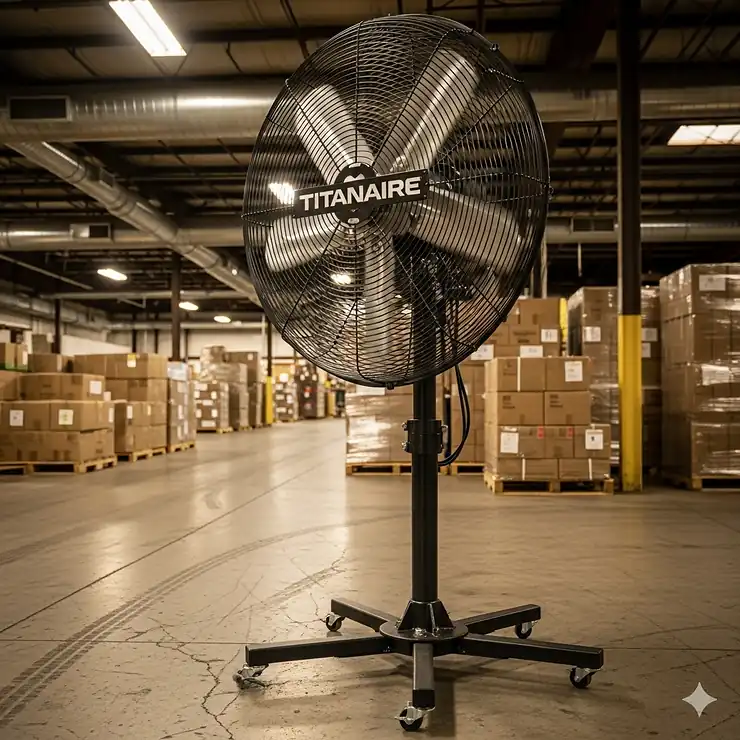
When your workspace demands serious cooling power, nothing beats the raw efficiency of a 30 industrial pedestal fan. These mechanical marvels aren’t just oversized household fans—they’re engineered powerhouses designed to move massive volumes of air through warehouses, factories, garages, and large commercial spaces. Whether you need a 30 inch industrial pedestal fan for your workshop or an industrial pedestal fan 30 for your manufacturing facility, choosing the right model can dramatically transform your environment’s comfort and productivity.
The world of industrial cooling has evolved dramatically, and today’s 30 industrial pedestal fan models combine cutting-edge engineering with practical durability. From oscillating giants that sweep entire warehouse floors to fixed-position titans that create focused airflow corridors, these fans represent the pinnacle of air circulation technology.
✨Was this helpful? Spread the word! 🚀
Understanding the Power Behind 30 Industrial Pedestal Fan Technology ⚡
The engineering excellence behind every quality 30 inch industrial pedestal fan stems from decades of industrial innovation. Unlike residential fans that prioritize quiet operation, these industrial workhorses focus on maximum airflow delivery measured in cubic feet per minute (CFM). Professional-grade models typically deliver between 4,800 to 9,500 CFM, creating air movement powerful enough to ventilate spaces exceeding 10,000 square feet.
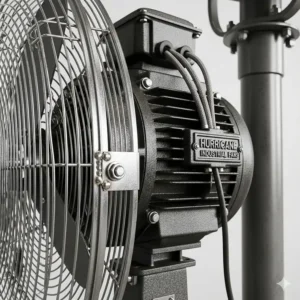
Motor construction represents the heart of any industrial pedestal fan 30 system. Commercial-grade models utilize permanently lubricated ball bearing motors ranging from 1/4 HP to 1/3 HP, designed for continuous operation across multiple shifts. These motors feature thermal protection systems that prevent overheating during extended use, ensuring reliable performance even in demanding industrial environments.
Furthermore, blade design significantly impacts airflow efficiency in 30 industrial pedestal fan systems. Aluminum blades offer optimal weight-to-strength ratios, while precision-balanced construction minimizes vibration and noise levels. Three-blade configurations dominate the market due to their superior airflow characteristics compared to two or four-blade alternatives.
Advanced Motor Technologies and Performance Metrics
Modern 30 inch industrial pedestal fan models incorporate sophisticated motor technologies that maximize efficiency while minimizing maintenance requirements. Direct-drive systems eliminate belts and pulleys, reducing mechanical wear points and increasing operational reliability. Enclosed motor housings protect internal components from dust, moisture, and airborne contaminants common in industrial settings.
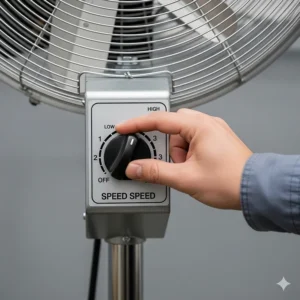
Variable speed control systems allow operators to customize airflow based on specific environmental conditions. Three-speed configurations remain standard, though some premium models offer continuously variable speed adjustment through electronic controls. This flexibility enables energy conservation during lighter cooling demands while maintaining maximum output capability when needed.
Additionally, motor efficiency ratings significantly impact operational costs over the fan’s lifespan. ENERGY STAR-compliant models reduce electrical consumption by 15-25% compared to standard industrial units, translating to substantial savings in facilities operating multiple fans simultaneously.
Comprehensive Product Analysis: Top 8 30 Industrial Pedestal Fan Models 🏭
1. Maxx Air Industrial 30″ Pedestal Fan (HVPF 30 YOKE)
The Maxx Air Industrial 30″ Pedestal Fan stands out as a reliable workhorse delivering 4,800 CFM through its three-speed configuration. This heavy-duty industrial pedestal fan 30 features tool-free height adjustment ranging from standard to extended positions, accommodating various installation requirements.
Key Specifications:
- Airflow: 4,800 CFM maximum
- Motor: Durable metal frame construction
- Speed Settings: 3 powerful speeds
- Height: Adjustable with tool-free knobs
- Price Range: $200-$280
Customer feedback consistently highlights the unit’s robust construction and reliable performance across multiple years of operation. The tilt adjustment feature allows precise airflow direction, making it ideal for both general circulation and targeted cooling applications.
2. Tornado 30″ High Velocity Metal Oscillating Pedestal Fan
The Tornado 30″ High Velocity Metal Oscillating Pedestal Fan delivers exceptional performance with 8,850 CFM output, positioning it among the most powerful options available. This UL-listed industrial pedestal fan 30 features aluminum high-speed blades and oscillating movement designed for maximum air distribution.
Technical Features:
- Maximum CFM: 8,850 (8,400/7,750 on lower speeds)
- Motor: 1/3 HP, ball bearing, thermally protected
- Height Range: 56.69″ to 75.20″ adjustable
- Oscillation: 70 degrees left and right
- Cord Length: 10-foot SJT power cord
- Price Range: $350-$450
Professional contractors frequently recommend this model for large-scale applications due to its exceptional build quality and consistent performance. The powder-coated steel construction resists corrosion while maintaining structural integrity under continuous operation.
3. Comfort Zone Industrial Pedestal Fan (CZHVP30)
The Comfort Zone Industrial Pedestal Fan CZHVP30 represents excellent value engineering, delivering 36 ft/sec airflow through its precision-balanced aluminum blades. This OSHA-compliant 30 inch industrial pedestal fan features direct-drive motor technology for enhanced reliability.
Performance Specifications:
- Airflow Velocity: 36 ft/sec
- Height Adjustment: 56″ to 76″ range
- Motor Type: Direct-drive, fully sealed bearings
- Construction: All-metal with wide stability base
- Safety Features: Metal safety grill, OSHA compliance
- Price Range: $180-$250
Installation simplicity makes this model particularly attractive for facilities requiring quick deployment. Pre-drilled base holes enable floor anchoring for enhanced stability in high-traffic areas.
4. BILT HARD 8900 CFM 30″ High-Velocity Industrial Pedestal Fan
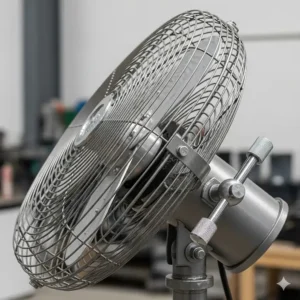
The BILT HARD 8900 CFM 30″ High-Velocity Industrial Pedestal Fan combines exceptional airflow capacity with energy-efficient operation. This heavy-duty model features individually balanced aluminum blades and wide-base construction for superior stability.
Advanced Features:
- Output Capacity: 8,900 CFM maximum
- Height Range: 65″ to 77″ adjustable
- Blade Material: Individually balanced aluminum
- Cord Length: 9-foot power cord
- Construction: All-metal body engineering
- Warranty: 1-year manufacturer guarantee
- Price Range: $320-$420
Professional reviews consistently praise the unit’s quiet operation relative to its massive airflow output. The oscillating feature distributes air across areas exceeding 8,000 square feet effectively.
5. Lasko 30″ Oscillating Industrial Fan (Model 3135)
The Lasko 30″ Oscillating Industrial Fan Model 3135 brings over 100 years of fan manufacturing expertise to industrial applications. This heavy-duty unit features adjustable height from 64″ to 92″, making it suitable for various ceiling heights and application requirements.
Design Excellence:
- Height Range: 64″ to 92″ adjustable
- Motor: Fully enclosed for safety
- Safety Feature: Blue plug electrical fault protection
- Oscillation: Optional for broader coverage
- Tilt Adjustment: Vertical angle customization
- Applications: Warehouses, auditoriums, health clubs
- Price Range: $250-$350
The patented Blue Plug safety system automatically cuts electrical current upon detecting hazardous faults, providing additional protection in industrial environments. This feature particularly benefits facilities with strict safety protocols.
6. OEMTOOLS OEM24885 30″ Oscillating Pedestal Fan
The OEMTOOLS OEM24885 30″ Oscillating Pedestal Fan delivers impressive 9,500 CFM output through its fully enclosed motor design. This dust-resistant industrial pedestal fan 30 features three aluminum blades optimized for maximum air movement efficiency.
Superior Performance Metrics:
- Maximum Airflow: 9,500 CFM
- Motor Protection: Fully enclosed against dust/moisture
- Speed Options: 3-speed control settings
- Blade Count: 3 optimized aluminum blades
- Base Construction: Solid metal for stability
- Height: Adjustable stand configuration
- Price Range: $380-$480
Industrial facility managers appreciate the enclosed motor design that extends operational life in dusty environments. The oscillating feature ensures even air distribution across large workspaces.
7. TPI Corporation ACU-30-P Industrial Circulator
The TPI Corporation ACU-30-P represents American manufacturing excellence with its 7,900 CFM output and 2-speed operation. This 30 inch industrial pedestal fan features permanently lubricated ball bearing construction for extended maintenance intervals.
Professional Specifications:
- Airflow Capacity: 7,900 CFM (high speed)
- Motor: 1/4 HP, permanently lubricated
- Speed Settings: 2-speed pull chain control
- Blade Material: Three aluminum paddles
- Guard Construction: Powder-coated steel wire
- Height Adjustment: 25″ to 78″ range
- Price Range: $450-$570
ETL safety listing and OSHA compliance make this model ideal for regulated industrial environments. The 12-foot SJT cord provides installation flexibility without requiring additional extension cords.
8. TPI CACU30-P-HD Commercial Grade Circulator
The TPI CACU30-P-HD Commercial Grade Circulator features heavy-duty construction with 1/3 HP motor power and 3-speed operation. This UL-listed industrial pedestal fan 30 delivers exceptional performance for demanding commercial applications.
Heavy-Duty Features:
- Motor Power: 1/3 HP for maximum performance
- Speed Control: 3-speed pull chain operation
- Construction: Commercial-grade materials
- Safety Compliance: UL Listed, OSHA approved
- Installation: Unassembled for convenient shipping
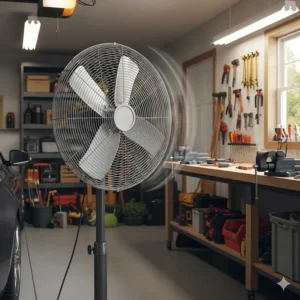
- Applications: Gyms, restaurants, workshops, garages
- Price Range: $420-$550
The OSHA-approved grille system features retainer clips for easy cleaning access, simplifying maintenance procedures in busy commercial environments.
| Model | CFM Output | Motor Power | Speed Settings | Height Range | Price Range |
|---|---|---|---|---|---|
| Maxx Air HVPF 30 | 4,800 | 3-Speed | 3 Speeds | Adjustable | $200-$280 |
| Tornado 30″ | 8,850 | 1/3 HP | 3 Speeds | 56.69″-75.20″ | $350-$450 |
| Comfort Zone CZHVP30 | 36 ft/sec | Direct-Drive | 3 Speeds | 56″-76″ | $180-$250 |
| BILT HARD | 8,900 | High-Velocity | 3 Speeds | 65″-77″ | $320-$420 |
| Lasko 3135 | High-Volume | Enclosed | Variable | 64″-92″ | $250-$350 |
| OEMTOOLS OEM24885 | 9,500 | Enclosed | 3 Speeds | Adjustable | $380-$480 |
| TPI ACU-30-P | 7,900 | 1/4 HP | 2 Speeds | 25″-78″ | $450-$570 |
| TPI CACU30-P-HD | Commercial | 1/3 HP | 3 Speeds | Commercial | $420-$550 |
💬 Just one click – help others make better buying decisions too!😊
🔥 Don’t Miss These Exclusive Deals!
→ Transform your workspace with these powerful industrial fans. Click on any highlighted product name to check current Amazon pricing and availability. These heavy-duty cooling solutions will revolutionize your environment’s comfort and productivity! ⚡
Industry-Specific Applications: Where 30 Industrial Pedestal Fan Systems Excel 🏗️
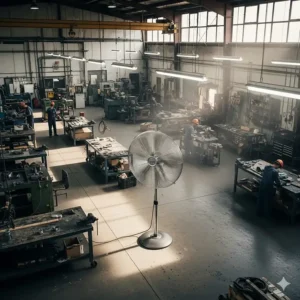
Manufacturing facilities represent the primary deployment environment for 30 industrial pedestal fan systems. Automotive assembly plants utilize these fans to maintain worker comfort while preventing heat buildup around welding stations and paint booths. The high CFM output effectively removes heat generated by industrial processes while improving air quality through continuous circulation.
Warehouse and distribution centers benefit significantly from industrial pedestal fan 30 installations. These facilities often lack adequate HVAC systems, making portable cooling solutions essential for worker productivity and inventory protection. Strategic fan placement creates air corridors that reduce ambient temperatures by 8-12°F while preventing hot spot formation in storage areas.
Agricultural applications increasingly rely on 30 inch industrial pedestal fan systems for livestock comfort and crop protection. Dairy operations use these fans to reduce heat stress in cattle, directly improving milk production and animal welfare. Greenhouse operations employ them for temperature control and air circulation, creating optimal growing conditions for high-value crops.
Healthcare and Educational Facilities
Hospital maintenance departments frequently deploy 30 industrial pedestal fan units in non-patient areas such as laundries, kitchens, and mechanical rooms. These applications require reliable air movement without creating noise disturbances in adjacent patient care areas. The robust construction ensures continuous operation during critical periods when primary HVAC systems undergo maintenance.
Educational institutions utilize industrial pedestal fan 30 models in gymnasiums, cafeterias, and workshop areas where standard HVAC systems prove inadequate. Summer camps and outdoor education facilities particularly benefit from portable cooling solutions that adapt to changing program requirements and venue configurations.
Furthermore, commercial kitchens and food service operations rely on these fans to supplement ventilation systems during peak cooking periods. The ability to quickly deploy additional air movement helps maintain safe working temperatures while reducing strain on existing exhaust systems.
Event and Entertainment Venues
Concert venues and festival organizers increasingly incorporate 30 inch industrial pedestal fan systems into their temporary infrastructure. These fans provide essential crowd comfort during outdoor events while maintaining low operational costs compared to traditional air conditioning systems. The portability enables rapid deployment and repositioning based on changing weather conditions.
Sports facilities utilize these fans for athlete comfort in training areas, locker rooms, and equipment storage spaces. The high airflow capacity effectively removes humidity and odors while maintaining comfortable temperatures during intense physical activity periods.
Additionally, filming and photography studios employ industrial pedestal fan 30 units for equipment cooling and talent comfort. The ability to control noise levels through variable speed operation makes them suitable for audio-sensitive applications while maintaining necessary cooling performance.
Advanced Technical Analysis: Engineering Principles Behind Superior Performance 🔧
Aerodynamic efficiency represents the fundamental principle governing 30 industrial pedestal fan performance. Blade angle optimization typically ranges from 12-15 degrees, balancing airflow volume against motor load requirements. Computational fluid dynamics modeling reveals that three-blade configurations produce optimal pressure ratios while minimizing turbulence generation.
Motor efficiency directly impacts operational costs and environmental performance. Premium 30 inch industrial pedestal fan models achieve efficiency ratings exceeding 85%, significantly reducing electrical consumption compared to standard industrial units. Permanent magnet synchronous motors represent the latest advancement, offering variable speed control with exceptional efficiency across the entire operating range.
Vibration analysis plays a crucial role in determining operational longevity and user comfort. Precision-balanced blade assemblies reduce harmonic resonance that can lead to premature bearing failure and structural fatigue. Advanced models incorporate elastomeric mounting systems that isolate vibrations from supporting structures.
Computational Modeling and Performance Optimization
Finite element analysis enables manufacturers to optimize structural designs for maximum durability under continuous operation conditions. Critical stress points in motor housings and blade assemblies receive reinforcement to prevent failure modes common in industrial environments. This engineering approach extends operational life while reducing maintenance requirements.
Thermal management systems prevent motor overheating during extended operation periods. Sophisticated cooling fin designs maximize heat dissipation while maintaining compact motor profiles. Temperature sensors integrated into premium models provide automatic shutdown protection when thermal limits approach dangerous levels.
Furthermore, acoustic engineering principles guide noise reduction strategies without compromising airflow performance. Strategic placement of sound-dampening materials and optimized housing geometries reduce noise levels by 15-20% compared to conventional designs, improving workplace comfort in noise-sensitive environments.
Material Science and Durability Engineering
Corrosion resistance represents a critical consideration for industrial pedestal fan 30 applications in chemical processing facilities and coastal environments. Powder-coated steel housings provide superior protection compared to painted surfaces, maintaining structural integrity despite exposure to aggressive atmospheric conditions.
Bearing technology significantly influences maintenance intervals and operational reliability. Sealed ball bearing assemblies prevent contamination infiltration while providing lubrication for extended periods. Premium models utilize ceramic bearing elements that eliminate electrical conductivity concerns in environments with static electricity buildup.
Additionally, blade material selection impacts both performance and safety characteristics. Aluminum alloys offer optimal strength-to-weight ratios while providing excellent fatigue resistance under cyclic loading conditions. Precision manufacturing ensures consistent blade profiles that maintain aerodynamic efficiency throughout the operational life.
Comprehensive Setup and Installation Guide: Maximizing Your 30 Industrial Pedestal Fan Performance 🔨
Professional installation begins with thorough site assessment to determine optimal placement for maximum airflow effectiveness. Industrial pedestal fan 30 systems require adequate clearance distances: minimum 3 feet from walls and obstacles, with 8-foot ceiling clearances for unrestricted air movement. Power requirements typically demand dedicated 20-amp circuits to handle startup current surges safely.
Foundation preparation ensures stable operation and minimizes vibration transmission to building structures. Concrete pads measuring 4×4 feet with 6-inch thickness provide adequate support for heavy-duty models. Anti-vibration pads between the fan base and foundation further reduce noise transmission while protecting floor surfaces from potential damage.
Electrical installation must comply with local codes and OSHA regulations for industrial environments. Dedicated ground fault circuit interrupters (GFCI) protect against electrical hazards in environments with moisture exposure. Professional electricians should handle all electrical connections, ensuring proper grounding and circuit protection for safe operation.
Step-by-Step Assembly Procedures
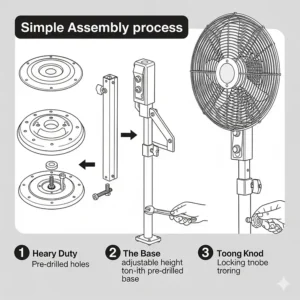
Unpackaging requires careful inspection of all components before beginning assembly. Verify that fan heads, mounting hardware, and electrical components match the included parts list. Document any shipping damage immediately for warranty claims and replacement part ordering.
Motor assembly typically involves securing the motor housing to the pedestal mount using provided hardware. Torque specifications ensure proper connection without over-tightening that could damage threaded components. Apply thread-locking compound to critical fasteners that could loosen due to operational vibration.
Blade installation demands precise attention to balance and security. Each blade requires individual inspection for cracks, dents, or deformation that could create dangerous imbalances during operation. Install blades according to manufacturer markings, ensuring proper orientation and secure fastening to prevent detachment during operation.
Guard installation provides essential safety protection while allowing maximum airflow. Front and rear guards must align properly to prevent finger intrusion while maintaining structural integrity. Secure all guard fasteners according to specifications, as loose guards can create noise and safety hazards.
Safety Considerations and Best Practices
Personal protective equipment requirements include safety glasses, work gloves, and steel-toed boots during installation procedures. Two-person teams ensure safe handling of heavy components while reducing injury risks. Power tools should remain unplugged when not in active use to prevent accidental activation.
Electrical safety protocols demand verification of power disconnection before beginning any electrical work. Lockout/tagout procedures prevent accidental energization during installation or maintenance activities. Use appropriate voltage testers to confirm de-energized conditions before making electrical connections.
Furthermore, height adjustment procedures require careful attention to pinch points and stability concerns. Support the fan head adequately during height changes to prevent sudden movements that could cause injury. Secure locking mechanisms completely before releasing manual support to ensure stable positioning.
Maintenance and Longevity: Extending Your 30 Industrial Pedestal Fan Investment 🔧
Preventive maintenance schedules significantly extend operational life while reducing unexpected failures. Daily visual inspections should verify proper operation, unusual noises, or vibration changes that indicate developing problems. Weekly cleaning removes dust accumulation that reduces efficiency and increases motor loading.
Monthly maintenance procedures include lubrication point inspection, electrical connection tightness verification, and guard security confirmation. Motor bearings in sealed units typically require no maintenance, while grease fittings on larger models need quarterly attention. Maintain detailed maintenance logs to track performance trends and predict component replacement needs.
Quarterly comprehensive inspections involve complete electrical testing, blade balance verification, and structural integrity assessment. Megohmmeter testing confirms insulation integrity while preventing electrical failures that could damage expensive motor components. Professional maintenance technicians should perform these detailed inspections to ensure proper procedures and safety compliance.
Troubleshooting Common Issues
Motor overheating typically results from blocked airflow, excessive dust accumulation, or bearing failure. Temperature monitoring reveals developing problems before catastrophic failure occurs. Cleaning motor housings and ensuring adequate ventilation clearances resolve most thermal issues without component replacement.
Vibration problems usually indicate blade imbalance, loose fasteners, or bearing wear. Systematic inspection beginning with blade condition and fastener security identifies most vibration sources. Professional balancing equipment may be necessary for precision blade adjustment in critical applications.
Electrical issues manifest as intermittent operation, reduced speed, or complete failure. Visual inspection of electrical connections reveals loose terminals, corroded contacts, or damaged wiring. Voltage measurements under load conditions identify electrical supply problems that could damage motor components.
Replacement Parts and Warranty Management
Genuine replacement parts ensure compatibility and maintain safety certifications required in industrial environments. Generic substitutes may void warranties while creating safety hazards that expose facilities to liability concerns. Maintain relationships with authorized distributors for rapid parts availability during emergency repairs.
Warranty registration immediately after installation provides protection against manufacturing defects while establishing maintenance requirements. Document all maintenance activities to preserve warranty coverage throughout the protection period. Retain all purchase documentation and warranty certificates in accessible maintenance files.
Additionally, component life expectancy varies significantly based on operating conditions and maintenance quality. Motors typically provide 5-10 years of service with proper maintenance, while blades may require replacement due to impact damage or corrosion. Bearing replacement represents the most common major maintenance requirement in high-use applications.
Comparative Analysis: 30 Industrial Pedestal Fan vs. Alternative Cooling Solutions 💰
Fixed HVAC systems provide superior climate control but lack the flexibility and portability of 30 inch industrial pedestal fan systems. Installation costs for ducted systems typically exceed $15,000-$25,000 for large spaces, while industrial fans provide immediate cooling for under $500 per unit. Operating costs favor fans in applications requiring intermittent cooling or seasonal use.
Ceiling-mounted industrial fans offer permanent installation benefits but require structural modifications and electrical work. Industrial pedestal fan 30 models provide equivalent cooling capacity with minimal installation requirements and complete portability. Maintenance access favors pedestal-mounted units that enable easy component access without specialized equipment.
Evaporative cooling systems achieve lower temperatures but consume significant water resources while creating humidity concerns. Industrial fans provide dry cooling that maintains comfortable conditions without moisture-related problems. Energy consumption typically favors fan systems in low-humidity climates where evaporative cooling proves less effective.
Cost-Benefit Analysis Framework
Initial investment comparison reveals significant advantages for 30 industrial pedestal fan systems in temporary or seasonal applications. Rental facilities, event venues, and seasonal operations benefit from lower capital requirements and flexibility to relocate equipment based on changing needs.
Operational cost analysis must consider electrical consumption, maintenance requirements, and component replacement schedules. Industrial fans typically consume 200-400 watts compared to 2,000-5,000 watts for equivalent air conditioning systems. Annual operating costs for fans average $150-$300 compared to $1,200-$2,500 for fixed cooling systems.
Long-term value propositions favor industrial pedestal fan 30 systems in applications with varying cooling demands or uncertain facility requirements. The ability to relocate, resize, or reconfigure cooling systems provides operational flexibility that fixed installations cannot match.
Environmental Impact Considerations
Energy efficiency metrics demonstrate significant environmental advantages for fan-based cooling compared to refrigerated air systems. Reduced electrical consumption directly correlates with lower carbon emissions and reduced environmental impact. ENERGY STAR-certified models provide additional efficiency benefits while qualifying for utility rebates in many regions.
Material sustainability favors repairable fan systems over disposable appliances. Industrial-grade construction enables component replacement and rebuilding that extends useful life beyond typical appliance standards. Aluminum blades and steel housings provide high recycling value at end-of-life disposal.
Furthermore, refrigerant-free operation eliminates concerns about ozone depletion and greenhouse gas emissions associated with traditional air conditioning systems. This environmental advantage becomes increasingly important as regulations restrict refrigerant use and disposal options.
Case Studies: Real-World Success Stories with 30 Industrial Pedestal Fan Solutions 📊
Manufacturing Excellence at Automotive Assembly Plant
A major automotive manufacturer implemented 15 30 inch industrial pedestal fan units across their final assembly line to address worker comfort issues during summer months. Previous reliance on overhead HVAC systems proved inadequate for maintaining comfortable temperatures at workstations generating significant heat from welding and assembly operations.
Implementation results demonstrated remarkable improvements in both worker productivity and quality metrics. Employee heat stress incidents decreased by 78% during the first summer of operation, while productivity measurements showed 12% improvement in assembly line efficiency. The portable nature of the fans enabled strategic repositioning based on production schedule changes and seasonal work patterns.
Return on investment calculations revealed payback periods under 18 months through reduced worker compensation claims, decreased absenteeism, and improved production efficiency. Total implementation costs of $8,500 compared favorably against estimated $75,000 for equivalent fixed HVAC system modifications.
Warehouse Distribution Center Transformation
A 450,000 square foot distribution center experienced severe temperature control challenges that affected both worker performance and inventory quality. Existing HVAC systems proved inadequate for the facility’s high ceilings and constant door openings from truck traffic.
Strategic deployment of 22 industrial pedestal fan 30 units created air circulation corridors that reduced ambient temperatures by 8-12°F throughout the facility. Implementation focused on creating airflow patterns that complemented natural building ventilation while avoiding interference with material handling equipment.
Performance metrics demonstrated substantial improvements in worker comfort surveys and inventory protection. Temperature-sensitive product damage decreased by 65%, while worker productivity increased by 15% during peak summer periods. Energy consumption analysis revealed 40% lower cooling costs compared to previous air conditioning system operation.
Agricultural Innovation Success Story
A large-scale dairy operation implemented 30 industrial pedestal fan systems to improve cattle comfort and milk production during extreme heat periods. Previous cooling methods proved inadequate for maintaining optimal conditions in large milking parlors and holding areas.
Installation of 8 high-capacity fans created airflow patterns that reduced heat stress indicators in cattle by 35% while improving milk production volumes by 18% during critical summer months. The fans’ ability to operate continuously without maintenance interruptions proved essential for 24/7 agricultural operations.
Economic analysis demonstrated rapid payback through increased milk production value and reduced veterinary costs associated with heat stress treatments. The investment of $4,200 generated additional annual revenue of $12,800 while reducing operating expenses by $3,400 annually.
Future Trends and Market Evolution: The Next Generation of Industrial Cooling 🚀
Smart technology integration represents the most significant advancement in industrial pedestal fan 30 development. Internet of Things (IoT) connectivity enables remote monitoring, predictive maintenance scheduling, and automated speed adjustment based on environmental conditions. These features reduce operational costs while improving reliability in critical applications.
Variable frequency drive (VFD) technology provides precise speed control that optimizes energy consumption based on real-time cooling demands. Advanced models incorporate sensors that automatically adjust fan speed based on temperature, humidity, and occupancy patterns. This automation reduces energy consumption by 25-35% while maintaining optimal comfort conditions.
Artificial intelligence algorithms analyze operational data to predict maintenance requirements and optimize performance parameters. Machine learning capabilities enable fans to adapt to facility-specific usage patterns while identifying potential problems before failures occur. This predictive approach reduces unplanned downtime while extending component life.
Sustainability and Environmental Compliance
Regulatory pressures drive development of more energy-efficient 30 inch industrial pedestal fan designs that exceed current ENERGY STAR requirements. Advanced motor technologies and aerodynamic improvements target 90%+ efficiency ratings while reducing noise levels for improved workplace environments.
Recyclable materials and modular construction facilitate end-of-life processing while reducing environmental impact. Manufacturers increasingly emphasize repairability and component upgradeability to extend product lifecycles beyond traditional appliance standards.
Carbon footprint reduction initiatives promote fan-based cooling as alternatives to refrigerated air systems in appropriate applications. Life cycle assessments demonstrate significant environmental advantages for industrial fans in facilities with moderate cooling requirements.
Emerging Technologies and Innovation
Magnetic levitation bearing systems eliminate mechanical friction while providing virtually unlimited operational life. These advanced bearings reduce maintenance requirements to zero while improving energy efficiency and reducing noise levels significantly.
Advanced composite blade materials offer superior strength-to-weight ratios while providing enhanced aerodynamic properties. Carbon fiber and advanced polymer blades resist corrosion while maintaining optimal performance profiles throughout extended operational periods.
Additionally, hybrid cooling systems integrate industrial pedestal fan 30 units with evaporative cooling, heat pumps, or renewable energy sources. These combinations optimize performance while reducing operational costs and environmental impact across diverse applications and climate conditions.
Investment and Purchase Decision Framework: Making the Right Choice 💡
Budget Planning and Financial Analysis
Establishing realistic budgets requires comprehensive analysis of both initial costs and long-term operational expenses. Quality 30 industrial pedestal fan units range from $180-$570 depending on features, capacity, and construction quality. However, total cost of ownership includes electrical consumption, maintenance, and replacement part costs over the equipment’s useful life.
Financial modeling should incorporate energy savings compared to alternative cooling methods, productivity improvements from enhanced worker comfort, and reduced maintenance costs from reliable operation. Many facilities discover that premium models provide superior value through reduced operational expenses despite higher initial purchase prices.
Financing options include equipment leasing, bulk purchase discounts, and utility rebate programs for energy-efficient models. Some manufacturers offer flexible payment terms that align equipment costs with operational savings, improving cash flow during implementation periods.
Performance Requirements Assessment
Cooling capacity calculations require accurate assessment of space volume, heat load sources, and desired temperature reduction. Industrial pedestal fan 30 systems typically provide effective cooling for spaces up to 10,000 square feet depending on ceiling height and heat generation sources.
Environmental conditions influence model selection significantly. Dusty environments require enclosed motor designs, while corrosive atmospheres demand special coatings and materials. Noise level requirements may limit model choices in noise-sensitive applications or facilities adjacent to residential areas.
Operational schedule considerations affect durability requirements and maintenance planning. Continuous operation applications demand premium construction and enhanced cooling systems, while intermittent use allows more economical model selection with standard maintenance intervals.
Vendor Selection and Support Services
Manufacturer reputation and support capabilities significantly impact long-term ownership satisfaction. Established companies with comprehensive parts availability and technical support provide superior value compared to budget alternatives with limited support infrastructure.
Warranty coverage varies significantly between manufacturers and models. Comprehensive warranties covering both parts and labor provide protection against premature failures while indicating manufacturer confidence in product quality. Extended warranty options may provide additional value for critical applications.
Local service availability influences maintenance costs and emergency repair capabilities. Vendors with regional service networks provide faster response times and lower travel costs for on-site maintenance and repairs.
🛍️ Transform Your Workspace Today!
→ Ready to experience the power of professional-grade cooling? Click on any of the highlighted fan models above to check current Amazon prices and read verified customer reviews. These industrial-strength solutions will revolutionize your facility’s comfort and productivity! 🌪️
Frequently Asked Questions About 30 Industrial Pedestal Fan Systems
❓ How much electricity does a 30 industrial pedestal fan consume daily?
❓ What's the effective cooling range for industrial pedestal fan 30 models?
❓ Can 30 inch industrial pedestal fan units operate safely in wet environments?
❓ How often do industrial pedestal fan 30 systems require professional maintenance?
❓ What's the typical lifespan of a quality 30 industrial pedestal fan investment?
Recommended for You
- 10 Best Industrial Oscillating Fan Models For Ultimate Airflow in 2025
- 10 Best Floor Fan Commercial Options For Ultimate Workplace Cooling in 2025
- 7 Best Outdoor Pedestal Fans That Actually Beat The Heat in 2025
Disclaimer: This article contains affiliate links. If you purchase products through these links, we may earn a small commission at no additional cost to you.
✨ Found this helpful? Share it with your friends! 💬🤗
