
In This Article
When the summer heat becomes unbearable in large spaces, finding the right cooling solution makes all the difference between comfort and suffering. If you’re dealing with warehouses, workshops, or spacious home areas, a 30 inch pedestal fan delivers the powerful airflow you need to create a comfortable environment. However, choosing the perfect fan requires understanding the intricate details of airflow capacity, motor efficiency, and safety features that set premium models apart from basic alternatives.
✨Was this helpful? Spread the word! 🚀
The market for large industrial fans has evolved significantly, with manufacturers now offering sophisticated features like variable speed controls, oscillation capabilities, and energy-efficient motors. Moreover, understanding CFM ratings, OSHA compliance requirements, and installation considerations ensures you make an informed decision that delivers long-term value and performance.
Understanding 30 Inch Pedestal Fan Technology
Core Engineering Principles
The engineering behind a 30 inch pedestal fan involves sophisticated aerodynamic principles that maximize air movement while minimizing energy consumption. These fans typically feature three-blade aluminum propellers designed with precision-balanced engineering to reduce vibration and noise levels while delivering exceptional airflow capacity. Furthermore, the substantial 30-inch diameter creates a larger swept area compared to smaller fans, allowing for more efficient air displacement across expansive spaces.
Most industrial-grade models incorporate direct-drive motors that connect directly to the fan blades without belts or couplings. This design approach reduces mechanical wear points and increases the overall lifespan of the unit. Additionally, the motor housing typically features sealed ball bearings that protect internal components from dust and moisture infiltration.
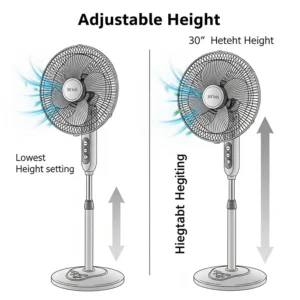
The pedestal base design ensures stability while providing height adjustability to direct airflow precisely where needed. Many models offer adjustment ranges from 56 inches to 77 inches, allowing users to customize airflow patterns for specific applications. The oscillation mechanism, when present, typically provides 70-80 degrees of left-right movement for broader coverage.
Airflow Dynamics and CFM Performance
Cubic feet per minute (CFM) represents the primary measurement for evaluating fan performance, with 30 inch pedestal fans typically delivering between 4,800 to 9,500 CFM depending on motor power and blade design. However, understanding how these numbers translate to real-world performance requires considering factors like static pressure, air density, and environmental conditions.
The relationship between fan speed and airflow follows established fan laws, where doubling the speed increases airflow proportionally but requires eight times the power. This principle explains why variable speed controls prove essential for optimizing energy efficiency while maintaining adequate cooling performance.
Advanced models incorporate computational fluid dynamics (CFD) in their blade design to minimize turbulence and maximize smooth airflow. The blade angle, twist, and tip design all contribute to overall efficiency, with some manufacturers achieving 80% motor efficiency ratings through sophisticated engineering.
Top 7 Real 30 Inch Pedestal Fan Models Available Now
Premium Industrial Options
The Maxx Air Industrial 30″ Pedestal Fan (HVPF 30 YOKE) delivers exceptional performance for demanding industrial applications. With 4,800 CFM on high speed and three powerful speed settings, this fan features a durable metal frame with individually balanced aluminum blades. The unit offers tool-free height adjustment and includes a pre-assembled fan head for quick setup. Price range: $180-220.
For maximum airflow capacity, the iLiving ILG8P30-72 Commercial Pedestal Floor Fan provides an impressive 7,261 CFM output with UL and OSHA compliance certification. This model features heavy-duty steel housing with a three-blade aluminum propeller and comes with a 9-foot cord for extended reach. The enclosed motor design protects against dust and moisture. Price range: $250-300.
The Comfort Zone Industrial Pedestal Fan (CZHVP30) offers adjustable height from 56″ to 76″ with 36 ft/sec airflow velocity. This OSHA-compliant model features a direct-drive motor with sealed bearings and includes pre-drilled base holes for permanent anchoring. The pull-chain speed control provides two speed options for versatile operation. Price range: $160-200.
High-Performance Commercial Models
The BILT HARD 8900 CFM 30″ High-Velocity Industrial Pedestal Fan delivers three speed settings (6900/8000/8900 CFM) with height adjustment from 65″ to 77″. This oscillating model features heavy-duty metal construction with individually balanced aluminum blades and includes a 9-foot power cord. The unit comes with a one-year warranty and is ideal for commercial applications. Price range: $200-250.
The OEMTOOLS OEM24885 30″ Oscillating Pedestal Fan provides maximum airflow of 9,500 CFM with a fully enclosed motor for dust and moisture protection. This three-speed model features 80-degree oscillation and height adjustability for precise airflow control. The aluminum blades and metal base ensure durability in tough industrial environments. Price range: $280-320.
Professional Grade Solutions
The Global Industrial Oscillating Pedestal Fan offers 8,775 CFM with a rugged 1/3 HP motor and 18-foot power cord. This model features 80-degree oscillation, precision-balanced aluminum blades, and a heavy-duty pedestal base for stability. The fan meets OSHA requirements and includes tool-free height adjustment. Price range: $300-350.
The Tornado 30″ High Velocity Metal Oscillating Pedestal Fan delivers 8,850 CFM with UL Safety Listed certification and OSHA compliance. This model features a thermally protected direct drive motor with ball bearings and includes a 10-foot SJT power cord. The unit offers 70-degree oscillation and 25-degree vertical tilting capability. Price range: $320-370.
Comprehensive Comparison Tables
Airflow and Performance Specifications
| Model | CFM Rating | Motor Power | Speed Settings | Oscillation | Height Range |
|---|---|---|---|---|---|
| Maxx Air HVPF 30 YOKE | 4,800 | 1/3 HP | 3 Speed | No | 56-75″ |
| iLiving ILG8P30-72 | 7,261 | 1/3 HP | 3 Speed | No | Fixed |
| Comfort Zone CZHVP30 | 36 ft/sec | Direct Drive | 2 Speed | No | 56-76″ |
| BILT HARD 8900 | 8,900 | High Output | 3 Speed | Yes | 65-77″ |
| OEMTOOLS OEM24885 | 9,500 | 1/3 HP | 3 Speed | Yes | Adjustable |
| Global Industrial | 8,775 | 1/3 HP | 3 Speed | Yes | Tool-free |
| Tornado 30″ | 8,850 | 1/3 HP | 3 Speed | Yes | 56.69-75.20″ |
Safety and Compliance Features
| Model | OSHA Compliant | UL Listed | Guard Opening | Cord Length | Warranty |
|---|---|---|---|---|---|
| Maxx Air | Yes | Yes | 1/2″ | 6 ft | 1 Year |
| iLiving | Yes | Yes | 1/2″ | 9 ft | 1 Year |
| Comfort Zone | Yes | ETL Listed | 1/2″ | Standard | 1 Year |
| BILT HARD | Yes | Yes | 1/2″ | 9 ft | 1 Year |
| OEMTOOLS | Yes | Yes | 1/2″ | 6 ft | 1 Year |
| Global Industrial | Yes | Yes | 1/2″ | 18 ft | 1 Year |
| Tornado | Yes | UL507 | 1/2″ | 10 ft | 1 Year |
💬 Just one click – help others make better buying decisions too!😊
Don’t Miss These Exclusive Deals! 🛒⚡
Take your cooling setup to the next level with these carefully selected 30 inch pedestal fans. Click on any highlighted item to check current pricing and availability. These powerful units will help you create comfortable environments in large spaces!
Industry-Specific Applications and Use Cases
Manufacturing and Industrial Facilities
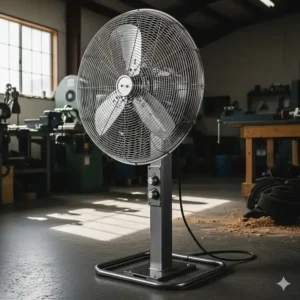
In manufacturing environments, 30 inch pedestal fans serve multiple critical functions beyond simple cooling. These units provide essential air circulation for heat dissipation around heavy machinery, help maintain consistent temperatures in production areas, and support worker comfort in high-temperature processes. Furthermore, the mobility of pedestal fans allows repositioning based on seasonal needs or changing production layouts.
Automotive repair shops particularly benefit from 30 oscillating pedestal fan installations because these units help evacuate fumes while providing directional cooling for technicians working under vehicle hoods. The ability to tilt and direct airflow makes these fans invaluable for spot cooling during welding or painting operations.
Steel fabrication facilities often deploy multiple 30 inch oscillating fans to create cross-ventilation patterns that help remove hot air generated by cutting and welding processes. The OSHA-compliant safety guards ensure worker protection while maintaining unrestricted airflow around dangerous equipment.
Warehousing operations utilize these fans for climate control in loading dock areas where temperature fluctuations occur frequently due to open bay doors. The high CFM ratings help maintain comfortable working conditions for personnel handling heavy lifting tasks throughout long shifts.
Commercial and Retail Applications
Large retail spaces like auto dealerships, furniture showrooms, and outdoor equipment stores benefit from the powerful air circulation provided by 30 inch pedestal fans. These environments often feature high ceilings and open floor plans where traditional HVAC systems struggle to maintain consistent temperatures throughout the space.
Restaurant kitchens and food service facilities use industrial pedestal fans to supplement exhaust systems and provide additional air movement around cooking areas. The ability to position fans strategically helps reduce heat buildup while maintaining food safety standards.
Gyms and fitness centers deploy 30 pedestal fans to enhance air circulation in weight training areas and group exercise studios. The adjustable height and oscillation features allow targeting specific workout zones where heat generation is highest.
Agricultural and Livestock Operations
Dairy barns and livestock facilities rely on 30 inch oscillating pedestal fans to maintain air quality and temperature control for animal comfort. These fans help reduce heat stress in cattle while promoting better milk production and overall animal health. The ability to withstand harsh agricultural environments makes industrial-grade models essential for these applications.
Greenhouse operations use pedestal fans for air circulation to prevent stagnant conditions that promote plant diseases. The gentle air movement helps strengthen plant stems while maintaining optimal growing conditions throughout the facility.
Hay storage and feed processing areas benefit from the dust-clearing capabilities of high-velocity fans, helping maintain air quality while reducing fire hazards associated with accumulated particulates.
Advanced Technical Analysis and Performance Metrics
Motor Technology and Efficiency Standards
Modern 30 inch pedestal fan motors have evolved significantly from traditional designs, with many incorporating permanent magnet technology for improved efficiency and reduced operating costs. The direct-drive configuration eliminates belt losses and reduces maintenance requirements, while sealed ball bearing systems provide extended operational life even in demanding industrial environments.
According to recent Department of Energy regulations, fan manufacturers must meet specific efficiency standards measured in CFM per watt. These regulations drive innovation in motor design and blade aerodynamics to achieve compliance while maintaining performance expectations.
The thermal protection systems in industrial fans prevent motor damage from overheating, automatically shutting down operation when temperatures exceed safe thresholds. Additionally, moisture resistance ratings ensure reliable operation in humid environments common in many industrial applications.
Variable frequency drives (VFDs) integrated into some models allow precise speed control while optimizing energy consumption. This technology enables matching fan output to actual cooling needs rather than operating at fixed speeds regardless of demand.
Aerodynamic Engineering and Blade Design
The science behind effective blade design involves complex computational fluid dynamics (CFD) modeling to optimize airflow patterns while minimizing noise generation. Modern 30 inch fans utilize airfoil-shaped blades with specific twist angles that maximize pressure differential across the blade surface.
Research conducted by the Air Movement and Control Association (AMCA) has established standardized testing procedures for measuring fan performance under controlled conditions. These AMCA 210 standards ensure published CFM ratings accurately reflect real-world performance capabilities.
The blade material selection significantly impacts both performance and durability. Aluminum blades offer excellent strength-to-weight ratios while resisting corrosion in challenging environments. The precision balancing process reduces vibration and extends bearing life while maintaining quiet operation.
Tip speed calculations determine the maximum safe operating RPM for specific blade diameters, with 30 inch fans typically operating between 800-1200 RPM depending on motor specifications and application requirements.
Sound Engineering and Noise Control
Industrial environments require careful consideration of noise levels to maintain OSHA workplace safety standards while providing adequate cooling performance. Modern 30 inch pedestal fans incorporate sound-dampening technologies that reduce operational noise without compromising airflow capacity.
The blade design significantly influences noise generation, with swept-back tips and optimized blade angles reducing the whistling and turbulence associated with high-speed operation. Additionally, motor mounting systems with vibration isolation help prevent mechanical noise transmission through the pedestal structure.
Typical sound levels for quality 30 inch pedestal fans range from 60-75 decibels at maximum speed, comparable to normal conversation levels and well within acceptable workplace limits for extended exposure.

Comprehensive Setup and Installation Guide
Site Preparation and Safety Considerations
Proper installation begins with thorough site assessment to ensure adequate clearance around the fan location. OSHA safety requirements mandate specific clearances from walkways and work areas to prevent accidental contact with rotating blades.
The installation surface must provide stable, level support capable of withstanding operational vibrations and wind loads. Concrete floors offer ideal mounting surfaces, while wooden structures may require reinforcement to prevent excessive movement during operation.
Electrical requirements typically include 115V single-phase power with adequate circuit protection sized according to motor specifications. Most 30 inch fans draw between 3-8 amps depending on motor size and speed settings.
Ground fault circuit interrupter (GFCI) protection may be required in certain environments, particularly those with moisture exposure or outdoor applications. Additionally, emergency disconnect switches should be easily accessible for safety compliance.
Assembly and Mounting Procedures
Most 30 inch pedestal fans arrive partially assembled, requiring connection of the pedestal base to the motor assembly and installation of safety guards. The assembly process typically requires 30-45 minutes using basic hand tools provided with the unit.
Critical assembly steps include proper torque specification for all fasteners, particularly those securing the fan blades to the motor shaft. Loose connections can cause dangerous blade separation during operation, creating serious safety hazards.
The height adjustment mechanism requires proper lubrication and testing to ensure smooth operation throughout the adjustment range. Additionally, oscillation controls need calibration to prevent binding or excessive wear during extended operation.
Guard installation represents a crucial safety step that must comply with OSHA standards requiring openings no larger than 1/2 inch. The guards must be securely fastened and inspected regularly for damage or loosening that could compromise protection.
Electrical Connections and Controls
Electrical connections should always be performed by qualified personnel familiar with local electrical codes and safety requirements. The motor terminal box typically provides clear connection diagrams for standard voltage configurations.
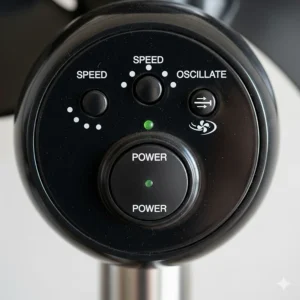
Speed control mechanisms vary by model, with some featuring simple pull-chain switches while others incorporate electronic variable speed controls. Understanding the control system operation ensures optimal performance and prevents damage from improper use.
Wiring requirements include proper conductor sizing based on motor amperage and circuit length. Voltage drop calculations become important for longer cord runs to prevent motor overheating and performance degradation.
Grounding requirements mandate proper connection to facility ground systems to prevent electrical shock hazards. The fan frame and motor housing must maintain continuity to the electrical ground for safety compliance.
Energy Efficiency and Operating Cost Analysis
Power Consumption Characteristics
Understanding the energy consumption patterns of 30 inch pedestal fans enables accurate operating cost calculations and helps justify investment decisions. Most models consume between 200-400 watts depending on speed settings and motor efficiency ratings.
According to energy efficiency studies, pedestal fans consume significantly less electricity than equivalent air conditioning systems while providing substantial cooling benefits through enhanced air circulation. A typical 30 inch fan operating 8 hours daily costs approximately $15-30 monthly in electricity charges at average utility rates.
Variable speed operation allows matching energy consumption to actual cooling needs, potentially reducing operating costs by 30-50% compared to fixed-speed operation. This flexibility proves particularly valuable in applications with fluctuating heat loads throughout the day.
The power factor characteristics of modern fan motors typically range from 0.85-0.95, indicating efficient power utilization with minimal reactive power consumption. This efficiency translates to lower demand charges for commercial customers with power factor penalties.
Lifecycle Cost Considerations
Total cost of ownership extends beyond initial purchase price to include energy consumption, maintenance requirements, and replacement costs over the fan’s operational life. Quality 30 inch pedestal fans typically provide 10-15 years of reliable service with proper maintenance.
Maintenance costs remain minimal for direct-drive models, primarily involving annual lubrication and periodic cleaning. Belt-driven alternatives require more frequent attention including belt replacement and pulley alignment, increasing long-term operating expenses.
Energy costs represent the largest component of lifecycle expenses, making motor efficiency a critical selection criterion. A 10% improvement in motor efficiency can reduce operating costs by $50-100 annually for continuously operated fans.
Depreciation schedules for tax purposes typically allow 7-year recovery periods for industrial equipment, making energy-efficient models financially attractive through reduced operational expenses and potential tax benefits.
Environmental Impact Assessment
The environmental benefits of 30 inch pedestal fans include reduced reliance on energy-intensive air conditioning systems and lower overall facility energy consumption. Studies indicate that strategic fan placement can reduce HVAC loads by 15-25% in many applications.
Carbon footprint calculations show pedestal fans producing significantly lower greenhouse gas emissions compared to equivalent cooling from refrigeration-based systems. A single 30 inch fan typically prevents 2-4 tons of CO2 emissions annually compared to air conditioning alternatives.
The recyclability of fan components, particularly aluminum blades and steel frames, supports sustainable disposal practices at end-of-life. Additionally, the long operational life reduces replacement frequency and associated manufacturing impacts.
Advanced motor technologies including variable frequency drives and high-efficiency permanent magnet motors further reduce environmental impact through decreased energy consumption and improved grid stability.
Maintenance Protocols and Troubleshooting
Preventive Maintenance Schedules
Establishing comprehensive maintenance protocols ensures optimal performance and extends equipment life while maintaining safety compliance. Daily visual inspections should verify proper guard installation, check for unusual vibration or noise, and confirm normal motor temperature.
Weekly maintenance includes cleaning accumulated dust from blades and guards, checking all fasteners for tightness, and verifying proper oscillation operation. Additionally, lubrication points require inspection to ensure adequate grease levels in bearing housings.
Monthly procedures involve comprehensive cleaning of the motor housing, inspection of electrical connections for signs of heating or corrosion, and verification of proper speed control operation across all settings. The pedestal adjustment mechanism requires lubrication and functional testing.
Quarterly maintenance includes professional motor inspection, blade balance verification, and comprehensive electrical testing including insulation resistance measurements. Additionally, replacement of consumable components like filters or seals occurs during these scheduled maintenance windows.
Common Issues and Solutions
Excessive vibration typically indicates blade imbalance, loose mounting hardware, or motor bearing wear. Resolution involves systematic inspection of all rotating components and tightening of fasteners to manufacturer specifications. Blade replacement may be necessary if damage or distortion is discovered.
Reduced airflow performance often results from blade angle changes, motor speed degradation, or obstruction of air passages. Troubleshooting requires CFM measurement using calibrated instruments and comparison to original specifications. Motor testing may reveal internal faults requiring professional repair.
Electrical problems including intermittent operation or failure to start frequently trace to control switch failures, wiring degradation, or motor winding faults. Systematic electrical testing using proper safety procedures identifies the root cause and guides appropriate repair actions.
Noise issues beyond normal operational levels may indicate bearing wear, blade damage, or structural resonance problems. Frequency analysis of the noise can help identify specific components requiring attention and guide appropriate corrective actions.
Professional Service Requirements
Annual professional inspections ensure compliance with safety regulations and identify potential problems before they cause equipment failure. Qualified technicians possess specialized tools and training necessary for comprehensive motor testing and electrical system evaluation.
Motor rewinding services extend equipment life when windings fail but the mechanical components remain serviceable. This option often provides cost-effective restoration compared to complete unit replacement, particularly for high-quality industrial models.
Balancing services restore smooth operation when blade damage or wear causes vibration problems. Professional balancing equipment ensures proper correction without compromising safety or performance characteristics.
Electrical system upgrades including variable frequency drive installation can improve energy efficiency and provide enhanced control capabilities for existing installations. These modifications require professional design and installation to ensure proper integration with existing systems.
Advanced Safety Standards and Compliance
OSHA Requirements and Implementation
The Occupational Safety and Health Administration mandates specific safety standards for industrial fans to protect workers from rotating machinery hazards. OSHA Standard 1910.212(a)(5) requires guards for fan blades when the periphery is less than seven feet above the floor or working level.
Guard specifications mandate openings no larger than 1/2 inch to prevent finger contact with rotating blades while maintaining adequate airflow. The guards must be securely attached to prevent removal without tools and must not create additional hazards through sharp edges or unstable mounting.
Workplace risk assessments should identify all locations where personnel might encounter fan hazards during normal operations or maintenance activities. Additionally, emergency stop procedures must be established and clearly communicated to all personnel working near industrial fans.
Training requirements include proper operation procedures, safety awareness, and emergency response protocols. Workers must understand the dangers associated with rotating machinery and the importance of maintaining safety guards in proper condition.
UL Certification and Testing Standards
Underwriters Laboratories (UL) certification ensures electrical safety compliance through rigorous testing of motor windings, electrical connections, and control systems. UL-listed fans meet specific standards for insulation resistance, grounding continuity, and protection against electrical shock hazards.
Testing procedures include temperature rise measurements during continuous operation, short circuit protection verification, and evaluation of emergency stop capabilities. Additionally, environmental testing ensures reliable operation across specified temperature and humidity ranges.
Fire safety considerations include evaluation of motor enclosures for ignition resistance and proper ventilation to prevent overheating. Thermal protection devices must function properly to prevent motor damage and potential fire hazards.
Quality control systems at certified manufacturing facilities ensure consistent compliance with safety standards throughout the production process. Regular audits verify continued adherence to certification requirements and identify any deviations requiring corrective action.
Risk Assessment and Hazard Mitigation
Comprehensive risk assessments identify potential hazards including blade contact, electrical shock, noise exposure, and tip-over risks. Each identified hazard requires specific mitigation strategies to reduce risk to acceptable levels.
Personal protective equipment (PPE) requirements may include hearing protection in high-noise environments and safety glasses when working near operating fans. Additionally, lockout/tagout procedures prevent accidental startup during maintenance activities.
Emergency response protocols address potential injuries from blade contact, electrical shock, or equipment failure. These procedures must be clearly documented and regularly practiced to ensure effective response when incidents occur.
Incident reporting systems track near-misses and actual injuries to identify trends and implement additional safety measures. Regular safety meetings help maintain awareness of fan-related hazards and reinforce proper safety practices.
Comparative Analysis: 30 Inch vs Alternative Cooling Solutions
Performance Comparison Matrix
| Cooling Solution | Coverage Area | Energy Consumption | Initial Cost | Installation Complexity | Maintenance Requirements |
|---|---|---|---|---|---|
| 30 Inch Pedestal Fan | 2,000-4,000 sq ft | 200-400W | $160-370 | Low | Minimal |
| Central HVAC | Unlimited | 3,000-10,000W | $5,000-15,000 | High | Moderate |
| Evaporative Coolers | 800-2,000 sq ft | 100-300W | $300-800 | Moderate | High |
| Portable AC Units | 400-800 sq ft | 1,000-3,500W | $400-1,200 | Low | Moderate |
| Ceiling Fans | 400-1,000 sq ft | 50-200W | $100-500 | Moderate | Low |
Cost-Benefit Analysis Framework
Investment analysis for 30 inch pedestal fans demonstrates superior value in applications requiring focused high-volume air movement without the infrastructure requirements of central systems. The payback period typically ranges from 6-18 months compared to air conditioning alternatives in suitable applications.
Operating cost comparisons show pedestal fans consuming 60-80% less energy than equivalent cooling from refrigeration-based systems. This efficiency advantage increases in applications where air movement rather than temperature reduction provides adequate comfort improvement.
Flexibility advantages include portable positioning, seasonal storage capability, and minimal installation requirements. These factors provide significant value in rental facilities or applications with changing layout requirements.
Scalability benefits allow incremental capacity additions as needs grow, while central systems require substantial initial investments for full capacity installation. This characteristic makes pedestal fans ideal for expanding operations or seasonal requirements.
Integration Strategies with Existing Systems
Hybrid cooling approaches combining 30 inch pedestal fans with existing HVAC systems often provide optimal comfort and energy efficiency. Fans enhance air circulation from central systems while reducing required temperature differentials for comfort.
Strategic placement guidelines maximize synergy between fan airflow patterns and HVAC distribution systems. Proper positioning prevents conflicts between air streams while ensuring comprehensive coverage throughout the conditioned space.
Control integration allows coordinated operation between fans and central systems, optimizing energy consumption while maintaining comfort levels. Simple timer controls or sophisticated building automation systems can provide this coordination depending on application requirements.
Seasonal operation strategies utilize fans for shoulder seasons when full air conditioning proves unnecessary, extending comfortable conditions while minimizing energy consumption. This approach proves particularly effective in temperate climates with moderate summer temperatures.
Future Technology Trends and Market Evolution
Smart Control Integration
The integration of Internet of Things (IoT) technology into 30 inch pedestal fans represents a significant advancement in remote monitoring and control capabilities. Smart fans can adjust speed automatically based on temperature sensors, occupancy detection, or time schedules to optimize comfort while minimizing energy consumption.
Advanced control systems enable predictive maintenance through vibration monitoring, temperature sensing, and operating hour tracking. These systems alert facility managers to potential problems before equipment failure occurs, reducing downtime and repair costs.
Integration with building management systems provides centralized control over multiple fans throughout a facility. This capability enables coordinated operation, energy optimization, and comprehensive monitoring from a single interface.
Mobile applications allow remote monitoring and control from smartphones or tablets, providing convenience for facility managers and enabling quick response to changing conditions or equipment issues.
Motor Technology Advancements
Permanent magnet motor technology continues advancing with improved efficiency ratings and reduced manufacturing costs. These motors provide variable speed capability with precise control while maintaining high efficiency across the entire operating range.
Magnetic bearing systems eliminate mechanical wear points in the most advanced designs, providing virtually maintenance-free operation for critical applications. While currently expensive, these technologies may become cost-effective for industrial applications requiring continuous operation.
Direct drive integration eliminates external speed control devices by incorporating variable frequency drives within the motor housing. This approach reduces installation complexity while providing sophisticated control capabilities.
Regenerative braking capabilities in advanced motor designs can recover energy during deceleration, further improving overall system efficiency in applications with frequent speed changes.
Sustainability and Environmental Considerations
Carbon footprint reduction initiatives drive development of more efficient motor designs and improved aerodynamic performance. Manufacturers increasingly focus on lifecycle environmental impact including material selection, manufacturing processes, and end-of-life recyclability.
Renewable energy integration enables solar-powered operation for remote applications or grid-independent facilities. Battery backup systems provide continued operation during power outages while supporting sustainability goals.
Advanced materials including carbon fiber components and bio-based lubricants reduce environmental impact while maintaining performance standards. These materials often provide superior performance characteristics compared to traditional alternatives.
Circular economy principles influence design decisions to maximize material recovery and reuse at end-of-life. Modular construction facilitates component replacement and upgrading while extending overall equipment life.
Investment Decision Framework and ROI Analysis
Financial Justification Models
Capital investment analysis for 30 inch pedestal fans requires comprehensive evaluation of initial costs, operating expenses, and productivity benefits. The business case strengthens in applications where comfort improvements translate to measurable productivity gains or reduced absenteeism.
Energy savings calculations provide quantifiable benefits for economic evaluation. Typical industrial applications show 15-30% reduction in HVAC costs through strategic fan placement and operation, generating substantial annual savings.
Productivity impact studies demonstrate worker efficiency improvements of 5-15% in properly ventilated environments compared to inadequate cooling conditions. These gains often justify fan investments through increased output rather than just energy savings.
Tax incentives and utility rebates may be available for energy-efficient equipment installations, improving project economics and reducing payback periods. Additionally, some regions offer accelerated depreciation schedules for energy-efficient industrial equipment.
Risk Assessment and Mitigation
Equipment reliability analysis shows quality 30 inch pedestal fans providing 10-15 years of service with minimal maintenance requirements. This reliability reduces business disruption risks compared to more complex cooling systems with multiple failure points.
Supplier evaluation criteria should include financial stability, parts availability, and service support capabilities to ensure long-term equipment support. Additionally, warranty terms and service response commitments provide protection against premature failures.
Redundancy planning for critical applications may require multiple fan installations to prevent cooling loss during maintenance or equipment failure. The relatively low cost of pedestal fans makes redundant installations economically feasible for many applications.
Insurance considerations may include coverage for equipment damage, business interruption, and liability protection. Some insurers offer premium reductions for facilities with proper ventilation systems that reduce heat-related safety risks.
Implementation Timeline and Project Management
Project planning for fan installations typically requires 2-4 weeks from specification development through commissioning, depending on the number of units and complexity of electrical requirements. This timeline includes equipment procurement, installation, and testing phases.
Phased installation approaches allow gradual capacity increases while minimizing business disruption. Priority areas receive fans first, with expansion to additional areas based on performance evaluation and budget availability.
Commissioning procedures ensure proper installation and optimal performance before accepting equipment as complete. This process includes airflow verification, noise measurement, and operational testing across all speed ranges.
Training programs for operating and maintenance personnel ensure proper equipment utilization and long-term reliability. Additionally, documentation including operation manuals and maintenance schedules supports ongoing equipment management.
Frequently Asked Questions
❓ How much space can a 30 inch pedestal fan effectively cool?
❓ What's the difference between oscillating and stationary 30 pedestal fans?
❓ How loud are 30 inch oscillating pedestal fans during operation?
❓ Can 30 inch oscillating fans be used outdoors safely?
❓ What maintenance does a 30 inch pedestal fan require annually?
Maximize Your Cooling Investment Today! 🌟💨
Ready to transform your space with powerful, efficient cooling? These top-rated 30 inch pedestal fans deliver the performance and reliability you need for any large space application. Choose your ideal model and experience the difference professional-grade cooling makes!
Recommended for You
- 30 Industrial Pedestal Fan: Top 8 Powerhouse Models That Deliver Unmatched Performance in 2025
- 10 Best Industrial Oscillating Fan Models For Ultimate Airflow in 2025
- 10 Best Floor Fan Commercial Options For Ultimate Workplace Cooling in 2025
Disclaimer: This article contains affiliate links. If you purchase products through these links, we may earn a small commission at no additional cost to you.
✨ Found this helpful? Share it with your friends! 💬🤗
