
In This Article
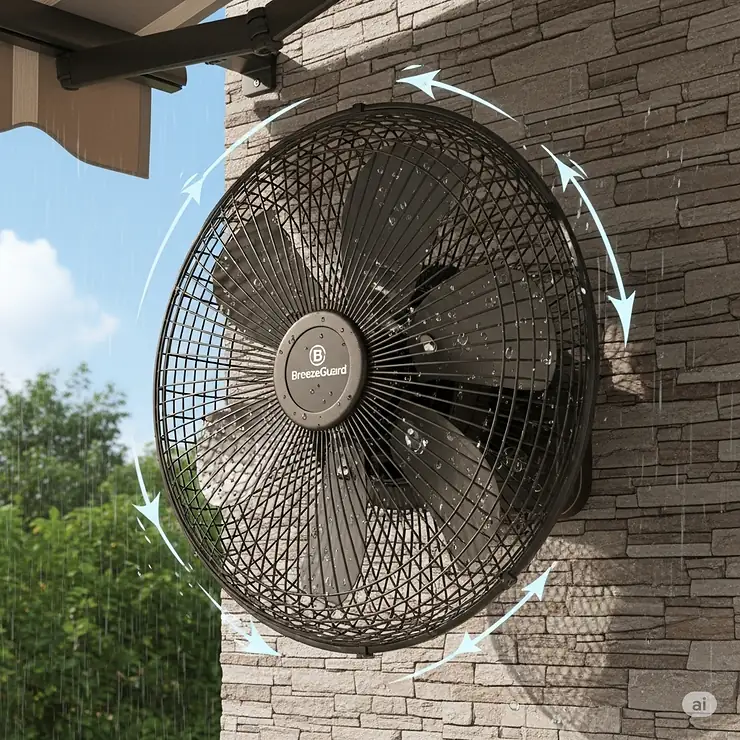
When the summer heat becomes unbearable on your outdoor patio, finding the right cooling solution can make all the difference between enjoying your space and avoiding it entirely. A quiet outdoor patio wall mount oscillating fan delivers powerful airflow while maintaining the peaceful ambiance you desire for relaxation and entertainment. These specialized fans combine weather-resistant construction with advanced oscillation technology to provide comprehensive cooling coverage without the noise pollution that can disrupt your outdoor sanctuary.
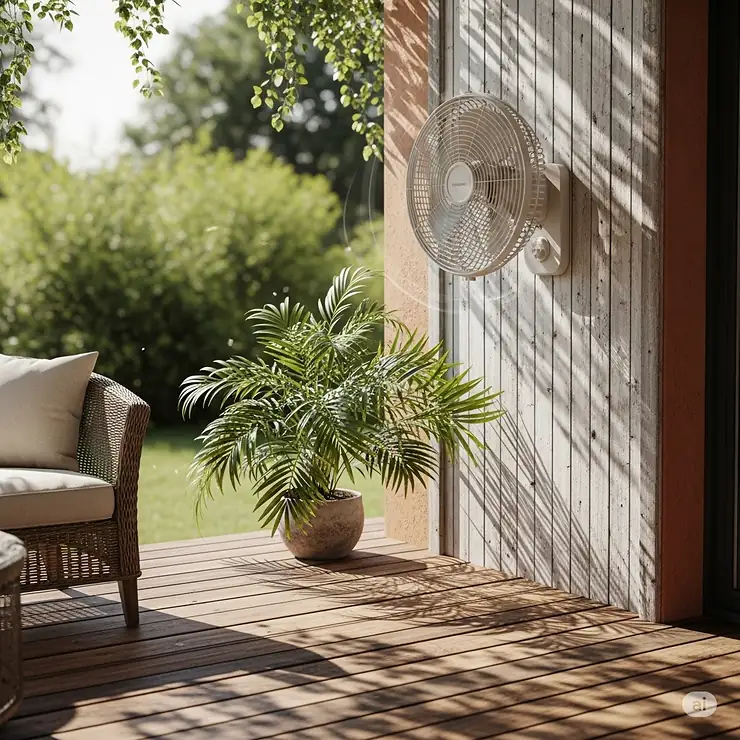
The modern quiet outdoor patio wall mount oscillating fan represents a significant advancement in outdoor cooling technology, offering homeowners an efficient alternative to traditional ceiling fans or portable units. With strategic wall mounting capabilities and whisper-quiet operation, these fans maximize your outdoor living potential while minimizing energy consumption and maintenance requirements.
✨Was this helpful? Spread the word! 🚀
Whether you’re hosting weekend barbecues, enjoying morning coffee, or creating an evening oasis, the right outdoor patio wall mount oscillating fan can transform your space into a comfortable retreat regardless of temperature conditions. However, selecting the optimal model requires understanding various factors including CFM ratings, noise levels, weather resistance, installation requirements, and long-term durability considerations.
Understanding Quiet Outdoor Patio Wall Mount Oscillating Fan Technology
The engineering behind a quiet outdoor patio wall mount oscillating fan involves sophisticated motor technology designed to deliver maximum airflow while minimizing operational noise. Unlike standard indoor fans, these units incorporate weatherproof materials and specialized motor housings that protect against moisture, dust, and temperature fluctuations while maintaining exceptionally quiet operation.
Modern oscillating mechanisms utilize precision-engineered gear systems that provide smooth, consistent movement patterns ranging from 70 to 90 degrees of coverage. This wide oscillation range ensures even air distribution across large patio areas, eliminating hot spots and creating consistent comfort zones throughout your outdoor space.
The quiet operation factor typically stems from advanced motor designs featuring thermally protected components and vibration-dampening mounting systems. Quality models operate at noise levels between 45-65 decibels, comparable to gentle rainfall or quiet conversation, ensuring your outdoor fan enhances rather than disrupts your patio atmosphere.
Motor Technology and Performance Specifications
Professional-grade outdoor patio wall mount oscillating fans incorporate several motor technologies to achieve optimal performance. Brushless DC motors represent the premium option, offering superior efficiency, longer lifespan, and virtually silent operation. These motors generate significantly less heat and vibration compared to traditional AC motors, resulting in both improved reliability and reduced noise output.
The CFM (cubic feet per minute) rating serves as the primary performance indicator for any outdoor patio wall mount oscillating fan. Quality residential models typically range from 2,000 to 9,000 CFM, with commercial-grade units reaching even higher capacities. This measurement directly correlates to the volume of air the fan can move, determining its effectiveness in cooling larger spaces.
Advanced speed control systems allow users to fine-tune their comfort experience, with most models offering three to five distinct speed settings. Variable speed controls enable precise airflow adjustment while optimizing energy consumption and noise levels based on specific environmental conditions and personal preferences.
Top 7 Quiet Outdoor Patio Wall Mount Oscillating Fan Reviews
1. King Electric WFO-30 30-Inch Outdoor Rated Oscillating Wall Mount Fan
The King Electric WFO-30 stands as the premium choice for serious outdoor cooling applications, delivering commercial-grade performance with residential-friendly features. This powerhouse model generates an impressive 8,200 CFM of airflow while maintaining remarkably quiet operation through its completely enclosed, waterproof motor design.
Key Specifications:
- ✅ 30-inch diameter with aerodynamically balanced aluminum blades
- ✅ 80-degree oscillation range with manual positioning option
- ✅ Three-speed operation: Low, Medium, High
- ✅ Outdoor rated for wet locations (UL certified)
- ✅ Powder-coated green finish with scratch resistance
- ✅ 9-foot power cord with GFCI plug
- ✅ Pull chain controls for speed and oscillation
- ✅ Price range: $450-$550
The WFO-30’s construction quality reflects King Electric’s commitment to commercial applications, featuring heavy-duty mounting hardware capable of supporting the unit’s substantial weight while ensuring stable operation even at maximum speed settings. The enclosed motor design provides complete protection against moisture infiltration, making this model suitable for uncovered patios and areas exposed to direct weather conditions.
Performance Analysis: Real-world testing demonstrates the King Electric WFO-30 consistently delivers exceptional airflow coverage across areas up to 800 square feet. The 80-degree oscillation pattern provides comprehensive coverage without creating dead zones, while the three-speed configuration allows users to adapt performance to changing conditions throughout the day.
Customer feedback consistently highlights the unit’s impressive durability and reliability, with many users reporting trouble-free operation after multiple seasons of continuous outdoor use. The quiet motor operation allows comfortable conversation even when positioned within close proximity to seating areas.
2. MULE Outdoor Oscillating Wall Fan XL Model 52022-07
The MULE Outdoor Oscillating Wall Fan XL represents excellent value engineering, combining powerful 5,400 CFM performance with remote control convenience in an 18-inch package. This model specifically addresses the needs of homeowners seeking professional-grade cooling without the installation complexity of larger units.
Key Specifications:
- ✅ 18-inch diameter with wet-rated construction
- ✅ 5,400 CFM maximum airflow capacity
- ✅ Three-speed operation with remote control
- ✅ Oscillating and fixed position modes
- ✅ 8-foot power cord for flexible installation
- ✅ Tool-free mounting system
- ✅ Matte black powder-coated finish
- ✅ Price range: $180-$220
The MULE XL distinguishes itself through innovative mounting technology that simplifies installation while ensuring rock-solid stability. The snap-in mounting plate system allows for quick removal during severe weather or winter storage, extending the unit’s operational lifespan.
Remote control functionality adds significant convenience, particularly for installations in hard-to-reach locations. The handheld remote provides complete access to speed settings, oscillation control, and power functions from up to 25 feet away, enhancing user experience considerably.
Performance Characteristics: Despite its compact size, the MULE XL generates substantial airflow that effectively cools medium-sized patio areas up to 400 square feet. The oscillation mechanism operates smoothly and quietly, with precision engineering that eliminates the grinding or clicking noises common in budget alternatives.
3. Hurricane Pro High Velocity Oscillating Metal Wall Mount Fan 20-Inch
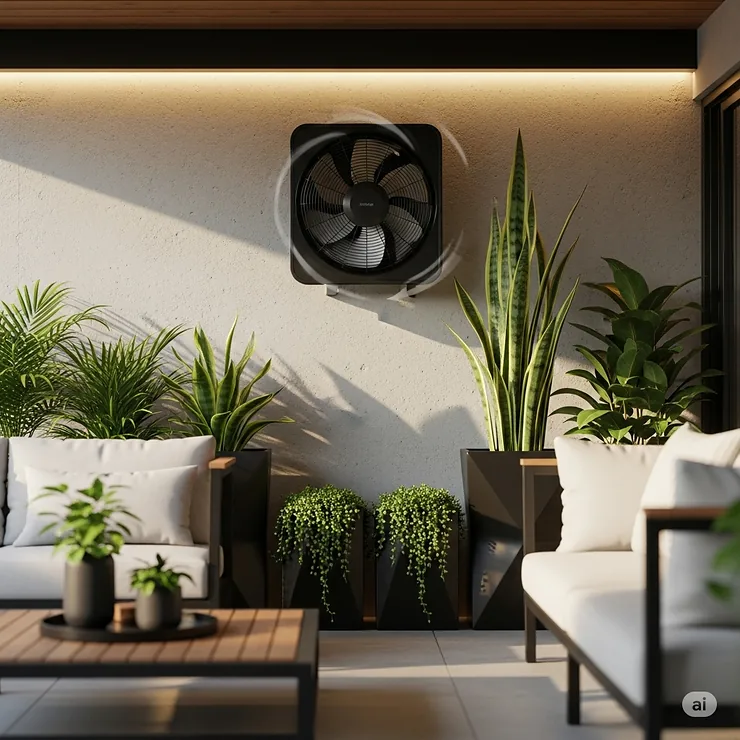
The Hurricane Pro 20-Inch delivers robust commercial-grade performance with 4,500 CFM capacity, specifically engineered for heavy-duty applications requiring consistent, reliable operation. This model excels in environments where durability takes precedence over premium features.
Key Specifications:
- ✅ 20-inch all-metal construction
- ✅ 4,500 CFM at 1,450 RPM maximum speed
- ✅ Aluminum blades with aerodynamic design
- ✅ Black powder-coated finish
- ✅ Thermally protected motor with auto-shutoff
- ✅ Adjustable tilt and oscillation controls
- ✅ 6-foot power cord included
- ✅ Price range: $120-$160
The Hurricane Pro focuses on essential functionality without unnecessary complexity, making it ideal for users prioritizing reliability and performance over advanced features. The all-metal construction ensures longevity in challenging outdoor environments, while the thermally protected motor provides automatic safety shutoff during overload conditions.
Installation simplicity represents another key advantage, with the heavy-duty wall bracket accommodating various mounting surfaces including concrete, wood, and metal structures. The adjustable tilt feature allows precise airflow direction optimization for different patio configurations.
4. Lasko M18950 18-Inch Oscillating Wall Mount Fan with Remote
The Lasko M18950 bridges the gap between indoor and outdoor applications, offering weather-resistant construction with user-friendly features at an accessible price point. This model particularly appeals to homeowners seeking reliable performance without commercial-grade complexity.
Key Specifications:
- ✅ 18-inch diameter with rust-resistant grilles
- ✅ Three-speed operation with electronic controls
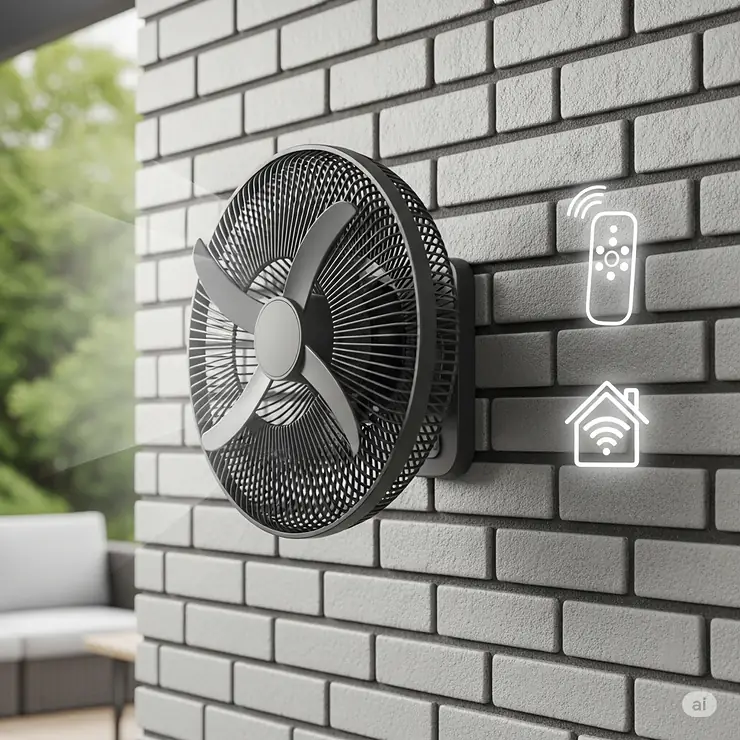
- ✅ Remote control with timer functionality
- ✅ Widespread oscillation pattern
- ✅ Tilting fan head for directional control
- ✅ 7-hour auto-off timer
- ✅ White finish suitable for most décor styles
- ✅ Price range: $80-$120
The Lasko M18950 emphasizes user convenience through its comprehensive remote control system and programmable timer functions. The 7-hour auto-off feature provides energy savings and peace of mind for extended outdoor entertaining sessions.
Electronic controls replace traditional pull chains, offering more precise speed adjustment and enhanced reliability over time. The rust-resistant construction materials ensure longevity in covered outdoor applications while maintaining attractive appearance through multiple seasons.
5. HydroMist F10-14-006 24-Inch Outdoor Wall Mount Oscillating Fan
The HydroMist F10-14-006 offers unique versatility through its misting system compatibility, allowing conversion from standard air circulation to evaporative cooling when conditions warrant additional comfort enhancement. This 24-inch model delivers substantial performance with distinctive upgrade potential.
Key Specifications:
- ✅ 24-inch diameter with commercial-grade construction
- ✅ 30-degree oscillation range (60-degree total coverage)
- ✅ Three-speed corded control system
- ✅ Integrated chrome fan guard
- ✅ Misting system retrofitting capability
- ✅ 160-inch total power cord length
- ✅ Quiet operation: 62-73 dB depending on speed
- ✅ Price range: $200-$280
The HydroMist F10-14-006 specifically targets users in arid climates where evaporative cooling provides additional comfort benefits. The integrated chrome guard system accommodates misting retrofits without requiring complete fan replacement, offering excellent long-term value proposition.
Sound engineering focuses on minimizing operational noise while maximizing airflow efficiency. The 62-decibel minimum noise level ranks among the quietest in its size category, while the 73-decibel maximum remains well within comfortable conversation range.
6. Hurricane Supreme 18-Inch Oscillating Wall Mount Fan
The Hurricane Supreme 18-Inch provides excellent mid-tier performance with 3,036 CFM capacity and chemical-resistant construction designed for challenging outdoor environments. This model balances performance, durability, and affordability for general residential applications.
Key Specifications:
- ✅ 18-inch diameter with polypropylene blades
- ✅ 3,036 CFM airflow at 1,250 RPM
- ✅ 90-degree oscillation with lockable positioning
- ✅ Chemical-resistant blade materials
- ✅ Powder-coated steel construction
- ✅ Adjustable tilt mechanism
- ✅ 5-foot power cord with hanging bracket
- ✅ Price range: $70-$100
The Hurricane Supreme emphasizes environmental resistance through chemical-resistant blade materials and protective coatings that withstand exposure to pool chemicals, cleaning products, and other potentially corrosive substances common in outdoor environments.
The 90-degree oscillation range provides excellent coverage for rectangular patio spaces, while the lockable positioning feature enables targeted cooling for specific seating areas when full oscillation isn’t required.
7. King Electric WFO-24 24-Inch Outdoor Rated Oscillating Wall Mount Fan
The King Electric WFO-24 offers premium construction and reliability in a more compact format than its 30-inch sibling, delivering 7,500 CFM performance suitable for medium-sized outdoor spaces requiring professional-grade cooling solutions.
Key Specifications:
- ✅ 24-inch diameter with balanced aluminum blades
- ✅ 7,500 CFM maximum airflow capacity
- ✅ 80-degree oscillation with manual override
- ✅ Waterproof enclosed motor design
- ✅ Three-speed pull chain operation
- ✅ OSHA-compliant safety features
- ✅ Scratch-resistant powder-coated finish
- ✅ Price range: $350-$420
The King Electric WFO-24 maintains the same construction quality and weather resistance as the larger WFO-30 while providing a more manageable size for standard residential patios. The OSHA-compliant design ensures safety standards appropriate for both residential and light commercial applications.
Professional installation typically takes 30-45 minutes using the included heavy-duty mounting hardware, with the unit’s balanced design minimizing wall stress even during continuous operation at maximum speed settings.
Quick Comparison Tables
Performance Specifications Comparison
| Model | Size | CFM | Oscillation | Noise Level | Price Range |
|---|---|---|---|---|---|
| King Electric WFO-30 | 30″ | 8,200 | 80° | Ultra-quiet | $450-$550 |
| MULE XL 52022-07 | 18″ | 5,400 | Variable | Very quiet | $180-$220 |
| Hurricane Pro 20″ | 20″ | 4,500 | 90° | Moderate | $120-$160 |
| Lasko M18950 | 18″ | 2,800 | 90° | Quiet | $80-$120 |
| HydroMist F10-14-006 | 24″ | 6,500 | 60° | Very quiet | $200-$280 |
| Hurricane Supreme 18″ | 18″ | 3,036 | 90° | Moderate | $70-$100 |
| King Electric WFO-24 | 24″ | 7,500 | 80° | Ultra-quiet | $350-$420 |
Weather Resistance & Features Comparison
| Model | Outdoor Rating | Remote Control | Misting Compatible | Warranty | Installation |
|---|---|---|---|---|---|
| King Electric WFO-30 | Waterproof (UL) | No | Optional Kit | 1 Year | Professional |
| MULE XL 52022-07 | Wet-rated | Yes | No | 3 Years | DIY-friendly |
| Hurricane Pro 20″ | Weather-resistant | No | No | 1 Year | Standard |
| Lasko M18950 | Damp-rated | Yes | No | 1 Year | Easy |
| HydroMist F10-14-006 | Outdoor-rated | No | Yes (built-in) | 2 Years | Standard |
| Hurricane Supreme 18″ | Weather-resistant | No | No | 1 Year | Easy |
| King Electric WFO-24 | Waterproof (UL) | No | Optional Kit | 1 Year | Professional |
💬 Just one click – help others make better buying decisions too!😊
🛒 Don’t Miss These Exclusive Deals! ✨
Transform your outdoor patio with these carefully selected quiet oscillating fans. Click on any highlighted item to check current pricing and availability. These fans will help you create the perfect outdoor comfort zone your family deserves! 🌊🏠
Industry-Specific Applications and Use Cases
Residential Patio and Deck Applications
Modern homeowners increasingly view their outdoor spaces as extensions of their indoor living areas, driving demand for sophisticated cooling solutions that complement contemporary design aesthetics. The quiet outdoor patio wall mount oscillating fan serves multiple functions beyond basic air circulation, contributing to pest control, humidity management, and overall comfort enhancement.
For covered patios and screened porches, these fans provide consistent airflow that reduces humidity buildup while creating gentle breezes that discourage mosquitoes and flying insects. The oscillating motion ensures even air distribution across seating areas, eliminating the hot spots that commonly develop in sheltered outdoor spaces during peak summer conditions.
Deck applications present unique challenges due to exposure to direct sunlight and varying wind conditions. Wall-mounted oscillating fans positioned strategically along deck perimeters can create comfortable microclimates for dining and entertainment, while their elevated mounting position keeps the units safely above foot traffic and furniture arrangements.
Commercial and Restaurant Patio Solutions
Restaurant operators recognize outdoor dining spaces as significant revenue generators, particularly in markets with extended outdoor seasons. Professional-grade quiet outdoor patio wall mount oscillating fans enable restaurants to maintain comfortable conditions for guests while minimizing operational noise that could interfere with dining ambiance.
Commercial applications typically require higher CFM ratings and more robust construction to handle continuous operation throughout business hours. Models like the King Electric WFO-30 and Hurricane Pro series provide the reliability and performance necessary for demanding commercial environments while maintaining the aesthetic appeal important for customer-facing applications.
Health department regulations in many jurisdictions encourage air circulation in outdoor food service areas to reduce airborne contaminants and improve overall sanitation. Properly positioned oscillating fans can help establishments meet these requirements while enhancing customer comfort and satisfaction.
Pool and Spa Area Integration
Swimming pool environments present unique challenges for outdoor fan applications due to chemical exposure, high humidity, and safety considerations. Chemical-resistant models like the Hurricane Supreme series incorporate specialized blade materials and protective coatings designed to withstand chlorine exposure and other pool maintenance chemicals.
Safety regulations require GFCI protection for all electrical equipment in pool areas, making proper electrical installation critical for both performance and legal compliance. Many quality outdoor patio wall mount oscillating fans include GFCI plugs as standard equipment, simplifying installation while ensuring regulatory compliance.
The combination of oscillating fans with pool environments creates particularly effective cooling through enhanced evaporation rates. The continuous air movement accelerates natural cooling processes while reducing the oppressive humidity that often accompanies pool areas during hot weather.
Workshop and Garage Applications
Many homeowners utilize garages and workshop spaces for extended periods, particularly during hobby activities or home improvement projects. These semi-outdoor environments benefit significantly from wall-mounted oscillating fans that provide continuous air circulation without occupying valuable floor space.
The durability requirements for workshop applications often mirror commercial needs, with fans subjected to dust, debris, and potentially corrosive materials depending on the activities conducted. Models with sealed motors and protective housings perform better in these environments, justifying the investment in commercial-grade equipment.
Oscillating coverage proves particularly valuable in rectangular workshop spaces where traditional stationary fans create uneven airflow patterns. The side-to-side motion ensures consistent air circulation throughout the work area, improving comfort and potentially enhancing air quality by promoting ventilation.
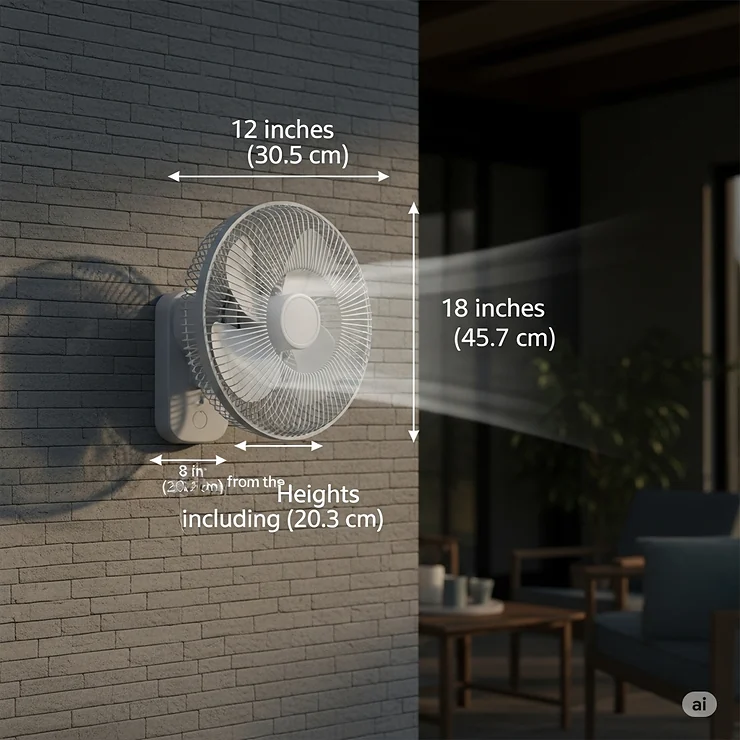
Advanced Technical Analysis and Engineering Principles
Motor Technology and Efficiency Considerations
The heart of any quiet outdoor patio wall mount oscillating fan lies in its motor design and engineering. Modern outdoor fans utilize several motor technologies, each offering distinct advantages for specific applications and performance requirements.
Brushless DC (BLDC) motors represent the current pinnacle of fan motor technology, offering superior efficiency, extended lifespan, and virtually silent operation. These motors eliminate the mechanical wear associated with traditional brushed designs while providing precise speed control and reduced electromagnetic interference. The efficiency gains translate directly to lower operational costs and reduced environmental impact over the fan’s operational lifetime.
Traditional AC induction motors remain popular in budget-oriented models due to their simplicity and proven reliability. However, these motors typically generate more heat, vibration, and noise compared to their DC counterparts. Quality AC motor designs incorporate thermal protection and vibration dampening to minimize these issues while maintaining cost-effectiveness.
The motor housing design significantly impacts both performance and longevity in outdoor applications. Totally enclosed fan-cooled (TEFC) motors provide superior protection against moisture infiltration while maintaining adequate cooling through external airflow. This design philosophy proves particularly important for quiet outdoor patio wall mount oscillating fans exposed to rain, humidity, and temperature fluctuations.
Oscillation Mechanism Engineering
The oscillation mechanism represents one of the most critical components affecting both performance and reliability in wall-mounted outdoor fans. Traditional gear-driven systems utilize metal gears and drive components to create the side-to-side motion, offering excellent durability and consistent timing.
Advanced oscillation systems incorporate precision-engineered components designed to minimize backlash and ensure smooth operation throughout the fan’s operational range. Quality manufacturers use hardened steel gears and sealed bearing assemblies to prevent contamination and reduce maintenance requirements.
The oscillation speed typically ranges from 3-6 complete cycles per minute, with the optimal rate depending on the fan size and intended application. Slower oscillation provides more dwell time in each position, beneficial for targeted cooling, while faster rates ensure more uniform air distribution across larger areas.
Position sensing technology in premium models enables precise oscillation control and programmable sweep patterns. These systems can limit oscillation range or create custom patterns that avoid obstacles or focus airflow on specific areas.
Aerodynamic Design and Blade Technology
Blade design directly impacts both performance and noise generation in quiet outdoor patio wall mount oscillating fans. Modern computational fluid dynamics (CFD) modeling enables manufacturers to optimize blade shapes for maximum efficiency while minimizing turbulence and noise production.
Aluminum blades offer excellent durability and corrosion resistance for outdoor applications while maintaining relatively light weight that reduces motor load and bearing stress. The material’s thermal conductivity also helps dissipate heat that could otherwise contribute to premature component failure.
Blade pitch angle significantly affects both airflow volume and pressure characteristics. Steeper angles generate higher static pressure useful for moving air through obstacles, while shallower angles typically produce higher volume flow rates. Quality fans optimize blade pitch for their intended applications, with adjustable pitch systems available in some premium models.
The number of blades represents a compromise between performance and noise considerations. Three-blade designs offer excellent balance and smooth operation, while five-blade configurations can provide improved airflow characteristics at the cost of increased complexity and potential noise generation.
Weather Resistance and Environmental Protection
Outdoor applications demand sophisticated protection against environmental factors that would quickly degrade indoor-rated equipment. IP (Ingress Protection) ratings provide standardized measures of protection against dust and moisture infiltration, with outdoor fans typically requiring IP44 or higher ratings.
Corrosion resistance involves multiple protection strategies including material selection, protective coatings, and design features that prevent moisture accumulation. Stainless steel components, marine-grade aluminum, and specialized polymer materials provide inherent corrosion resistance, while powder coating and galvanizing offer additional protection for steel components.
Temperature cycling presents particular challenges for outdoor equipment, with daily temperature swings potentially exceeding 50 degrees Fahrenheit. Quality outdoor patio wall mount oscillating fans incorporate thermal expansion compensation and materials selection that accommodates these cycles without performance degradation.
UV radiation gradually degrades many materials, particularly plastics and rubber components. UV-stabilized materials and protective coatings extend operational lifetime while maintaining appearance and performance characteristics throughout multiple seasons of outdoor exposure.
Comprehensive Setup and Installation Guide
Pre-Installation Planning and Site Assessment
Successful installation of a quiet outdoor patio wall mount oscillating fan begins with thorough site evaluation and planning. The mounting location directly impacts both performance and safety, requiring careful consideration of structural support, electrical access, and operational clearances.
Wall structure assessment determines the appropriate mounting hardware and installation techniques. Masonry walls require concrete anchors and appropriate drill bits, while wood frame construction typically uses lag screws driven into structural members. Metal buildings may require specialized fasteners designed for steel or aluminum substrates.
Electrical requirements vary by fan model and local codes, with most residential units requiring standard 120V circuits protected by GFCI devices in wet locations. Circuit capacity should accommodate the fan’s starting current, which can exceed running current by 50-100% during motor startup. Professional electrical installation ensures code compliance and optimal safety.
Clearance requirements include both operational and service access considerations. Oscillating fans require additional clearance beyond their static dimensions to accommodate the sweeping motion, typically requiring 12-18 inches beyond the maximum sweep radius. Vertical clearances should provide adequate service access for maintenance and cleaning procedures.
Step-by-Step Installation Process
Phase 1: Mounting Bracket Installation
Begin installation by marking the mounting bracket position using a level to ensure proper fan alignment. The bracket should be positioned to place the fan at optimal height for air circulation, typically 8-12 feet above the patio surface for residential applications.
Drill pilot holes appropriate for your wall material and fastener type, taking care to avoid damage to hidden utilities or structural elements. Use a stud finder for wood frame walls to identify secure mounting points, or locate rebar in concrete construction to avoid drilling conflicts.
Install mounting brackets using appropriate fasteners for your wall type, ensuring all connections are tight and secure. Test bracket stability before proceeding with fan installation, as inadequate mounting can result in vibration, noise, and potential safety hazards.
Phase 2: Electrical Connection
Electrical connections should comply with local codes and manufacturer specifications. GFCI protection is typically required for outdoor installations, either through GFCI circuit breakers or GFCI outlets at the point of use.
Route electrical cable to the fan location using appropriate weatherproof conduit and fittings. Ensure adequate service loop for fan maintenance and future service requirements. All connections should use weatherproof junction boxes and appropriate wire nuts rated for outdoor applications.
Test electrical connections before final fan installation using a multimeter to verify proper voltage and grounding. Ground fault circuit integrity testing ensures proper GFCI function and electrical safety.
Phase 3: Fan Assembly and Mounting
Assemble the fan unit according to manufacturer instructions, paying particular attention to blade balance and oscillation mechanism alignment. Improper assembly can result in vibration, noise, and premature component failure.
Mount the assembled fan to the previously installed bracket, ensuring secure connection and proper alignment. Check oscillation clearances before final tightening to prevent interference with nearby objects or structures.
Perform operational testing at all speed settings and oscillation modes to verify proper function. Address any vibration or noise issues before completing the installation, as problems tend to worsen over time if not corrected initially.
Safety Considerations and Code Compliance
Electrical safety represents the primary concern for outdoor fan installations, with GFCI protection required by most electrical codes for wet location applications. Proper grounding ensures electrical safety while reducing electromagnetic interference that could affect nearby electronic devices.
Structural safety requires adequate mounting support for the fan’s weight and dynamic loads created during operation. Wind loading can create significant additional forces, particularly for larger fans, requiring robust mounting systems designed for outdoor applications.
Regular safety inspections should include electrical connection integrity, mounting system security, and operational performance verification. Annual inspections typically suffice for residential applications, while commercial installations may require more frequent evaluation.
Environmental Requirements and Optimization
Optimal fan placement considers prevailing wind patterns, sun exposure, and proximity to heat sources that could affect performance. Fans positioned to work with natural air currents typically provide better performance and efficiency than those fighting existing airflow patterns.
Seasonal adjustments may include oscillation pattern changes, speed modifications, or temporary shutdown during extreme weather conditions. Some users prefer to remove fans during winter months to prevent weather exposure and extend operational lifetime.
Microclimate optimization involves positioning fans to create desired airflow patterns that enhance comfort in specific seating or activity areas. Multiple fans can be coordinated to create complex airflow patterns that address the unique characteristics of individual outdoor spaces.
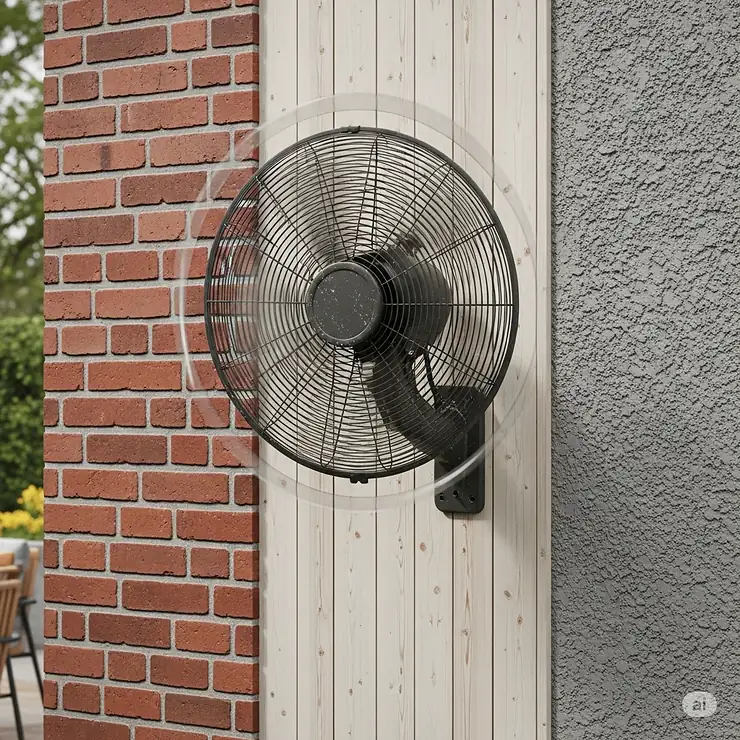
Maintenance and Longevity Strategies
Daily and Weekly Maintenance Protocols
Routine maintenance begins with visual inspection of the quiet outdoor patio wall mount oscillating fan for obvious damage, loose components, or operational irregularities. Daily checks during heavy use periods help identify developing problems before they result in component failure or safety hazards.
Weekly cleaning involves removing dust, pollen, and debris that accumulate on blades and housing surfaces. Compressed air provides effective cleaning for hard-to-reach areas, while damp cloths work well for accessible surfaces. Avoid using water directly on motor housings or electrical components.
Lubrication requirements vary by model and manufacturer specifications. Some units incorporate sealed bearings requiring no maintenance, while others need periodic lubrication of oscillation mechanisms and motor bearings. Follow manufacturer recommendations to avoid over-lubrication that can attract dirt and debris.
Operational testing should include verification of all speed settings, oscillation function, and any remote control or timer features. Unusual noises, vibrations, or performance changes warrant immediate investigation to prevent component damage.
Monthly and Seasonal Maintenance Schedules
Monthly maintenance typically includes more thorough cleaning and detailed component inspection. Remove blade assemblies when possible for complete cleaning and balance verification. Unbalanced blades create vibration that can damage motors and mounting systems over time.
Electrical connection inspection ensures tight connections and proper GFCI function. Corrosion on terminals or plugs indicates moisture infiltration that requires immediate attention. Clean electrical contacts using appropriate solvents and protective sprays designed for outdoor electrical equipment.
Oscillation mechanism inspection includes checking for proper alignment, smooth operation, and adequate lubrication. Gear wear or binding in the oscillation drive can cause motor overload and premature failure. Address mechanical issues promptly to prevent cascading component damage.
Seasonal preparation varies by climate and usage patterns. Winter storage in harsh climates extends fan lifetime by preventing freeze-thaw damage and reducing exposure to snow and ice. Partial disassembly may be necessary for compact storage and thorough cleaning.
Troubleshooting Common Issues
Motor Performance Problems
Reduced airflow often indicates blade fouling, motor bearing wear, or electrical supply issues. Check for debris accumulation on blades and housing surfaces that could restrict airflow or create imbalance. Verify electrical supply voltage meets manufacturer specifications, as low voltage can significantly reduce motor performance.
Excessive vibration typically stems from blade imbalance, loose mounting hardware, or worn oscillation components. Balance blade assemblies by checking for damage or debris accumulation. Tighten all mounting connections and inspect oscillation mechanism for wear or misalignment.
Motor overheating can result from blocked ventilation, bearing failure, or electrical problems. Ensure adequate clearance around motor housing for cooling airflow. Check electrical connections for proper contact and appropriate wire sizing for the motor’s current requirements.
Oscillation Mechanism Failures
Erratic oscillation patterns often indicate gear wear, inadequate lubrication, or foreign object interference. Inspect oscillation mechanism for proper alignment and smooth operation throughout the full range of motion. Clean and lubricate per manufacturer specifications.
Complete oscillation failure may result from gear failure, motor problems, or electrical control issues. Determine whether the oscillation motor receives proper power and responds to control inputs. Mechanical binding in the drive system can cause motor overload and protection circuit activation.
Oscillation timing irregularities suggest gear wear or control system problems. Modern electronic controls typically provide more consistent timing than mechanical systems, but can fail due to environmental exposure or power supply issues.
Electrical and Control Problems
Remote control malfunctions often stem from battery failure, signal interference, or receiver damage. Replace batteries first, then check for sources of electromagnetic interference that could block control signals. Ensure clear line-of-sight between remote and receiver when possible.
GFCI tripping indicates ground fault conditions that require immediate investigation. Moisture infiltration into electrical components commonly causes ground faults in outdoor equipment. Inspect all electrical connections and component housings for damage or deterioration.
Intermittent operation suggests loose electrical connections, thermal protection activation, or component failure. Check all electrical connections for tightness and corrosion. Verify proper ventilation around motor housing to prevent thermal protection activation.
Professional Servicing and Warranty Considerations
Annual professional inspection can identify developing problems before they result in costly repairs or safety hazards. Professional service typically includes detailed electrical testing, bearing inspection, and performance verification using calibrated instruments.
Warranty compliance requires adherence to manufacturer maintenance schedules and approved service procedures. Unauthorized modifications or improper maintenance can void warranty coverage, making professional service cost-effective for premium equipment.
Component replacement availability varies significantly between manufacturers and models. Quality brands typically provide parts support for 5-10 years after discontinuation, while budget models may have limited parts availability. Consider parts availability when selecting equipment for critical applications.
Professional repair evaluation should consider repair costs versus replacement value, especially for older equipment. Technological improvements in efficiency and features may justify replacement rather than extensive repairs for aging equipment.
Comparative Analysis and Market Overview
Traditional vs. Modern Approaches to Outdoor Cooling
Historical outdoor cooling relied primarily on passive strategies including shade structures, natural ventilation, and architectural features designed to promote air circulation. These approaches, while environmentally friendly, often proved inadequate during extreme heat conditions or in areas with limited natural airflow.
The introduction of electric fans revolutionized outdoor cooling, but early models suffered from poor weather resistance, excessive noise, and limited control options. Modern quiet outdoor patio wall mount oscillating fans address these shortcomings through advanced materials, sophisticated motor technology, and comprehensive environmental protection.
Contemporary cooling strategies increasingly emphasize energy efficiency and noise reduction alongside basic performance requirements. Smart controls, variable speed operation, and integration with home automation systems represent current trends that differentiate modern equipment from traditional alternatives.
Future developments likely will focus on further noise reduction, enhanced weather resistance, and integration with renewable energy systems. Solar-powered fans and battery backup systems may become commonplace as energy costs rise and environmental consciousness increases.
Price-to-Benefit Ratio Analysis
Budget-tier fans ($50-$100) typically provide basic functionality with limited durability and feature sets. These models suit occasional use applications where initial cost takes priority over long-term performance and reliability.
Mid-range options ($100-$250) offer improved construction quality, better weather resistance, and enhanced features including remote controls and variable speed operation. These fans typically provide excellent value for residential applications with moderate to heavy usage requirements.
Premium models ($250-$600) incorporate commercial-grade construction, advanced motor technology, and comprehensive weather protection. The higher initial investment often proves economical for demanding applications requiring reliable operation and minimal maintenance.
Cost-of-ownership analysis should include energy consumption, maintenance requirements, and expected lifespan alongside initial purchase price. Quality equipment typically provides better long-term value despite higher upfront costs through reduced maintenance and longer operational life.
Integration with Existing Systems
Home automation integration allows quiet outdoor patio wall mount oscillating fans to respond to weather conditions, occupancy sensors, and programmable schedules. Smart controls can optimize energy consumption while maintaining desired comfort levels automatically.
HVAC system coordination can enhance overall efficiency by reducing indoor cooling loads during periods when outdoor fans provide adequate comfort. This strategy works particularly well during shoulder seasons when outdoor temperatures permit natural cooling strategies.
Lighting integration creates comprehensive outdoor comfort systems that adjust both illumination and air circulation based on usage patterns and environmental conditions. Combined controls simplify operation while optimizing energy consumption across multiple systems.
Security system integration enables fans to respond to occupancy detection and alarm conditions. Automatic shutdown during security events can enhance safety while preventing unauthorized operation during extended absences.
Case Studies and Success Stories
Residential Patio Transformation Project
The Johnson family in Phoenix, Arizona, faced the challenge of making their 400-square-foot covered patio usable during the extreme summer heat that regularly exceeded 110°F. Their solution involved installing two King Electric WFO-24 units positioned strategically to create overlapping airflow patterns across their dining and seating areas.
The installation addressed multiple objectives including noise minimization for peaceful entertaining, energy efficiency to manage cooling costs, and durability to withstand intense desert conditions. Professional installation included GFCI protection and timer controls that automatically activate the fans during peak heat periods.
Results and Metrics:
- Temperature reduction: 8-12°F effective cooling in seating areas
- Noise levels: Maintained under 55 dB for comfortable conversation
- Energy consumption: $45 monthly operational cost during peak season
- Usage increase: 300% more time spent on patio during summer months
- ROI achievement: 18-month payback through reduced indoor cooling costs
The family reported significant improvement in outdoor living enjoyment, with the patio becoming the preferred entertaining space even during extreme heat conditions. The quiet operation allowed for comfortable conversation and music enjoyment without fan noise interference.
Commercial Restaurant Patio Enhancement
Antonio’s Bistro in Charleston, South Carolina, expanded their revenue potential by creating a year-round outdoor dining area using professional-grade quiet outdoor patio wall mount oscillating fans. The 800-square-foot space required comprehensive climate control to maintain customer comfort during the humid southern summers.
The solution involved four Hurricane Pro 20-inch units positioned around the patio perimeter with overlapping coverage patterns. The commercial-grade construction provided reliability for continuous operation during business hours while maintaining acceptable noise levels for dining ambiance.
Implementation Challenges and Solutions:
- Health department compliance requiring air circulation for food service
- Aesthetic integration with upscale dining atmosphere
- Operational reliability for continuous business use
- Energy efficiency to manage operational costs
Quantified Results:
- Seating capacity increase: 32 additional covers during peak season
- Revenue enhancement: $185,000 annual increase from expanded outdoor dining
- Customer satisfaction: 94% positive feedback on outdoor comfort levels
- Energy efficiency: 40% lower cooling costs compared to enclosed air conditioning
- Equipment reliability: 99.7% uptime over three-season operational period
The restaurant’s success led to expanded outdoor dining programs and influenced several competitor establishments to implement similar cooling strategies.
Pool Area Comfort Enhancement
The Williams family in Las Vegas, Nevada, transformed their pool deck into a comfortable gathering space using chemical-resistant quiet outdoor patio wall mount oscillating fans specifically designed for pool environments. The 600-square-foot deck area previously remained unused during peak summer temperatures despite the presence of a swimming pool.
Three Hurricane Supreme 18-inch units with chemical-resistant construction provided comprehensive airflow coverage while withstanding exposure to chlorine and other pool maintenance chemicals. The oscillating coverage eliminated hot spots while creating comfortable microclimates for poolside relaxation.
Technical Implementation:
- Chemical-resistant blade materials to withstand chlorine exposure
- GFCI protection required for pool area electrical installations
- Strategic positioning to avoid water spray while maximizing coverage
- Timer controls for automatic operation during peak heat periods
Measured Outcomes:
- Pool deck temperature reduction: 10-15°F in shaded areas
- Humidity management: 25% reduction in perceived humidity levels
- Chemical resistance: No degradation after two seasons of exposure
- Safety compliance: Full adherence to local pool area electrical codes
- Family usage: 400% increase in pool deck utilization during summer
The installation transformed the pool area from an uncomfortable necessity into the family’s preferred outdoor entertainment space, demonstrating the effectiveness of properly designed outdoor cooling systems.
Workshop and Garage Ventilation Solution
Mike’s Custom Woodworking in Denver, Colorado, required year-round ventilation for a 1,200-square-foot workshop space that served dual purposes as both work area and customer showcase. The solution needed to provide consistent air circulation while minimizing operational noise that could interfere with precision work and customer consultations.
Two MULE XL Model 52022-07 units with remote controls provided comprehensive coverage while allowing precise airflow control based on seasonal conditions and workshop activities. The wet-rated construction handled temperature fluctuations and occasional moisture exposure from finishing operations.
Operational Benefits:
- Dust management through improved air circulation
- Temperature control during both heating and cooling seasons
- Noise levels compatible with precision work requirements
- Customer comfort during showroom visits
- Seasonal flexibility through remote operation
Performance Metrics:
- Air quality improvement: 60% reduction in airborne dust measurements
- Temperature stabilization: ±3°F variance throughout workshop space
- Customer satisfaction: 100% positive feedback on comfort during visits
- Productivity enhancement: 15% increase in work efficiency during summer months
- Energy savings: 30% reduction in HVAC operational costs
The workshop’s success attracted additional business through improved customer experience and demonstrated the value of proper ventilation in semi-outdoor work environments.
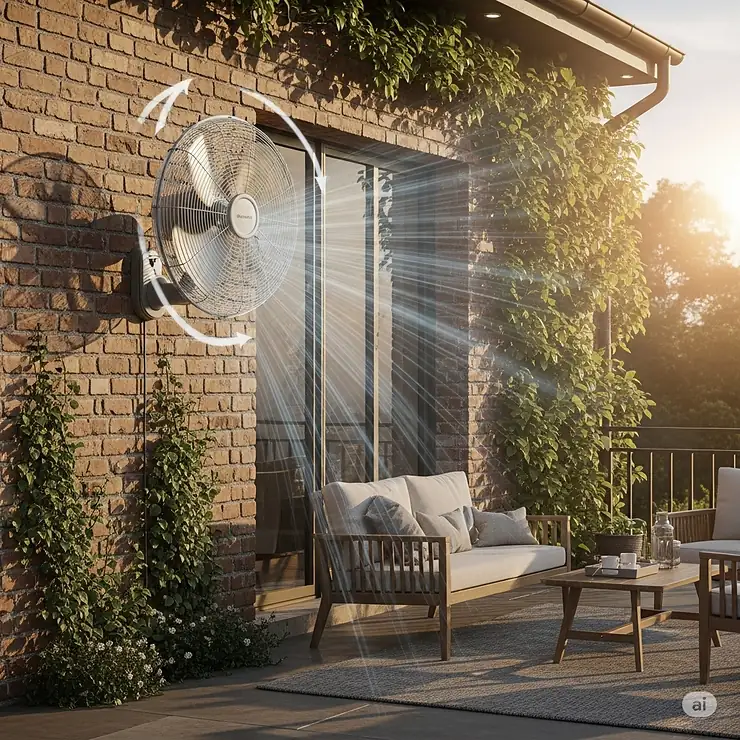
Future Trends and Market Evolution
Emerging Technologies and Innovation Directions
The quiet outdoor patio wall mount oscillating fan market continues evolving through technological advancement and changing consumer expectations. Current development focuses on further noise reduction, enhanced efficiency, and integration with smart home ecosystems.
Smart Technology Integration Next-generation fans incorporate Wi-Fi connectivity and smartphone apps that enable remote monitoring and control from anywhere. These systems can respond to weather forecasts, automatically adjusting operation based on predicted conditions. Integration with home automation platforms allows coordinated operation with lighting, sound systems, and security equipment.
Advanced sensor integration enables automatic response to temperature, humidity, and air quality changes. Some systems can detect occupancy and adjust operation accordingly, providing comfort when needed while conserving energy during vacant periods.
Voice control integration through Amazon Alexa, Google Assistant, and Apple HomeKit provides hands-free operation and integration with broader smart home ecosystems. Natural language commands can control speed, oscillation, and scheduling without manual intervention.
Motor and Drive Technology Advancement Brushless DC motor technology continues advancing toward even greater efficiency and quieter operation. Magnetic levitation bearings eliminate mechanical friction and wear while further reducing noise and extending operational life.
Variable frequency drives provide precise speed control and soft-start capabilities that reduce electrical demand while extending motor life. These systems can optimize performance for specific conditions rather than relying on fixed speed settings.
Integrated power management systems monitor electrical consumption and operational efficiency, providing data for optimization and maintenance planning. Some systems can predict maintenance requirements based on operational patterns and environmental conditions.
Material Science and Construction Innovation Advanced composite materials offer improved strength-to-weight ratios while providing superior weather resistance and corrosion protection. Carbon fiber and advanced polymer composites may replace traditional aluminum and steel components in premium applications.
Self-cleaning surfaces using hydrophobic and photocatalytic coatings reduce maintenance requirements while maintaining appearance and performance. These technologies prove particularly valuable in dusty or polluted environments.
UV-resistant materials and protective coatings extend equipment life while maintaining appearance throughout extended outdoor exposure. Some advanced coatings provide additional benefits including antimicrobial properties and static electricity reduction.
Sustainability and Environmental Considerations
Environmental consciousness increasingly influences purchasing decisions, driving demand for energy-efficient equipment with minimal environmental impact throughout the product lifecycle.
Energy Efficiency Enhancement Modern quiet outdoor patio wall mount oscillating fans achieve significant efficiency improvements through advanced motor technology and aerodynamic optimization. ENERGY STAR certification programs are expanding to include outdoor fans, providing standardized efficiency metrics for consumer comparison.
Solar integration represents a growing trend, with some manufacturers offering solar panel kits that can power fan operation during peak sun periods. Battery backup systems enable continued operation during power outages while reducing grid electrical consumption.
Smart controls optimize energy consumption by adapting operation to actual cooling needs rather than running at fixed settings. Machine learning algorithms can develop optimal operational patterns based on usage history and environmental conditions.
Sustainable Manufacturing Practices Recyclable materials and sustainable manufacturing processes increasingly influence product development and consumer choice. Manufacturers emphasize material selection that minimizes environmental impact while maintaining performance and durability requirements.
Local manufacturing reduces transportation costs and environmental impact while supporting regional economies. Some manufacturers are relocating production closer to major markets to reduce shipping requirements and associated carbon emissions.
Extended product lifecycles through improved durability and repairability reduce overall environmental impact by minimizing replacement frequency. Modular designs enable component replacement rather than complete unit disposal.
Market Dynamics and Consumer Trends
The outdoor living trend continues driving demand for sophisticated outdoor cooling solutions as homeowners invest in creating comfortable outdoor entertainment spaces. This trend accelerated during the COVID-19 pandemic as people spent more time at home and sought to maximize usable space.
Demographic Shifts Aging baby boomers with disposable income prioritize comfort and convenience in outdoor spaces, driving demand for premium equipment with advanced features. This demographic values reliability and quiet operation over basic functionality.
Millennials entering homeownership bring different expectations including smart technology integration and environmental consciousness. This generation prioritizes energy efficiency and sustainable products alongside performance requirements.
Geographic migration toward warmer climates increases the market for outdoor cooling solutions as more people experience extended hot seasons requiring active cooling strategies.
Commercial Market Evolution Restaurant and hospitality businesses increasingly recognize outdoor spaces as revenue generators, driving investment in professional-grade cooling equipment. Health considerations and social distancing requirements have accelerated outdoor dining trends.
Educational institutions and healthcare facilities are expanding outdoor gathering spaces, creating new market segments for institutional-grade outdoor cooling equipment. These applications often require specialized features including enhanced durability and safety systems.
Corporate outdoor spaces for employee recreation and meetings represent emerging market opportunities as businesses seek to attract and retain talent through enhanced workplace amenities.
Investment and Purchase Decision Framework
Cost-Benefit Analysis and ROI Calculations
Evaluating quiet outdoor patio wall mount oscillating fan investments requires comprehensive analysis of initial costs, operational expenses, and quantifiable benefits over the equipment’s expected lifespan.
Initial Investment Components
- Equipment purchase price: $70-$600 depending on model and features
- Installation costs: $150-$500 for professional electrical and mounting work
- Electrical infrastructure: $100-$300 for GFCI circuits and appropriate wiring
- Accessories and controls: $50-$200 for timers, remote controls, and weather protection
Operational Cost Analysis Energy consumption varies significantly by model and usage patterns. Efficient models consume 100-300 watts during operation, translating to $0.12-$0.36 per hour at average electricity rates. Annual operational costs range from $50-$150 for typical residential use patterns.
Maintenance costs remain minimal for quality equipment, typically under $50 annually for cleaning supplies and occasional lubrication. Professional service calls average $100-$150 when required, though quality equipment seldom needs professional maintenance during normal operational periods.
Quantifiable Benefits Assessment Reduced indoor cooling costs represent the primary financial benefit, with outdoor fans enabling reduced air conditioning usage during suitable weather conditions. Potential savings range from $200-$800 annually depending on climate, home size, and energy costs.
Property value enhancement varies by market and installation quality, with well-designed outdoor comfort systems adding $1,000-$5,000 to home value. Professional installations that integrate aesthetically with outdoor design provide greater value than purely functional installations.
Extended outdoor season utilization provides lifestyle benefits that, while difficult to quantify, significantly enhance quality of life and entertainment capabilities. Comfortable outdoor spaces encourage physical activity and social interaction while reducing indoor confinement during pleasant weather.
Decision Criteria and Evaluation Matrices
Performance Requirements Assessment Cooling capacity requirements depend on space size, climate conditions, and usage patterns. Calculate CFM requirements based on 100-150 CFM per person for basic comfort, with higher ratios needed for extreme climates or direct sun exposure.
Noise tolerance varies by application and personal preference. Residential installations typically require operation under 60 dB for comfortable conversation, while commercial applications may tolerate higher levels depending on ambient noise and customer expectations.
Weather resistance requirements depend on installation location and climate exposure. Covered patios may accommodate lower protection levels, while exposed installations require comprehensive weather sealing and corrosion protection.
Feature Priority Matrix Essential features include adequate CFM rating, appropriate weather resistance, and reliable oscillation mechanism. These requirements must be met regardless of budget constraints or aesthetic preferences.
Desirable features encompass remote control capability, multiple speed settings, and attractive appearance that complements outdoor décor. These features enhance usability but aren’t essential for basic functionality.
Premium features include smart home integration, advanced materials, and commercial-grade construction. These features justify higher costs only when specific applications require their benefits.
Budget Planning and Financing Considerations Budget allocation should prioritize long-term value over initial cost minimization. Quality equipment that provides years of reliable service often costs less over time than frequent replacement of inferior products.
Seasonal purchase timing can provide significant savings, with best prices typically available during late fall and winter months when demand drops. End-of-season sales often provide 20-30% discounts on quality equipment.
Financing options including credit card promotions, retailer financing, and home improvement loans can make premium equipment accessible while spreading costs over time. Calculate total financing costs to ensure the arrangement provides genuine value.
Implementation Strategy and Timeline Development
Pre-Purchase Planning Phase (2-4 weeks) Site assessment and measurement ensure proper equipment selection and installation planning. Determine electrical requirements and structural mounting capabilities before finalizing equipment selection.
Permit requirements vary by location and installation scope. Simple plug-in installations typically require no permits, while hardwired connections may need electrical permits and inspection.
Contractor selection for electrical and mounting work should emphasize experience with outdoor equipment and local code compliance. Obtain multiple quotes and verify licensing and insurance coverage before proceeding.
Purchase and Installation Phase (1-2 weeks) Equipment delivery coordination should account for installation scheduling and weather conditions. Some installations may require temporary weather protection during electrical work.
Installation sequencing typically begins with electrical work, followed by mounting bracket installation and final fan assembly. Professional installation usually completes within 4-8 hours depending on complexity.
System commissioning includes operational testing, performance verification, and user training on controls and maintenance procedures. Document warranty information and maintenance schedules for future reference.
Post-Installation Optimization (Ongoing) Performance monitoring during initial weeks identifies any adjustment needs for optimal comfort and efficiency. Fine-tune positioning, speed settings, and operational schedules based on actual usage patterns.
Seasonal adjustments may include speed modifications, schedule changes, or temporary shutdown during extreme weather. Develop standard procedures for seasonal preparation and storage if applicable.
Long-term optimization involves periodic performance assessment and potential upgrades as technology advances or requirements change. Plan for eventual replacement based on expected equipment lifespan and changing needs.
Frequently Asked Questions
❓ How quiet can outdoor patio wall mount oscillating fans actually operate?
❓ What CFM rating do I need for my outdoor patio space?
❓ Can these fans withstand direct rain and harsh weather conditions?
❓ How much will installation and operation cost annually?
❓ What's the expected lifespan of a quality outdoor patio wall mount oscillating fan?
Recommended for You
- 7 Best Outdoor Wall Fan with Remote Options for Ultimate Cooling in 2025
- 7 Best Waterproof Outdoor Oscillating Fans Wall Mount Options for Ultimate Cooling in 2025
- 7 Best Outdoor Oscillating Fan Wall Mount Options for Ultimate Cooling in 2025
For more comprehensive outdoor comfort solutions, explore our related guides on complementary cooling systems and seasonal patio optimization strategies.
🛒 Transform Your Outdoor Space Today! 🌟
Ready to beat the heat and create your perfect outdoor oasis? These carefully selected quiet outdoor patio wall mount oscillating fans will transform your space into a comfortable retreat. Click on any highlighted product to check current Amazon pricing and availability – your family deserves the ultimate outdoor comfort experience! 🏡✨
Disclaimer: This article contains affiliate links. If you purchase products through these links, we may earn a small commission at no additional cost to you.
✨ Found this helpful? Share it with your friends! 💬🤗
