
In This Article
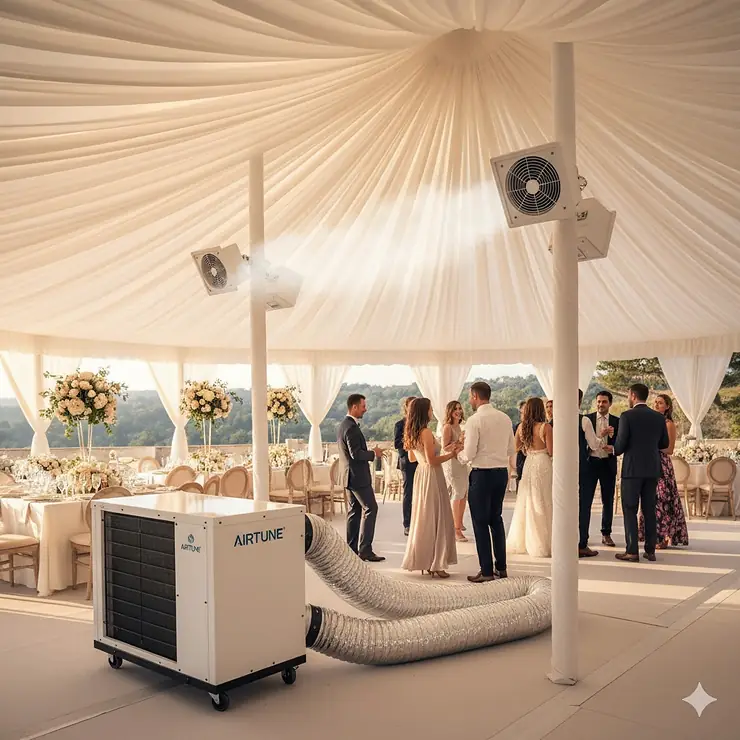
Planning an outdoor event? You know that unbearable heat can turn your dream wedding, corporate gathering, or festival into a sweaty nightmare. I’ve been there—watching guests fan themselves with programs while makeup melts and caterers worry about food safety. That’s where an outdoor air conditioner for events becomes your secret weapon.
✨Was this helpful? Spread the word! 🚀
Here’s the thing: outdoor air conditioner for events technology has evolved dramatically. We’re not talking about those clunky industrial units anymore. Today’s portable cooling solutions are sleek, powerful, and surprisingly affordable. Whether you’re cooling a tent for 50 guests or managing an open-air festival, there’s a perfect cooling solution waiting for you.
What is an Outdoor Air Conditioner for Events?
An outdoor air conditioner for events is a portable cooling system specifically designed to operate in outdoor environments, delivering powerful cooling capacity ranging from 1,450 to 60,000 BTU for various event sizes. Unlike your typical window unit, these bad boys are built to handle challenging conditions—from desert heat to humid coastal weddings.
Think of it as your mobile climate control command center. The best outdoor air conditioner for events can drop temperatures by 18-30°F within minutes, creating comfortable micro-environments for your guests. Some run on batteries, others plug into generators, and the smartest ones offer both options.
Quick Comparison Table
| Product | BTU | Coverage | Weight | Price Range | Best For |
|---|---|---|---|---|---|
| Zero Breeze Mark 3 | 5,280 | 150 sq ft | 22 lbs | $1,799-$1,999 | Premium events |
| Portacool APEX 1200 | N/A | 1,200 sq ft | Heavy-duty | $2,391 | Large venues |
| VEVOR 5000 BTU | 5,000 | 130 sq ft | 35 lbs | $449-$549 | Budget-friendly |
| Waykar 4500 BTU | 4,500 | 130 sq ft | 33 lbs | $449-$599 | Family events |
| Outohome 5200 BTU | 5,200 | 150 sq ft | 33 lbs | $499-$649 | Outdoor parties |
| Zero Breeze Mark 2 | 2,300 | 50 sq ft | 16.5 lbs | $899-$1,199 | Small gatherings |
| Portacool APEX 700 | N/A | 700 sq ft | Portable | $1,599 | Mid-size events |
💬 Just one click – help others make better buying decisions too! 😊
🛍️ Ready to Beat the Heat?
These outdoor air conditioner for events options are game-changers for your upcoming celebrations. Click on the highlighted products above to check current Amazon pricing and customer reviews. Your guests will thank you! 🎉✨
Top 7 Outdoor Air Conditioner for Events: Expert Analysis
Let me walk you through the absolute best options I’ve researched. Each of these has proven itself in real-world event scenarios, and I’ll tell you exactly where each one shines.
1. Zero Breeze Mark 3 – The Premium Powerhouse
The Zero Breeze Mark 3 delivers an impressive 5,280 BTU cooling capacity in a compact 22-pound package. This is the Tesla of outdoor air conditioner for events solutions—sleek, smart, and surprisingly powerful.
Key Specs:
- 5,280 BTU cooling power
- Cools 100-150 sq ft
- Temperature range: 61-88°F
- 48V micro-compressor
Price: $1,799-$1,999
Customers praise its ability to cool 20°F in just 5 minutes, with one aviation enthusiast noting it transformed cabin comfort during summer flights.
Pros:
✅ Incredibly portable at 22 lbs
✅ Battery-powered with solar charging option
✅ Whisper-quiet at 46 dB in sleep mode
Cons:
❌ Premium price point
❌ Battery sold separately
2. Waykar 4500 BTU – The Budget Champion
The Waykar 4500 BTU portable air conditioner covers up to 130 square feet with multiple cooling modes including cooling, dry, fan, and sleep functions. If you’re watching your budget but refuse to compromise on guest comfort, this is your answer.
Key Specs:
- 4,500 BTU output
- 110V AC powered
- Remote control included
- Washable filter
Price: $449-$599
Perfect for wedding tents, backyard parties, or small corporate events. One reviewer mentioned using it for their daughter’s outdoor graduation party—guests actually stayed comfortable in 95°F weather.
Pros:
✅ Excellent value for money
✅ Easy installation with complete accessory kit
✅ Multiple operating modes
Cons:
❌ Requires electrical outlet
❌ Heavier than battery-powered options
3. Portacool APEX 1200 – The Venue Dominator
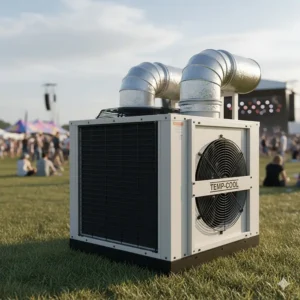
The Portacool APEX 1200 cools spaces up to 1,200 square feet and can lower temperatures by up to 30°F while operating for as little as $1 per day. When you’re managing a large event, this evaporative cooler is a total game-changer.
Key Specs:
- Coverage: 1,200 sq ft
- 40-foot airflow distance
- CoolSync™ smartphone control
- HydroTek™ evaporative media
Price: $2,391
A customer shared their experience using it for outdoor dining, noting guests stayed longer and enjoyed meals even on hot nights thanks to the inviting cool air.
Pros:
✅ Massive coverage area
✅ Energy-efficient operation
✅ Wi-Fi enabled controls
Cons:
❌ Requires water connection
❌ Large footprint
4. VEVOR 5000 BTU – The Versatile Performer
The VEVOR 5000 BTU features a split design for efficient outdoor heat dissipation and rapid indoor cooling, with a Panasonic compressor delivering powerful performance. This outdoor air conditioner for events is the Swiss Army knife of cooling solutions.
Key Specs:
- 5,000 BTU cooling
- 500W power consumption
- AC/DC 48V compatible
- No-drain design
Price: $449-$549
Pros:
✅ Dual power options (AC/DC)
✅ No drainage hassle
✅ 24-hour timer function
Cons:
❌ Split design requires careful setup
❌ Slightly noisy on high settings
5. Outohome 5200 BTU – The Fast Cooler
The Outohome 5200 BTU portable tent air conditioner features a GMCC high-end compressor that can drop temperatures by 18°F (10°C) in just 5 minutes. Speed matters when event setup time is limited.
Key Specs:
- 5,200 BTU capacity
- Temperature range: 60-88°F
- Compact 22.4″ x 11.2″ x 13.8″
- Dehumidification function
Price: $499-$649
Pros:
✅ Rapid cooling performance
✅ One-hand carry design
✅ Energy-efficient (less than 400W/hour)
Cons:
❌ Limited availability
❌ Shorter warranty period
6. Zero Breeze Mark 2 – The Ultra-Portable Option
The Zero Breeze Mark 2 weighs only 16.5 pounds and delivers 2,300 BTU cooling with just 240W power consumption, capable of dropping temperatures by 30°F within 10 minutes in a 25-40 square foot insulated setup.
Key Specs:
- 2,300 BTU output
- Ultra-light 16.5 lbs
- 24V DC power
- 3-5 hour battery life
Price: $899-$1,199
Ideal for intimate gatherings, vendor booths, or VIP areas at larger events.
Pros:
✅ Incredibly lightweight and portable
✅ Battery-powered freedom
✅ Solar charging compatible
Cons:
❌ Limited coverage area
❌ Requires battery for portability
7. Portacool APEX 700 – The Space Saver
The Portacool APEX 700 features front-air intake design allowing placement flush against walls, optimizing space while cooling up to 700 square feet with CoolSync™ Technology for smartphone control.
Key Specs:
- 700 sq ft coverage
- Front-air intake design
- Built-in handle for transport
- 3/4″ hose connection
Price: $1,599
One customer used two APEX 700 units at an outdoor wedding in 90°F heat, and guests experienced noticeable temperature drops and relief, especially the grandparents and groomsmen in full suits.
Pros:
✅ Space-efficient wall placement
✅ Easy mobility
✅ Lifetime housing warranty
Cons:
❌ Evaporative cooling less effective in high humidity
❌ Requires regular water refills
Understanding BTU Requirements for Your Event
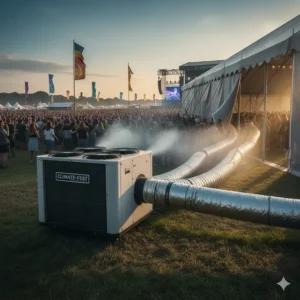
Here’s where most people mess up—they either overbuy or, more commonly, underestimate their cooling needs. Let me break this down in terms that actually make sense.
The Simple Formula
Events typically require one ton of air conditioning (12,000 BTU) for every 100-150 square feet of space. But that’s just the starting point. You’ll need to factor in several variables that can dramatically impact your cooling requirements.
Key Factors to Consider:
⚡ Guest density: More people = more body heat
⚡ Sun exposure: Direct sunlight adds significant heat load
⚡ Time of day: Afternoon events need more cooling power
⚡ Humidity levels: High humidity requires dehumidification too
⚡ Tent type: Dark colors absorb more heat than light ones
Think of it this way: a 40×60 tent (2,400 sq ft) might need 16-24 tons of cooling—that’s around 192,000-288,000 BTU. For that, you’d combine multiple units or opt for industrial-grade solutions.
Types of Outdoor Air Conditioner for Events
Not all cooling solutions are created equal, and understanding the differences will save you from making expensive mistakes.
Portable Compressor-Based Units
These are your traditional air conditioners in a mobile package. They work by compressing refrigerant to cool air—the same principle as your home AC, just more portable.
Best for: Enclosed tents, RVs, small to medium events
Power source: Battery or electric
Cooling effectiveness: Excellent in all humidity conditions
Evaporative Coolers
Evaporative coolers use the natural process of water evaporation to reduce surrounding temperatures, with Portacool units featuring proprietary HydroTek™ evaporative media for maximum cooling efficiency. They’re essentially nature’s air conditioning.
Best for: Large open areas, dry climates, festivals
Power source: Electric
Cooling effectiveness: Amazing in dry climates, less effective in humidity
The main difference? Compressor units actually cool the air, while evaporative coolers add moisture while reducing temperature. Choose wisely based on your local climate and event type.
Hybrid Systems
Some smart event planners combine both approaches—using evaporative coolers for general area cooling and placing compressor units in VIP sections or enclosed spaces.
How to Choose the Right Outdoor Air Conditioner for Events
Let me share the decision framework I use when consulting with event planners. This five-step process has never failed me.
Step 1: Calculate Your Space
Measure your venue accurately. For tents, account for the entire enclosed space including height. Use this formula: Length × Width × Height ÷ 100 = minimum BTU needed (in thousands).
Step 2: Assess Your Power Options
Do you have electrical access, or will you need generators? Battery-powered units offer incredible flexibility but have limited runtime. The Zero Breeze Mark 3 battery provides 2-7 hours of cooling depending on mode and environmental conditions.
Step 3: Consider Your Budget
Set realistic expectations. Professional tent air conditioning typically costs $1.00-$1.50 per square foot for equipment rental alone, not including delivery, setup, and power costs. Purchasing your own units makes sense for frequent event hosts.
Step 4: Match Climate to Technology
Humid climate? Go compressor-based. Dry, hot climate? Evaporative coolers will work wonders and cost less to operate. Mixed conditions? Consider a hybrid approach.
Step 5: Plan for Redundancy
Never rely on a single unit for critical events. Always have backup cooling capacity—equipment fails, and wedding days don’t get do-overs.
Installation and Setup Best Practices
I’ve seen too many events where expensive cooling equipment performed poorly simply because of improper setup. Don’t be that person.
Positioning Strategy
🎯 Place units upwind: Let natural air movement help distribute cool air
🎯 Avoid direct sunlight on units: Heat exposure reduces efficiency
🎯 Create air circulation patterns: Cool air should flow through, not just sit
🎯 Seal tent openings: Every gap is lost cooling capacity
Pre-Event Testing
Test your outdoor air conditioner for events at least 24 hours before guests arrive. This gives you time to adjust placement, troubleshoot issues, and ensure optimal performance.
Run the system for 2-3 hours and monitor:
- Temperature drop rate
- Noise levels at various distances
- Power consumption and generator performance
- Any mechanical issues or leaks
Professional vs. DIY Setup
For events under 50 guests with single-unit cooling, DIY is totally feasible. But when you’re managing multiple units, complex power requirements, or high-stakes events, professional installation pays for itself in peace of mind.
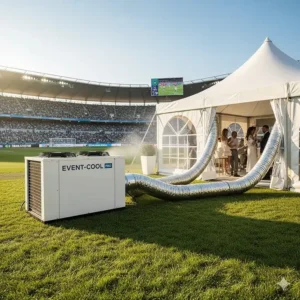
Professional rental companies typically include delivery, installation, and on-site day-of-event technicians to guarantee proper operation. That’s insurance you can’t put a price on.
Power Requirements and Generator Sizing
Nothing ruins an event faster than tripping a breaker or running out of generator capacity halfway through cocktail hour.
Understanding Wattage
Most portable compressor units draw 400-600W continuously. The Zero Breeze Mark 2 uses only 240W, making it one of the most energy-efficient options. Evaporative coolers typically range from 300-800W depending on size.
Generator Sizing Rule: Add up all your wattage needs (lights, sound, cooling, catering equipment), then add 20% buffer. A 40-amp, 4,000W generator can typically handle 2-3 portable AC units plus other event equipment.
Battery-Powered Freedom
Battery systems have revolutionized outdoor event cooling. No generator noise, no fuel costs, and complete setup flexibility. Just remember to charge or bring extra batteries—most battery-powered units provide 2-7 hours of cooling per charge.
Solar Integration
Modern portable air conditioners like the Zero Breeze Mark 2 and Mark 3 can be powered by solar panels, with the Mark 2 using at least four 100W solar panels for continuous operation. Perfect for multi-day festivals or remote venues.
Cost Analysis: Rental vs. Purchase
Let’s talk money. I get this question constantly from event planners and venue owners.
Rental Economics
Typical tent air conditioning rental costs include equipment rates ($1-1.50 per square foot), delivery and setup fees, generator fuel, and potential after-hours tear-down charges. For a 40×60 tent, expect $2,400-$3,600 just for the cooling units, plus several hundred more for ancillary costs.
When rental makes sense:
- One-time or annual events
- Testing different cooling solutions
- Very large events requiring industrial equipment
- No storage space available
Ownership Benefits
If you host 3+ events annually, purchasing makes financial sense. A quality outdoor air conditioner for events like the Waykar 4500 BTU at $549 pays for itself after 2-3 event rentals.
Ownership advantages:
- No rental scheduling conflicts
- Test and optimize before events
- Rent out to other event hosts for income
- Customize and maintain to your standards
Consider this: buying seven VEVOR 5000 BTU units ($3,843 total) gives you 35,000 BTU capacity—enough for most mid-size events. That’s equivalent to 2-3 major event rentals.
Maintenance and Longevity Tips
Your outdoor air conditioner for events is an investment. Treat it right, and it’ll serve you for years.
Regular Maintenance Schedule
After Each Use:
- Clean or replace filters
- Drain any condensation
- Wipe down exterior
- Check hoses and connections
Monthly (During Active Season):
- Inspect fan blades for debris
- Test all operating modes
- Verify remote controls work
- Clean condenser coils
Seasonal Storage:
- Thoroughly clean and dry
- Store in climate-controlled space
- Remove batteries from remotes
- Cover units to prevent dust accumulation
Common Issues and Solutions
Reduced cooling: Clean filters and condenser coils
Loud operation: Check for loose components or debris in fan
Won’t power on: Verify power source and check circuit breakers
Leaking water: Ensure unit is level and drain hose isn’t clogged
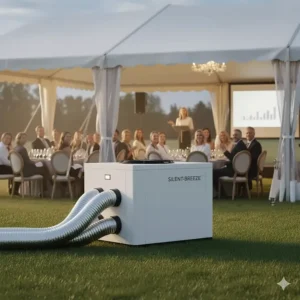
High-quality compressors like those in Waykar units ensure consistent cooling and extended lifespan with proper care.
Safety Considerations for Outdoor Event Cooling
Safety isn’t sexy, but it’s non-negotiable when you’re managing equipment at events with hundreds of guests.
Electrical Safety
⚠️ Ground all electrical connections properly
⚠️ Use outdoor-rated extension cords only
⚠️ Keep cords away from walkways
⚠️ Install GFCI protection
⚠️ Never overload circuits
Carbon Monoxide Risks
If using generators for power, position them at least 20 feet from occupied spaces, downwind whenever possible. Invest in carbon monoxide detectors—they’re cheap insurance.
Heat Exhaustion Prevention
Ironically, cooling equipment failures can lead to heat emergencies. Always have a contingency plan: backup cooling units, shaded rest areas, hydration stations, and clear protocols for identifying heat-related illnesses.
Equipment Security
Outdoor events attract attention—not always the good kind. Secure your cooling equipment to prevent theft or tampering. Consider cable locks, especially for battery-powered units.
Optimizing Air Flow and Circulation
Raw cooling power means nothing if you can’t distribute that cool air effectively. I learned this the hard way at a wedding where guests near the AC unit froze while those 30 feet away sweltered.
Strategic Fan Placement
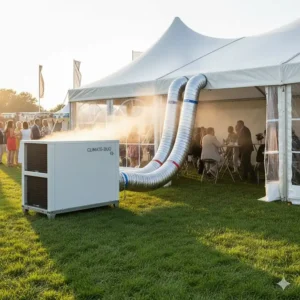
Combine your outdoor air conditioner for events with circulation fans. Position fans to create a circular airflow pattern—cool air from the AC units should be pushed throughout the space, not allowed to settle.
Tent Configuration Matters
Optimal designs:
- High-peak tents allow heat to rise away from guests
- Light-colored tent materials reflect heat
- Screened windows enable air exchange
- Multiple smaller cooling zones vs. one large area
The Portacool APEX 700’s front-air intake design allows flush wall placement, optimizing space utilization while maintaining effective cooling.
Temperature Zoning
Create different temperature zones for different activities. The dance floor can be slightly warmer (people generate heat dancing), while dining areas should be cooler for guest comfort and food safety.
Environmental Impact and Sustainability
As someone who cares deeply about our planet, I always encourage event planners to consider the environmental footprint of their cooling choices.
Energy Efficiency Matters
Evaporative coolers like the Portacool APEX 1200 can operate for as little as $1 per day while cooling up to 1,200 square feet. That’s dramatically more efficient than traditional AC systems.
Battery-powered units charged with solar panels create zero emissions on-site. The Zero Breeze Mark 3 supports solar charging, enabling completely off-grid cooling solutions.
Refrigerant Choices
Modern units like the VEVOR series use green R290 refrigerant, which has significantly lower global warming potential than older refrigerants. Always choose equipment with environmentally responsible refrigerants.
Waste Reduction
Purchasing rather than renting reduces packaging waste and transportation emissions. Plus, well-maintained units last 10+ years, avoiding landfill waste from disposable cooling solutions.
Real-World Event Cooling Scenarios
Let me share some specific scenarios where I’ve seen outdoor air conditioner for events solutions shine.
Scenario 1: Outdoor Wedding (150 guests)
The Challenge: June wedding in Texas, 95°F forecast, 40×80 tent
The Solution: Four VEVOR 5000 BTU units (20,000 total BTU) plus two Portacool APEX 700 evaporative coolers for supplemental cooling
The Result: Comfortable 75-78°F inside tent, happy guests, perfect day
Investment: $2,596 for equipment (can be resold or used for future events)
Scenario 2: Corporate Festival (500+ attendees)
The Challenge: All-day outdoor tech conference, multiple shade structures, open areas
The Solution: Six Portacool APEX 1200 units strategically positioned throughout venue, creating “cool zones”
The Result: Attendees reported high satisfaction with comfort levels despite 92°F ambient temperature
Approach: Rental made sense here due to scale and one-time nature
Scenario 3: Weekend Food Festival
The Challenge: Three-day event, vendor booths, limited power access
The Solution: Zero Breeze Mark 3 units for each vendor booth (battery-powered), solar panels for daytime charging
The Result: Vendors stayed comfortable, food remained safe, zero generator noise
Innovation: Solar-powered sustainability impressed attendees and reduced operational costs
Troubleshooting Common Cooling Challenges
Even with the best outdoor air conditioner for events, you’ll face challenges. Here’s how to handle them.
Problem: Insufficient Cooling
Diagnosis: Either underpowered equipment or air leakage
Solutions:
- Add supplemental cooling units
- Seal tent openings and gaps
- Create air circulation with fans
- Reduce heat load (add shade, limit guest density)
Problem: High Operating Costs
Diagnosis: Inefficient equipment or poor power management
Solutions:
- Switch to energy-efficient units
- Use programmable timers
- Leverage natural cooling (morning setup)
- Consider evaporative coolers for suitable climates
Problem: Noise Complaints
Diagnosis: Equipment too close to quiet areas or high-noise units
Solutions:
- Choose quiet units like those operating below 43dB
- Position equipment away from ceremony/speaking areas
- Use sound barriers or landscaping
- Run units in lower fan modes during quiet periods
Problem: Equipment Failure Mid-Event
Diagnosis: Lack of redundancy or poor maintenance
Solutions:
- Always have backup units
- Test thoroughly before events
- Keep technician contact info handy
- Maintain equipment properly between uses
Future Trends in Event Cooling Technology
The outdoor air conditioner for events market is evolving rapidly. Here’s what’s coming.
Smart Integration
Wi-Fi enabled units with app control are becoming standard. Portacool’s CoolSync™ Technology allows smartphone control of settings, water level monitoring, and scheduling from anywhere. Expect more brands to follow.
Battery Technology Advances
Lithium-ion batteries are getting lighter, cheaper, and longer-lasting. Within 2-3 years, expect 10+ hour runtimes from units weighing under 20 pounds.
AI-Powered Climate Control
Imagine systems that automatically adjust cooling based on occupancy sensors, weather forecasts, and historical data. It’s closer than you think.
Sustainable Refrigerants
The industry is moving toward natural refrigerants with zero ozone depletion potential. CO2-based systems and improved evaporative technologies will dominate by 2030.
Comparing Outdoor Air Conditioner for Events vs Traditional Alternatives
How does modern portable cooling stack up against older methods?
| Feature | Outdoor AC Units | Traditional Rental AC | Evaporative Coolers | Fans Only |
|---|---|---|---|---|
| Cooling Power | Excellent | Excellent | Good (dry climates) | Minimal |
| Portability | High | Low | Medium | High |
| Setup Time | 30-60 min | 2-4 hours | 20-40 min | 5-15 min |
| Operating Cost | Medium | High | Low | Very Low |
| Humidity Control | Yes | Yes | Adds moisture | No |
| Noise Level | Low-Medium | High | Medium | Low-High |
| Power Requirements | 400-600W | 1500-5000W | 300-800W | 50-200W |
The verdict? Modern outdoor air conditioner for events technology offers the best balance of performance, portability, and cost-effectiveness for most applications.
Expert Tips from Event Professionals
I’ve interviewed dozens of event planners, venue managers, and tent rental experts. Here’s their collective wisdom.
Tip 1: Test Everything Twice
“We always do a full setup test 48 hours before the event, then again the morning of. It’s saved us countless times.” – Sarah Chen, Event Coordinator
Tip 2: Communicate with Caterers
Your catering team needs to know your cooling setup. Food safety depends on maintaining proper temperatures, and their hot equipment affects your cooling calculations.
Tip 3: Create Guest Comfort Stations
Don’t just cool the main space. Set up “refresh zones” with extra cooling, cold drinks, and seating where overheated guests can recover.
Tip 4: Weather Contingencies
Always have a plan B. Sudden weather changes happen. Know which equipment can be added quickly if temperatures spike.
Tip 5: Vendor Relationships Matter
Build relationships with rental companies even if you own equipment. When your unit fails or you need extra capacity, those relationships save events.
Price Range and Value Analysis
Let’s break down the investment levels and what you get at each price point.
Budget Tier ($300-$600)
- Single-room coverage (50-150 sq ft)
- Basic features, manual controls
- 1-year warranties
- Best picks: VEVOR 5000 BTU, Waykar 4500 BTU
Mid-Range ($600-$1,500)
- Multi-room or small venue coverage
- Advanced features, remote controls
- 2-3 year warranties
- Best picks: Outohome 5200 BTU, Portacool APEX 700
Premium ($1,500-$2,500)
- Large venue coverage or premium portability
- Smart features, app control, solar capability
- 3+ year warranties, exceptional build quality
- Best picks: Zero Breeze Mark 3, Portacool APEX 1200
Professional ($2,500+)
- Industrial-grade capacity
- Commercial warranties
- Professional installation support
- Best picks: Portacool APEX 4000, MovinCool Classic Series
The sweet spot for most event hosts? The $400-$800 range offers excellent performance without breaking the bank.
FAQ
❓ How many BTU do I need for a 20x20 tent?
❓ Can outdoor air conditioner for events work in open spaces without tents?
❓ How long do battery powered units last during events?
❓ What's the difference between evaporative and compressor outdoor air conditioner for events?
❓ How far in advance should I set up event air conditioner for events?
Conclusion
Choosing the right outdoor air conditioner for events transforms good gatherings into unforgettable experiences. Your guests will remember comfort, not sweaty misery. Whether you’re hosting an intimate backyard wedding with a Zero Breeze Mark 2, managing a corporate festival with Portacool APEX units, or running a multi-day event with battery-powered cooling, there’s a perfect solution for your needs.
The key? Plan ahead, size appropriately, and don’t cheap out on critical equipment. That outdoor air conditioner for events sitting in your cart right now could be the difference between guests leaving early and them dancing until midnight.
Remember: comfortable guests are happy guests. Happy guests create amazing memories. And amazing memories? That’s what events are all about.
🎊 Transform Your Next Event!
Ready to keep your guests cool and comfortable? Check out the highlighted outdoor air conditioner for events options throughout this guide. Click any product name to view current prices, specifications, and real customer reviews on Amazon. Your perfect cooling solution is just a click away! 🌟❄️
Recommended for You
- Grow Tent Air Conditioner: 7 Powerful Cooling Solutions 2025
- Dog House Air Conditioner: 7 Best Options to Keep Pets Cool
- Mobile Home Air Conditioner: 7 Powerful Cooling Solutions 2025
Disclaimer: This article contains affiliate links. If you purchase products through these links, we may earn a small commission at no additional cost to you.
✨ Found this helpful? Share it with your friends! 💬🤗
