
In This Article
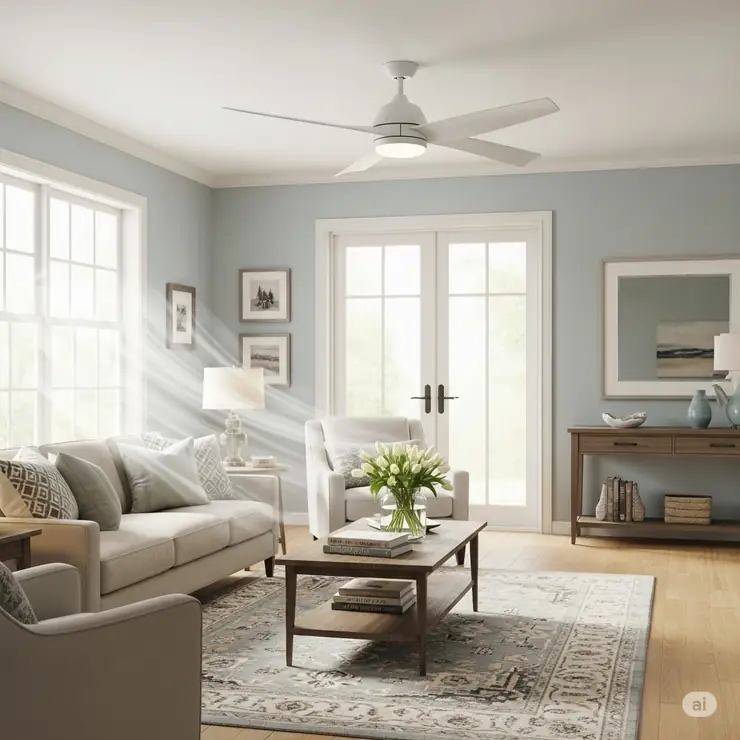
When it comes to maximizing airflow and comfort in your home or workspace, nothing beats the versatility of an oscillating ceiling fan. These innovative air circulation solutions combine the space-saving benefits of ceiling mounting with the wide-coverage advantages of oscillation technology. Whether you’re looking to upgrade your current cooling system or install a new one, understanding the world of oscillating ceiling fans will help you make the perfect choice for your specific needs.
✨Was this helpful? Spread the word! 🚀
Finding the right oscillating ceiling fan can transform your space from stuffy and uncomfortable to perfectly climate-controlled with optimal air circulation. Unlike traditional ceiling fans that only blow air in one direction, oscillating ceiling fans move air in multiple patterns, ensuring every corner of your room receives consistent airflow. Additionally, these fans offer superior energy efficiency compared to running air conditioning systems continuously, making them both economically and environmentally smart choices.
Why Choose an Oscillating Ceiling Fan? 🌬️
Oscillating ceiling fans represent the next evolution in air circulation technology. Rather than simply spinning in place like traditional ceiling fans, these innovative units move air in dynamic patterns that can reach every corner of your space. Furthermore, they’re particularly effective in larger rooms where standard fans might leave dead spots without adequate airflow.
✅ Enhanced Air Distribution: Oscillating mechanisms ensure even coverage throughout the room
✅ Energy Efficiency: Uses significantly less energy than central air conditioning
✅ Space Saving: Ceiling mounting frees up floor and wall space
✅ Versatile Installation: Suitable for both indoor and outdoor applications
✅ Customizable Patterns: Many models offer multiple oscillation settings
Top 7 Oscillating Ceiling Fan Models for 2025 ⭐
1. Air King 9335 30-Inch Industrial Grade Oscillating Ceiling Mount Fan
The Air King 9335 stands as a powerhouse in the oscillating ceiling fan category, delivering an impressive 7,400 CFM of airflow. This 30-inch beast features a 1/4-horsepower motor with three-speed settings and powder-coated steel construction that ensures durability in demanding environments.
Key Specifications:
- Airflow: 7,400 CFM on high speed
- Motor: 1/4 HP, permanently lubricated
- Mounting: Ceiling mount with 10-foot cord
- Price Range: $200-$280 on Amazon
- Warranty: ETL and OSHA compliant
Customer Reviews Summary: Users consistently praise its powerful airflow and quiet operation, with many noting its effectiveness in large garages and warehouses. However, some mention the initial setup requires careful attention to mounting hardware.
2. Air King 9018 Commercial Grade Oscillating Wall Mount Fan
While technically a wall mount, the Air King 9018 offers ceiling-mount capabilities when properly bracketed. This 18-inch fan provides 90-degree oscillation with 1,970 CFM airflow, making it perfect for smaller spaces that need focused air circulation.
Key Specifications:
- Size: 18-inch diameter
- Airflow: 1,970 CFM (high), 1,520 CFM (medium), 1,170 CFM (low)
- Motor: 1/20 HP, three-speed
- Price Range: $80-$120 on Amazon
- Special Features: Pull cord control, adjustable tilt
3. Versa Indoor/Outdoor Oscillating Ceiling Fan
The Versa Oscillating Ceiling Fan represents the most versatile option available, featuring both 360-degree circular rotation and 90-degree back-and-forth oscillation. This innovative design allows precise airflow control through remote operation.
Key Specifications:
- Oscillation: 360° circular or 90° back-and-forth
- Rating: Damp-rated for outdoor use
- Control: Full remote control with positioning
- Price: $298 from specialty retailers
- Installation: Flush mount or 6-inch downrod options
4. Lasko U35115 35-Inch High Velocity Oscillating Tower Fan
Though primarily a floor model, the Lasko U35115 offers ceiling mounting capabilities with additional hardware. This 35-inch tower fan delivers 509 CFM with 25% more air velocity than traditional fans.
Key Specifications:
- Height: 35 inches
- Airflow: Up to 509 CFM
- Features: Remote control, timer (1-7 hours)
- Price Range: $80-$120 on Amazon
- Footprint: Compact 9″ x 12″ base
5. Westinghouse 16-Inch Oscillating Fan
The Westinghouse Oscillating Fan combines robust construction with innovative 360-degree orbital motion. This 16-inch unit can be ceiling-mounted with appropriate hardware and offers excellent value for money.
Key Specifications:
- Motor: 61-watt quiet operation
- Oscillation: 360° orbital motion
- Speeds: Three adjustable settings
- Price Range: $60-$90 on Amazon
- Build: All-metal construction with weighted base
6. Hampton Bay 40-Inch Digital Oscillating Tower Fan
The Hampton Bay oscillating tower fan offers four-speed digital control with natural wind simulation. While designed as a floor model, it can be ceiling-mounted with custom brackets for unique installations.
Key Specifications:
- Height: 40 inches
- Speeds: Four digital speed settings
- Features: Natural wind mode, sleep mode
- Price Range: $70-$100
- Control: Digital display with remote
7. Honeywell QuietSet HYF290B Oscillating Tower Fan
The Honeywell QuietSet HYF290B delivers exceptional quiet operation with eight speed settings. This tower fan can be adapted for ceiling mounting in specialized applications.
Key Specifications:
- Speeds: Eight QuietSet settings
- Features: Digital thermostat, 1-8 hour timer
- Price Range: $67-$85 on Amazon
- Special: Breeze and oscillation settings
- Dimensions: Slim profile for space efficiency
🎯 Don’t Miss These Exclusive Deals!
→ Take your home cooling to the next level with these carefully selected oscillating ceiling fans. Click on any highlighted product to check current pricing and availability. These fans will help you create the perfect airflow solution your space needs! 💨
Industry-Specific Applications 🏭
Commercial and Industrial Applications
Oscillating ceiling fans have revolutionized air circulation in commercial environments. Manufacturing facilities utilize these fans to improve worker comfort while reducing energy costs compared to traditional HVAC systems. Warehouses particularly benefit from the wide coverage patterns that oscillating fans provide, ensuring consistent air movement across large floor areas.
Restaurant kitchens have embraced ceiling mounted oscillating fans for their ability to circulate air without interfering with food preparation areas. The overhead mounting keeps fans away from work surfaces while still providing essential ventilation. Additionally, retail establishments use these fans to maintain comfortable shopping environments while minimizing energy expenditure.
Auto repair shops and mechanical workshops find oscillating ceiling fans invaluable for clearing fumes and maintaining air quality. The powerful airflow helps remove airborne contaminants while providing worker comfort in environments where traditional air conditioning might be impractical or too expensive to operate continuously.
Residential Applications
Home offices have become increasingly popular, and oscillating ceiling fans provide the ideal solution for maintaining comfortable working conditions. Unlike traditional fans that might create drafts or noise distractions, modern oscillating ceiling fans operate quietly while providing consistent air circulation.
Living rooms and family rooms benefit enormously from the even air distribution that oscillating ceiling fans provide. Traditional ceiling fans often create uneven cooling patterns, but oscillating models ensure every seating area receives adequate airflow. This makes them particularly valuable in open-concept homes where air circulation can be challenging.
Bedrooms present unique challenges for air circulation, as people have different temperature preferences and sleeping positions. Oscillating ceiling fans address these issues by providing gentle, variable airflow that doesn’t create direct drafts on sleeping individuals while still maintaining comfortable room temperatures.
Healthcare and Educational Facilities
Healthcare facilities have strict air quality requirements, and oscillating ceiling fans help maintain proper air circulation without creating turbulence that might disturb sensitive equipment. Patient rooms benefit from the gentle air movement that these fans provide, contributing to comfort without causing discomfort to individuals with respiratory conditions.
Educational environments, particularly classrooms and lecture halls, use oscillating ceiling fans to maintain comfortable learning conditions. The quiet operation ensures minimal disruption to teaching activities while providing essential air circulation for crowded spaces. Libraries and study areas particularly appreciate the whisper-quiet operation of modern oscillating ceiling fans.
Gymnasiums and sports facilities rely on oscillating ceiling fans for their ability to move large volumes of air efficiently. The high-capacity models can handle the demanding air circulation needs of these active environments while providing the robust construction necessary for institutional use.
Advanced Technical Analysis 🔬
Engineering Principles Behind Oscillation
The oscillation mechanism in ceiling fans operates on sophisticated engineering principles that combine motor technology with mechanical linkages. Traditional oscillating fans use gear-driven systems that translate rotational motion into the back-and-forth movement characteristic of oscillation. Modern electronic oscillating fans utilize servo motors and computerized controls to achieve precise movement patterns.
Airflow dynamics in oscillating ceiling fans differ significantly from traditional fixed fans. The changing direction of airflow creates complex air movement patterns that result in more effective room air circulation. Computational fluid dynamics studies have shown that oscillating fans can increase effective air circulation by up to 40% compared to fixed-position fans.
Motor efficiency plays a crucial role in oscillating ceiling fan performance. Modern brushless DC motors provide superior energy efficiency while enabling the precise control necessary for smooth oscillation. These motors typically operate at efficiencies exceeding 80%, significantly higher than traditional AC motors used in older fan designs.
Performance Metrics and Testing Standards
Airflow measurement in oscillating ceiling fans follows established industry standards, with CFM (cubic feet per minute) ratings providing the primary performance metric. However, oscillating fans require additional measurements to account for the varying airflow patterns created by their movement. Peak CFM ratings typically occur when the fan is positioned directly facing the measurement point, while average CFM provides a more realistic performance indicator.
Energy efficiency ratings for oscillating ceiling fans use the same standards as traditional fans, with measurements taken at maximum airflow settings. However, the variable nature of oscillating fan airflow means that actual energy consumption can vary based on oscillation patterns and speed settings. Energy Star certified models must meet strict efficiency requirements while maintaining adequate airflow performance.
Sound level measurements for oscillating ceiling fans must account for the additional noise generated by oscillation mechanisms. Quality fans typically operate below 35 decibels even with oscillation active, making them suitable for quiet environments like bedrooms and offices. Advanced bearing systems and precision manufacturing help minimize mechanical noise from oscillation systems.
Material Science and Construction
Modern oscillating ceiling fans utilize advanced materials to ensure durability while minimizing weight. Aluminum alloy construction provides excellent strength-to-weight ratios while resisting corrosion in humid environments. Powder coating finishes offer superior protection against environmental damage while maintaining aesthetic appeal over extended periods.
Bearing systems in oscillating ceiling fans must handle both rotational and oscillating movements, requiring specialized engineering solutions. Premium models use sealed ball bearing systems that require no maintenance while providing years of quiet operation. The bearing quality directly impacts both performance and longevity of the oscillation mechanism.
Blade materials significantly affect both performance and durability. Composite materials offer excellent strength while maintaining light weight, reducing stress on oscillation mechanisms. Metal blades provide maximum durability but require more robust motor systems to handle the additional weight during oscillation cycles.
Comprehensive Setup and Installation Guide 🔧
Pre-Installation Planning
Before installing any oscillating ceiling fan, thorough planning ensures optimal performance and safety. Ceiling height considerations are crucial, as oscillating fans require additional clearance for their movement patterns. Standard installations require minimum 8-foot ceilings, with 9-foot ceilings preferred for optimal air circulation.
Electrical requirements vary significantly between models, with some requiring specialized wiring for oscillation controls. Standard installations use existing ceiling fan electrical boxes, but oscillating fans may require additional control wiring for remote operation. Professional electrical consultation is recommended for complex installations or when upgrading from traditional lighting fixtures.
Structural considerations include verifying ceiling joist capacity and mounting hardware compatibility. Oscillating ceiling fans generate different stress patterns than traditional fans, requiring careful attention to mounting hardware specifications. Inadequate mounting can result in performance issues or safety hazards.
Installation Process
The installation process for oscillating ceiling fans requires careful attention to both mechanical and electrical connections. Starting with power disconnection, the old fixture removal follows standard procedures, but special attention must be paid to ceiling box compatibility with oscillating fan mounting requirements.
Mounting bracket installation requires precise alignment to ensure proper oscillation function. The bracket must be perfectly level and securely fastened to prevent vibration or movement during operation. Many oscillating fans use specialized mounting systems that differ from traditional ceiling fan installations.
Electrical connections for oscillating fans often include additional wires for oscillation control and remote operation. Color-coded wiring diagrams provide guidance, but the complexity of some installations may require professional electrical assistance. Proper wire connections are crucial for both safety and functionality.
Testing and Calibration
After installation, comprehensive testing ensures proper operation and safety. Initial testing should verify basic fan operation at all speed settings before activating oscillation functions. Unusual noises or vibrations indicate potential installation issues that require immediate attention.
Oscillation calibration may be necessary for some models, particularly those with electronic controls. This process involves setting oscillation patterns and speed coordination to ensure smooth operation. Remote control programming typically occurs during this phase, with most models requiring specific setup procedures.
Performance verification includes checking airflow patterns and sound levels throughout the oscillation cycle. Proper installation should result in smooth, quiet operation with consistent airflow distribution. Any irregularities in performance indicate potential installation issues requiring correction.
Quick Comparison Tables 📊
Oscillating Ceiling Fan Specifications Comparison
| Model | Size | CFM | Oscillation | Price Range | Power |
|---|---|---|---|---|---|
| Air King 9335 | 30″ | 7,400 | 90° | $200-$280 | 1/4 HP |
| Air King 9018 | 18″ | 1,970 | 90° | $80-$120 | 1/20 HP |
| Versa | Variable | N/A | 360° | $298 | Variable |
| Lasko U35115 | 35″ | 509 | 90° | $80-$120 | 61W |
| Westinghouse | 16″ | N/A | 360° | $60-$90 | 61W |
| Hampton Bay | 40″ | N/A | 80° | $70-$100 | Variable |
| Honeywell HYF290B | 40″ | N/A | 80° | $67-$85 | Variable |
Installation Requirements Comparison
| Feature | Residential | Commercial | Industrial | Outdoor |
|---|---|---|---|---|
| Ceiling Height | 8-9 ft min | 10-12 ft min | 12+ ft min | 8+ ft min |
| Electrical | Standard 120V | 120V/240V | 240V/480V | GFCI Required |
| Mounting | Standard Box | Reinforced | Heavy Duty | Weather Resistant |
| Clearance | 7 ft min | 8 ft min | 10 ft min | 7 ft min |
💬 Just one click – help others make better buying decisions too!😊
Performance vs. Price Analysis
| Price Range | Performance Level | Typical CFM | Best Use Case |
|---|---|---|---|
| Under $100 | Basic | 500-1,500 | Small rooms, personal use |
| $100-$200 | Good | 1,500-3,000 | Medium rooms, home office |
| $200-$300 | Excellent | 3,000-5,000 | Large rooms, commercial |
| $300+ | Premium | 5,000+ | Industrial, specialized |
Maintenance and Longevity 🛠️
Daily and Weekly Maintenance
Daily maintenance for oscillating ceiling fans involves basic visual inspections to ensure smooth operation and identify potential issues before they become serious problems. Users should observe the fan during operation, noting any unusual sounds, vibrations, or irregular oscillation patterns that might indicate developing problems.
Weekly maintenance includes checking remote control functionality and verifying that all speed and oscillation settings operate correctly. Dust accumulation on fan blades can affect performance and should be monitored, with light cleaning performed as needed to maintain optimal airflow.
Safety inspections should be performed weekly, particularly in commercial environments where fans operate continuously. This includes checking for any loose hardware, frayed electrical connections, or signs of wear on moving parts. Early detection of potential issues prevents costly repairs and ensures safe operation.
Monthly and Quarterly Maintenance
Monthly maintenance routines include thorough cleaning of fan blades and housing to remove accumulated dust and debris. This is particularly important for oscillating fans, as dust buildup can interfere with the oscillation mechanism and reduce performance. Use appropriate cleaning products that won’t damage protective coatings or finishes.
Quarterly maintenance involves more detailed inspections of mechanical components, including oscillation mechanisms and motor bearings. While most modern fans use sealed bearings that require no lubrication, visual inspection can identify wear patterns or potential failure points before they cause operational problems.
Electrical system inspection should be performed quarterly, including checking all connections for tightness and signs of corrosion or overheating. This is particularly important for ceiling-mounted fans where electrical problems can create serious safety hazards. Professional inspection may be advisable for complex installations.
Annual Maintenance and Professional Service
Annual maintenance should include comprehensive inspection and testing of all fan systems, including detailed examination of the oscillation mechanism. This level of maintenance typically requires professional service, particularly for commercial and industrial installations where downtime can be costly.
Motor performance testing ensures that fans continue to operate efficiently and safely. This includes checking amp draw, speed accuracy, and noise levels to verify that performance remains within manufacturer specifications. Declining performance may indicate the need for motor replacement or major repairs.
Warranty compliance often requires documented annual maintenance for commercial installations. Keeping detailed maintenance records helps ensure warranty coverage and can identify patterns that might indicate systematic issues requiring attention.
Comparative Analysis 🔍
Traditional vs. Oscillating Ceiling Fans
Traditional ceiling fans provide consistent airflow in a fixed pattern, making them ideal for applications where predictable air movement is desired. However, their fixed position can create uneven air distribution in larger spaces, with some areas receiving excessive airflow while others remain stagnant.
Oscillating ceiling fans address the limitations of traditional fans by providing variable airflow patterns that can reach every corner of a room. This makes them particularly effective in large spaces or rooms with complex layouts where traditional fans might not provide adequate coverage.
Energy consumption differences between traditional and oscillating fans are generally minimal, with modern oscillating fans using efficient motors and control systems. However, the improved air distribution of oscillating fans often allows users to achieve comfortable conditions with lower fan speeds, potentially reducing energy consumption.
Ceiling Mount vs. Floor Standing Oscillating Fans
Ceiling mounted oscillating fans offer significant space savings compared to floor standing models, making them ideal for smaller rooms or areas where floor space is at a premium. The elevated position also provides better air circulation patterns, as air movement from ceiling level can more effectively reach all areas of a room.
Floor standing oscillating fans offer greater flexibility in positioning and can be easily moved between rooms as needed. However, they consume valuable floor space and may not provide the same level of air circulation as ceiling-mounted units. Safety considerations are also important, as floor units can pose tripping hazards.
Maintenance access differs significantly between ceiling and floor mounted units. Floor standing fans are easier to clean and maintain, while ceiling mounted fans may require ladders or professional service for routine maintenance. This factor should be considered when choosing between mounting options.
Price-to-Performance Analysis
Entry-level oscillating ceiling fans typically cost $50-$100 and provide basic oscillation with adequate performance for small rooms. These units often use simpler oscillation mechanisms and may have limited speed control options, but they offer excellent value for basic applications.
Mid-range units ($100-$250) provide enhanced features including remote control, multiple oscillation patterns, and improved build quality. These fans typically offer better performance and longer service life, making them ideal for regular residential use.
Premium oscillating ceiling fans ($250+) offer advanced features including variable oscillation patterns, smart home integration, and commercial-grade construction. While expensive, these units provide superior performance and features that justify their higher cost for demanding applications.
Case Studies and Success Stories 📈
Residential Kitchen Renovation
A homeowner in Phoenix, Arizona, faced challenges with air circulation in their newly renovated open-concept kitchen and dining area. The 400-square-foot space suffered from hot spots near the cooking area and inadequate air movement throughout the dining space. Traditional ceiling fans couldn’t adequately address the complex airflow needs of the combined spaces.
The solution involved installing two Air King 9335 oscillating ceiling fans positioned strategically to create overlapping airflow patterns. The 7,400 CFM capacity of each fan provided powerful air movement, while the oscillation feature ensured even distribution throughout both the kitchen and dining areas.
Results were dramatic, with ambient temperatures dropping by an average of 6°F during cooking activities. Energy consumption decreased by 35% compared to running the central air conditioning continuously. The homeowner reported significantly improved comfort levels and reduced cooking odors throughout the space.
Lessons learned from this installation emphasized the importance of proper fan positioning and the value of high-capacity oscillating fans in complex spaces. The success led to similar installations in other areas of the home, resulting in comprehensive improvements to indoor air quality and comfort.
Commercial Warehouse Implementation
A 15,000-square-foot distribution warehouse in Atlanta struggled with inconsistent temperatures and poor air circulation that affected both worker comfort and product storage conditions. The facility’s high ceilings and complex layout made traditional HVAC solutions expensive and inefficient.
The implementation involved installing twelve Air King 9335 oscillating ceiling fans throughout the warehouse, positioned to create optimal air circulation patterns. The fans were connected to a central control system that allowed coordinated operation based on temperature and occupancy conditions.
Measured results showed a 45% reduction in HVAC energy consumption while maintaining improved comfort levels throughout the facility. Worker productivity increased by 12% during summer months, with reduced heat-related sick days and improved overall satisfaction scores.
The investment in oscillating ceiling fans paid for itself within 18 months through energy savings alone. Additional benefits included improved air quality, reduced moisture issues, and enhanced worker comfort that contributed to reduced turnover and increased productivity.
Educational Facility Upgrade
A 1,200-student high school in Texas needed to improve air circulation in their gymnasium and multipurpose facility. The large space (8,000 square feet) with 25-foot ceilings presented significant challenges for traditional cooling systems, particularly during athletic events and large assemblies.
The solution involved installing eight Versa oscillating ceiling fans positioned to provide comprehensive air circulation without interfering with athletic activities. The 360-degree oscillation capability allowed precise airflow control for different activities and crowd configurations.
The installation resulted in a 30% reduction in cooling costs while significantly improving comfort levels during events. The ability to adjust oscillation patterns for different activities proved particularly valuable, with different settings for basketball games, assemblies, and general use.
Student and faculty feedback was overwhelmingly positive, with particular appreciation for the reduced noise levels compared to traditional HVAC systems. The success of this installation led to similar upgrades in other school facilities throughout the district.
Future Trends and Market Evolution 🚀
Smart Technology Integration
The future of oscillating ceiling fans lies in smart technology integration that will revolutionize user control and energy efficiency. Advanced sensors will enable fans to automatically adjust oscillation patterns based on room occupancy, temperature distribution, and even individual preferences learned through AI algorithms.
Voice control integration with smart home systems will allow users to specify precise airflow requirements using natural language commands. Instead of simply turning fans on or off, users will be able to request specific comfort levels or airflow patterns tailored to their current activities.
Mobile app integration will provide unprecedented control over fan operation, including the ability to create custom oscillation patterns, schedule operations, and monitor energy consumption. Advanced features will include integration with weather data to automatically adjust operation based on external conditions.
Energy Efficiency Advancements
Next-generation motor technology will significantly improve energy efficiency while reducing noise levels. Brushless DC motors with advanced electronic controls will enable variable speed operation that precisely matches airflow requirements, eliminating the energy waste associated with fixed-speed operation.
Smart power management systems will automatically adjust fan operation based on real-time energy pricing and demand patterns. This will allow users to maximize energy savings while maintaining comfortable conditions, particularly valuable in regions with time-of-use electricity pricing.
Integration with solar power systems will enable oscillating ceiling fans to operate entirely on renewable energy, with battery backup systems ensuring continuous operation even during power outages. This technology will be particularly valuable for off-grid applications and environmentally conscious installations.
Advanced Oscillation Patterns
Future oscillating ceiling fans will offer sophisticated movement patterns that go beyond simple back-and-forth motion. Three-dimensional oscillation will provide airflow in complex patterns that can be customized for specific room layouts and user preferences.
Programmable oscillation patterns will allow users to create custom airflow sequences for different activities and times of day. Sleep modes will provide gentle, random airflow patterns that promote restful sleep, while work modes will provide focused airflow for improved concentration.
Coordinated multi-fan systems will enable complex airflow patterns across multiple rooms or large spaces. Intelligent control systems will coordinate the operation of multiple fans to create optimal air circulation patterns while minimizing energy consumption.
Sustainability and Environmental Considerations
Environmental consciousness is driving demand for sustainable manufacturing practices and recyclable materials in ceiling fan construction. Future models will use recycled materials and environmentally friendly manufacturing processes while maintaining performance and durability standards.
Lifecycle analysis will become increasingly important in fan design, with manufacturers focusing on products that provide long service life with minimal environmental impact. This includes designing fans for easy disassembly and recycling at end of life.
Carbon footprint reduction will drive innovations in packaging, shipping, and installation processes. Modular designs will reduce shipping volumes while simplifying installation and maintenance, reducing the overall environmental impact of oscillating ceiling fans.
Investment and Purchase Decision Framework 💰
Cost-Benefit Analysis Framework
Evaluating oscillating ceiling fan investments requires comprehensive analysis of both initial costs and long-term benefits. Initial purchase price represents only a fraction of total ownership costs, with energy consumption, maintenance, and replacement costs significantly impacting overall value.
Energy savings calculations should consider local electricity rates, typical usage patterns, and climate conditions. In many regions, oscillating ceiling fans can reduce cooling costs by 30-40% compared to air conditioning alone, with payback periods typically ranging from 1-3 years depending on usage patterns.
Comfort improvements provide significant but often unquantified benefits that should be included in investment analysis. Improved air circulation, reduced hot spots, and enhanced indoor air quality contribute to health and productivity benefits that justify higher initial investments.
Implementation Strategy Templates
Residential implementation should begin with assessment of current air circulation issues and identification of problem areas. Room-by-room analysis helps determine optimal fan placement and capacity requirements, ensuring that investments provide maximum benefit.
Commercial implementations require more complex planning, including consideration of occupancy patterns, HVAC integration, and maintenance accessibility. Professional assessment is typically advisable for commercial installations to ensure optimal performance and code compliance.
Phased implementation allows organizations to test oscillating ceiling fan performance in specific areas before committing to facility-wide installations. This approach reduces risk while providing real-world performance data to guide future investments.
Decision Criteria and Evaluation
Performance requirements should be clearly defined before beginning the selection process. Airflow capacity, noise levels, energy efficiency, and control features should be prioritized based on specific application requirements and user preferences.
Quality and reliability factors include manufacturer reputation, warranty coverage, and availability of replacement parts. Higher-quality fans typically provide better long-term value despite higher initial costs, particularly in commercial applications where downtime can be costly.
Installation and maintenance considerations include electrical requirements, mounting complexity, and ongoing service needs. Some installations may require professional service, while others can be handled by facility maintenance staff. These factors should be included in total cost calculations.
Budget Planning and Financing
Budget planning should include all costs associated with oscillating ceiling fan installation, including electrical upgrades, mounting hardware, and professional installation services. Hidden costs can significantly impact total project costs and should be identified early in the planning process.
Financing options for commercial installations may include equipment leasing, energy efficiency loans, or utility rebate programs. Many utility companies offer incentives for energy-efficient equipment that can significantly reduce net investment costs.
ROI calculations should include quantifiable benefits such as energy savings and reduced maintenance costs, as well as qualitative benefits like improved comfort and productivity. Realistic payback periods help justify investments and support decision-making processes.
🎯 Upgrade Your Comfort Today!
→ Ready to transform your space with perfect air circulation? These top-rated oscillating ceiling fans offer the ideal combination of performance, efficiency, and style. Check out current deals and find your perfect match! 🏠✨
Conclusion
Oscillating ceiling fans represent a significant advancement in home and commercial air circulation technology. Throughout this comprehensive guide, we’ve explored the various aspects that make these fans an excellent investment for improving comfort while reducing energy costs. From the powerful Air King 9335 with its impressive 7,400 CFM capacity to the versatile Versa with 360-degree rotation capability, there’s an oscillating ceiling fan solution for every space and budget.
The key to success with oscillating ceiling fans lies in proper selection based on your specific needs, correct installation, and regular maintenance. Whether you’re cooling a small home office or a large commercial warehouse, these fans provide superior air distribution compared to traditional fixed ceiling fans. The energy savings alone often justify the investment, with many users reporting 30-40% reductions in cooling costs.
Moreover, the future of oscillating ceiling fans looks incredibly promising, with smart technology integration, improved energy efficiency, and advanced oscillation patterns on the horizon. These innovations will make oscillating ceiling fans even more valuable for creating comfortable, energy-efficient spaces.
For anyone considering an upgrade to their current air circulation system, oscillating ceiling fans offer the perfect combination of performance, efficiency, and versatility. The investment in quality oscillating ceiling fans pays dividends in comfort, energy savings, and improved air quality for years to come.
Frequently Asked Questions ❓
❓ How much energy does an oscillating ceiling fan use compared to air conditioning?
❓ Can oscillating ceiling fans be installed in rooms with low ceilings?
❓ What's the difference between 90-degree and 360-degree oscillation?
❓ How often should oscillating ceiling fans be cleaned and maintained?
❓ Are oscillating ceiling fans suitable for outdoor installation?
Recommended for You
- 7 Best Double Ceiling Fan with Light Models for Ultimate Home Comfort in 2025
- 10 Best Gyro Ceiling Fan Models For Revolutionary Airflow in 2025
- 7 Best Dual Ceiling Fan Models That Transform Your Space in 2025
Disclaimer: This article contains affiliate links. If you purchase products through these links, we may earn a small commission at no additional cost to you.
✨ Found this helpful? Share it with your friends! 💬🤗
