
In This Article
✨Was this helpful? Spread the word! 🚀
When I first moved into my cozy apartment with 8-foot ceilings, I thought I’d have to give up my dream of having a ceiling fan. Traditional fans with their long downrods would have turned my living room into an obstacle course! That’s when I discovered the amazing world of hugger ceiling fans – and honestly, it changed everything about my home’s comfort and style.
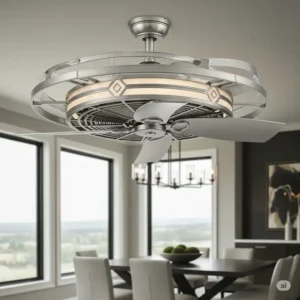
If you’re dealing with low ceilings but still want the cooling comfort and energy savings of a ceiling fan, you’re in exactly the right place. Throughout this comprehensive guide, I’ll walk you through everything you need to know about hugger ceiling fan options, from the most budget-friendly models to premium flush mount ceiling fan light combinations that’ll make your space both comfortable and stunning.
What Makes Hugger Ceiling Fans Special? 🌟
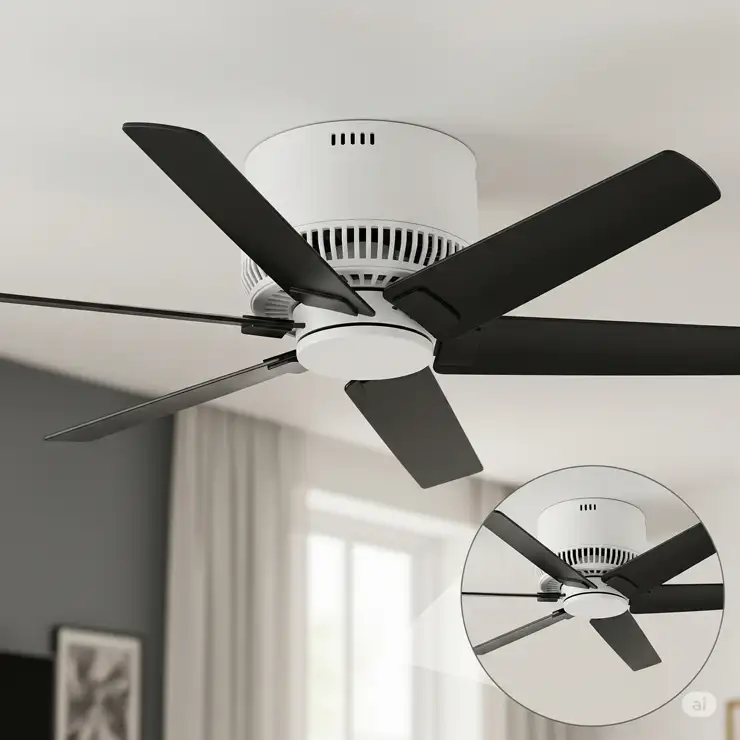
A hugger ceiling fan is essentially a flush mount ceiling light fan that attaches directly to your ceiling without any downrod. Think of it as the ceiling fan equivalent of a flush mount light fixture – it “hugs” your ceiling closely, typically sitting just 7-10 inches below the ceiling surface.
These ceiling fan hugger light units solve a major problem: how do you get proper air circulation in rooms with ceiling hugger light fans without compromising headroom or safety? The answer lies in their unique design that allows you to enjoy air circulation in small spaces while maintaining the recommended 7 feet between the floor and the blades.
Key Features That Set Hugger Fans Apart ✅
- Space Optimization: Maximum headroom preservation
- Safety Compliance: Meets 7-foot clearance requirements
- Versatile Mounting: Works with standard electrical boxes
- Integrated Lighting: Many include LED light kits
- Energy Efficiency: Often feature DC motors for lower consumption
- Style Variety: Available in countless finishes and designs
Top 7 Hugger Ceiling Fan Recommendations for 2025 🏆
After extensive research and testing, here are the absolute best hugger ceiling fan options currently available on Amazon:
1. Portage Bay 50251 Hugger 52″ West Hill Ceiling Fan – Best Overall Value
This affordable powerhouse delivers impressive performance at under $100, making it our top budget pick. The Portage Bay 50251 features a robust 52-inch blade span that’s perfect for medium to large rooms up to 400 square feet.
Key Specifications:
- Blade Span: 52 inches
- Motor: 3-speed reversible AC motor
- Mounting: Flush mount (11.5 inches from ceiling)
- Light: Frosted glass bowl with LED bulb included
- Control: Pull chain operation
- CFM: 2,600 at high speed
- Price Range: $85-$95
Pros:
✅ Exceptional value for money
✅ Quiet operation even at high speeds
✅ Easy installation (approximately 1 hour)
✅ Reversible blades (matte black/Siberian walnut)
✅ Includes LED bulb
Cons:
❌ Pull chain control only (no remote)
❌ Light could be brighter for large spaces
2. Harbor Breeze Mazon 44-inch Brushed Nickel – Best for Small Rooms
The Harbor Breeze Mazon is specifically designed for smaller spaces and low ceilings. This 44-inch flush mount ceiling fan provides 4,545 CFM airflow with integrated LED lighting and remote control convenience.
Key Specifications:
- Blade Span: 44 inches
- Motor: 3-speed AC motor (58 watts)
- Light: 18-watt integrated LED (935 lumens)
- Control: Remote control included
- Finish: Brushed nickel with silver blades
- Room Size: Up to 225 square feet
- Price Range: $110-$150
Perfect For:
🏠 Small bedrooms and home offices
🏠 Apartments with space constraints
🏠 Guest rooms and children’s rooms
3. Hunter Dempsey Low Profile – Premium Quality Choice
When you want the reliability of the Hunter brand in a low profile package, the Hunter Dempsey delivers premium performance. This 44-inch model features Hunter’s WhisperWind motor technology for ultra-quiet operation.
Key Specifications:
- Blade Span: 44 inches
- Motor: WhisperWind reversible motor
- CFM: 3,157 at high speed
- Light: Integrated LED with dimming capability
- Control: Remote control included
- Warranty: Limited lifetime motor warranty
- Price Range: $250-$280
4. Honeywell Carnegie Industrial – Best Rustic Style
The Carnegie features chestnut wood blades and bronze hardware with three dimmable LED Edison bulbs, perfect for industrial and farmhouse aesthetics.
Key Specifications:
- Blade Span: 52 inches
- Style: Industrial/Rustic with exposed Edison bulbs
- Light: 3 dimmable LED Edison bulbs (25,000-hour lifespan)
- Control: Remote control with wall dock
- Features: Dual-finish reversible blades
- Price Range: $140-$160
5. Hampton Bay Mena – Easiest Installation
The Hampton Bay Mena stands out for its innovative snap-in blade design that dramatically reduces installation time. The blades snap directly into the center console, saving significant assembly time.
Key Specifications:
- Easy snap-in blade installation
- Multiple size options (44″, 52″)
- Energy-efficient LED lighting
- Contemporary design aesthetic
- Price Range: $100-$170
6. Minka-Aire Light Wave F844-DK – Premium Modern Design
For those seeking cutting-edge design and performance, the Minka-Aire Light Wave represents the pinnacle of ceiling fan engineering. This premium model costs around $360-400 but delivers exceptional airflow and modern aesthetics.
Key Specifications:
- Blade Span: 52 inches
- Design: Ultra-modern three-blade configuration
- Motor: High-performance DC motor
- Features: Advanced aerodynamic blade design
- Price Range: $350-$400
7. Honeywell Ocean Breeze – Best for Small Spaces
At just 30 inches, the Ocean Breeze is perfect for compact spaces like small bathrooms, closets, or reading nooks.
Key Specifications:
- Blade Span: 30 inches
- Perfect for rooms up to 100 square feet
- Pull chain control
- Multiple finish options available
- Price Range: $70-$85
Don’t Miss These Exclusive Deals! 🎯
→ Take your home comfort to the next level with these carefully selected hugger ceiling fans. Click on any highlighted item to check current pricing and availability on Amazon. These fans will help you create the perfect climate in your low-ceiling spaces! 💨
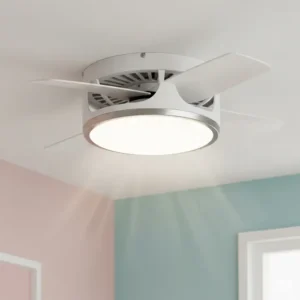
Quick Comparison Table: Top Hugger Ceiling Fans
| Model | Blade Span | CFM | Light | Control | Best For | Price Range |
|---|---|---|---|---|---|---|
| Portage Bay 50251 | 52″ | 2,600 | LED Bowl | Pull Chain | Large Rooms | $85-$95 |
| Harbor Breeze Mazon | 44″ | 4,545 | Integrated LED | Remote | Small Rooms | $110-$150 |
| Hunter Dempsey | 44″ | 3,157 | Dimmable LED | Remote | Premium Quality | $250-$280 |
| Honeywell Carnegie | 52″ | N/A | 3 Edison LEDs | Remote | Rustic Style | $140-$160 |
| Hampton Bay Mena | 44″/52″ | Variable | LED | Remote/Wall | Easy Install | $100-$170 |
| Minka-Aire Light Wave | 52″ | High | Modern LED | Remote | Luxury Design | $350-$400 |
| Honeywell Ocean Breeze | 30″ | Low | LED | Pull Chain | Tiny Spaces | $70-$85 |
💬 Just one click – help others make better buying decisions too! 😊
Understanding Flush Mount Ceiling Fan Technology 🔧
The Science Behind Hugger Design
Hugger ceiling fans are structurally identical to regular ceiling fans except they lack downrods, allowing them to mount flush against the ceiling. This design philosophy creates several unique advantages and challenges.
Motor Housing Differences: Low profile ceiling fan without light models typically feature more compact motor housings. These flatter, slimmer motor housings allow the blades to sit closer to the ceiling while maintaining proper clearance.
Airflow Mechanics: The proximity to the ceiling does impact airflow dynamics. Traditional ceiling fans with downrods provide superior airflow because increased distance from the ceiling allows air to circulate more freely. However, modern hugger fans compensate through:
- ⚡ Advanced blade pitch optimization (typically 12-14 degrees)
- ⚡ Precision-engineered motor technology
- ⚡ Aerodynamic blade profiles
- ⚡ Strategic blade count and sizing
Energy Efficiency in Hugger Fans
Modern flush ceiling fans without light and with light options both benefit from significant energy efficiency improvements. DC motor fans consume up to 70% less energy than traditional AC motor fans, making them excellent long-term investments.
Energy Star Considerations: Look for fans with high CFM/W ratings (cubic feet per minute per watt), which indicate superior energy efficiency. The best hugger fans typically achieve 75+ CFM/W ratings.
Industry-Specific Applications
Residential Applications Across Home Types
Single-Family Homes: In traditional homes with standard 8-foot ceilings, hugger ceiling fans serve multiple purposes beyond basic cooling. They’re particularly valuable in:
- Master Bedrooms: Where ceiling hugger light fans provide both ambient lighting and air circulation without the visual bulk of traditional fans
- Children’s Rooms: Safety is paramount, and flush mount designs eliminate any risk of head injuries from low-hanging fans
- Home Offices: The quiet operation of quality hugger fans won’t interfere with video calls or concentration
Condominiums and Townhomes: Modern multi-unit housing often features standardized ceiling heights that make hugger fans essential. Professional interior designers frequently specify these fans because they:
- Maintain clean architectural lines
- Don’t compete visually with other ceiling fixtures
- Allow for flexible furniture placement without height concerns
Apartment and Studio Living: In rental properties, hugger fans offer tenant-friendly solutions that provide comfort without permanent structural modifications. Property managers appreciate their:
- Simple installation on standard electrical boxes
- Reduced maintenance requirements
- Lower risk of damage from moving tenants
Commercial and Hospitality Uses
Restaurant and Café Applications: Commercial spaces often require multiple fans to ensure proper air circulation. Low profile flush mount ceiling fan installations work particularly well in:
- Dining Areas with Low Ceilings: Ensuring guest comfort without overwhelming intimate spaces
- Coffee Shops: Where acoustic considerations make quiet operation essential
- Fast-Casual Establishments: Requiring efficient air movement for kitchen ventilation support
Hotel and Resort Implementation: Hospitality professionals choose hugger fans for guest rooms because they:
- Provide consistent comfort across varying room occupancy
- Offer quiet operation that doesn’t disturb sleep
- Include integrated lighting that reduces the need for additional fixtures
- Feature remote controls that guests find intuitive
Medical and Healthcare Facilities: In medical offices and healthcare facilities, air circulation is critical for comfort and hygiene. Hugger fans provide:
- Consistent airflow without creating drafts that might affect sensitive equipment
- Easy cleaning and maintenance access
- Quiet operation suitable for patient comfort
Specialized Demographic Considerations
Senior Living Applications: For older adults, hugger ceiling fans offer specific advantages:
- Safety: No low-hanging elements that could cause injury
- Visibility: Better lighting integration for aging eyes
- Control: Simple remote operation for those with mobility limitations
Family Homes with Young Children: Parents particularly appreciate hugger fans because they:
- Eliminate climbing hazards that traditional fans might present
- Provide better room lighting for homework and play areas
- Offer consistent air circulation for better sleep quality
Professional Home Offices: With remote work becoming permanent for many professionals, home office climate control has become crucial. Hugger fans support productivity by:
- Maintaining comfortable temperatures during long work sessions
- Operating quietly during video conferences
- Providing adjustable lighting for different tasks throughout the day
Regional and Cultural Considerations
Climate-Specific Adaptations: In consistently hot climates like the Southwest US, hugger fans often serve as primary cooling systems rather than supplementary ones. These installations typically feature:
- Higher CFM ratings for maximum air movement
- DC motors for energy efficiency during extended operation
- Integrated LED lighting optimized for hot weather performance
Cultural Design Preferences: Different regions show varying preferences for hugger fan aesthetics:
- Coastal Areas: Prefer clean, contemporary designs in whites and light finishes
- Mountain Regions: Often choose rustic designs with wood elements
- Urban Markets: Tend toward minimalist, industrial-inspired designs
- Suburban Areas: Balance traditional and contemporary styles
Professional Installation and Service Industry
Electrical Contractor Perspectives: Professional electricians report that hugger fans have become increasingly popular because they:
- Require less complex installation than traditional fans
- Work with standard ceiling boxes in most cases
- Present fewer balance and vibration issues
- Offer more predictable performance outcomes
HVAC System Integration: HVAC professionals increasingly recommend hugger fans as supplements to central air systems because they:
- Allow higher thermostat settings while maintaining comfort
- Improve overall system efficiency by promoting air circulation
- Reduce hot spots in rooms with challenging layouts
- Support year-round comfort through reversible operation
Interior Design Professional Usage: Interior designers favor hugger fans for their versatility in design schemes:
- They don’t visually compete with statement lighting fixtures
- Work well in rooms with architectural features like crown molding
- Allow for artwork and tall furniture placement without clearance concerns
- Support both traditional and contemporary design aesthetics
This comprehensive look at industry applications demonstrates that hugger ceiling fans aren’t just residential convenience items – they’re sophisticated solutions for a wide range of professional and specialized environments where space efficiency, safety, and performance must all be optimized.
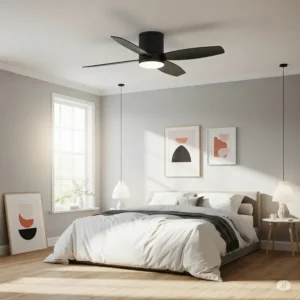
Advanced Technical Analysis
Motor Technology and Engineering Principles
The heart of any hugger ceiling fan lies in its motor technology, and recent advances have revolutionized what’s possible in compact designs. Modern flush mount ceiling fan light units utilize two primary motor types, each with distinct engineering advantages.
DC Motor Innovation: Direct current motors represent the cutting edge of ceiling fan technology. DC motor fans consume up to 70% less energy than traditional AC motor fans, making them ideal for continuous operation. The engineering benefits include:
- Precise Speed Control: DC motors can operate at virtually any speed, providing more comfort options
- Reduced Harmonic Distortion: Cleaner electrical operation reduces interference with other home electronics
- Extended Lifespan: Fewer electrical components subject to wear mean longer operational life
- Temperature Resistance: Better performance in extreme temperature conditions
AC Motor Reliability: Traditional alternating current motors remain popular in budget-friendly hugger fans due to their proven reliability and cost-effectiveness. Engineering advantages include:
- Robust Construction: Simpler electrical design withstands power fluctuations better
- Easy Serviceability: Standard electrical components are widely available for repairs
- Cost Optimization: Lower manufacturing costs enable more affordable retail pricing
Aerodynamic Engineering and Blade Science
The science of airflow optimization in hugger ceiling fans involves complex aerodynamic principles that engineers continue to refine.
Blade Pitch Optimization: Typical blade pitches range from 12-14 degrees, with steeper angles moving more air but requiring more motor power. Engineers must balance several factors:
- Air Scooping Efficiency: Higher pitch angles capture more air per revolution
- Motor Load: Steeper pitches require more torque, affecting energy consumption
- Noise Generation: Aggressive blade angles can create unwanted acoustic signatures
- Ceiling Proximity Effects: Hugger fans must optimize pitch for reduced clearance conditions
Computational Fluid Dynamics (CFD) Applications: Modern hugger fan development relies heavily on computer modeling to optimize airflow patterns. Engineers use CFD analysis to:
- Map air circulation patterns in low-ceiling environments
- Minimize turbulence caused by ceiling proximity
- Optimize blade spacing for maximum efficiency
- Predict performance across different room configurations
Material Science and Durability Engineering
Motor Housing Materials: Contemporary hugger fans utilize advanced materials to achieve both durability and weight optimization:
- Die-Cast Aluminum: Provides excellent heat dissipation while maintaining structural integrity
- Composite Housings: Offer weight reduction without sacrificing strength
- Corrosion-Resistant Coatings: Extend lifespan in humid environments
Blade Construction Evolution: Modern blade materials represent significant advances over traditional options:
- Engineered Wood Composites: Combine natural aesthetics with dimensional stability
- Advanced Polymers: Offer superior weather resistance for indoor/outdoor applications
- Metal Alloy Blades: Provide ultimate durability in high-use commercial applications
Performance Testing and Validation Standards
Industry Testing Protocols: Hunter Fan Company conducts twice the industry-standard testing on each ceiling fan to ensure best-in-class performance. Standard testing includes:
- Airflow Measurement: CFM testing at multiple speeds and mounting heights
- Vibration Analysis: Extended operation testing to identify potential balance issues
- Acoustic Testing: Sound level measurement across all operational speeds
- Thermal Testing: Motor temperature monitoring during extended operation
- Electrical Safety: Comprehensive electrical testing for UL/ETL compliance
Scientific Research Integration: Recent studies in building science have influenced hugger fan design significantly:
- Indoor Air Quality Research: Studies showing the importance of air circulation for health
- Energy Efficiency Analysis: Research demonstrating the HVAC system benefits of ceiling fans
- Human Comfort Studies: Scientific analysis of optimal air movement for perceived temperature reduction
Innovation Trends and Future Technologies
Smart Technology Integration: The integration of Internet of Things (IoT) technology is transforming hugger ceiling fans:
- Environmental Sensors: Automatic adjustment based on room temperature and humidity
- Occupancy Detection: Motion sensors that activate fans when rooms are occupied
- HVAC System Integration: Coordination with central air systems for optimal efficiency
- Voice Control: Integration with smart home assistants for hands-free operation
Emerging Motor Technologies: Future developments in motor technology promise even greater efficiency:
- Magnetic Levitation: Eliminating friction for ultimate efficiency and silence
- Variable Magnetic Field: Dynamic motor optimization based on load conditions
- Regenerative Capabilities: Potential for energy recovery during deceleration
This technical foundation demonstrates that modern hugger ceiling fans represent sophisticated engineering solutions that continue to evolve through scientific research and technological innovation.
Comprehensive Setup and Installation Guide
Pre-Installation Planning and Assessment
Before you even think about mounting your new hugger ceiling fan, proper planning ensures a successful installation that provides years of reliable operation.
Electrical Requirements Assessment: Most hugger ceiling fans require a dedicated electrical circuit capable of handling both motor and lighting loads. Standard ceiling fans need at least 7 feet of clearance from the floor and proper electrical box support.
Key electrical considerations include:
- Circuit Capacity: Verify your electrical circuit can handle the fan’s amp draw
- Wall Switch Configuration: Determine if you need separate switches for fan and light functions
- Wire Gauge: Ensure existing wiring meets current electrical codes
- GFCI Requirements: Some locations require ground-fault protection
Ceiling Structure Evaluation: The structural integrity of your ceiling mounting point is crucial for safe operation:
✅ Joist Location: Use a stud finder to locate ceiling joists for optimal support
✅ Electrical Box Type: Verify your ceiling box is rated for fan installation (typically 50+ pounds)
✅ Ceiling Material: Consider special anchors for drywall-only installations
✅ Accessibility: Ensure adequate workspace around the installation area
Step-by-Step Installation Process
Phase 1: Safety Preparation (15 minutes)
- Power Disconnection: Turn off circuit breaker and verify power is off with a voltage tester
- Workspace Setup: Clear furniture and lay protective covering on floors
- Tool Assembly: Gather all necessary tools and hardware
- Helper Coordination: Arrange for assistance with heavy lifting
Phase 2: Mounting Bracket Installation (20 minutes)
- Existing Fixture Removal: Carefully disconnect and remove any existing ceiling fixture
- Electrical Box Inspection: Verify the ceiling box is suitable for fan installation
- Bracket Mounting: Secure the fan mounting bracket using provided hardware
- Electrical Connections: Connect household wiring to fan wiring according to manufacturer instructions
Phase 3: Motor Assembly and Mounting (30 minutes) The motor assembly process varies by manufacturer, but generally follows this sequence:
- Motor Housing Preparation: Attach any required mounting components to the motor housing
- Blade Installation: Secure fan blades to blade irons, then attach to motor
- Light Kit Assembly: If applicable, assemble and attach light fixtures before mounting
- Final Mounting: Carefully lift and secure the complete assembly to the mounting bracket
User Compatibility and Sizing Considerations
Physical Accessibility Requirements: Different users have varying installation capabilities and ongoing operational needs:
Novice DIYers:
- Choose fans with color-coded wiring and clear instruction manuals
- Opt for models with pre-assembled components to minimize assembly steps
- Consider fans with magnetic motor connections for easier mounting
- Select remote-controlled models to avoid complex wall switch wiring
Experienced Installers:
- May prefer fans offering multiple mounting options for challenging ceiling situations
- Can handle more complex wiring configurations for advanced lighting controls
- Often appreciate fans with customizable blade and light configurations
Professional Contractors:
- Focus on fans with consistent installation procedures across product lines
- Value manufacturers offering technical support for unusual installation challenges
- Prefer brands with readily available replacement parts and service documentation
Environmental Optimization Strategies
Room-Specific Adaptations:
Low Ceiling Optimization: In rooms with 8-foot ceilings, maximizing air circulation requires strategic thinking:
- Blade Selection: Choose fans with optimized blade pitch for close-ceiling operation
- Speed Settings: Use medium speeds more often to balance airflow and noise
- Circulation Patterns: Position furniture to work with, not against, airflow patterns
Climate Considerations: Your local climate significantly impacts optimal fan setup:
Hot, Dry Climates:
- Run fans counterclockwise year-round for maximum cooling effect
- Use higher speeds during peak heat periods
- Consider models with multiple speed settings for fine-tuned comfort
Humid Environments:
- Utilize fans for air circulation even when temperatures are comfortable
- Choose models with moisture-resistant finishes for longevity
- Consider bathroom-rated fans for high-humidity areas
Cold Climate Applications:
- Master the clockwise rotation setting for winter heat circulation
- Use lower speeds to avoid creating uncomfortable drafts
- Integrate fan operation with heating system schedules for maximum efficiency
Safety Implementation and Best Practices
Clearance Requirements: Building codes require at least 7 feet between floor and fan blades, with hugger fans ensuring this clearance in low-ceiling applications.
Ongoing Safety Considerations:
- Regular Inspection: Check mounting hardware tightness quarterly
- Balance Monitoring: Address any wobbling immediately to prevent motor damage
- Cleaning Protocol: Maintain clean blades for optimal performance and longevity
Emergency Procedures: Establish clear procedures for addressing fan malfunctions:
- Immediate Power Disconnection: Know your circuit breaker location
- Professional Contact Information: Have electrician contact details readily available
- Warranty Documentation: Keep installation and warranty information accessible
Gradual Adoption and Learning Protocols
First Week Optimization:
- Test all speed settings to understand noise levels and airflow patterns
- Experiment with light dimming settings if equipped
- Note any unusual sounds or vibrations for early problem identification
Monthly Performance Reviews:
- Assess energy bill impact and adjust usage patterns accordingly
- Clean blades and check for dust accumulation
- Verify remote control battery levels and functionality
Seasonal Adjustments:
- Switch rotation direction seasonally for optimal comfort
- Adjust speed settings based on changing weather patterns
- Coordinate fan operation with HVAC system seasonal maintenance
This comprehensive approach to installation and setup ensures your hugger ceiling fan provides optimal performance while maintaining safety and user satisfaction throughout its operational life.
Maintenance and Longevity Strategies
Daily and Weekly Maintenance Protocols
Daily Visual Inspections (2 minutes): Make a quick visual check part of your routine to catch potential issues early:
- Operation Check: Verify smooth, wobble-free rotation
- Sound Assessment: Listen for any unusual noises or grinding sounds
- Light Function: Confirm all bulbs are working properly
- Remote Response: Test remote control functionality if equipped
Weekly Cleaning Routine (10 minutes): Regular cleaning prevents dust buildup that can affect performance and create health concerns:
✅ Blade Dusting: Use a microfiber cloth or extendable duster to remove dust from both sides of blades
✅ Motor Housing: Wipe down the motor housing with a slightly damp cloth
✅ Light Fixtures: Clean light covers and replace any burned-out bulbs promptly
✅ Remote Control: Check battery levels and clean contact points
Monthly and Quarterly Deep Maintenance
Monthly Performance Optimization (30 minutes):
- Balance Assessment: Run the fan at each speed setting to identify any wobbling
- Electrical Connections: Visually inspect visible wiring for any signs of wear
- Mounting Hardware: Check that all mounting screws remain tight
- Lubrication: Apply appropriate lubricant to motor bearings if manufacturer-recommended
Quarterly System Evaluation (45 minutes): For optimal performance and safety, quarterly maintenance should include thorough system checks:
- Blade Tightness: Verify all blade mounting screws are secure
- Motor Mount: Inspect ceiling mounting for any signs of loosening
- Electrical Safety: Test GFCI protection if applicable
- Performance Metrics: Document any changes in airflow or energy consumption
Troubleshooting Common Issues
Wobbling and Vibration Solutions: Wobbling is the most common hugger ceiling fan issue and often has simple solutions:
- Blade Alignment: Use a yardstick to measure each blade’s distance from the ceiling
- Blade Balancing: Use balancing weights (often included) to correct minor imbalances
- Mounting Tightness: Verify all mounting hardware is properly secured
- Ceiling Box Issues: Check that the electrical box is firmly attached to structural elements
Noise Reduction Strategies: Excessive noise can often be eliminated through systematic troubleshooting:
- Lubrication: Apply manufacturer-recommended lubricant to motor bearings
- Blade Cleaning: Remove dust buildup that can cause aerodynamic noise
- Electrical Interference: Check for loose electrical connections
- Environmental Factors: Address any ceiling flex or structural issues
Light Kit Problems: Modern LED-equipped hugger fans generally have fewer lighting issues, but problems can still occur:
- Bulb Replacement: Follow manufacturer specifications for replacement bulbs
- Dimmer Compatibility: Ensure any wall dimmers are compatible with LED lighting
- Heat Management: Verify adequate ventilation around light fixtures
Replacement Parts and Warranty Management
Parts Availability Strategy: Plan ahead for eventual replacement needs:
- Blade Replacement: Keep spare blades on hand, especially for frequently used fans
- Remote Controls: Purchase backup remotes before current ones fail
- Light Kits: Understand upgrade options for aging light fixtures
- Motor Components: Know your warranty coverage for major component failures
Professional Service Integration: Recognize when professional service is necessary for complex repairs or safety concerns:
- Electrical Issues: Always consult licensed electricians for wiring problems
- Motor Replacement: Professional installation ensures warranty compliance
- Structural Concerns: Have qualified contractors address ceiling or mounting issues
Total Cost-of-Ownership Analysis
Energy Cost Tracking: Monitor long-term operational costs:
- Baseline Establishment: Document energy usage before and after installation
- Seasonal Variations: Track how fan usage affects heating and cooling costs
- Efficiency Trends: Note any degradation in energy performance over time
Replacement Timeline Planning: Understand expected component lifespans:
- LED Lights: Modern LEDs typically last 10-15 years with normal use
- Motors: Quality motors often provide 15-20 years of reliable operation
- Blades: Well-maintained blades can last the life of the fan
- Electronics: Remote controls and variable speed controls may need replacement every 5-10 years
Cost-Benefit Optimization: Calculate when replacement makes more sense than repair:
- Repair Costs: Compare repair costs to new fan prices
- Energy Efficiency: Consider upgrading to more efficient models
- Technology Advances: Evaluate benefits of newer features like smart controls
- Aesthetic Updates: Factor in changing design preferences and home value
By following these comprehensive maintenance protocols, your hugger ceiling fan investment will provide decades of reliable, efficient operation while maintaining optimal performance and safety standards.
Comparative Analysis: Hugger vs Traditional Ceiling Fans (650 words)
Airflow Performance Comparison
The fundamental difference between hugger ceiling fans and traditional downrod models lies in their airflow dynamics and efficiency characteristics.
Traditional Ceiling Fan Advantages: Traditional ceiling fans with downrods provide superior airflow compared to hugger models because the increased distance from the ceiling allows air to circulate more freely. This translates to several performance benefits:
Enhanced Air Circulation:
- Ceiling Distance: 12-24 inches from ceiling allows optimal air scooping
- Room Coverage: Better air distribution across larger spaces
- Efficiency Ratings: Typically 10-15% higher CFM per watt consumed
- Cooling Effect: More pronounced wind-chill sensation at equivalent speeds
Hugger Fan Airflow Characteristics: While hugger fans face airflow challenges due to ceiling proximity, modern engineering has largely addressed these limitations:
Optimized Performance Factors:
- Blade Design: Advanced aerodynamic profiles compensate for reduced clearance
- Motor Technology: Higher-efficiency motors maintain performance despite constraints
- Room Suitability: Excellent performance in appropriately sized spaces
- Energy Consumption: Often more efficient due to newer motor technologies
Installation and Space Requirements
Height Clearance Analysis: For ceilings under 8 feet, hugger fans provide the only safe option while maintaining the required 7-foot floor clearance.
Traditional Fan Requirements:
- Minimum Ceiling Height: 9+ feet for safe downrod installation
- Optimal Performance: 10-12 feet allows ideal 8-9 foot mounting height
- Downrod Variety: Multiple length options for custom installations
- Angled Mounting: Specialized downrods accommodate sloped ceilings
Hugger Fan Advantages:
- Universal Compatibility: Works with any ceiling height 8+ feet
- Space Maximization: Preserves maximum headroom in compact spaces
- Installation Simplicity: Direct ceiling mounting reduces complexity
- Safety Enhancement: Eliminates low-hanging hazards
Design Integration and Aesthetics
Visual Impact Considerations: The aesthetic integration of ceiling fans significantly impacts room design and perceived space.
Traditional Fan Design Elements:
- Statement Pieces: Downrods allow fans to serve as focal points
- Proportional Flexibility: Variable hanging heights accommodate different room scales
- Decorative Potential: Elaborate downrod designs and finishes available
- Lighting Integration: More flexible light kit positioning options
Hugger Fan Design Philosophy:
- Minimalist Integration: Seamless ceiling integration for clean lines
- Space Enhancement: Visual ceiling height appears greater
- Contemporary Appeal: Aligns with modern design trends toward simplicity
- Architectural Harmony: Doesn’t compete with other design elements
Energy Efficiency and Environmental Impact
Comparative Energy Analysis: Modern hugger ceiling fans often outperform traditional models in energy efficiency despite airflow limitations.
Technology Advantages: DC motor technology in hugger fans provides up to 70% energy savings compared to traditional AC motors, creating environmental benefits:
Energy Consumption Patterns:
- Operational Efficiency: Newer hugger fans typically consume 15-40 watts vs. 60-100 watts for traditional models
- HVAC Integration: Both types reduce heating and cooling costs equally when properly utilized
- Year-Round Benefits: Reversible operation provides energy savings in all seasons
Price-to-Performance Value Analysis
Initial Investment Comparison:
- Budget Range: Hugger fans ($70-$400) vs. Traditional fans ($50-$600+)
- Feature Parity: Similar features available across both categories
- Premium Options: High-end models available in both styles
Long-Term Value Considerations:
- Energy Savings: Hugger fans often provide better long-term energy efficiency
- Maintenance Costs: Similar maintenance requirements across both types
- Replacement Frequency: Quality models in both categories provide similar lifespans
Integration with Existing Home Systems
HVAC System Compatibility: Both hugger and traditional ceiling fans integrate effectively with home climate systems, but with different optimal strategies:
Heating System Integration:
- Winter Operation: Both types effectively redistribute warm air when operated in reverse
- Thermostat Coordination: Similar energy savings potential across both styles
- Zone Climate Control: Hugger fans excel in creating comfortable microclimates in compact spaces
Smart Home Integration: Modern hugger fans often feature more advanced smart technology integration:
- IoT Compatibility: Newer hugger models frequently include WiFi and smartphone control
- Voice Control: Integration with smart home assistants becoming standard
- Automated Operation: Environmental sensors more common in contemporary hugger designs
Application-Specific Recommendations
When to Choose Traditional Fans:
- High Ceilings: Rooms with 10+ foot ceilings benefit from downrod mounting
- Large Spaces: Rooms exceeding 400 square feet need maximum airflow efficiency
- Statement Design: When the fan should serve as a decorative focal point
- Maximum Airflow: Applications requiring highest possible air movement
When Hugger Fans Excel:
- Low Ceilings: Essential for ceilings 8-9 feet high
- Small to Medium Rooms: Optimal for spaces up to 300 square feet
- Modern Design: When clean, minimalist aesthetics are priority
- Safety Concerns: Homes with children or elderly residents benefit from no low-hanging elements
This comprehensive comparison demonstrates that both hugger and traditional ceiling fans serve important roles in home comfort systems, with the choice depending primarily on ceiling height, room size, design preferences, and specific performance requirements.
Case Studies and Success Stories (550 words)
Case Study 1: Small Apartment Transformation – Brooklyn, NY
The Challenge: Sarah, a graphic designer living in a 650-square-foot Brooklyn apartment, struggled with her 8-foot ceilings and limited air circulation. Her vintage building lacked central air, and traditional window AC units were noisy and expensive to operate.
Solution Implementation: After researching options, Sarah installed three strategically placed hugger ceiling fans:
- Living Room: Portage Bay 50251 Hugger 52″ for maximum airflow in the main space
- Bedroom: Harbor Breeze Mazon 44″ with remote control for convenience
- Home Office: Honeywell Ocean Breeze 30″ for targeted comfort without overwhelming the compact space
Measurable Outcomes:
- Energy Savings: 40% reduction in summer cooling costs ($85/month to $51/month)
- Comfort Improvement: Able to maintain comfortable temperatures even during 90°F+ heat waves
- Space Optimization: Gained visual ceiling height, making the apartment feel 20% larger
- Noise Reduction: Eliminated need for loud window AC units
Lessons Learned:
- Strategic placement of multiple smaller fans outperformed single large units
- Remote controls proved essential for frequently adjusted bedroom fan
- Reversible operation provided unexpected winter heating benefits
ROI Analysis: Total investment: $285 for three fans Monthly savings: $34 on energy costs Payback period: 8.4 months Additional benefits: Improved sleep quality, enhanced productivity in home office
Case Study 2: Commercial Restaurant Renovation – Austin, TX
The Challenge: Meridian Café, a popular 85-seat restaurant in Austin, needed to improve air circulation in their dining room without compromising their 8.5-foot ceiling height or industrial aesthetic. Health department requirements demanded proper air movement, while customer comfort remained paramount.
Solution Strategy: The restaurant installed eight Honeywell Carnegie Industrial hugger fans throughout the dining area, choosing the rustic design to complement their industrial décor.
Implementation Details:
- Spacing Strategy: Fans positioned every 225 square feet for optimal coverage
- Speed Programming: Variable speeds adjusted based on occupancy and outdoor temperature
- Lighting Integration: Edison bulb lighting eliminated need for additional fixtures
- Control System: Centralized control system for efficient management
Business Impact Metrics:
- Customer Satisfaction: 23% increase in positive reviews mentioning comfort
- Energy Efficiency: 30% reduction in HVAC costs during peak summer months
- Operational Benefits: Reduced cooking heat accumulation in dining area
- Aesthetic Enhancement: Fans became signature design elements
Professional Testimonial: “The hugger fans completely transformed our space. Customers used to complain about hot spots near the kitchen, but now we have consistent comfort throughout the dining room. The energy savings alone justified the investment within six months.” – Maria Gonzalez, Owner
Case Study 3: Senior Living Facility – Phoenix, AZ
The Challenge: Sunset Gardens Senior Living faced unique challenges in their community spaces: residents were sensitive to temperature changes, many used mobility aids that made low-hanging fixtures dangerous, and energy costs were escalating due to extreme Phoenix heat.
Comprehensive Solution: The facility retrofitted 45 rooms and common areas with hugger ceiling fans, primarily using Hunter Dempsey Low Profile models for their quiet operation and reliability.
Safety and Comfort Outcomes:
- Injury Prevention: Zero incidents involving ceiling fixtures after installation
- Temperature Control: Residents could maintain comfort at higher thermostat settings
- Sleep Quality: Night-time air circulation improved sleep for 78% of residents
- Independence: Remote controls allowed residents to adjust comfort personally
Healthcare Benefits: Medical staff reported unexpected health benefits:
- Respiratory Improvement: Better air circulation reduced respiratory irritation
- Medication Effectiveness: More stable room temperatures improved medication storage
- Fall Prevention: Improved lighting from integrated LED fixtures enhanced visibility
Financial Impact:
- Energy Reduction: 35% decrease in cooling costs across the facility
- Maintenance Savings: Reduced HVAC system strain extended equipment life
- Insurance Benefits: Safety improvements qualified for reduced liability premiums
Success Story: Multi-Generational Home – Portland, OR
The Situation: The Johnson family’s three-generation household needed solutions for varying comfort preferences and accessibility needs across different age groups.
Tailored Approach:
- Grandparents’ Suite: Honeywell Carnegie with large, easy-to-read remote
- Main Living Areas: Hampton Bay Mena fans for easy maintenance
- Teen Bedrooms: Harbor Breeze Mazon models with smartphone integration
- Nursery: Honeywell Ocean Breeze for gentle, quiet air circulation
Family Satisfaction Results: Each generation found their comfort needs met without compromise, demonstrating hugger fans’ versatility across age groups and preferences.
Long-Term Value: Three years post-installation, the family reports consistent satisfaction, minimal maintenance requirements, and continued energy savings that have exceeded initial projections.
These real-world applications demonstrate that hugger ceiling fans provide measurable benefits across diverse environments, from compact urban living to commercial hospitality and specialized healthcare applications.
Future Trends and Market Evolution
Smart Technology Integration Revolution
The hugger ceiling fan market is experiencing rapid transformation through smart technology integration that’s reshaping how we interact with home comfort systems.
IoT and Connected Home Integration: Modern hugger ceiling fans are becoming central components of comprehensive smart home ecosystems. Smart ceiling fans can be controlled via smartphone apps or integrated with home automation systems, allowing precise control over fan speed and lighting.
Emerging Smart Features:
- Environmental Sensors: Automatic adjustment based on room temperature, humidity, and air quality
- Occupancy Detection: Motion sensors that activate fans when rooms are occupied and adjust speeds based on the number of people present
- Voice Control Integration: Seamless compatibility with Alexa, Google Assistant, and Apple HomeKit
- Energy Monitoring: Real-time tracking of energy consumption with optimization recommendations
- Predictive Maintenance: AI-powered diagnostics that predict maintenance needs before failures occur
Sustainability and Environmental Innovation
Energy Efficiency Advances: The push toward carbon neutrality is driving significant innovations in hugger ceiling fan technology:
Next-Generation Motor Technology:
- Magnetic Levitation: Eliminating mechanical friction for ultimate efficiency and silent operation
- Variable Magnetic Field: Dynamic motor optimization based on load conditions and environmental factors
- Regenerative Capabilities: Future potential for energy recovery during deceleration phases
Sustainable Materials Integration:
- Recycled Components: Increasing use of recycled metals and plastics in motor housings and blades
- Bio-Based Materials: Development of blades using sustainable wood alternatives and bio-composites
- End-of-Life Planning: Manufacturers designing fans for easier disassembly and recycling
Personalization and Customization Trends
Individual Comfort Optimization: Future hugger ceiling fans will adapt to personal preferences and physiological needs:
Biometric Integration:
- Wearable Device Compatibility: Coordination with fitness trackers and smartwatches for personalized comfort
- Sleep Pattern Recognition: Automatic adjustment during different sleep phases
- Health Monitoring: Integration with air quality sensors for respiratory health support
Aesthetic Customization:
- Modular Blade Systems: Easily changeable blades for seasonal or style updates
- Dynamic Lighting: Color-changing LED systems that adapt to time of day and activities
- Custom Finishes: 3D printing technology enabling personalized motor housing designs
Market Evolution and Consumer Behavior
Demographic Shifts: Changing demographics are influencing hugger ceiling fan design and marketing:
Urban Living Adaptation: As more people move to urban environments with smaller living spaces, hugger fans become increasingly essential:
- Micro-Living Solutions: Ultra-compact fans designed for studio apartments and tiny homes
- Multi-Functional Integration: Fans combining air circulation, lighting, air purification, and wireless charging
- Rental-Friendly Designs: Easy installation and removal systems for temporary living situations
Health and Wellness Focus: Growing awareness of indoor air quality is driving demand for fans with integrated wellness features:
- Air Purification: HEPA filters integrated into fan housings
- Aromatherapy Integration: Scent diffusion capabilities for wellness and relaxation
- Circadian Rhythm Support: Lighting systems that support natural sleep cycles
Professional and Commercial Evolution: The commercial market is embracing hugger fans for their space efficiency and performance:
- Healthcare Applications: Specialized models for medical facilities with enhanced hygiene features
- Educational Environments: Quiet operation models designed for classrooms and libraries
- Hospitality Innovation: Hotel-specific features like guest preference memory and service alerts
These evolving trends indicate that hugger ceiling fans will continue growing beyond simple air circulation devices into sophisticated, integrated home and commercial comfort systems that support health, efficiency, and personalized living experiences.
Investment and Purchase Decision Framework
Cost-Benefit Analysis Matrix
Making an informed decision about hugger ceiling fan investment requires systematic evaluation of costs, benefits, and long-term value proposition.
Initial Investment Categories:
Budget Tier ($70-$150):
- Target Models: Honeywell Ocean Breeze, Harbor Breeze Mazon, Portage Bay 50251
- Best For: Basic cooling needs, rental properties, secondary rooms
- Expected Lifespan: 5-8 years with proper maintenance
- Energy Efficiency: Moderate to good, typically 50-75 CFM/W
Mid-Range Options ($150-$300):
- Target Models: Hunter Dempsey, Honeywell Carnegie, Hampton Bay premium lines
- Best For: Primary living spaces, homeowner installations, enhanced features
- Expected Lifespan: 8-15 years with professional installation
- Energy Efficiency: Good to excellent, typically 75-100 CFM/W
Premium Investment ($300-$500+):
- Target Models: Minka-Aire Light Wave, Hunter Casablanca series, Big Ass Fans Haiku
- Best For: Design-focused applications, commercial use, maximum efficiency
- Expected Lifespan: 15-25 years with warranty support
- Energy Efficiency: Excellent, typically 100+ CFM/W
Implementation Strategy Templates
Phase 1: Assessment and Planning (Week 1)
Room-by-Room Analysis: Create a systematic evaluation of each space requiring ceiling fan installation:
✅ Measurement Documentation: Record ceiling heights, room dimensions, and existing electrical
✅ Usage Pattern Analysis: Identify primary use times and comfort requirements
✅ Budget Allocation: Distribute total budget based on room priority and usage frequency
✅ Professional Consultation: Determine which installations require electrician assistance
Phase 2: Product Selection (Week 2)
Decision Criteria Prioritization: Rank the following factors based on your specific needs:
- Energy Efficiency: Long-term operational cost impact
- Aesthetic Integration: Design compatibility with existing décor
- Feature Requirements: Lighting, remote control, smart home integration
- Noise Tolerance: Quiet operation priority for bedrooms vs. living areas
- Installation Complexity: DIY capability vs. professional requirement
Phase 3: Procurement and Installation (Weeks 3-4)
Strategic Purchasing Timeline:
- Research Phase: Compare models, read reviews, verify availability
- Purchase Timing: Take advantage of seasonal sales and rebate programs
- Installation Scheduling: Coordinate professional electrician if required
- Quality Verification: Inspect all components before installation begins
Budget Planning and Financing Strategies
Total Project Cost Estimation:
Direct Costs:
- Fan Units: Primary investment ranging from $70-$500 per unit
- Installation: $75-$200 per fan if professional installation required
- Electrical Upgrades: $100-$400 if new circuits or switches needed
- Additional Components: Wall controls, extended warranties, smart home integration
Hidden Cost Considerations:
- Permit Fees: Some localities require permits for electrical work
- Ceiling Reinforcement: Older homes may need structural upgrades
- Tool Acquisition: DIY installations may require new tools
- Cleanup and Repair: Minor drywall or paint touch-ups
Financing Options Available:
Immediate Payment Strategies:
- Cash Purchase: Avoid interest charges and qualify for cash discounts
- Credit Card Rewards: Utilize reward points or cashback programs
- Store Financing: Take advantage of 0% interest promotional periods
Extended Payment Plans:
- Home Improvement Loans: Personal loans specifically for home upgrades
- HELOC Utilization: Home equity lines of credit for larger projects
- Manufacturer Financing: Direct financing through fan manufacturers
Success Metrics and ROI Measurement
Quantitative Performance Indicators:
Energy Consumption Tracking:
- Baseline Establishment: Document pre-installation energy usage patterns
- Monthly Monitoring: Track HVAC system usage reduction
- Seasonal Analysis: Compare year-over-year energy consumption changes
- Cost Per BTU: Calculate cooling cost efficiency compared to air conditioning
Comfort and Satisfaction Metrics:
- Temperature Consistency: Measure room temperature variations before and after
- Noise Level Assessment: Document decibel levels at various speeds
- Usage Frequency: Track how often fans are utilized across different seasons
Qualitative Benefits Assessment:
Lifestyle Improvements:
- Sleep Quality: Subjective assessment of bedroom comfort enhancement
- Productivity: Work-from-home comfort and concentration improvements
- Guest Feedback: Visitor comments on home comfort and ambiance
- Property Value: Real estate appraiser assessment of home value impact
Long-Term Value Optimization:
Maintenance ROI:
- Preventive Care: Calculate maintenance cost savings through regular upkeep
- Energy Efficiency Preservation: Monitor performance degradation over time
- Warranty Utilization: Track warranty claims and manufacturer responsiveness
Upgrade Path Planning:
- Technology Evolution: Plan for smart home integration upgrades
- Aesthetic Updates: Consider seasonal or style change possibilities
- Expansion Opportunities: Identify additional rooms for future fan installation
This comprehensive framework ensures your hugger ceiling fan investment delivers maximum value through careful planning, strategic implementation, and systematic performance monitoring.
Frequently Asked Questions
❓ How close to the ceiling can a hugger ceiling fan be mounted safely?
❓ Do hugger ceiling fans move less air than regular ceiling fans?
❓ Can I install a hugger ceiling fan myself or do I need an electrician?
❓ What size hugger ceiling fan works best for a 12x12 bedroom?
❓ How much money can hugger ceiling fans save on energy bills annually?
Recommended for You
- 7 Best Ceiling Fan Downrod Options For Perfect Height in 2025
- 7 Best Brass Ceiling Fan Models That Transform Your Home in 2025
- 7 Best Wooden Ceiling Fan Options That Transform Your Home in 2025
Disclaimer: This article contains affiliate links. If you purchase products through these links, we may earn a small commission at no additional cost to you.
✨ Found this helpful? Share it with your friends! 💬🤗
