
In This Article
✨Was this helpful? Spread the word! 🚀
Have you ever noticed musty odors wafting up from beneath your home? Moreover, excessive moisture in your crawl space can lead to serious structural damage and health concerns. Furthermore, choosing the right crawl space fan can make all the difference between a dry, healthy home and costly repairs down the road.
Nevertheless, understanding which crawl space fan works best for your specific situation can be overwhelming. Additionally, with so many options available, homeowners often struggle to find the perfect balance between effectiveness and energy efficiency. Therefore, this comprehensive guide will help you navigate the world of crawl space fans and moisture control solutions.
Understanding Crawl Space Fan Technology 🔧
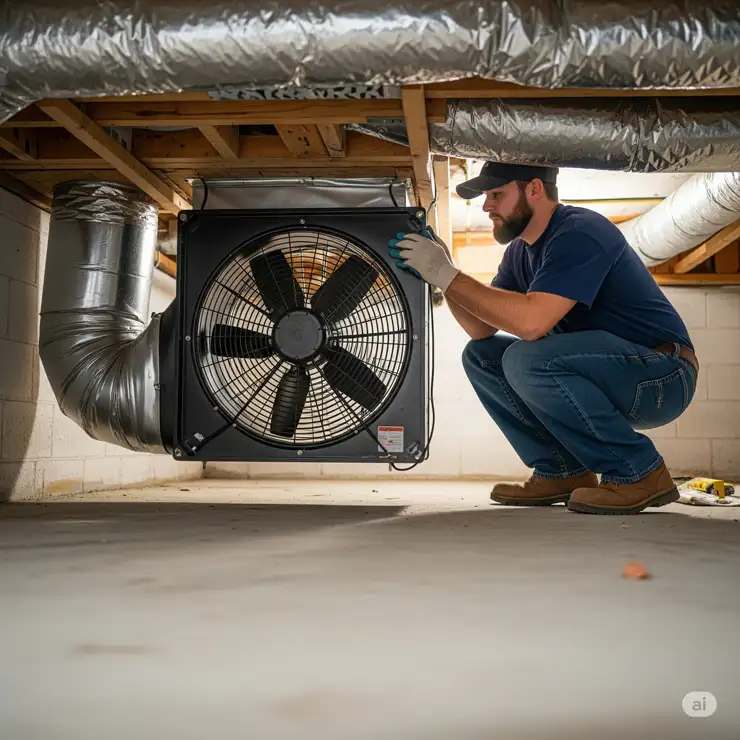
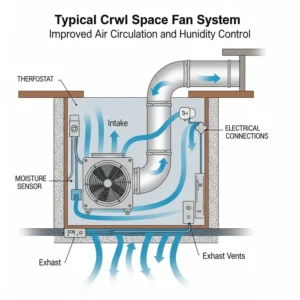
Crawl space fans operate as mechanical ventilation systems designed to address moisture-related issues beneath your home. Similarly, these devices work by creating air circulation that helps control humidity levels and prevent mold growth. However, the effectiveness of a crawl space fan depends heavily on proper installation and the specific conditions in your space.
How Crawl Space Fans Work
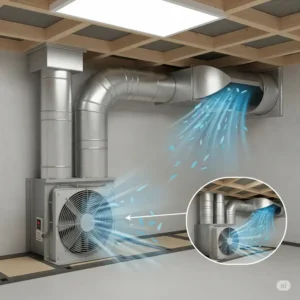
Essentially, a crawl space fan creates airflow by either exhausting stale air from your crawl space or introducing fresh air from outside. Furthermore, most modern crawl space fans include sophisticated controls like humidistats and thermostats. Additionally, these controls ensure the fan operates only when beneficial conditions exist.
According to Field Controls, “The Eliminator Crawl Space Vent Fan (EL-1) is a motorized fan designed to circulate fresh air in a home or building crawl space to eliminate cancer-causing radon gas and reduce moisture” that can lead to serious structural problems.
Types of Crawl Space Fans Available
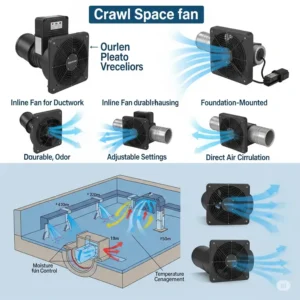
There are several varieties of crawl space fans, each designed for specific applications:
Exhaust Fans ⚡
These fans remove air from your crawl space, creating negative pressure that draws fresh air through natural openings. Consequently, exhaust fans are particularly effective for removing radon gas and soil odors.
Intake Fans 🌬️
Conversely, intake fans push fresh outdoor air into your crawl space. Similarly, these fans work best when outdoor air has lower humidity than indoor air.
Circulation Fans 🔄
These fans move air within the crawl space without bringing in outside air. Furthermore, circulation fans help distribute dehumidified air throughout the entire space.
Smart Fan Systems 🧠
Advanced systems like the ATMOX use sensors to determine optimal operating conditions. Additionally, these systems can control multiple fans and dehumidifiers simultaneously.
Top 10 Crawl Space Fan Solutions for 2025 🏆
1. ALORAIR 540 CFM IP-55 Grade Crawlspace Ventilation Fan
This premium crawl space fan offers exceptional durability and performance. Furthermore, the IP-55 rating means it’s dust and water-resistant, making it ideal for harsh crawl space environments. Additionally, the adjustable humidistat ranges from 5%-80% relative humidity.
Key Features:
✅ 540 CFM airflow capacity
✅ IP-55 dust and water resistance
✅ Built-in humidistat and thermostat
✅ Isolation mesh included
✅ Suitable for spaces up to 7,400 cubic feet
2. Tjernlund V1D UnderAire Crawlspace Ventilator Fan
The Tjernlund V1D represents excellent value for homeowners seeking reliable moisture control. Moreover, this 110 CFM fan includes a built-in thermostat and operates efficiently in various conditions. Similarly, customer reviews consistently praise its effectiveness and quiet operation.
Key Features:
✅ 110 CFM exhaust capacity
✅ Built-in thermostat activation
✅ Energy-efficient operation
✅ Easy installation process
✅ Proven moisture reduction performance
3. Durablow 220 CFM Air-Out Stainless Steel Crawl Space Vent Fan
This Durablow model features dual fans with superior stainless steel construction. Additionally, the combination of dehumidistat and thermostat controls ensures optimal performance. Furthermore, the 220 CFM capacity makes it suitable for larger crawl spaces.
Key Features:
✅ Dual fan configuration
✅ 220 CFM total airflow
✅ Stainless steel 430 construction
✅ Dehumidistat and thermostat controls
✅ Radon mitigation capability
Don’t Miss These Exclusive Deals! 🛒
→ Transform your crawl space into a dry, healthy environment with these carefully selected fans. Click on any highlighted item to check current pricing and availability. These proven solutions will help you eliminate moisture problems and protect your home’s foundation! 💰
The Science Behind Crawl Space Moisture Control 🧪
Understanding the science of moisture control helps homeowners make informed decisions about crawl space fans. The EPA emphasizes that “the key to mold control is moisture control” and recommends drying water-damaged areas within 24-48 hours to prevent mold growth.
Relative Humidity and Dew Point
Relative humidity measures the amount of moisture in the air compared to the maximum amount the air can hold at that temperature. Similarly, dew point represents the temperature at which air becomes saturated and condensation occurs. Therefore, understanding these concepts helps determine when crawl space fans should operate.
According to EPA guidelines, maintaining indoor humidity “below 60 percent relative humidity (RH), ideally 30 percent to 50 percent” prevents mold growth and structural damage.
The Stack Effect and Air Movement
The stack effect occurs when warm air rises through your home, creating negative pressure in lower areas like crawl spaces. Consequently, this natural phenomenon can draw moisture-laden air and soil gases into your living space. Therefore, proper crawl space fan installation helps counteract these effects.
Crawl Space Fan vs. Dehumidifier: Making the Right Choice 🤔
When to Choose a Crawl Space Fan
Crawl space fans work best in specific conditions:
Climate Considerations 🌡️
In regions where outdoor air is frequently drier than crawl space air, fans can effectively reduce moisture levels. Additionally, fans excel at removing radon gas and other soil contaminants.
Energy Efficiency ⚡
Ventilation fans typically consume less power than dehumidifiers, making them more energy-efficient for continuous operation.
Odor Control 👃
Fans effectively remove musty odors and chemical off-gassing from treated lumber. Furthermore, continuous air exchange prevents odor accumulation.
When Dehumidifiers Are Better
However, dehumidifiers offer advantages in certain situations:
Precise Humidity Control 🎯
Dehumidifiers directly remove moisture from the air, providing consistent humidity levels regardless of outdoor conditions.
Existing Moisture Problems 💧
If you already have moisture issues such as standing water or mold growth, a dehumidifier may be the better option.
High Humidity Climates 🌴
In consistently humid regions, outdoor air may be more humid than crawl space air, making fans counterproductive.
Installation and Sizing Guide 📏
Calculating Your Crawl Space Fan Requirements
Proper sizing ensures optimal performance and energy efficiency. Furthermore, undersized fans won’t adequately address moisture problems, while oversized units waste energy.
CFM Calculation Formula:
- Crawl Space Volume (Length × Width × Height) ÷ 6 = Minimum CFM Required
- For enhanced performance, multiply by 1.5-2.0
Professional vs. DIY Installation
DIY Installation Considerations 🔨
Many crawl space fans can be installed by homeowners with basic electrical knowledge. However, always check local building codes and electrical requirements.
Professional Installation Benefits 👷
Professionals ensure proper electrical connections, optimal fan placement, and compliance with local codes. Additionally, they can assess your specific crawl space conditions and recommend appropriate solutions.
Comparison Table: Top Crawl Space Fans 📊
| Model | CFM Rating | Special Features | Best For | Price Range |
|---|---|---|---|---|
| ALORAIR 540 CFM IP-55 | 540 | IP-55 Rating, Humidistat | Large Spaces | $$$ |
| Tjernlund V1D UnderAire | 110 | Thermostat, Quiet Operation | Standard Homes | $$ |
| Durablow 220 CFM Dual | 220 | Stainless Steel, Dual Fans | Radon Mitigation | $$$ |
| CADPXS Crawlspace Ventilation | 220 | Humidistat, Freeze Protection | All Climates | $$ |
| Field Controls Eliminator | 110 | Temperature Control, Proven Design | Basic Ventilation | $$ |
💬 Just one click – help others make better buying decisions too! 😊
Common Mistakes to Avoid ❌
Oversizing Your Crawl Space Fan
Bigger isn’t always better when it comes to crawl space fans. Similarly, oversized fans can create excessive air movement that actually increases moisture problems. Therefore, proper sizing calculations are essential.
Ignoring Humidity Monitoring
Installing a crawl space fan without humidity monitoring is like driving blindfolded. Furthermore, smart controls and humidistats ensure fans operate only when beneficial. Additionally, monitoring helps verify your system’s effectiveness.
Neglecting Air Sealing
The EPA notes that moisture can pass from a crawl space into a building through cracks in walls, floors and ceilings. Therefore, proper air sealing should accompany any crawl space fan installation.
Energy Efficiency and Operating Costs 💡
Understanding Power Consumption
Most crawl space fans consume between 50-150 watts during operation. Similarly, smart controls help minimize energy usage by operating fans only when necessary. Furthermore, energy-efficient models can reduce operating costs significantly.
Calculating Annual Operating Costs
Basic Formula:
- (Watts ÷ 1000) × Hours of Operation × Days per Year × Electricity Rate = Annual Cost
For example, a 100-watt fan operating 12 hours daily at $0.12/kWh costs approximately $52 annually.
Maintenance and Troubleshooting 🔧
Regular Maintenance Tasks
Monthly Checks 📅
- Inspect fan operation and listen for unusual noises
- Check humidistat and thermostat settings
- Verify adequate airflow through intake and exhaust points
Quarterly Tasks 📅
- Clean fan blades and housing
- Inspect electrical connections
- Test control systems
Annual Maintenance 📅
- Professional inspection of entire system
- Calibrate humidity sensors
- Check for obstructions in ductwork
Common Problems and Solutions
Fan Not Operating ⚠️
Check electrical connections, thermostat settings, and circuit breakers. Additionally, verify that humidity levels exceed the humidistat setting.
Reduced Airflow ⚠️
Clean fan blades, check for obstructions, and inspect intake/exhaust openings. Furthermore, ensure adequate clearance around the fan unit.
Increased Humidity Despite Fan Operation ⚠️
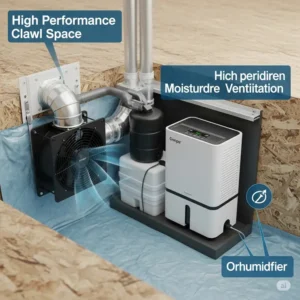
One misconception is that crawl space vent fans lower humidity, but fans work best when combined with dehumidifiers for comprehensive moisture control.
Advanced Crawl Space Fan Systems 🚀
Smart Control Integration
Modern crawl space fans can integrate with home automation systems. Furthermore, Wi-Fi enabled controls allow remote monitoring and adjustment. Additionally, some systems send alerts when maintenance is needed.
Multi-Zone Systems
Large homes may benefit from multi-zone crawl space fan systems. Similarly, these systems can address varying conditions throughout different areas. Furthermore, zone-specific controls optimize performance and energy efficiency.
Health and Safety Considerations ⚕️
Radon Mitigation
In some regions, crawl spaces can be a source of radon gas, and by improving ventilation, a crawl space fan can help reduce radon levels and associated health risks.
Indoor Air Quality Benefits
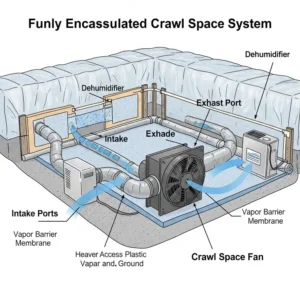
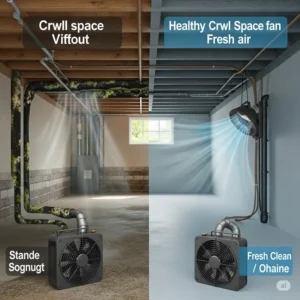
Proper crawl space ventilation prevents contaminants from entering your living space through the stack effect. Additionally, reducing moisture levels eliminates conditions that support mold growth and pest infestations.
Safety Precautions
Always follow electrical safety guidelines during installation. Furthermore, ensure adequate ventilation to prevent carbon monoxide buildup if combustion appliances are present.
Cost-Benefit Analysis 💰
Initial Investment vs. Long-Term Savings
While crawl space fans require upfront investment, they can prevent costly moisture damage. Furthermore, proper moisture control protects structural components and improves energy efficiency.
Potential Savings Include: ✅ Reduced mold remediation costs
✅ Prevention of structural repairs
✅ Lower HVAC operating costs
✅ Extended building material lifespan
ROI Calculations
Most homeowners see return on investment within 3-5 years through reduced maintenance costs and energy savings. Additionally, improved indoor air quality provides immeasurable health benefits.
Regional Considerations 🌍
Climate-Specific Recommendations
Humid Climates 🌊
In consistently humid regions, crawl space fans may not provide adequate moisture control alone. Therefore, combining fans with dehumidifiers often yields best results.
Dry Climates 🏜️
Fans work exceptionally well in dry climates where outdoor air can effectively reduce crawl space humidity.
Mixed Climates 🌤️
Smart control systems excel in mixed climates by adapting to changing seasonal conditions automatically.
Future Trends in Crawl Space Fan Technology 🔮
IoT Integration
Internet of Things (IoT) technology is revolutionizing crawl space fan systems. Furthermore, predictive maintenance algorithms can identify potential problems before they occur.
Energy Efficiency Improvements
Next-generation fans will feature improved motor efficiency and advanced controls. Additionally, solar-powered options may become more viable for remote installations.
Smart Home Integration
Future crawl space fans will seamlessly integrate with whole-home environmental control systems. Similarly, AI-powered optimization will maximize performance while minimizing energy consumption.
Expert Recommendations and Best Practices 👨🔬
Professional Insights
Industry experts recommend a comprehensive approach to crawl space moisture control. Furthermore, combining multiple strategies typically yields better results than relying on fans alone.
Professional Tips:
✅ Always address water intrusion sources first
✅ Install vapor barriers before fan systems
✅ Consider whole-house humidity levels
✅ Monitor performance regularly
Best Practice Guidelines
The EPA recommends controlling humidity in crawl spaces to less than 65 percent using ventilation when outdoor air dew point is lower than indoor dew point.
📞 Ready to Transform Your Crawl Space?
Don’t let moisture problems damage your home’s foundation and compromise your family’s health. These expertly reviewed crawl space fans offer proven solutions for lasting moisture control. Take action today and create a healthier, drier environment beneath your home! 🏠
Conclusion
Selecting the right crawl space fan requires careful consideration of your specific conditions, climate, and moisture control goals. Furthermore, understanding the science behind moisture control helps ensure you make an informed decision. Additionally, proper installation and maintenance are crucial for long-term success.
Remember that crawl space fans work best as part of a comprehensive moisture control strategy. Therefore, consider combining fans with vapor barriers, proper drainage, and potentially dehumidifiers for optimal results. Most importantly, don’t delay addressing moisture problems, as early intervention prevents costly damage and health issues.
Whether you choose a basic thermostat-controlled fan or an advanced smart system, the key is taking action to protect your home and family. Furthermore, the investment in proper crawl space ventilation pays dividends through improved indoor air quality, reduced maintenance costs, and enhanced structural integrity.
Frequently Asked Questions
❓ How long should a crawl space fan run each day?
❓ Can I install a crawl space fan myself?
❓ What size crawl space fan do I need for a 1200 square foot home?
❓ Do crawl space fans work in winter?
❓ How much does it cost to run a crawl space fan annually?
Recommended for You
- 10 Best Light Kit for Ceiling Fan Options That Transform Your Space in 2025
- 15 Best Drum Fan Solutions That Revolutionize Industrial Cooling in 2025
- 7 Best 3 Blade Ceiling Fan Models That Save 70% Energy in 2025
Disclaimer: This article contains affiliate links. If you purchase products through these links, we may earn a small commission at no additional cost to you.
✨ Found this helpful? Share it with your friends! 💬🤗
