
In This Article
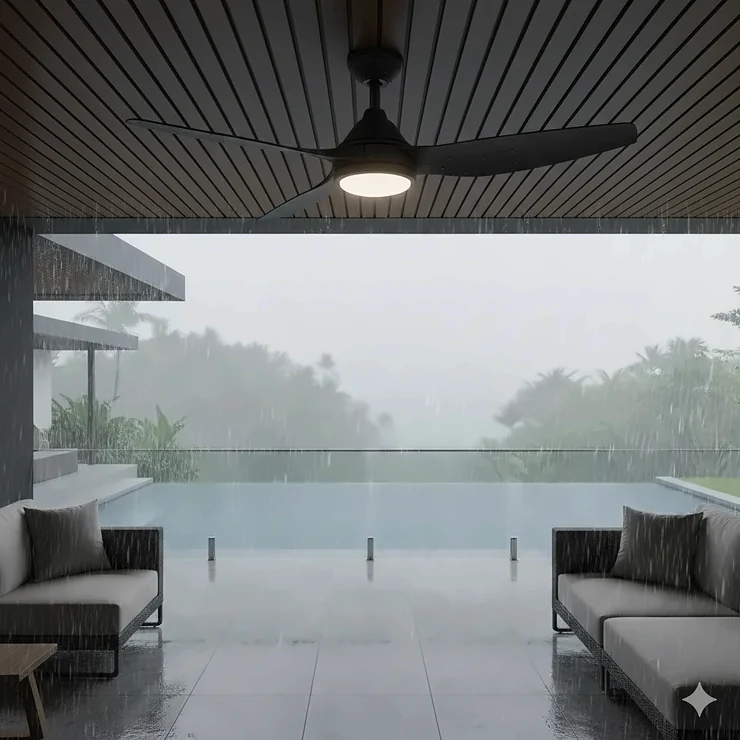
Picture this: you’re hosting a summer barbecue on your patio, and while everyone else is melting in the heat, you’re relaxing under a gentle, cooling breeze. That’s the magic of outdoor ceiling fans wet rated for extreme conditions. Unlike their indoor cousins that’ll rust faster than you can say “warranty void,” these weather warriors are built to withstand rain, snow, humidity, and whatever Mother Nature throws their way.
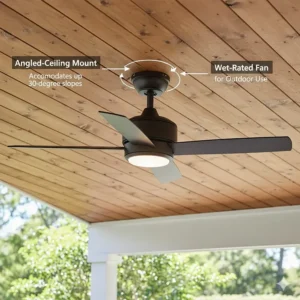
According to the U.S. Environmental Protection Agency’s ENERGY STAR program, properly selected ceiling fans can reduce air conditioning costs by up to 40%, making them a smart investment for any outdoor living space. But here’s the catch – not all outdoor ceiling fans wet rated are created equal. Some are designed for covered patios (damp-rated), while others can handle direct exposure to the elements (wet-rated). The difference? It could mean the gap between a fan that lasts 15 years and one that shorts out after the first rainstorm.
In this comprehensive guide, we’ll dive deep into the best ceiling fans for outside spaces available in 2025, helping you choose the perfect wet rated patio ceiling fans for your specific needs. As research from the National Association of Home Builders shows, 58% of design professionals cite connection to the outdoors as a top influence on home design, making quality outdoor equipment more important than ever. Whether you’re upgrading a covered porch or installing a fan on an open-air gazebo, we’ve got you covered with expert insights, real product reviews, and insider tips you won’t find anywhere else.
Quick Comparison Table
| Product | Size | Rating | Price Range | Key Feature |
|---|---|---|---|---|
| Modern Forms Aviator | 54″ | Wet | $550-$650 | Smart home integration with Alexa/Google |
| Honeywell Belmar | 52″ | Wet | $100-$140 | Traditional design with 5-blade efficiency |
| Hunter Cassius | 44″/52″ | Damp | $85-$140 | Reversible blades with WhisperWind motor |
| Minka-Aire Concept I Wet | 52″ | Wet | $380-$450 | Integrated LED with modern aesthetics |
| Hampton Bay North Pond | 52″ | Wet | $95-$130 | QuickFit installation technology |
| Westinghouse Oasis | 48″ | Wet | $120-$160 | Tropical design with alabaster glass |
| Hampton Bay Gazebo III | 52″ | Wet | $130-$175 | Dome light kit with Jacobean finish |
💬 Just one click – help others make better buying decisions too!😊
Top 7 Outdoor Ceiling Fans Wet Rated: Expert Analysis
1. Modern Forms Aviator 54-Inch Smart Ceiling Fan
If you’re ready to bring your outdoor space into the 21st century, the Modern Forms Aviator is your ticket to smart home nirvana. This isn’t just a fan – it’s a statement piece that combines cutting-edge technology with serious performance.
Key Specifications:
- Blade span: 54 inches (also available in 70″)
- Motor: Ultra-efficient DC motor (70% more efficient than AC)
- Airflow: Up to 6,817 CFM
- Control: Bluetooth remote + iOS/Android app
- Smart integration: Alexa, Google Home, Samsung SmartThings
This wet-rated outdoor ceiling fan features aerospace-inspired design with three ABS blades available in striking finishes like Graphite/Weathered Gray or Matte Black/Distressed Koa. What sets it apart? The six-speed DC motor runs whisper-quiet while moving massive amounts of air, and the optional LED light kit (sold separately) provides customizable illumination.
Customers rave about the seamless app integration and energy savings, though some mention the initial setup requires patience. One reviewer noted they reduced their patio cooling costs by 35% after installation.
✅ Pros:
- Complete smart home ecosystem compatibility
- Lifetime motor warranty
- Flush-mount design perfect for lower ceilings
❌ Cons:
- Premium price point
- Light kit sold separately
Price: $550-$650 (varies by finish and size)
2. Honeywell Belmar 52-Inch Wet Rated Ceiling Fan
For those who appreciate classic design without breaking the bank, the Honeywell Belmar delivers traditional elegance with modern performance. This is the best ceiling fans for outside when you want reliable performance without fancy features.
Key Specifications:
- Blade span: 52 inches
- 5 reversible ABS blades (wood-texture finish)
- ETL wet-rated for full exposure
- 3-speed reversible motor
- CFM: 5,020+ at high speed
Available in bronze or white finishes, the Belmar features all-weather resistant blades that won’t warp or fade. The tri-mount system offers standard, angled, or flush-mount options, making it incredibly versatile for various ceiling heights. With a 4-inch downrod included, installation is straightforward even for DIY enthusiasts.
Customer feedback highlights the exceptional value and durability. One homeowner shared that their Belmar has been running flawlessly for 4+ years in coastal Florida, handling salt air and tropical storms without issues.
✅ Pros:
- ETL wet-rated for maximum weather resistance
- Traditional aesthetic fits any décor
- Pull-chain control (no electronics to fail)
❌ Cons:
- No remote control included (compatible with universal remotes)
- Limited finish options
Price: $100-$140
3. Hunter Cassius 52-Inch Indoor/Outdoor Ceiling Fan
Hunter’s legendary WhisperWind motor technology meets industrial-chic design in the Cassius. While technically damp-rated (not wet), this fan excels in covered outdoor spaces and represents Hunter’s 140 years of engineering excellence.
Key Specifications:
- Available in 44″ and 52″ blade spans
- Damp-rated for covered outdoor areas
- 3-speed WhisperWind motor
- 13-degree blade pitch for optimal airflow
- Reversible blades (wood stripe or solid finish)
The Cassius showcases a minimalist, industrial aesthetic with clean lines and exposed hardware. Reversible blades let you choose between a softer wood tone or consistent metallic finish. Available in Fresh White, Matte Black, Matte Silver, or New Bronze, there’s a Cassius to complement any outdoor décor scheme.
Hunter’s rigorous testing ensures this fan handles humidity, temperature fluctuations, and continuous outdoor use. The WhisperWind motor operates at a whisper-quiet level while delivering powerful, energy-efficient airflow. Installation is simplified with Hunter’s 3D Interactive Guide accessible via QR code.
✅ Pros:
- Hunter’s lifetime motor warranty
- Reversible blades for design flexibility
- ETL-tested and UL-certified quality
❌ Cons:
- Damp-rated only (not suitable for direct rain exposure)
- Basic pull-chain control
Price: $85-$140 (depending on size and finish)
4. Minka-Aire Concept I Wet 52-Inch Ceiling Fan
The Minka-Aire Concept I Wet redefines what wet rated patio ceiling fans can look like. This sculptural masterpiece features concaved blades that flow directly from the fan body, creating a cohesive, modern aesthetic that’s part art installation, part cooling powerhouse.
Key Specifications:
- 52-inch blade span with unique concave design
- Integrated 14W LED light kit (3000K warm white)
- Wet-rated for full outdoor exposure
- 3 sculptural ABS blades
- Multiple finish options including White, Flat Black, and more
What makes the Concept I special? The integrated LED light is ingeniously sculpted into the fan’s design rather than tacked on as an afterthought. The high blade pitch (optimized for outdoor airflow) ensures maximum air movement even in open spaces where walls don’t reflect the breeze back.
Professional installers love the straightforward mounting system, while homeowners appreciate the conversation-starting design. The LED lighting provides sufficient illumination for outdoor dining without harsh brightness.
✅ Pros:
- Architectural design element, not just functional
- Integrated LED light (no separate light kit needed)
- Wet-rated for maximum versatility
❌ Cons:
- Higher price point than basic models
- Contemporary style may not suit traditional settings
Price: $380-$450
5. Hampton Bay North Pond 52-Inch Wet Rated Fan
Budget-conscious doesn’t mean budget-quality with the Hampton Bay North Pond. This wet-rated outdoor ceiling fan proves you can have weather resistance and style without emptying your wallet.
Key Specifications:
- 52-inch matte black finish
- Wet-rated for any outdoor setting
- 3-speed reversible motor
- QuickFit installation technology
- AccuArm blade arms for easy assembly
The North Pond’s QuickFit technology revolutionizes DIY installation. The slide-on mounting bracket and QuickInstall blade system cut installation time by up to 50% compared to traditional fans. The matte black finish is powder-coated for durability and complements contemporary outdoor furniture trends.
User reviews consistently praise the ease of installation and solid performance. One reviewer mentioned they installed two fans in under 2 hours without any electrical experience. The reversible motor provides year-round functionality – downdraft cooling in summer, updraft to redistribute warm air in winter.
✅ Pros:
- QuickFit installation saves time and frustration
- Wet-rated at budget-friendly price
- Modern matte black finish
❌ Cons:
- No light kit included
- Limited finish options (primarily matte black)
Price: $95-$130
6. Westinghouse Oasis 48-Inch Tropical Ceiling Fan
Bring island vibes to your outdoor oasis with the Westinghouse Oasis. This wet-rated wonder combines tropical aesthetics with practical performance, perfect for creating that resort feel at home.
Key Specifications:
- 48-inch blade span (ideal for smaller patios)
- Oil-rubbed bronze finish
- 5 mahogany-finish ABS blades
- Yellow alabaster glass light kit included
- 10W LED bulb included
The Oasis delivers 3,983 CFM airflow at high speed while consuming just 50W without lights – that’s an impressive 80 CFM/W efficiency rating. The tropical palm-leaf blade design isn’t just for show; the airfoil engineering maximizes air movement while maintaining whisper-quiet operation. The included light kit with warm alabaster glass creates ambient lighting perfect for evening entertaining.
Westinghouse’s high-quality motor features sealed bearings and weather-resistant components designed specifically for outdoor use. The oil-rubbed bronze finish develops a beautiful patina over time, adding character while resisting corrosion.
✅ Pros:
- Distinctive tropical design
- Light kit and LED bulb included
- Energy-efficient operation
❌ Cons:
- 48″ size limits coverage area
- Style is specific (not for modern minimalists)
Price: $120-$160
7. Hampton Bay Gazebo III 52-Inch Natural Iron Fan
Rounding out our lineup is the Hampton Bay Gazebo III, a wet-rated outdoor ceiling fan that balances traditional design with modern weather resistance. This fan is specifically engineered for gazebos, pergolas, and open-air structures.
Key Specifications:
- 52-inch natural iron finish
- 5 reversible Jacobean Walnut/Natural Iron blades
- Wet-rated housing for direct exposure
- Frosted glass dome light kit included
- 3-speed control with reverse function
The Gazebo III features a sophisticated dome-style light kit with frosted glass that provides soft, ambient illumination without harsh glare. The reversible blades offer design flexibility – choose rich Jacobean Walnut for warmth or Natural Iron for a coordinated metallic look.
Installation is simplified with Hampton Bay’s tri-mount system supporting standard, angled, and flush configurations. The wet-rated housing includes sealed electrical components and corrosion-resistant hardware engineered for years of outdoor exposure. Customer reviews highlight the solid construction and attractive light fixture as standout features.
✅ Pros:
- Versatile mounting options
- Attractive frosted glass light kit included
- Reversible blades for design flexibility
❌ Cons:
- Traditional style may not suit modern spaces
- Requires compatible wall control (sold separately)
Price: $130-$175
Understanding Wet Rated vs. Damp Rated: What You Need to Know
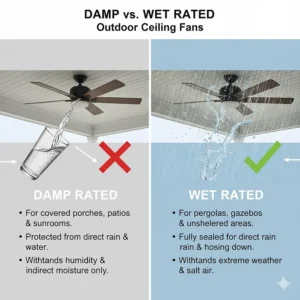
One of the biggest mistakes homeowners make? Installing a damp-rated fan where they need wet-rated protection. Let’s break down the difference in plain English.
Damp Rated Ceiling Fans
These fans can handle humidity and occasional moisture but shouldn’t be exposed to direct rain or snow. Think:
- Covered patios with full roof protection
- Screened porches where rain can’t reach
- Three-season rooms with environmental protection
- Bathroom installations (indirect water contact)
According to ENERGY STAR guidelines, damp-rated fans must withstand condensation and humidity but are not designed for direct water contact.
Wet Rated Ceiling Fans
These are the heavy-duty champions built for full weather exposure:
- Open pergolas and gazebos
- Uncovered decks and patios
- Pool areas with direct spray potential
- Coastal locations with salt air exposure
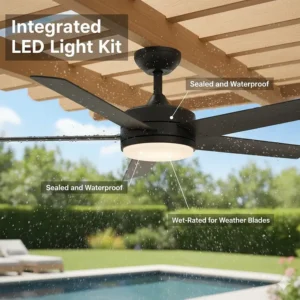
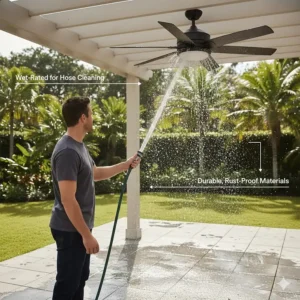
The difference in construction is significant. Wet-rated fans feature sealed motor housings, corrosion-resistant hardware, waterproof electrical connections, and weather-resistant blade materials.
💡 Pro Tip: When in doubt, go wet-rated. They can be used anywhere a damp-rated fan can, providing extra protection and longevity.
Best Ceiling Fans for Outside: Size Matters
Choosing the right fan size isn’t just about aesthetics – it’s about performance. Here’s the science behind proper sizing:
Room Size Guidelines
| Patio Area | Recommended Fan Size | Coverage |
|---|---|---|
| Up to 75 sq ft | 29-36 inches | Small balconies |
| 76-144 sq ft | 36-42 inches | Breakfast nooks |
| 144-225 sq ft | 44-50 inches | Standard patios |
| 225-400 sq ft | 50-54 inches | Large outdoor rooms |
| 400+ sq ft | 54-60+ inches or multiple fans | Expansive decks |
Height Requirements
Your fan needs adequate clearance for safety and efficiency. Minimum blade height should be 7 feet from the floor, with 8-9 feet being ideal for outdoor comfort. For ceilings above 9 feet, use downrod extensions to lower the fan into the optimal airflow zone.
Blade pitch matters too! Outdoor fans typically feature steeper blade angles (12-14 degrees) compared to indoor models because they need to move air in open spaces without wall reflection.
Key Features to Look for in Wet Rated Patio Ceiling Fans
Motor Technology: AC vs. DC
AC Motors (Alternating Current)
- Traditional technology, time-tested reliability
- Generally less expensive upfront
- More power consumption but robust performance
- Ideal for large outdoor spaces needing maximum airflow
DC Motors (Direct Current)
- Modern efficiency (up to 70% energy savings)
- Whisper-quiet operation
- Smart home compatibility
- Higher initial cost, lower operating expenses
The best ceiling fans for outside in 2025 increasingly feature DC motors, especially in premium models. They’re perfect when you want to run the fan all evening without worrying about energy bills.
Weather-Resistant Materials
Not all materials handle outdoor conditions equally. Here’s what to look for:
Blade Materials:
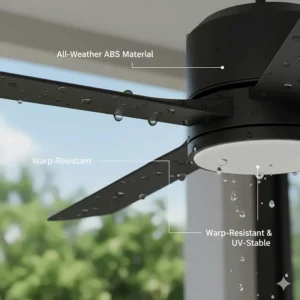
- ABS Plastic: Lightweight, won’t warp, resists UV damage, affordable
- Composite: Enhanced durability, maintains shape in humidity
- Marine-grade aluminum: Ultimate corrosion resistance for coastal areas
- Sealed wood: Limited to damp locations, requires maintenance
Housing & Hardware:
- Powder-coated finishes resist chipping and rust
- Stainless steel hardware prevents corrosion
- Sealed electrical boxes protect against moisture infiltration
Smart Features Worth Considering
Modern outdoor ceiling fans wet rated offer impressive technology:
Remote Control: Adjust settings without leaving your chair. Look for RF (radio frequency) remotes with better range than IR (infrared).
Wi-Fi Connectivity: Control via smartphone app, integrate with smart home systems, set schedules and automation.
Voice Control: “Alexa, increase patio fan speed” – works with Amazon Alexa, Google Assistant, Apple HomeKit, Samsung SmartThings.
Adaptive Learning: High-end models learn your preferences and automatically adjust based on temperature and time of day.
Installation Guide: DIY or Professional?
Can You DIY Install?
If you’re reasonably handy and comfortable working with electrical systems, installing outdoor ceiling fans wet rated is doable. You’ll need:
Tools Required:
- Voltage tester
- Wire strippers/cutters
- Drill and bits
- Ladder (tall enough for safe access)
- Screwdrivers (Phillips and flathead)
- Pliers
Important Safety Steps:
- Turn off power at the breaker panel – not just the switch
- Verify electrical box rating – must be labeled “Suitable for Fan Support” and rated for at least 35 pounds
- Check downrod length – proper clearance is critical for safety and efficiency
- Use weatherproof connections – outdoor installations require sealed wire nuts and waterproof tape
- Follow manufacturer instructions precisely – warranties often require proper installation
When to Call a Professional
Consider hiring a licensed electrician if:
- You’re adding a new electrical circuit
- The existing junction box isn’t fan-rated
- You’re uncomfortable working with electrical wiring
- Local building codes require permitted electrical work
- The installation involves unusual ceiling angles or heights
Average installation costs: $100-$300 for professional labor, depending on complexity and location.
Maximizing Energy Efficiency with Your Outdoor Fan
Running outdoor ceiling fans wet rated doesn’t have to spike your energy bill. Here’s how to optimize efficiency:
Understanding CFM vs. Wattage
CFM (Cubic Feet per Minute) measures airflow volume. Higher CFM means more air movement. Wattage measures energy consumption. The sweet spot? Maximum CFM per watt.
As explained in the physics of fan operation, ceiling fans work by creating differential pressure that moves air vertically, creating the cooling wind-chill effect we feel. This principle becomes especially important in outdoor settings where there are no walls to redirect airflow.
Efficiency Formula: CFM ÷ Watts = CFM/W (airflow efficiency)
Look for fans delivering at least 75 CFM/W. Premium DC motor models can exceed 100 CFM/W, providing superior airflow while using minimal electricity.
Seasonal Optimization
Summer (Downdraft Mode):
- Blades rotate counter-clockwise
- Creates direct cooling breeze
- Can make temperature feel up to 8°F cooler
- Run on low to medium speed for comfortable air movement
Winter (Updraft Mode):
- Blades rotate clockwise
- Gently redistributes warm air trapped near ceiling
- Helps covered outdoor heaters work more efficiently
- Use lowest speed to avoid creating drafts
Smart Scheduling
Program your fan to run during peak heat hours rather than 24/7. A typical summer schedule might be: 11 AM – 9 PM on weekdays, extended hours on weekends. This alone can reduce energy consumption by 40% compared to continuous operation.
Maintenance Tips for Long-Lasting Performance
Your outdoor ceiling fans wet rated investment deserves proper care. Follow these maintenance protocols:
Monthly Tasks
Visual Inspection:
- Check for loose hardware (tighten mounting screws and blade brackets)
- Look for signs of corrosion or rust
- Verify blade balance (wobbling indicates imbalance)
- Test all control functions
Quick Cleaning:
- Wipe blades with microfiber cloth (dry or slightly damp)
- Remove dust from motor housing
- Clean light fixtures and replace burned-out bulbs
Seasonal Deep Cleaning
Spring/Fall (Twice Yearly):
- Turn off power at breaker panel
- Remove blade assembly if heavily soiled
- Clean with mild soap solution (never use harsh chemicals on outdoor finishes)
- Dry thoroughly before reassembly
- Lubricate moving parts if manufacturer recommends (most modern fans have sealed bearings)
- Balance blades using a balancing kit if wobbling occurs
Winter Storage Considerations
If you’re in a region with harsh winters and won’t use the fan for months:
- Clean thoroughly before winter
- Cover exposed metal parts to prevent oxidation
- Consider removing and storing blades if severe weather expected
- Run fan briefly monthly to keep bearings lubricated
Warning signs requiring immediate attention:
- Unusual noises (grinding, clicking, buzzing)
- Excessive wobbling that doesn’t improve with balancing
- Intermittent power issues
- Visible damage to blades or housing
- Sparking or burning smell
How to Choose the Perfect Wet Rated Outdoor Ceiling Fan
Step-by-Step Selection Process
Step 1: Determine Your Rating Needs Is your installation location covered or fully exposed? Covered patio with complete protection = damp-rated works. Open area with rain exposure = must be wet-rated.
Step 2: Measure Your Space Calculate square footage (length × width). This determines minimum fan size. For irregular shapes, divide into sections and calculate separately.
Step 3: Assess Ceiling Height Standard 8-9 foot ceilings work with most fans and included downrods. Higher ceilings need extension downrods (sold separately). Lower ceilings (under 8 feet) require hugger/flush-mount models.
Step 4: Consider Airflow Requirements Open-air locations need higher CFM ratings than semi-enclosed spaces. As a rule, aim for at least 4,000 CFM for standard outdoor patios, 6,000+ CFM for large open areas.
Step 5: Set Your Budget
- Budget: $80-$150 (reliable performance, basic features)
- Mid-range: $150-$350 (better efficiency, enhanced features)
- Premium: $350-$700+ (smart features, maximum efficiency, designer aesthetics)
Step 6: Choose Control Type Pull-chain is most affordable but least convenient. Wall control offers centralized management. Remote control provides portable convenience. Smart integration gives ultimate flexibility.
Step 7: Select Style and Finish Match your outdoor décor scheme. Contemporary spaces suit sleek, minimalist designs. Traditional settings call for classic styling. Coastal environments benefit from nautical themes.
Troubleshooting Common Issues
Even the best ceiling fans for outside can develop problems. Here’s how to diagnose and fix common issues:
Fan Wobbles Excessively
Causes:
- Unbalanced blades (most common)
- Loose mounting hardware
- Warped or damaged blade
- Improper installation
Solutions:
- Tighten all mounting and blade screws
- Use blade balancing kit (included with most fans)
- Swap blades between positions to find culprit
- Replace damaged blade or entire blade set if necessary
Fan Runs Slowly or Struggles
Causes:
- Worn bearings
- Motor capacitor failure
- Incorrect wiring
- Power supply issues
Solutions:
- Verify correct voltage at junction box
- Check all wire connections for security
- Test capacitor with multimeter (replace if faulty)
- Contact manufacturer if motor bearing is issue (often warranty covered)
Remote Control Not Working
Causes:
- Dead batteries (obvio
us but overlooked)
- Signal interference
- Lost pairing with receiver
- Damaged receiver
Solutions:
- Replace batteries in remote
- Re-pair remote following manufacturer instructions
- Remove potential interference sources (other remotes, wireless devices)
- Test receiver with multimeter or replace if defective
❓ Frequently Asked Questions
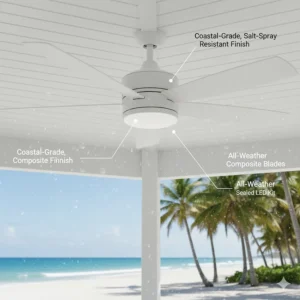
❓ Can outdoor ceiling fans wet rated be used in coastal areas with salt air?
❓ How much does it cost to run outdoor ceiling fans wet rated continuously?
❓ What's the difference between wet rated and weatherproof outdoor ceiling fans?
❓ Do wet rated patio ceiling fans require special electrical boxes?
❓ How long do outdoor ceiling fans wet rated typically last?
Conclusion: Making the Right Choice for Your Outdoor Oasis
Choosing among the best outdoor ceiling fans wet rated doesn’t have to be overwhelming. Whether you’re drawn to the smart-home sophistication of the Modern Forms Aviator, the classic reliability of the Honeywell Belmar, or the budget-friendly Hampton Bay North Pond, there’s a perfect wet rated patio ceiling fans solution for every outdoor space and budget.
According to recent home design research, maximizing outdoor living spaces has become a top priority for homeowners, with 63% saying they would prioritize outdoor areas if remodeling. This trend makes selecting the right outdoor equipment crucial for both comfort and home value.
Remember these key takeaways:
🌟 Match the rating to your exposure level – damp for covered areas, wet for open installations
🌟 Size appropriately – larger spaces need bigger fans or multiple units
🌟 Prioritize motor quality – DC motors offer superior efficiency and longevity
🌟 Don’t skimp on installation – proper setup ensures safety and performance
🌟 Maintain regularly – simple cleaning and inspections prevent costly repairs
The outdoor living trend continues growing in 2025, and outdoor ceiling fans wet rated have evolved from simple cooling devices into sophisticated climate control systems that extend your living space into the great outdoors. Whether you’re creating an al fresco dining room, a relaxation retreat, or an entertainment hub, the right fan transforms your vision into comfortable reality.
Ready to upgrade your outdoor comfort? Start by measuring your space, determining your wet/damp rating needs, and exploring the products in our expert review. Your perfect outdoor oasis awaits – all it needs is the right fan to bring it to life!
Recommended for You
- 7 Best Garage Ceiling Fans 2025 You Need Right Now
- 7 Best Ceiling Fan Chandelier for 2025 | Ultimate Buying Guide
- 7 Best Wood Ceiling Fan Options That’ll Transform Your Home in 2025
Disclaimer: This article contains affiliate links. If you purchase products through these links, we may earn a small commission at no additional cost to you.
✨ Found this helpful? Share it with your friends! 💬🤗
