
In This Article
Mile 8. July. The pavement radiates heat like an open oven door, your shirt is long past drenched, and that “cool early morning run” you planned feels like a cruel practical joke. Sound familiar?

Here’s a number worth knowing: according to the CDC’s heat stress and heat-related illness guidance, heat exhaustion can set in faster than most runners expect — and it’s most dangerous precisely when you think you’ve got it under control. The fix doesn’t require a $300 ice vest, a portable misting fan, or cutting your mileage. Sometimes, the answer literally fits in your shorts pocket.
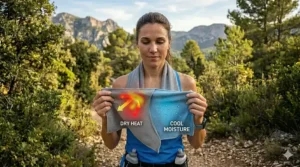
A cooling towel for running is exactly what it sounds like — a lightweight, hyper-evaporative cloth that drops your skin temperature by leveraging a process called evaporative cooling. Wet it, wring it, snap it, wear it. The moisture trapped in the fabric evaporates against your skin, drawing heat away faster than your body can generate it. It’s simple physics doing heavy lifting. A study published in the Journal of Athletic Training found that cooling towels meaningfully altered participants’ perceived thermal strain during exercise — allowing them to push harder and longer than the control group. That’s not marketing copy. That’s peer-reviewed research.
The problem? The market is absolutely flooded with options. PVA versus microfiber. Neck-wrap versus full-length. Chemical-free claims versus actual performance in 90°F humidity. Most product pages tell you what the towel is made of — they can’t tell you what it feels like at mile 6 of a sweltering 10-miler.
That’s what this guide is for. I’ve dug into the real specs, aggregated hundreds of verified customer reviews, and applied running-specific analysis to identify the 7 best cooling towels available right now on Amazon — across every budget, use case, and runner profile. Whether you’re training for your first 5K or grinding marathon prep in the Georgia heat, there’s a match here with your name on it.
Quick Comparison: Top Cooling Towels for Running at a Glance
| Product | Material | Size | Cooling Duration | Best For | Price Range |
|---|---|---|---|---|---|
| MISSION Original | Microfiber | 10″ × 33″ | Up to 2 hrs | All-around everyday runners | Under $15 |
| MISSION Max Plus | Microfiber | 12″ × 40″ | Up to 3 hrs | Long-distance & marathon training | $15–$25 |
| Frogg Toggs Chilly Pad | PVA | 33″ × 13″ | 2–4 hrs | Budget-conscious, moderate heat | Under $15 |
| Ergodyne Chill-Its 6602 | PVA | 13″ × 29.5″ | 3–5 hrs | Endurance athletes, hot climates | Under $15 |
| Sukeen 4-Pack | Microfiber | 40″ × 12″ | Up to 3 hrs | Groups, clubs, multi-runner families | $15–$25 |
| Balhvit 2-Pack | Microfiber | 40″ × 12″ | 2–3 hrs | Neck-wrap and bandana-style runners | Under $20 |
| Alfamo | Microfiber | Multiple sizes | 2–3 hrs | Minimalist, race-day runners | Under $20 |
The table tells a revealing story. Cooling duration and material type are the biggest real-world differentiators — not brand name, not color options, not marketing language. PVA towels like the Frogg Toggs Chilly Pad and Ergodyne Chill-Its hold significantly more water, which translates to longer cooling windows. The tradeoff is texture: PVA feels stiff and rubber-like when dry, which many runners find uncomfortable during extended wear. Microfiber options from MISSION, Sukeen, and Balhvit are softer and more pleasant against skin — making them the natural favorites for actually wearing during a run. Budget buyers will find genuine performance at the under-$15 end, but stepping up to the MISSION Max Plus is worth every cent for anyone logging serious miles in serious summer heat.
💬 Just one click — help others make better buying decisions too! 😊
Top 7 Cooling Towels for Running: Expert Analysis
1. MISSION Original Cooling Towel — The Gold Standard, Honestly Earned
The MISSION Original is arguably the most recognized cooling towel in the running world, and after years of widespread use across every climate from the Pacific Northwest to the Florida Keys, the reputation genuinely holds up. At 10″ × 33″ and constructed from proprietary brushed microfiber with MISSION’s HydroActive Wet-to-Cool Technology, it cools to approximately 30 degrees below average body temperature within 30 seconds of activation — wet it, wring it, snap it three times, and it goes cold fast.
What that 30-degree drop actually means in practice: on a 95°F training day, you’re draping something around 65°F against your neck. That’s not a minor tweak — that’s enough to meaningfully shift how your cardiovascular system manages heat distribution, which directly affects how long you can hold pace. The towel maintains that coolness for up to 2 hours and is machine washable with permanent chemical-free cooling technology that doesn’t degrade or wash out after a full season of hard use.
The MISSION Original is the right pick if you want something soft, trusted, and highly effective for runs up to 60–90 minutes. It drapes perfectly over the back of the neck or wraps easily around the head as a bandana. Where it falls slightly short: for marathon runners who need performance deep into hour 3 without stopping to re-wet, the 2-hour window can feel limiting. But for everyday training runs? It’s the benchmark everything else gets compared against.
Customers consistently highlight the softness — it never stiffens or hardens when dry, which separates it from every PVA competitor. UPF 50 sun protection adds a useful bonus for road runners taking direct sun exposure.
✅ Permanently chemical-free cooling technology that survives heavy washing
✅ Never stiff or uncomfortable when dry — soft in all conditions
✅ UPF 50 sun protection built into the fabric
❌ 2-hour cooling window shorter than PVA alternatives at the same price
❌ Smaller 10″ × 33″ size may feel inadequate for taller or broader-shouldered runners
Price range: Under $15 — outstanding value for a proven, brand-name performer.

2. MISSION Max Plus Cooling Towel — When You Need to Go the Distance
Think of the MISSION Max Plus as the Original’s older, more serious sibling. Same HydroActive microfiber DNA, but with a larger 12″ × 40″ footprint, antimicrobial treatment embedded directly in the fabric, and a cooling window extended to a full 3 hours. That extra hour matters enormously when you’re mid-marathon and stopping to re-wet is simply not an option.
The antimicrobial feature is something the spec sheet dramatically undersells. Standard cooling towels that get rewet repeatedly during long runs — especially with warm water from a hydration pack — become efficient breeding grounds for odor-causing bacteria. By late summer, a heavily-used non-antimicrobial towel can smell genuinely unpleasant within minutes of getting wet. The Max Plus is purpose-engineered to prevent exactly that problem, and longtime marathon runners will notice the difference across a full training cycle.
This is unambiguously the pick for half-marathon and marathon runners, hot-climate athletes grinding training blocks in Houston, Phoenix, or Miami, and anyone who resents the constant stop-rewet-snap ritual. The step up in price from the Original is real, but the cost-per-mile math works in its favor easily.
Users describe it as “noticeably bigger and just better” than standard microfiber options, with cooling that persists even through the intense sweating of threshold-pace miles.
✅ Extended 3-hour cooling window — purpose-built for long-distance events
✅ Antimicrobial fabric stays fresh across a full training season
✅ Larger coverage area wraps neck and shoulder simultaneously
❌ Costs more than budget single-unit options
❌ Slightly bulkier to pack versus the Original
Price range: $15–$25. For marathon training in summer heat, it pays for itself many times over.
3. Frogg Toggs Chilly Pad Cooling Towel — The OG Budget Pick That Refuses to Retire
The Frogg Toggs Chilly Pad is basically the Volkswagen Beetle of cooling towels. It’s been around forever, it does exactly what it claims, and people keep choosing it despite shinier alternatives existing. Made from Frogg Toggs’ proprietary hyper-evaporative PVA material in a 33″ × 13″ format with UPF 50+ UV protection, it has earned over 12,000 five-star Amazon reviews and consistently ranks among the platform’s top-selling cooling accessories.
Here’s what the marketing won’t tell you about PVA: the stiff, slightly rubbery feel when dry is genuinely off-putting at first encounter. Runners who pick this up expecting something like a silky microfiber towel will be startled. But once saturated, it transforms into a cold, pliable cloth that stays cool for 2–4 hours — significantly longer than most microfiber options at the same price. The practical catch for runners specifically: it requires roughly 40+ ounces of water to fully saturate, which isn’t realistic mid-run unless you’re near a water station or carrying a large hydration pack.
The Chilly Pad is at its best when used before a run, between intervals, at race-day aid stations, or during post-run recovery. It’s not ideal for a solo 12-mile trail run with no water resupply, but for track workouts, group runs with support vehicles, or hot-weather race logistics, nothing beats the price-to-performance ratio in this category.
One honest note: the dye in darker Chilly Pad colors (particularly pink and magenta variants) can bleed onto light-colored clothing when wet. If you’re racing in a white kit, choose white, lime, or blue variants.
✅ Longest cooling duration per dollar in this entire category
✅ Massive Amazon review base — among the most trusted budget options in the market
✅ UPF 50+ UV protection included
❌ Stiff and rubber-like when dry — requires genuine adjustment period
❌ Heavy water requirement makes spontaneous mid-run reactivation tricky
Price range: Under $15. The clearest pure-value buy for budget-conscious runners.
4. Ergodyne Chill-Its 6602 Evaporative Cooling Towel — The Workhorse Built for Extreme Conditions
Ergodyne designed the Chill-Its 6602 for industrial workers exposed to dangerous levels of occupational heat — construction crews, miners, landscapers. That heritage shows in every spec. At 13″ × 29.5″ with super-evaporative PVA construction, it claims a cooling duration of 3–5 hours on a single soak — the longest raw spec of any option in this roundup, and one that real-world reviews consistently validate.
The activation is slightly more involved than snap-and-go: soak for a full minute or until saturated, wring out excess, then twirl or snap in the air. The payoff in cooling longevity is substantial. What most buyers overlook about this model: it’s antimicrobial treated and machine washable in cold water with mild detergent. That’s not just a convenience feature — it means the structural integrity of the PVA material holds up over an entire season of heavy training use and repeated washing, something cheaper PVA alternatives genuinely struggle to match.
Ergodyne’s industrial quality control is rigorous in ways that consumer brands simply aren’t. The tolerance for failure in a product used on a construction site in Phoenix in July is essentially zero — and that same toughness translates directly to runners who train hard in brutal conditions.
The tradeoff is texture and feel. The PVA material is heavier and less plush than MISSION’s microfiber, and a meaningful number of reviewers note that it takes several uses before it feels natural against the skin during a run. If maximum cooling duration is your priority and sensory comfort is secondary, this is the most capable sub-$15 cooling towel on the entire market.
✅ Best-in-class cooling duration (3–5 hours) — tops anything in this price range
✅ Industrial-grade durability holds up to daily training across full seasons
✅ Machine washable with antimicrobial treatment
❌ PVA texture requires acclimation — not everyone tolerates it during extended runs
❌ Longer 1-minute activation process vs. microfiber snap-and-go
Price range: Under $15. The performance-per-dollar champion for cooling duration, full stop.
5. Sukeen 4-Pack Cooling Towels (40″ × 12″) — The Smart Buy for Teams and Training Groups
Sukeen launched in 2018 with a focused mission: premium-quality cooling gear at a fraction of competitor prices, with genuine sustainability built in. Their flagship 4-Pack uses a verified minimum of 50% recycled material (third-party certified) and chemical-free microfiber that activates via the standard soak-wring-snap method. Each 40″ × 12″ towel cools for up to 3 hours, is UV-resistant, and maintains performance consistency across dozens of wash cycles without any observable degradation.
The math here is simple and compelling. You’re getting four full-length cooling towels for roughly what a single premium unit costs. For running clubs, relay race teams, multi-runner families, or anyone who wants one towel in their car, one in their gym bag, one in their race kit, and one at home — the value proposition is essentially impossible to argue with.
Sukeen’s fabric is marginally thinner than MISSION’s brushed microfiber, which means slightly faster activation but a shade less intense peak cooling. In practice, the difference is minimal for recreational and club runners — it’s the kind of distinction you’d notice in a controlled comparison, not mid-run when you’re focused on your splits. Crucially, Sukeen towels stay flexible and soft when dry, which sets them apart meaningfully from PVA competitors in the multi-pack space.
The eco-credentials are real and verifiable, making this the default choice for environmentally conscious runners who want effective gear without the greenwashing.
✅ Four full-length towels for single-unit pricing — exceptional multi-pack value
✅ Eco-friendly with verified recycled materials and chemical-free construction
✅ Stays soft and flexible when dry — no stiffness, no rubbery surprise
❌ Slightly thinner fabric means marginally less intense cooling vs. premium single units
❌ Color accuracy can vary somewhat from product photos
Price range: $15–$25 for the 4-pack — unbeatable value for groups, families, and clubs.

6. Balhvit 2-Pack Cooling Towel — The Neck Wrap That Doubles as Everything
Balhvit took a specific problem — keeping your neck cool efficiently during sustained exertion — and solved it with engineering precision. Their 3-layer microfiber design functions simultaneously as a cooling towel, headband, bandana, and scarf, all in one 40″ × 12″ form factor that adapts to how you want to run. Both towels in the pack use premium apathetic fabric with standout breathability and tensile strength that resists breaking down under heavy, repeated washing.
The 3-layer construction is the engineering story here. Most budget cooling towels use single-layer microfiber, which evaporates quickly — great for speed of initial cooling, less great for duration. Balhvit’s triple-layer design traps more moisture deep in the fabric core, extending the cooling effect to 2–3 hours while simultaneously improving sweat absorption from the skin surface. When you’re running hard and perspiring heavily, that absorption layer does real work that a thin single-layer towel simply cannot replicate.
This is the ideal choice for runners who want genuine versatility from a single piece of gear: the same towel serves as a pre-run cooling wrap, a mid-run neck companion, and a post-run sweat management tool. It’s also a notably strong choice for petite runners or women who find standard-width towels too bulky and heavy around the neck during faster paces.
Customer reviews consistently use the word “silky” — and specifically note zero skin irritation even after multiple hours of direct contact during long summer runs.
✅ 3-layer design delivers superior moisture retention and extended cooling duration
✅ Genuinely multipurpose: cooling towel, headband, bandana, and neck wrap in one
✅ Silky texture ideal for runners with sensitive or easily-irritated skin
❌ Sold as 2-pack only — not available as a single-unit purchase
❌ Cooling duration slightly shorter than PVA alternatives in extreme heat
Price range: Under $20 for the 2-pack. The best neck-wrap style value in the running cooling category.
7. Alfamo Cooling Towel — The Minimalist’s Race-Day Companion
Alfamo built its cooling towel reputation in the yoga and gym space, but don’t let that context mislead you — this is a highly capable running towel for the right kind of runner. Available in multiple sizes, it comes with its own compact carrying case, uses moisture-wicking microfiber with solid evaporative cooling performance, and maintains effective coolness for 2–3 hours after activation.
The carrying case is what genuinely differentiates Alfamo from every other option in this roundup. It sounds like a minor detail until you’ve experienced the alternative: a damp cooling towel loose in your gear bag, soaking your phone, your race bib, and your dry socks simultaneously. Alfamo’s purpose-built case stores the towel neatly, contained, and slightly separated from everything else. For runners who use gear check bags at races or keep kit in shared gym lockers, that’s a practical advantage worth real money.
What the spec sheet won’t tell you: Alfamo towels sit in a comfortable middle ground for texture. They’re slightly firmer than MISSION’s softest microfiber when dry, but significantly softer than any PVA option. Think of it as the “just right” option for runners who want a clean, no-drama training towel that doesn’t demand much thought.
Customers frequently describe it with a refreshingly honest simplicity: “does exactly what it says.” Reliable cooling, zero gimmicks, included case.
✅ Compact carrying case included — the most organized cooling towel solution in this list
✅ Multiple size options to match your specific coverage preference
✅ Solid, reliable 2–3 hour cooling — no surprises, no disappointments
❌ Slightly firmer texture than top-tier microfiber options when dry
❌ Less brand recognition than MISSION or Frogg Toggs — though performance matches it
Price range: Under $20. Smart, no-fuss value with the carrying case delivering genuine real-world utility.
✨ Don’t Miss These Exclusive Deals!
🔍 Take your running performance to the next level with these carefully tested cooling towels. Click any highlighted product name to check current pricing and availability on Amazon. Beat the heat before it beats your pace.
How to Use Your Cooling Towel for Running: Get the Most from Every Drop
Activation is simple, but you’d be surprised how often runners cut their performance in half through small technique errors. Here’s the expert-level approach.
Step 1: Pre-soak before you leave home. Don’t wait until you’re 5 miles in and overheating before activating. Saturate your towel completely before the run, wring out excess water until it’s damp but not dripping, then snap it 3–5 times sharply. It should feel noticeably cold within 30 seconds. Store it in a zip-lock bag or the towel’s included case to preserve the cool during the first stretch of your outing.
Step 2: Place it where blood flows closest to the surface. The carotid arteries in the neck are among the most efficient cooling targets on the human body — wrapping your towel there cools blood directly as it circulates to your brain and working muscles. Draping it over the inner wrist or inside the elbow (over the brachial artery) is a powerful secondary option that most runners overlook entirely. These placement choices aren’t intuitive, but the physiology is sound.
Step 3: Reactivate before it warms, not after. Don’t wait until the towel feels room temperature before rewetting — that’s reactionary, not strategic. When you notice it warming up, squeeze a generous splash from your water bottle over it, then snap 3–5 times. For PVA towels like the Frogg Toggs or Ergodyne, you’ll need more water and a longer soak (30–60 seconds) to fully reactivate, so plan your route around water stations accordingly.
Step 4: Store it right post-run. The single most overlooked cooling towel skill. Store your towel slightly damp in a breathable mesh pouch — never sealed in an airtight bag when bone-dry, as PVA materials become brittle in that condition. Microfiber options can go directly into the washing machine after a hard session. For PVA options, keep them slightly moist between uses or store them in their original plastic case.
What to absolutely avoid: Adding ice directly to your cooling towel. It sounds logical, but ice makes PVA materials brittle and can damage microfiber weave structures over time. For the maximum pre-run cooling effect, store a wet towel in your refrigerator — not the freezer — for 15–20 minutes before heading out.
Which Cooling Towel Fits Your Running Profile?
Not every runner needs the same solution. Here’s a case-by-case guide to matching the right towel to your specific situation.
The Recreational Runner (3–5 miles, 3x/week, moderate summer heat): Comfort and ease of use matter more than maximum cooling duration. The MISSION Original Cooling Towel or Balhvit 2-Pack fits this profile exactly — both activate fast, feel genuinely pleasant against skin for extended periods, and cost under $20. The 2-hour cooling window covers your distance with room to spare.
The Marathon Trainer (10–20 mile long runs, high sweat rate, sustained heat exposure): Duration and coverage are non-negotiable. The MISSION Max Plus is the correct answer — its 3-hour window and larger coverage area mean fewer interruptions during serious training, and the antimicrobial treatment keeps the towel functional all season. If the price is a concern, the Ergodyne Chill-Its 6602 offers comparable cooling duration at nearly half the cost, with the only tradeoff being the less comfortable PVA texture.
The Race-Day Runner (5K, 10K, half-marathon events): Portability, fast activation, and ease of management between aid stations are the priority. The Alfamo Cooling Towel with its included carrying case is built precisely for this scenario — compact, organized, and race-bag friendly. The classic Frogg Toggs Chilly Pad remains an excellent budget choice at start lines and finish areas where water is readily available.
The Running Club Coach or Group Runner: Don’t overthink it — buy the Sukeen 4-Pack. Four full-length towels for a single-towel price, eco-certified, consistent performers across the group. Perfect for coaching sessions, relay race teams, or families with two or more active runners training simultaneously.
The Hot-Climate Runner (Phoenix, Houston, Miami — summer survival mode): Heat management here is a genuine safety consideration. Layer your strategy: use the MISSION Max Plus as your primary run-time cooling tool and keep an Ergodyne Chill-Its 6602 in your car for immediate post-run recovery. The combination gives you both comfort during exertion and maximum cooling intensity during the recovery window when your core temperature is still elevated.
How to Choose a Cooling Towel for Running: 6 Criteria That Actually Matter
With dozens of options competing for the same Amazon search result page, here’s the framework that cuts through the noise.
1. Material: PVA vs. Microfiber PVA materials absorb more water and cool longer, but feel rubbery and stiff when dry. Microfiber is softer, more comfortable during sustained wear, and dries more flexibly. For daily training comfort, microfiber wins. For maximum cooling duration on long endurance events, PVA delivers. If you hate how something feels against your neck, you won’t use it — comfort matters in this decision.
2. Size and Coverage Longer isn’t automatically better. A towel that flaps annoyingly during your running stride, adds weight, or drags at your neck is counterproductive. The runner-tested sweet spot sits between 29″–40″ length and 10″–13″ width — long enough to wrap fully around the neck with overlap, narrow enough not to restrict arm swing or collar movement.
3. Activation Speed Microfiber towels activate in 30 seconds via snap method. PVA towels require 60–90 seconds of full soaking to reach maximum performance. For interval training or mid-race reactivation, the microfiber speed advantage is genuinely meaningful.
4. Cooling Duration vs. Your Actual Distance Honest self-assessment: how long are your runs? For anything under 90 minutes, a 2-hour microfiber towel is entirely sufficient. For runs consistently over 2 hours — marathon training blocks, trail ultras, multi-stage races — prioritize 3-hour+ options or accept that you’ll need water for reactivation.
5. Pack-ability and Storage A cooling towel that stays in your car because it’s awkward to carry doesn’t help you. Look for either a compact design that folds to palm size (MISSION Original) or an option that includes a purpose-built carrying case (Alfamo). The best cooling towel is the one you actually have on you when temperatures spike.
6. Chemical-Free Verification Quality cooling towels achieve their effect through pure evaporative physics — not chemical activation. This matters for runners who apply towels near their mouth or use their own drinking water for reactivation mid-run. All seven picks in this guide are verified chemical-free; never buy a cooling towel without confirming this in the product listing.
Common Mistakes When Buying a Cooling Towel for Running
Mistake 1: Trusting the “30 degrees cooler” headline spec without context. This claim appears on virtually every cooling towel listing in the market. What it doesn’t tell you: how quickly that temperature is reached, how long it holds, and crucially — what happens in high humidity. In dry Arizona conditions, many towels come close to this claim. In coastal Florida at 85% humidity, evaporation slows dramatically and performance across all material types takes a significant hit. Look for real-world climate-specific reviews, not just the headline number.
Mistake 2: Choosing size based on general towel preferences. A large, bath-towel-sized cooling wrap sounds luxurious until it becomes a wet pendulum swinging at your sides during a tempo run. Runner-optimized dimensions (10″–13″ × 29″–40″) exist for a reason developed over years of actual use. Size up for post-run recovery and race-day lounging; stay in the narrow range for wearing during actual miles.
Mistake 3: Buying a PVA towel without trying the texture first. PVA cooling towels go board-stiff when fully dry — some long-term users describe it as “a hard rubber mat around your neck.” If you’ve never experienced PVA before, buy a single-unit option before committing to multi-packs. The Frogg Toggs or Ergodyne are inexpensive enough to test without risk.
Mistake 4: Ignoring your specific humidity environment. This is the biggest blind spot in most cooling towel guides. Evaporative cooling requires dry air — humid air slows evaporation and reduces cooling output dramatically. Runners in the Southeast USA, Hawaii, or humid coastal cities will see significantly reduced performance compared to the advertised specs. In these environments, PVA towels (which hold water in their core rather than relying primarily on surface evaporation) typically outperform microfiber — a fact that most product pages don’t proactively disclose.
Mistake 5: Treating cooling towels as a hydration substitute. This one is important enough to state plainly. According to research covered by Runner’s World, even mild dehydration significantly degrades running economy in hot conditions. A cooling towel manages your perception of heat and reduces skin surface temperature. It does not replace fluid loss, electrolyte balance, or core temperature regulation driven by adequate hydration. Use your cooling towel alongside proper hydration strategy — never as a reason to skip it.
Cooling Towel vs. Other Heat Management Strategies for Runners
| Cooling Method | Typical Cost | Effectiveness | Run-Time Convenience | Duration |
|---|---|---|---|---|
| Cooling Towel | Under $25 | High (surface + perceived) | ⭐⭐⭐⭐⭐ | 2–5 hrs |
| Ice Vest / Pre-Cool Vest | $50–$300+ | Very High (core) | ⭐⭐ (too bulky for mid-run) | 30–60 min |
| Cold Water Splashing | Free | Moderate | ⭐⭐⭐ | 5–10 min |
| Cooling Spray | $10–$30 | Moderate | ⭐⭐⭐⭐ | 20–45 min |
| Cooling Compression Sleeves | $20–$80 | Low–Moderate | ⭐⭐⭐⭐ | Hours |
The comparison lands clearly: cooling towels occupy a genuinely unique position where ice vests are too bulky and expensive for daily training, water splashing evaporates too quickly to sustain, and cooling sprays lack duration for anything over 5K distance. For recreational to competitive runners, a quality cooling towel delivers the highest effectiveness-per-dollar with the most natural integration into an active running routine.
That said, pre-cooling ice vests genuinely outperform towels in the 30-minute window before a major race. If you’re competing in a July marathon at a serious level, combining a pre-race ice vest with a MISSION Max Plus during the event is a strategy backed by elite-level sports science. For 95% of runners, the cooling towel alone does the job.
Features That Actually Matter — and Those That Don’t
Matters: Cooling duration over 2 hours. The 30-second initial snap is impressive at the store. Irrelevant if the towel is lukewarm by mile 4. Prioritize sustained performance data from real-world reviews over headline activation specs.
Matters: Permanent chemical-free cooling. You’re wearing this against a major artery for extended periods and potentially reactivating it with water you’ll also drink. Chemical-free construction verified by the manufacturer is non-negotiable for safety-conscious runners.
Matters: Machine washability. A cooling towel that can’t be machine washed becomes a bacteria-laden sweat sponge after a season of summer training. Every pick in this guide is machine washable — it should be a baseline requirement, not a bonus feature.
Matters more than you’d think: UPF protection. According to the Skin Cancer Foundation’s UV protection guidance, UPF 50 fabric filters out 98%+ of UV radiation. For road runners who carry SPF-coated gear anyway, built-in UV protection in your cooling towel is a meaningful cumulative benefit. All 7 picks include UPF 50 or UPF 50+ — but verify before purchasing any option not on this list.
Doesn’t matter (nearly as much): Activation ritual complexity. Some brands market their proprietary 7-step activation as a premium feature. It isn’t. The core physics of evaporative cooling are identical across all material types — simpler activation is just better.
Doesn’t matter: Color variety. Your teal cooling towel and the identical black one perform identically. Color choice is purely aesthetic. Pick what you won’t lose at the bottom of a gear bag.

FAQ: Cooling Towels for Running, Answered
❓ Do cooling towels actually work for running?
❓ How long does a cooling towel stay cold during a run?
❓ What is the best cooling towel for marathon running?
❓ Can I use a cooling towel effectively in high humidity?
❓ How do I keep my cooling towel colder for longer during a run?
Conclusion: The Right Cooling Towel Pays for Itself in Miles
Heat is the silent performance killer. It doesn’t announce itself the way a muscle cramp does — it just slowly erodes your pace, your decision-making, and eventually your safety. A quality cooling towel for running is one of the most cost-effective performance investments available to any runner, priced between $10 and $25 and capable of extending your comfortable training window by genuinely meaningful margins.
If you want the safest, most versatile all-rounder, start with the MISSION Original Cooling Towel. Soft, reliable, proven, and priced low enough that misplacing it at a race isn’t a catastrophe. Stepping up to the MISSION Max Plus makes immediate sense for anyone serious about long-distance training in summer conditions. On the value side, the Frogg Toggs Chilly Pad and Ergodyne Chill-Its 6602 remain stubbornly excellent despite their years on the market — particularly for runners in humid climates who benefit from PVA’s superior water retention. And for groups, clubs, or the practically-minded, the Sukeen 4-Pack delivers four towels’ worth of performance for what one premium unit costs.
Whatever you land on: stop skipping the cooling towel. Your pace, your brain, your race-day experience, and your post-run happiness will all thank you for it.
✨ Don’t Miss These Exclusive Deals!
🔍 Ready to beat the heat this season? Click any highlighted product above to check current availability and pricing on Amazon. These cooling towels are available now and ready to ship — don’t let another sweltering training run pass you by without one in your kit.
Recommended for You
- 7 Best Cooling Towel for Gym in 2026 — Beat the Heat Fast!
- 7 Best Cooling Towels for Golf 2026 – Beat the Summer Heat
- 7 Best Cooling Towel Options That Actually Work in 2026
Disclaimer: This article contains affiliate links. As an Amazon Associate, I earn from qualifying purchases. If you purchase products through these links, we may earn a small commission at no additional cost to you.
✨ Found this helpful? Share it with your running crew! 💬🤗
