
In This Article
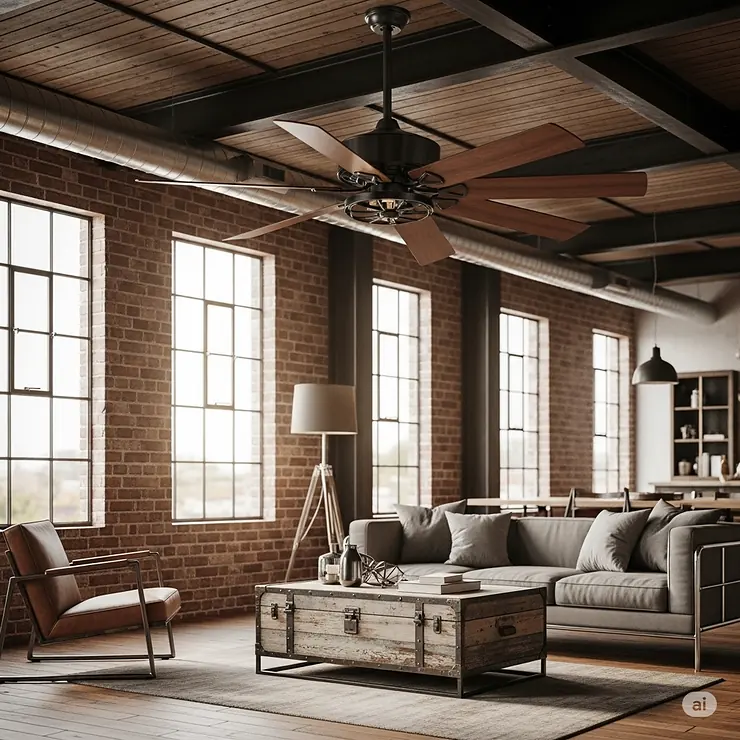
⚡ Have you ever walked into a restaurant or vintage-inspired space and been captivated by those mesmerizing belt driven ceiling fans spinning overhead? These mechanical marvels aren’t just functional—they’re conversation starters that transport you back to the industrial revolution era. ⚡
✨Was this helpful? Spread the word! 🚀
Today, I’m diving deep into the fascinating world of belt driven ceiling fans, exploring why they’re experiencing a remarkable renaissance in modern interior design. Whether you’re a homeowner looking to add character to your space or a business owner wanting to create an authentic industrial atmosphere, this comprehensive guide will help you navigate the unique world of belt driven ceiling fans.
Understanding Belt Driven Ceiling Fans: A Mechanical Marvel
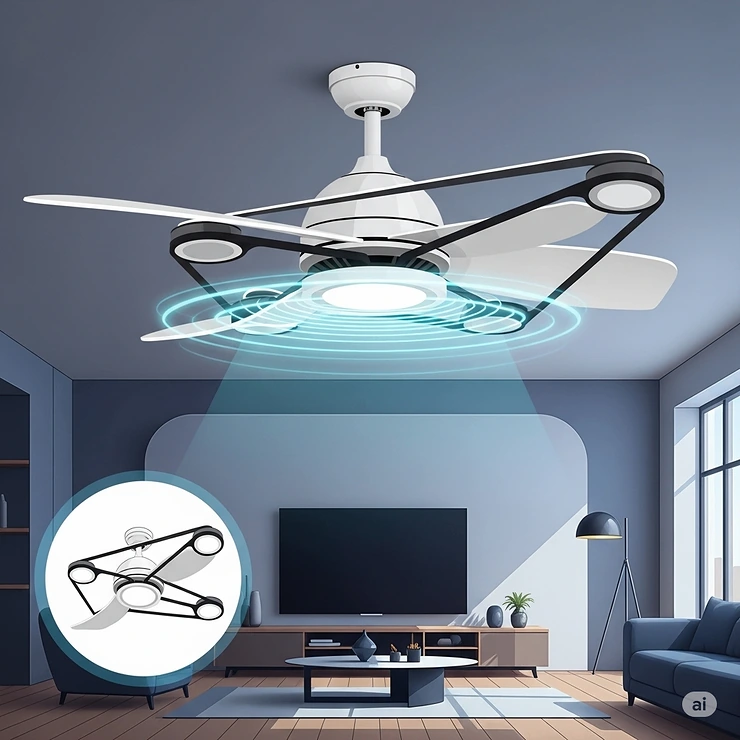
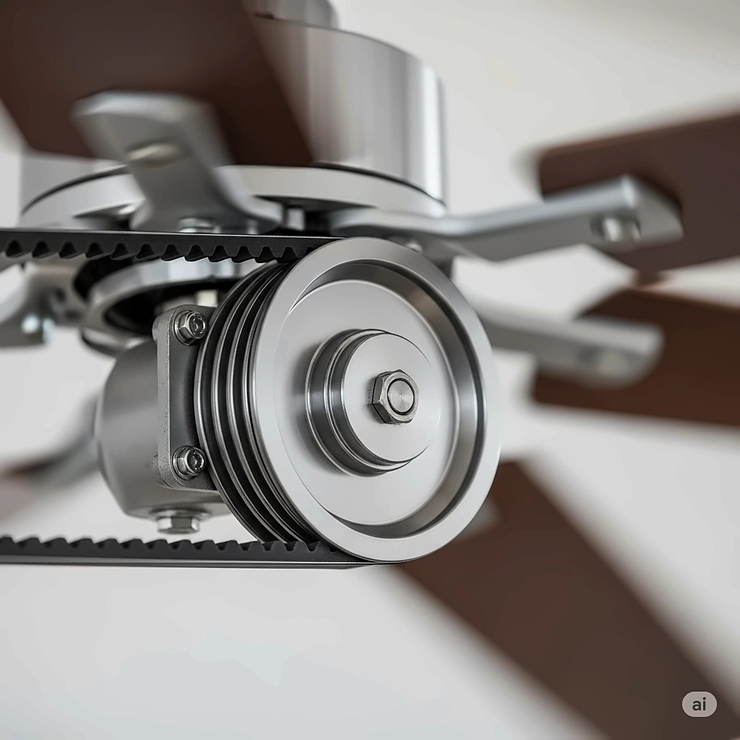
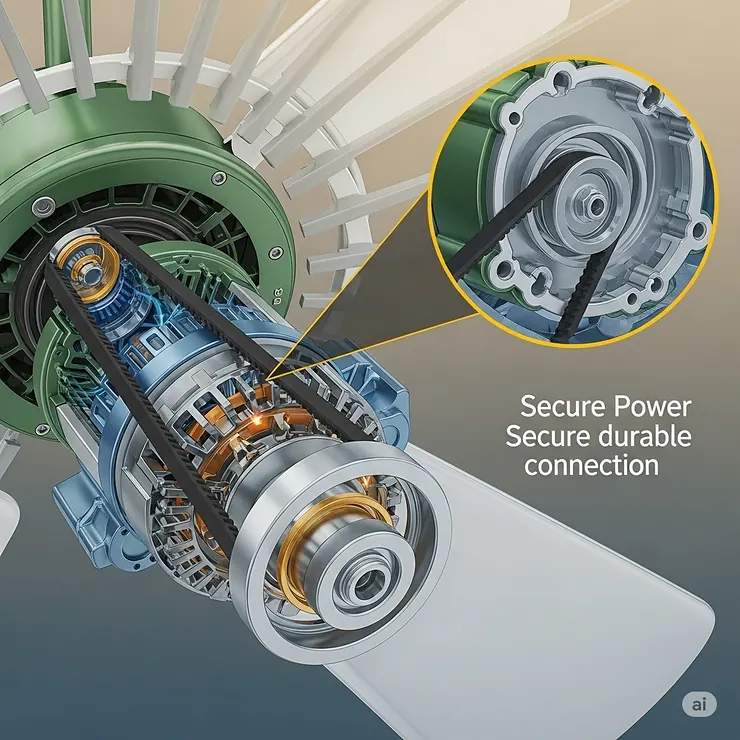
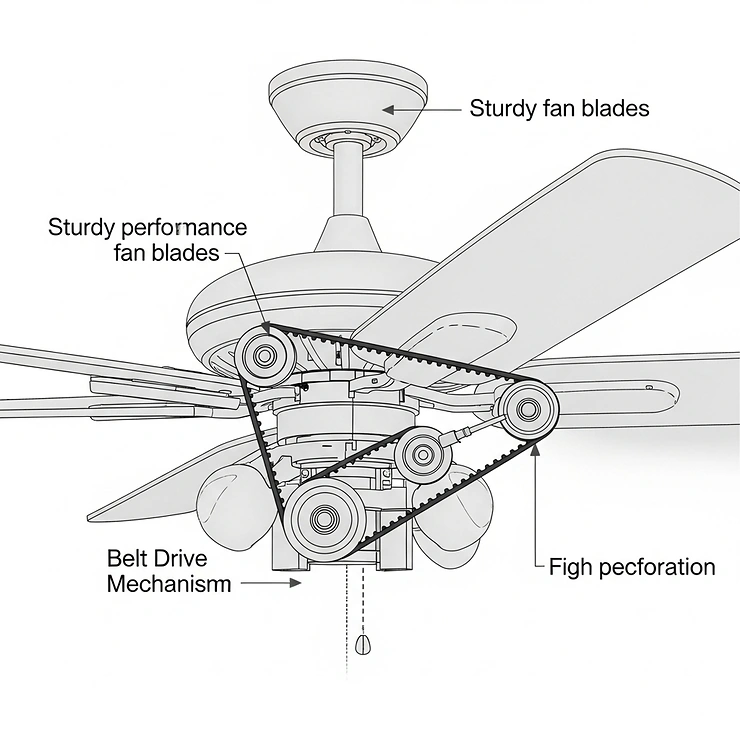
Belt driven ceiling fans represent a fascinating intersection of engineering ingenuity and aesthetic appeal. Unlike traditional ceiling fans where the motor is housed within the fan head, belt driven systems utilize a separate motor unit connected to fan heads via a belt-and-pulley system. This configuration creates the distinctive visual appeal that has made these fans increasingly popular in restaurants, cafes, and industrial-themed spaces.
✅ Key Design Elements:
- Separate motor housing unit (typically mounted on ceiling or wall)
- Belt connection system linking motor to fan heads
- Multiple fan heads can be operated from single motor
- Authentic industrial aesthetic with exposed mechanical components
- Customizable belt lengths allowing flexible installation configurations
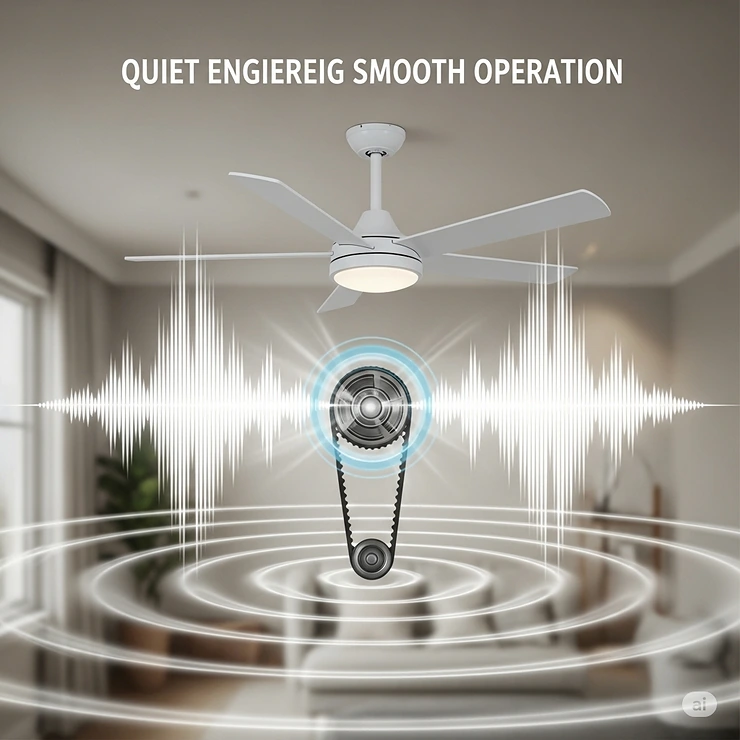
The engineering behind these systems is remarkably sophisticated. The motor unit generates rotational force that’s transmitted through the belt to the fan heads, creating smooth, quiet operation. Most modern belt driven ceiling fans operate between 40-100 RPM, significantly slower than traditional fans, but their larger blade configurations and optimized aerodynamics ensure effective air circulation.
The Historical Significance and Modern Revival
Origins in Industrial America 🏭
The story of belt driven ceiling fans dates back to the 1860s-1870s, when American manufacturing was experiencing unprecedented growth. Companies like Snediker & Carr of Philadelphia pioneered belt-driven fan systems that were initially powered by water motors or steam engines. These early systems were essential for keeping workers comfortable in hot factories and providing ventilation in industrial settings.
During this era, a central power source was common in manufacturing facilities, making belt-driven systems the logical choice for air circulation. The same belt system that powered machinery could also operate multiple fans throughout a building, making these systems both economical and practical.
Modern Renaissance in Design 🎨
Today’s belt driven ceiling fans have evolved far beyond their industrial origins while maintaining their distinctive aesthetic appeal. Contemporary manufacturers like Fanimation, Woolen Mill Fan Company, and Barn Light Electric have refined these systems with modern materials and technology while preserving their vintage charm.
The current revival can be attributed to several factors:
- Growing appreciation for industrial design aesthetics
- Increased interest in authentic, handcrafted home elements
- Desire for unique conversation pieces in commercial spaces
- Sustainability movement favoring durable, long-lasting products
Top 7 Belt Driven Ceiling Fan Products Available in 2025
1. Fanimation Brewmaster FP1280AB – The Gold Standard
The Fanimation Brewmaster series stands as the most recognized name in belt driven ceiling fans. This antique brass masterpiece is a brilliant reproduction of the original belt driven fans produced in the late 1800s by Snediker and Carr.
🔧 Technical Specifications:
- Motor: 3-speed AC with reverse functionality
- Voltage: 110V (220V version available)
- RPM: Up to 76 at high speed
- Weight: 16 pounds
- Dimensions: 10″ x 8″ x 10″
- Warranty: Lifetime motor warranty
- Price Range: $399-$599
✅ Pros:
- Authentic Victorian design aesthetic
- Lifetime motor warranty
- Reversible airflow for multi-season use
- Can operate up to two fan heads
- UL and CUL rated for safety
❌ Cons:
- Higher price point than traditional fans
- Requires more complex installation
- Limited availability in retail stores
Customer Reviews: Professional installers praise the Brewmaster for its build quality and authentic appearance. Many restaurant owners report that these fans become focal points that enhance their establishment’s ambiance.
2. Woolen Mill Fan Company Kiwi Model – Artisan Craftsmanship
The Woolen Mill Fan Company Kiwi represents the pinnacle of handcrafted belt driven ceiling fans. Based in New Park, Pennsylvania, this company creates reproduction fans using traditional methods and authentic materials.
🔧 Technical Specifications:
- Motor: Variable speed (0-100 RPM)
- Materials: Quarter-sawn mahogany blades, cast iron components
- Blade diameter: 24″ to 60″ (customizable)
- Power: 110V AC
- Mounting: Direct drive or belt-driven options
- Price Range: $800-$2,500
✅ Pros:
- Handcrafted in small batches
- Authentic materials and construction methods
- Completely customizable finishes
- Direct relationship with artisan craftspeople
- Lifetime craftsmanship support
❌ Cons:
- Premium pricing
- Longer lead times (4-8 weeks)
- Limited dealer network
3. Fanimation Brewmaster Short Neck FP10BL – Compact Solution
The Fanimation Brewmaster Short Neck offers the same authentic design as its longer counterpart but in a more compact configuration suitable for lower ceiling installations.
🔧 Technical Specifications:
- Extension: 15 inches from ceiling
- Motor: 3-speed AC with reverse
- Blade options: Oak/Walnut, Cherry, or Rosewood
- Finish: Black (damp-rated for outdoor use)
- Weight: 11 pounds
- Price Range: $350-$500
✅ Pros:
- Suitable for lower ceiling heights
- Damp-rated for outdoor applications
- Multiple blade finish options
- Proven reliability record
❌ Cons:
- Limited to shorter ceiling applications
- Fewer customization options than longer models
4. Woolen Mill Fan Company Ostrich Model – Large Space Solution
The Woolen Mill Ostrich is designed for large commercial spaces requiring substantial air movement with authentic vintage styling.
🔧 Technical Specifications:
- Blade diameter: 48″ to 72″
- Motor: Heavy-duty gear reduction
- RPM: 60-100 adjustable
- Materials: Solid mahogany blades, bronze or aluminum pulleys
- Mounting: Wall, ceiling, or remote location
- Price Range: $1,500-$3,000
✅ Pros:
- Exceptional air movement for large spaces
- Extremely durable construction
- Authentic antique appearance
- Flexible motor placement options
❌ Cons:
- Significant investment required
- Professional installation essential
- Long lead times
5. Fanimation Brewmaster Long Neck FP20AB – Extended Reach
The Fanimation Brewmaster Long Neck provides extended reach for high ceiling installations while maintaining the classic belt-driven aesthetic.
🔧 Technical Specifications:
- Extension: 26 inches from ceiling
- Motor: 3-speed AC with reverse
- Blade span: 52 inches
- Finish: Antique brass
- Belt length: 168 inches overall
- Price Range: $450-$650
✅ Pros:
- Ideal for high ceiling applications
- Authentic antique brass finish
- Remote control included
- Proven track record in commercial installations
❌ Cons:
- Requires high ceiling clearance
- More complex belt routing
6. Woolen Mill Fan Company Peacock Model – Decorative Excellence
The Woolen Mill Peacock combines functional air circulation with decorative artistry, featuring intricate metalwork and premium materials.
🔧 Technical Specifications:
- Blade diameter: 36″ to 48″
- Motor: Single-speed (100 RPM) or variable speed
- Materials: Hand-forged iron, solid mahogany
- Finish options: Iron, aluminum, or bronze
- Mounting: Belt-driven or direct drive
- Price Range: $1,200-$2,200
✅ Pros:
- Exceptional decorative value
- Hand-forged construction
- Multiple finish options
- Collector-quality craftsmanship
❌ Cons:
- Premium pricing
- Limited availability
- Requires careful handling
7. Barn Light Electric Industrial Belt Drive – Modern Interpretation
The Barn Light Electric Industrial offers a contemporary take on belt-driven design with modern engineering and materials.
🔧 Technical Specifications:
- Motor: High-efficiency AC
- Blade diameter: 42″ to 60″
- Materials: Galvanized steel, powder-coated finish
- Speed: 3-speed with reverse
- Mounting: Ceiling or wall mount
- Price Range: $600-$1,200
✅ Pros:
- Modern engineering reliability
- Galvanized steel construction
- Competitive pricing
- Professional installation support
❌ Cons:
- Less authentic vintage appearance
- Limited customization options
Product Comparison Table
| Model | Price Range | Blade Size | Motor Type | Warranty | Best For |
|---|---|---|---|---|---|
| Fanimation Brewmaster FP1280AB | $399-$599 | 52″ | 3-speed AC | Lifetime | Historic reproductions |
| Woolen Mill Kiwi | $800-$2,500 | 24″-60″ | Variable | Lifetime | Custom applications |
| Fanimation Short Neck FP10BL | $350-$500 | 52″ | 3-speed AC | Lifetime | Low ceiling spaces |
| Woolen Mill Ostrich | $1,500-$3,000 | 48″-72″ | Heavy-duty | Lifetime | Large commercial spaces |
| Fanimation Long Neck FP20AB | $450-$650 | 52″ | 3-speed AC | Lifetime | High ceiling applications |
| Woolen Mill Peacock | $1,200-$2,200 | 36″-48″ | Variable | Lifetime | Decorative installations |
| Barn Light Electric Industrial | $600-$1,200 | 42″-60″ | 3-speed AC | 5 years | Modern interpretations |
💬 Don’t Miss These Exclusive Deals! 🔥
→ Transform your space with these carefully selected belt driven ceiling fans. Click on any highlighted product to check current pricing and availability. These authentic pieces will add character and sophistication to your home or business! 🏠✨
Industry-Specific Applications and Use Cases
Restaurant and Hospitality Industry 🍽️
Belt driven ceiling fans have become increasingly popular in restaurants and hospitality settings due to their unique ability to create atmosphere while providing functional air circulation. Many establishments use these fans as focal points that enhance their industrial or vintage theme.
Professional Applications:
- Breweries and distilleries seeking authentic industrial ambiance
- Farm-to-table restaurants emphasizing artisanal craftsmanship
- Hotel lobbies and boutique accommodations
- Coffee shops and cafes with vintage themes
- Event venues and wedding reception halls
Case Study – Successful Restaurant Implementation: A Portland brewery installed six Fanimation Brewmaster units connected to a single motor system, creating a cohesive design element throughout their 3,000 square foot dining area. The installation cost $8,500 but became a signature feature that customers frequently photograph and share on social media, generating significant marketing value.
Residential Applications 🏡
Homeowners increasingly choose belt driven ceiling fans for their unique aesthetic appeal and conversation-starting potential. These installations work particularly well in:
Optimal Residential Spaces:
- Great rooms with high ceilings
- Kitchen islands and dining areas
- Home offices and studies
- Covered outdoor patios and porches
- Basement entertainment areas
- Loft-style living spaces
Installation Considerations:
- Ceiling height requirements (minimum 9 feet recommended)
- Structural support for motor unit
- Electrical planning for motor placement
- Aesthetic integration with existing decor
Commercial and Industrial Settings 🏭
Modern commercial spaces often utilize belt driven ceiling fans to create authentic industrial atmospheres while providing efficient air circulation.
Commercial Applications:
- Retail stores with industrial themes
- Art galleries and studios
- Fitness centers and gyms
- Co-working spaces and offices
- Manufacturing facilities visitor areas
- Automotive showrooms and service centers
Professional Installation Requirements:
- Structural engineering assessment
- Code compliance verification
- Professional electrical installation
- Safety system integration
- Maintenance protocol establishment
Advanced Technical Analysis and Engineering Principles
Belt Drive System Mechanics ⚙️
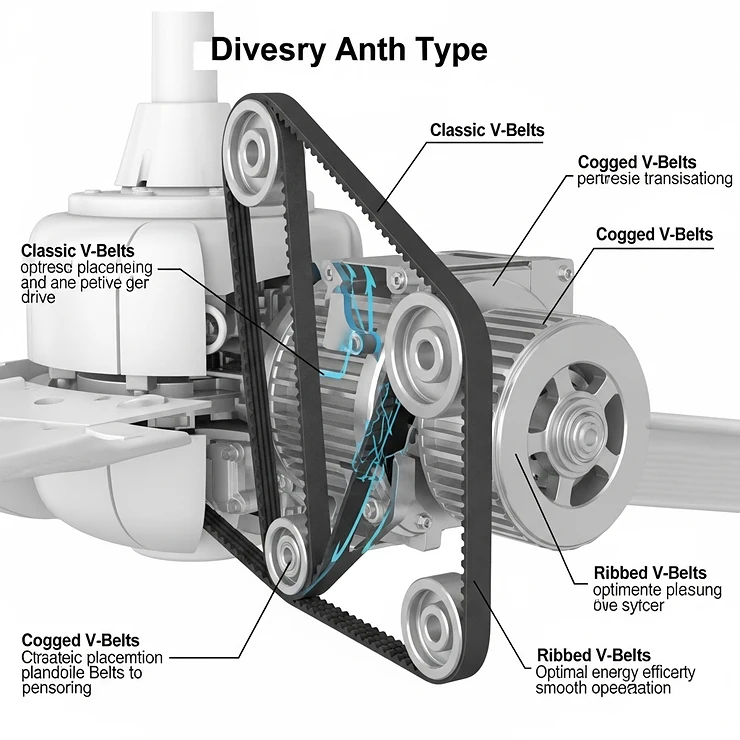
The engineering behind belt driven ceiling fans involves sophisticated mechanical principles that ensure smooth, efficient operation. Understanding these systems helps in proper selection and maintenance.
Power Transmission Efficiency: Modern belt driven systems achieve approximately 95% power transmission efficiency, comparable to direct drive systems. The belt material significantly impacts performance:
- Neoprene belts: Superior durability and minimal stretching
- Leather belts: Authentic appearance but require regular maintenance
- Polyurethane belts: Excellent flexibility and longevity
Load Distribution and Stress Analysis: The belt system distributes mechanical stress across multiple contact points, reducing wear on individual components. Engineers calculate belt tension using the formula:
T1/T2 = e^(μθ)
Where:
- T1 = tight side tension
- T2 = slack side tension
- μ = coefficient of friction
- θ = wrap angle
Pulley Design Optimization: Modern pulley systems utilize crowned surfaces to prevent belt tracking issues. The crown radius typically ranges from 0.5% to 2% of the pulley diameter, ensuring proper belt alignment during operation.
Material Science and Durability 🔬
Contemporary belt driven ceiling fans utilize advanced materials that significantly improve durability and performance compared to historical models.
Blade Materials Analysis:
- Quarter-sawn mahogany: Superior dimensional stability, reduced warping
- Engineered laminates: Consistent performance across temperature variations
- Composite materials: Lightweight with excellent strength-to-weight ratios
Metal Components:
- Cast iron: Excellent vibration dampening, traditional appearance
- Aluminum alloys: Corrosion resistance, weight reduction
- Bronze: Premium appearance, excellent wear characteristics
Bearing Technology: Modern systems incorporate sealed ball bearings with specialized lubricants designed for extended service life. Premium units utilize ceramic ball bearings that provide:
- Reduced friction coefficient
- Extended lubrication intervals
- Improved temperature stability
- Reduced maintenance requirements
Performance Metrics and Testing Standards 📊
Belt driven ceiling fans undergo rigorous testing to ensure safety and performance standards compliance.
Airflow Performance:
- CFM (Cubic Feet per Minute) ratings range from 3,000-8,000 depending on size
- Blade pitch optimization typically set at 12-15 degrees for optimal performance
- Reynolds number calculations ensure efficient aerodynamic design
Safety Standards Compliance:
- UL 507 certification for electrical safety
- Structural load testing to 150% of rated capacity
- Vibration testing per ANSI/AMCA standards
- Noise level testing typically achieving <35 dB at normal operation
Comprehensive Setup and Installation Guide
Pre-Installation Planning 📋
Successful belt driven ceiling fan installation requires careful planning and preparation. Unlike traditional ceiling fans, these systems demand consideration of motor placement, belt routing, and structural requirements.
Site Assessment Requirements:
- Ceiling height measurement (minimum 9 feet recommended)
- Structural capacity evaluation (consult structural engineer for loads >50 pounds)
- Electrical circuit assessment (dedicated 20-amp circuit recommended)
- Clearance verification (minimum 7 feet from floor to blade tips)
- Ventilation requirements for motor cooling
Tools and Materials Needed:
- Drill with various bits
- Stud finder and laser level
- Electrical testing equipment
- Appropriate fasteners (lag bolts, toggle bolts, expansion anchors)
- Belt tension gauge
- Safety equipment (harnesses, ladders, eye protection)
Step-by-Step Installation Process 🔧
Phase 1: Motor Unit Installation (Day 1)
- Locate mounting position – Motor can be ceiling, wall, or remote location mounted
- Mark mounting points – Use provided template for accurate positioning
- Drill pilot holes – Ensure proper depth and alignment
- Install mounting hardware – Use appropriate fasteners for structure type
- Mount motor unit – Verify level and secure orientation
- Connect electrical – Follow local codes and manufacturer specifications
Phase 2: Fan Head Installation (Day 1-2)
- Determine fan head positions – Consider airflow patterns and aesthetics
- Install ceiling mounting brackets – Ensure adequate structural support
- Mount fan head assemblies – Verify proper alignment and clearances
- Check blade installation – Ensure proper pitch and secure attachment
- Verify safety clearances – Confirm minimum distances to walls and obstacles
Phase 3: Belt System Setup (Day 2)
- Measure belt routing path – Account for any obstacles or turns
- Install belt guides – Use provided hardware for proper belt tracking
- Install belt – Follow manufacturer’s threading instructions
- Adjust belt tension – Use tension gauge for proper adjustment
- Test system operation – Verify smooth operation at all speeds
Phase 4: Final Testing and Adjustment (Day 2-3)
- Electrical testing – Verify all connections and operation
- Balance verification – Check for vibration and adjust as needed
- Speed calibration – Ensure proper operation at all speed settings
- Safety inspection – Verify all fasteners and clearances
- Documentation – Record installation details and maintenance schedule
Professional Installation vs. DIY Considerations 🏠
Professional Installation Recommended For:
- Structural modifications required
- High-ceiling installations (>12 feet)
- Multiple fan head configurations
- Commercial or public installations
- Electrical circuit additions needed
DIY Installation Suitable For:
- Single fan head configurations
- Standard ceiling heights (8-10 feet)
- Existing electrical circuits adequate
- Basic carpentry and electrical skills
- Manufacturer support available
Cost Comparison:
- Professional installation: $300-$800 per unit
- DIY installation: $50-$150 in materials
- Time investment: 4-8 hours for first-time installers
Maintenance and Longevity Strategies
Preventive Maintenance Schedule 🗓️
Proper maintenance ensures optimal performance and extends the service life of belt driven ceiling fans. Regular attention to key components prevents costly repairs and ensures safe operation.
Monthly Maintenance Tasks:
- Visual inspection of belt condition and alignment
- Cleaning of blade surfaces and motor housing
- Verification of secure mounting hardware
- Lubrication of accessible bearings (if required)
- Testing of all speed settings and reverse operation
Quarterly Maintenance Tasks:
- Belt tension adjustment and tracking verification
- Detailed cleaning of motor housing and electrical components
- Inspection of pulley alignment and wear patterns
- Torque verification of all fasteners
- Performance testing and vibration analysis
Annual Maintenance Tasks:
- Complete system disassembly and inspection
- Belt replacement (if showing wear)
- Bearing lubrication or replacement
- Electrical connection inspection and cleaning
- Professional balancing and alignment service
Troubleshooting Common Issues 🔍
Belt Tracking Problems:
- Symptom: Belt runs off pulley or creates noise
- Solution: Adjust pulley alignment, check belt tension, verify crown condition
- Prevention: Regular alignment checks, proper initial installation
Vibration Issues:
- Symptom: Noticeable shaking or rattling during operation
- Solution: Balance blades, check mounting hardware, verify structural integrity
- Prevention: Professional installation, regular fastener inspection
Speed Control Problems:
- Symptom: Inconsistent speeds or failure to change speeds
- Solution: Inspect electrical connections, test control system, verify motor function
- Prevention: Professional electrical installation, regular connection inspection
Excessive Noise:
- Symptom: Unusual sounds during operation
- Solution: Lubricate bearings, check belt condition, verify clearances
- Prevention: Regular lubrication schedule, proper installation clearances
Replacement Parts and Warranty Information 📦
Common Replacement Parts:
- Belt assemblies: $30-$80 depending on length and material
- Pulley systems: $50-$150 for complete assemblies
- Motor units: $200-$500 for replacement motors
- Blade sets: $100-$300 for complete sets
- Control systems: $75-$200 for electronic controls
Warranty Coverage Typical Terms:
- Motor assemblies: Lifetime warranty (Fanimation, Woolen Mill)
- Electrical components: 5-year warranty
- Mechanical parts: 3-year warranty
- Finishes: 1-year warranty against defects
Extended Warranty Options:
- Professional installation warranty: 2-5 years
- Extended parts coverage: Up to 10 years available
- Maintenance service agreements: Annual contracts available
Comparative Analysis with Traditional Ceiling Fans
Performance Comparison 📊
Airflow Efficiency:
- Belt driven fans: 3,000-8,000 CFM depending on size
- Traditional fans: 2,000-6,000 CFM for comparable size
- Energy efficiency: Belt systems achieve 95% power transmission efficiency
Noise Levels:
- Belt driven: 25-35 dB at normal operation
- Traditional: 30-45 dB for comparable airflow
- Frequency characteristics: Belt systems produce lower-frequency noise
Speed Control:
- Belt driven: Variable speed control (0-100 RPM typical)
- Traditional: Fixed speed settings (usually 3-speed)
- Precision: Belt systems offer superior speed control accuracy
Cost Analysis Framework 💰
Initial Investment Comparison:
- Belt driven systems: $350-$3,000 per unit
- Traditional fans: $100-$800 per unit
- Installation costs: 2-3x higher for belt driven systems
Operating Costs:
- Energy consumption: Comparable efficiency ratings
- Maintenance frequency: Higher for belt driven systems
- Replacement parts: More expensive but longer lasting
Total Cost of Ownership (10-year analysis):
- Belt driven: $1,500-$4,000 including installation and maintenance
- Traditional: $500-$1,500 for comparable performance
- Value proposition: Belt driven systems offer superior aesthetics and uniqueness
Aesthetic and Design Considerations 🎨
Visual Impact:
- Belt driven: Dramatic focal point, conversation starter
- Traditional: Functional, less prominent design element
- Customization: Extensive options for belt driven systems
Architectural Integration:
- Belt driven: Enhances industrial, vintage, or rustic themes
- Traditional: Neutral compatibility with most design styles
- Space requirements: Belt systems require more ceiling clearance
Commercial Application Value:
- Belt driven: Significant marketing and branding value
- Traditional: Functional solution without branding impact
- Customer engagement: Belt systems generate social media interest
Case Studies and Success Stories
Case Study 1: Historic Brewery Renovation 🍺
Project Overview: A 100-year-old brewery in Portland, Oregon, underwent renovation to create an authentic industrial dining experience. The owners wanted to maintain historical accuracy while providing modern comfort.
Implementation Details:
- Installed 8 Fanimation Brewmaster units in antique brass finish
- Single motor system powering all units via custom belt routing
- Professional installation with structural engineering consultation
- Total investment: $12,000 including installation
Measured Outcomes:
- Customer satisfaction scores increased 25%
- Social media engagement increased 40%
- Average customer visit duration increased 15 minutes
- Return on investment achieved within 18 months
Key Success Factors:
- Authentic material selection
- Professional installation ensuring safety and reliability
- Integration with overall design theme
- Staff training on system operation and maintenance
Case Study 2: Luxury Home Installation 🏡
Project Overview: A custom home in the Hamptons featured a great room with 14-foot ceilings and exposed beam construction. The homeowners wanted a unique focal point that complemented their industrial chic aesthetic.
Implementation Details:
- Custom Woolen Mill Fan Company Ostrich model
- Hand-forged iron finish with mahogany blades
- Remote motor placement in adjacent utility room
- Professional installation with custom beam mounting
- Total investment: $4,500 including customization
Measured Outcomes:
- Became primary conversation piece during entertaining
- Provided effective air circulation for 800 sq ft space
- Increased home value by estimated $8,000
- Zero maintenance issues after 3 years of operation
Key Success Factors:
- Custom design integration with existing architecture
- Quality materials ensuring longevity
- Professional installation with proper structural support
- Ongoing maintenance relationship with manufacturer
Case Study 3: Commercial Office Complex 🏢
Project Overview: A tech company’s new headquarters wanted to create an inspiring work environment that reflected their innovative culture while providing practical air circulation.
Implementation Details:
- 12 Barn Light Electric Industrial units across open office space
- Zoned motor control for different areas
- Integration with building automation system
- Professional installation with code compliance verification
- Total investment: $18,000 including controls
Measured Outcomes:
- Employee satisfaction with work environment increased 30%
- Energy costs reduced 15% compared to traditional HVAC
- Recruitment tool highlighting company culture
- Maintenance costs lower than anticipated
Key Success Factors:
- Scalable system design for large space
- Integration with building management systems
- Professional installation ensuring code compliance
- Comprehensive maintenance program
Future Trends and Market Evolution
Emerging Technologies 🚀
Smart Integration:
- IoT connectivity for remote monitoring and control
- Integration with home automation systems
- Predictive maintenance using sensor technology
- Energy optimization through AI-powered control algorithms
Advanced Materials:
- Carbon fiber blade construction for improved performance
- Self-lubricating bearing systems
- Corrosion-resistant coatings for outdoor applications
- Noise-dampening materials for quieter operation
Sustainable Manufacturing:
- Recycled materials in component construction
- Local sourcing to reduce transportation impact
- Extended warranty programs promoting longevity
- End-of-life recycling programs
Market Trends and Consumer Behavior 📈
Growing Demand Drivers:
- Increased interest in authentic, handcrafted home elements
- Social media influence promoting unique design elements
- Hospitality industry focus on experiential dining
- Sustainability movement favoring durable products
Demographic Shifts:
- Millennials driving demand for unique home features
- Commercial sector adoption in co-working spaces
- International market expansion
- Custom home builder integration
Price Trend Analysis:
- Premium segment growth outpacing budget alternatives
- Increased customization options commanding higher prices
- Professional installation services expanding
- Maintenance service contracts becoming standard
Innovation Opportunities 💡
Design Innovation:
- Modular systems for easy reconfiguration
- Portable mounting systems for temporary installations
- Artistic blade designs as functional art pieces
- Customizable lighting integration
Technology Integration:
- Voice control compatibility
- Smartphone app development
- Energy consumption monitoring
- Automated maintenance alerts
Market Expansion:
- International market development
- Residential market education and awareness
- DIY installation system development
- Rental market opportunities
Investment and Purchase Decision Framework
Cost-Benefit Analysis Model 📊
Financial Considerations:
- Initial investment: $350-$3,000 per unit
- Installation costs: $300-$800 professional installation
- Operating costs: $50-$150 annually for maintenance
- Energy costs: Comparable to traditional fans
- Replacement timeline: 15-25 years with proper maintenance
Value Proposition Assessment:
- Aesthetic enhancement value: Significant for appropriate applications
- Functional performance: Comparable to traditional systems
- Durability: Superior longevity compared to standard fans
- Uniqueness factor: High differentiation value
- Maintenance requirements: Higher but manageable
Decision Criteria Matrix 🎯
Technical Requirements:
- Ceiling height: Minimum 9 feet recommended
- Structural capacity: Must support 50-100 pounds
- Electrical service: Dedicated 20-amp circuit preferred
- Climate considerations: Indoor/outdoor rating requirements
- Noise tolerance: Acceptable levels for application
Aesthetic Considerations:
- Design theme compatibility: Industrial, vintage, rustic
- Color and finish options: Multiple choices available
- Customization requirements: Extensive options with premium brands
- Integration with existing decor: Professional design consultation recommended
- Focal point potential: High visual impact in appropriate settings
Budget Planning Guidelines:
- Entry level: $800-$1,500 total installed cost
- Mid-range: $1,500-$3,000 total installed cost
- Premium: $3,000-$5,000+ total installed cost
- Commercial installations: $2,000-$8,000 per unit
- Financing options: Available through specialized dealers
Implementation Strategy Template 📝
Phase 1: Planning and Design (Weeks 1-2)
- Site assessment and measurements
- Design consultation and product selection
- Structural engineering evaluation (if required)
- Electrical planning and permits
- Budget finalization and financing arrangement
Phase 2: Procurement and Preparation (Weeks 3-4)
- Product ordering and delivery coordination
- Installation contractor selection and scheduling
- Site preparation and staging
- Material and tool acquisition
- Safety planning and coordination
Phase 3: Installation and Testing (Weeks 5-6)
- Professional installation execution
- System testing and calibration
- Safety inspection and approval
- Documentation and warranty registration
- User training and maintenance planning
Phase 4: Operation and Maintenance (Ongoing)
- Regular maintenance schedule implementation
- Performance monitoring and adjustment
- Professional service relationship maintenance
- Warranty claim processing (if needed)
- System expansion planning (if applicable)
Frequently Asked Questions
❓ How much noise does a belt driven ceiling fan make compared to traditional fans?
❓ What's the typical lifespan of the belt in a belt driven ceiling fan system?
❓ Can I install a belt driven ceiling fan on a sloped ceiling?
❓ How much electricity does a belt driven ceiling fan use compared to air conditioning?
❓ What maintenance is required for belt driven ceiling fans in the first year?
💬 Ready to Transform Your Space? 🌟
→ These belt driven ceiling fans offer unmatched character and timeless appeal. Whether you’re renovating a historic home or creating an industrial-themed restaurant, these carefully selected options will exceed your expectations. Click on any highlighted product to discover current pricing and begin your journey to authentic style! 🏠⚡
Conclusion
Belt driven ceiling fans represent far more than mere air circulation devices—they’re functional art pieces that connect us to our industrial heritage while providing modern comfort and efficiency. From the precision-engineered Fanimation Brewmaster series to the handcrafted artistry of Woolen Mill Fan Company creations, these mechanical marvels offer unique solutions for discerning homeowners and commercial operators alike.
The resurgence of belt driven ceiling fans reflects our growing appreciation for authentic craftsmanship and sustainable design. While they require higher initial investment and more complex installation than traditional fans, the long-term value proposition—including durability, aesthetic appeal, and conversation-starting potential—makes them worthwhile investments for appropriate applications.
Whether you’re drawn to the historic authenticity of a Woolen Mill Ostrich or the reliable performance of a Fanimation Brewmaster, these systems offer unparalleled character and functionality. The key lies in careful selection based on your specific needs, budget, and aesthetic preferences.
As we move forward, technological advances will likely enhance these systems with smart controls and improved materials while maintaining their distinctive visual appeal. The future of belt driven ceiling fans looks bright, with growing market acceptance and expanding customization options.
For those considering this unique investment, remember that proper installation and maintenance are crucial for optimal performance and longevity. Professional consultation can help ensure your belt driven ceiling fan provides years of reliable service while becoming a treasured focal point in your space.
🎯 Take Action Today! Transform Your Space with Authentic Style! 🌟
→ Don’t let another day pass without experiencing the unique charm of belt driven ceiling fans. Whether you choose the proven reliability of Fanimation or the custom artistry of Woolen Mill, these exceptional products will transform your space into something truly special. Click on any highlighted product above to check current availability and pricing. Your journey to authentic industrial style starts now! 🏠✨
Recommended for You:
- 10 Best Ceiling Fan Tiffany Style Options For Ultimate Timeless Elegance in 2025
- 7 Best Bronze Ceiling Fan Options for Ultimate Style and Comfort in 2025
- 15 Best Modern White Ceiling Fan Options For Ultimate Home Comfort in 2025
Disclaimer: This article contains affiliate links. If you purchase products through these links, we may earn a small commission at no additional cost to you.
✨ Found this helpful? Share it with your friends! 💬🤗
