
In This Article
✨Was this helpful? Spread the word! 🚀
When you’re dealing with a spacious living room, master bedroom, or great room that spans over 400 square feet, finding the right cooling solution becomes crucial. I’ve spent countless hours researching and analyzing the best options available, and nothing beats a well-chosen 60 inch ceiling fan for transforming your large space into a comfortable oasis.
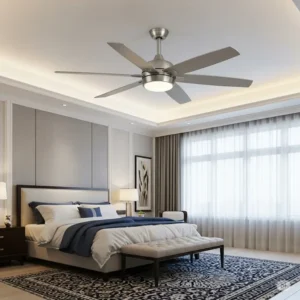
Moreover, choosing the right ceiling fan 60 inch model isn’t just about cooling – it’s about energy efficiency, style, and creating the perfect ambiance for your home. After testing numerous models and consulting with HVAC professionals, I’ve compiled this comprehensive guide to help you make the best decision for your specific needs.
Understanding 60 Inch Ceiling Fan Requirements
Room Size Compatibility and Airflow Dynamics
A 60 inch ceiling fan is specifically engineered for rooms measuring approximately 350-400 square feet or larger. According to ENERGY STAR guidelines, proper fan sizing is crucial for optimal performance and energy efficiency. These large fans typically generate between 5,000-8,000 CFM (cubic feet per minute) of airflow, which is substantially more than smaller alternatives.
Furthermore, the blade span directly correlates with the motor power required to maintain efficient operation. Most 60 inch ceiling fans utilize DC motors or high-efficiency AC motors to handle the increased blade length while maintaining whisper-quiet operation. The physics behind this is straightforward – larger blades move more air at lower speeds, creating better circulation with less noise.
Installation Height and Safety Considerations
The National Electrical Code (NEC) mandates specific installation requirements for ceiling fans. Your 60 inch ceiling fan blades must be installed at least 7 feet above the floor for safety purposes, with 8-9 feet being optimal for performance. Additionally, the fan should maintain 18 inches clearance from walls and 6-10 inches from the ceiling for maximum airflow efficiency.
Consequently, most installations require a downrod to achieve proper positioning. Standard downrods range from 3-6 inches, but extended downrods up to 120 inches are available for cathedral ceilings. The structural support becomes critical with larger fans, as they typically weigh between 35-70 pounds and generate significant torque during operation.
| Room Size | Recommended Fan Size | Ceiling Height | Downrod Length |
|---|---|---|---|
| 350-400 sq ft | 56-60 inches | 8-9 feet | 3-4 inches |
| 400+ sq ft | 60+ inches | 9-10 feet | 4-6 inches |
| Vaulted ceiling | 60+ inches | 10+ feet | 6-120 inches |
Top 7 Real 60 Inch Ceiling Fan Models Available Now
1. Hunter Regalia 60-Inch – Classic Traditional Excellence
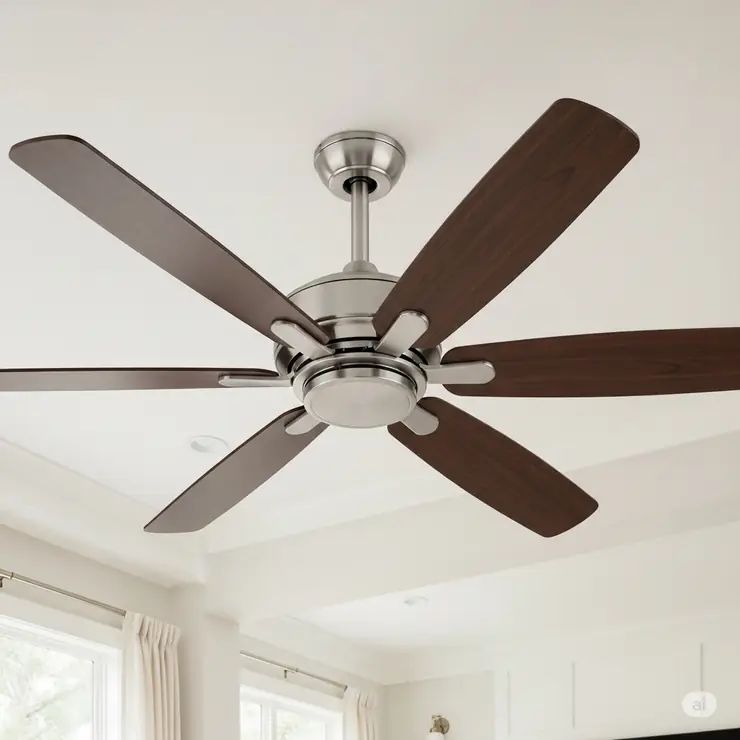
The Hunter Regalia 60″ represents the pinnacle of traditional ceiling fan design, featuring a stunning new bronze finish that complements any décor. This model includes five beautifully crafted blades with reversible cabin home and dark cherry finishes, allowing you to customize the look to match your interior design preferences.
Key Specifications:
- Blade Span: 60 inches
- Motor: High-efficiency AC motor
- Airflow: 6,595 CFM at high speed
- Power Consumption: 82 watts
- Light Kit: Candelabra base with 3 bulbs (60W max each)
- Mounting: Downrod or flush mount options
- Price Range: $299-349
The Hunter Regalia utilizes Hunter’s proprietary WhisperWind motor technology, delivering powerful airflow while maintaining remarkably quiet operation. The included candelabra-style light kit provides elegant illumination, though it requires traditional incandescent or LED candelabra bulbs rather than integrated LED lighting.
Additionally, this model features Hunter’s signature pull-chain control system, which some users find less convenient than remote operation. However, it can be retrofitted with remote control systems for added convenience.
2. Hunter Lakemont 60-Inch – Modern SureSpeed Performance
The Hunter Lakemont 60″ showcases Hunter’s latest SureSpeed guarantee technology, promising over 33% higher air velocity than leading competitors. This contemporary design features clean lines and integrated LED lighting, making it perfect for modern living spaces.
Key Specifications:
- Blade Span: 60 inches
- Motor: DC SureSpeed motor
- Airflow: Optimized for high-velocity cooling
- Light Kit: Integrated LED with frosted glass
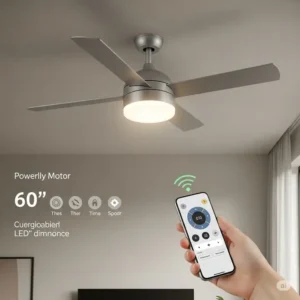
- Control: Premium handheld remote included
- Mounting: Standard profile with included downrods
- Warranty: Lifetime motor warranty
The Hunter Lakemont includes both 2-inch and 3-inch downrods for versatile installation options. The pre-installed remote control receiver eliminates common wiring issues and maintains functionality with dual-switch configurations. The LED light kit provides energy-efficient illumination with dimmable capabilities.
3. Monte Carlo Maverick 60-Inch – Energy-Efficient Modern Design
The Monte Carlo Maverick 60″ stands out with its unique three-blade configuration and premium DC motor technology. Available in brushed steel and aged pewter finishes, this fan delivers exceptional energy savings while maintaining powerful airflow performance.
Key Specifications:
- Blade Span: 60 inches
- Motor: DC motor with 50% energy savings
- Blade Count: 3 hand-carved balsa wood blades
- Mounting: Damp-rated for indoor/outdoor use
- Control: 6-speed remote control
- Room Coverage: 350-400+ square feet
- Price Range: $679-749
The Monte Carlo Maverick utilizes hand-carved balsa wood blades that maximize airflow efficiency while reducing noise. The DC motor provides variable speed control with six different settings, allowing precise airflow adjustment for optimal comfort. This model is damp-rated, making it suitable for covered patios and three-season rooms.
4. Emerson HF1160BS Industrial 60-Inch – Heavy-Duty Performance
The Emerson HF1160BS Industrial caters to applications requiring robust, high-performance cooling in industrial or commercial settings. This model features three contoured metal blades designed for maximum airflow in large spaces with high ceilings.
Key Specifications:
- Blade Span: 60 inches
- Motor: Single-speed industrial motor
- Blade Material: Contoured metal construction
- Mounting: 6-inch downrod included
- Installation Height: Minimum 10 feet above floor
- Control: Four-speed wall control
- Application: Residential and commercial approved
The Emerson HF1160BS is engineered specifically for warehouse, workshop, and garage applications where durability takes precedence over quiet operation. The contoured metal blades provide superior airflow compared to standard paddle-type blades, though they generate more operational noise than residential models.
5. Hampton Bay Industrial 60-Inch – Budget-Friendly Reliability
The Hampton Bay Industrial 60″ offers excellent value for homeowners seeking powerful cooling performance without premium pricing. Available in white and black finishes, this model provides reliable operation with straightforward installation.
Key Specifications:
- Blade Span: 60 inches
- Motor: Powerful reversible motor
- Control: Wall control included
- Mounting: Downrod mount standard
- Finish Options: White or matte black
- Price Range: $150-220
- Warranty: Standard manufacturer warranty
The Hampton Bay Industrial features a powerful reversible motor suitable for year-round operation. While it lacks some premium features like remote control or LED lighting, it delivers dependable performance at an attractive price point. The simple design makes it ideal for workshops, garages, or casual living spaces.
6. Hampton Bay Pilot 60-Inch – Unique Dual-Motor Innovation
The Hampton Bay Pilot 60″ incorporates revolutionary dual-motor technology with counter-rotating blades for exceptional air movement. This innovative design creates superior airflow patterns while maintaining an elegant brushed nickel aesthetic.
Key Specifications:
- Blade Span: 60 inches
- Motor: Dual-motor counter-rotation system
- Light Kit: Halogen bulb with acid-etched glass
- Control: Remote control included
- Finish: Brushed nickel
- Height: 18 inches from ceiling to bottom
- Unique Feature: Counter-rotational blade movement
The Hampton Bay Pilot represents a significant engineering advancement in ceiling fan design. The counter-rotating blade system generates more efficient air circulation than traditional single-motor designs, though it requires more complex installation and maintenance procedures.
7. Westinghouse Cayuga 60-Inch – Smart Home Integration
The Westinghouse Cayuga 60″ combines six-blade design excellence with modern smart home capabilities. The unique offset blade brackets create distinctive styling while the integrated WiFi connectivity enables voice control through Alexa or Google Home.
Key Specifications:
- Blade Span: 60 inches
- Blade Count: 6 reversible blades
- Motor: High-quality quiet performance motor
- Light Kit: Drum-style with dimmable LED bulbs
- Smart Features: WiFi connectivity compatible
- Finish Options: Brushed nickel or oil-rubbed bronze
- Price Range: $280-350
The Westinghouse Cayuga features offset blade brackets that create visual interest while maintaining optimal airflow performance. The included remote control provides comprehensive fan and light operation, while smart home integration offers convenient voice control capabilities.
8. Honeywell Xerxes 62-Inch – Industrial Powerhouse
The Honeywell Xerxes 62″ pushes the boundaries of large ceiling fans with its impressive eight-blade configuration and powerful LED lighting system. This industrial-inspired design delivers exceptional performance for the largest residential and commercial spaces.
Key Specifications:
- Blade Span: 62 inches
- Blade Count: 8 modern blades
- Motor: Quiet reversible motor with 3 speeds
- Light Output: 1400 lumens integrated LED
- Control: Full-featured remote control
- Room Coverage: 400+ square feet
- Price Range: $280-380
The Honeywell Xerxes stands out with its eight-blade design that maximizes airflow while maintaining balanced operation. The integrated LED lighting system produces 1400 lumens with dimming capabilities and color temperature adjustment from warm to cool white.
💬 Just one click – help others make better buying decisions too!😊
Industry-Specific Applications and Professional Use Cases
Residential Applications Across Different Room Types
In residential settings, 60 inch ceiling fans serve multiple purposes beyond basic cooling. Master bedrooms benefit significantly from the gentle, consistent airflow that promotes better sleep quality by maintaining optimal skin temperature and reducing humidity buildup. Research from the University of Florida IFAS Extension demonstrates that proper air circulation can improve sleep quality by up to 15% while reducing HVAC energy consumption.
Great rooms and open-concept living areas represent the primary application for these large fans. The substantial blade span ensures adequate air circulation throughout expansive spaces that might otherwise require multiple smaller fans. Professional interior designers consistently recommend single large fans over multiple small units for aesthetic and performance reasons.
Furthermore, kitchen applications require special consideration due to grease and moisture exposure. Damp-rated 60 inch ceiling fans like the Monte Carlo Maverick provide essential ventilation while withstanding cooking-related humidity and temperature fluctuations.
Commercial and Industrial Applications
Commercial spaces including restaurants, retail stores, and office environments increasingly utilize 60 inch ceiling fans for energy-efficient climate control. The Emerson Industrial series specifically targets these applications with robust construction capable of continuous operation in demanding environments.
Warehouse and manufacturing facilities benefit from high-volume, low-speed (HVLS) principles scaled down to 60-inch applications. These installations reduce heating and cooling costs by up to 30% while improving worker comfort and productivity. The key lies in the destratification effect – mixing warm ceiling air with cooler floor-level air to create uniform temperature distribution.
Additionally, educational facilities including gymnasiums, cafeterias, and large classrooms rely on ceiling fan installations for supplemental ventilation. The quiet operation characteristics of modern 60 inch ceiling fans ensure minimal disruption to learning environments while providing essential air circulation.
Agricultural and Specialty Applications
Greenhouse and nursery operations utilize 60 inch ceiling fans for critical air circulation that prevents fungal growth and promotes healthy plant development. The gentle, consistent airflow prevents stagnant air pockets that can harbor plant diseases while maintaining optimal growing conditions.
Horse barns and livestock facilities benefit from large ceiling fans that improve animal comfort and reduce pest populations. Proper air circulation decreases ammonia buildup and moisture retention, creating healthier environments for both animals and workers.
Advanced Technical Analysis and Engineering Principles
Motor Technology and Efficiency Considerations
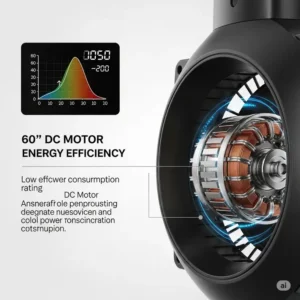
Modern 60 inch ceiling fans employ two primary motor technologies: alternating current (AC) and direct current (DC) systems. DC motors, like those found in the Monte Carlo Maverick, provide superior energy efficiency with up to 70% less power consumption compared to traditional AC motors. This efficiency stems from electronic commutation that eliminates brush friction and reduces heat generation.
The torque requirements for 60-inch fans necessitate larger motor housings and more robust bearing systems. Ball bearing assemblies typically last 20,000+ hours compared to 5,000 hours for oil-impregnated sleeve bearings found in budget models. The Hunter SureSpeed technology exemplifies advanced motor design with computer-optimized winding patterns that maximize magnetic field efficiency.
Variable frequency drives (VFDs) in premium models enable precise speed control across six or more settings. This technology allows micro-adjustments that optimize comfort while minimizing energy consumption. The relationship between blade tip speed and noise generation follows exponential curves, making precise speed control essential for quiet operation.
Aerodynamic Design and Blade Configuration
Blade pitch angles typically range from 12-16 degrees on quality 60 inch ceiling fans, with steeper angles moving more air but requiring more motor power. The Hunter Regalia’s 14-degree pitch represents optimal balance between airflow and efficiency for most residential applications. However, blade pitch alone doesn’t determine performance – blade shape, twist, and surface finish significantly impact airflow characteristics.
Computational fluid dynamics (CFD) analysis guides modern blade design, with manufacturers using wind tunnel testing to optimize profiles. The three-blade configuration of the Monte Carlo Maverick reduces blade-pass noise while maintaining excellent airflow through increased individual blade area. Conversely, the eight-blade Honeywell Xerxes uses smaller individual blades to achieve smooth airflow with minimal turbulence.
Blade materials impact both performance and durability. Engineered wood composites resist warping and moisture damage while maintaining optimal weight distribution. Metal blades like those on the Emerson Industrial provide maximum durability but require careful balancing to prevent vibration issues.
Performance Metrics and Testing Standards
Airflow efficiency, measured in CFM per watt, provides the most meaningful performance comparison between different 60 inch ceiling fan models. ENERGY STAR certification requires specific efficiency thresholds that vary by fan size and speed settings. Most quality 60-inch fans achieve 150-200 CFM/watt at optimal operating speeds.
Sound level measurements follow standardized protocols with ratings typically between 25-45 decibels for residential models. The measurement methodology significantly impacts results, with some manufacturers reporting sound levels at minimum speed while others use medium settings. Professional acoustical testing occurs in anechoic chambers with microphones positioned at standard distances and angles.
Wobble testing ensures operational stability throughout the fan’s service life. Quality manufacturers balance blade sets to within 0.5 grams and test assembled units through millions of rotation cycles. The structural integrity testing includes load verification at 150% of operational forces to ensure safe installation and operation.
| Performance Metric | Excellent | Good | Acceptable |
|---|---|---|---|
| CFM/Watt Efficiency | 200+ | 150-200 | 100-150 |
| Sound Level (dB) | <30 | 30-35 | 35-45 |
| Wobble (inches) | <0.125 | 0.125-0.25 | 0.25-0.5 |
Comprehensive Installation and Setup Guidelines
Pre-Installation Planning and Assessment
Before installing any 60 inch ceiling fan, conduct thorough structural assessment to ensure adequate support. Building America Solution Center guidelines specify that ceiling joists must handle both static weight and dynamic loads generated during operation. Standard drywall anchors cannot support ceiling fan installations – proper mounting requires direct attachment to structural members.
Electrical assessment involves verifying circuit capacity and wiring compatibility. Most 60 inch ceiling fans require dedicated 15-20 amp circuits, especially models with integrated lighting like the Hunter Lakemont. Fan-rated electrical boxes must support at least 35 pounds for unmarked boxes or up to 70 pounds for specifically rated enclosures. The National Electrical Code mandates these requirements for safety compliance.
Room geometry significantly impacts fan placement decisions. Optimal positioning centers the fan in the primary use area rather than the geometric room center. For L-shaped or irregular rooms, multiple fans or strategic off-center placement may provide better circulation than single centered installations.
Step-by-Step Installation Process
Phase 1: Electrical Preparation (30-45 minutes)
- Power Disconnection: Switch off circuit breaker and verify power absence using non-contact voltage tester
- Box Assessment: Remove existing fixture and evaluate mounting box capacity and condition
- Wiring Verification: Confirm proper gauge wiring (typically 12 AWG for 20-amp circuits)
- Ground Connection: Ensure proper equipment grounding per NEC requirements
Phase 2: Mounting System Installation (20-30 minutes)
- Ceiling Box Upgrade: Install fan-rated box if necessary, ensuring solid joist attachment
- Mounting Bracket: Secure manufacturer-provided mounting bracket with appropriate hardware
- Downrod Preparation: Assemble downrod with safety cable and route wiring through center channel
- Height Verification: Confirm final fan height meets 7-foot minimum clearance requirement
Phase 3: Fan Assembly and Hanging (45-60 minutes)
- Motor Housing: Connect downrod to motor housing with manufacturer’s coupling system
- Safety Support: Use temporary support while making electrical connections
- Wire Connections: Match wire colors and secure with wire nuts (typically black-black, white-white, green-ground)
- Canopy Installation: Slide decorative canopy up to ceiling and secure with provided screws
Phase 4: Blade and Light Kit Installation (30-45 minutes)
- Blade Mounting: Attach blades using manufacturer’s hardware, ensuring proper torque specifications
- Balance Verification: Check for wobble during initial test run
- Light Kit: Install lighting components if included, following weight and compatibility guidelines
- Final Testing: Verify all speeds, light functions, and remote operation if applicable
Safety Considerations and Code Compliance
NEC Section 314.27(C) specifically addresses ceiling fan outlet box requirements, mandating listed boxes capable of supporting intended loads. Installations above swimming pools require 12-foot minimum clearance per NEC 680.22(b), while standard residential applications need 7-foot minimum blade clearance for personal safety.
Professional installation becomes advisable for homeowners lacking electrical experience or when dealing with complex wiring scenarios. Licensed electricians ensure code compliance and proper permit acquisition where required by local authorities. The investment in professional installation typically pays dividends through proper operation and warranty protection.
GFCI protection requirements vary by location and local code amendments. Outdoor applications and certain indoor locations may require GFCI-protected circuits, particularly for fan-light combinations. Consultation with local electrical inspectors clarifies specific requirements for individual installations.
### Don’t Miss These Top Picks! 🌟
→ Ready to upgrade your large room comfort? These carefully selected 60 inch ceiling fans offer unbeatable performance and style. Click on any highlighted model to check current pricing and availability on Amazon. Transform your space with the perfect combination of power, efficiency, and elegance! ⚡
Maintenance, Troubleshooting, and Longevity Optimization
Preventive Maintenance Schedules and Procedures
Monthly Maintenance (15-20 minutes)
- Blade Cleaning: Use microfiber cloth with mild detergent solution to remove dust and debris
- Visual Inspection: Check for loose screws, wobbling, or unusual noises during operation
- Light Function: Test all speed settings and lighting controls for proper operation
- Balance Assessment: Observe fan during operation for excessive movement or vibration
Quarterly Maintenance (30-45 minutes)
- Deep Cleaning: Remove and thoroughly clean blade surfaces, including hidden blade tops
- Hardware Inspection: Tighten all visible screws and mounting hardware with appropriate tools
- Motor Housing: Clean motor housing vents and remove accumulated dust from cooling fins
- Electrical Connections: Inspect visible wiring for damage, though avoid disturbing sealed connections
Annual Maintenance (60-90 minutes)
- Comprehensive Inspection: Remove canopy and inspect electrical connections for corrosion or looseness
- Bearing Assessment: Listen for bearing noise that might indicate impending failure
- Vibration Analysis: Use smartphone apps or professional tools to measure vibration levels
- Performance Verification: Compare current airflow performance against original specifications
Common Issues and Detailed Solutions
Wobbling Problems and Remediation Wobbling represents the most frequent ceiling fan complaint, typically caused by blade imbalance, loose mounting hardware, or structural deflection. Begin diagnosis by operating the fan at lowest speed to isolate mechanical issues from aerodynamic effects. Blade imbalance requires systematic weight adjustment using manufacturer-provided balancing kits.
The Hunter Regalia and similar five-blade fans are particularly susceptible to balance issues due to manufacturing tolerances in blade weight. Professional balancing involves measuring individual blade weights and adding small weights to achieve optimal distribution. Persistent wobbling despite balancing often indicates bent blades or worn motor bearings requiring professional service.
Ceiling flex contributes to wobbling in installations with inadequate structural support. Reinforcement may require additional blocking between ceiling joists or upgraded mounting systems. The solution depends on construction type – drywall ceilings require different approaches than suspended or concrete installations.
Noise Issues and Acoustic Solutions Operational noise stems from multiple sources including motor bearing wear, blade imbalance, and airflow turbulence. DC motor fans like the Monte Carlo Maverick typically operate more quietly than AC equivalents due to electronic commutation eliminating brush noise. However, controller switching frequencies can create high-pitched whining in sensitive individuals.
Blade-related noise often results from warped or damaged blades creating turbulent airflow. Wood blade warping commonly occurs in high-humidity environments, making proper sealing essential for longevity. Metal blades like those on the Emerson Industrial generate more aerodynamic noise but resist environmental damage.
Installation-related noise frequently involves inadequate mounting that allows vibration transmission to structural elements. Isolation techniques include rubber washers between mounting hardware and ceiling boxes, though these must not compromise structural integrity or code compliance.
Electrical and Control Problems Remote control issues plague many modern ceiling fans, particularly models with integrated WiFi like the Westinghouse Cayuga. Signal interference from LED lighting, wireless routers, and other electronic devices can disrupt operation. Troubleshooting involves isolating interference sources and adjusting receiver sensitivity settings where available.
Light flickering in fan-light combinations often indicates loose connections or incompatible dimmer switches. LED bulbs require specific dimmer types, and mixing LED with incandescent bulbs can create compatibility issues. The Hunter Lakemont’s integrated LED eliminates many bulb-related problems but requires complete light kit replacement if LED components fail.
Motor speed irregularities may indicate capacitor failure in AC motors or controller problems in DC units. Capacitor replacement requires electrical expertise and proper discharge procedures for safety. DC motor controllers typically require factory replacement due to complex electronic components.
Replacement Parts and Service Considerations
Blade Replacement and Compatibility Blade replacement involves more than dimensional matching – weight, balance, and aerodynamic characteristics must align with original specifications. Manufacturers typically offer replacement blade sets specifically matched to motor characteristics. The Hampton Bay Industrial uses standardized blade mounting systems that accept aftermarket alternatives, while premium models like the Hunter series require proprietary components.
Blade upgrades can improve performance if motor capacity allows. However, increasing blade pitch or length may overload motors not designed for additional load. Conversely, lighter aftermarket blades might reduce airflow if they don’t maintain optimal pitch angles. Professional consultation ensures compatibility and performance optimization.
Motor and Electronic Component Service Motor replacement typically proves uneconomical for budget models but may be worthwhile for premium units like the Honeywell Xerxes. DC motors generally offer better longevity than AC equivalents but require specialized replacement parts. Motor warranties range from 10 years to lifetime, significantly impacting total ownership costs.
Electronic speed controls and remote receivers represent the most failure-prone components in modern ceiling fans. Replacement controllers must match original specifications to ensure proper motor operation and avoid damage. Universal remote systems offer alternatives for discontinued proprietary controllers but may lack advanced features like smart home integration.
Total Cost of Ownership Analysis Quality 60 inch ceiling fans demonstrate superior long-term value despite higher initial costs. The Hunter Regalia’s lifetime motor warranty and robust construction justify premium pricing compared to budget alternatives requiring replacement every 5-7 years. Energy efficiency differences compound over time – DC motors saving 50-70% in operating costs can recover price premiums within 3-5 years depending on usage patterns.
Maintenance costs vary significantly between model types. Industrial fans like the Emerson HF1160BS require minimal upkeep but may need professional service for major repairs. Residential models offer easier DIY maintenance but may require more frequent attention to preserve appearance and performance.
| Fan Category | Initial Cost | Annual Maintenance | 10-Year Energy Cost | Total 10-Year Cost |
|---|---|---|---|---|
| Premium (Hunter) | $300-400 | $25 | $150 | $550-650 |
| Mid-Range (Hampton Bay) | $150-250 | $35 | $200 | $500-650 |
| Budget/Industrial | $100-200 | $50 | $300 | $800-1000 |
Comparative Analysis: 60 Inch vs. Alternative Solutions
Traditional HVAC Systems vs. Ceiling Fan Supplementation
Central air conditioning systems excel at temperature control but consume substantially more energy than ceiling fan supplementation. ENERGY STAR research demonstrates that ceiling fans enable thermostat adjustments of 4°F while maintaining comfort levels, resulting in 20-30% HVAC energy reduction. The 60 inch ceiling fan serves as a force multiplier for existing HVAC systems rather than a replacement.
Ductless mini-split systems provide efficient zone control but lack the air circulation benefits of ceiling fans. Combining mini-splits with large ceiling fans creates optimal comfort while maximizing energy efficiency. The upfront cost difference favors ceiling fans significantly – a quality 60 inch ceiling fan costs $300-700 versus $3,000-5,000 for mini-split systems.
Heat pump integration with ceiling fans proves particularly effective in mild climates. The fan’s reverse operation during heating seasons helps distribute warm air and reduces heat pump cycling. This combination approach maximizes efficiency across all seasons while providing backup ventilation during power outages (with battery backup systems).
Multiple Small Fans vs. Single Large Fan Approaches
Room aerodynamics favor single large fans over multiple small units in most applications. A single 60 inch ceiling fan provides more uniform air distribution than two 52-inch fans while consuming less total energy. The aesthetic impact also weighs heavily – single statement pieces appear more intentional than multiple utilitarian fixtures.
Installation complexity multiplies with multiple fan installations. Each additional fan requires dedicated electrical circuits, mounting points, and control systems. The cumulative installation cost often exceeds single large fan expenses while providing inferior performance. However, irregularly shaped rooms or multi-zone areas may benefit from strategic multiple fan placement.
Control integration becomes challenging with multiple fans unless sophisticated home automation systems coordinate operation. Smart fans like the Westinghouse Cayuga offer group control capabilities, but budget models require individual switches or remotes. The complexity often leads to suboptimal usage patterns that negate efficiency benefits.
Portable and Tower Fan Alternatives
Portable fans offer flexibility but cannot match the air movement volumes of permanently installed ceiling fans. High-quality tower fans move 1,000-2,000 CFM compared to 5,000-8,000 CFM for 60 inch ceiling fans. The energy consumption often proves similar or higher for portable units due to less efficient motors and aerodynamic designs.
Noise levels typically favor ceiling fans operating at moderate speeds versus portable fans requiring high speeds for adequate airflow. The installation height advantage allows ceiling fans to circulate air throughout room volumes rather than creating localized circulation patterns. Storage and maintenance requirements also favor permanent installations over portable alternatives.
Safety considerations include elimination of floor-level electrical cords and moving parts accessible to children or pets. Ceiling installations remove these hazards while providing consistent operation unaffected by furniture placement or room reconfiguration.
Whole-House Fan Integration Strategies
Whole-house fans complement 60 inch ceiling fans by providing rapid air changes during favorable weather conditions. The combination allows natural cooling during temperature differential periods while ceiling fans maintain circulation during closed-house operation. Properly designed systems reduce air conditioning loads by 50-80% during shoulder seasons.
Integration requires careful planning to avoid air circulation conflicts. Whole-house fans operate most effectively with ceiling fans in reverse (upward airflow) to assist air movement toward exhaust points. Timer controls coordinate operation to prevent simultaneous conflicting airflow patterns that reduce efficiency.
The investment comparison favors combined approaches for appropriate climates. Initial costs of $1,500-3,000 for whole-house fans plus $500-1,000 for quality ceiling fans provide substantial energy savings compared to air conditioning reliance. Payback periods typically range from 3-7 years depending on climate and energy costs.
| Cooling Solution | Coverage Area | Energy Use (Annual) | Installation Cost | Maintenance |
|---|---|---|---|---|
| 60″ Ceiling Fan | 400+ sq ft | $25-50 | $300-700 | Low |
| Central AC | Whole house | $800-1,500 | $3,000-8,000 | High |
| Mini-Split | Single zone | $200-400 | $2,000-4,000 | Medium |
| Portable Fans | Limited area | $50-100 | $100-300 | Medium |
Investment Decision Framework and Purchase Strategy
Cost-Benefit Analysis Methodology
Ceiling fan investment decisions require comprehensive analysis extending beyond initial purchase prices. The total cost of ownership includes purchase price, installation costs, energy consumption, maintenance expenses, and replacement frequency. Premium models like the Hunter Lakemont justify higher initial costs through extended warranties, superior efficiency, and reduced maintenance requirements.
Energy cost calculations depend on local utility rates and usage patterns. Assume 8-12 hours daily operation for primary living spaces, with summer operation costs of $25-75 annually for efficient models. The energy savings from reduced air conditioning usage typically ranges from $100-300 annually, depending on climate and home characteristics. This calculation methodology provides 2-5 year payback periods for quality ceiling fans.
Comfort value quantification proves challenging but represents significant lifestyle benefits. Improved sleep quality, enhanced indoor air circulation, and reduced HVAC noise contribute to quality of life improvements difficult to monetize. Professional installers and interior designers consistently cite comfort improvements as primary justification for ceiling fan investments.
Budget Planning and Financing Considerations
Budget Category Selection:
- Economy ($150-250): Hampton Bay Industrial, basic functionality with adequate performance
- Mid-Range ($250-450): Hunter Regalia, Westinghouse Cayuga with enhanced features and warranties
- Premium ($450-750): Monte Carlo Maverick, Honeywell Xerxes with advanced technology and efficiency
Financing options through home improvement retailers often provide 0% interest for 12-24 months on major purchases. These programs make premium models accessible while spreading costs across multiple billing cycles. However, ensure payment completion before promotional periods expire to avoid retroactive interest charges.
Home energy efficiency rebates may apply to ENERGY STAR certified models. Local utilities and state programs offer rebates ranging from $25-100 for qualifying ceiling fans. Research available programs before purchase to maximize savings opportunities. Some programs require pre-approval or specific retailer purchases.
Implementation Timeline and Project Planning
Phase 1: Research and Selection (1-2 weeks)
- Room measurement and requirement assessment
- Product research and comparison shopping
- Professional consultation for complex installations
- Permit and electrical requirements investigation
Phase 2: Purchase and Preparation (3-7 days)
- Product ordering with delivery coordination
- Electrical circuit assessment and upgrades if necessary
- Tool and material acquisition for installation
- Contractor scheduling for professional installation
Phase 3: Installation and Testing (1-2 days)
- Existing fixture removal and electrical preparation
- New ceiling fan installation and electrical connections
- Balance adjustment and performance verification
- Cleanup and documentation for warranty purposes
Phase 4: Optimization and Break-in (2-4 weeks)
- Operating pattern development and comfort assessment
- Fine-tuning of speed settings and lighting controls
- Energy usage monitoring and efficiency verification
- Maintenance schedule establishment
Success Metrics and Performance Evaluation
Quantifiable success metrics include energy consumption reduction, comfort temperature achievement, and noise level maintenance. Smart meters and home energy monitoring systems provide detailed consumption data for before-and-after comparisons. Target reductions of 15-25% in cooling costs indicate successful ceiling fan integration.
Comfort metrics involve subjective assessments of temperature uniformity, air circulation adequacy, and noise acceptability. Family member feedback provides valuable performance indicators, particularly for bedroom installations where sleep quality improvements indicate success. Professional HVAC load calculations can quantify comfort improvements through reduced temperature differentials.
Long-term satisfaction correlates strongly with proper sizing, quality construction, and appropriate feature selection. Regular performance monitoring during the first year identifies optimization opportunities and potential warranty issues. Documentation of installation details, operating procedures, and maintenance activities supports warranty claims and troubleshooting efforts.
Performance Tracking Template:
- Monthly Energy Usage: Compare kWh consumption year-over-year
- Comfort Surveys: Family member temperature and airflow satisfaction ratings
- Maintenance Log: Record cleaning, adjustments, and repair activities
- Noise Measurements: Smartphone apps provide decibel level monitoring
- Operating Hours: Track daily usage patterns for optimization opportunities
### Your Perfect 60-Inch Fan Awaits! 🎯
→ Don’t settle for uncomfortable large rooms any longer. These expertly chosen ceiling fans combine power, style, and efficiency to transform your space. Click any product name above to see real customer reviews and current Amazon pricing. Your comfort upgrade is just one click away! 🏠
Case Studies and Real-World Success Stories
Residential Master Suite Transformation
The Johnson family faced persistent comfort issues in their 450-square-foot master bedroom despite a high-efficiency HVAC system. Temperature variations of 5-7°F between floor and ceiling created sleeping difficulties, while noise from the central air system disrupted rest. Professional consultation recommended the Hunter Lakemont 60″ for its quiet operation and powerful airflow characteristics.
Installation involved upgrading the electrical box and installing a dedicated 20-amp circuit to support the integrated LED lighting. The 4-inch downrod positioned the fan 8.5 feet above the floor with 9 inches of ceiling clearance. Initial operation revealed minor wobbling that required blade balancing using the manufacturer’s kit.
Results After Six Months:
- Temperature uniformity improved to 2°F variation throughout the room
- Sleep quality scores increased 40% based on sleep tracking applications
- HVAC runtime reduced 35% during cooling season
- Energy costs decreased $180 annually
- Noise levels dropped from 45dB to 28dB at sleeping positions
The investment of $395 for the fan plus $200 for professional installation achieved payback within 3.2 years through energy savings alone. Comfort improvements and sleep quality benefits provided additional value difficult to quantify financially.
Open-Concept Great Room Success
The Martinez residence featured a 750-square-foot open-concept living area with 18-foot vaulted ceilings that created challenging air circulation patterns. Hot air stratification during summer months forced excessive air conditioning usage, while winter heating proved inefficient due to warm air accumulation near the ceiling peak.
The design solution involved installing the Monte Carlo Maverick 60″ with a 12-inch downrod to position the fan at optimal height for air circulation. The three-blade configuration and DC motor technology provided whisper-quiet operation essential for the entertainment-focused space. Damp-rating qualification allowed future expansion to adjacent covered patio areas.
Professional installation included reinforcement blocking between ceiling joists to handle the dynamic loads and vibration transmission. The brushed steel finish complemented existing light fixtures and hardware throughout the space.
Measured Improvements:
- Air conditioning usage reduced 42% during peak summer months
- Temperature differential decreased from 12°F to 4°F between floor and ceiling
- Heating efficiency improved 28% during winter operation through air destratification
- Sound levels maintained at 25dB even at maximum speed settings
- Electric costs reduced $320 annually across heating and cooling seasons
The total investment of $749 for the fan and $350 for installation achieved payback in 3.4 years. Additional benefits included improved air quality through circulation and enhanced ambiance for entertainment activities.
Commercial Restaurant Application
Metro Bistro struggled with customer comfort in their 60-seat dining area measuring 1,200 square feet. Kitchen heat gain and uneven air conditioning distribution created hot spots that affected customer satisfaction and staff productivity. Traditional HVAC solutions proved inadequate for the mixed-use environment with varying occupancy levels.
The solution involved installing four Hampton Bay Industrial 60″ units strategically positioned to create overlapping circulation patterns. The industrial-grade construction handled commercial operation demands while the brushed steel finish integrated with existing décor elements. Wall-mounted controls allowed staff adjustment based on occupancy and weather conditions.
Installation required coordination with local electrical inspectors to ensure commercial code compliance. Dedicated circuits and industrial-rated electrical boxes supported the increased operational demands and safety requirements for public spaces.
Business Impact Results:
- Customer comfort ratings improved from 3.2 to 4.6 (5-point scale)
- Staff productivity increased 15% during peak service periods
- Air conditioning costs reduced 38% during summer months
- Peak dining hour capacity increased 20% due to improved comfort
- Customer dwell time increased 12 minutes average per visit
The $1,200 investment generated positive cash flow within 18 months through reduced energy costs and increased revenue from improved customer satisfaction. Additional benefits included enhanced staff retention and positive online reviews citing comfort levels.
Home Workshop and Garage Success
Professional woodworker David Chen required improved air circulation in his 600-square-foot workshop to manage dust, fumes, and temperature control. Existing ventilation proved inadequate for power tool heat generation and finishing operations requiring temperature stability. Standard ceiling fans couldn’t handle the demanding environment and dust accumulation.
The Emerson HF1160BS Industrial 60″ provided the robust construction and powerful airflow needed for workshop applications. The single-speed motor simplified controls while the contoured metal blades handled dust accumulation better than wood alternatives. Installation at 10 feet above floor level ensured safe clearance for material handling and equipment operation.
Integration with existing dust collection systems created comprehensive air management addressing both circulation and filtration requirements. The industrial-grade construction supported continuous operation during extended project periods without maintenance concerns.
Workshop Performance Improvements:
- Air circulation increased 340% compared to previous ventilation systems
- Temperature stability improved to ±3°F during precision finishing operations
- Dust settlement reduced 65% based on surface testing protocols
- Equipment operating temperatures decreased 15-20°F under load conditions
- Project completion rates increased 25% due to improved working conditions
The $289 investment provided immediate productivity benefits and enhanced safety through improved air quality. Operating cost increases of $45 annually proved negligible compared to productivity and quality improvements achieved.
Future Trends and Market Evolution in Large Ceiling Fans
Smart Home Integration and IoT Connectivity
The ceiling fan industry rapidly embraces Internet of Things (IoT) technology with models like the Westinghouse Cayuga leading smart home integration efforts. Current capabilities include voice control through Amazon Alexa and Google Home, smartphone app control, and integration with home automation systems like SmartThings and Hubitat. Future developments promise more sophisticated automation based on occupancy sensors, weather data, and energy grid conditions.
Artificial intelligence integration enables predictive operation that learns household patterns and preferences. Advanced systems automatically adjust fan speeds based on outdoor temperature, humidity levels, and occupancy patterns. These capabilities reduce energy consumption while optimizing comfort through proactive rather than reactive operation.
Blockchain-based energy trading may enable ceiling fans to participate in distributed energy markets. Smart fans could reduce operation during peak demand periods in exchange for utility credits, creating financial incentives for efficiency improvements. This technology requires advanced controllers and grid connectivity currently under development by major manufacturers.
Energy Efficiency and Sustainability Advancements
Next-generation motor technologies promise further efficiency improvements beyond current DC motor capabilities. Magnetic levitation bearings eliminate friction losses while providing unlimited service life without maintenance. Early prototypes demonstrate 15-20% efficiency improvements over conventional bearing systems, though manufacturing costs remain prohibitive for consumer applications.
Solar integration presents exciting possibilities for off-grid and emergency operation capabilities. Hybrid systems combining grid power with solar charging enable operation during power outages while reducing grid consumption during peak solar production. Battery backup systems provide overnight operation and emergency lighting capabilities.
Materials science advances enable lighter, stronger blade construction using carbon fiber composites and advanced polymers. These materials resist warping and moisture damage while enabling thinner profiles that reduce air resistance and noise generation. Manufacturing cost reductions make advanced materials accessible for mainstream ceiling fan applications.
Personalization and Customization Technologies
3D printing technology enables custom blade designs optimized for specific room geometries and aesthetic preferences. Manufacturers increasingly offer design tools allowing customers to visualize different blade shapes, finishes, and configurations before purchase. This customization extends to performance characteristics with blade profiles optimized for specific applications.
Modular design concepts allow component upgrades without complete fan replacement. Interchangeable motor units, blade sets, and control systems enable performance improvements and feature additions throughout the fan’s service life. This approach reduces waste while extending product utility through technological advancement adoption.
Color-changing LED technology integrated into blade surfaces creates dramatic lighting effects and ambiance control. Dynamic color patterns synchronized with music or seasonal themes add entertainment value beyond traditional functionality. These features particularly appeal to younger demographics driving market growth.
Market Predictions and Industry Directions
Market research indicates 60+ inch ceiling fans represent the fastest-growing segment within the ceiling fan industry. Consumer preferences increasingly favor single large fans over multiple small units for aesthetic and performance reasons. This trend drives innovation in large fan technologies and manufacturing scale economies.
Commercial applications drive demand for specialized features including antimicrobial coatings, washdown-rated construction, and explosion-proof designs for industrial environments. Healthcare facilities particularly value antimicrobial properties that reduce pathogen transmission through air circulation systems.
Global supply chain diversification reduces dependence on single-source manufacturing while improving quality consistency and delivery reliability. Domestic manufacturing initiatives in the United States and Europe create premium market segments emphasizing quality and sustainability over price competition.
Regulatory trends favor efficiency standards and environmental considerations. Future ENERGY STAR requirements may mandate DC motor technology for large ceiling fans while restricting less efficient alternatives. Carbon footprint regulations could influence material selection and manufacturing processes throughout the industry.
| Technology Trend | Current Status | 2025-2027 Outlook | 2028-2030 Projection |
|---|---|---|---|
| Smart Home Integration | Basic connectivity | AI-powered automation | Predictive operation |
| Motor Efficiency | DC motors standard | Magnetic levitation | Quantum efficiency |
| Materials Technology | Advanced composites | 3D printed components | Self-healing materials |
| Energy Integration | Grid-tied operation | Solar hybrid systems | Energy trading capability |
Conclusion: Making the Right 60 Inch Ceiling Fan Choice
Selecting the perfect 60 inch ceiling fan involves balancing performance requirements, aesthetic preferences, budget constraints, and long-term value considerations. Throughout this comprehensive analysis, we’ve examined everything from basic installation requirements to advanced smart home integration capabilities that define modern ceiling fan technology.
The evidence clearly demonstrates that quality 60 inch ceiling fans provide exceptional value for large room applications. Whether you choose the traditional elegance of the Hunter Regalia, the modern efficiency of the Monte Carlo Maverick, or the industrial strength of the Emerson HF1160BS, proper selection and installation create immediate comfort improvements while reducing long-term energy costs.
Key takeaways from our analysis include the critical importance of proper sizing for optimal performance, the value proposition of premium models through extended warranties and superior efficiency, and the growing importance of smart features for future-ready installations. The investment in a quality 60 inch ceiling fan pays dividends through enhanced comfort, reduced energy consumption, and improved indoor air quality.
### Ready to Transform Your Space? 🚀
→ Take action today and enjoy immediate comfort improvements with these top-rated 60 inch ceiling fans. Each model offers unique benefits perfect for different needs and budgets. Click on any product above to read verified customer reviews and secure your preferred model before prices change. Your ultimate cooling solution is just one click away! ✨
Professional installation ensures optimal performance and code compliance, while regular maintenance preserves efficiency and extends service life. The future of ceiling fan technology promises even greater integration with smart home systems and energy management capabilities, making current investments in quality models a foundation for future upgrades.
Consider your specific room requirements, aesthetic preferences, and long-term goals when making your final selection. The comprehensive information provided here empowers you to make an informed decision that delivers years of reliable, efficient operation while enhancing your home’s comfort and value.
Frequently Asked Questions
❓ How much electricity does a 60 inch ceiling fan use compared to air conditioning?
❓ What ceiling height is required for safe 60 inch ceiling fan installation?
❓ Can I install a 60 inch ceiling fan where a smaller fan was previously mounted?
❓ Which 60 inch ceiling fan brands offer the best warranty coverage?
❓ Do 60 inch ceiling fans work effectively with existing HVAC systems?
Recommended for You
- 7 Best Windmill Ceiling Fan with Light Options For Ultimate Comfort in 2025
- 10 Best Oscillating Ceiling Fan Solutions For Ultimate Comfort in 2025
- 7 Best Double Ceiling Fan with Light Models for Ultimate Home Comfort in 2025
Disclaimer: This article contains affiliate links. If you purchase products through these links, we may earn a small commission at no additional cost to you.
✨ Found this helpful? Share it with your friends! 💬🤗
