

In This Article
A wheelchair cooling pad is a seat cushion or cushion cover that reduces heat and moisture buildup between the user and the wheelchair seat. It uses gel layers, ventilation channels, airflow grids, or occasionally active cooling to keep skin cooler during long sitting sessions, while also helping spread pressure.

Here’s what nobody mentions at the equipment showroom: sitting is hot work. Your body is parked on foam, vinyl, or upholstery that has zero interest in letting heat escape. After an hour, the seat feels like a parked car in July. After four, it’s a sauna with armrests.
Heat isn’t only a comfort gripe, either. Bedsores, also called pressure injuries, develop from sustained pressure that limits blood flow to the skin, and seating specialists treat warmth and moisture as accomplices to that pressure. That’s why a good wheelchair cooling cushion earns its keep well beyond fewer sweat stains.
So I dug through spec sheets, clinical research, and aggregated review sentiment to separate the genuinely useful options from the glossy marketing. Below you’ll find seven real products across budget, mid-range, and premium tiers, plus practical guides for setup, real-life scenarios, and safe use.
One honesty note up front: this is analysis built on published specs and aggregated reviews, not lab testing or personal ownership. Wherever verified data runs thin, I’ll say so plainly.
Whether you want a cooling pad for wheelchair errands in summer, better extended sitting comfort for long workdays, or help choosing for someone you care for, start with the table below.
Wheelchair Cooling Pad Quick Comparison: 7 Picks at a Glance
Think of this as the cheat sheet. Each row shows how the pad fights heat, roughly what tier it sits in, and who it suits best. Prices are ranges only, since retailer pricing shifts constantly. Check current price before you buy.
| Product | Cooling Approach | Price Tier | Best For |
|---|---|---|---|
| AUVON Gel Wheelchair Seat Cushion | Thick gel blocks over memory foam | Budget to mid | Heat-sensitive sitters with tailbone discomfort |
| Everlasting Comfort Ventilated Wheelchair Cushion | Ventilated gel-infused memory foam | Budget to mid | Everyday all-rounder use |
| AUVON Ventilation Seat Cushion | Air holes and ventilation grooves | Budget to mid | Airflow-first shoppers |
| OMCOZY Honeycomb Gel Seat Cushion | Double-layer honeycomb gel | Budget | Short-term or backup cushion |
| Drive Medical Gel “E” Skin Protection Cushion | 3-inch gel and foam sandwich | Budget to mid | Low-risk skin, daily wheelchair use |
| Purple Royal Seat Cushion | Open-grid polymer channels | Premium consumer | Users who dislike foam heat |
| ROHO Hybrid Elite SR | Air cells over a foam base | Clinical premium | High-risk skin under clinician guidance |
Looking at the comparison above, AUVON Gel Wheelchair Seat Cushion and Everlasting Comfort Ventilated Wheelchair Cushion cover the widest slice of everyday buyers. ROHO Hybrid Elite SR lives in a different universe: prescribed, adjusted, and priced like medical equipment. Budget shoppers should note that OMCOZY Honeycomb Gel Seat Cushion trades clinical credentials for a very low entry price.
💬 Just one click — help others make better buying decisions too!😊
Top 7 Wheelchair Cooling Pad and Cushion Picks: Expert Analysis
A quick word on method. Specs come from manufacturer and retailer listings, review sentiment comes from aggregated roundups and retailer pages, and prices are ranges as of late 2026. Where I couldn’t verify a large pool of independent reviews, I say so rather than fill the gap.
1. AUVON Gel Wheelchair Seat Cushion — U-cutout meets thick cooling gel
The headline trick is pairing a tailbone cutout with oversized gel blocks, so heat and pressure get tackled in the same layer.
Listings describe gel blocks about three times thicker than the brand’s standard gel, layered over memory foam, topped with a waterproof ice-silk-style cover, and held down by an adjustable strap and dual anti-slip base. Dimensions vary by listing (an 18 x 16 x 3 inch variant is common), so measure your seat first. In practice, gel absorbs body heat and spreads it sideways, which flattens the hot spot you’d feel on plain foam.
Based on the spec comparison, this suits someone whose two complaints are warmth and tailbone ache. One caution: clinicians steer people away from doughnut rings, and while a U-shaped cutout is a different design, anyone with prior skin breakdown should run it past a therapist.
Aggregated roundups put it near 4.4 stars across 3,600-plus reviews. Reviewers consistently praise the tailbone relief, and a recurring note is that the foam firms up in cooler rooms and the foam core isn’t machine washable.
Pros:
- ✅ Thick gel blocks reduce heat buildup
- ✅ U-cutout takes pressure off the tailbone
- ✅ Waterproof cover handles sweat and spills
Cons:
- ❌ Feels firmer in cold rooms
- ❌ Foam core can’t go in the washer
Price range: budget-to-mid tier (check current price), and strong value for heat-sensitive sitters.

2. Everlasting Comfort Ventilated Wheelchair Cushion — most-reviewed all-rounder
If popularity were a spec, this one would win it.
It uses gel-infused memory foam with a ventilated design, an OEKO-TEX certified cover, a machine-washable cover, and a rubberized non-slip base. Typical listings run about 18 x 16 inches and roughly 2.3 pounds, and roundups note FSA/HSA eligibility. Light weight matters more than it sounds: it’s easier to lift out for cleaning and doesn’t add bulk to transfers. The ventilation channels give trapped heat a route out, which a solid foam slab can’t offer.
On paper this is the “buy it and stop worrying” option for people with moderate heat complaints and no major skin-risk history. What the spec sheet won’t tell you is that gel-infused foam still behaves like foam. It dulls heat spikes but won’t chill you.
Reviewers consistently put it around 4.5 stars across more than 8,000 reviews, praising the all-day comfort and washable cover. A common reservation is the rounded front edge, which not everyone likes.
Pros:
- ✅ Large review base with steady 4.5-star sentiment
- ✅ Machine-washable cover simplifies cleanup
- ✅ Non-slip base keeps it put
Cons:
- ❌ Rounded front edge divides opinion
- ❌ Gel-infused foam isn’t truly cold
Price range: budget-to-mid tier (check current price), and excellent value as a first purchase.
3. AUVON Ventilation Seat Cushion — airflow-first, 30 air holes
This is the cushion for people who’d rather ventilate than refrigerate.
Listings cite 30 air holes and 11 ventilation grooves cut into memory foam, plus a velour cover, buckle strap, and anti-slip base. The practical meaning is simple: perforations and grooves let air circulate under your thighs, which helps evaporate sweat before it turns clammy. Memory foam still retains some warmth, so expect modest cooling rather than a chilled seat.
My read: it’s a sensible mobility chair cooling choice for people who run warm but don’t want a gel layer, especially in dry climates where airflow does its best work. One flag worth checking before you buy: some AUVON ventilation listings mention ice-silk fabric, others velour, and velour tends to feel warmer against skin.
Review confidence is moderate here. One 2026 roundup ranked it a top cooling pick at a compelling price, but I couldn’t verify a large independent review pool, so treat the praise as promising rather than proven.
Pros:
- ✅ Perforated design promotes real airflow
- ✅ Buckle strap and anti-slip base add stability
- ✅ Light and portable for travel
Cons:
- ❌ Velour cover can feel warmer
- ❌ No dedicated gel layer to absorb heat
Price range: budget-to-mid tier (check current price), and good value for airflow seekers.
4. OMCOZY Honeycomb Gel Seat Cushion — budget honeycomb gel pad
The pitch is simple: a lot of gel for very little money.
The design uses a double-layer honeycomb gel structure with a zipper cover. Honeycomb columns compress under your sit bones and rebound as you shift, and the gaps between cells let air move, so the pad tends to run cooler than a slab of foam. It’s sold for office, car, and wheelchair use, which is a clue to what it is: a general comfort pad, not a clinical cushion.
For occasional rides, a backup cushion, or a trial run before spending more, the math works. For someone with fragile skin or all-day wheelchair use, I’d step up to a model built around skin protection instead.
One roundup flagged that it may not fit all chairs, so measure seat width and depth before ordering. I couldn’t verify a deep, independent review set for wheelchair-specific use.
Pros:
- ✅ Honeycomb gaps encourage airflow
- ✅ Very low cost of entry
- ✅ Zipper cover is easy to remove
Cons:
- ❌ Not designed as a clinical cushion
- ❌ Fit can be hit-or-miss on narrow seats
Price range: roughly $20-$40 for this class of honeycomb gel pad (check current price), and decent value as a secondary cushion.
5. Drive Medical Gel “E” Skin Protection Cushion — clinical-style gel and foam on a budget
This one comes from the medical-supply world rather than the office-chair aisle, and it shows.
The 3-inch version is a gel-and-foam cushion offered in five sizes, with a water-resistant top, a non-slip vinyl base, and a weight of about 6 pounds. Retailers categorize it as a skin protection wheelchair cushion intended to help with prevention and management of pressure injuries. The gel layer absorbs and spreads heat while foam supplies structure. Listed weight capacity differs between retailers (275 pounds on some, 500 on others), so verify with the manufacturer before relying on it.
Honest take: it’s built for low-risk skin and daily wheelchair use, and one retailer says exactly that. The vinyl-style cover is easy to wipe but less breathable than mesh, so it won’t win a pure cooling contest.
One medical retailer shows about 4.4 stars from 151 reviews, with 87 percent recommending it.
Pros:
- ✅ Designed around skin protection
- ✅ Five sizes improve fit
- ✅ Wipe-clean, water-resistant top
Cons:
- ❌ Vinyl-style cover is less breathable
- ❌ Heavier than foam-only pads
Price range: roughly $35-$85 depending on size and retailer (check current price), a solid mid-tier value.

6. Purple Royal Seat Cushion — open-grid design that avoids foam heat
If memory foam makes you sweat, this is the contrarian pick.
It swaps foam for Purple’s GelFlex Grid, a hyper-elastic polymer lattice with open channels. One accessibility listing gives dimensions of about 17.5 x 15.75 x 2 inches and roughly 6 pounds, and describes a securing strap and a thicker grid recommended for hard seats. Because air passes through the grid instead of being trapped in foam, it tends to feel temperature neutral, and the springy rebound keeps shifting easy.
Here’s what to weigh: this is a premium consumer cushion, not a medical device. It’s popular with long sitters for back and sciatica comfort, and one retailer review describes a wheelchair user buying a second one after a year. Still, a prescribed or high-risk user should get clinical input first, and the footprint may be tight for wider chairs.
I couldn’t verify a large wheelchair-specific review pool, so the evidence here is anecdotal.
Pros:
- ✅ Open grid lets air flow through
- ✅ No foam to trap or hold heat
- ✅ Springy support eases weight shifts
Cons:
- ❌ Premium price for a general-use cushion
- ❌ Not marketed as a clinical wheelchair cushion
Price range: around $100-$130 (check current price), worthwhile if foam heat is your main enemy.
7. ROHO Hybrid Elite SR — clinical air-cell protection for high-risk skin
Everything above is a comfort cushion with cooling perks. This is a skin-protection tool that happens to sit on a wheelchair.
It pairs a contoured foam base with an adjustable air-cell insert. Published specs list roughly 4.25 inches of height, widths from 14 to 22 inches, a 24-month cushion warranty, and a 6-month cover warranty. The air cells float your pelvis so pressure spreads evenly, and the manufacturer positions it for people at risk of or living with pressure injuries.
Now the surprising bit. A published review of wheelchair cushion research found foam-gel cushions ran cooler than air cushions by about 0.8°C on average. So this model’s strength is pressure and stability, not coolness. Pair it with a breathable cover, and expect to check air inflation regularly.
Independent aggregated reviews weren’t verifiable, so I’m skipping sentiment claims. Treat fitting as a clinical job.
Pros:
- ✅ Adjustable air cells fit your shape
- ✅ Foam base adds stability for transfers
- ✅ Air insert is repairable
Cons:
- ❌ Costs far more than comfort cushions
- ❌ Needs inflation checks and setup help
Price range: roughly $380-$500 (check current price), justified only when a clinician recommends it.
Side-by-Side Specs and Value
| Product | Size and Build | Price Range | Verified Review Snapshot | Best For |
|---|---|---|---|---|
| AUVON Gel Wheelchair Seat Cushion | About 18 x 16 x 3 in, gel plus foam | Budget to mid | ~4.4 stars, 3,600+ reviews (roundup) | Tailbone and heat |
| Everlasting Comfort Ventilated Wheelchair Cushion | About 18 x 16 in, vented foam | Budget to mid | ~4.5 stars, 8,000+ reviews (roundup) | Everyday use |
| AUVON Ventilation Seat Cushion | Perforated foam, 11 grooves | Budget to mid | Limited data | Airflow seekers |
| OMCOZY Honeycomb Gel Seat Cushion | Double-layer honeycomb | About $20-$40 | Limited data | Backup cushion |
| Drive Medical Gel “E” Skin Protection Cushion | 3 in gel/foam, five sizes | About $35-$85 | ~4.4 stars, 151 reviews (retailer) | Low-risk skin |
| Purple Royal Seat Cushion | ~2 in grid, ~6 lb | About $100-$130 | Anecdotal only | Foam-heat haters |
| ROHO Hybrid Elite SR | ~4.25 in air and foam | About $380-$500 | Not verified | Clinician-guided use |
The data lines up with the tiers. Everlasting Comfort Ventilated Wheelchair Cushion wins on sheer review volume, which makes its sentiment the most trustworthy in this lineup. Drive Medical Gel “E” Skin Protection Cushion is the best deal for medical-style construction. ROHO Hybrid Elite SR only makes financial sense when a clinical need is driving the purchase.
Setting Up and Maintaining Your Wheelchair Cooling Cushion: The First 30 Days
Buying the right pad is half the job. Using it well is the other half, and listings rarely cover it.
- Check the fit. The cushion should match your seat’s width and depth without folding at the edges. Sagging corners create friction.
- Orient it correctly. U-cutout and sloped designs have a back and a front. Cutout to the rear.
- Secure the strap. Snug but not tight, so the wheelchair cooling cushion doesn’t creep forward during transfers.
- Give gel a rest. Gel absorbs heat until it saturates. Lifting the cushion out for 30-60 minutes after a long day lets the layer shed what it stored. That’s reasoning from how passive materials work, not a manufacturer claim.
- Clean on a schedule. Wipe waterproof covers weekly, wash removable covers per the label, and air-dry fully.
- Inspect your skin daily. Redness or an area that feels warmer than its surroundings deserves attention.
Common first-month mistakes: stacking a new wheelchair cooling pad on top of a prescribed cushion without asking, ignoring a slipping base, and judging performance after twenty minutes. Give it a full day of real use.

Real-World Scenarios: Matching a Wheelchair Seat Cooler to Your Day
These are illustrative profiles, not real customers, built to show the reasoning.
The college commuter. Picture a student rolling eight miles a day across a humid campus, budget under $60, sitting two-to-three hours at a stretch. Everlasting Comfort Ventilated Wheelchair Cushion fits: washable, vented, easy to lift out between classes. A wheelchair seat cooler doesn’t need to be fancy here, just breathable.
The retiree who sits eight hours. Think of someone watching grandkids’ games, then dinner, then the evening news, with a mid-range budget. AUVON Gel Wheelchair Seat Cushion adds tailbone relief and thick gel for long sessions, while Drive Medical Gel “E” Skin Protection Cushion is the alternative if the clinician prefers a medical-category cushion.
The caregiver watching high-risk skin. When a loved one has had pressure injuries before, comfort cushions aren’t the starting point. ROHO Hybrid Elite SR or another clinician-selected cushion comes first, and a breathable cover handles the cooling side.
Problem-Solution Guide: Heat, Sweat, and Slipping
Problem: sweaty thighs by midday. Choose a ventilated option such as AUVON Ventilation Seat Cushion and wear breathable fabrics. Moisture management matters as much as temperature.
Problem: the cushion slides forward. Tighten the strap, wipe the seat base dry, and confirm the non-slip underside is clean. If it still creeps, the size is wrong.
Problem: the pad is hot again by afternoon. Passive gel only absorbs so much. Rotate cushions between morning and afternoon, or take 30-minute breaks off the cushion.
Problem: tailbone ache plus heat. A cutout design like AUVON Gel Wheelchair Seat Cushion addresses both, but confirm with your therapist.
Problem: lingering odor. Washable covers on Everlasting Comfort Ventilated Wheelchair Cushion make deep cleaning painless. Foam cores need air-drying, never a dryer.
How to Choose a Wheelchair Cooling Cushion: 7 Steps
The best wheelchair cooling cushion matches your skin risk, your sitting hours, and your seat size first, and your budget second. Work through these steps in order.
- Assess skin risk first. Any history of pressure injury moves a clinician into the decision.
- Understand what each material does. A systematic review and meta-analysis of wheelchair cushion microclimate found foam-gel cushions best for managing temperature and foam cushions best for managing moisture. No single cushion won everything.
- Measure your seat. Width and depth, plus how much height your footrests and transfers allow.
- Match thickness to need. Two inches suits comfort pads, three inches or more suits longer sitting.
- Check the cover. Mesh breathes, ice-silk-style fabrics feel cooler, and vinyl wipes clean but holds heat.
- Confirm slip resistance. A non-slip base and strap are worth more than any cooling claim.
- Plan for care. Washable covers and replaceable parts extend life.
Features that actually matter: fit, base grip, and cover breathability. Features that mostly don’t: exotic color options and unverified “instant cooling” slogans.
Pressure Relief Cooling: Why Heat Matters as Much as Pressure
Pressure relief cooling is the idea that temperature and moisture deserve the same attention as pressure. Researchers call the skin-and-seat environment the microclimate, and the National Pressure Ulcer Advisory Panel defines it as local tissue temperature and moisture at the interface. A pilot study on strap-based wheelchair seating tracked that exact interface over 100-minute sits in six people with spinal cord injuries.
Why does it matter? A literature summary presented at a 2025 UK pressure-care conference reported that a 1°C rise in sacral skin temperature raises ulcer risk about as much as a 14 mmHg pressure increase. The same summary noted that most temperature-regulating cushion brochures lack quantitative test data, and in one study a plain reference cushion measured cooler than several marketed “temperature regulating” models.
My takeaway: be skeptical of dramatic cooling promises. Wheelchair seating standards include heat and water-vapor test protocols, yet consumer cushions rarely publish results. A sensible wheelchair cooling pad lowers peak heat modestly, moves moisture, and doesn’t pretend to replace pressure redistribution. Treat pressure relief cooling as one layer of protection, not the whole strategy.
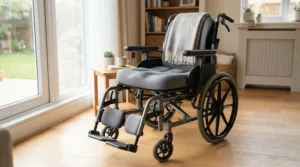
Wheelchair Seat Cooler Options vs Traditional Seating
How does a modern wheelchair seat cooler stack up against the cushions many users already have? Here’s the breakdown.
| Option | Heat Handling | Moisture | Pressure Role | Best For |
|---|---|---|---|---|
| Standard foam cushion | Retains warmth | Manages moisture best | Basic redistribution | Budget daily use |
| Foam-gel cooling cushion such as Everlasting Comfort Ventilated Wheelchair Cushion | Best temperature results in research | Moderate | Good comfort-level support | Most heat-sensitive users |
| Air-cell cushion such as ROHO Hybrid Elite SR | Runs slightly warmer on average | Needs a breathable cover | Strongest pressure redistribution | High-risk skin |
| Grid or honeycomb pad such as Purple Royal Seat Cushion | Open channels help airflow | Dries quickly | Comfort-level only | Foam-heat avoiders |
The table shows no free lunch. Foam-gel wins on temperature, foam wins on moisture, and air wins on protection. If your main complaint is warmth, a cooling pad for wheelchair use built on foam-gel is the logical start, while ROHO Hybrid Elite SR answers a different question entirely.
Active cooling exists, too, but mostly in labs. One university prototype circulated chilled water through a cushion and cooled tissue from about 28°C to 25°C in 30 minutes, yet it couldn’t push peak pressure below its target. That’s promising research, not a shelf product.
Extended Sitting Comfort: What to Expect in Real-World Performance
Extended sitting comfort is where cushion promises meet the clock. Here’s a realistic timeline for passive gel or ventilated designs.
First 30 minutes: the surface feels noticeably cooler, because gel and foam are still absorbing your body heat.
Hours one to three: the cushion approaches body temperature and the effect fades. Ventilated designs hold up better here because air keeps moving.
Hours four and beyond: passive materials have mostly equalized. This is where weight shifts, position changes, and breaks matter more than any cushion.
What this means for you: don’t expect a bag of ice. Expect a smaller heat spike, drier skin, and an easier afternoon. Pair the cushion with breathable clothing, hydration, and scheduled position changes. A wheelchair cooling pad handles the surface; you handle the schedule.
Also consider seat angle and clothing seams, since both change pressure and sweat patterns more than people expect.
Mobility Aid Cooling and Mobility Chair Cooling: Safety and Smart Habits
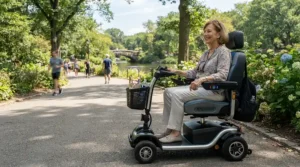
Mobility aid cooling covers more than cushions. Power chairs, scooters, and transport chairs all trap heat, and mobility chair cooling starts with the seat but extends to back cushions, armrest pads, shade, and fluids.
Safety comes first. Seating clinicians use skin checks, fit checks, and weight shifts as core defenses. MedlinePlus guidance on preventing pressure ulcers advises sitting on a foam or gel cushion that fits the chair, avoiding donut-shaped cushions, shifting your weight every 15 to 20 minutes, and having a provider check wheelchair fit once or twice a year.
Practical habits:
- Check skin daily, especially the tailbone and sit bones.
- Call your provider if redness, warmth, or pain lingers for more than a few days.
- Don’t layer a consumer pad over a prescribed cushion without checking with your therapist.
- Ask about coverage. Drive Medical Gel “E” Skin Protection Cushion carries a skin-protection cushion billing code in medical references, but coverage varies, so confirm with your plan.
This isn’t medical advice. Your clinician knows your skin and your risk.
Long-Term Cost and Maintenance: What a Wheelchair Cooling Pad Really Costs
Sticker price is only the opening bid. Total cost depends on lifespan, cleaning, and replacements.
Take a comfort cushion in the $25-$70 range. If it holds shape for 18 months, you’re paying roughly a few dollars a month. A premium option like Purple Royal Seat Cushion at $100-$130 spreads out over a longer life if the grid holds up, though I couldn’t verify lifespan data. Meanwhile, ROHO Hybrid Elite SR at about $380-$500 works out to around $16-$21 monthly over its 24-month warranty window, and it asks for more care: inflation checks, a repair kit, and proper cleaning.
Maintenance costs hide in covers and replacements. Washable covers like the one on Everlasting Comfort Ventilated Wheelchair Cushion extend life cheaply, while a stained foam core often means replacing the whole cushion. Drive Medical Gel “E” Skin Protection Cushion lists an 18-month limited warranty at one retailer.
Value verdict: for heat complaints and moderate use, a mid-tier foam-gel cushion usually wins on cost per month. Spend more only when clinical needs, not marketing, push you there.
Frequently Asked Questions
❓ How much does a good wheelchair cooling pad cost?
❓ Can a cooling pad for wheelchair use replace a prescribed pressure cushion?
❓ Does the gel in a wheelchair cooling cushion stay cool all day?
❓ Are wheelchair seat cooler cushions covered by FSA, HSA, or insurance?
❓ How do I clean a wheelchair cooling cushion without damaging it?
Conclusion: Keep Cool, Stay Protected
Choosing a wheelchair cooling pad comes down to three honest questions: how risky is your skin, how long do you sit, and what actually fits your seat? For most people with heat complaints, a foam-gel or ventilated cushion such as Everlasting Comfort Ventilated Wheelchair Cushion or AUVON Gel Wheelchair Seat Cushion hits the sweet spot of cost, comfort, and cooling. Budget buyers can test the waters with OMCOZY Honeycomb Gel Seat Cushion, while foam-averse sitters might look at Purple Royal Seat Cushion.
And if skin protection is the priority, Drive Medical Gel “E” Skin Protection Cushion and ROHO Hybrid Elite SR sit in a different league that deserves a clinician’s guidance. Don’t buy on marketing slogans, because the research shows cooling claims often lack hard data.
Whatever you choose, pair it with the unglamorous habits that work: measure first, check your skin daily, shift your weight, and keep covers clean. Heat is a solvable problem. A smart cushion plus smart habits makes long days in the chair feel a lot less like a sauna.
Recommended for You
- Gaming Chair Cooling Pad: 7 Best Picks To Beat Sweat (2026)
- Cooling Seat Cushion For Office: 7 Best Picks To Beat Sweat (2026)
- Portable Car Air Conditioner: 7 Best Picks For 2026
Disclaimer: This article contains affiliate links. As an Amazon Associate, I earn from qualifying purchases. If you purchase products through these links, we may earn a small commission at no additional cost to you. This article is for general information and is not medical advice.
✨ Found this helpful? Share it with your friends! 💬🤗
