

In This Article
The best greenhouse fan is the one sized to your structure’s volume and matched to your climate. In practice, that usually means a thermostat-controlled shutter exhaust fan that swaps your air roughly once per minute in peak summer, plus a small circulation fan that keeps damp, stagnant pockets from forming around your plants.
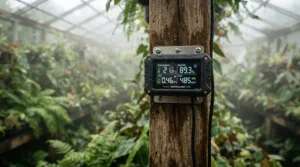
Here’s the twist most shopping guides skip: a greenhouse needs two different jobs done, and no single fan does both well. An exhaust fan trades your hot, humid inside air for cooler outside air. A circulation fan stirs whatever air is inside, so every leaf lives in roughly the same weather. Skip the first and your tomatoes bake. Skip the second and you’ve built a very expensive petri dish.
Universities have been sizing this stuff for decades. University of Vermont Extension’s ventilation guidance expresses the target in cubic feet per minute (CFM) per square foot of growing area. That’s the same math we’ll use to sort the seven picks below: five shutter-style ventilation fans and two circulation fans. Each was chosen for real specs, honest price ranges, and the recurring themes in real buyer feedback.
Maybe you’re hunting for a top rated greenhouse fan to protect a seed-starting bench. Maybe you need a greenhouse ventilation fan for a 10×20 hoop house. Either way the goal is the same: humidity temperature control that’s automatic enough to forget about, and gentle enough to build a healthy growth environment. Let’s start with the cheat sheet.
Best Greenhouse Fan Picks at a Glance
| Product | Type | Rated Airflow | Control | Price Range | Best For |
|---|---|---|---|---|---|
| iLiving 16-Inch Shutter Exhaust Fan with Thermospeed | Shutter exhaust | ~1,200 CFM | Built-in thermostat, variable speed | $130–$150 | Set-and-forget home greenhouses |
| VEVOR 16-Inch Shutter Exhaust Fan with Controller | Shutter exhaust (EC motor) | ~2,650 CFM | Temp/humidity controller, 10 speeds | $100–$120 | Budget growers wanting maximum airflow |
| AC Infinity AIRLIFT T14 | Shutter exhaust (EC motor) | ~1,513 CFM | Smart controller, 10-speed | $200–$250 | Tech fans who want remote monitoring |
| KEN BROWN 20-Inch Shutter Exhaust Fan | Shutter exhaust | ~3,500–4,200 CFM | Speed controller included | Under $100 | Larger houses on tight budgets |
| iPower 12-Inch Shutter Exhaust Fan | Shutter exhaust | ~940 CFM | Thermostat-compatible (not included) | Under $90 | Small hobby structures |
| AC Infinity CLOUDRAY S6 | Clip circulation | ~325 CFM | 10 speeds, 10 oscillation levels | $45–$60 | Seedling benches, compact houses |
| Hurricane Supreme 16-Inch Oscillating Wall Fan | Wall circulation | ~2,118 CFM | 3-speed dial and pull cords | Under $50 | Mid-size houses needing a sweeping breeze |
Looking at the comparison above, the VEVOR 16-Inch delivers the most rated airflow per dollar in a compact opening. The iLiving 16-Inch justifies its higher price by having a thermostat already built in. Tech-minded growers should note that the AC Infinity AIRLIFT T14 trades raw airflow for control and monitoring. The two circulation fans, the AC Infinity CLOUDRAY S6 and the Hurricane Supreme 16-Inch, solve a different problem entirely, so buy one alongside an exhaust fan rather than instead of one.
💬 Just one click — help others make better buying decisions too!😊
Top 7 Best Greenhouse Fan Picks: Expert Analysis
A quick honesty note before the picks. Airflow figures are manufacturer ratings, not lab-verified results. The buyer-feedback notes summarize themes from published roundups and public discussions, not personal testing. Prices are ranges at the time of research, so check current price before you buy.
1. iLiving 16-Inch Shutter Exhaust Fan with Thermospeed — thermostat and variable speed built in
Most shutter fans arrive as a fan plus a to-do list. The iLiving 16-Inch arrives with its brain already installed. Its integrated thermostat ramps the fan up as heat builds and eases it back as the greenhouse cools, so you stop being the human thermostat.
It’s rated around 1,200 CFM from a 1/20 HP motor turning near 1,550 RPM and drawing roughly 0.85 amps. That’s an efficient mover rather than a brute. Using the university rule of about 8 CFM per square foot for summer cooling, 1,200 CFM covers roughly 150 square feet of floor at peak heat. Think a 10×15 hobby house. Some listings stretch coverage claims far beyond that, but those numbers describe basic air exchange, not surviving August.
Based on the spec comparison, this is the model for a grower who wants automation without a second purchase or a wiring project. The aluminum shutters and galvanized steel frame suit humid air better than bare steel. Variable speed matters more than it sounds. Running at partial speed in spring and fall is quieter and cheaper than a fan that’s either roaring or off.
Reviewers consistently praise how quiet it runs. The recurring complaints are shutters that don’t seal perfectly tight without occasional lubrication, and a wiring box that feels less robust than the rest of the unit.
Pros:
- ✅ Thermostat with variable speed included in the box
- ✅ Quiet operation noted across buyer feedback
- ✅ Aluminum shutters and galvanized frame resist humidity
Cons:
- ❌ Shutters may need lubrication to seal fully
- ❌ Wiring box feels less robust than the fan
Price range: around $130–$150 at the time of research. Value verdict: excellent for houses up to roughly 150 square feet in peak summer, and still a strong winter-humidity fan for larger ones.
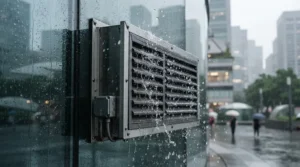
2. VEVOR 16-Inch Shutter Exhaust Fan with Controller — most rated airflow per dollar
This fan’s party trick is arithmetic. It’s rated at 2,650 CFM from a 16-inch opening, while other fans in this size class are rated around 1,200 to 1,500.
It has an EC (electronically commutated) motor, ten adjustable speeds, and a controller with temperature and humidity programming, timer, and alarm modes. It supports a second fan later, and it’s ETL-listed. Roundups commonly cite EC motors as using 30–50% less electricity than comparable AC designs. Ten speeds also mean you can throttle down for winter humidity control instead of freezing your plants. At 8 CFM per square foot, that rating points to roughly 330 square feet of summer cooling capacity, if it holds up. Brands rate airflow under different test conditions, so treat cross-brand CFM comparisons as directional.
Here’s what to weigh: this is the pick that lets a 10×20 builder buy one fan instead of two. The frame is powder-coated steel with aluminum blades and shutters, so it’s sturdy where it counts. Budget a few dollars for weatherstripping or stronger return springs, because the shutters are where the savings show.
Buyer reports point to weak shutter spring tension, which lets louvers rattle or blow open in wind. The controller cord is also on the short side, around 6–8 feet.
Pros:
- ✅ Very high rated airflow for a 16-inch fan
- ✅ EC motor with ten adjustable speeds
- ✅ Controller with humidity, timer, and alarm modes
Cons:
- ❌ Shutter springs struggle in windy locations
- ❌ Controller cord is shorter than ideal
Price range: roughly $100–$120. Value verdict: hard to beat on airflow per dollar, provided you’ll tinker with the shutters.
3. AC Infinity AIRLIFT T14 — app-connected control with efficient EC power
If the iLiving 16-Inch is the sensible sedan, the AC Infinity AIRLIFT T14 is the one with the dashboard. Its controller tracks temperature and humidity, and per published reviews it links to a smartphone app for remote monitoring, alerts, and speed changes.
The 14-inch fan is rated around 1,513 CFM and pairs an EC motor with 10-speed PWM control. Dual ball bearings are rated for 67,000 hours, which is about 7.6 years of nonstop running. It carries an IP44 rating, with aluminum blades and steel guards. At 8 CFM per square foot, that airflow suits roughly 190 square feet, so a 10×20 house would find it just slightly short at peak heat. Full-speed noise is listed at 68 dBA, somewhere between conversation and a vacuum cleaner. Dial it down and it gets far friendlier.
Honestly, the smart features are the product here. If you travel, run multiple structures, or simply enjoy data, the alerts are a real safety net against a heat spike while you’re away. If you’re a weekend hobbyist, you’re paying for capability you may not use.
I couldn’t verify a large independent sample of greenhouse-specific reviews for this model. Published comparisons agree on two trade-offs: louder at full speed than some rivals, and priced well above basic exhaust fans.
Pros:
- ✅ Smart controller with alerts and remote monitoring
- ✅ EC motor with precise 10-speed control
- ✅ Long-life bearings rated for 67,000 hours
Cons:
- ❌ 68 dBA at full speed is not whisper-quiet
- ❌ Premium price for modest airflow
Price range: roughly $200–$250. Value verdict: worth it if automation is the point, overkill if it isn’t.
4. KEN BROWN 20-Inch Shutter Exhaust Fan — big airflow for a small check
Sometimes the best deal wears a nobody’s name badge. The KEN BROWN 20-Inch is rated between 3,500 and 4,200 CFM, which is territory that bigger, pricier fans sometimes struggle to reach.
The motor turns at about 1,309 RPM and is thermally protected, with permanently lubricated bearings. The blades and shutters are aluminum, and a speed controller is included. The cord is short, around 1.65 meters (about 5.4 feet), so plan your outlet. At 8 CFM per square foot, 3,500 CFM suggests roughly 430 square feet of summer capacity. That’s serious real estate for the money.
Here’s the catch, and it’s a big one: this brand has a thin track record. Long-term reliability data is limited, and its build quality is described as adequate rather than premium. For a large greenhouse on a shoestring, the CFM-per-dollar is compelling. For a greenhouse holding a full season’s crop, ask yourself how you’ll cope if a motor quits in July.
I couldn’t verify a deep pool of long-term reviews for this model, so treat it as a calculated gamble with a return window as your safety net.
Pros:
- ✅ Very high rated CFM for a 20-inch fan
- ✅ Speed controller included
- ✅ Thermally protected, permanently lubricated motor
Cons:
- ❌ Limited long-term reliability feedback
- ❌ Short power cord limits placement
Price range: under $100. Value verdict: unbeatable on paper, so inspect it carefully on arrival.
5. iPower 12-Inch Shutter Exhaust Fan — compact, quiet starter for small houses
Not every greenhouse is a cathedral. The iPower 12-Inch fits a wall opening where bigger fans would require carpentry and a hard conversation with your spouse.
It’s rated around 940 CFM at 1,620 RPM. Using 8 CFM per square foot, that’s roughly 115 square feet of summer capacity, perfect for a 6×10 or 8×12 hobby structure. Some listings suggest it handles much larger spaces, but that stretches the physics. The aluminum shutters resist corrosion, and it’s thermostat-compatible, meaning you can add automation later.
One important detail: there’s no plug. The fan requires manual wiring, so budget for an electrician or a comfortable weekend with a wire stripper. The upside is flexibility, since you choose your own controller and switch.
Buyers frequently mention quiet operation. Complaints center on speed controllers that fail or behave unreliably, which argues for pairing it with a separate thermostat.
Pros:
- ✅ Compact 12-inch size fits small wall openings
- ✅ Quiet operation reported by buyers
- ✅ Corrosion-resistant aluminum shutters
Cons:
- ❌ No plug included, so wiring is required
- ❌ Speed controller reliability complaints
Price range: under $90. Value verdict: a smart starter for small structures, not a solution for hot climates or large spaces.

6. AC Infinity CLOUDRAY S6 — the clip fan that mimics an outdoor breeze
Plants in still air grow like office workers in a windowless room: soft, leggy, and prone to getting sick. The AC Infinity CLOUDRAY S6 fixes that with ten “dynamic wind” modes that vary airflow the way a real breeze does.
Specs: rated around 325 CFM, 31 dBA, drawing about 12 watts, with a 6.5-inch impeller and an EC motor. It has ten speeds, ten oscillation levels, a 90° rotation range, and a 55° tilt. Dual ball bearings and carbon steel gears back a 67,000-hour lifespan claim. The moisture rating is listed as IP54 on most listings, though a few retailers show IP44, so confirm before buying. In practice, 12 watts means you can run it around the clock for pocket change. Extension guidance suggests roughly 2 CFM per square foot for circulation, so one S6 covers about 160 square feet on paper. That’s plenty for a small house.
Based on the specs, this is the ideal bench-level fan for propagation and compact greenhouses. Add an AC Infinity controller (sold separately) for temperature triggers and schedules.
One aggregator lists roughly 4.5 out of 5 stars across several thousand Amazon ratings. Forum discussions note that oscillating mechanisms are the usual failure point on clip fans generally, which is what the Gen 2 redesign targets.
Pros:
- ✅ Whisper-quiet at 31 dBA
- ✅ Dynamic wind modes simulate natural breezes
- ✅ Very low power draw for 24/7 running
Cons:
- ❌ Smart control needs a separate controller
- ❌ Modest airflow for larger houses
Price range: roughly $45–$60 for a single unit. Value verdict: the best-balanced circulation choice for small greenhouses.
7. Hurricane Supreme 16-Inch Oscillating Wall Fan — sweeping horizontal airflow on a budget
Where the AC Infinity CLOUDRAY S6 is a gentle breeze, the Hurricane Supreme 16-Inch is a coastal gust. It mounts high on a wall and sweeps the whole house.
It’s rated around 2,118 CFM on high at 1,250 RPM, with three speeds via dial or pull cords. It oscillates across 90° or locks in place, and has a multi-position tilt. Chemical-resistant polypropylene blades and a powder-coated steel grill are built for damp air. That airflow is well beyond the roughly 2 CFM per square foot circulation guideline, so on low speed it can serve houses up to several hundred square feet. It carries a one-year warranty per one retailer’s listing.
What most buyers overlook is that big circulation airflow needs restraint. On high, in a small house, it can dry out seedlings and whip lightweight leaves around. Low speed is the sweet spot. Wall mounting also keeps floor and bench space free.
Buyers of the Hurricane Supreme line generally describe strong airflow for the price. I found little greenhouse-specific long-term feedback, so keep the cord and blades dust-free and inspect them each season.
Pros:
- ✅ Strong rated airflow at a very low price
- ✅ Wall mount preserves floor and bench space
- ✅ Oscillation can be locked for targeted airflow
Cons:
- ❌ Basic 3-speed control with no thermostat
- ❌ Shorter one-year warranty
Price range: under $50. Value verdict: the cheapest way to move a lot of circulating air, if you keep the speed sensible.
Now let’s see how the seven stack up feature by feature.
| Product | Motor / Drive | Speed Control | Protection / Build | Best For |
|---|---|---|---|---|
| iLiving 16-Inch | 1/20 HP, ~1,550 RPM | Thermostat, variable speed | Aluminum shutters, galvanized frame | Automatic, quiet daily use |
| VEVOR 16-Inch | EC motor | 10 speeds, controller | Powder-coated steel, ETL-listed | Maximum airflow on a budget |
| AC Infinity AIRLIFT T14 | EC motor | 10-speed PWM, app-connected | IP44, aluminum blades | Remote monitoring and alerts |
| KEN BROWN 20-Inch | Thermally protected, ~1,309 RPM | Speed controller | Aluminum blades and shutters | Big houses, tiny budgets |
| iPower 12-Inch | ~1,620 RPM | Thermostat-compatible | Aluminum shutters, no plug | Small, quiet setups |
| AC Infinity CLOUDRAY S6 | EC motor | 10 speeds, 10 oscillation levels | IP54 (some listings IP44) | Seedlings, compact houses |
| Hurricane Supreme 16-Inch | ~1,250 RPM | 3 speeds, dial or pull cord | Polypropylene blades, steel grill | Sweeping wall-mounted circulation |
The table shows a clear split. The EC-motor models (VEVOR 16-Inch, AC Infinity AIRLIFT T14, AC Infinity CLOUDRAY S6) give finer control and lower running cost, while the KEN BROWN 20-Inch and iPower 12-Inch win on price. If you can only pick one exhaust fan and want automation, the iLiving 16-Inch remains the most balanced choice for a typical backyard house.
How to Choose the Best Greenhouse Fan in 7 Steps
- Calculate your volume. Multiply length by width by average height. Extension guidance targets roughly one full air change per minute in peak summer, which works out to about 8 CFM per square foot for an average-height house.
- Choose your motor. EC motors run cooler and use less power with finer speed control. Basic AC motors cost less upfront but usually offer fewer speeds.
- Demand automatic control. A built-in or compatible thermostat beats remembering to flip a switch. Variable speed beats on/off.
- Size your intake. Exhaust fans need somewhere to pull replacement air from. Guidance varies, but intake openings around 1.25 to 1.5 times the fan’s opening area are commonly recommended.
- Check the build. Look for aluminum shutters, corrosion-resistant frames, and ingress ratings (IP44 to IP55) suited to damp air.
- Add circulation. Plan roughly 2 CFM per square foot of circulation airflow, and run it separately from the exhaust fan.
- Verify noise and warranty. Compare decibel ratings and warranty length. Two years beats one.

Greenhouse Ventilation Fan Sizing: The Math Behind Airflow
A greenhouse ventilation fan doesn’t cool by magic. It replaces hot air with cooler outdoor air, which means it can only bring your greenhouse close to outdoor temperature. According to guidance summarized from University of Georgia Extension, one air exchange per minute without evaporative cooling keeps the interior roughly 8°F above outdoors. That’s a useful reality check. No fan turns a 100°F day into a spa.
Now run the numbers on a 10×20 house with 8-foot walls. That’s 200 square feet, or 1,600 cubic feet. At about 8 CFM per square foot, you want around 1,600 CFM of exhaust capacity. Here’s how the picks fit:
- The VEVOR 16-Inch (rated ~2,650 CFM) clears that with room to throttle down.
- The KEN BROWN 20-Inch clears it easily and could serve a house twice as big.
- The AC Infinity AIRLIFT T14 (~1,513 CFM) falls slightly short at absolute peak.
- The iLiving 16-Inch (~1,200 CFM) would need a partner fan.
- The iPower 12-Inch (~940 CFM) suits an 8×12 or smaller house.
Two cautions. First, brands rate airflow under different conditions, and real-world output drops when intake is restricted. Second, cool-season needs are much smaller. UVM Extension cites about 2 CFM per square foot for cool-season growing versus 8 for hot season. That’s why variable speed control matters so much.
Greenhouse Circulation Fan Best Practices: Placement, Speed, and Timing
Greenhouse circulation fan best practices start with one idea: horizontal airflow. University of Connecticut’s Dr. Jay Koths introduced the Horizontal Air Flow (HAF) concept in 1967, and it’s still the standard. The UMass Amherst horizontal airflow fact sheet explains the pattern. Air moves down one side of a freestanding greenhouse and back the other, creating a slow racetrack loop.
The target is about 2 CFM per square foot of floor area, delivering a gentle 50 to 100 feet per minute of air movement. UMass notes that adequate movement means leaves flutter slightly, not thrash. Run circulation around the clock, except when exhaust fans kick in. A relay can shut it off automatically, since the two systems can fight each other.
For a small house, the math is friendly. An 8×12 house (96 square feet) needs roughly 190 CFM, so one AC Infinity CLOUDRAY S6 does the job. A 200-square-foot house needs around 400 CFM, which means two clip fans, or one Hurricane Supreme 16-Inch on its lowest setting. Set the first fan 10 to 15 feet from an end wall, aim it along a long side, and place fans above the crop’s final height.
Finally, clean them. UMass warns that blade guards and motor housings collect dust, which chokes airflow and strains motors. Wipe them monthly during the growing season.
Humidity Temperature Control: A Practical Setup Guide
Buying good fans is only half the job. Here’s how to set up humidity temperature control so it works from day one.
Step 1: Mount and seal. Mount the exhaust fan on the downwind wall and the intake on the opposite, upwind wall. Add weatherstripping around the shutters if they rattle.
Step 2: Set your trigger. Set the thermostat to start the exhaust fan near the upper end of your crop’s comfort range. Many growers start around the mid-70s to 80°F for warm-season vegetables, then adjust based on plant response. Use a separate hygrometer to verify readings.
Step 3: Program humidity. Extension sources recommend keeping relative humidity below roughly 85% to suppress gray mold, with daytime levels below 70% ideal for many crops. Use humidity triggers on controllers like the VEVOR 16-Inch or AC Infinity AIRLIFT T14 to vent damp air at night.
Step 4: Sync the fans. Run circulation continuously and pause it when the exhaust fan is running.
Maintenance schedule: wipe blades monthly, lubricate shutters each season, and check bearings and wiring before summer.
Common first-30-day mistakes: blocking the intake with a bench, forgetting to calibrate your hygrometer, running circulation at full speed on seedlings, and leaving shutters unsealed in winter. Fix these early and your fans will barely need a second thought.
Building a Healthy Growth Environment: Problem-and-Solution Guide
A healthy growth environment isn’t luck. It’s usually five problems solved before they start.
Problem 1: Gray mold and mildew. Botrytis thrives at 60–70°F with humidity above 85%, according to NC State Extension’s Botrytis guide. Solution: avoid high humidity for more than about three hours a day. Run circulation continuously and vent damp air at dusk. Adjust fans so there are no dead-air spots.
Problem 2: Hot and cold pockets. Solution: a HAF loop from the Hurricane Supreme 16-Inch or one or two AC Infinity CLOUDRAY S6 fans blends temperatures floor to ceiling.
Problem 3: A fan that runs but won’t cool. Solution: check intake first. Blocked or undersized intakes are the classic culprit. Open more area.
Problem 4: Rattling shutters. Solution: weatherstripping, stronger return springs, or magnetic catches. This matters most for the VEVOR 16-Inch.
Problem 5: Leggy, weak seedlings. Solution: gentle, varied airflow. The dynamic wind modes on the AC Infinity CLOUDRAY S6 are built for this, and circulation is widely credited with strengthening stems.
Real-World Scenarios: Three Hypothetical Growers, Three Fan Setups
These profiles are illustrative, built from the specs above.
Maya, 8×12 backyard house, tomatoes and herbs. Hot summers, weekend gardener, budget around $200. Her exhaust target is about 770 CFM at 8 per square foot. The iLiving 16-Inch covers it with its built-in thermostat, and she can add one AC Infinity CLOUDRAY S6 for around $50. She runs the exhaust fan on hot days and the clip fan year-round. Total: about $180–$200 and almost no daily attention.
Dan, 10×20 hoop house, windy Midwest, tight budget. He needs roughly 1,600 CFM exhaust and 400 CFM circulation. The VEVOR 16-Inch handles exhaust, and a Hurricane Supreme 16-Inch on low handles circulation. Expect to spend a little more on weatherstripping. Total: under $200, run daily from spring through fall.
Priya, 6×8 seed-starting house, frequent traveler. Her volume is small, so raw airflow is a non-issue. The AC Infinity AIRLIFT T14 offers remote alerts if the greenhouse overheats while she’s away, and a AC Infinity CLOUDRAY S6 keeps seedlings sturdy. Alternatively, a iPower 12-Inch with a separate thermostat saves money if she doesn’t need the app. The T14 is oversized for her house, but at low speed it’s quiet and efficient.
Grow Greenhouse Fan Reviews: What Buyers Keep Reporting
When you read grow greenhouse fan reviews across roundups, forums, and retailer pages, the same themes repeat. That’s useful, because patterns are more reliable than any single glowing or furious review.
Noise is the top praise and top gripe. The iLiving 16-Inch and iPower 12-Inch get credit for quiet operation, while full-speed noise is a common trade-off on larger exhaust fans like the AC Infinity AIRLIFT T14.
Shutters are the weak link on budget fans. Sealing, rattling, and spring tension come up repeatedly for the iLiving 16-Inch and VEVOR 16-Inch. It’s fixable, but know it going in.
Oscillation mechanisms wear out. Forum threads about clip and wall fans regularly mention oscillation failing before the motor does. That’s why the AC Infinity CLOUDRAY S6 Gen 2 redesign focuses on the oscillation gearing.
Wiring and cords vary widely. The iPower 12-Inch ships without a plug, and the KEN BROWN 20-Inch has a short cord.
CFM numbers deserve skepticism. Ratings differ by brand and test method, so use them to compare within a category rather than treating them as guarantees. For current ratings and recent reviews, always check the live product pages.
Top Rated Greenhouse Fan Features That Actually Matter (And Those That Don’t)
A top rated greenhouse fan earns the label through boring virtues. Here’s what deserves your attention:
Features that matter:
- Automatic control. Thermostat or programmable control prevents the two classic failures: forgetting to turn it on, and running it constantly.
- Variable speed. It saves power, cuts noise, and handles winter humidity.
- Corrosion-resistant construction. Humid air destroys steel. Aluminum shutters and sealed motors last longer.
- Ingress protection. IP44 handles splashes, and IP54 or IP55 handles dust and water better.
- Warranty. The AC Infinity CLOUDRAY S6 and AC Infinity AIRLIFT T14 carry AC Infinity’s two-year program, while the Hurricane Supreme 16-Inch lists one year.
Features that matter less:
- WiFi for hobbyists. Great for travelers, a nice-to-have for everyone else.
- Headline CFM alone. Bigger isn’t better if you can’t provide enough intake.
- Coverage claims. “Covers 1,800 square feet” tells you little about summer cooling.
Benefits vs Traditional Alternatives: Fans or Just Open Doors?
Cracking the door and propping a roof vent is how everyone starts. It works, until it doesn’t.
| Factor | Passive Venting (Doors and Roof Vents) | Fan-Assisted (Exhaust + Circulation) |
|---|---|---|
| Peak heat control | Depends on wind and outdoor temperature | Consistent, thermostat-driven |
| Humidity control | Manual and easy to forget | Automatic vent cycles at dusk |
| Air uniformity | Hot and cold pockets common | Blended with a HAF loop |
| Labor | Daily attention | Minimal after setup |
| Upfront cost | Low | Around $150–$300 for a small house |
| Best For | Cool climates, very small houses | Serious growing, e.g. iLiving 16-Inch plus AC Infinity CLOUDRAY S6 |
The table shows that passive venting wins on cost and loses on reliability. If you can’t be there every day at noon, a fan pair is cheap insurance. Passive vents are still worth keeping as a backup and as the intake side of your system, so you don’t have to choose one or the other.
Long-Term Cost and Maintenance: What These Fans Really Cost to Run
Fans are cheap to run, which surprises people. Take an illustrative electricity rate of 17 cents per kWh. The iLiving 16-Inch draws roughly 0.85 amps, or about 100 watts. Running 10 hours a day for a 120-day summer is about 1,200 hours, or 120 kWh, roughly $20 for the season.
The AC Infinity CLOUDRAY S6 draws around 12 watts. Running it 24/7 for a year is about 105 kWh, roughly $18. Circulation is cheap even at full-time duty.
So where does the money really go? Replacement. A fan that corrodes or seizes every two or three seasons costs more than one that lasts. Bearings rated for 67,000 hours, like those on the AC Infinity AIRLIFT T14, only pay off if the rest of the fan lasts too. Spend a bit more on humid-air durability and you’ll buy once.
Maintenance is simple. Wipe blades and guards monthly, lubricate shutters each spring, and check cords and connections before hot weather. Twenty minutes a season is the price of reliability.

Frequently Asked Questions
❓ How much does a good greenhouse ventilation fan cost?
❓ Are EC motor greenhouse fans worth the extra money?
❓ Can one clip fan handle a small greenhouse?
❓ Do I need a thermostat with a greenhouse exhaust fan?
❓ How loud is a greenhouse exhaust fan?
Conclusion
Here’s the short version. Match your exhaust fan to your volume at roughly 8 CFM per square foot, add circulation at about 2 CFM per square foot, and automate both. Do that and the best greenhouse fan for you stops being a mystery and becomes a matter of budget and preference.
For most home growers, the iLiving 16-Inch is the balanced all-rounder. The VEVOR 16-Inch wins on airflow per dollar, the AC Infinity AIRLIFT T14 wins on smart control, and the KEN BROWN 20-Inch suits larger houses if you accept some risk. The iPower 12-Inch fits small structures. For circulation, the AC Infinity CLOUDRAY S6 suits compact houses and seedlings, while the Hurricane Supreme 16-Inch covers more ground on a tight budget.
Remember that fans control conditions, not miracles. Humidity swings, especially in spring and fall when disease risk peaks, deserve steady attention. UMass Extension’s guide to reducing humidity in the greenhouse is a useful next read. Get the airflow right and the rest of your growing gets easier.
✨ Ready to Build a Healthier Greenhouse?
🌿 Compare the fans above, check current pricing and availability, and match them to your greenhouse size. Your plants will thank you with stronger stems, cleaner leaves, and bigger harvests! 💚
Recommended for You
- Cooling Products For Elderly: 7 Best Safe Picks For 2026
- 7 Best Cooling Products For Pregnancy In 2026
- Cooling Products For Multiple Sclerosis: 7 Best Picks (2026)
Disclaimer: This article contains affiliate links. As an Amazon Associate, I earn from qualifying purchases. If you purchase products through these links, we may earn a small commission at no additional cost to you.
✨ Found this helpful? Share it with your friends! 💬🤗
