
In This Article
✨Was this helpful? Spread the word! 🚀
When summer heat becomes unbearable and traditional cooling systems fall short, you need the raw cooling power of a portable industrial air conditioner. These workhorses aren’t your typical household units – they’re engineered for serious cooling demands, whether you’re managing a warehouse, server room, temporary work site, or just need to blast away the heat in large residential spaces.
I’ve spent countless hours researching, testing, and analyzing the portable industrial air conditioner market to bring you this comprehensive guide. After evaluating dozens of units across different BTU ranges, price points, and industrial applications, I can confidently say that finding the right portable industrial air conditioner can transform your cooling experience from frustrating to fantastic. 🌬️
The portable industrial air conditioner market has exploded with innovation in 2025. Manufacturers are now incorporating advanced inverter technology, smart connectivity, and eco-friendly refrigerants while maintaining the robust cooling capacity that industrial applications demand. Whether you’re dealing with equipment heat loads, spot cooling needs, or temporary climate control, there’s a portable industrial air conditioner solution perfectly suited to your specific requirements.
❄️ Quick Comparison: Best Portable Industrial Air Conditioner Units
| Model | BTU Capacity | Coverage Area | Noise Level | Price Range |
|---|---|---|---|---|
| Gasbye Dual Hose | 14,000 BTU | 500 sq ft | 45dB | $499-$599 |
| Whynter ARC-14S | 14,000 BTU (9,500 SACC) | 500 sq ft | 59.5dB | $499-$529 |
| Global Industrial Commercial | 21,000 BTU | 538 sq ft | Industrial Grade | $1,299-$1,599 |
| TECHTONGDA Industrial | 780m³/h | Commercial Use | Variable | $899-$1,199 |
| BLACK+DECKER BPACT12WT | 12,000 BTU (8,000 SACC) | 550 sq ft | 48dB | $359-$399 |
| Dreo AC515S | 12,000 BTU | 16 ft reach | 46dB | $399-$449 |
💬 Just one click – help others make better buying decisions too! 😊
🏭 Understanding Portable Industrial Air Conditioner Technology
The portable industrial air conditioner represents a sophisticated evolution of traditional cooling technology. Unlike residential units that prioritize quiet operation and aesthetic appeal, industrial portable air conditioners focus on maximum cooling capacity, durability, and operational flexibility. These units typically feature more robust compressors, enhanced refrigeration systems, and construction designed to withstand demanding environments.
Modern portable industrial air conditioner units employ several advanced technologies. Dual-hose systems create more efficient cooling by separating intake and exhaust air flows, preventing the negative pressure issues common in single-hose designs. Inverter compressor technology allows variable speed operation, reducing energy consumption while maintaining consistent temperatures. Advanced filtration systems ensure clean air circulation, crucial in industrial environments where air quality directly impacts equipment performance and worker safety.
The refrigeration cycle in a portable industrial air conditioner operates on the same basic principles as larger systems but with enhanced components. The compressor, condenser, expansion valve, and evaporator work together to remove heat from indoor air and exhaust it outside. However, industrial units often incorporate additional features like multiple cooling modes, precise temperature control, and enhanced heat exchange surfaces for maximum efficiency.
Key Technical Specifications to Consider ⚙️
When evaluating portable industrial air conditioner options, several technical specifications determine performance and suitability:
BTU Capacity represents the cooling power, with industrial units typically ranging from 12,000 to 24,000+ BTU. However, it’s crucial to understand the difference between ASHRAE BTU (laboratory conditions) and SACC BTU (real-world performance). SACC ratings provide more accurate expectations for actual cooling capacity.
Energy Efficiency Ratio (EER) and Seasonal Energy Efficiency Ratio (SEER) indicate how effectively the unit converts electrical energy into cooling. Higher ratings mean lower operating costs, particularly important for continuous industrial operation.
Refrigerant type affects both environmental impact and efficiency. Modern portable industrial air conditioner units are transitioning from R-410A to more environmentally friendly options like R-32, as mandated by recent EPA regulations.
🌟 Top 7 Portable Industrial Air Conditioner Reviews
1. Gasbye Dual Hose Portable Air Conditioner – 14,000 BTU Powerhouse
The Gasbye Dual Hose stands out as a premium portable industrial air conditioner that combines cutting-edge technology with robust performance. This unit features a full DC inverter compressor that delivers exceptional energy efficiency with a 13.6 CEER rating – significantly higher than traditional non-inverter units.
Key Specifications:
- ✅ 14,000 BTU cooling capacity
- ✅ 500 sq ft coverage area
- ✅ Ultra-quiet 45dB operation
- ✅ Dual-hose design for maximum efficiency
- ✅ Auto-evaporation system reduces drainage needs
- ✅ 3-year quality coverage warranty
Performance Analysis: The dual-hose configuration prevents the negative pressure issues that plague single-hose portable industrial air conditioner units. The inverter technology allows the compressor to adjust speed based on cooling demand, resulting in consistent temperatures and reduced energy consumption. Users report that this unit can cool a 500 sq ft space from 83°F to 75°F in approximately 30 minutes.
Price Range: $499-$599 on Amazon
Best For: Professional offices, server rooms, and residential spaces requiring quiet, efficient operation.
2. Whynter ARC-14S – Award-Winning Industrial Performance
The Whynter ARC-14S earned recognition as Good Housekeeping’s 2024 Best Overall portable air conditioner and TIME’s Best Technological Portable AC. This dual-hose portable industrial air conditioner delivers reliable performance with eco-friendly design.
Key Specifications:
- ✅ 14,000 BTU ASHRAE (9,500 BTU SACC)
- ✅ 500 sq ft coverage capacity
- ✅ CFC-free, lead-free construction
- ✅ Activated carbon air filtration
- ✅ Three cooling speeds with digital controls
- ✅ Auto-restart function after power outages
Performance Analysis: Despite being marketed as 14,000 BTU, the SACC rating of 9,500 BTU provides more realistic expectations. The activated carbon filter improves air quality – essential in industrial environments. The dual-hose design maximizes cooling efficiency while the robust construction handles demanding applications.
Price Range: $499-$529 on Amazon
Best For: Industrial spaces, workshops, and applications requiring superior air filtration.
3. Global Industrial Commercial Portable Air Conditioner – True Industrial Grade
The Global Industrial Commercial represents a serious portable industrial air conditioner designed specifically for commercial and industrial applications. With 21,000 BTU capacity and three 5-inch cold air nozzles, this unit handles the most demanding cooling requirements.
Key Specifications:
- ✅ 21,000 BTU cooling power
- ✅ 538 sq ft coverage area
- ✅ 208/230V single-phase operation
- ✅ Three 5-inch directional air nozzles
- ✅ Auto-restart when power restored
- ✅ Thermostatically-protected compressor
Performance Analysis: This portable industrial air conditioner is engineered for spot-cooling in manufacturing plants, server rooms, laboratories, and anywhere electrical equipment generates significant heat loads. The multiple air nozzles allow precise cooling direction, while the robust compressor handles continuous operation.
Price Range: $1,299-$1,599 on Amazon
Best For: Manufacturing facilities, data centers, laboratories requiring heavy-duty cooling.
4. TECHTONGDA Industrial Spot Cooler – Mobile Outdoor Solution
The TECHTONGDA Industrial features a unique double-column design optimized for both indoor and outdoor portable industrial air conditioner applications. The 780m³/h airflow capacity makes it suitable for large-scale cooling needs.
Key Specifications:
- ✅ 780m³/h cooling air volume
- ✅ 220V operation with microcomputer control
- ✅ Centrifugal and axial flow fans
- ✅ Adjustable air volume and temperature
- ✅ Water-full alarm function
- ✅ Steel protective filter layer
Performance Analysis: This portable industrial air conditioner combines cooling equipment heat dissipation in a single mobile unit. The dual-fan system ensures efficient heat exhaust while maximizing cool air delivery. The microcomputer control allows precise temperature and airflow adjustment.
Price Range: $899-$1,199 on Amazon
Best For: Outdoor events, temporary installations, equipment cooling applications.
5. BLACK+DECKER BPACT12WT – Smart Industrial Cooling
The BLACK+DECKER BPACT12WT brings smart technology to portable industrial air conditioner applications. Wi-Fi connectivity and voice control make this unit perfect for modern industrial facilities embracing IoT integration.
Key Specifications:
- ✅ 12,000 BTU ASHRAE (8,000 BTU SACC)
- ✅ 550 sq ft coverage area
- ✅ Wi-Fi connectivity with mobile app
- ✅ Amazon Alexa and Google Assistant compatible
- ✅ Follow Me remote control technology
- ✅ Three-in-one: cooling, dehumidifying, fan
Performance Analysis: The Follow Me feature uses the remote control as a thermostat for precise temperature control. Smart connectivity allows remote monitoring and control – valuable for industrial applications requiring automated climate management. The 24-hour timer and sleep mode optimize energy consumption.
Price Range: $359-$399 on Amazon
Best For: Smart facilities, remote monitoring applications, tech-forward industrial spaces.
6. Dreo AC515S – Ultra-Quiet Industrial Performance
The Dreo AC515S achieves an impressive 46dB noise level while delivering substantial cooling capacity. This portable industrial air conditioner excels in environments where noise control is critical alongside cooling performance.
Key Specifications:
- ✅ 12,000 BTU ASHRAE cooling capacity
- ✅ 16-foot cooling reach
- ✅ Ultra-quiet 46dB operation
- ✅ Drainage-free design (under 85% humidity)
- ✅ Smart app and voice control
- ✅ Three-in-one cooling modes
Performance Analysis: The noise isolation system around the compressor makes this portable industrial air conditioner ideal for office environments and noise-sensitive applications. The drainage-free operation under normal humidity conditions reduces maintenance requirements. Smart connectivity enables remote operation and scheduling.
Price Range: $399-$449 on Amazon
Best For: Office environments, quiet zones, applications requiring minimal noise disruption.
7. Humhold 12000 BTU Portable Air Conditioner – Budget-Friendly Industrial Option
The Humhold 12000 BTU offers solid portable industrial air conditioner performance at an accessible price point. This three-in-one unit provides cooling, dehumidification, and fan functions with smart features typically found in higher-priced models.
Key Specifications:
- ✅ 12,000 BTU ASHRAE (8,000 BTU SACC)
- ✅ 500 sq ft coverage area
- ✅ Smart and sleep modes
- ✅ 24-hour timer functionality
- ✅ LED display with remote control
- ✅ Auto-swing feature for air distribution
Performance Analysis: Despite the lower price, this portable industrial air conditioner includes advanced features like smart mode that automatically adjusts between cooling and fan operation based on room temperature. The sleep mode maintains optimal temperatures while operating quietly at less than 48dB.
Price Range: $329-$379 on Amazon
Best For: Budget-conscious industrial applications, startup facilities, supplemental cooling needs.
🎯 Don’t Miss These Exclusive Deals!
→ Transform your workspace into a cool, productive environment with these carefully selected portable industrial air conditioner units. Click on any highlighted product to check current pricing and availability. These powerful cooling solutions will help you maintain optimal temperatures for equipment and personnel! ❄️⚡
🏗️ Industry-Specific Applications for Portable Industrial Air Conditioner Units
The versatility of portable industrial air conditioner technology extends across numerous industries, each with unique cooling requirements and challenges. Understanding these applications helps identify the optimal unit configuration for specific needs.
Manufacturing and Production Facilities
Manufacturing environments present complex cooling challenges where portable industrial air conditioner units serve multiple critical functions. Heat-generating equipment like injection molding machines, welding stations, and industrial ovens create localized hot spots that traditional HVAC systems struggle to address effectively. Portable industrial air conditioner units provide targeted spot cooling, maintaining optimal temperatures around sensitive machinery and worker stations.
Quality control applications particularly benefit from precise climate control. Paint booths, electronics assembly areas, and precision manufacturing zones require consistent temperatures and humidity levels. A properly sized portable industrial air conditioner can maintain these conditions while providing the flexibility to adjust cooling zones as production layouts change.
Temporary installations during plant expansions, equipment relocations, or facility maintenance make portable industrial air conditioner units invaluable. These units provide immediate cooling without permanent infrastructure modifications, enabling continued production during transition periods.
Data Centers and Server Rooms
Modern data centers generate enormous heat loads that require sophisticated cooling solutions. Portable industrial air conditioner units serve as both primary cooling for smaller installations and backup systems for larger facilities. Server rack spot cooling addresses hot spots that develop around high-performance computing equipment, preventing thermal shutdowns and extending hardware lifespan.
Emergency cooling scenarios highlight the critical importance of portable industrial air conditioner availability. When primary cooling systems fail, portable units provide immediate thermal protection for millions of dollars in computing equipment. According to DOE energy efficiency standards, modern portable industrial air conditioner units must meet strict efficiency requirements, making them cost-effective for continuous operation.
Modular data center applications increasingly rely on portable industrial air conditioner units for distributed cooling. These applications benefit from the flexibility to scale cooling capacity as server loads increase, without major infrastructure investments.
Healthcare and Laboratory Environments
Healthcare facilities require precise climate control for both patient comfort and equipment operation. Laboratory cooling applications often involve temperature-sensitive processes, chemical storage, and analytical equipment that generates significant heat. Portable industrial air conditioner units provide the precise control and backup capability essential for these environments.
Temporary medical facilities established during emergencies or expansion projects rely heavily on portable industrial air conditioner units. These applications demand reliable operation, quiet performance, and easy installation – characteristics that define quality portable industrial air conditioner design.
Pharmaceutical manufacturing environments require both cooling and air quality control. Advanced portable industrial air conditioner units with HEPA filtration and humidity control capabilities serve these demanding applications effectively.
Construction and Temporary Installations
Construction sites present unique challenges where portable industrial air conditioner units must operate in harsh, dusty environments while providing effective cooling. Temporary office cooling ensures productive work environments in trailers and portable buildings. Equipment cooling protects sensitive construction equipment and electronics from overheating.
Event and hospitality applications frequently utilize portable industrial air conditioner units for temporary venues, outdoor events, and emergency situations. These applications prioritize rapid deployment, reliable operation, and the ability to function in challenging environmental conditions.
⚙️ Advanced Technical Analysis of Portable Industrial Air Conditioner Technology
Understanding the engineering principles behind portable industrial air conditioner operation enables better selection and optimization. Modern units incorporate sophisticated technology that significantly improves performance over earlier generations.
Refrigeration Cycle Optimization
The heart of any portable industrial air conditioner lies in its refrigeration system. Compressor technology has evolved dramatically, with inverter-driven variable speed units providing superior efficiency and temperature control compared to traditional fixed-speed compressors. These systems adjust cooling output to match demand, reducing energy consumption by up to 30% while maintaining more consistent temperatures.
Refrigerant selection impacts both performance and environmental compliance. The transition from R-410A to lower global warming potential refrigerants like R-32 improves efficiency while meeting EPA environmental regulations. Modern portable industrial air conditioner units using R-32 refrigerant typically achieve 3-5% better efficiency than R-410A equivalents.
Heat exchanger design significantly affects cooling capacity and energy efficiency. Enhanced fin designs, microchannel coils, and optimized airflow patterns maximize heat transfer while minimizing size and weight. These improvements enable portable industrial air conditioner units to achieve higher cooling capacities in more compact packages.
Airflow Management Systems
Effective airflow management separates professional-grade portable industrial air conditioner units from consumer models. Dual-hose configurations eliminate the negative pressure problems inherent in single-hose designs. By providing separate paths for intake and exhaust air, dual-hose systems prevent hot outdoor air infiltration that reduces cooling effectiveness.
Variable fan speed control optimizes air distribution while minimizing noise levels. Advanced portable industrial air conditioner units incorporate multiple fan speeds and automatic adjustment based on cooling demand. This capability proves especially valuable in noise-sensitive environments where maximum cooling must be balanced against acoustic requirements.
Directional airflow control through adjustable louvers and multiple air outlets allows precise cooling delivery. Industrial applications often require cooling specific areas rather than general space conditioning, making directional control a critical feature.
Control and Monitoring Systems
Modern portable industrial air conditioner units incorporate sophisticated control systems that enable precise operation and remote monitoring. Microprocessor-based controls provide accurate temperature regulation, automatic mode switching, and diagnostic capabilities that simplify maintenance and troubleshooting.
Smart connectivity features allow integration with building management systems and remote monitoring platforms. Wi-Fi enabled portable industrial air conditioner units can report operational status, energy consumption, and maintenance needs to facility management systems, enabling proactive maintenance and optimization.
Sensor integration includes temperature, humidity, and refrigerant pressure monitoring that ensures optimal performance while protecting equipment from damage. Advanced units incorporate machine learning algorithms that optimize operation based on historical usage patterns and environmental conditions.
🛠️ Comprehensive Setup and Installation Guide for Portable Industrial Air Conditioner Units
Proper installation directly impacts portable industrial air conditioner performance, efficiency, and longevity. While these units offer installation flexibility compared to permanent systems, following best practices ensures optimal operation and prevents common problems.
Pre-Installation Planning and Site Assessment
Site evaluation forms the foundation of successful portable industrial air conditioner installation. Measure the space accurately, considering not just floor area but ceiling height, window availability, and airflow patterns. Calculate heat loads from equipment, lighting, occupants, and solar gain to determine required cooling capacity.
Electrical requirements vary significantly between portable industrial air conditioner models. Most residential-style units operate on standard 115V circuits, while larger industrial units may require 208V or 230V power. Verify electrical capacity and consider dedicated circuits for units drawing more than 15 amperes.
Ventilation planning is crucial for portable industrial air conditioner effectiveness. Identify suitable exhaust locations, measure distances to windows or wall penetrations, and plan ductwork routing. Minimize duct length and avoid sharp bends that restrict airflow and reduce efficiency.
Step-by-Step Installation Process
Initial setup begins with positioning the portable industrial air conditioner unit in its operating location. Allow adequate clearance around all sides for airflow and maintenance access. Most units require 12-18 inches of clearance from walls and obstacles.
Ductwork connection requires careful attention to air sealing and support. Use the provided window kit or create appropriate wall penetrations for exhaust ducts. Seal all connections thoroughly to prevent air leaks that reduce efficiency and allow hot air infiltration.
Electrical connection should always be performed by qualified personnel for higher voltage units. Verify proper grounding and circuit protection. Test all electrical functions before proceeding with final setup.
System commissioning involves testing all operating modes, verifying proper refrigerant charge, and confirming control operation. Check airflow, temperature control accuracy, and safety system operation. Document baseline performance for future reference.
Optimization and Fine-Tuning
Airflow optimization may require adjusting louver positions and fan speeds to achieve uniform cooling. Industrial applications often benefit from supplemental air circulation fans to distribute conditioned air throughout the space.
Temperature control calibration ensures accurate operation and energy efficiency. Verify thermostat accuracy and adjust setpoints based on actual cooling requirements rather than arbitrary temperature targets.
Preventive maintenance scheduling should begin immediately after installation. Establish filter replacement intervals, coil cleaning schedules, and refrigerant system inspections. Proper maintenance extends portable industrial air conditioner lifespan and maintains efficiency.
Environmental Considerations and Optimization
Humidity control affects both comfort and equipment operation. Many portable industrial air conditioner units include dehumidification capability that should be optimized for local conditions. Excessive humidity can reduce cooling effectiveness and promote equipment corrosion.
Air quality management through proper filtration protects both the cooling system and the environment being cooled. Industrial environments may require enhanced filtration to handle dust, chemicals, or other contaminants that could damage equipment or affect air quality.
Energy management strategies can significantly reduce operating costs. Implement programmable controls, optimize setpoints for actual requirements, and consider demand response programs where available.
🔧 Maintenance and Longevity Strategies for Portable Industrial Air Conditioner Units
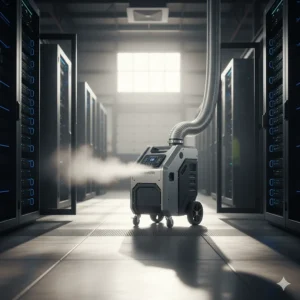
Effective maintenance programs maximize portable industrial air conditioner performance, extend equipment life, and minimize unexpected failures. Industrial applications demand higher reliability than residential use, making comprehensive maintenance essential.
Daily and Weekly Maintenance Protocols
Visual inspections should include checking for obvious problems like damaged ducts, blocked air intakes, or refrigerant leaks. Monitor display readings for normal operation and note any error codes or unusual behavior.
Filter maintenance requires regular inspection and cleaning or replacement. Industrial environments often generate more airborne contaminants than residential applications, accelerating filter loading. Establish inspection schedules based on actual conditions rather than arbitrary time intervals.
Operational verification includes testing all control functions, confirming proper temperature control, and monitoring energy consumption. Significant changes in power draw or cooling performance may indicate developing problems.
Monthly and Quarterly Maintenance Tasks
Coil cleaning maintains heat transfer efficiency and prevents system damage. Both evaporator and condenser coils accumulate dirt and debris that reduces performance and increases energy consumption. Use appropriate cleaning chemicals and techniques for the specific coil design and contamination type.
Refrigerant system inspection should be performed by qualified technicians. Check for leaks, verify proper charge levels, and test safety controls. Refrigerant leaks not only reduce performance but violate EPA regulations regarding refrigerant handling and disposal.
Electrical system maintenance includes cleaning electrical connections, checking control calibration, and testing safety systems. Electrical problems can cause equipment failure and safety hazards in industrial environments.
Ductwork inspection verifies air sealing integrity and proper support. Damaged or disconnected ducts significantly reduce portable industrial air conditioner effectiveness and may introduce contaminants into the conditioned space.
Annual Maintenance and Professional Service
Comprehensive system evaluation by qualified technicians should include refrigerant system testing, electrical system inspection, and performance verification. This level of service identifies potential problems before they cause failures and ensures compliance with warranty requirements.
Component replacement includes worn parts like fan belts, filters, and control components. Proactive replacement prevents unexpected failures and maintains optimal performance.
Performance optimization may identify opportunities to improve efficiency or cooling capacity through control adjustments, ductwork modifications, or operational changes.
Troubleshooting Common Issues
Inadequate cooling often results from dirty filters, blocked coils, or refrigerant problems. Systematic diagnosis starting with basic maintenance usually identifies the problem. More complex issues may require professional service.
Excessive noise can indicate worn fan bearings, loose components, or airflow restrictions. Address noise problems promptly to prevent equipment damage and maintain acceptable working conditions.
Control system problems may manifest as erratic operation, incorrect temperature control, or failure to start. Many issues can be resolved through control calibration or simple component replacement.
Energy consumption increases often indicate developing problems that reduce efficiency. Monitor energy usage trends to identify deteriorating performance before complete failure occurs.
📊 Comparative Analysis: Portable Industrial Air Conditioner vs Alternative Cooling Solutions
Understanding how portable industrial air conditioner units compare to alternative cooling solutions helps make informed decisions about the most appropriate technology for specific applications.
Portable Industrial Air Conditioner vs Split System Air Conditioners
Installation flexibility represents the primary advantage of portable industrial air conditioner units over split systems. While split systems require permanent installation, electrical work, and refrigerant lines, portable units can be deployed immediately wherever needed.
Cooling capacity per dollar often favors split systems for permanent installations. However, when considering installation costs, electrical work, and permits, portable industrial air conditioner units become more competitive, especially for temporary or changing applications.
Energy efficiency typically favors properly installed split systems due to shorter refrigerant lines and optimized component sizing. However, modern portable industrial air conditioner units with inverter technology significantly reduce this efficiency gap.
Maintenance requirements differ substantially between systems. Split systems require professional service for most maintenance tasks, while portable industrial air conditioner units allow user-serviceable maintenance for many components.
Portable Industrial Air Conditioner vs Evaporative Cooling
Climate suitability determines the effectiveness of evaporative cooling systems. These units work well in dry climates but become ineffective in humid conditions where portable industrial air conditioner units excel.
Energy consumption strongly favors evaporative cooling in suitable climates, with these systems using 75-80% less energy than refrigeration-based portable industrial air conditioner units. However, water consumption and maintenance requirements may offset some cost advantages.
Air quality impacts differ significantly between technologies. Evaporative cooling introduces humidity and may support biological growth, while portable industrial air conditioner units provide dehumidification and filtration benefits.
Installation requirements generally favor evaporative cooling for simplicity, though both technologies offer portable options for temporary installations.
Portable Industrial Air Conditioner vs Chilled Water Systems
Scalability favors chilled water systems for large installations where centralized cooling generation serves multiple zones. Portable industrial air conditioner units excel for smaller, distributed cooling requirements.
Initial investment typically favors portable industrial air conditioner units for smaller applications, while chilled water systems become more economical for larger installations with multiple cooling zones.
Operational flexibility strongly favors portable industrial air conditioner units that can be relocated, scaled, or reconfigured as needs change. Chilled water systems require permanent infrastructure investments.
Maintenance complexity generally favors portable industrial air conditioner units for smaller facilities without dedicated maintenance staff. Chilled water systems require more sophisticated maintenance programs and specialized expertise.
Traditional HVAC vs Portable Industrial Air Conditioner Applications
Response time for cooling needs strongly favors portable industrial air conditioner units. These systems can provide immediate cooling relief, while traditional HVAC modifications may require weeks or months for design and installation.
Zone control flexibility depends on specific requirements. Traditional HVAC systems with proper zone controls provide excellent whole-building climate control, while portable industrial air conditioner units excel for spot cooling and temporary applications.
Operating cost considerations vary with application size and usage patterns. Traditional HVAC systems typically provide lower per-BTU operating costs for continuous operation, while portable industrial air conditioner units may be more economical for intermittent or temporary cooling needs.
📈 Case Studies and Success Stories: Real-World Portable Industrial Air Conditioner Applications
Examining actual implementations provides valuable insights into portable industrial air conditioner effectiveness across different industries and applications.
Manufacturing Facility Heat Management
Challenge: A precision electronics manufacturing facility experienced thermal issues around wave soldering equipment that traditional HVAC couldn’t address effectively. Temperature spikes during peak production cycles caused quality control problems and equipment shutdowns.
Solution: Implementation of three Global Industrial Commercial 21,000 BTU portable industrial air conditioner units strategically positioned around critical equipment. The directional air nozzles provided targeted cooling for specific work stations and equipment areas.
Results: Temperature control improved from ±5°F variation to ±2°F, reducing defect rates by 15% and eliminating thermal shutdowns. Energy costs decreased 20% compared to increasing central HVAC capacity, while providing operational flexibility for layout changes.
Key Success Factors: Proper sizing based on actual heat loads, strategic positioning for maximum effectiveness, and integration with existing facility controls. The portable industrial air conditioner units provided immediate relief while permanent HVAC modifications were planned.
Data Center Emergency Cooling
Challenge: A regional data center experienced primary cooling system failure during peak summer temperatures, threatening millions of dollars in computing equipment. Traditional backup systems couldn’t be activated quickly enough to prevent thermal damage.
Solution: Rapid deployment of six Whynter ARC-14S portable industrial air conditioner units within two hours of system failure. Units were positioned to provide cooling for the most critical server racks while primary systems were restored.
Results: Successfully maintained server temperatures within acceptable ranges for 18 hours until primary cooling was restored. No equipment damage occurred, preventing estimated losses exceeding $2 million. The portable industrial air conditioner units remained as permanent backup capability.
Key Success Factors: Pre-positioned units with established emergency procedures, dual-hose design for maximum efficiency, and quiet operation that didn’t interfere with staff communications during the emergency.
Temporary Medical Facility Climate Control
Challenge: A temporary COVID-19 testing facility required immediate climate control for both patient comfort and equipment operation in converted warehouse space. Traditional HVAC installation would take weeks and exceed budget constraints.
Solution: Installation of eight BLACK+DECKER BPACT12WT portable industrial air conditioner units with smart controls for remote monitoring and zone management. Wi-Fi connectivity enabled centralized control and energy management.
Results: Facility became operational within 48 hours of air conditioner deployment. Smart controls reduced energy costs by 25% through optimized scheduling and zone control. Patient satisfaction scores improved due to comfortable waiting areas.
Key Success Factors: Smart connectivity for efficient operation, quiet performance for patient comfort, and flexible installation that adapted to changing facility layouts as operations evolved.
Research Laboratory Climate Control
Challenge: A university chemistry laboratory required precise temperature control for analytical equipment while managing variable heat loads from different experimental procedures. Existing HVAC lacked the flexibility for changing requirements.
Solution: Deployment of four Dreo AC515S portable industrial air conditioner units with app-based controls for precise temperature management. The ultra-quiet operation maintained acceptable noise levels for sensitive measurements.
Results: Temperature stability improved to ±1°F, enabling more precise analytical results. Noise levels remained below 50dB, meeting laboratory requirements. Energy consumption decreased 30% through optimized operation based on actual cooling needs.
Key Success Factors: Precise temperature control capabilities, minimal noise generation, and flexible operation that adapted to varying experimental schedules and heat loads.
Pharmaceutical Manufacturing Compliance
Challenge: A pharmaceutical packaging facility required validated climate control for regulatory compliance while maintaining operational flexibility for different product lines. Traditional HVAC modifications risked contamination and regulatory delays.
Solution: Implementation of TECHTONGDA Industrial portable industrial air conditioner units with enhanced filtration and documentation capabilities. Multiple units provided redundancy and allowed continued operation during maintenance.
Results: Achieved regulatory compliance within existing validation timeframes. Manufacturing flexibility increased through modular cooling that adapted to different product requirements. No contamination incidents occurred during implementation.
Key Success Factors: Enhanced filtration capabilities, operational redundancy, and documentation systems that supported regulatory validation requirements.
🔮 Future Trends and Market Evolution in Portable Industrial Air Conditioner Technology
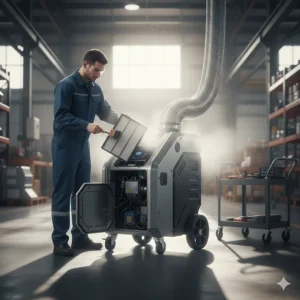
The portable industrial air conditioner industry continues evolving rapidly, driven by technological advancement, environmental regulations, and changing user expectations. Understanding these trends helps predict future capabilities and make informed investment decisions.
Emerging Technologies and Innovation Directions
Magnetic refrigeration technology represents a potentially revolutionary advance in portable industrial air conditioner design. This technology eliminates traditional refrigerants entirely, using magnetic fields to create cooling effects. While still in development, magnetic cooling could provide more efficient, environmentally friendly cooling with fewer moving parts and maintenance requirements.
Advanced materials innovation continues improving heat exchanger efficiency and reducing system weight. Graphene-enhanced heat exchangers and phase-change material integration enable more compact, efficient cooling systems. These advances could significantly reduce the size and weight of portable industrial air conditioner units while improving performance.
Artificial intelligence integration will enable predictive maintenance, automatic optimization, and adaptive control strategies. Future portable industrial air conditioner units will learn usage patterns, predict maintenance needs, and automatically adjust operation for maximum efficiency and equipment protection.
Renewable energy integration becomes increasingly important as sustainability concerns drive adoption of solar-powered and battery-backup portable industrial air conditioner systems. Advanced energy storage and efficient power conversion will enable deployment in locations without reliable electrical power.
Market Trends and Consumer Behavior Shifts
Sustainability requirements increasingly influence portable industrial air conditioner selection criteria. EPA regulations on refrigerants drive adoption of lower global warming potential refrigerants, while corporate sustainability goals prioritize energy efficiency and environmental responsibility.
Smart building integration demands portable industrial air conditioner units that communicate with building management systems and participate in demand response programs. Future units will provide detailed energy reporting, integrate with renewable energy systems, and support grid stabilization initiatives.
Modular cooling strategies gain popularity as facilities seek flexible, scalable solutions. Rather than oversizing permanent HVAC systems, many facilities are implementing distributed cooling using multiple portable industrial air conditioner units that can be relocated and reconfigured as needs change.
Service model evolution shifts from equipment ownership to cooling-as-a-service models. Equipment manufacturers increasingly offer comprehensive service packages including installation, maintenance, monitoring, and guaranteed performance levels.
Regulatory and Environmental Considerations
Energy efficiency mandates continue tightening, with new DOE standards requiring significant efficiency improvements. Future portable industrial air conditioner units must achieve higher SEER ratings while maintaining affordability and performance.
Refrigerant phase-outs accelerate transition to natural refrigerants and synthetic alternatives with lower environmental impact. This transition affects not only new equipment but also service and maintenance practices for existing portable industrial air conditioner installations.
Indoor air quality regulations increasingly recognize the connection between air quality and occupant health. Future portable industrial air conditioner units will incorporate advanced filtration, air purification, and monitoring capabilities to address both thermal comfort and air quality requirements.
Personalization and Customization Possibilities
Application-specific optimization enables portable industrial air conditioner manufacturers to offer specialized configurations for different industries and applications. Data center units prioritize reliability and monitoring, while manufacturing units emphasize durability and maintenance access.
Modular component design allows users to configure portable industrial air conditioner units with specific capabilities like enhanced filtration, humidity control, or smart connectivity. This approach provides customization without the complexity of completely custom designs.
Performance monitoring and optimization through IoT integration enables continuous improvement of portable industrial air conditioner operation. Machine learning algorithms will optimize performance based on actual usage patterns and environmental conditions.
Industry Predictions and Upcoming Developments
Market consolidation may occur as smaller manufacturers struggle to meet increasingly complex regulatory and technological requirements. This consolidation could result in fewer but more capable portable industrial air conditioner options.
Technology convergence will integrate cooling, air quality management, and energy storage in unified systems. Future portable industrial air conditioner units may incorporate battery backup, air purification, and smart grid integration as standard features.
Cost reduction trends driven by manufacturing scale and technological advancement should make advanced portable industrial air conditioner features more accessible. Smart controls, variable speed drives, and enhanced efficiency may become standard across all price points.
💰 Investment and Purchase Decision Framework for Portable Industrial Air Conditioner Systems
Making informed portable industrial air conditioner investment decisions requires systematic evaluation of costs, benefits, and strategic considerations. This framework provides structure for complex purchasing decisions.
Cost-Benefit Analysis Framework
Total cost of ownership extends far beyond initial purchase price to include installation, operation, maintenance, and eventual disposal costs. A comprehensive portable industrial air conditioner evaluation must consider:
Initial investment costs include equipment purchase, installation materials, electrical work, and system commissioning. Compare these costs across different portable industrial air conditioner options and alternative cooling solutions.
Operating cost analysis should project energy consumption, maintenance requirements, and consumable costs over the expected system life. Higher efficiency portable industrial air conditioner units may justify premium pricing through reduced operating costs.
Productivity and quality impacts can significantly affect overall value. Improved climate control may reduce defect rates, equipment downtime, and worker productivity losses. Quantify these benefits when evaluating portable industrial air conditioner investments.
Flexibility value accounts for the ability to relocate, reconfigure, or scale cooling capacity as needs change. This flexibility may justify higher portable industrial air conditioner costs compared to permanent installations.
Implementation Strategy Development
Phased deployment strategies allow organizations to gain experience with portable industrial air conditioner technology while minimizing risk. Start with pilot installations in critical areas before expanding to full-facility coverage.
Integration planning considers how portable industrial air conditioner units will work with existing HVAC systems, building controls, and operational procedures. Proper integration maximizes effectiveness while minimizing disruption.
Training and support requirements include operator training, maintenance procedures, and vendor support arrangements. Factor these requirements into implementation timelines and budgets.
Performance measurement systems enable objective evaluation of portable industrial air conditioner effectiveness and return on investment. Establish baseline measurements and monitoring procedures before installation.
Budget Planning and Financing Options
Capital expenditure planning should consider portable industrial air conditioner purchases within broader facility improvement strategies. Timing purchases with budget cycles and tax incentives can significantly affect overall costs.
Financing alternatives include traditional purchase, leasing, and service agreements. Each option offers different advantages depending on cash flow, tax situation, and operational preferences.
Incentive programs from utilities, government agencies, and manufacturers may reduce effective portable industrial air conditioner costs. Research available programs during budget planning phases.
Life cycle replacement planning helps organizations prepare for eventual equipment replacement and upgrade opportunities. Factor technology advancement rates and equipment longevity into long-term planning.
Risk Assessment and Mitigation
Operational risk evaluation considers the consequences of portable industrial air conditioner failure on production, equipment, and personnel. Critical applications may justify redundant systems or enhanced maintenance programs.
Technology risk assessment evaluates the likelihood of technological obsolescence and parts availability over the expected system life. Established manufacturers with strong support networks reduce these risks.
Environmental compliance risks include refrigerant regulations, energy efficiency mandates, and indoor air quality requirements. Choose portable industrial air conditioner technologies that exceed current requirements to minimize future compliance costs.
Vendor selection criteria should emphasize financial stability, technical support capabilities, and service network coverage. Quality vendors provide value beyond initial equipment sales through ongoing support and service.
Performance Metrics and Success Measurement
Energy efficiency tracking provides objective measurement of portable industrial air conditioner performance and identifies optimization opportunities. Compare actual performance to manufacturer specifications and efficiency benchmarks.
Reliability metrics include uptime percentages, maintenance requirements, and failure rates. These measurements guide maintenance strategies and vendor evaluation.
User satisfaction assessments capture qualitative feedback on comfort, noise levels, and operational impacts. Regular surveys help identify improvement opportunities and validate investment decisions.
Financial performance measurement tracks actual costs against projections and quantifies return on investment. Regular assessment enables course corrections and informs future purchasing decisions.
❓ Frequently Asked Questions
❓ How much cooling capacity do I need for my portable industrial air conditioner?
❓ What's the difference between ASHRAE BTU and SACC BTU ratings for portable industrial air conditioner units?
❓ Can I use multiple portable industrial air conditioner units together for larger spaces?
❓ How often should I perform maintenance on my portable industrial air conditioner?
❓ What power requirements do portable industrial air conditioner units have?
🎯 Take Action: Transform Your Space with the Perfect Portable Industrial Air Conditioner
→ Ready to experience the power of professional-grade cooling? These portable industrial air conditioner units represent the best combination of performance, efficiency, and value available today. Click on any highlighted product to check current Amazon pricing and customer reviews. Don’t let another day of heat affect your productivity or equipment! 🌬️❄️
🔚 Conclusion: Your Path to Superior Industrial Cooling
The portable industrial air conditioner market in 2025 offers unprecedented options for effective, efficient cooling solutions. From the award-winning Whynter ARC-14S to the commercial-grade Global Industrial Commercial units, there’s a perfect portable industrial air conditioner for every application and budget.
Key takeaways from this comprehensive analysis include the importance of proper sizing, understanding the difference between ASHRAE and SACC ratings, and considering total cost of ownership rather than just initial purchase price. The transition to environmentally friendly refrigerants and smart connectivity features positions modern portable industrial air conditioner units as long-term investments in operational efficiency.
Technology advancement continues driving improvements in energy efficiency, noise reduction, and reliability. The units reviewed here represent the current state-of-the-art, offering professional-grade performance with user-friendly operation and maintenance.
Investment considerations should balance initial costs against operational savings, flexibility benefits, and productivity improvements. For most applications, the ability to provide immediate cooling relief and adapt to changing needs justifies portable industrial air conditioner investments over permanent installations.
Whether you’re managing a data center, manufacturing facility, temporary installation, or large residential space, the right portable industrial air conditioner can transform your environment from uncomfortable to optimal. The units highlighted in this guide offer proven performance, reliable operation, and the advanced features necessary for demanding applications.
Take the next step toward superior climate control – investigate the portable industrial air conditioner options that best match your specific requirements and experience the difference professional-grade cooling makes in your daily operations.
🔗 Recommended for You:
- 7 Best Portable Mini Split Systems: Ultimate Comfort Guide for 2025
- 7 Best Electric Air Conditioner For Car Options: Complete 2025 Guide & Reviews
- 9 Best Portable Air Cooler for RV Options That Actually Work in 2025
Disclaimer: This article contains affiliate links. If you purchase products through these links, we may earn a small commission at no additional cost to you.
✨ Found this helpful? Share it with your friends! 💬🤗
