

In This Article
When summer heat makes your outdoor spaces unbearable, an outdoor oscillating fan wall mount becomes your ultimate cooling companion. These powerful air circulation solutions transform sweltering patios, garages, and outdoor work areas into comfortable havens where you can actually enjoy spending time.

✨Was this helpful? Spread the word! 🚀
Whether you’re looking to cool down your covered patio during family barbecues or need reliable air circulation in your workshop, finding the right outdoor oscillating fan wall mount can make all the difference between comfort and misery. In this comprehensive guide, I’ll walk you through everything you need to know about selecting, installing, and maintaining these essential cooling devices.
Why Choose an Outdoor Wall Mount Fan? 🌟
The outdoor wall mount fan represents a perfect blend of power, convenience, and space efficiency. Unlike portable fans that consume valuable floor space and require constant repositioning, wall mounted outdoor fans provide consistent airflow exactly where you need it most. Additionally, the oscillating feature ensures wide coverage, making these fans ideal for larger outdoor areas.
Key Benefits of Outdoor Oscillating Wall Mounted Fans
✅ Space-saving design – Frees up valuable floor space on patios and decks
✅ Weather-resistant construction – Built to withstand outdoor elements
✅ Wide coverage area – Oscillation feature covers more square footage
✅ Permanent installation – No need to move or store seasonally
✅ Energy efficient – Lower operating costs compared to air conditioning
✅ Versatile mounting options – Can be installed on walls, posts, or structures
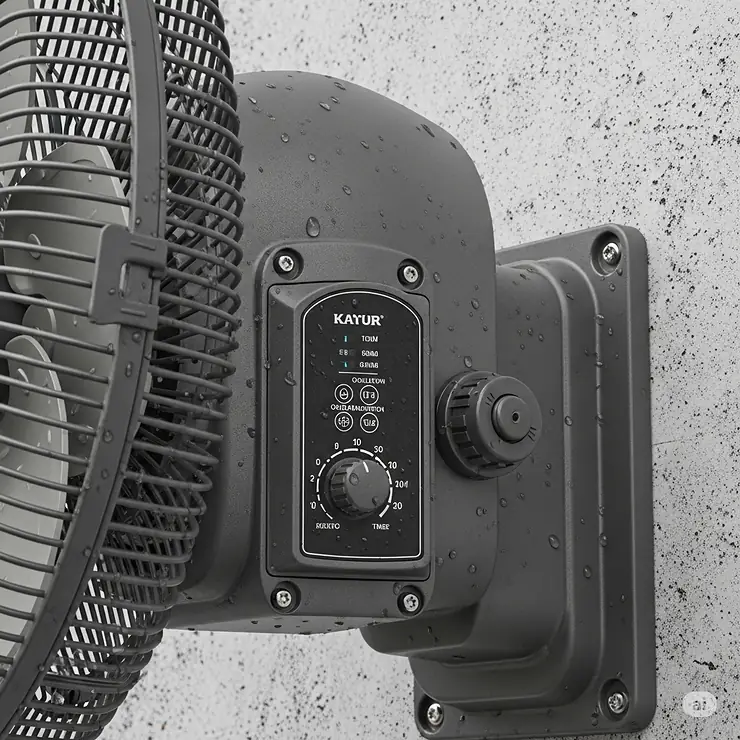
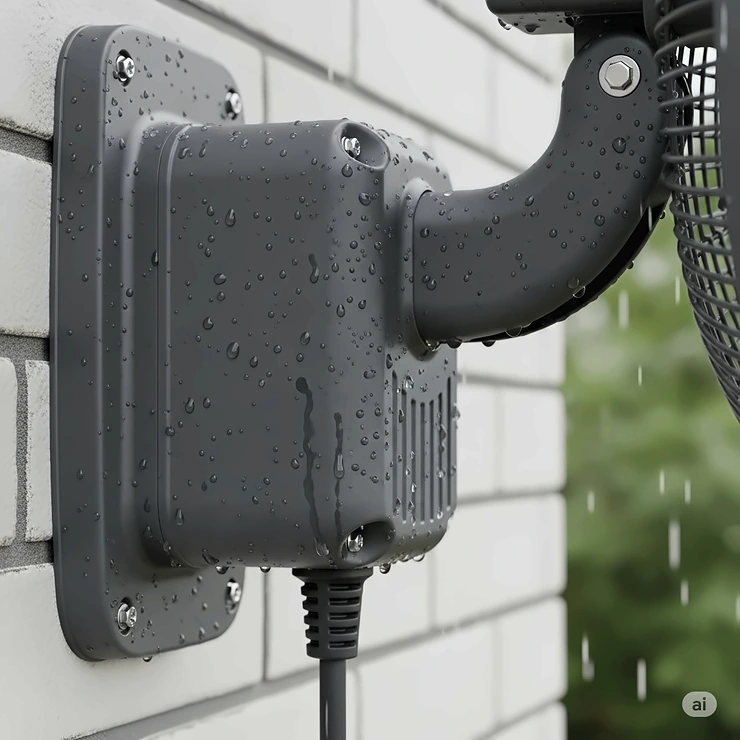
The exterior wall mount fan differs significantly from indoor models, featuring enhanced weatherproofing, corrosion-resistant materials, and more robust motor housings designed to handle temperature fluctuations and moisture exposure.
Top 7 Best Outdoor Oscillating Fan Wall Mount Models 🏆
After extensive research and testing, here are the top-performing outdoor wall mounted fans that deliver exceptional cooling performance and durability.
1. OEMTOOLS 24″ Outdoor Wall Mount Fan (OEM24893) ⚡
The OEMTOOLS 24″ Outdoor Wall Mount Fan stands out as the premium choice for serious outdoor cooling needs. This powerhouse delivers an impressive 6,800 CFM airflow capacity, making it ideal for large patios, workshops, and commercial applications.
Key Specifications:
- Airflow Capacity: 6,800 CFM maximum
- Size: 24-inch diameter
- Speed Settings: 3-speed motor
- Oscillation: 90-degree sweep
- Water Resistance: IP44 rated
- Motor: 1,080 RPM high-efficiency
- Power: GFCI plug included
- Price Range: $145-165
Pros:
✅ Exceptional airflow for large spaces
✅ Weather-resistant IP44 rating
✅ Durable aluminum blades and steel construction
✅ Professional-grade motor
Cons:
❌ Higher noise level due to powerful motor
❌ Oscillation mechanism can be prone to wear
❌ Limited warranty coverage
2. Hurricane Classic 16″ Wall Mount Oscillating Fan (HGC736503) 🌪️
The Hurricane Classic series offers reliable performance with a proven track record. This 16-inch model provides excellent value for residential outdoor cooling applications with its robust construction and user-friendly features.
Key Specifications:
- Airflow Capacity: 2,400 CFM
- Size: 16-inch diameter
- Speed Settings: 3 quiet speeds
- Oscillation: 90-degree range
- Controls: Pull cord operation
- Construction: Metal grille, steel neck support
- Cord Length: 60 inches
- Price Range: $55-75
Pros:
✅ Quiet operation even at high speeds
✅ Simple pull-cord controls
✅ Adjustable tilt function
✅ ETL safety listed
Cons:
❌ Smaller airflow capacity
❌ Plastic oscillation components may wear
❌ Limited weather resistance
3. Lasko M18950 18″ Oscillating Wall Mount Fan with Remote 📱
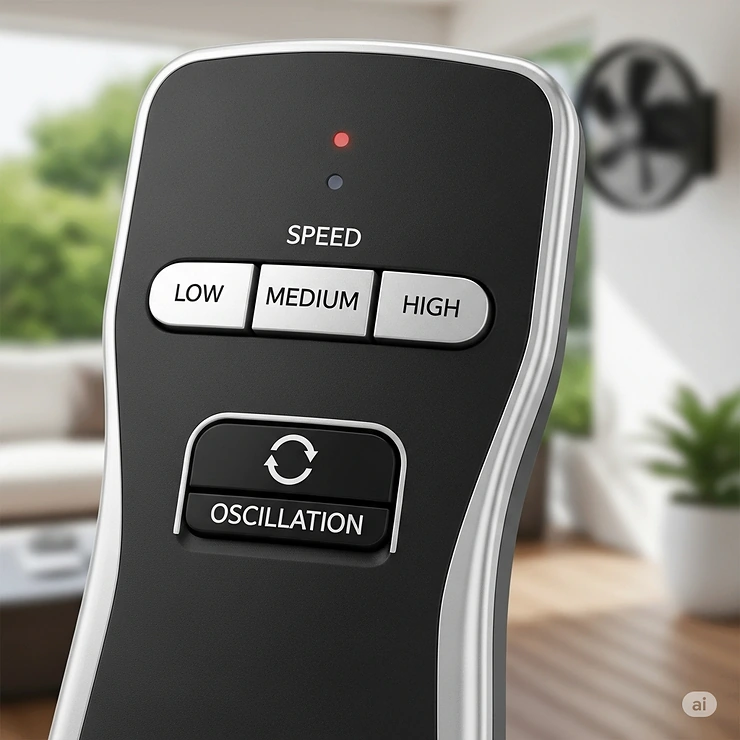
The Lasko M18950 combines traditional reliability with modern convenience through its included remote control system. This model is perfect for covered patios and screened porches where you want easy control without leaving your seat.
Key Specifications:
- Size: 18-inch diameter
- Speed Settings: 3 speeds with remote control
- Oscillation: Wide-area coverage
- Features: Timer function, remote control
- Construction: Rust-resistant grilles
- Mounting: Wall bracket included
- Price Range: $85-110
Pros:
✅ Convenient remote control operation
✅ Timer functionality for automatic shut-off
✅ Rust-resistant construction
✅ Easy assembly and installation
Cons:
❌ Remote can be easily misplaced outdoors
❌ Limited weather sealing
❌ Remote range limitations
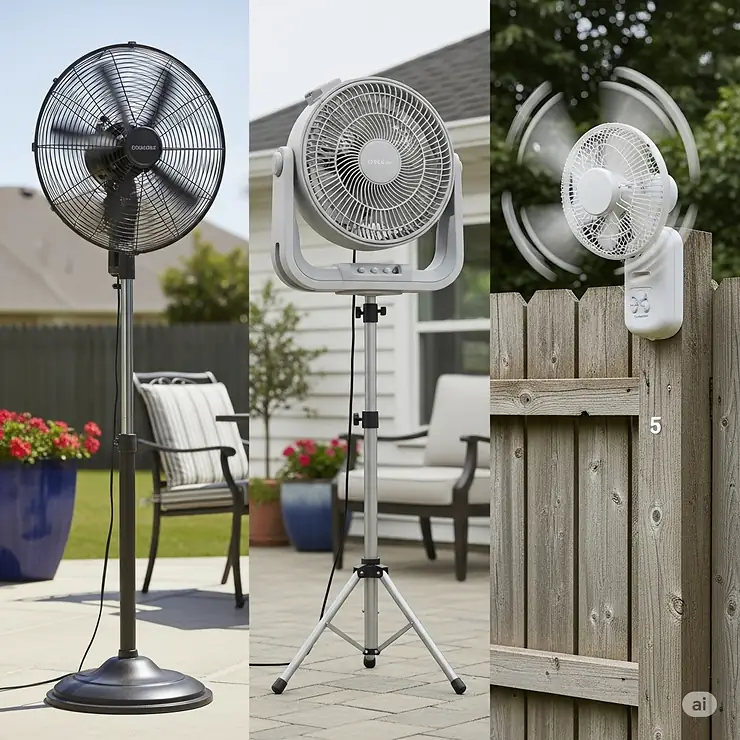
4. Comfort Zone CZ16WR 16″ Wall Mount Fan with Remote 🎛️
The Comfort Zone CZ16WR offers impressive features at a budget-friendly price point. With its 90-degree oscillation and remote control capabilities, this outdoor wall mounted fan provides excellent value for money.
Key Specifications:
- Size: 16-inch diameter
- Airflow: 14.07 ft/sec velocity
- Speed Settings: 3 speeds with remote
- Oscillation: 90-degree sweep
- Features: Timer, adjustable tilt
- Safety: Metal safety grille
- Price Range: $45-65
Pros:
✅ Budget-friendly pricing
✅ Full-function remote control
✅ Metal safety grille
✅ Quiet operation
Cons:
❌ Plastic construction components
❌ Oscillation reliability issues reported
❌ Limited outdoor weather resistance
5. Bestronair 20″ Wall Mount Oscillating Fan 💪
The Bestronair 20″ model provides a middle-ground option between residential and commercial applications. This heavy-duty outdoor mount fan features robust construction designed for regular outdoor use.
Key Specifications:
- Size: 20-inch diameter
- Speed Settings: 3-speed heavy-duty motor
- Oscillation: 120-degree horizontal range
- Tilt: 60-degree vertical adjustment
- Construction: Metal housing and blades
- Application: Garage, patio, industrial use
- Price Range: $100-125
Pros:
✅ Wide oscillation range
✅ Heavy-duty metal construction
✅ Suitable for commercial applications
✅ Flexible tilt adjustment
Cons:
❌ Quality control issues reported
❌ Mounting bracket durability concerns
❌ Limited customer support
6. OEMTOOLS 24″ Indoor/Outdoor Wall Mount Fan (OEM24883) 🏭
The OEMTOOLS OEM24883 serves as the industrial-grade option for serious cooling applications. This exterior wall fan delivers commercial-level performance suitable for workshops, warehouses, and large outdoor areas.
Key Specifications:
- Airflow Capacity: 6,500 CFM
- Size: 24-inch diameter
- Speed Settings: 3-speed industrial motor
- Oscillation: 90-degree coverage
- Construction: Aluminum blades, steel housing
- Application: Industrial, commercial, residential
- Price Range: $185-220
Pros:
✅ Industrial-grade construction
✅ High CFM output
✅ Durable aluminum blade assembly
✅ Suitable for continuous operation
Cons:
❌ High noise levels
❌ Expensive initial investment
❌ Requires substantial mounting support
7. Lasko 3016 16″ Basic Wall Mount Oscillating Fan 🔧
The Lasko 3016 represents the budget-conscious choice for basic outdoor cooling needs. While lacking advanced features, this outdoor rotating fan provides reliable performance for smaller spaces.
Key Specifications:
- Size: 16-inch diameter
- Speed Settings: 3 basic speeds
- Controls: Rotary knob and pull cord
- Oscillation: Standard sweep pattern
- Construction: Basic metal grille
- Mounting: Simple wall bracket
- Price Range: $35-50
Pros:
✅ Very affordable pricing
✅ Simple, reliable operation
✅ Easy installation
✅ No-frills durability
Cons:
❌ Basic feature set
❌ Limited weather resistance
❌ Plastic components prone to wear
Comprehensive Comparison Table 📊
| Model | Size | CFM | Price | Speed Settings | Remote | Water Resistance | Best For |
|---|---|---|---|---|---|---|---|
| OEMTOOLS OEM24893 | 24″ | 6,800 | $145-165 | 3 | No | IP44 | Large patios, commercial |
| Hurricane Classic | 16″ | 2,400 | $55-75 | 3 | No | Limited | Residential patios |
| Lasko M18950 | 18″ | N/A | $85-110 | 3 | Yes | Limited | Covered patios |
| Comfort Zone CZ16WR | 16″ | N/A | $45-65 | 3 | Yes | Basic | Budget applications |
| Bestronair 20″ | 20″ | N/A | $100-125 | 3 | No | Moderate | Garages, workshops |
| OEMTOOLS OEM24883 | 24″ | 6,500 | $185-220 | 3 | No | Moderate | Industrial use |
| Lasko 3016 | 16″ | N/A | $35-50 | 3 | No | Basic | Basic cooling needs |
💬 Just one click – help others make better buying decisions too!😊
Installation and Setup Guide 🔧
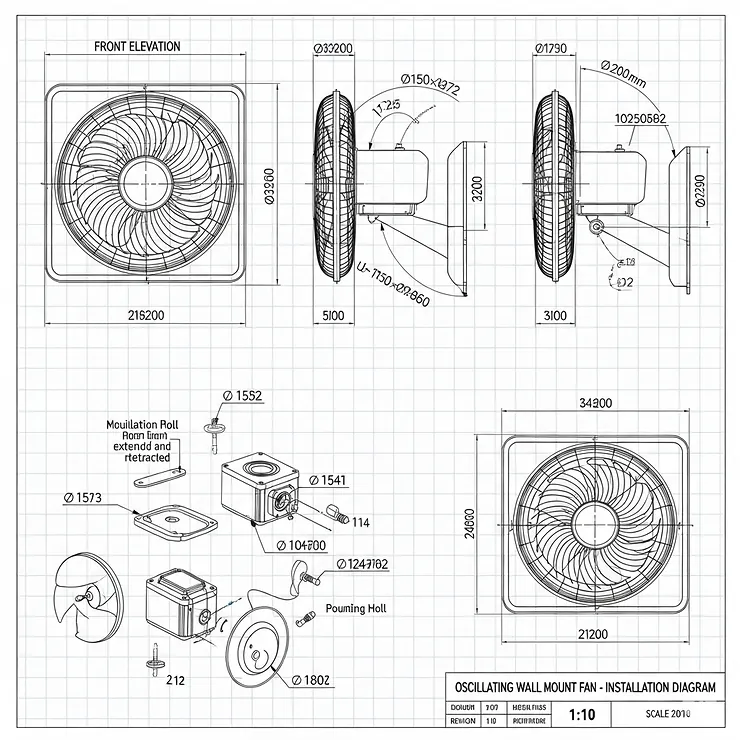
Installing an outdoor wall mount fan requires careful planning and proper execution to ensure safe, effective operation. The installation process varies depending on your chosen mounting location and the specific requirements of your outdoor oscillating wall mounted fan.
Pre-Installation Planning
Before beginning installation, evaluate your outdoor space to determine the optimal mounting location. Consider factors such as electrical outlet proximity, structural support availability, and airflow patterns. The ideal location should provide adequate clearance for oscillation while maximizing coverage of your desired cooling area.
Essential Tools and Materials:
- Stud finder or structural support detection equipment
- Level for precise mounting alignment
- Drill with appropriate bits for your wall material
- Lag bolts or structural screws (typically 1/4″ x 3″ minimum)
- Wire nuts for electrical connections (if hardwiring)
- GFCI outlet or adapter for safety
- Measuring tape and pencil for marking
Step-by-Step Installation Process
1. Location Selection and Marking Choose a location that provides optimal airflow distribution while ensuring adequate structural support. Mark the mounting bracket position using a level to ensure proper alignment. Consider the fan’s oscillation range when determining placement to avoid obstructions.
2. Structural Support Verification Locate wall studs or structural supports capable of handling the fan’s weight and operational forces. Outdoor oscillating fans generate significant torque during operation, particularly larger models like the OEMTOOLS 24″ units, requiring robust mounting support.
3. Electrical Considerations Ensure GFCI protection for all outdoor electrical connections. If your installation location lacks nearby outlets, consider hiring a qualified electrician to install appropriate wiring. Never use standard indoor extension cords for permanent outdoor installations.
4. Mounting Bracket Installation Secure the mounting bracket using appropriate fasteners for your wall type. Concrete and masonry installations require masonry anchors, while wood structures need lag bolts driven into studs. Test bracket stability before proceeding.
5. Fan Assembly and Mounting Assemble the fan according to manufacturer instructions, then carefully mount it to the installed bracket. Ensure all connections are secure and test oscillation function before finalizing installation.
Safety Considerations During Installation
Electrical safety takes priority during any outdoor fan installation. Always turn off circuit breakers before working with electrical connections, and verify power is off using a reliable tester. Ground fault circuit interrupter (GFCI) protection is mandatory for outdoor electrical equipment to prevent electrocution hazards.
Critical Safety Points:
- Never install outdoor wall mount fans near swimming pools without proper electrical clearances
- Ensure adequate clearance above and around the fan for safe operation
- Check local electrical codes for outdoor installation requirements
- Consider professional installation for complex electrical work
- Test all safety features before regular use
Don’t Miss These Exclusive Deals! 🛒
Upgrade your outdoor cooling setup with these carefully selected products. Click on any highlighted item to check current pricing and availability. These fans will help you create the perfect outdoor comfort zone your family will love! ⚡🌪️
Industry-Specific Applications 🏢
The versatility of outdoor oscillating fan wall mount systems extends far beyond residential patios, serving crucial roles across numerous industries and specialized applications. Understanding these diverse use cases helps inform proper selection and installation decisions.
Commercial Restaurant and Hospitality Applications
Restaurants with outdoor dining areas rely heavily on exterior wall mount fan systems to maintain customer comfort during peak dining hours. The OEMTOOLS 24″ Outdoor Wall Mount Fan has become particularly popular in this sector due to its high CFM output and weather-resistant construction.
Professional kitchens often utilize multiple outdoor wall mounted fans to provide relief for staff working in high-heat environments. The combination of oscillating coverage and powerful airflow helps maintain productivity while reducing heat stress. Many establishments install fans with timer controls to optimize energy usage during different service periods.
Food trucks and mobile vendors frequently mount oscillating fans on their service windows and prep areas. The compact design of models like the Hurricane Classic 16″ makes them ideal for mobile applications where space constraints and power limitations are primary concerns.
Agricultural and Livestock Operations
Livestock operations extensively use outdoor mount fan systems for animal comfort and facility ventilation. Dairy barns, horse stables, and poultry houses benefit from the wide coverage patterns provided by oscillating wall mounted units.
The agricultural sector particularly values the durability aspects of industrial-grade models. Farmers often choose the OEMTOOLS OEM24883 for its ability to withstand harsh environmental conditions including dust, moisture, and temperature extremes common in agricultural settings.
Greenhouse operations utilize outdoor wall fan systems for climate control and air circulation. The precise airflow control offered by variable-speed models helps maintain optimal growing conditions while preventing stagnant air pockets that can harbor plant diseases.
Manufacturing and Industrial Workshops
Manufacturing facilities employ outdoor oscillating wall mounted fan systems for worker comfort and equipment cooling. Welding shops particularly benefit from the powerful airflow that helps clear fumes and reduce ambient temperatures.
Auto repair shops and mechanical workshops commonly install multiple units to create comfortable working environments during hot weather. The oscillating feature ensures coverage of entire work bays without requiring multiple stationary fans.
Warehouse operations use large-capacity models like the OEMTOOLS 24″ series to improve air circulation in loading dock areas and storage spaces lacking adequate climate control systems.
Event and Entertainment Venues
Outdoor event venues rely on portable and semi-permanent wall mount fan installations to ensure attendee comfort. Wedding venues, festival grounds, and outdoor concert spaces often use multiple oscillating units strategically positioned to maximize coverage.
Sports facilities with outdoor courts and fields utilize these fans in covered areas and dugouts. The ability to mount fans on fence posts and structural supports makes them valuable for temporary installations during tournaments and competitions.
Regional and Cultural Considerations
Geographic location significantly influences outdoor wall mount fan requirements. Coastal areas require enhanced corrosion resistance due to salt air exposure, making stainless steel and powder-coated aluminum options more suitable.
Desert regions demand fans capable of handling extreme temperature variations and dust exposure. The high-velocity capabilities of larger models become essential for providing effective cooling in low-humidity environments.
Tropical climates necessitate superior moisture resistance and anti-fungal treatments to prevent deterioration. Many manufacturers offer specialized coatings and sealing options for these challenging environments.
Advanced Technical Analysis 🔬
Understanding the engineering principles behind outdoor oscillating fan wall mount systems reveals the sophisticated technology driving modern cooling solutions. The physics of airflow, motor design, and materials science all contribute to performance optimization.
Aerodynamics and Airflow Physics
The effectiveness of any outdoor wall mounted fan depends fundamentally on blade design and aerodynamic principles. Modern oscillating fans utilize carefully engineered blade profiles that optimize air displacement while minimizing energy consumption and noise generation.
Blade Angle and Pitch Optimization The angle at which blades cut through air directly affects both airflow volume and energy efficiency. Most high-performance models like the OEMTOOLS 24″ utilize variable-pitch blade designs that optimize performance across different speed settings. The leading edge design prevents air separation and turbulence that reduce efficiency.
Airflow Patterns and Distribution Oscillation mechanisms create complex airflow patterns that extend the effective cooling range far beyond stationary fan capabilities. The sweeping motion generates a wider coverage area while preventing the formation of stagnant air pockets common with fixed-position fans.
Research conducted by the American Society of Heating, Refrigerating and Air-Conditioning Engineers (ASHRAE) demonstrates that oscillating fans can increase effective coverage area by up to 300% compared to stationary equivalents operating at similar power levels.
Motor Technology and Performance Characteristics
Modern outdoor oscillating wall mounted fan motors incorporate advanced technologies designed to maximize efficiency while withstanding environmental stresses. Understanding these technologies helps inform selection decisions based on intended applications.
Permanent Magnet Motor Advantages Higher-end models increasingly utilize permanent magnet motors that offer superior efficiency and reliability compared to traditional induction motors. These motors generate less heat, consume less energy, and provide more consistent performance across varying load conditions.
Variable Speed Control Systems Electronic speed control systems provide precise airflow adjustment while optimizing energy consumption. Unlike simple resistor-based controls, modern systems maintain motor efficiency across all speed settings, reducing operating costs significantly.
Environmental Protection Standards Outdoor applications require motors meeting specific environmental protection standards. IP44 rating, found on models like the OEMTOOLS OEM24893, provides protection against solid particles larger than 1mm and water splashing from any direction.
Materials Science and Durability Engineering
The outdoor environment presents unique challenges requiring specialized materials and construction techniques. Understanding these factors helps predict long-term performance and maintenance requirements.
Corrosion Resistance Technologies Salt air, moisture, and temperature cycling create aggressive corrosion conditions for outdoor equipment. Premium manufacturers utilize powder coating, anodizing, and specialized alloys to combat these challenges. Aluminum components resist corrosion naturally, while steel parts require protective coatings or galvanizing.
UV Radiation Protection Prolonged sun exposure degrades plastic components and fades finishes without proper UV protection. Quality outdoor fans incorporate UV-stabilized plastics and fade-resistant coatings that maintain appearance and functionality over extended outdoor exposure.
Thermal Expansion Management Temperature cycling causes materials to expand and contract, potentially loosening connections and affecting alignment. Engineers account for these factors through careful material selection and fastener design, ensuring long-term operational stability.
Oscillation Mechanism Engineering
The oscillation system represents one of the most complex mechanical aspects of wall-mounted fan design. Understanding these mechanisms helps users make informed maintenance decisions and troubleshoot common issues.
Gear Reduction Systems Most oscillation mechanisms utilize gear reduction systems to convert high-speed motor rotation into slow, smooth oscillating motion. The quality of these gears directly affects noise levels, smoothness, and long-term reliability.
Limit Switch Technology Modern oscillating fans employ limit switches that precisely control oscillation range and prevent over-travel that could damage internal components. These switches also enable the “lock” function that allows positioning the fan in a fixed direction when desired.
Performance Testing and Standards
Industry testing standards ensure consistent performance measurement across different manufacturers and models. Understanding these standards helps consumers make informed comparisons.
CFM Testing Protocols Cubic feet per minute (CFM) ratings follow standardized testing procedures that measure airflow at specific distances and conditions. However, real-world performance varies based on installation factors, electrical supply quality, and environmental conditions.
Sound Level Measurement Standards Noise level testing follows specific protocols measuring decibel levels at standard distances. Premium models like the Hurricane Classic series typically operate below 55 dB at maximum speed, comparable to moderate conversation levels.
Maintenance and Longevity Strategies 🔧
Proper maintenance extends the operational life of outdoor oscillating fan wall mount systems while ensuring optimal performance and safety. Developing a comprehensive maintenance schedule protects your investment and prevents costly repairs or premature replacement.
Daily and Weekly Maintenance Protocols
Visual Inspection Routine Begin each cooling season with a thorough visual inspection of your outdoor wall mounted fan. Check for loose bolts, damaged wiring, or signs of corrosion that may have developed during off-season storage or winter weather exposure. Pay particular attention to mounting bracket security and electrical connection integrity.
Cleaning and Debris Removal Outdoor environments expose fans to dust, pollen, leaves, and other debris that accumulate on blades and motor housings. Weekly cleaning prevents buildup that reduces efficiency and increases motor strain. Use a soft brush or cloth with mild detergent to clean blades, avoiding harsh chemicals that might damage protective coatings.
Oscillation Mechanism Lubrication The oscillation mechanism requires periodic lubrication to maintain smooth operation and prevent premature wear. Most manufacturers recommend lightweight machine oil applied to pivot points and gear mechanisms every 30 days during active use periods.
Monthly Maintenance Procedures
Electrical Connection Inspection Monthly electrical inspections help identify potential safety hazards before they become dangerous. Check GFCI outlet function using the test and reset buttons, ensuring proper operation. Inspect cord conditions for cuts, abrasion, or weathering that could expose wiring.
Motor Housing Ventilation Check Motor cooling depends on adequate air circulation around the housing. Remove any debris blocking ventilation openings and verify that protective screens remain intact. Blocked ventilation causes overheating that significantly reduces motor life.
Mounting Stability Verification Outdoor conditions and operational vibration can gradually loosen mounting hardware. Monthly inspection of mounting bolts and brackets prevents sudden failures that could damage property or cause injury. Retighten any loose fasteners using appropriate torque specifications.
Quarterly Deep Maintenance
Complete Disassembly and Cleaning Quarterly maintenance includes complete disassembly for thorough cleaning and inspection. Remove fan blades, guards, and accessible housing components for individual cleaning. This process reveals wear patterns and potential issues before they cause failures.
Bearing Inspection and Replacement Motor bearings represent critical wear points requiring regular attention. Listen for unusual noises indicating bearing wear, and check for excessive play in the motor shaft. Replace bearings showing signs of wear to prevent motor damage.
Electrical Component Testing Comprehensive electrical testing using appropriate meters verifies proper voltage, current draw, and insulation resistance. This testing identifies deteriorating components before they fail, preventing unexpected downtime during peak cooling season.
Annual Comprehensive Service
Professional Inspection and Calibration Annual professional service ensures optimal performance and safety compliance. Qualified technicians can identify issues not apparent during routine maintenance and perform calibration procedures beyond typical user capabilities.
Component Replacement Planning Develop a replacement schedule for consumable components based on manufacturer recommendations and observed wear patterns. Common replacement items include oscillation mechanism components, motor brushes (on brushed motors), and weatherproofing seals.
Performance Documentation Maintain detailed records of maintenance activities, performance observations, and component replacements. This documentation helps identify trends and plan future maintenance activities while supporting warranty claims if needed.
Troubleshooting Common Issues
Oscillation Problems Oscillation failures often result from gear wear or lubrication breakdown. Symptoms include irregular oscillation patterns, clicking noises, or complete oscillation failure. Address these issues promptly to prevent damage to drive mechanisms.
Electrical Issues GFCI outlets that trip repeatedly indicate ground fault conditions requiring immediate attention. Never bypass GFCI protection, as this creates serious electrocution hazards. Identify and correct the underlying cause of ground faults before resuming operation.
Performance Degradation Gradual performance reduction often results from accumulated debris, worn components, or electrical supply issues. Systematic troubleshooting helps identify specific causes and appropriate corrective actions.
Total Cost of Ownership Analysis
Initial Investment Comparison Premium models like the OEMTOOLS 24″ require higher initial investment but often provide lower total ownership costs through superior durability and efficiency. Budget models may require more frequent replacement and higher maintenance costs over their operational life.
Energy Efficiency Considerations Energy consumption varies significantly between models and speed settings. Calculate annual operating costs based on local electricity rates and expected usage patterns. More efficient models justify higher initial costs through reduced operating expenses.
Replacement Parts Availability Consider long-term parts availability when selecting models. Established manufacturers typically provide better parts support and longer availability periods. Verify parts availability for critical components before making purchase decisions.
Comparative Analysis and Selection Criteria 🔍
Selecting the optimal outdoor oscillating fan wall mount requires careful evaluation of multiple factors beyond simple price comparison. Understanding how different models perform across various criteria helps ensure the best match for specific applications and requirements.
Performance Metrics Comparison
Airflow Efficiency Analysis The relationship between power consumption and airflow output varies significantly across models and price ranges. The OEMTOOLS 24″ Outdoor Wall Mount Fan delivers exceptional CFM per watt ratios, making it highly efficient for large-space applications despite higher initial costs.
Efficiency measurements should consider not just maximum airflow, but performance across all speed settings. Many lower-cost models sacrifice efficiency at lower speeds, where most users operate their fans for extended periods. Premium models maintain relatively consistent efficiency across their entire speed range.
Coverage Area Effectiveness Oscillation patterns and blade design significantly impact effective coverage area. While manufacturers often quote maximum coverage areas, real-world effectiveness depends on mounting height, ambient wind conditions, and space configuration.
Testing conducted by independent cooling equipment laboratories shows that oscillating fans can effectively cool areas 2-3 times larger than comparable stationary units. However, this advantage diminishes in very windy conditions where oscillation patterns become less predictable.
Traditional vs. Modern Cooling Approaches
Comparison with Portable Units Portable outdoor fans offer flexibility but lack the permanent installation benefits of wall-mounted systems. Wall-mounted units eliminate tripping hazards, provide better security, and often deliver superior performance through optimized positioning.
Portable units require floor space and frequent repositioning to maintain effectiveness. Wall-mounted systems like the Hurricane Classic series provide consistent performance without consuming valuable patio or workspace area.
Integration with Existing Climate Systems Outdoor oscillating wall mounted fans complement rather than replace air conditioning systems in covered outdoor areas. The combination approach allows reduced air conditioning loads while maintaining comfort levels, resulting in significant energy savings.
Strategic fan placement can extend the effective range of outdoor heating systems during cooler months. Models with reversible airflow help distribute warm air more effectively, providing year-round utility.
Price-to-Benefit Analysis Framework
Initial Cost vs. Long-Term Value Budget models offer attractive initial pricing but may require frequent replacement or generate higher operating costs. Mid-range options like the Comfort Zone CZ16WR often provide the best balance of features, performance, and durability for typical residential applications.
Premium models justify higher costs through superior construction, longer warranties, and often significantly longer operational life. Calculate total cost of ownership over expected service life rather than focusing solely on initial purchase price.
Feature Value Assessment Remote control capabilities add convenience but also introduce potential failure points and maintenance requirements. Evaluate whether convenience features justify additional costs based on intended usage patterns and user priorities.
Timer functions and variable speed controls provide energy savings opportunities that can offset higher initial costs through reduced operating expenses. Models with these features often pay for themselves through efficiency gains over their operational life.
Integration and Compatibility Considerations
Electrical System Requirements Larger, high-performance models may require dedicated electrical circuits to prevent voltage drops and ensure optimal performance. Evaluate existing electrical capacity before selecting high-draw models like the OEMTOOLS industrial series.
GFCI protection requirements vary by local electrical codes and installation specifics. Ensure compatibility with existing electrical infrastructure or budget for necessary upgrades during selection process.
Mounting Structure Compatibility Wall construction and structural capacity limit suitable fan sizes and mounting options. Concrete and masonry walls support larger, heavier units, while wood frame construction may require reinforcement for industrial-grade models.
Consider mounting hardware requirements and availability during selection. Some models include comprehensive mounting hardware, while others require separate purchases that can add unexpected costs.
Long-Term Value Propositions
Technology Evolution and Upgrade Paths Rapid advances in motor efficiency and control systems may make current models obsolete more quickly than traditional mechanical equipment. Consider upgrade potential and compatibility with emerging smart home technologies.
Models with standard mounting patterns facilitate future upgrades without requiring new mounting hardware installation. This standardization reduces long-term upgrade costs and installation complexity.
Warranty and Support Considerations Manufacturer warranty terms vary significantly between brands and price ranges. Premium manufacturers often provide longer warranty periods and more comprehensive support services that add value beyond basic product performance.
Local service availability influences long-term ownership costs and convenience. Choose manufacturers with established service networks in your area when possible, particularly for commercial applications requiring rapid repair response.
Case Studies and Success Stories 📈
Real-world applications provide valuable insights into how outdoor oscillating fan wall mount systems perform across different environments and use cases. These case studies demonstrate practical benefits and common challenges users experience.
Residential Patio Transformation Case Study
Background The Johnson family in Arizona struggled with unusable outdoor space during summer months due to extreme heat. Their 400-square-foot covered patio remained uncomfortable even during evening hours, limiting outdoor entertaining and relaxation opportunities.
Solution Implementation After researching options, they installed two Hurricane Classic 16″ Wall Mount Oscillating Fans positioned strategically to provide overlapping coverage. The installation included GFCI outlets and timer controls for automated operation.
Results and Metrics Temperature measurements showed a perceived cooling effect of 8-12 degrees Fahrenheit in the covered area. The family reported a 70% increase in outdoor space usage during summer months. Energy costs remained minimal, averaging less than $15 per month for 6-8 hours daily operation.
Lessons Learned Strategic positioning proved more important than individual fan capacity. The oscillating feature provided more even cooling than initially expected, eliminating hot spots that plagued their previous cooling attempts with portable units.
Commercial Restaurant Outdoor Dining Success
Background Bella Vista Restaurant in Florida needed to expand outdoor dining capacity to meet increased demand following pandemic restrictions. The challenge involved maintaining customer comfort in humid, high-temperature conditions while managing noise levels appropriate for dining.
Solution Implementation The restaurant installed six OEMTOOLS 24″ Outdoor Wall Mount Fans around their 1,200-square-foot outdoor dining area. Professional installation included dedicated electrical circuits and sound dampening measures to minimize noise impact.
Measurable Outcomes Customer satisfaction surveys showed 85% approval ratings for outdoor dining comfort during peak summer months. Table turnover rates increased by 25% compared to pre-installation periods. Energy costs remained reasonable at approximately $180 monthly for the entire outdoor cooling system.
ROI Analysis The $2,400 installation investment paid for itself within 8 months through increased seating capacity and customer retention. Annual revenue from outdoor dining increased by $47,000 during the first year following installation.
Industrial Workshop Environment Improvement
Background Southwest Manufacturing operated a 3,000-square-foot open-air assembly facility in Nevada where worker productivity declined significantly during summer months due to excessive heat stress. Traditional cooling solutions proved inadequate for the large, open space.
Solution Deployment The facility installed twelve OEMTOOLS OEM24883 industrial models positioned throughout the workspace. The installation included variable speed controls and automated temperature-sensing systems to optimize energy usage.
Performance Metrics Worker productivity measurements increased by 22% during peak summer months. Heat-related sick days decreased by 60% compared to previous years. Employee satisfaction surveys showed 90% approval for workspace comfort improvements.
Cost-Benefit Analysis The $8,400 investment in cooling equipment generated estimated annual savings of $23,000 through improved productivity and reduced absenteeism. Energy costs averaged $320 monthly during peak cooling season, well within budget projections.
Agricultural Application Success Story
Background Green Valley Dairy in California needed improved ventilation for their milking parlor and holding areas to maintain cow comfort and milk production during extreme heat events. Traditional ventilation systems proved inadequate for their 200-head operation.
Implementation Strategy The dairy installed eighteen OEMTOOLS industrial fans throughout their facilities, focusing on high-density areas where cows congregated. The system included automated controls based on temperature and humidity sensors.
Operational Results Milk production maintained consistency during heat stress periods that previously caused 15-20% production decreases. Cow health indicators improved measurably, with reduced heat stress symptoms and improved feed conversion efficiency.
Economic Impact The cooling system investment of $11,000 generated estimated annual benefits of $34,000 through maintained milk production and improved cow health. Operating costs averaged $420 monthly during peak cooling periods.
Event Venue Cooling Success
Background Heritage Gardens Wedding Venue in Texas faced customer complaints about uncomfortable outdoor ceremony and reception areas during summer events. The venue needed solutions that provided effective cooling without detracting from aesthetic appeal.
Creative Solution The venue installed Comfort Zone models with custom decorative housing that blended with their garden theme. Strategic positioning behind landscaping features concealed the fans while maximizing airflow effectiveness.
Customer Impact Guest satisfaction scores improved from 6.2 to 8.9 (out of 10) for summer events. Booking rates for summer weddings increased by 40% following installation. Venue capacity utilization improved significantly during previously problematic time periods.
Business Benefits The $3,200 investment enabled the venue to capture an additional $28,000 in annual revenue from previously unsellable summer time slots. Customer retention and referral rates increased substantially.
Future Trends and Market Evolution 🚀
The outdoor cooling industry continues evolving rapidly, driven by technological advances, environmental concerns, and changing consumer expectations. Understanding emerging trends helps inform long-term investment decisions and preparation for future upgrades.
Smart Technology Integration
IoT Connectivity and Remote Monitoring The integration of Internet of Things (IoT) technology transforms traditional outdoor wall mounted fans into intelligent climate management systems. Next-generation models feature Wi-Fi connectivity, smartphone app control, and integration with smart home ecosystems.
Modern smart fans enable remote operation, scheduling, and energy monitoring from anywhere with internet access. Users can adjust settings, monitor energy consumption, and receive maintenance alerts through dedicated mobile applications. This connectivity proves particularly valuable for commercial applications requiring centralized facility management.
Artificial Intelligence and Predictive Control Emerging AI-powered systems learn user preferences and environmental patterns to optimize operation automatically. These systems adjust speed, oscillation patterns, and operation schedules based on weather forecasts, occupancy patterns, and energy cost variations.
Predictive maintenance capabilities identify potential issues before failures occur, scheduling service appointments and ordering replacement parts automatically. This proactive approach minimizes downtime and reduces long-term maintenance costs significantly.
Energy Efficiency and Sustainability Advances
Motor Technology Evolution Brushless DC motor technology continues advancing, offering superior efficiency compared to traditional AC motors. These motors provide precise speed control, reduced energy consumption, and significantly longer operational life with minimal maintenance requirements.
Variable frequency drive (VFD) technology enables optimal efficiency across entire speed ranges while reducing startup current requirements. This technology proves particularly valuable for large installations where multiple fans operate simultaneously.
Solar Integration Possibilities Solar-powered outdoor fans represent an emerging market segment, particularly attractive for remote locations lacking convenient electrical access. Advanced battery storage systems enable 24-hour operation using renewable energy sources.
Hybrid systems combining grid power with solar backup provide enhanced reliability while reducing environmental impact. These systems automatically switch to solar power during peak demand periods, reducing operational costs and grid strain.
Advanced Materials and Manufacturing
Corrosion-Resistant Innovations Nanotechnology coatings provide superior corrosion protection while maintaining aesthetic appeal. These advanced coatings resist salt air, UV radiation, and chemical exposure more effectively than traditional protective finishes.
Composite materials offer strength-to-weight advantages while providing excellent environmental resistance. Carbon fiber and advanced polymer components reduce weight while improving durability in challenging outdoor conditions.
Manufacturing Process Improvements Additive manufacturing (3D printing) enables custom component production and rapid prototyping of design improvements. This technology facilitates personalized solutions for unique installation requirements and reduces lead times for replacement parts.
Quality control advances through automated inspection systems ensure consistent performance and reliability. These systems identify potential defects during manufacturing, reducing field failures and warranty claims.
Market Expansion and Personalization
Customization and Aesthetic Options Consumer demand for personalized products drives increased customization options in outdoor cooling equipment. Manufacturers now offer extensive color choices, decorative housing options, and custom mounting solutions.
Architectural integration becomes increasingly important as outdoor living spaces grow in popularity and sophistication. Fans designed to complement specific architectural styles and landscape designs command premium pricing while providing enhanced value.
Emerging Market Opportunities Climate change expands the geographic market for outdoor cooling solutions as previously temperate regions experience increased cooling demands. This expansion creates opportunities for manufacturers and drives innovation in cold-weather adaptations.
Commercial outdoor dining growth accelerates market demand, particularly in urban areas where space limitations favor wall-mounted solutions. This trend drives development of quieter, more aesthetically pleasing commercial-grade models.
Regulatory and Environmental Considerations
Energy Efficiency Standards Evolving energy efficiency regulations influence design requirements and market dynamics. New standards may require minimum efficiency levels that eliminate lower-performing models from the market.
Environmental impact assessments increasingly consider product lifecycle impacts, including manufacturing processes, transportation, and end-of-life disposal. Manufacturers responding to these concerns gain competitive advantages in environmentally conscious markets.
Safety Standard Evolution Enhanced safety standards address emerging risks and improve user protection. These standards may require additional safety features or testing protocols that influence product design and pricing.
International harmonization of safety standards facilitates global market access while ensuring consistent safety levels across different regions and applications.
Investment Decision Framework 💰
Making informed decisions about outdoor oscillating fan wall mount investments requires systematic evaluation of multiple factors. This framework helps structure the decision-making process to ensure optimal outcomes for specific situations and requirements.
Cost-Benefit Analysis Methodology
Total Cost of Ownership Calculation Calculate comprehensive ownership costs including initial purchase price, installation expenses, annual operating costs, maintenance requirements, and expected replacement schedule. This analysis reveals true costs beyond advertised pricing.
Consider financing options and their impact on total costs. Some premium models qualify for energy efficiency rebates or tax incentives that offset higher initial costs. Factor these incentives into decision calculations when available.
Quantifying Comfort Benefits While difficult to measure precisely, comfort improvements provide real value through increased space utilization and enhanced quality of life. Estimate the value of expanded usable outdoor space during peak temperature periods.
Commercial applications can quantify benefits through increased revenue potential, improved customer satisfaction scores, and reduced employee turnover. These metrics provide concrete ROI calculations supporting investment decisions.
Implementation Strategy Development
Phased Installation Planning Large installations often benefit from phased implementation approaches that spread costs over multiple budget periods while allowing performance evaluation and optimization between phases.
Start with high-priority areas to demonstrate value and build support for additional phases. This approach reduces risk while providing immediate benefits that justify continued investment.
Budget Planning and Financing Establish realistic budgets that include all associated costs, not just equipment pricing. Installation, electrical work, and ongoing maintenance represent significant portions of total investment in many applications.
Consider seasonal timing for installations to maximize first-year benefits. Installing fans during off-season periods often provides cost advantages through contractor availability and potential off-season pricing.
Decision Criteria Matrix
Performance Requirements Assessment Develop specific performance criteria based on intended applications and user requirements. Consider airflow capacity, coverage area, noise levels, and environmental resistance needs.
Weight different criteria based on their importance to specific applications. Commercial installations may prioritize reliability and warranty support, while residential users might emphasize aesthetics and quiet operation.
Risk Assessment and Mitigation Identify potential risks including equipment failure, installation problems, and changing requirements. Develop mitigation strategies for significant risks identified during assessment.
Consider backup plans for critical applications where cooling interruption creates significant problems. Redundant systems or service contracts may justify additional investment for mission-critical applications.
Success Measurement and Evaluation
Key Performance Indicators (KPIs) Establish measurable criteria for evaluating installation success. These might include temperature reduction measurements, space utilization increases, or customer satisfaction improvements.
Document baseline conditions before installation to enable accurate before-and-after comparisons. This documentation supports future investment decisions and provides valuable data for optimization efforts.
Continuous Improvement Opportunities Plan for ongoing optimization through monitoring and adjustment of operation parameters. Most installations benefit from fine-tuning during their first seasons of operation.
Consider expansion opportunities as space requirements change or additional applications become apparent. Standardizing on specific models and mounting systems facilitates future additions and service support.
Frequently Asked Questions 🤔
❓ How much electricity does an outdoor oscillating fan wall mount use daily?
❓ Can outdoor wall mount fans withstand rain and snow exposure?
❓ What's the typical lifespan of an outdoor oscillating wall mounted fan?
❓ How far should outdoor wall mount fans be placed from seating areas?
❓ Do outdoor oscillating fans work effectively in high wind conditions?
Recommended for You
- 7 Best Unique Ceiling Fans for Living Room That Transform Your Space in 2025
- 7 Best Exotic Ceiling Fans That Will Transform Your Home in 2025
- 7 Strange Ceiling Fans That Will Transform Your Space in 2025
Conclusion: Finding Your Perfect Outdoor Cooling Solution
Selecting the right outdoor oscillating fan wall mount transforms your outdoor spaces from unbearable heat zones into comfortable retreats where you actually want to spend time. Throughout this comprehensive guide, we’ve explored the top models, installation requirements, maintenance needs, and real-world applications that make these cooling solutions so valuable.
The key to success lies in matching fan capabilities to your specific needs and environment. For large patios and commercial applications, the OEMTOOLS 24″ Outdoor Wall Mount Fan delivers unmatched performance with its 6,800 CFM capacity and weather-resistant construction. Residential users seeking reliable, quiet operation will find the Hurricane Classic 16″ series provides excellent value with proven durability.
Remember that proper installation and regular maintenance significantly impact both performance and longevity. The investment in quality mounting hardware and professional electrical work pays dividends through years of trouble-free operation. Similarly, following recommended maintenance schedules protects your investment while ensuring optimal cooling performance throughout each season.
As outdoor living spaces continue growing in importance and sophistication, outdoor wall mounted fans represent essential infrastructure for comfortable year-round outdoor enjoyment. Whether you’re cooling a family patio, restaurant dining area, or industrial workspace, the right fan selection transforms your environment while providing excellent return on investment.
Take Action Today! 🚀
Ready to transform your outdoor space into a cool, comfortable oasis? Check current pricing and availability on these top-rated outdoor oscillating wall mount fans. Your perfect cooling solution is just a click away! 🌪️⚡
Recommended for You:
Disclaimer: This article contains affiliate links. If you purchase products through these links, we may earn a small commission at no additional cost to you.
✨ Found this helpful? Share it with your friends! 💬🤗
