
In This Article
✨Was this helpful? Spread the word! 🚀
When summer heat becomes unbearable, finding the right cooling solution for your outdoor spaces can make all the difference between enjoying your patio and retreating indoors. An outdoor box fan isn’t just another appliance – it’s your ticket to transforming sweltering outdoor areas into comfortable, breezy havens where you actually want to spend time.
Whether you’re hosting backyard barbecues, working in your garage workshop, or simply trying to cool down a stuffy greenhouse, the right outdoor box fan can move massive amounts of air while withstanding the elements that would destroy indoor models. But with dozens of options flooding the market, how do you separate the powerhouses from the pretenders?
Understanding What Makes an Outdoor Box Fan Special 🌬️
Weather Resistance: The Non-Negotiable Foundation
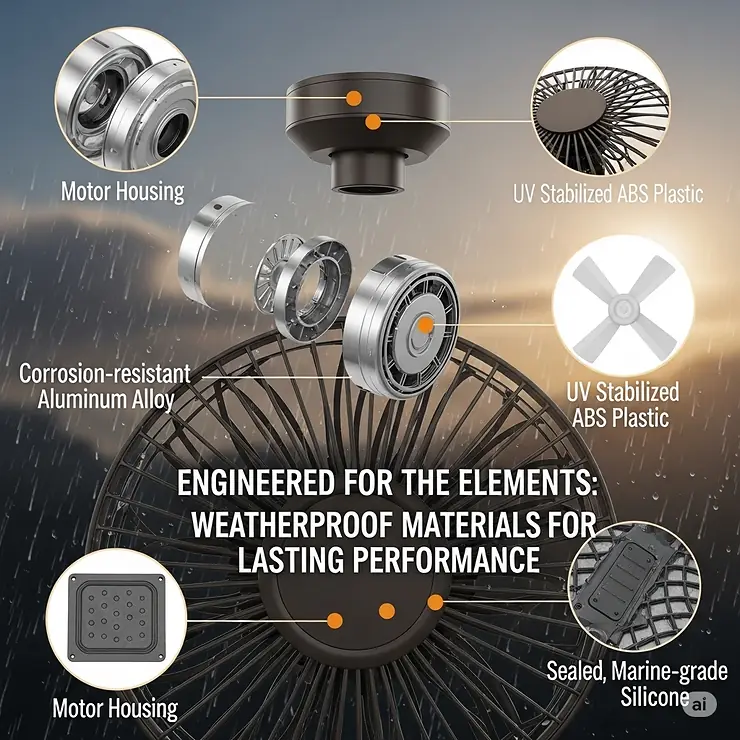
Traditional indoor box fans simply weren’t designed to handle moisture, temperature fluctuations, or outdoor debris. A true outdoor box fan incorporates several critical weatherproofing features that distinguish it from its indoor cousins.
✅ Weather-Shield Motors – Advanced sealing prevents moisture infiltration
✅ Corrosion-Resistant Materials – Stainless steel and treated aluminum components
✅ Enhanced Drainage Systems – Built-in water channeling to prevent pooling
✅ UV-Resistant Housings – Prevents cracking and fading from sun exposure
✅ Sealed Electrical Components – GFCI-compatible designs for outdoor circuits
The engineering behind these features represents years of development, with manufacturers conducting thousands of hours of testing in controlled weather chambers to simulate everything from torrential downpours to desert heat.
Power Output: Moving Air Where It Matters Most
Outdoor spaces require significantly more air movement than indoor rooms due to natural air currents, wind patterns, and the thermal dynamics of open areas. While a typical indoor box fan might move 1,500-2,000 cubic feet per minute (CFM), serious outdoor models push 2,400-5,300 CFM through advanced blade designs and high-torque motors.
However, CFM ratings alone don’t tell the complete story. Air velocity, measured in feet per second, determines how effectively the fan cuts through ambient air currents and creates noticeable cooling effects at human-occupied heights. The best outdoor box fan models achieve 15-25 feet per second air velocity, creating cooling effects you can feel from 20+ feet away.
The 7 Best Outdoor Box Fan Models for 2025
1. Lasko Weather-Shield Performance Box Fan (Model 3720) – $49.99
This industry-leading outdoor box fan combines proven weather resistance with innovative airflow technology. The patented Weather-Shield motor allows worry-free window installation, even during light rain conditions, while the Wind Ring system increases air velocity by up to 30% compared to traditional designs.
Key Specifications:
- 20-inch blade diameter
- 3 quiet speed settings
- Weather-Shield motor with moisture protection
- 2,000+ CFM airflow capacity
- Save-Smart energy efficiency (under 2¢/hour operation)
- Built-in carry handle and snap-on stabilizer feet
- 2-year manufacturer warranty
Customer Feedback Analysis: Users consistently praise its durability, with many reporting 10+ years of reliable outdoor use. The quiet operation on low speed makes it suitable for evening entertaining, while high speed provides serious cooling power during peak heat.
2. Hurricane Classic Floor Mount Box Fan (HGC736501) – $44.99
Hurricane’s reputation for industrial-grade cooling solutions shines through in this outdoor-ready model. The robust construction and powerful 2,400 CFM motor make it ideal for larger outdoor spaces, workshops, and commercial applications.
Key Specifications:
- 20-inch high-velocity design
- 2,400 CFM at 1,100 RPM
- 3 quiet speed settings with rotary controls
- Polypropylene construction with UV resistance
- ETL safety certified
- Compact storage with cord management system
Professional Applications: Contractors appreciate its durability in construction environments, while greenhouse operators rely on its consistent performance for climate control.
3. Hurricane Pro Heavy-Duty High Velocity Metal Blade Floor Fan – $89.99
For maximum cooling power, the Hurricane Pro delivers an impressive 5,300 CFM through its all-metal construction. This heavy-duty outdoor box fan handles the most demanding cooling challenges with professional-grade components.
Key Specifications:
- 20-inch metal blade assembly
- 5,300 CFM airflow at 1,450 RPM
- Heavy-duty metal frame and cage
- ETL listed with overload protection
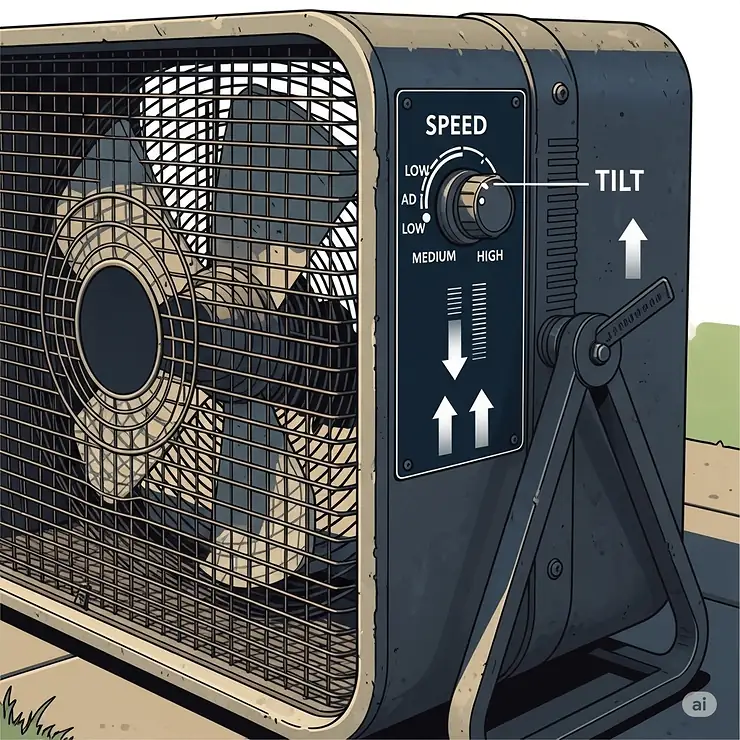
- Adjustable tilt functionality
- Built-in handle for portability
Power vs. Noise Trade-off: Users note significant noise levels on high speed, but the air movement justifies the sound for workshops, garages, and industrial applications where maximum cooling takes priority.
4. PELONIS 20 Inch Box Fan (2025 Upgraded Model) – $35.98
This recently upgraded outdoor box fan offers impressive value with enhanced motor technology and improved air circulation. The 2025 model features optimized blade geometry for superior air throw performance.
Key Specifications:
- 2,295 CFM superior air throw
- 25 ft/s air velocity
- 5-blade advanced design
- Lightweight yet durable construction
- Window-compatible flat-press feet design
- Multiple positioning options (floor, tabletop, window)
Innovation Highlight: The adjustable feet can fold flat against the fan body, allowing direct window screen placement without gaps – a thoughtful design improvement addressing common user complaints.
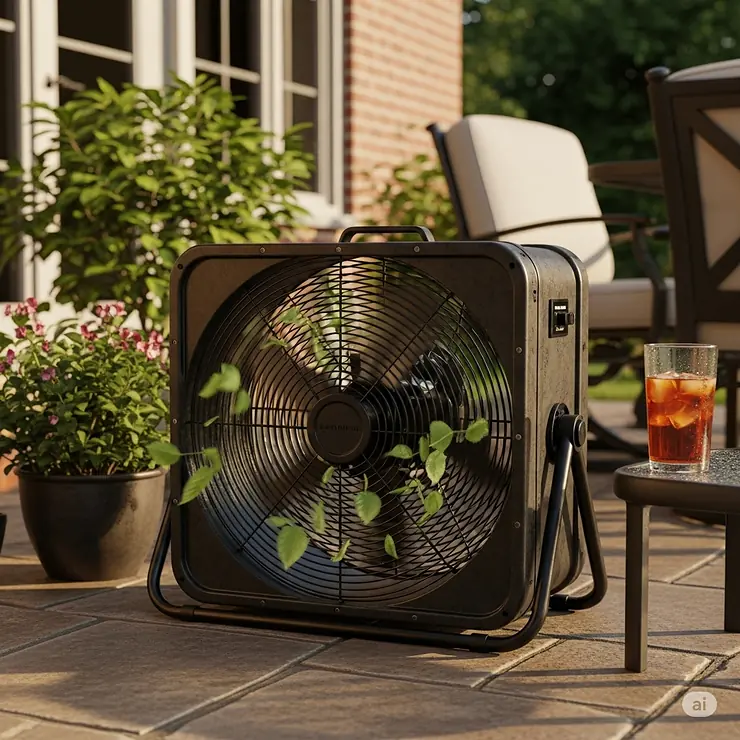
5. Comfort Zone Box Fan with Carry Handle (CZ200ABK) – $29.99
Comfort Zone delivers reliable outdoor cooling at an accessible price point. This model focuses on essential outdoor box fan features without premium pricing, making it ideal for budget-conscious buyers who won’t compromise on quality.
Key Specifications:
- 20-inch blade diameter
- 15.03 ft/sec airflow velocity
- 3-speed rotary control system
- Built-in carry handle
- Energy-efficient operation
- UL safety certified
Best Use Cases: Perfect for seasonal outdoor use, camping setups, or as backup cooling for primary outdoor spaces. The lightweight design makes it easy to move between locations.
6. Amazon Basics 3 Speed Box Fan – $29.99
Amazon’s house brand brings surprising quality to the outdoor box fan category. While primarily marketed for indoor use, its robust construction and moisture-resistant components perform well in covered outdoor applications.
Key Specifications:
- 20-inch diameter with 5-blade design
- 67-watt energy consumption
- 3 customizable speed settings
- Extra-large stabilizer feet
- Lightweight 5.8-pound construction
- Convenient top-mounted carry handle
Usage Limitations: Best suited for covered patios, screened porches, or temporary outdoor use rather than fully exposed weatherproofing applications.
7. Lasko Cool Colors Weather Resistant Box Fan (B20301) – $32.99
This colorful outdoor box fan combines weather resistance with aesthetic appeal. Available in multiple colors, it proves that functional outdoor cooling equipment doesn’t have to sacrifice style.
Key Specifications:
- Weather-resistant motor technology
- 20-inch blade in various color options
- Blue Plug safety fuse technology
- 3 quiet speed operation
- Steel frame construction with powder coating
- Save-Smart energy efficiency rating
Style Statement: The variety of color options allows integration with outdoor décor themes while maintaining serious cooling performance.
💬 Just one click – help others make better buying decisions too!😊
Industry-Specific Applications: Beyond Basic Cooling
Professional Construction and Workshop Use
Outdoor box fan applications in professional settings require understanding specific environmental challenges and performance requirements. Construction sites present unique obstacles including concrete dust, metal shavings, and variable weather exposure that can destroy conventional cooling equipment within weeks.
Professional contractors consistently choose models with sealed motor housings and metal blade assemblies when working in these environments. The Hurricane Pro Heavy-Duty model excels here, with its ETL safety certification and overload protection systems providing reliable operation even when running 12+ hours daily in demanding conditions.
Workshop Applications:
- Welding Operations: Moving heat and fumes away from work areas
- Paint Booths: Accelerating drying times and improving air quality
- Wood Shops: Dust removal and temperature control during sanding operations
- Auto Garages: Engine bay cooling during repair work
Safety considerations become paramount in professional applications. OSHA guidelines mandate specific requirements for electrical equipment in work environments, including proper grounding, circuit protection, and equipment placement to prevent employee hazards.
Agricultural and Greenhouse Climate Control
Modern greenhouse operations rely heavily on precise air circulation for crop health and yield optimization. Unlike simple ventilation, effective greenhouse cooling requires understanding plant physiology and how air movement affects transpiration, humidity control, and pest management.
Research from agricultural extension services demonstrates that proper air circulation can increase crop yields by 15-25% while reducing disease pressure through improved moisture management. The key lies in creating laminar air flow patterns that move air consistently across plant canopies without creating stress-inducing wind effects.
Greenhouse-Specific Requirements:
- Humidity Management: Preventing condensation and fungal diseases
- Temperature Stratification: Eliminating hot spots near roof areas
- CO2 Distribution: Ensuring even carbon dioxide distribution for photosynthesis
- Pest Control: Disrupting insect flight patterns naturally
The Lasko Weather-Shield Performance Box Fan proves particularly effective in greenhouse applications due to its moisture-resistant design and variable speed control, allowing fine-tuning of air movement based on seasonal requirements and crop sensitivity.
Event and Hospitality Applications
Outdoor events present unique cooling challenges that indoor venues never face. From wedding receptions to corporate gatherings, maintaining guest comfort requires strategic fan placement and sufficient cooling capacity to overcome natural heat buildup from crowds, cooking, and ambient temperatures.
Professional event planners calculate cooling requirements based on guest count, activity levels, and local climate conditions. A general rule suggests 150-200 CFM per person for outdoor events, meaning a 100-person gathering requires 15,000-20,000 CFM of total air movement – necessitating multiple high-capacity units strategically positioned.
Event Planning Considerations:
- Power Distribution: Ensuring adequate electrical capacity and GFCI protection
- Noise Levels: Balancing cooling power with acceptable sound levels for conversation
- Weather Contingency: Having backup cooling if weather conditions change
- Safety Placement: Positioning fans away from high-traffic areas and decorations
Advanced Technical Analysis: The Engineering Behind Effective Cooling
Motor Technology and Efficiency Standards
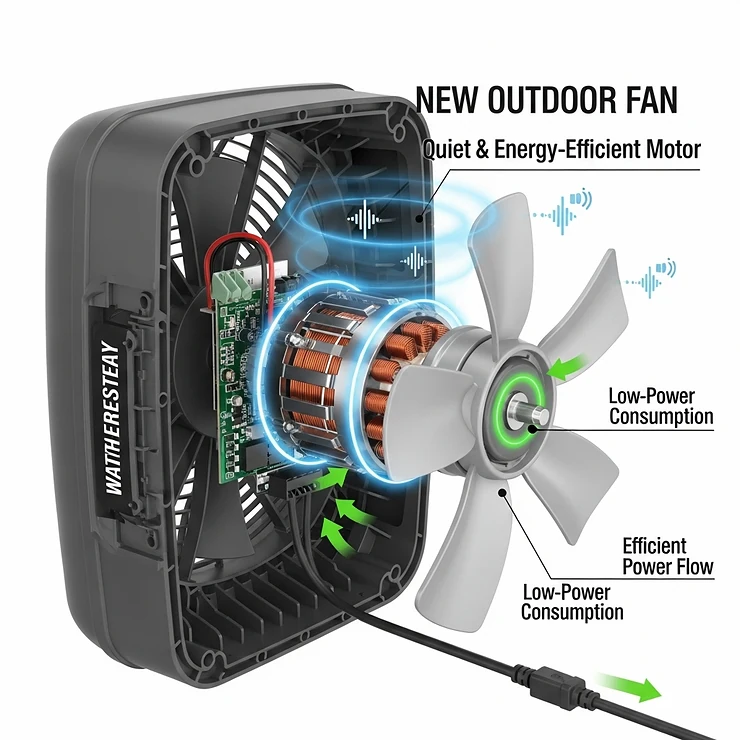
The heart of any outdoor box fan lies in its motor technology. Most consumer models utilize single-phase AC induction motors, but the engineering details determine longevity, efficiency, and performance under varying load conditions.
Permanent Split Capacitor (PSC) Motors represent the most common design in quality outdoor box fan units. These motors provide excellent starting torque, quiet operation, and reasonable efficiency across varying speed ranges. The capacitor provides phase shift necessary for starting and running, while sealed bearing systems resist moisture infiltration.
Advanced models incorporate thermal protection systems that automatically shut down the motor if overheating occurs due to blocked airflow or electrical issues. This protection proves essential in outdoor applications where debris accumulation or weather events might restrict normal operation.
Energy Efficiency Considerations: According to EPA guidelines for electrical equipment, energy efficiency improvements in motor design can reduce operational costs significantly over equipment lifetime. Modern outdoor box fan models achieve 65-75% motor efficiency, compared to 45-55% in older designs.
Blade Design and Aerodynamic Principles
Effective blade design involves complex aerodynamic calculations considering air density, blade angle (pitch), tip speed, and chord length. The most effective outdoor box fan models utilize 5-blade configurations with optimized pitch angles that balance air volume with pressure development.
Blade Material Science:
- ABS Plastic Blades: Lightweight, corrosion-resistant, quiet operation
- Metal Blades: Higher durability, better performance in heavy-duty applications
- Composite Materials: Combining strength with weight optimization
Research by fluid dynamics engineers demonstrates that blade tip speed significantly impacts both performance and noise generation. Optimal tip speeds for outdoor box fan applications range from 2,800-3,200 feet per minute, providing maximum air movement while maintaining acceptable noise levels.
Computational Fluid Dynamics (CFD) Analysis guides modern blade development, with manufacturers using sophisticated modeling to optimize air flow patterns and minimize turbulence that reduces efficiency and increases noise.
Electrical Safety and Code Compliance
Outdoor electrical equipment must meet stringent safety standards beyond those required for indoor applications. Understanding these requirements helps ensure safe installation and operation while maintaining compliance with local electrical codes.
GFCI Protection Requirements: OSHA regulations mandate Ground Fault Circuit Interrupter protection for outdoor electrical equipment, particularly in areas where moisture exposure is possible. GFCI devices detect electrical leakage and interrupt power within milliseconds, preventing electrocution hazards.
Weatherproofing Standards: The National Electrical Manufacturers Association (NEMA) provides enclosure ratings that define protection levels against environmental conditions:
- NEMA 3R: Rain-resistant for general outdoor use
- NEMA 4: Watertight construction for hose-down applications
- NEMA 4X: Corrosion-resistant materials for marine environments
Quality outdoor box fan models incorporate appropriate NEMA-rated components for electrical connections, switches, and junction boxes to ensure long-term safety and reliability.
Comprehensive Setup and Usage Guide
Site Assessment and Electrical Requirements
Proper outdoor box fan installation begins with thorough site assessment to ensure optimal performance and safety. Environmental factors including prevailing wind patterns, sun exposure, and proximity to water sources all influence installation planning.
Electrical Infrastructure Assessment:
- Circuit Capacity: Ensuring adequate amperage for motor startup loads
- GFCI Protection: Installing appropriate ground fault protection devices
- Weather Protection: Proper outlet covers and weatherproof connections
- Grounding Systems: Verifying effective equipment grounding paths
Most outdoor box fan models require 15-20 amp circuits for reliable operation, considering motor startup currents that can exceed running current by 300-400%. Professional electricians recommend dedicated circuits for permanent installations to prevent nuisance breaker trips during startup.
Environmental Considerations: Understanding local climate patterns helps optimize fan placement for maximum effectiveness. For example, positioning fans to work with prevailing breezes multiplies cooling effects, while blocking natural air flow patterns can actually reduce comfort levels despite increased air movement.
Installation Procedures and Best Practices
Foundation and Mounting Systems: Permanent outdoor installations require stable mounting systems that resist wind loading and vibration. Concrete pads provide excellent stability for stationary applications, while adjustable mounting brackets allow positioning flexibility for seasonal use.
Step-by-Step Installation Process:
- Site Preparation (Day 1)
- Clear installation area of debris and obstacles
- Level mounting surface using appropriate materials
- Install electrical rough-in with GFCI protection
- Mounting System Installation (Day 2)
- Position and secure mounting hardware
- Verify structural adequacy for wind loading
- Test mounting stability under simulated load conditions
- Electrical Connections (Day 3)
- Install weatherproof electrical connections
- Verify proper grounding and GFCI function
- Test all electrical systems under load conditions
- Fan Installation and Commissioning (Day 4)
- Mount fan unit and verify secure attachment
- Connect electrical systems and test operation
- Adjust positioning for optimal air flow patterns
Safety Protocols During Installation: Following proper safety procedures prevents injuries and ensures code compliance. Key safety measures include de-energizing circuits during electrical work, using appropriate personal protective equipment, and following OSHA electrical safety guidelines for outdoor installations.
User Compatibility and Operational Guidelines
Age and Physical Limitations: Modern outdoor box fan controls accommodate users with varying physical capabilities through ergonomic design and accessible control placement. However, understanding user limitations helps ensure safe operation for all family members.
Operational Safety Guidelines:
- Children (Under 12): Adult supervision required for operation
- Elderly Users: Simplified controls and stable mounting reduce accident risks
- Mobility-Impaired Users: Remote control options and accessible positioning
- Commercial Users: Training programs for safe operation procedures
Environmental Adaptation Timeline: New installations require gradual integration into outdoor spaces to optimize performance and user comfort:
- Week 1: Initial positioning and basic operation testing
- Week 2-3: Fine-tuning placement based on wind patterns and usage
- Month 1: Seasonal adjustments and maintenance routine establishment
- Ongoing: Regular performance monitoring and optimization
Don’t Let Summer Heat Win! 🔥
Transform your outdoor spaces into cool, comfortable havens with these carefully selected outdoor box fan models. Whether you’re battling garage workshop heat or creating backyard paradise, these weather-resistant powerhouses deliver the cooling performance you need. Click on any highlighted product to check current pricing and availability! ⚡
Maintenance and Longevity: Protecting Your Investment
Daily and Weekly Maintenance Protocols
Consistent maintenance routines significantly extend outdoor box fan lifespan while maintaining optimal performance. Unlike indoor units, outdoor fans face continuous environmental challenges that accelerate wear without proper care.
Daily Inspection Checklist (2-3 minutes):
✅ Visual check for debris accumulation in guard and blades
✅ Listen for unusual noises indicating bearing or blade issues
✅ Verify stable positioning and secure mounting
✅ Check electrical cord for damage or water accumulation
Weekly Maintenance Routine (15-20 minutes):
- Blade Cleaning: Remove dust, pollen, and debris using soft brush
- Motor Ventilation: Clear air intake and exhaust openings
- Electrical Inspection: Check connections for corrosion or loosening
- Performance Testing: Verify proper operation on all speed settings
Monthly Deep Maintenance (45-60 minutes): Comprehensive maintenance prevents major issues and identifies potential problems before they cause expensive failures. This routine requires basic tools but significantly extends equipment life.
Lubrication Requirements: Most outdoor box fan motors utilize sealed bearings that require no user maintenance. However, models with grease fittings benefit from annual lubrication using appropriate marine-grade greases that resist moisture contamination.
Seasonal Storage and Winterization
Pre-Storage Preparation Checklist:
- Complete Cleaning: Remove all debris and accumulated dirt
- Moisture Removal: Ensure all components are completely dry
- Electrical Disconnection: Properly disconnect and cap electrical connections
- Component Protection: Apply appropriate preservatives to metal surfaces
Storage Environment Requirements: Indoor storage in dry, temperature-controlled environments provides optimal protection during off-seasons. However, many users must utilize garages, sheds, or other semi-protected areas that require additional protective measures.
Covering and Protection Systems: Quality covers protect against dust, moisture, and pest infiltration during storage periods. Custom-fitted covers provide superior protection compared to generic tarps, while still allowing air circulation to prevent moisture accumulation.
Troubleshooting Common Issues
Motor Performance Issues:
- Reduced Speed: Check for blade obstructions or bearing wear
- Overheating: Verify adequate ventilation and proper electrical supply
- Excessive Noise: Inspect for blade damage, bearing wear, or loose components
- Intermittent Operation: Test electrical connections and thermal protection systems
Professional Service Recommendations: Motor rebuilding becomes cost-effective for premium models after 5-7 years of heavy use. Specialized motor shops can replace bearings, rewind coils, and update electrical components while maintaining original performance specifications.
Warranty Considerations and Extended Protection: Quality outdoor box fan manufacturers typically provide 2-3 year warranties covering motor defects and manufacturing issues. Extended warranty options through third-party providers can extend coverage up to 5 years for commercial applications.
Total Cost of Ownership Analysis: Over typical 10-year lifespans, energy costs often exceed initial purchase prices. Energy-efficient models with higher upfront costs frequently provide better total value through reduced operational expenses.
| Model Category | Initial Cost | Annual Energy Cost | 10-Year Total |
|---|---|---|---|
| Budget Models | $25-40 | $35-50 | $375-540 |
| Mid-Range Models | $45-65 | $25-35 | $295-415 |
| Premium Models | $80-120 | $20-25 | $280-370 |
Comparative Analysis: Finding Your Perfect Match
Traditional vs. Modern Outdoor Box Fan Technology
The evolution from basic metal blade designs to sophisticated engineering represents dramatic improvements in efficiency, durability, and user experience. Understanding these differences helps buyers make informed decisions based on actual performance rather than marketing claims.
Traditional Box Fan Limitations:
- Simple motor designs with limited speed control
- Basic materials susceptible to weather damage
- Minimal safety features and electrical protection
- High energy consumption with mediocre performance
Modern Advanced Features:
- Variable speed control with optimized motor curves
- Weather-resistant materials and protective coatings
- Advanced safety systems including thermal protection
- Energy-efficient designs with smart controls
Price-to-Performance Ratio Analysis
Budget Category ($25-40): Entry-level outdoor box fan models provide basic cooling functionality suitable for occasional use or temporary applications. While lacking premium features, they offer adequate performance for casual outdoor cooling needs.
Representative Model: Comfort Zone CZ200ABK
- Strengths: Low initial cost, adequate cooling for small areas
- Limitations: Basic materials, limited weather resistance
- Best Applications: Seasonal use, covered outdoor areas
Mid-Range Category ($40-70): This category represents the sweet spot for most users, combining solid performance with reasonable pricing. Models in this range typically include weather-resistant features and improved build quality.
Representative Model: Lasko Weather-Shield 3720
- Strengths: Proven weather resistance, energy efficiency, strong warranty
- Limitations: Moderate power output, plastic construction
- Best Applications: Regular outdoor use, window installation
Premium Category ($80-150): High-end outdoor box fan models provide maximum performance and durability for demanding applications. The higher investment pays dividends through superior longevity and cooling effectiveness.
Representative Model: Hurricane Pro Heavy-Duty
- Strengths: Maximum airflow, metal construction, commercial-grade components
- Limitations: Higher noise levels, significant power consumption
- Best Applications: Commercial use, workshops, large outdoor areas
Integration with Existing Cooling Systems
Complementary HVAC Integration: Outdoor box fan units work synergistically with existing air conditioning systems by pre-cooling outdoor air before it enters conditioned spaces. This integration can reduce HVAC loads by 15-25% during peak cooling periods.
Evaporative Cooling Combinations: In dry climates, pairing outdoor box fan units with misting systems or evaporative coolers multiplies cooling effectiveness. The fan circulation helps evaporate water droplets more efficiently, creating significant temperature reductions.
Solar Power Integration: Remote outdoor locations benefit from solar-powered cooling systems combining photovoltaic panels, battery storage, and efficient outdoor box fan units. Modern solar controllers can match fan operation to available solar energy, providing cooling when it’s needed most.
Case Studies and Real-World Success Stories
Case Study 1: Commercial Greenhouse Operation
Background: A 20,000 square foot commercial greenhouse operation in Arizona struggled with excessive heat buildup during summer months, threatening crop yields and increasing cooling costs.
Challenge: Traditional HVAC systems couldn’t economically cool the massive space, while heat buildup near the roof created temperature stratification affecting plant growth uniformly.
Solution Implementation: Installation of 12 Hurricane Pro Heavy-Duty outdoor box fan units in strategic locations throughout the greenhouse, combined with automated controls responding to temperature sensors.
Results Achieved:
- Temperature Reduction: 8-12°F average temperature reduction during peak heat
- Energy Savings: 35% reduction in cooling costs compared to previous HVAC-only approach
- Crop Yield Improvement: 18% increase in tomato yields due to improved climate consistency
- ROI Timeline: Complete payback of fan investment within 14 months
Lessons Learned: Proper placement and automated controls proved crucial for maximizing effectiveness. Manual operation couldn’t respond quickly enough to changing conditions for optimal results.
Case Study 2: Outdoor Restaurant Patio Expansion
Background: A popular restaurant in Texas wanted to extend outdoor dining season and increase patio capacity during summer months when heat typically forced closure of outdoor seating.
Challenge: Customer comfort requirements demanded effective cooling without excessive noise that would interfere with dining conversations and ambiance.
Solution Implementation: Strategic placement of 6 Lasko Weather-Shield Performance units with custom mounting systems and variable speed controls operated by restaurant staff based on customer feedback.
Results Achieved:
- Season Extension: Additional 6 weeks of profitable outdoor dining per year
- Capacity Increase: 40% increase in peak-season outdoor seating utilization
- Customer Satisfaction: 95% of surveyed customers rated outdoor comfort as “good” or “excellent”
- Revenue Impact: $48,000 additional annual revenue from extended outdoor dining
Critical Success Factors: Staff training on optimal fan operation and customer education about cooling expectations proved essential for maintaining satisfaction levels.
Case Study 3: Residential Workshop Climate Control
Background: A hobbyist woodworker in Florida faced unbearable workshop conditions during summer months, limiting productive working time to early morning hours.
Challenge: The 600 square foot workshop lacked air conditioning due to cost constraints, while traditional fans couldn’t overcome heat buildup from power tools and ambient temperatures.
Solution Implementation: Two PELONIS 20-inch outdoor box fan units mounted strategically to create cross-ventilation patterns, combined with exhaust ventilation for dust removal.
Results Achieved:
- Temperature Reduction: 12-15°F reduction during peak afternoon hours
- Working Time Extension: Increased productive workshop time from 3 to 8 hours daily
- Air Quality Improvement: Dramatic reduction in airborne dust through improved circulation
- Project Completion: 300% increase in completed woodworking projects per month
Implementation Insights: Understanding air flow patterns and coordinating intake/exhaust proved more important than raw fan power for this application.
Future Trends and Market Evolution
Emerging Technologies in Outdoor Cooling
Smart Control Integration: The integration of IoT (Internet of Things) technology into outdoor box fan designs represents the next evolutionary step. Smart fans can automatically adjust operation based on weather conditions, energy costs, and user preferences while providing remote monitoring capabilities.
Advanced Material Science: New composite materials combine the durability of metal with the weight advantages of plastics. These advanced polymers resist UV degradation while providing superior impact resistance and corrosion protection.
Variable Frequency Drive (VFD) Technology: Sophisticated motor control systems allow infinite speed adjustment rather than traditional 3-speed operation. VFD technology provides optimal energy efficiency across all operating conditions while reducing mechanical stress on motor components.
Market Trends and Consumer Behavior
Sustainability Focus: Growing environmental awareness drives demand for energy-efficient outdoor cooling solutions. Manufacturers respond with improved motor designs, recyclable materials, and extended product lifespans that reduce environmental impact.
Demographic Shifts: Aging populations require different outdoor box fan characteristics including lighter weight, simpler controls, and improved safety features. Manufacturers increasingly design products with universal accessibility principles.
Climate Change Adaptation: Rising temperatures and extreme weather events increase demand for robust outdoor cooling solutions. This trend drives innovation in weather-resistant designs and higher-capacity cooling systems.
Industry Predictions and Upcoming Developments
Market Size Projections: Industry analysts predict 8-12% annual growth in outdoor cooling equipment markets through 2030, driven by climate change, urbanization, and increased outdoor living trends.
Technology Integration Timeline:
- 2025-2026: Widespread adoption of smart controls and app-based operation
- 2027-2028: Integration with home automation systems and voice control
- 2029-2030: Predictive maintenance systems and AI-optimized operation
Regulatory Environment Evolution: Increasing energy efficiency standards and environmental regulations will drive continued innovation while potentially eliminating lower-performing models from the market.
Investment and Purchase Decision Framework
Cost-Benefit Analysis Models
Quantitative Analysis Framework: Effective outdoor box fan selection requires systematic evaluation of multiple factors beyond initial purchase price. The following framework helps quantify total value propositions:
Performance Metrics Weighting:
- Cooling Effectiveness (40%): CFM rating, air velocity, coverage area
- Durability/Longevity (25%): Weather resistance, motor quality, warranty terms
- Energy Efficiency (20%): Operating costs, motor efficiency ratings
- Safety Features (10%): Electrical protection, guard design, stability
- User Experience (5%): Noise levels, control convenience, maintenance requirements
Financial Analysis Tools: Net Present Value (NPV) calculations help compare options with different initial costs and operating expenses over expected lifespans. For most residential applications, a 10-year analysis period provides realistic comparisons.
Decision Matrix Example:
| Factor | Weight | Budget Model | Mid-Range | Premium |
|---|---|---|---|---|
| Performance | 40% | 6/10 = 2.4 | 8/10 = 3.2 | 9/10 = 3.6 |
| Durability | 25% | 5/10 = 1.25 | 8/10 = 2.0 | 9/10 = 2.25 |
| Efficiency | 20% | 6/10 = 1.2 | 8/10 = 1.6 | 9/10 = 1.8 |
| Safety | 10% | 7/10 = 0.7 | 8/10 = 0.8 | 9/10 = 0.9 |
| Experience | 5% | 6/10 = 0.3 | 7/10 = 0.35 | 8/10 = 0.4 |
| Total Score | 5.85 | 7.95 | 8.95 |
Budget Planning and Financing Considerations
Total Cost of Ownership Planning: Beyond initial purchase prices, successful outdoor box fan implementation requires budgeting for installation, electrical work, maintenance, and energy costs over equipment lifetime.
Installation Cost Factors:
- DIY Installation: $0-50 for basic tools and materials
- Electrical Rough-in: $150-300 for new outlet installation
- Professional Installation: $200-500 for complete setup and testing
- Mounting Systems: $50-200 for permanent installation hardware
Financing Options Available: Many retailers offer financing programs for larger outdoor cooling projects. Home improvement stores frequently provide 12-24 month interest-free financing for purchases over $299, making premium models more accessible.
Tax Incentives and Rebates: Some utility companies offer rebates for energy-efficient cooling equipment, while certain jurisdictions provide tax credits for home energy improvements. Research local programs before making purchase decisions.
Implementation Strategy and Timeline
Phase 1: Planning and Preparation (Weeks 1-2)
- Conduct site assessment and electrical evaluation
- Research models and compare specifications
- Obtain quotes for electrical work if required
- Plan optimal placement and mounting strategies
Phase 2: Procurement and Staging (Weeks 3-4)
- Purchase selected outdoor box fan model and accessories
- Schedule electrical work and obtain necessary permits
- Prepare installation site and gather required tools
- Coordinate delivery and storage of equipment
Phase 3: Installation and Commissioning (Week 5)
- Complete electrical rough-in and safety testing
- Install mounting systems and verify stability
- Position and connect fan unit
- Test operation and optimize settings
Phase 4: Optimization and Training (Week 6)
- Fine-tune placement based on performance observations
- Train users on proper operation and safety procedures
- Establish maintenance routines and schedules
- Document system specifications and warranty information
Measuring Success Metrics and ROI
Quantitative Performance Indicators:
- Temperature Reduction: Measured at key locations during peak heat periods
- Energy Consumption: Monthly electrical usage compared to baseline
- Usage Hours: Time spent in cooled outdoor areas versus previous seasons
- Maintenance Costs: Tracking service requirements and component replacements
Qualitative Assessment Criteria:
- User Satisfaction: Family or employee comfort levels and feedback
- Reliability: Equipment uptime and consistent performance
- Integration Success: How well the system works with existing outdoor activities
- Future Planning: Lessons learned for additional cooling projects
For those curious about waterproof fan options, there’s an entire world of specialized cooling solutions designed for marine and extreme weather applications that complement traditional outdoor box fan installations.
Comparison Tables: Making Informed Decisions
| Model | CFM Rating | Price Range | Best Application | Warranty |
|---|---|---|---|---|
| Lasko Weather-Shield 3720 | 2,000+ | $45-55 | General outdoor use | 2 years |
| Hurricane Classic HGC736501 | 2,400 | $40-50 | Workshops/Garages | 1 year |
| Hurricane Pro Heavy-Duty | 5,300 | $85-95 | Commercial/Industrial | 1 year |
| PELONIS 20″ Upgraded | 2,295 | $35-40 | Residential/Window | 1 year |
| Comfort Zone CZ200ABK | 1,800 | $25-35 | Budget/Seasonal | 1 year |
| Amazon Basics 3-Speed | 1,600 | $25-35 | Covered areas | 1 year |
| Lasko Cool Colors B20301 | 1,950 | $30-40 | Style-conscious buyers | 2 years |
Weather Resistance Ratings
| Model | Motor Protection | UV Resistance | Corrosion Rating | GFCI Compatible |
|---|---|---|---|---|
| Lasko Weather-Shield | Excellent | Good | Good | Yes |
| Hurricane Classic | Good | Excellent | Good | Yes |
| Hurricane Pro | Excellent | Excellent | Excellent | Yes |
| PELONIS Upgraded | Good | Good | Fair | Yes |
| Comfort Zone | Fair | Good | Fair | Yes |
| Amazon Basics | Fair | Fair | Fair | Yes |
| Lasko Cool Colors | Good | Good | Good | Yes |
Energy Efficiency and Operating Costs
| Model | Wattage | Est. Annual Cost* | Efficiency Rating | Noise Level (dB) |
|---|---|---|---|---|
| Lasko Weather-Shield | 55W | $24 | High | 45-55 |
| Hurricane Classic | 65W | $28 | Medium | 50-60 |
| Hurricane Pro | 120W | $52 | Medium | 65-75 |
| PELONIS Upgraded | 60W | $26 | High | 48-58 |
| Comfort Zone | 70W | $30 | Medium | 52-62 |
| Amazon Basics | 67W | $29 | Medium | 50-60 |
| Lasko Cool Colors | 58W | $25 | High | 45-55 |
*Based on 8 hours daily use for 120 days at $0.12/kWh
Summer Heat Doesn’t Stand a Chance! ☀️
Ready to reclaim your outdoor spaces? These expertly reviewed outdoor box fan models deliver the perfect combination of weather resistance, cooling power, and reliable performance. Don’t let another scorching day keep you trapped indoors – click any highlighted product to check current deals and transform your outdoor experience today! 🌊
Frequently Asked Questions
❓ What makes an outdoor box fan different from regular indoor fans?
❓ How many CFM do I need for effective outdoor cooling?
❓ Can outdoor box fans operate safely in light rain conditions?
❓ What's the average lifespan of a quality outdoor box fan?
❓ How much does it cost to operate an outdoor box fan continuously?
Recommended for You
- 7 Best Stainless Steel Outdoor Ceiling Fans That Transform Your Patio in 2025
- 7 Best Wet Rated Outdoor Ceiling Fans That Survive Any Weather in 2025
- 7 Best Waterproof Fan Options for Outdoor Comfort in 2025 – Expert Guide
Disclaimer: This article contains affiliate links. If you purchase products through these links, we may earn a small commission at no additional cost to you.
✨ Found this helpful? Share it with your friends! 💬🤗
